Christina Hoag: Girl on the Brink; Skin of Tattoos Wednesday, Jan 11 2017 

Please welcome YA author Christina Hoag, who will share her writing tips Auntie M’s readers~

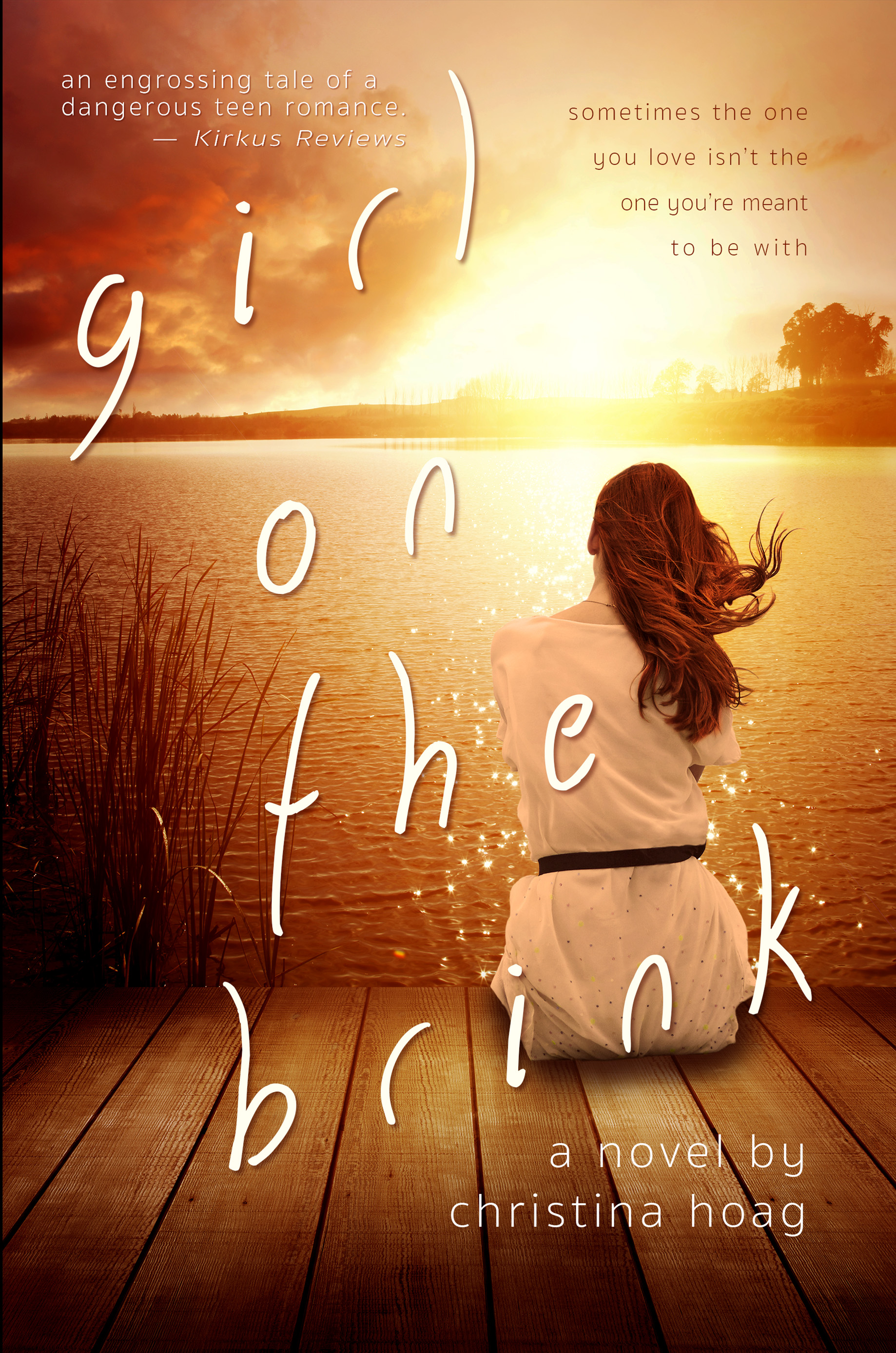
girlonthebrinkcover

Writing Tips
By Christina Hoag

Here are several writing tips I’ve discovered through many years of writing. You may find them helpful. They’re in no particular order.

1. I don’t write myself out every day. I leave something – the very next scene, usually – so when I come back the next day I know what to do. I just pick up and keep going. If you write yourself out, then you end up wasting a lot of time wondering what comes next and trying to get back into the rhythm of the story.

2. If someone says something in your piece doesn’t work, it’s only one person’s opinion. But if two people make the same observation, you need to pay attention to what they’re saying. More often than not, it’s something that needs fixing.

3. Develop a thick skin. It takes courage to write and show your work to the world for judgment, but remember that not everyone is going to like your work, and that’s okay. You have to learn to let criticism roll off you. The nastiest rejection I ever got was from the editor of a literary journal who scornfully said of my experimental fiction submission, “Why would anyone even read this?” I kept submitting it and got the piece and another like it published in other journals.

4. If there’s someone in your life who does not support you creatively, either get rid of them or distance yourself from them as much as possible. Be ruthless because your art is worth it. I’ve broken up with boyfriends because they were not supportive or had no interest in my writing. In my mind, you can’t be with a writer if you’re not interested in what they write because their writing is part of their self-expression.

5. Don’t give up! It can be hard to keep going amid the onslaught of rejection –agents, editors, reviewers. If you get a particularly bad rejection or setback, allow yourself to wallow in self-pity for a set period of time, say three days. When that’s over, get back to your PC.

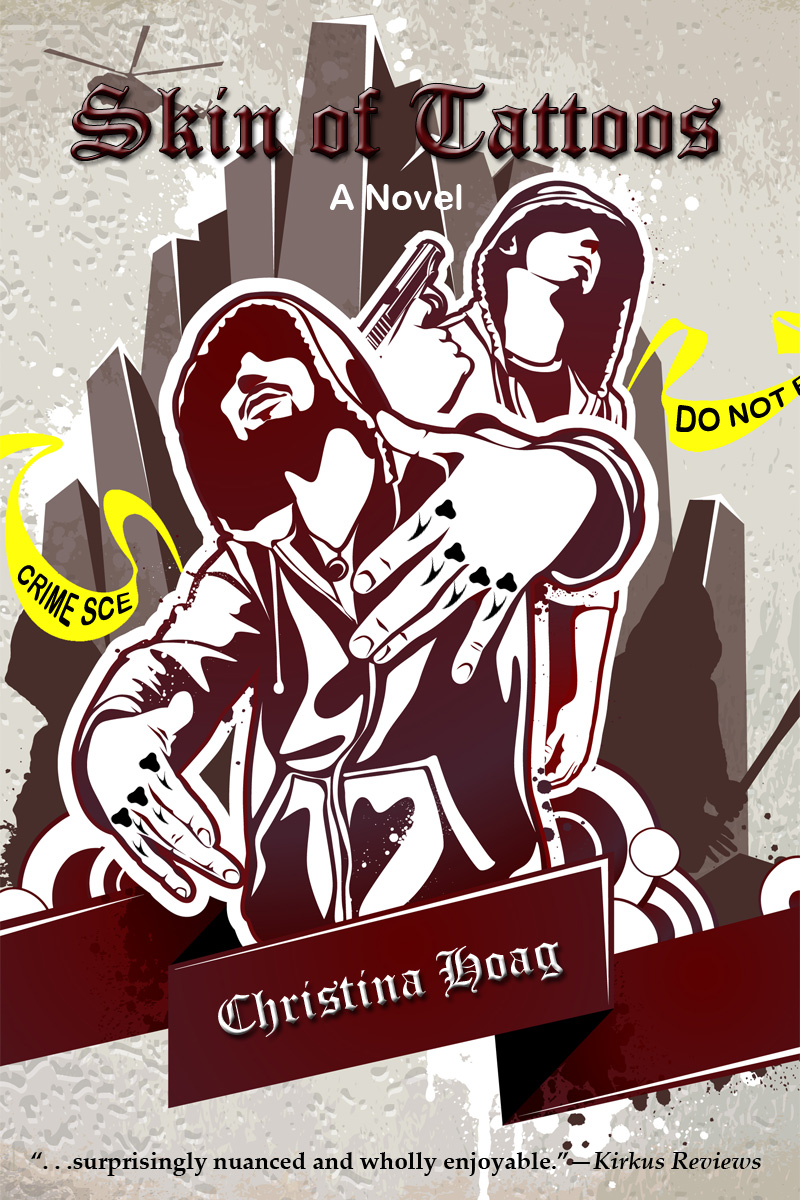
skinoftattooscover
6. When critiquing other people’s work, remember to be constructive and how it feels to be on the receiving end. Always state some positive points first then say “I thought you could improve this by…”

7. Have a general sense of where your story is going and how it will end. I’ve tried “pantsing,” ie. writing by the seat of my pants, and ended up lost in the plot labyrinth and wasted a lot of time. Now I have a loose outline and I periodically map out the next couple scenes as I write. That keeps me on track and thinking ahead. It makes the process much smoother.

8. Read a wide range of genres and authors. Read poetry to develop lyricism and an ear for language. Read plays to develop dialogue. Read mysteries/thriller/classics to improve plot development. Read literary works to enhance character development.

9. When confronting the dreaded writer’s block, do something else for a while, don’t fret and don’t force. I’ve found that getting up and going to the kitchen clears my head enough for the next step to pop in it. You can also use the time to do something else writing-related: work on your website, submissions, an essay, or on another section of your book. The secret is changing your focus so you can clear your blocked channel.

10. This may be the most important tip of all: Believe in yourself. Believe that you have something worthwhile to say. Believe in your talent. Believe that you will succeed and that the rocky road is part of any artist’s journey.

christinahoagauthorheadshot

Christina Hoag is the author of Skin of Tattoos, a literary thriller set in L.A.’s gang underworld (Martin Brown Publishers, 2016) and Girl on the Brink, a romantic thriller for young adults (Fire and Ice YA/Melange Books, 2016) that was named to Suspense Magazine’s Best of 2016 YA list.

She is a former reporter for the Associated Press and Miami Herald, and worked as a correspondent in Latin America writing for major media outlets including Time, Business Week, Financial Times, the Houston Chronicle and The New York Times. She is the co-author of Peace in the Hood: Working with Gang Members to End the Violence, a groundbreaking book on gang intervention (Turner Publishing, 2014).

ChristineS lives in Los Angeles. For more information about her, see http://www.christinahoag.com.
Skin of Tattoos and Girl on the Brink are available in ebook and paperback: http://amzn.to/2bSRjqP and http://amzn.to/2aRFsVZ

Happy New Year Treat: The Ones I Bought Myself Sunday, Jan 1 2017 

Happy New Year 2017 to all my readers~It’s a pleasure bringing you recommendations for great crime books to seek out and Auntie M will continue to read and review on your behalf, while working on her own mysteries. The next Nora Tierney, THE GOLDEN HOUR, will see Nora frustrated at not being able to investigate an international crime that has a very personal effect. Stay tuned.

For the New Year, she’s bringing you several of the books she bought herself. When you receive books to review, and not all are reviewed, your buying need drops tremendously. Yet there are writers whose work Auntie M values and these she’ll mention to give you even more great crime novels to look for.

But first: a special mention to those of you who haven’t discovered the Esa Khattak/Rachel Getty series written by Ausma Zehanat Khan. On the heels of her debut, The Unquiet Dead, her second in the series, The Language of Secrets, will be out in paperback next week.
language-of-secrets-731The third, Among the Ruins, will publish in February, so if you haven’t read this complex and fascination series yet, please sort that out before the third comes out. You won’t be disappointed as Khan is a master plotter who brings multi-cultural realities to crime.

On to thumbnails of Auntie M’s other recommendations:

outofbounds
Val McDermid’s Out of Bounds
brings detective Karen Pirie her most challenging cases yet, when the DNA from a teen joyrider after a crash, may hold the key to a long-unsolved murder. Drawn to another case she’s surreptitiously investigating on her own, Pirie is plagued with insomnia as she wades through her grief after the death of her partner, fellow detective Phil Parhatka. Accomplished and nuanced.

hushhush
Laura Lippman brings Tess Monaghan her strangest case. Juggling parenthood to the precocious Carla Scout has been a challenge, as will the new case. With partner Sandy in tow, Tess reluctantly agrees to provide security for Melisandre Harris, back in the country to film an most unusual documentary of a mother reuniting with the children she left ten years ago, an ending to her crime.Years ago after giving birth to her third child, Melisandre locked the infant in her car and sat on the banks of a river while it died. Found not guilty by reason of criminal insanity, she left her husband and two other daughters to move to France for therapy and a fresh start. Her return brings its own issues when Tess’s client is suddenly a mruder suspect, just when Tess starts receiving messages from a stalker about her parenting. Vintage Lippman.

wildelake
But don’t stop there if you’re a Lippman fan. Knowing Auntie M is, a good friend gifted her a signed copy of Lippman’s stand alone Wilde Lake. The new state’s attorney for Howard County, MD, is Lu Brant, filling her father’s shoes. Her current case revolves around trying a homeless man accused of murdering a woman in her home. But it also dredges up memories of the night her brother murdered a man in self defense to save the life of his best friend. How the two are connected in Lu’s mind will have her wondering whether the legal system is all she’s signed up for; and what really happened that night so many years ago.

little-blue-boy
M J Arlidge’s DI Helen Grace series continue with her fifth installment in Little Boy Blue, when a case hits too close to home and threatens to reveal Helen’s personal secrets. The killer is targeting members of the BDSM community, and leads melt away as the killer keeps up his spree. Alarming depravity resides alongside a fast pace, as the twists and turns keep coming in this dark thriller that will have readers panting for the next installment.

shotthruheart
This Grace is DI Grace Fisher, in the second of Isabelle Grey’s series that promises to attract a wide readership. Shot Through the Heart
examines police corruption and how Grace’s investigation is hampered at every turn when five people are gunner down before the shooter kills himself on Christmas Day–and one of those killed is a police officer. Crime journalist Ivo Sweatman is on hand to either help or hinder Grace, but she has no option but to accept his offers of help when her youngest witness disappears.

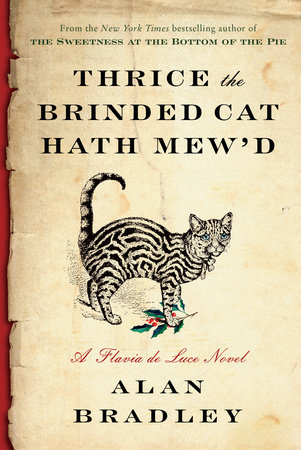
thricebrindledcat
Alan Bradley’s Flavia de Luce mysteries are a delight, and capture readers’ attention as the 12 year-old brilliant chemist returns home from her awful term at a Canadian boarding school. But it’s not the happy homecoming Flavia pictured, for her dear father is in hospital with a severe case of pneumonia. What’s a girl to do, but climb on her bicycle, Gladys, and run an errand for the beleaguered vicar’s wife–which results in her stumbling on the dead body of the recipient. With their awful cousin residing at Buckshaw, and Flavia’s two older sisters even more insufferable, if that’s at all possible, it will be up to Flavia to unravel the mystery, even as she will be shaken to her very core.

If you’ve thought Auntie M only reads novels with female protagonists, you’d be wrong. ratherbethedevil875 Ian Rankin brings back John Rebus, supposedly retired, and Matthew Fox, thrown into Siobhan Clarke’s case when a young drug lord is viciously attacked. Rebus actually has the semblance of a private life, with a girlfriend and dog, and Auntie M loves watching him adjust to these normalcies. But he just can’t let a cold case go, four decades old, and as he pokes his nose in where it shouldn’t be, what is he doing talking to his old nemesis, Big Ger Cafferty? This one brings all the pieces together in inimitable Rankin fashion.

Peter Lovesey: Another One Goes Tonight Monday, Dec 26 2016 

Happy Boxing Day to all, and Auntie M hopes you enjoyed whatever holiday you’ve been celebrating. As we look to the New Year, here’s one last for 2016, and it’s a real winner~

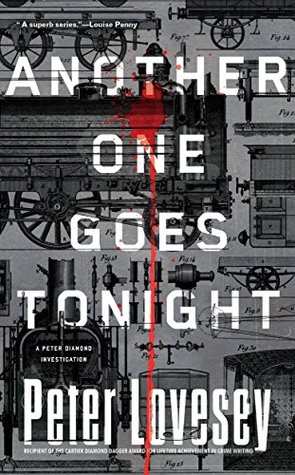
anotherone1
The incomparable Peter Lovesey has been awarded just about every crime prize, including The Lifetime Achievement Award from Strand Magazine, CWA Silver and Gold Daggers, and the Cartier Diamond Dagger for Lifetime Achievement–and he shows no signs of slowing down.

He’s back with his 16th Peter Diamond mystery, Another One Goes Tonight,, with the unflappable Bath detective up to his usual tricks.

Tasked with representing Professional Standards after an accident involving two police officers, one of whom dies at the scene, he discovers the body of an elderly victim of the crash, thrown into bushes at the side of the road. He saves the mans life with his quick CPR, and while investigating the incident, hoping the clear the police driver of fault, Diamond soon becomes convinced that the elderly engineer, still in hospital, is a serial killer.

It’s a fascinating premise as he tries to puzzle out what really happened that early morning between the police car and the elder out on his motorized bike. Most of what he uncovers is a by-product of his investigation and inadmissible. Soon he’s enlisted two of his team members to help him in this side investigation, with very interesting results as they uncover a trail of deaths of elderly people within the past two years who were known to the hospitalized engineer.

Readers will learn about the almost fanatical love some people had for steam engines, collecting memorabilia from their favorite branch and even assigning estates to the National Railway Museum.

But could this love of a bygone era also be the tie to a string of murders?
As well-plotted and crafty as always, with that hint of wry wit mixed into a police procedural. The most clever of puzzles with a highly satisfying ending.

Jane Cleland: The Glow of Death Saturday, Dec 24 2016 

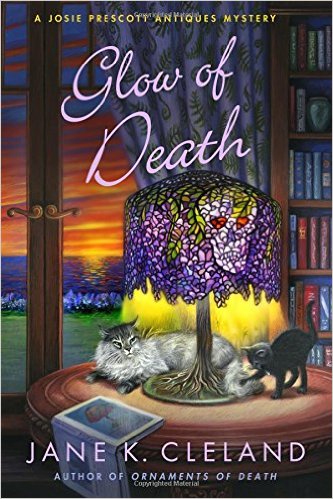
glowofdeath

Jane Cleland’s Josie Prescott Antiques Mysteries have a devoted following with good reason. Her eleventh in the series, The Glow of Death, bring the same meticulous research and detail of the antiques world underlying the action when a rare Tiffany lamp goes missing and murder soon follows.

It’s almost the Fourth of July and warm along New Hampshire’s coast when Josie called to appraise the Tiffany lamp at tony Rocky Point home of the wealthy Towson’s. Met by Ava Towson, Josie is delighted to find the lamp bears all the hallmarks of a real Tiffany lamp, along with a high value. Josie takes the lamp into her care for safekeeping and authentication, and over the next three days, estimates the value at $1.5 million–gulp. She has the film crew she works with come up to NH and film her describing her authentication process for the television show that features her, then later that afternoon returns the lamp.

With her boyfriend, Ty, away on Homeland Security business, Josie is getting ready for her annual 4th barbecue when her best friend, Zoe, enlists her own boyfriend, Ellis Hunter, to help Josie with kitchen prep. Ellis just happens to be the Chief of Police, and is deep into potato salad fixing when he gets a call that Ava Towson has been murdered.

With her husband on his way home from a business trip, Ellis asks Josie to identify the body. They travel to the Towson home, only there’s a catch: the woman dead in the Towson’s kitchen isn’t Ava Towson.

But it sound is confirmed that the dead woman IS Ava Towson and the woman who gave the lamp to Josie to appraise was an imposter. Everything Josie has learned was based on information from this imposter, and the only thing accurate is the authenticity of the pricey lamp, and if the bit filmed for her television show is cancelled, that puts her show in jeopardy, too.

Josie can’t stand the thought of being duped by the imposter, and sets out to find out who had the temerity to trick her in such a horrible way. It will bring her into the line of fire literally.

One of the delights of this series is the information readers glean about the antiques world as they explore the business Josie has built, from the authentication process to the ways experts are used. A delightful addition to the series.

Catriona McPherson: The Reek of Red Herrings; Dandy Gilver #5 Tuesday, Dec 20 2016 

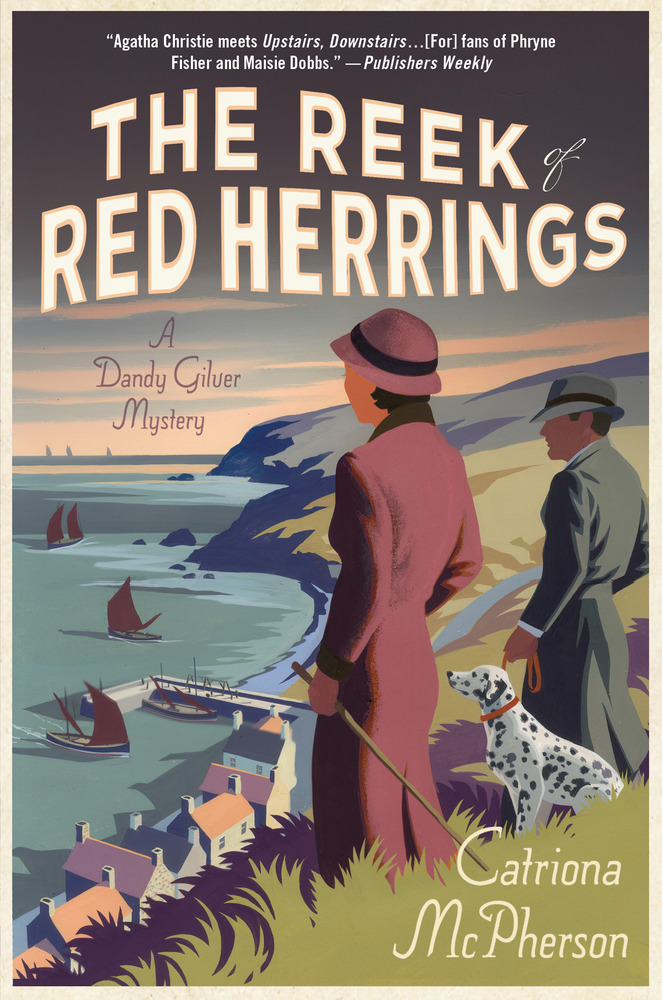
reekredherrings
Catriona McPherson’s fifth Dandy Gilver master, The Reek of Red Herrings, finds the 1930 sleuth and her partner, Alec, headed to the Banffshire coast of Scotland to the tiny fishing village of Gamrie.

Posing as philologists out to garner information on local folklore and the Doric speech patterns, the colloquial language soon gets the better of them as they hide their real aim: to uncover for the local herring merchant how body parts have started showing up in several barrels sent from the area.

They arrive at the rainy and snowy coast the week before Christmas, a high time as the boats are due in, in strong contract to the menacing weather. It’s also the wedding season as the boats return with their unusual engagement customs followed, and soon the two are swept up in the five weddings to take place on the next weekend.

Adding to the bizarre feeling of the area are the two strange brothers who inhabit Lump House on the cliff, a menagerie of stuffed animals in tableau settings that creep out Dandy as much as the boarding house where they stay, with its meager food and drafty rooms.

The duo become adrift in a sea of nonsensical “teenames,” nicknames given to tell people apart when the local custom has so much naming after grandparents that there could be three in a family with the same name. McPherson has done significant research to get the tone and customs down right and it shows.

The wild winter adds to the discomfort Dandy and Alec encounter, and just when she thinks things can’t possibly fall into place, Dandy figures out what’s really happened. But just what should be done about it then becomes the issue.

A satisfying and enveloping mystery that will have Dandy and Alec consulting their own morals before it’s over.

Molly MacRae: Plaid and Plagiarism Sunday, Dec 18 2016 

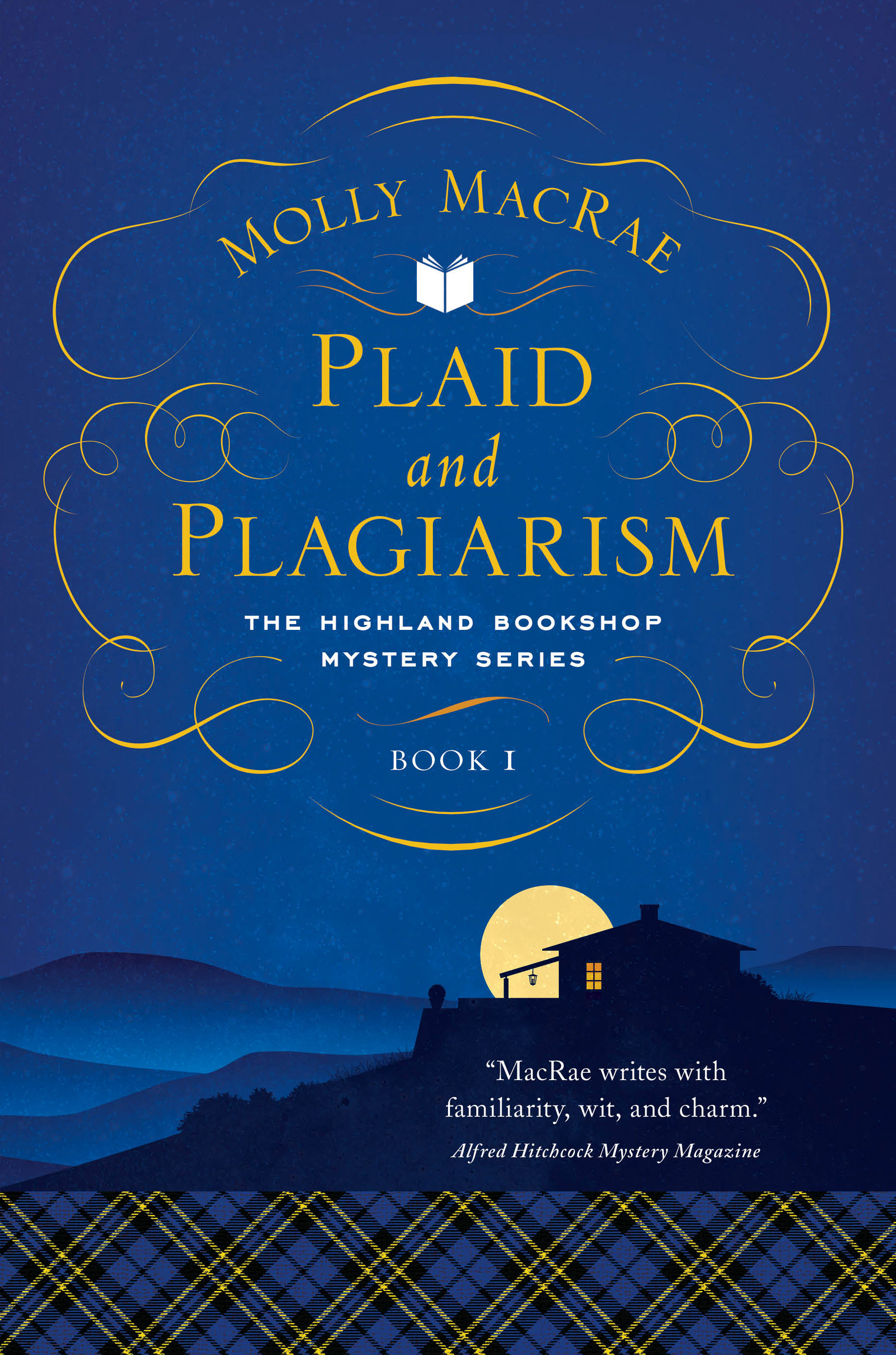
plaid-and-plagiarism-final

What book-lover hasn’t had a least a fleeting dream of owning a bookstore? The idea for Plaid and Plagiarism and the Highland Bookshop Mystery series hatched and grew after I saw an article about a bookshop up for sale.

According to the article, the shop had a thriving business in lovely surroundings—on the west coast of the Scottish Highlands. For me, that was two dreams in one. A bookshop! The Highlands!

I shared the article on Facebook and asked if anyone wanted to join me in a new venture. My question was, of course, tongue in cheek, but several friends and I had fun plotting and planning how we would make it work. The dreams ended up being so much fun, they were too good to waste, so I gave them to four new characters—four women—three Americans and a Scot who’d lived in the States for several decades and wanted to move home.

Years ago I did run a bookstore, and even more years ago I lived in Scotland. So I do have some background for writing this new series. My experiences lack dead bodies, and I’m not sure how I would handle discovering one in my garden shed. But, though felt just a bit bad planting a body where my four women would discover it, I think they acquit themselves reasonably well in their new business and in crime solving. For amateurs, anyway.

Where you can find Plaid and Plagiarism: Independent bookstores: http://www.indiebound.org/book/9781681772561 Barnes & Noble: http://www.barnesandnoble.com/s/plaid+and+plagiarism?_requestid=637814 Amazon: https://www.amazon.com/gp/product/1681772566/ Where you can find Molly: Website: http://www.mollymacrae.com Facebook: https://www.facebook.com/molly.macrae.9 Pinterest: https://www.pinterest.com/MollyMacRae/ Twitter: @mysterymacrae

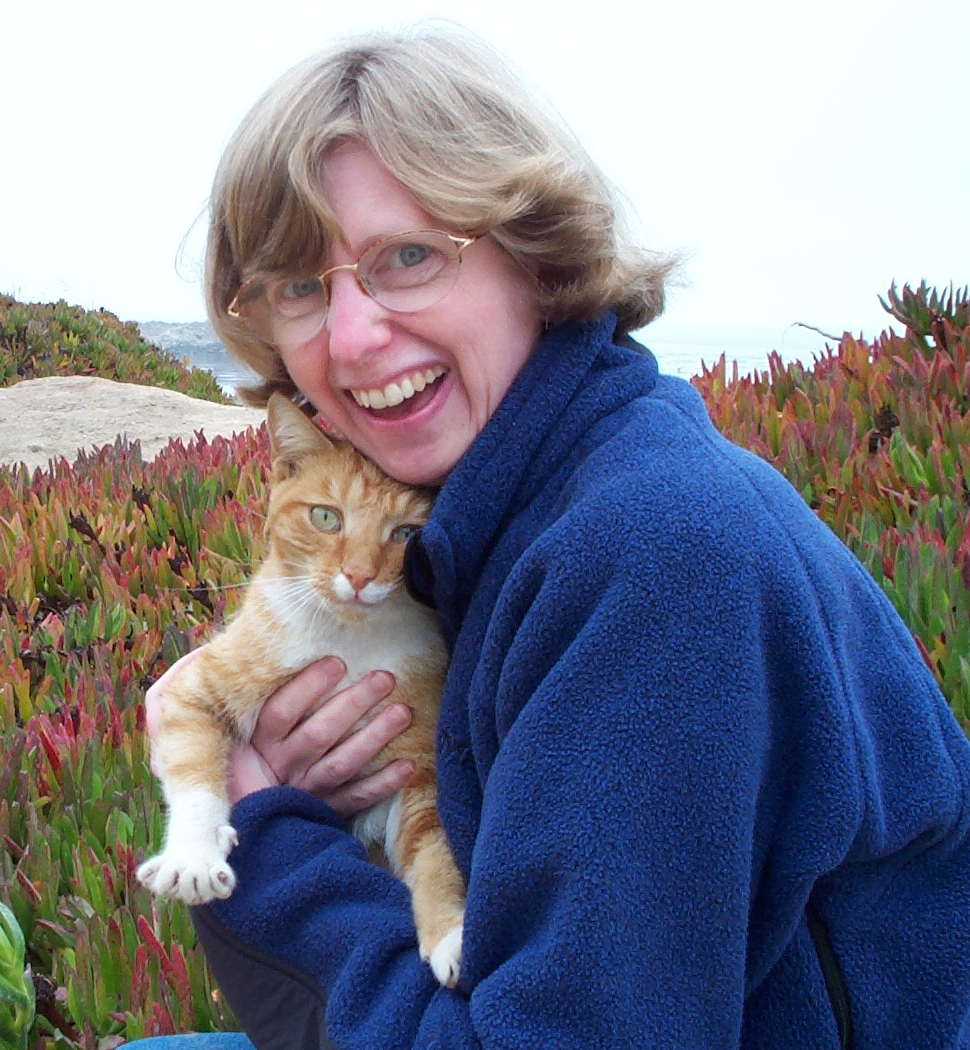
molly-and-cat

The Boston Globe says Molly MacRae writes “murder with a dose of drollery.” In addition to writing the Highland Bookshop Mysteries, Molly is the author of the award-winning Haunted Yarn Shop Mysteries from NAL/Penguin and the stand-alone mystery novels Lawn Order and Wilder Rumors.

Molly’s short stories have appeared in Alfred Hitchcock Mystery Magazine since 1990 and she’s a winner of the Sherwood Anderson Award for Short Fiction. Molly and her family live in Champaign, Illinois, where she connects children and books at the public library.

Auntie M Writes.docx
Open with Google Docs
Displaying Auntie M Writes.docx. Page 1 of 1

Nupur Tustin: A Minor Deception Thursday, Dec 15 2016 

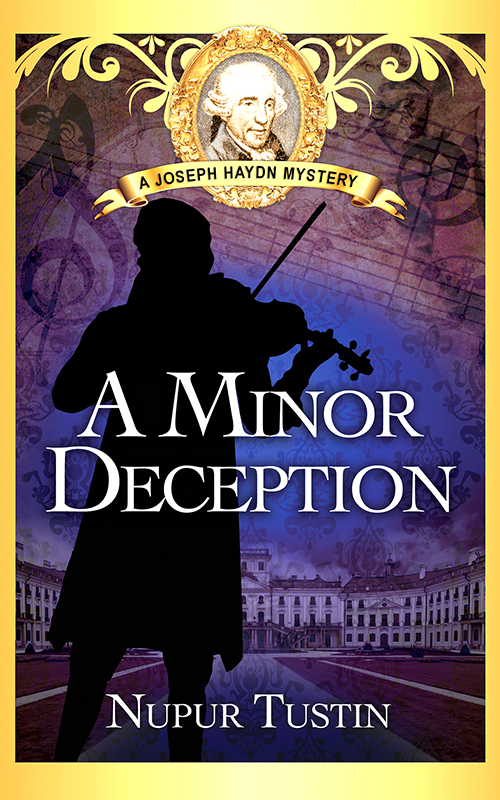
deception_final_500x800
Please welcome Nupur Tustin, who will describe the starting point for her historical mystery starring none other than Austrian composer Haydn:

How Haydn Captured My Heart

Nupur Tustin

Franz Joseph Haydn, the Austrian composer, was born in the tiny village of Rohrau, the son of a wheelwright and his wife. By the year 1766 when A Minor Deception, the first Haydn mystery, begins, he was being hailed as the “darling of the nation,” and was employed by the wealthiest and most powerful noble family in the Habsburg Empire, the Esterházys.

But this amazing rags-to-riches story, inspiring as it is, isn’t what compelled me to choose Haydn as the protagonist of my historical mystery series. The qualities that won me over are quite different.

In the year 1802, seven years before his death, Haydn received a letter from the music lovers of a small German town called Bergen. The musicians in this little town had performed his oratorio—a religious opera—The Creation. The work had been so well-received and enjoyed so much, the town and its inhabitants felt obliged to communicate their delight to the composer.

Now, Haydn by this time was “free of care,” as he put it. He owned a comfortable house in Gumpfendorf, at the time a suburb of Vienna, and was able to afford a good glass of wine and enjoy three or four courses at dinner. He had received medals and honors, and had consorted with “emperors, kings, and many great gentlemen.”

Yet a letter from this obscure town received an immediate response. “It was indeed a most pleasant surprise to receive such a flattering letter from a place where I could have no idea that the fruits of my poor talents were known,” he begins, going on to express his own delight that the work had been so well-received.

This is only one of countless tales of Haydn’s humility, his modesty, and his complete lack of ego even at the height of his success. It gave him genuine pleasure that anyone enjoyed performing and listening to his compositions. It mattered not who you were.

That modesty was accompanied by a strong sense of humor that took no umbrage when he was mistaken for a servant and treated brusquely.

Good fortune may have taken him from Rohrau to Vienna, the musical capital of the Habsburg Empire. But it was sheer diligence that resulted in Haydn’s fame and fortune.

“I was diligent,” Haydn was to say years later. “When my comrades went to play, I took my little Clavier under my arm and went up to the attic, where I could practice undisturbed.”

It took ten long years of grinding poverty before he received employment as Kapellmeister—Director of Music—first to Count Morzin and later the princely Esterházy family.

In those years of living in a dingy attic, without heat, with barely enough money to keep body and soul together, did the young Haydn sometimes feel discouraged, and wonder if his hard work would pay off? If so, what encouraged him to continue?

A passage from the letter of 1802 provides the answer:

Often, when contending with obstacles of every sort that interfered with my work, often when my powers both of body and mind were failing and I felt it a hard matter to persevere in the course I had entered on, a secret voice within me whispered, “There are but few contented, happy peoples here below; everywhere grief and care prevail; perhaps your labors may one day be the source from which the weary and worn, or the man burdened with affairs, may derive a few moments’ rest and refreshment.” What a powerful motive for pressing onward!

What a powerful motive, indeed! Haydn was speaking of the exhausting labor that went into the writing of the Creation. But I like to think that the same voice kept him on his course when as a young man poverty and hunger may have tempted him to look for some easier means of earning a living.

It’s hard work being a writer. The pursuit of any worthy endeavor, in fact, is hard. The road may not be long, but it is arduous. But Haydn’s own diligence, his ability to forge ahead despite obstacles, have taught me to persevere, even in the telling of his story.

He was never an amateur sleuth, although if someone had approached him for help, he would have given it quite willingly. His readiness to help, his humility, and his diligence serve as a moral compass for me. Quite simply, Haydn is my muse.

A Minor Deception is a fun, entertaining mystery. But much of Haydn’s character shines through in the fiction I weave. I hope as you read my novel, the Kapellmeister will capture your heart as he did mine.

nt-headshot
Bio:
A former journalist, Nupur Tustin relies upon a Ph.D. in Communication and an M.A. in English to orchestrate fictional mayhem. Childhood piano lessons and a 1903 Weber Upright share equal blame for her musical works. A Minor Deception is the first in her Joseph Haydn mystery series. Print and e-copies are available on Amazon, Barnes & Noble, iBooks, and Kobo.
Haydn Series: http://ntustin.com
Haydn Blog: http://ntustin.com/blog
Music: ntustin.musicaneo.com

Buy Links:
Amazon Kindle: https://www.amazon.com/dp/B01M4HHNXT?ref_=pe_2427780_160035660
Barnes & Noble: http://www.barnesandnoble.com/s/Nupur+Tustin?_requestid=744712
Kobo: https://store.kobobooks.com/en-us/ebook/a-minor-deception
iBooks: https://itunes.apple.com/us/book/id1164641370

D. J. Niko: The Sarah Weston Chronicles Wednesday, Dec 14 2016 

Please welcome guest author D J Niko of The Sarah Weston Chronicles:
daphne
In Search of Authenticity
A guest post by D.J. Niko

In writing believable fiction, research is imperative. Everyone knows that. But how far should an author go to delight her readers by making scenes plausible and characters authentic?

I’ve always believed that firsthand research is best, even if it comes with a high degree of adventure (or, as is often the case, misadventure), so I try to visit the places I write about (yes, even the remote ones), get to know people of the cultures represented in my pages, and maybe put myself in some unusual situations, just to see what happens. No risk, no reward—right?

As an example, I’d like to share a story about a personal experience that informed one of the scenes in the first novel of The Sarah Weston Chronicles, my series of archaeological thrillers: The Tenth Saint.
In Chapter 7, Gabriel warns the Bedouins about an imminent sandstorm. As a Western man and a scientist, Gabriel knows with mathematical accuracy the storm is coming. The Bedouins do not listen to him, instead pressing toward the oasis so they do not miss their turn in the fertile lands. Sure enough, the storm comes, wiping out the Bedouins’ caravan and brutally claiming lives.

Describing this sandstorm in an authentic, realistic manner came naturally to me, because I had experienced it firsthand. I was with four friends in the Moroccan Sahara, near the Mali border. We had been traveling on camelback for about a week, heading toward an oasis to replenish supplies.

Just before dusk, we saw the cloud approach from the south and knew we were in for a long night. Typical Westerners, we covered our backpacks and camera gear in blankets so that sand would not get in. We had no tents, and there was no cover anywhere in sight, so we built perimeter fences from bed linens, holding the contraption down with sand bags. We were industrious. We were resourceful.

We were scared.

Meanwhile, our Berber camel drivers were calm as could be. Without breaking a sweat, they built a fire and boiled murky water we’d collected earlier from a sand depression. They made tea and cooked some noodles. I shook my head. Who could think of food at a time like this?

The nomads were unruffled because they knew there was nothing they could do in the face of such fury. They couldn’t stop it; they couldn’t hide from it. So they went on with life. Whatever would come, would come, tea or no tea.
The sandstorm did come, and it battered our camp from sundown until four in the morning. It was the longest eight hours of my life. I still recall the constant grit of sand between my teeth and the violent stinging of my eyes as I lay there, in the fetal position in total darkness, waiting for the hissing to stop, hoping we would not be buried alive.

At dawn, as the shreds of our perimeter fence whipped in an errant breeze, we surveyed the damage. We shook pounds of sand off ourselves and searched for our belongings, which had been scattered by the wind. I recall inscribing “LIFE” with my fingernail on my sand-caked arm, in the same way you’d write “WASH ME” on a dirty car. But what I remember most vividly is Mohammed the Berber blowing into the belly of a meager fire, coaxing some flames, as if nothing had happened.

I learned something that day, and it is summed up this way in The Tenth Saint: “The way of the nomad is to accept everything as it comes: there is no anticipation of better days, no longing for the unrequited, no despair for loss.”
judgement
In the second novel of the series, The Riddle of Solomon, the antagonist, Trent Sacks, sits in a boat floating on the Ganges River in Varanasi, India. It’s late at night and all is dark, save for some strung-up lights illuminating the burning ghats. Then a platform on the edge of the river erupts with light and sound as Hindu priests announce the beginning of the puja ceremony by blowing into a conch shell. Here’s an excerpt from that scene:

The seven identically robed pujaris sat in lotus position on the platforms in front of Dasaswamedh Ghat, moving brass bells to and fro with slight movements of their wrists. The bells rang in practiced unison, their clear, melodic sounds like an entreaty imploring the heavens. They faced the Ganges, directing their worship to the goddess of the river rather than to the thousands of dark faces that crowded the stepped stone terraces behind the platforms or spilled out of the windows of the ornate Nagar buildings.
With movements as synchronized and fluid as the rhyme of a poem, the priests stood and took up brass diya lamps filled with burning incense coals. The tolling of the bells persisted, now joined by drumming, deliberate as a heartbeat, and a soft monotone chant. The pujaris mirrored one another as they waved the lamps like slowly swinging pendulums, raising great clouds of smoke that glowed copper under the golden lights. The faithful bowed their heads as the smoke wafted toward them, anointing them with the sweet fragrance of sandalwood.
Sacks shifted his gaze downriver. A cow, eyes wide open and bloated with death, floated past, and he regarded it with indifference. In the distance he could see a plume of smoke rising from Manikarnika Ghat and he felt the familiar pangs of arousal stir within him. Another cremation, another soul being released unto the ether. Funeral pyres were lit hundreds of times every day, from early morning until well into the night. In a country whose population exceeded a billion, there was no shortage of demand for the services of the burning ghats, nor for the delivery from suffering.

I still remember fondly my time in Varanasi: the pujaris performing exactly those movements, the woody scent of the incense, the marigold and candle offerings floating downriver, the smoke rising from the pyres of the burning ghats, the dead cows floating in the holy river. The dichotomy of Varanasi, which I’ve become well acquainted with over six visits, pits chaos with spirituality, life with death, filth with beauty. It’s not comfortable to travel there—both from a physical and emotional standpoint—but it does offer an education for those who go with eyes wide open. And that makes all the difference in crafting scenes, building authentic setting, and bringing characters to life.

For my next book, the fourth Sarah Weston adventure, I’ll be traveling to Morocco and the American Southwest, looking for the genuine soul of these places—and hoping to stay out of trouble!

Thank you, Marni, for the opportunity to contribute this post!

For more information:
D.J. Niko website
For more information on D.J. Niko’s books:
The Tenth Saint
The Riddle of Solomon
The Oracle
The Judgment
Find D.J. Niko on Twitter and Facebook.

DAPHNE NIKOLOPOULOS – Biography

Daphne Nikolopoulos, photography by Lauren Lieberman / LILA PHOTO

Daphne Nikolopoulos, photography by Lauren Lieberman / LILA PHOTO

Daphne Nikolopoulos in an award-winning journalist, author, editor, and lecturer. Under the pen name D.J. Niko, she has written two novels in an archaeological thriller series titled The Sarah Weston Chronicles. Her debut novel, The Tenth Saint (Medallion Press, 2012), won the Gold Medal (popular fiction) in the prestigious, juried Florida Book Awards. Her follow-up release, The Riddle of Solomon, continues the story of British archaeologist Sarah Weston as she seeks the relics—and mystical secrets—left behind by the biblical King Solomon in remote Israel.
Daphne’s newest releases include The Oracle, book 3 in The Sarah Weston Chronicles (November 2015), and The Judgment, which is set in Israel and Egypt in the tenth century BCE (May 2016).

In addition to writing fiction, Daphne is editor in chief of Palm Beach Illustrated magazine and editorial director of Palm Beach Media Group. Prior to that, she was a travel journalist who logged hundreds of thousands of miles traveling across the globe, with emphasis on little-known and off-the-beaten-path locales—many of which have inspired her novels.

Daphne frequently lectures about her research on the ancient world. She is an instructor at Florida Atlantic University’s Lifelong Learning Society, teaching on the subject of archaeology. She has also spoken to audiences at the Jewish Community Center of the Palm Beaches’ Academy for Continuous Education, and several libraries and private groups throughout Florida.
Born and raised in Athens, Greece, Daphne now resides in West Palm Beach with her husband and twin son and daughter. You can find her on the Web at djnikobooks.com and connect with her on Facebook (AuthorDJNiko) and on Twitter: @djnikobooks.

Matt Marinovich: The Winter Girl Saturday, Dec 10 2016 

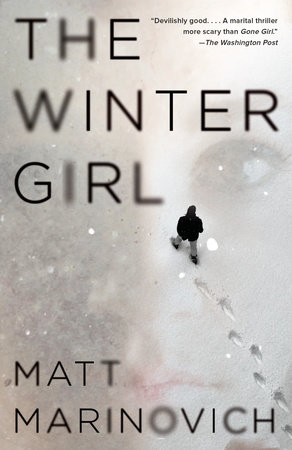
winter-girl

Just when you think you know what’s going on in Matt Marinovich’s thriller, The Winter Girl, you realize you really don’t–not by a long shot.

The isolation of the Hamptons in winter is the perfect backdrop for this tale of a young couple, Elise and Scott, staying in her father’s home as they wait for the old man to die of cancer.

Victor is not a nice person, Scott always thought, and readers will readily agree with him as more and more of his actions are revealed over the weeks and then months the couple spend catering to him. With his photography career stalled and Elise’s speech therapy clients all on hold, boredom sees them sneaking into the vacant house next door.

But is it really vacant? And what does all that blood signify? A twisted and twisting psychological tale that will have the hairs standing up on the back of your neck. And then some. Out in paperback on the 13th. Chill up someone’s stocking with this one!

James L’Etoile: At What Cost Wednesday, Dec 7 2016 

at-what-cost-cover

James L’toile calls on his vast experience in the criminal justice system to debut what Auntie M hopes is the start of a new series, At What Cost.

Set in Sacramento, he introduces Detective John Penley and his new partner, late of Internal Affairs and therefore proving her worth, Detective Paula Newberry. Facing a puzzling case will either cement or destroy their budding relationship, when trunks of headless and limbless bodies of gang members start appearing.

This is not your usual serial killer at work, and there soon becomes a personal component for Penley relating to his ill son that ties the investigation together and points squarely at the detective, for his son is on a kidney transplant waiting list, an organ he desperately needs.

Far from a simple manipulation of the supposedly-secure integrated donor system, there’s more at stake here as the two detectives dig deeper and the taunting of the killer rises. Can Penley use his son’s illness to flush out this maniac before he kills again? Or should he do a deal with the devil that might save his son’s life?

L’Etoile gets gang culture just right, along with the deranged personality of the demon his detectives seek. He knows the lie of the land in a police station, too. His work includes associate warden in a maximum security prison, director of adult parole, a primary hostage negotiator, and a national consultant on prison-based rehabilitation programs. This extensive experience runs the gamut of what humans are capable of doing to one another, and L’Etoile puts that knowledge to very good use in making this one of the most realistic and heartfelt crime thrillers she’s read in a good while.

The characters are complex and the pacing frenetic as the urgency to find the killer ramps up the action as a young boy’s life hangs in the balance. A powerful debut with a thriller of a police procedural at its heart. Readers will be waiting for Penley and Newberry’s next case.

« Previous PageNext Page »