More Catching UP #2: Historicals Wednesday, Oct 12 2016 

The next part of Auntie M’s catching up from her reading-while-recuperating summer blitz is here! These are historical, set in different eras and sometimes different countries. All are great reads for your fall enjoyment.

spicebox

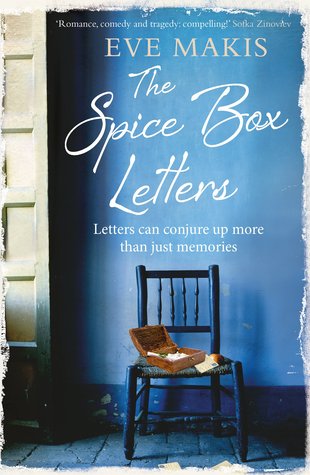
Eva Makis won the Aurora Maradiganian Gold Medal form the Armenian Geoncide Museum-Institute for The Spice Box Letters.

This is a mix of eras, 1985 and 1915, alternating the voice in 1915 of Mariam and in 1985, that of her grand-daughter, Katerina. It’a also a story of how love, culture, food and memory can survive atrocities, and how family ties can make for powerful redemption.

Katerina’s inheritance of her grandmother’s letters and a journal, written in Armenian and kept in a handmade spice box, spark her interest in her heritage. Her grandmother refused to talk about the past, but Katerina, in a visit to Cyprus, does her own investigation to lay the ghosts of the past to rest.

What she finds makes for fascinating and sometimes tragic reading, as the story of the Armenian Genocide becomes tangled with Mariam’s life. There is humor along with the Armenian food and culture.

Once the reality is known and the mystery is sorted, there will be reunions and tears, but there will also be a future filled with new love.

deathavidreader

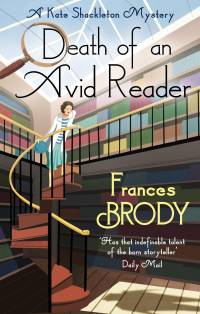
The sixth Kate Shackleton Mystery proves that there’s no stopping Frances Brody and her sleuth in Death of an Avid Reader.

Widow Kate is making something of a reputation for herself as an investigator. Think of a more genteel Phrynne Fischer, in the same time period, only set in England instead of Australia.

When Kate is engaged by former London society beauty Lady Coulton to find her illegitimate daughter, given up for adoption 20 years ago, she soon hits a dead end.

Her attention focuses on a case closer to home after she agrees to take part in a ceremony to expel the ghost of a dead librarian. That’s when the body of a respected professor is found in Leeds Library and Kate wonders if the two cases can be linked. Finding a sick organ grinder and his monkey living in the basement, the police make him their prime suspect, but Kate has other ideas.

Her investigation takes her from respectable drawing rooms into the grimy back streets of Leeds, and will lead her into physical danger as she uncovers a deeply buried past crime. And don’t forget that monkey!

Accomplished and complex, filled with accurate period details and enough twists to keep any mystery reader turning pages.

shatteredtree

The mother-son writing duo Charles Todd return with their eighth Bess Crawfod mystery featuring the WWI nurse who finds herself on the wrong side of the bed in The Shattered Tree.

In France at work after a brief leave, a sniper’s bullet takes Bess out of circulation temporarily. Recovering slowly, her mother’s even allowed a brief hour’s visit before Bess is moved to Rouen for newfangled X-rays after a fever spike.

A bit of missed button in her wound is the culprit, but she’s not fit for work yet, and is sent to Paris to a convalescent clinic. This fits in with her plans completely, for it’s here that another patient has also been sent: a man she’d treated who spoke German but was found wearing a French officer’s uniform.

Told he’s from the Alsace-Lorraine area should explain his ability to speak German. But Bess is concerned about where his sympathies lie, and when she runs across him in Paris, she has to decide whether to pursue his true identity, and at what cost.

Another compelling entry in the series.

thesehonoreddead
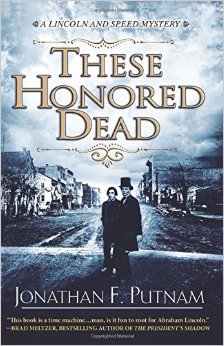
Jonathan Putnam draws on his own trial experience in addition to his wealth of knowledge about Abraham Lincoln to pull off a most amazing debut mystery in These Honored Dead
.

He introduces a newly-minted lawyer in Lincoln, also newly arrived in Springfield, and sharing bedspace (yes, literally the same bed as those with spaces were rented out in 1837) with Joshua Speed above the man’s general store. Speed is the book’s narrator, a nice touch that allows Lincoln to be seen from his point of view.

Lincoln accompanies Speed when he’s called out to the site of a murder. It’s to the home of the Widow Harriman, a fellow store owner in the next hamlet, and Rebecca Harriman had caught Speed’s eye several months before. Their brief affair has left Speed hoping for more.

Therefore it’s no surprise that when Rebecca’s niece is found murdered and she’s the prime suspect, that Speed and Lincoln begin an investigation to clear her and find the real murderer of her young ward.

But more deaths occur before it’s over. There will be threads to do with slavery and a courtroom scene as Lincoln finds his footing before it’s all ended. The accomplished start of a new historic mystery series, this is chock full of period details and customs that most readers won’t be aware of, written in the style and language of the time.

teetotaled-cover

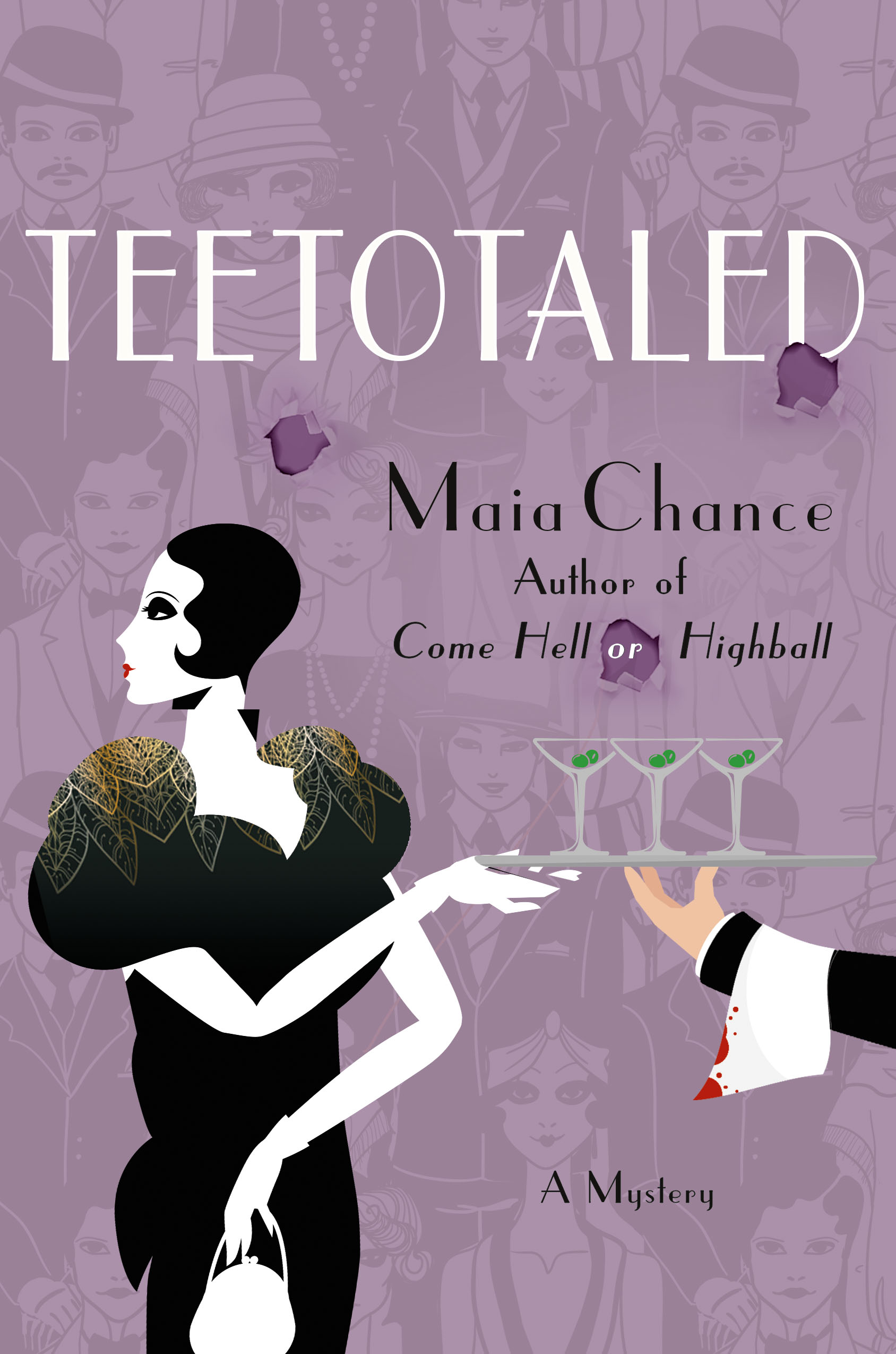
Maia Chance writes the Fairy Tale Fatal Mysteries, but last year she debuted her second series, the Discreet Retrieval series, which started with Come Hell or Highball and continues with Teetotaled.

Set during Prohibition New York, the investigating duo of former socialite Lola Woodby and her Swedish cook, Berta, have set up shop in Lola’s dead husband’s bolthole–or would secret love nest be more accurate?

But setting up a new business in these dicey times isn’t easy, and they take what cases they can. The Discreet Retrieval Agency promises no job is too trivial, so when Sophronia Whiddle appears at their door, requesting what seems an easy job, one look at their bank account has the two heading to the health farm where Grace Whiddle is staying.

Their goal is to retrieve Grace’s dairy so any compromising information would not come to light as she is to be married shortly to a senator’s son. The promise of their $500 fee once the diary is delivered is a healthy inducement, despite Lola’s misgivings.

There are several catches: this health farm is run by Lola’s brother-in-law, for a start; Lola doesn’t want her mother to know of her work. Things quickly go from bad to worse when Grace leaves, along with her diary, after her future mother-in-law is found murdered on the grounds. Soon the ladies have a new client and new case: to find the murderer. There will be more death, a tie in with history, and the breakup of the agency before it’s all sorted.

Chance’s love of all things vintage shines through, with a nice dollop of humor.

mostnovelrevenge

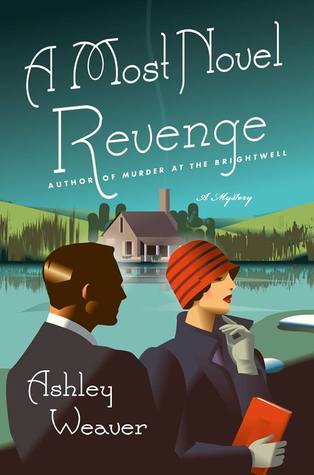
Ashley Weaver’s Amory Ames series has developed a nice following after the previous two entries. The third, A Most Novel Revenge, brings us into the 1930s.

Amory and husband Milo, together happily for a change, are planning a winter trip to Italy when her cousin Laurel intervenes. They are needed at Lyonsgate, the English country estate of Reginald Lyons.

The house is filled with a nicely eccentric cast, including a notorious socialite, Isobel Van Allen, whose visit at the house has everyone on edge.

Isobel’s first book, The Dead of Winter, was a fictionalized version of a murder that took place at Lyonsgate. Now she’s back to write a sequel and tell all about that night, and except for Amory and Milo, everyone else was present during that murder–and many of them have been Isobel’s lover.

Of course it will be Amory who finds the dead body and comes into the sights of the inspector on the case. But it will also be Amory who untangles long-held secrets from the past to break the case.

A classic country house English mystery.

Laurel Peterson: Shadow Notes Sunday, Oct 9 2016 

Please welcome Laurel Peterson to discuss psychic gifts that appear in her new book, Shadow Notes:
Shadow Notes Cover compressed

THE USE OF PSYCHIC GIFTS
by Laurel S. Peterson

Right now, I want a crystal ball to tell me who the next U.S. president will be. Then, I can decide if I need to pack my bags and move to a small tropical island.

Unfortunately, I haven’t been gifted psychically, unlike Clara Montague, the protagonist of my mystery novel, Shadow Notes. That’s one of the reasons I chose to write a character who had intuitive gifts; I was curious—and I think a lot of other people are, too.

Clara has dreams that give her pieces of a puzzle—images of her mother or a friend in danger, symbolic colors, animal guides. She has to take these clues and piece together from them the solution to the puzzle. She has a clear reason for wanting to know what her dreams mean, but for the rest of us, what does knowing mean to us?

When people talk about what they want to know, it rarely has to do with world events, but instead with lottery numbers, their love lives and their health. We want to know if we will suffer pain and find happiness. The answer to those questions is always yes.

I suppose it’s the specifics that torment us. Will being happy mean finding my one true love or having a cat? Will I be rich enough to buy an island or will I have a house in the suburbs or will I never get out of debt? Will I be made to suffer greatly or only a little? And who can measure suffering?

I don’t think psychics can give us the answers we want. And I don’t want to believe my actions can’t change the future. In fact, I would suggest most of us know already the answers to the questions we ask. I have a friend whose psychic has been telling her for years that she needs to write. I have another friend whose psychic told her she had been deeply wounded. Neither of them needed a psychic to tell them those things. They knew already, as did most of their friends. But being told by a stranger was affirming in a way that sometimes a friend can’t be.

Then there was the “psychic” working the coffee bar in a wealthy town near me doing grief counseling. My (now) husband engaged him in discussion one day shortly after losing his first wife, and the man never once mentioned my husband’s obvious emotional trauma.

I’m not saying psychics can’t surprise us, or turn us in a direction we might not have seen before, or warn us. But perhaps the most present benefit of seeing someone we believe can tell us the future is that she reaffirms the version of ourselves we hold in our secret hearts, the self we want to be but haven’t yet found the courage to put forward.

What do you think? Do you believe in or visit psychics yourself? What advantages have you gained from this? Or perhaps you yourself are psychic—and can demolish my theories (and tell me the outcome of the election)! I’d love to hear from you—and thanks so much for reading!

About Shadow Notes:
Clara Montague’s mother Constance never liked—or listened—to her but now they have to get along or they will both end up dead. Clara suspects she and her mother share intuitive powers, but Constance always denied it. When Clara was twenty, she dreamed her father would have a heart attack. Constance claimed she was hysterical. Then he died.

Furious, Clara leaves for fifteen years, but when she dreams Constance is in danger, she returns home. Then, Constance’s therapist is murdered and Constance is arrested.

Starting to explore her mother’s past, Clara discovers books on trauma, and then there’s a second murder. Can Clara find the connection between the murders and her mother’s past that will save her mother and finally heal their relationship?

You can purchase Shadow Notes at: barkingrainpress.org/shadow-notes/ or at Amazon: https://www.amazon.com/Shadow-Notes-Montague-Mystery-Mysteries/dp/1941295452

Anita Hughes: Christmas in Paris Thursday, Oct 6 2016 

christmasinparis_fc
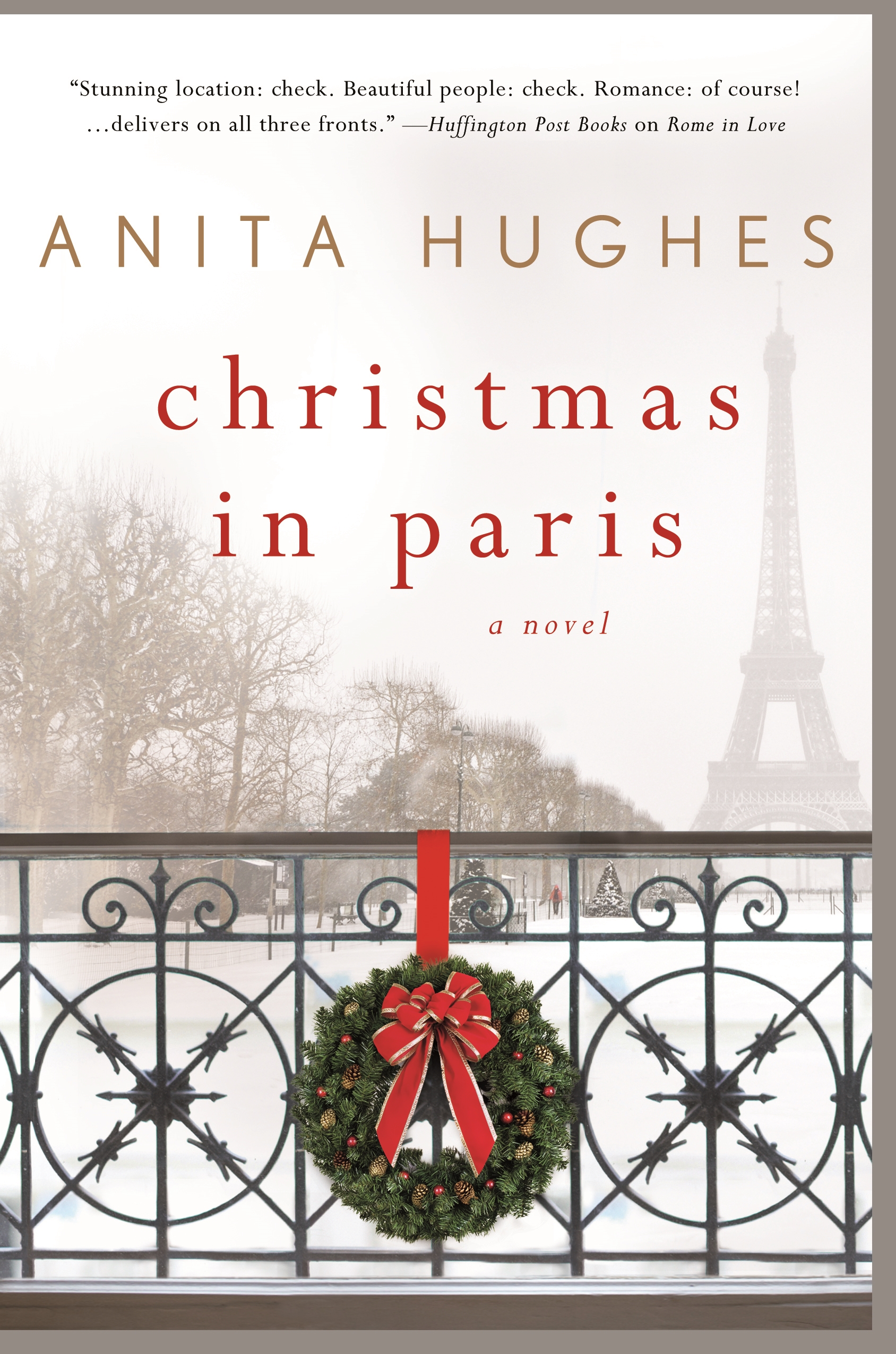
Auntie M wants to travel with Anita Hughes when she researches her books. With a penchant for combining wonderful settings in her previous books (Lake Como, Rome in Love, Santorini Sunsets, et al), Hughes makes those places spring alive with her mix of high-society settings and romance.

From time to time, Auntie M veers away from crime to give readers a chance to see what else is out there, and what else is a holiday treat Hughes is serving up this time in Christmas in Paris. Talk about Christmas in October! This one will be in the stockings of several of Auntie M’s friends for sheer delight. It is unabashedly a hearty romance with a fairy-tale bent, set in the City of Light, and while “La Ville Lumière” really refers to the City of Enlightenment, it’s also divine to be amongst this most romantic capitol at the holiday time.

Isabel Lawson may have the kind of brain that can compute calculus spreadsheets for fun, but the banking executive has a rocky road behind her in the romance department. She’s cancelled her wedding three days before the big winter event, and this is her second broken engagement. Her very tolerant Main Line Philadelphia parents, especially her mother, seem to understand Isabel gets numbers in a way she doesn’t distinguish between romantic love and true love.

In a gesture that shows he wasn’t a bad guy, her ex Neil has told Isabel to use their tickets and honeymoon stay at the Hotel de Crillon herself. Auntie M and Doc had a lovely evening at the Crillon on one of our own Paris trips, and Hughes’ descriptions of the elegant lobby and restaurant took her right back to that special evening. But then they’d returned to their tiny guest room with the bathroom on a different floor, while Isabel has an 800 square foot suite with heated marble floors all to herself.

One of Isabel’s first acts upon arriving is to check out the magnificent view from her balcony, filled with holiday lights and bustling shoppers. She’s convinced herself she’s made the right decision a week ago to cancel the wedding–and then realizes she’s freezing cold.

Only the balcony door has locked shut behind her. What’s a girl to do? She hurls one shoe after another (Ferragamo’s, of course) at the balcony door to the next suite. When the door finally opens and reveals a rather scruffy young man who promises to call Housekeeping to let Isabel into her suite, she soon finds out his fiancé left him for an Australian cricket player.

What happens next combines the best tour of French food and history, Paris museums and sights, and more of that haute-couture, as Isabel cements her friendship with Alec Braxton, a children’s book illustrator, even as she tries to find the the French aristocrat a fortune teller has told her she will marry. Somehow the originator of Gus the Cocker Spaniel books doesn’t seem to fit the bill.

Readers will be captivated by the way Isabel, wealthy in her own right, can spend money on pricey evening gowns in her quest to find her French count, while still enjoying all that Paris has to offer with Alec on a picnic. And Alec has his own ghosts, besides that of his broken engagement: French law means if he’s not married by a certain date, his mother will lose the home she loves. And that seems a certainty if his wicked stepsister has anything to say about it.

How it all works out is half the fun of getting to an ending that won’t surprise the reader but will delight them. The attention to detail is wonderful, and Auntie M can see many more trips to the romance that is Paris being booked.

Sharon Bolton: Daisy in Chains Tuesday, Oct 4 2016 

daisychains

Sharon Bolton’s Lacey Flint series and stand-alones have in common their ability to hold the reader’s attention while comprising riveting crime novels of suspense.

Daisy in Chains is Bolton at her finest, bringing an original plot to the mix in this twisty tale where each and every detail may have more than one meaning. It’s a masterful blend of sleight of hand and at the end, the reader will understand just how good a plotter and writer Bolton is–and clamor for her next outing.

We are introduced to Maggie Rose, the blue-haired writer and attorney whose specialty is reversing convictions for murderers. The books that come out of this have given her a nice house in the country, even while she shuns publicity and appears to be a loner.

Then she’s asked to investigate the case of good-looking doctor, Hamish Wolfe, in jail for three or four murders, depending on who’s counting. What the victims all have in common is their body style, larger women whose heaviness has often caused them issues.

While an undergrad in Oxford, Hamish had a relationship with a heavy woman. There is the suggestion he filmed himself and his lover having sex, but the video has vanished, as did his girlfriend.

The police seemed to think this was reason enough for his suspicion when the newer murders occur and each woman was heavyset, with their bodies found in caves Wolfe is familiar with. They are his “type.” Forensic evidence places one of the dead woman in his car. Game over.

Maggie agrees to see Wolfe but is cautioned by the detective who put him away, Pete Weston, that Wolfe is a dangerous, charismatic character. Stacks of letters from woman who have fallen for his charms from afar arrive at his prison at the Isle of Wight daily. A group of misfits headed by his mother have formed a group to try to get his conviction overturned.

Maggie isn’t certain at all that she wants this particular case, but finds herself drawn in. And then someone breaks into her house and leaves a strange message: He love me.

Weston seems attracted to Maggie, a nice subplot as he’s going through a divorce and the man his own wife has left him for just happens to be his boss.

There’s a lot here and close readers will still be surprised at the twisted ending. Bolton successfully explores issues of body image as the tension heats up quickly and stays there. Life in prison, body image issues and bullies, murder and mystery: it’s all here in letters and emails exchanged between various participants; and in the wonderful scenes between the well-drawn characters. Highly recommended.

Joyce Tremel: Tangled Up in Brew Sunday, Oct 2 2016 

Please welcome Joyce Tremel, who will describe how she came to be writing cozy mysteries~

tangled_up_in_brew

If someone had told me even ten years ago that I’d be writing cozies, I’m not sure I would have believed them. Back then, I was the part-time secretary for my local police department. The book I was writing was more of a police procedural, and my main character was an ex-cop who taught martial arts.

It was definitely NOT a cozy in any way, shape, or form. It made sense to me to “write what you know.” I knew cops and I knew martial arts—I had a second degree blackbelt in Taekwondo.

Then in 2008, I was let go from that job and I wondered what to do next. Did I find another part-time job? Or should I take the opportunity to write full time and see what happened?

Fortunately we didn’t need the tiny bit of income I’d had so I chose the latter and started a new book. The new story featured a police secretary named Irma Jean. She was a bit of a smart aleck. I let myself write without putting a label of “procedural” or “cozy” or anything else on the book. I just wrote the story.

When it was finished I sent out queries and an agent liked it enough to work on revising it with me. She had me restructure the book and soon it was ready to submit to publishers.

Except . . . she dropped a bombshell on me. She was leaving to take her dream job with a publishing company. Eventually I found another agent who started submitting the book. Then she left agenting to go back to school, but the good news was another agent at the same agency took me on. Whew.

To make this long story a little shorter, In Spite of Murder ended up on the desk of an editor at Berkley. She liked the story but the book wasn’t cozy enough for their line. She liked my voice and wanted to know if I’d be interested in writing a cozy.

Well, YES.

I’d been reading a lot of cozies and I realized deep down that was what I wanted to write. That was the genre I had the voice for. I just had to figure out what my book would be about.

I didn’t do crafts. I did help hubby with some home improvement type things, but there were already cozies that covered that topic. I tried to think up unusual occupations, but it seemed like most had been done. It finally dawned on me ( I may have been drinking a beer at the time) that there were no cozies with a craft brew theme.

Max O’Hara, my protagonist, would be a female brewmaster and I’d set it in my hometown of Pittsburgh. She’d have five older brothers and her dad would be a homicide detective. Her romantic interest would be her childhood crush—the best friend of one of her brothers.

I wrote a proposal for what I was calling the Brewing Trouble Series. The proposal included a synopsis of the first book, To Brew Or Not To Brew, plus ideas for following books. I sent the proposal along with the first three chapters to my agent. The rest, as they say, is history.

And now I’m launching the second book in the series, Tangled Up in Brew. I really hope yinz guys (as we say in Pittsburgh) will give Max O’Hara and her friends a try. You won’t be disappointed!

Joyce Tremel was a police secretary for ten years and more than once envisioned the demise of certain co-workers, but settled on writing as a way to keep herself out of jail.

Her flash fiction has appeared in Mysterical-e, and her non-fiction has been published in the Pittsburgh Post-Gazette and the Pennsylvania Chiefs of Police magazine. Her debut novel, TO BREW OR NOT TO BREW (December 2015) was nominated for a 2015 Reviewers’ Choice Award for best amateur sleuth by RT Book Reviews. The second book in the series TANGLED UP IN BREW (October 2016) has been chosen as a Top Pick by RT Book Reviews. The third book, A ROOM WITH A BREW, is tentatively scheduled for release in October 2017.

Catching Up #1: Thrillers and Out of US Friday, Sep 30 2016 

Auntie M is still trying to catch up on reviews of books she’s read while recuperating from extensive back surgery. She’s finally been given the go-ahead to sit at her laptop for longer periods of time, and boy are there a LOT of books to tell you about! So she’s going to break these longer review days into several postings to catch you–and her–up.

These reads are perfect for that swing time when you’re getting used to the change in seasons, if it ever comes. Or for those nights when there’s nothing on television that sparks your interest. Or waiting for an appointment. Or–well, for Auntie M, reading is something she does in all of these places. And then some. She usually has two books in progress at all times and brings at least one with her wherever she goes. WHEREVER she goes. Think about it . . .

She’s grouped these into general categories. Here are Thrillers and Out of the US:

First up are thrillers:
hardcoldwinter
Glen Erik Hamilton’s Past Crimes won the Anthony for Best First Novel the other night at the New Orleans Bouchercon Mystery Convention. His follow up, Hard Cold Winter, shows why he’s an award winner you’ll be hearing more and more of as his Van Shaw series, featuring the former Army Sergeant Ranger, remains gritty and powerful.

The vigilante expects to find a missing girl in the Olympic Mountains when he searches the woods as the behest of an old friend of his grandfather’s. Instead he stumbles across a ghastly murder scene, and this one has a victim whose family is one of Seattle’s rich and famous.

He will encounter an old friend, Leo, who brings his own trouble, as Van tries to contain his own PTSD and figure out his relationship with his girlfriend, Luce. Then a bomb goes off at his house, and when more people are murdered, the detectives are eyeing Van. When betrayal comes in an unexpected form, all bets are off.

For Jack Reacher fans, this is fast-paced action with an unexpected ending.
redrighthand

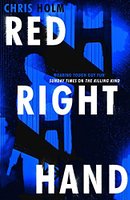
And a second Anthony winner, this time for Best Novel, beating out the likes of Louise Penny, Catriona McPherson, Hank Phillippi Ryan and Matt Coyle, is Chris Holm’s The Killing Kind.

Following up on that debut, Special Agent Charlie Thompson’s newest case starts off on an eerie note in Red Right Hand. Tourist video has captured a terrorist attack on the Golden Gate Bridge, but that’s not all the video reveals. It also shows the image of Frank Segreti, who was thought to have been blown up after turning against the organized crime mob known as the Council after giving away their secrets.

But Charlie’s racing against another element as he deals with both the terrorist attack and the idea of Segreti: a hit man on his way to San Francisco to join in the action.

Unrelenting and hard hitting, easily gulped down, and with a cinematic feel as it all unfolds.
thrillkill
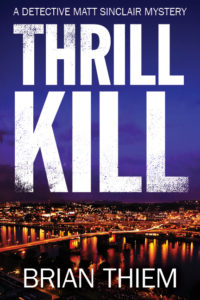
Booklist called Brian Thiem’s debut Red Line “a top-notch new series” with good reason. His followup, Thrill Kill
continues the promise of the Matt Sinclair series.

The Oakland homicide detective’s newest case starts when a woman murdered in a particularly horrific way is found hanging from a tree–and Sinclair recognizes her. He’d arrested her as a teen runaway a decade before.

Dawn Gustafson died a particularly awful death, and the fact that she was a prostitute doesn’t matter to Sinclair or his partner, Cathy Braddock. They’re sworn to find justice for Dawn, no matter where it leads them. Most of Dawn’s clients don’t want their names to be known,making their investigation more difficult.

They will both be surprised where that is before it’s over. Once the killer makes himself known, Sinclair must find out Dawn’s secrets even as he confronts his own.

An accomplished and intricate police procedural.
security
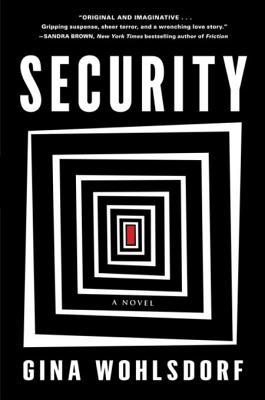
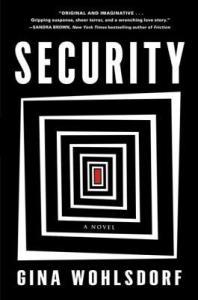
Gina Wahlsdorf’s Security brings a new dimension to thrillers with a strong debut that close readers will find pays a nod to many literary influences, including Stephen King, Poe and Auntie M’s own fave, Daphne Du Maurier.

Manderley is the most of everything a hotel can be in Santa Barbara: most luxurious, most exclusive, and most security conscious. It’s a few days until their grand opening, and readers have the dizzying effect of watching the action on multiple floors, from the rose garden to the ballroom’s champagne fountain, from the hotel manager covering every detail to the murderer in room 717.

Yes, there’s been a murder and the gore is only starting. The twists are scary and come at the reader in a fast and furious matter that rivals the best of Hitchcock with its omniscient narrator. Original and creative.

We turn now to several set outside the US and we head to Chile first.
face-blind

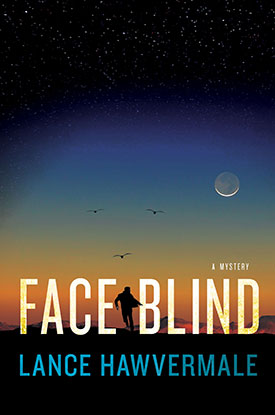
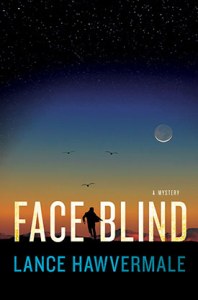
Lance Hawvermale’s Face Blind is set in Chile’s Atacama desert, a bland, lifeless place that’s made more bland by his protagonist’s inability to distinguish people by their looks due to prosopagnosia.

Astronomer Gabriel Traylin sees a murder happen right before his eyes when he steps out to have a cigarette. He races inside and has colleagues call the police, but by the time they arrive, the dead body has been moved, leaving only a few blood drops behind. Due to his condition, he’s viewed as a nutcase, unable to even give a description of the dead man.

Gabe has taught himself to focus on people’s voices and their clothing and shoes to recognize them again. He will need these skills when a series of mutilations in the area make him the police’s prime suspect.

He must also trust in strangers whose faces he can’t recall, including a lovely young woman, her twin brother with Down’s syndrome, and a novelist they seek. How these disparate threads come together in a wholly satisfying way is part of what makes this thriller so readable.

adamsrib
To Italy, with Antonio Manzini, riding on the success of Black Run. He returns with Deputy Police Chief Rocco Schiavone in Adam’s Rib
, with Rocco still banished from Rome to the small town of Aosta.

Rocco is a strange but endearing character, full of negatives, hearing the voice of his dead wife, trying to move on in a relationship–and despite the help of one officer and one inspector he trusts, he’s decided the rest of his police squad are simply idiots. He’s also corrupt himself, but don’t let that deter you.

The case opens when a cleaning woman finds her employer hanging from a chandelier. Despite the original assessment of suicide, the messed up kitchen and missing items from the house leave Rocco convinced Esther Baudo was murdered.

That’s when the highly unconventional detective swings into action. An ending twist will surprise readers, as will the actions of this police chief whose methods are so unusual that the satire shines through with a hint of Italian noir.
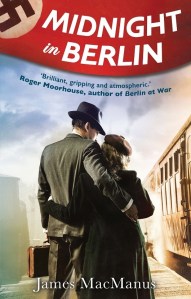
midnight-in-berlin_cover

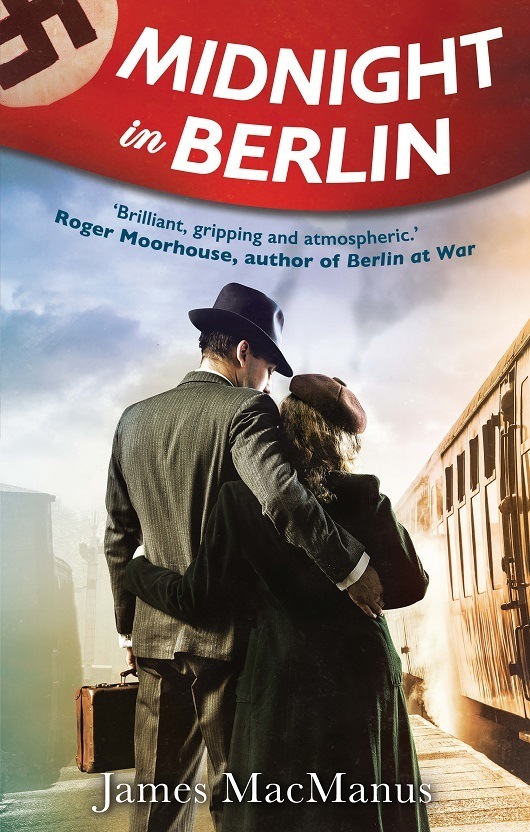
In 1938 Berlin, Noel Macrae and his wife, Primrose, arrive to take his new posting at the British Embassy in Berlin. Prime Minister Chamberlain is intent on placating Nazi Germany, but Macrae is less certain this is the path to take.

Convinced Hitler can only be stopped by means other than appeasement, Macrae finds his is not the only dissenting voice in the Embassy. Several senior officers in the German military are prepared to turn against the Fuhrer. But can they be trusted?

To gather intelligence, Macrae is drawn to a Nazi bordello and its enigmatic Jewish hostess Sara Sternschein, who has a treasure-trove of knowledge about the Nazi hierarchy in a city of lies, spies and secrets.
But does Sara hold the key to actually thwarting Hitler and his plans? Or is Macrae being manipulated, even as his wife romantically pursues his most important German military contact for her own information?

Well-drawn and atmospheric of these days, with the added spy element.
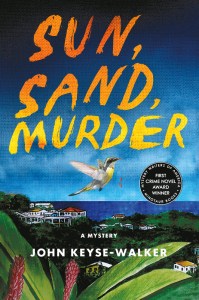
sunsandmurder
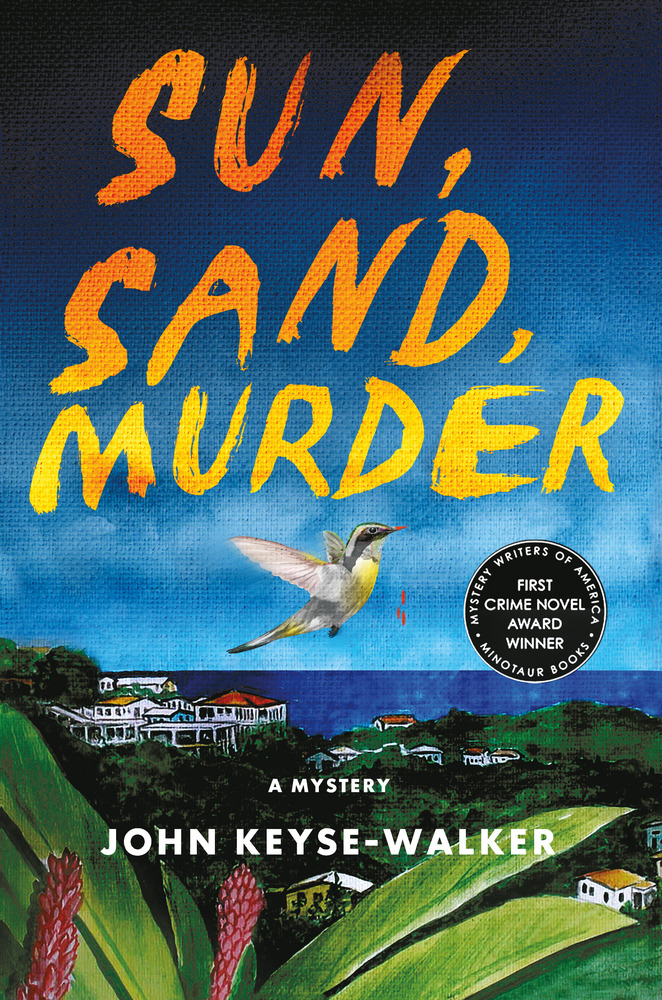
Winner of Minotaur/MWA’s Firsts Crime Novel Award, John Keyse-Walker’s Sun, Sand, Murder
takes readers to the remote British Virgin Island of Anegada. Auntie M visited here during a sailing vacation with Doc and it’s tough to imagine a less “rural” island unless it’s one that’s uninhabited.

Off the beaten track for many tourists, it’s police presence is all down to Teddy Creque, who hasn’t really had much to do in the way of real crime. The last murder was in 1681 . . .

That all changes when he’s called to the body of a biologist he knows lying on the beach, shot in the head. Paul Kelleher visited every winter to study the iguanas, but seems to be an unknown person elsewhere, as Teddy finds out when he tries to notify his next of kin about the murder. He can’t find any trace that the man exists.

Against the “real” police wishes, and despite his complicated family life and three jobs, Teddy investigates this murder, finally having real police work to do–if he survives it.

A fascinating look at island mores and life, with a charming protagonist. The story is told from his point of view and this island springs to life.

Bruce Robert Coffin: Among the Shadows Wednesday, Sep 28 2016 

among-the-shadows_final-cover

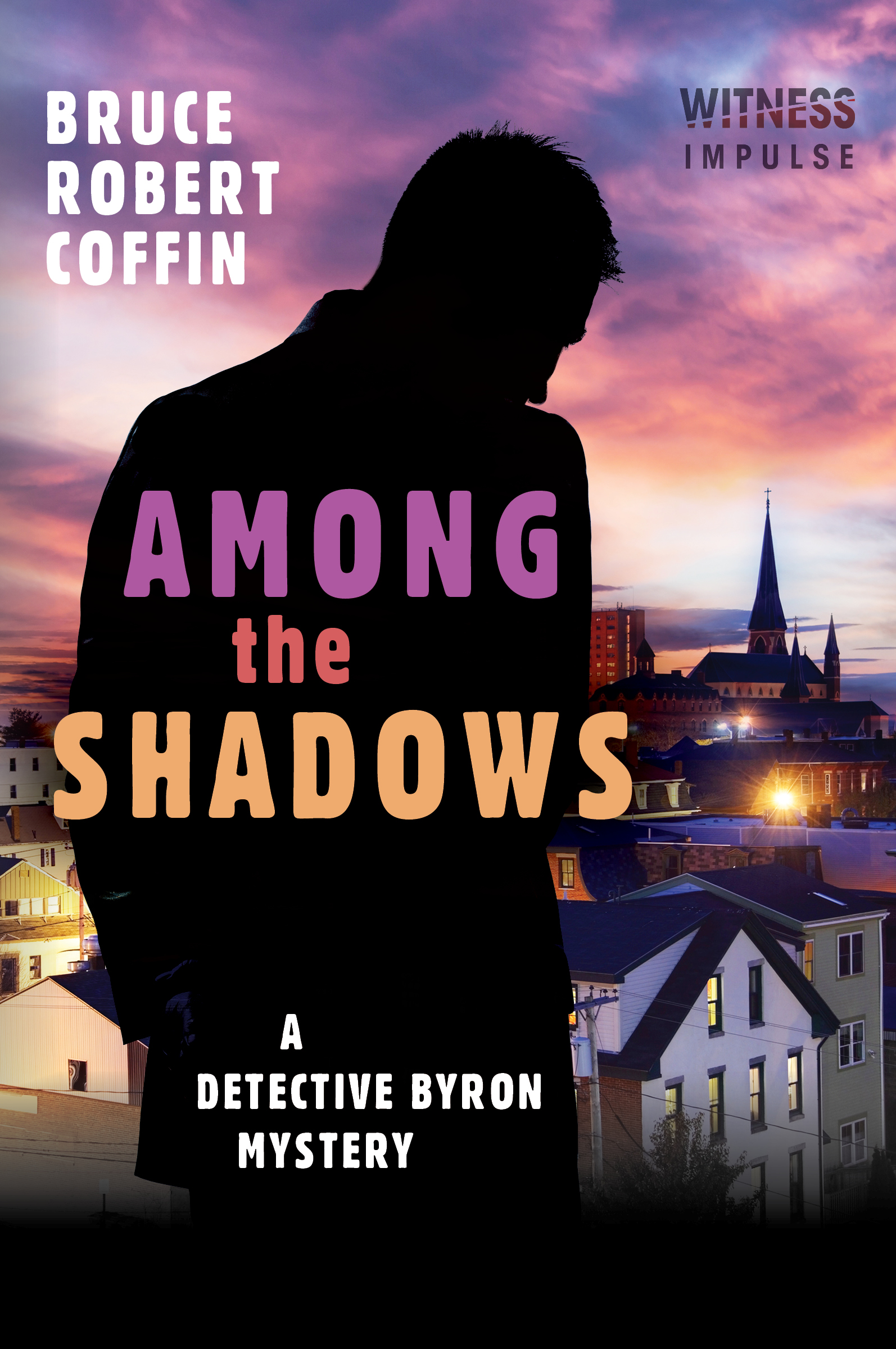
When you’re a retired law enforcement officer and your last name is Coffin, it would seem only natural that the next step would be to write a police procedural, and Bruce Robert Coffin has done just that with Among the Shadows. Auntie M couldn’t help but be reminded of Gwendolyn Butler’s John Coffin Mysteries, but these couldn’t be farther from the handsome English detective surrounded by theater friends.

This Coffin has created a very different detective, even as he gets his Portland, Maine setting down just right. He captures the rhythm and politics of the detective force and its team, too. Then the veteran homicide detective gives readers an intriguing main character in Detective Sergeant John Byron, a man who has the true detective’s dedication to the Job, despite the costs.

The son of a detective who committed suicide, Byron’s at a crossroads in his life. His marriage has disintegrated and he sunk into drinking too much. Coffin avoids veering into cliche’ by having Bryon acknowledge this and actually do something about it, a refreshing character change that makes Byron all the more interesting with this determined inner strength when he’s caught up in the current case.

It starts with the deaths of two former Portland PD members, and at first it’s only Byron who sees a connection when a photo surfaces that contains an old team of law enforcement officers who formed a Special Reaction Team–and Coffin’s father was one of that team.

With a loyal team assisting him who each have their own area of expertise, Byron will fight his superiors to connect the deaths. He insists the team members are being killed off for their connection to an old case where robbers got away with over a million dollars with the money never being recovered. One of the four robbers disappeared, while the other three were shot on scene, as was a member of the police team. It’s long been thought that the missing robber has the proceeds.

Coffin will have to fight some of his superiors every day, despite his lieutenant trying to give him the autonomy he needs to set his team where they need to be headed. He’s thwarted in particular by the Chief and Assistant Chief, and as the case heats up, trailed everywhere by a young investigative reporter out to build a name for himself who manages to get in his way.

The pace is kept taut, and the closer the team gets to resolving these cases, the more danger the team find themselves in. Before it’s over, there will be surprises that will keep readers wanting to figure out this twisted case as much as John Byron himself.

An intriguing debut from a storyteller to watch, Coffin has already made a name for himself as an artist. He paints everything from portraits to landscapes, but the piece Auntie M was most intrigued to read about is a work titled “Fidelity, Bravery, and Integrity.” The commissioned portrait commemorates the one hundredth anniversary of the Federal Bureau of Investigation and depicts Special Agent Edwin C. Shanahan, the first agent ever killed in the line of duty. The portrait is currently on display in the Boston field office of the FBI.

Coffin is a talented writer to watch~

Sarah Ward: A Deadly Thaw Sunday, Sep 25 2016 

DeadlyThaw

Sarah Ward’s debut In Bitter Chill brought her to reader’s attention quickly last year. After years of reviewing crime fiction, including acting as a judge for the Scandinavian translated crime novels’ Petrona Award, she has turned her hand to writing her own series, causing Booklist to call her “. . . a writer to watch.”

She returns with a second entry in the Derbyshire series, A Deadly Thaw, and fans of her first will be happy to know it’s every bit as well-written and suspenseful as her first. She brings back the compelling Bampton team of DI Francis Sadler and DC Connie Childs, plus other members who will have an impact on the story to investigate this unusual case.

The setup is creative and pulls the reader in immediately. Lena Grey has just been released from prison after serving fourteen years for smothering her husband, Andrew Fisher, in their bed. But then Andrew’s recently killed body is found in an old morgue.

Once the identification is complete, the questions become overwhelming: Who was the man in Lena’s bed all those years ago, and why would she lie about his identity and spend all of the time in prison? Sadler’s team must uncover why this deception could have been pulled off, while Childs is convinced it took more than a bad marriage and a lover for Lena Grey to take prison time. But Lena vanishes, leaving questions unanswered and the investigation to flounder.

The team will be led to Lena’s sister Kat, a therapist living in their childhood home, who can’t explain her sister’s actions then or now. Then Kat starts receiving packages from a young man, and based on their contents, he must know where Lena is hiding. She starts searching through their lives, looking for answers in her family’s secrets, conducting her own investigation.

Those secrets hold the key to the mystery and it will be up to Sadler’s team to put the pieces together. Distractions from personal issues within the team threaten to disturb their cohesiveness and ability to figure out the truth, but add layers of complexity to the story.

Ward’s plot is complex and well-executed, with twists and turns that make red herrings fall like so much litter as one reality becomes another. This is gripping, with an edge that makes for compulsive reading. Highly recommended.

Louise Penny: A Great Reckoning Wednesday, Sep 21 2016 

GreatReckoning

Louise Penny’s twelfth Inspector Gamache/Three Pines Mystery, A Great Reckoning, is responsible for making Auntie M cry–twice.

That’s how movingly she writes and entwines readers with the characters they’ve come to know and love in the series, most especially Gamache and his extended family. And yet if a reader were to pick up this book and not know any of the history, they would still be impressed by the scope of its plot and the depth of the feeling she manages to wring out without any hint of melodramatic tricks–and to bring them to tears.

Gamache and his beloved Reine-Maire have retired to the little village of Three Pines, where both have accepted that retiring doesn’t mean eating croissants and sitting around the Bistro all day, but that they will find new work that interests them. For Reine-Marie, the former librarian at the National Archives Library becomes involved the historical society, organizing its papers and artifacts. For Gamache, after mulling over many offers, being courted for some and rejecting many, he’s accepted the role of Commander of the Surete Academy, the three year schooling for new police cadets. His goal is to clean the house of the former regime which sent out cruel and corrupt police.

To the surprise of everyone, including his wife, he invites an old friend who’s been living in exile to take a role as a professor, teaching the cadets how easily it is to be corrupted as he was. It’s an interesting concept, and one that will have personal and professional ramifications for the new Commander. At one time the two men were as close as brothers, until they took divided paths in their careers.

Gamache also deliberately leaves in place one corrupt instructor, believing him to be the mastermind behind a large financial swindle on top of corruption of the cadets. But he lacks enough concrete evidence to arrest him, nor does he have the name of the man’s accomplice. Serge Leduc had waited to be fired as so many of his colleagues were. Gamache openly explains his reasons to the man: he intends to find out the depth of his betrayal and to find his accomplice.

Then a professor is murdered, and four cadets who have been especially close to the man are the prime suspects. Gamache sends them to Three Pines to board there and gives them an unlikely assignment: find out the significance of an orienteering map found in the wall of the bistro that he’s been given as a gift, showing the tiny village along with other oddities. Is this work to keep the four occupied so he can observe them and find which one is a killer? Or is he trying to protect them from the killer? And is there more at hand, as a copy of that same map of Three Pines has been found in the professor’s effects.

Suddenly the list of possible suspects widens, and Gamache finds himself being scrutinized as a murder suspect. And what of his relationship with the tattooed and pierced cadet Amelia Choquet? Why is the angry and obstinate cadet being carefully groomed by the Commander? How does the map fit in, and what does it have to do with a stained glass window in Three Pines tiny chapel?

This is Penny at her complex plotting best, bringing all of the quilted threads of the story together in a satisfying and chilling climax. There is family time and high points, and many lows that Ganache must navigate. But now he has his son-in-law nearby, and a person he respects as Chief of Homicide of the Surety, his old job, in Isabelle Lacoste. But will he figure out the devious machinations of the killer before he strikes again–or worse, is arrested for the murder himself? Highly recommended.

A note to readers: Please take the time to read the Acknowledgements at the end of the book. For any author, and Auntie M knows this from experience, this is the time to express a personal and public thank you to readers and to the many people who help an author move his or her book from an idea to a reality to the one you hold in your hands or listen to or read on your Kindle. It this case, it is also clearly a love letter to Penny’s ill husband, Michael, and deserves to be read, both to honor him and his life, and to honor Penny and the wonderful and rich writing she continues to give her readers.

Christine Hale: A Piece of Sky, A Grain of Rice: A Memoir in Four Mediations Sunday, Sep 18 2016 

From time to time, Auntie M veers away from crime to feature something different in terms of genre. Today it’s novelist Christine Hale who has taken a turn to memoir and tells us about her unusual approach.

9781627201018-PieceofSky-COV.indd

A Piece of Sky, A Grain of Rice: A Memoir in Four Meditations
by Christine Hale
(Apprentice House Press, 2016)

People often ask why I wrote a memoir (since my first book Basil’s Dream, was a novel). The next thing they want to know is why I wrote the book in “collage” or kaleidoscope form instead of telling a story straight through from beginning to end.

I’ve come up with a lot of long-winded answers in the past but today, writing this note to readers who enjoy mysteries and crime stories, it dawned on me that there’s a very short, very true answer: my parents were mysteries to me.

Married for over 60 years, they were hard-working, God-fearing, honest and frugal country people, and they passed those qualities on down to their daughters. But my mother also did and said some shockingly mean things to me, my sisters, and our father. And he, it would turn out, was secretly physically abusive to her for most of their marriage. My sisters and I never knew that until he got caught in the act soon after they moved to assisted living in their late eighties. We were summoned to a meeting with the facility manager and the police, because my father was about to be thrown out for his behavior. We were dumbfounded–that he was in that kind of trouble at his age, and that we’d been blind to it for so long. My oldest sister said, while we wrung our hands in the waiting room, “Somebody should write about this.”

Some of you may remember something Flannery O’Connor says in Mystery and Manners. She attributes the remark to a neighbor with whom she’d shared her early work. The stories, the woman said, “just showed how some folks would do.” That phrase captures exactly the way I feel about my parents’ struggles and mistakes (and my own): people will do the most surprising, confounding things, and it’s an unsolvable mystery to ever really know why.

Well, I’m a writer, and I process what confounds me by writing about it. The result, after a number of years and many drafts, was a memoir in collage form. Layered and overlapping memories–a patchwork quilt–from many different points in time, about my parents, my children, my husbands, and other people and events that instructed me, bruised me, transformed me. My intent in structuring my memoir as a collage was to mimic the way we remember and strive to make sense of memories. In her blog Backporchervations, LuAnn Braley described the book’s effect this way: “When we meditate, or think over our lives…we pick and choose certain memories from certain points that do not arrive in neat chronological order. Then, our subconscious wants to join the fun and grabs memories we forget we have along the theme of what our active mind is considering.”

It’s been tremendous fun to hear readers’ take on my book. So many people have contacted me to say it caused them to remember things they’d forgotten, and that without quite knowing why–another mystery–recovering and re-inhabiting old memories helped them feel better about their lives.

Chris Hale Finals (Web-Res)-9

You can learn more about me and my work at:
www.christinehalebooks.com. Or, if you’re in the neighborhood, I’ll be reading from A Piece of Sky, A Grain of Rice: A Memoir in Four Meditations at McIntryre’s Fine Books in Pittsboro, NC, on October 22 at 11 am. The book will be available for purchase there. You can also buy it through independent booksellers anywhere, and online at IndieBound, Amazon, and Walmart.

« Previous PageNext Page »