Emily Winslow: Jane Doe January Monday, Jul 4 2016 

This review represent a departure in two ways on our American Independence Day. First, Auntie M usually does crime fiction but occasionally adds a book in a different genre she thinks you should not miss. This is one of those occasions.
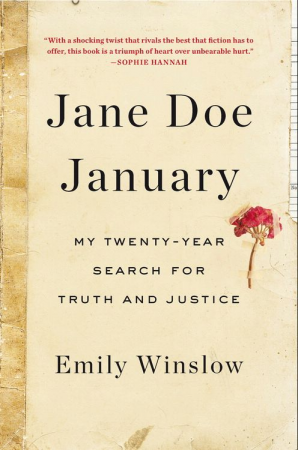
JaneDoeJanuary
Second, I am stepping out from behind my third person Auntie M persona to address readers as myself, because this book contains such a personal story that I feel it deserves that approach. It’s deliberately posting on the 4th of July because of all of the very American ideals the book addresses. It’s an absorbing and literate read, and I hope readers will take the journey offered with emotional insight into a rape case, offered by the victim herself.

I became acquainted with author Emily Winslow through her crime series, set in Cambridge where she lives. The series feature investigators Morris Keene and Chloe Frogman, and the novels are told in multiple first person narratives. The series is acclaimed for its ability to bring each character’s situation to life, and can be read as stand-alones in terms of the mystery. So far these are: The Whole World, The Start of Everything, and The Red House. I knew Winslow been a victim of rape during her college years from an article she’d written years ago that I’d read.

It is while Winslow is working on revisions to The Red House that she gets news that is at once startling and will turn her world upside down. A man arrested in New York has DNA that matches the eerily similar rape in Pittsburgh to hers, only a few months later. Winslow’s goal early on is the premise of this memoir, and she states it in her opening: To get to say what happened; and to be who he’s punished for.

In 1992, when a student at Carnegie Mellon University’s prestigious drama school, Winslow is attacked when a man follows her into her apartment building and brutally rapes her, smothering her screams with his hand pushed over her face and mouth until she quiets. She files her report, stays in school, lives with friends, and writes poetry about the incident to cope. She ultimately decided acting is not for her.

But as she grows and matures, marries a Brit, has two sons and moves to Cambridge, she never stops pestering the Pittsburgh detectives about her case. She calls herself “a beggar”, calling them every few years to ask them to look again at her case, always talking to someone new. Detectives retire, move on, transfer. Each call means having to explain who she is, explain the case again, “because no one remembers, except for me . . . And him.”

She takes to pestering detectives to test her DNA against this new arrest, and after an agonizing wait, gets her answer: it’s a match. She was raped in January, while the other woman, also a match, was raped in November, and both by a man with a history or serial rape, an ex-con named Arthur Fryar, who resists extradition from New York to Pittsburgh, despite its eventuality. Winslow will get her chance to fly to Pittsburgh for pretrial hearings that will hopefully bind him over for trial–the trial of Fryar for raping her, Jane Doe January, as she’s referred to in court documents to protect her privacy, and the other woman, Jane Doe November.

The bulk of the book is taken up with Winslow’s preparation for this trip and then for the upcoming trial, working with a series or prosecutors and attorneys, linking with the old detective on her case, a powerful ally, and trying to shield her two young sons from what is happening even while trying to explain it to her British circle of friends.

She will encounter a very American vs British culture gap: she longs to be asked for details about how the hearing went after the huge emotional and physical trip to Pittsburgh, but she’s initially disappointed when she slams up against true Brit reticence. Her English friends are reluctant to probe, worried about upsetting her when she’s desperate to ventilate about the experience. Then Winslow realizes she must give them a clue, permission even, to indicate she’s willing to talk it all. It’s a very American concept, she notes, to need help by talking and sharing.

She finds great support from her husband, and a clear friend and wonderful outlet in a college chaplain, and bonds closely with him. She spend hours Googling Fryar, trying to understand what would make a person rape a stranger. She learns he likes his victim’s legs and decided she will rob him of the opportunity to see hers in court and wear pants. She finds his family roots, the other crimes he’s committed, the way he’s tried to escape justice for years. The ending of this episode comes as Winslow is shattered in grief, and is totally unexpected, yet it is clear she has grown stronger from the experience.

Winslow is brave enough to document her feelings as they hit her, even as she recognizes that some might question them. She brave enough to share them, despite being clear that at times she was very needy. She has the right to be needy for what she is going through, what she went through, and what she still lives with.

This is not a social treatise or a commentary on a black man raping a white woman, nor should it be. This is one very honest woman’s story, told in such a way that it almost reads as a suspense legal thriller. As such, it’s very different and difficult to characterize, and I feel should stand on it is own merits. This is a truly intimate story about the process and emotions one woman undertakes in trying to bring her rapist to justice over two decades after the act, and what she learns about herself in the process. Highly recommended.

With grateful thanks, Emily Winslow agreed to answer a few questions regarding Jane Doe January:

Marni Graff: I know you’ve written articles before about the rape you endured years ago, which I read because I enjoy your crime series. But this is a very different and personal book. You allow readers inside your private thoughts and actions during a year filled with stresses and heartache. You don’t flinch or look away when many others would have during an intimate look at the long-delayed prosecution of your serial rapist. What influenced that decision to allow readers inside this painful journey?

Emily Winslow: My first audience for this work was myself, and the value in it was in being as direct as possible about what I understood, what I felt, and what I wanted. I needed to figure all of that out, as honestly and as fully as I could.

Now that I’m a little more distant from the prosecution (it ended almost two years ago), I’m developing some perspective I didn’t have then, but I value the immediacy of the book as it is, and the way that it’s an artifact of exactly what I went through at that time, in all of its intensity and specificity.

When I first decided to publish, I was still very close to it, and the feelings and opinions I described in the book still felt very “of course!” If I had taken more time before publishing, I might have second-guessed myself. I’m glad that I didn’t.

People often mention the therapeutic value of “getting it all out there,” but for me the deeper layer of value came from taking what I admitted on the page and using my skills to shape it into something that stands alone, apart from me. I hope I made something out of it that’s more than just a factual admission of the whole experience. I wanted to write something well-structured, well-told, beautiful. That attempt is what felt comforting to me.

So it seemed natural, as a writer proud of my work, to publish.

MG: As a mystery writer, I understand how authors put themselves, people they know, even situations they’ve been in, into their work. Sometimes this is deliberate but it can also happen in unexpected ways that are only recognized long after the writing is complete. You had this experience upon reflection: a known mirroring of a character, plus an unknown mirroring. The revisions you were doing as you experienced this stressful year led to that revelation. Was this startling, or more of a surprise when you realized the genesis of one of the characters in your latest book?

EM: It’s always startling to me when I discover a hidden motivation or personal meaning behind my choices in fiction, but they’re inevitable! I do make a lot up, but it’s often using bits of memories, hidden feelings, and unconsciously figurative images of real things. Even one’s observations of others describe one’s own filters and assumptions as much as they describe what’s being seen. That’s part of what makes using fictional first-person narrators so interesting, and it applies to myself as the author as well.

I get asked a lot if my experience as a victim is what pushed me to write crime novels. I honestly don’t know. A lot of people enjoy reading crime fiction without having a personal experience to justify it, and I write crime because I like reading it: I like its huge emotions, life-and-death stakes, the puzzles of its plots, and the challenging themes.

I do think that my personal experience might be what pushes me to be as serious as I am about the effects of crime, on all of the characters. Victims, perpetrators, witnesses, investigators… They’re all affected by the painful events that bring them together.

MG: Many people would not have been as open as you have been in this haunting memoir that is brutally honest. What has been the reception to the book from your family, your friends, and your Cambridge circle? What it what you expected?

EW: The reception from people I know has far exceeded my expectations and even my hopes, in kindness, understanding, and support. I’m very grateful. The reception from readers I don’t know has also been mostly warm, but occasionally there are reactions I wasn’t prepared for. This subject brings out big feelings and strong opinions, and people have assumptions and expectations about the way that victims should be. I focus on the people I know, my daily routines with my family, and the next book (a continuation of my mystery series set in Cambridge).

G. J. Brown: Long Before I Fell, prequel to FALLING Sunday, Jul 3 2016 

From time to time, Auntie M likes to mix things up a bit so her readers won’t get bored with straight book reviews. Today she’s thrilled to welcome Gordon Brown, whose new book FALLING is out in the US through Down & Out Books. Gordon is a great lad and crime fiction promotor extraordinaire, who helped start Scotland’s International Crime Writing Festival, Bloody Scotland. Today, he’s here with the prequel to his book as a treat for Auntie M’s readers:

Long Before I Fell

The room is designed to put the occupant in a state of mild panic. There are two comfortable but incongruous armchairs, sitting opposite each other. Both have signs of wear and tear—blue leather, fading to holes on the armrests.

The floor is wooden, real wood not fake laminate, with decades of use and abuse. It was once shining dark oak reclaimed from an old house but years of neglect have transmuted it into stained, warped planks separated by gaps packed with dust, dirt and crap. There are no windows and the only door is locked. The walls are magnolia, fresh, as if someone had started to think about selling the place. The ceiling is bare concrete with a small light fitting above the door. The bulb is fifty percent less powerful than it needs to be.

Below the light and above the door sits a small, scabby grey grill. The slats are furred from years of non-cleaning. A small hiss hints at some form of air movement from inside. It’s not air conditioning; the temperature in here is high enough to keep food warm before serving.

I’m sitting in a Marks and Spencer’s charcoal grey suit. It’s a few seasons past its best but in my trade the cash margins do not warrant new suits very often. My shoes are twice re-heeled rejects bought from TK Maxx. I’ve never heard of the brand printed on the insole but that means it’ll be well known to those with thicker wallets. My shirt is staining under my armpits as the lurid green that so appealed when I saw it for a fiver in the charity shop a few months ago is excelling as a sweat highlighting colour. I’m nervous enough without advertising the fact so graphically—so my jacket is staying on.

I’m sitting with a small briefcase clutched in both hands. I’ve had the case since I graduated from University. A present from an old girlfriend. The lining inside is ripped in several places but its outward distressed state is cool in certain quarters.

The briefcase contains one stapled sheaf of papers. They are my hope and my support. That is if, and if is small word for a large prayer, they stand up to scrutiny. There are five sheets, each one hand written and each one signed. There’s a lot riding on them.

I play with the lock on the front of the bag. Broken and without a key it stays shut with the aid of a small piece of cardboard.

The handle of the door turns and in walks a man I’ve never seen before. I stand up, my briefcase clasped to my chest. ‘Hello, I’m…’

‘Charles Wiggs. I know.’ The visitor ignores my outstretched hand. He’s dressed to heighten the rooms menace quotient. Black suit, black waistcoat, black tie, black shoes, white shirt and dark glasses. I’m thinking Matrix here. He’s clean shaven with a cropped hairstyle that looks DIY. Nose hair crowds both nasal passages, at odds with the neatness of the rest of him. He’s a little under six feet tall, wiry but with a beer gut that the suit is cut to try and hide.

‘So, Mr Wiggs, let’s get down to business.’ He perches on the edge of one of the chairs as if he’s expecting this to be a short meeting. ‘You’re here for a specific purpose and I’m short on time.’

There’s not much to say to that. This is the latest step in a six-month journey that started with a rather innocuous letter from a firm called Retip asking me to give them a call.

Nasal Hair, for want of a better name since he did not introduce himself, has an iPad in one hand. He’s doing that sweeping thing with it. He looks at me. ‘Two years and struck off as an accountant.’

He returns to the iPad and waits for a reply. I’m not sure whether this is a threat, an offer or the name of a new movie. I play dumb; I’m good at that.

‘How would you cope with two years and struck off as an accountant?’ This time he doesn’t lift his eyes from the screen.

‘Two years of what?’

He does the fingers opening wide trick on the iPad. ‘Jail.’

‘Really?’

‘What about four years and a fine?’

Okay, so this is some new game. I fire back. ‘I’ll raise you six years, a larger fine and a weekend in a country house hotel.’

Nasal Hair lowers the iPad. It looks like it hurts for him to do so. ‘Mr Wiggs, you do realise why you’re here? Flippancy is not something I would advise at this stage.’

I thought myself good at this. After so long in the profession I know how the game is played. Every step so far had been by the book. His tone was making me wonder if I’d missed something. ‘Mr…’ He doesn’t offer a name so I keep going. ‘Look, what’s with the jail thing?’

He lifts the iPad up and fiddles with it again. I wonder if he’s checking me on Google? I Googled myself once and found a single reference to me joining Cheedle, Baker and Nudge. It was below a reference to a guy called Charles Wiggs who had been arrested for exposing himself on the beach near Santa Monica.

The sound of a cat meowing slips from Nasal Hair’s machine. He gives it his full attention and I think I’ve been demoted to a level that lies beneath checking new emails. The cat kicks in again and I’m forced to sit back and wait while he catches up on shit.

‘So do we have a deal?’ He half drops the iPad to his side. Not quite wanting to go the full hog and lay it down.

‘We haven’t discussed any deal, and by the way, you owe an apology to Sarah.’

‘I told you, Mr Wiggs…’

‘Sarah is very important to our company. Do you know her? Sarah Gilmore. Nice lady. In her sixties, not quite sure how well into her sixties but looking good on it. She does some bookkeeping for us. Has a cat, sounds a little like your email alert. A tom. She had it done a few years ago. A bit late in my opinion. Story goes it’s the father to half the cat population in the area. Then again you can’t blame him. A bit fat now though. Anyway Sarah is a sensitive lady and takes things very personally.’

‘We met Miss Gilmore and others.’

‘I know.’

Sarah had been scared to death by the meeting. They can have a go at me. They can have a go at the others—we’ve all been around long enough to take it. But Sarah? That’s below the belt, even if you were wearing your belt round your ankles. I’d almost considered not coming. I lean forward. ‘Lawyer.’

‘Sorry?’

‘I’ll need a lawyer if we are looking at a deal.’

‘Why?’

‘To hold his hand and listen to my mum’s old 78’s.’

‘Funny. Accept our deal and then we can get down to the brass tacks.’

‘What deal?’ I struggle not to swear. There are times in my life when I meet people and wonder if it is me or is it them. I learned long ago that no one ever thinks it’s them. Except me. I think it’s me all the time. Does that make sense? No. Let me explain.

In this world you need someone to blame for all the shit that goes down, and in my experience, no one ever thinks it’s them at fault. So I figure why shouldn’t it be me. Why not? It makes life easier when you take the blame for things. ‘Who ate the last biscuit?’ ‘Who left the toilet seat up?’ ‘Who was supposed to lock the door last night?’ Take the blame and move on. It just helps the world run bit smoother. Except not now. It’s okay to be thought of as the ‘never closes the toilet seat man.’ The consequences for that are minimal. The consequences of getting this wrong are a little more serious. ‘Excuse me but who are you?’ I feel I should ask.

‘So do you want the deal?’

‘What deal?’ I’m sounding like a stuck record.

He shakes his head and stands up. His perfect black suit falls back into place. A tiny spot of dirt, sprung from the floorboards has landed on his shoe. He examines it, raises his foot and flicks at the offending fleck. Satisfied that all is right with his apparel he knocks on the door and is let out.

I’m left to stew in the rising heat. No doubt a temperature selected by hired psychologists to maximise the discomfort for a person. I’ll expect the white noise, water boarding and stress position in due course.

The entrance of someone new catches me by surprise. The theme is black again. This time black skirt, jacket, high heels, stockings and a white blouse. ‘Hi. I’m here to get your signature.’

‘You are?’

‘It will formalize our deal.’

‘We have a deal? And when did I agree to this?’

‘Just now. My associate just told me.’

‘He did? And you are?’

‘Are you happy with an electronic signature or would you prefer to use pen and paper.’

She’s in her early-forties, hair tied tight and a lack of make-up that doesn’t detract from her looks. She doesn’t need the stuff. I’ll call her No Make-up for the moment. ‘Look, who are you?’

‘Electronic then?’

‘No.’

No Make-up tilts her head a little. ‘No, what?’

‘No to anything. No to signing—electronic or paper. No to being here. No to coming here in the first place. No to this room. I mean, in this day and age, who holds interviews in a room like this. All in all the answer is no.’

‘So you don’t want the deal?’

‘What deal? We haven’t discussed a deal. There’s no deal. If you want a deal, tell me what deal you want. I have signed testimonials to our work in this bag. Do you want to see them? Will that help?’

‘We won’t make this offer again.’

‘What offer?’ This time I know it’s not me. It’s definitely them. It’s so them that if you opened the Oxford English Dictionary up at the word ‘them’ there wouldn’t be a written description lying there—instead there would be two small, passport size pictures of Nasal Hair and No Make-up. That’s how them, they are. ‘Look I’m not sure how this is supposed to work.’

‘Is your middle name Tyber?’

My head grinds to a halt as my brain stalls. ‘Sorry?’

‘Tyber. Is you middle name Tyber?’

‘What? I mean what? I mean…’ Shit I don’t know what I mean.

‘I had a boyfriend once that was called Tyber.’

‘Congratulations. And this is relevant how?’

‘If you were on your own in the desert and had run out of water, how long do you think you would last before you drank your own pee?’

I check that today is still Tuesday and that I’m still on the planet. I then check the room to make sure that someone else hasn’t snuck in and is now No Make-up’s new target.

I stand up, still clutching the bag.

No Make-up moves to cut me off. The door opens and Nasal Hair comes back in. He stands behind No Make-up. ‘Did he sign?’

She shakes her head. ‘He won’t even tell me if he’d drink his own pee.’

‘Did you tell him about your boyfriend?’

‘Yes.’

‘The snake?’

‘Not yet.’

‘Should I?’

‘Do you think it’ll help?’

‘Maybe.’ He turns to me. ‘Mr Wiggs, how long is a snake?’

I have no idea what to do here. I can’t think of anything to say other than. ‘I think I want out of here.’

Nasal Hair stands firm. ‘A rough guess will do?’

‘What is wrong with you people? Let me out right now.’

‘Any guess and you can go.’

‘And I can go?’

‘And you can go.’

‘Shit. Twenty feet.’

No Make-up smiles. ‘Good answer.’

Nasal Hair is smirking. ‘One of the best. Now can I have the testimonials you talked about.’

At first it doesn’t register that he’s talking about the papers in my briefcase. He holds out his hand. ‘Good answer by the way.’

I surprise myself by extracting the papers and handing them over. He takes them. ‘We’ll be fifteen minutes. It’s hot in here. We’ll get you a cold drink.’

With that they exit and I stand like a lemon.

True to their words they’re back in quarter of an hour, cold Coke in Nasal Hair’s hand. ‘Sorry to have kept you. We’ve kept the papers. I’m assuming you have copies. Everything looks in order. Oh sorry, do you not like Coke?’

I realise he is offering the can to me. He pulls it away and shakes my hand. ‘So I think we can close this one.’

No Make-up nods. ‘After the snake answer I think we can say that we’ve found who we need.’ She turns to me. ‘You’re free to go.’

Half my head wants to spit out a rant. The other half tells me to get the fuck out of there. I walk towards the door and it opens.

‘Oh, Mr Wiggs.’ I stop and turn at Nasal Hair’s voice.

‘Next time it’ll be a lot easier if you remember the snake answer up front.’

The door closes behind me. I’m in a normal corridor with normal windows looking onto normal offices on either side. I’m not in some displaced world and I hear the sound of laughter from behind the door.

The man who opened the door for me hands me a piece of paper. ‘This way, sir.’ He gestures along the corridor.

I’m guided to the exit and take the lift to the ground floor. I step into the freshest air I have breathed in a long time.

I look at the piece of paper in my hand and open it. In neat Times New Roman it reads. ‘Thank you for your application. We are pleased to say that we are going to appoint Cheedle, Baker and Nudge as our accountants.’

It’s signed: ‘Simon Malmon, Managing Director and Karen Lewis, HR Director, Retip’

It wasn’t usually my job to interview new clients. I’m too low down on the pecking order but my boss had made a big deal of winning the account. How this was my opportunity to shine. It’s why I had been so nervous. Cheedle, Baker and Nudge isn’t in a position to turn down business at the moment. Retip might be run by some oddballs but if we only dealt with the sensible business people we would be bankrupt. I’d done my job and with a bit of luck they might give Retip to one of the new boys to look after.

I decide I need some caffeine. As I cross the road I look up at the forty story high building I’ve just left. I can’t tell which is their office and I don’t care. We’ve won the business, I’ll get a pat on the back, maybe a small bonus, and anyway, how much trouble could they be? The answer to that question was more than I could have ever imagined.

About G. J. Brown

G. J. Brown lives in Scotland but splits his time between the UK, the U.S.A. and Spain. He’s married with two children. Gordon once quit his job in London to fly across the Atlantic to be with his future wife. He has also delivered pizzas in Toronto, sold non-alcoholic beer in the Middle East, launched a creativity training business called Brain Juice and floated a high tech company on the London Stock Exchange.

He almost had a toy launched by a major toy company, has an MBA, loves music, is a DJ on local radio, compered the main stage at a two-day music festival and was once booed by 49,000 people while on the pitch at a major football Cup Final.

Gordon has been writing since his teens and has four books published–his latest, Meltdown, being the second in the Craig McIntyre series.

Gordon also helped found Bloody Scotland—Scotland’s International Crime Writing Festival.

E. D. Bird: Bitter Sweet Wednesday, Jun 29 2016 

Please welcome author E. D. Bird, here to talk about Bitter Sweet, set in southern Africa:

BitterSweet
Bitter Sweet is a fictional novel set in southern Africa. It includes many encounters with wild animals and unscrupulous people.

The book was written with the author’s accumulated mining experience and knowledge of the African wildlife, as well as that of the environment. While the setting is fictional, as are the characters, a great many of the historical locales have been moved from their rightful position and fitted into this imaginary place.

Hilton Shire, a recently appointed Private Investigator since the untimely death of his wife Sabrina, is on a mission of revenge, together with his brothers-in- law, Jordan and Kyle. They believe that Sabrina was murdered as a result of her investigation into the demise of Julie Curl’s husband a number of years before; they also believe that she was drawing close to resolving the mystery when she met with unmitigated violence.

Will Hilton get to the bottom of the mystery and avenge his wife before more killings take place?

Readers are taken on a relentless cat and mouse chase across the unforgettable southern African nations and Barbados. The unfolding adventure is menacing, perilous, intriguing and, in the end, could possibly be Bitter Sweet . . .

The author was born in Scotland during 1955 and married in 1975. Bird’s parents immigrated to Zimbabwe (Southern Rhodesia as it was then) in 1957 and has lived there ever since. E.D. has two adult sons, the eldest of whom lives in New Zealand while the youngest, who has provided the author with two grandsons, resides in England. Bird was divorced during 1987, but remarried the same person on the 20 th anniversary of their original wedding date and they remain together living happily in Bulawayo with their two rescue dogs. The author is an animal lover and has over the years had a variety of pets including horses, dogs and cats, but dogs are definitely the favourites and at one stage there were eight different breeds in the household. E.D. Bird worked for a firm of attorneys for thirteen years and during the final three of those studied law by correspondence, but was forced to give up those lessons after the divorce and joined the family business, a gold mining enterprise. Having been brought up in a rural mining environment and having been primarily involved in mining for a lifetime, there is a sound base for the fictional events created in the books. http://www.edbirdbooks.com

John Farrow: Seven Days Dead Sunday, Jun 26 2016 

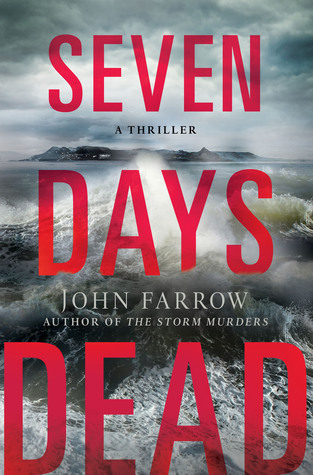
SevenDaysDead

Auntie M met John Farrow, as author/playwright Trevor Ferguson calls his crime fiction incarnation, last fall at Bouchercon. She found there to be similarities between the tall, slender Canadian and his fiction counterpart, retired detective Emile Cinq-Mars. Perhaps Emile’s long, Gallic nose, of which much has been made by characters unable to avoid, is the character’s alone, but Auntie M is thinking more of the way both men are deep thinkers, prone to lapses into thought processes, and yet totally aware of their surroundings.

It’s no surprise that the first in the trilogy within the series focusing on extreme weather called The Storm Murders proved such a hit, with its action starting in a blinding whiteout snowstorm. This second, Seven Days Dead, takes readers with Emile and his wife Sandra to the island of Grand Manan, off the coast of Maine in New Brunswick during the high seas of a torrential storm in the summer.

They are not the only ones to make it to Grand Manan, a guardian of the Bay of Fundy. Maddy Orrock has been summoned from Boston to her dying father’s bedside. She’s hoping for answers to long-held questions during their estrangement and needs to be there before he passes, and is willing to risk a rough crossing to the island under the careful guidance of fisherman Sticky McCarran.

The Reverend Simon Lescavage has also been summoned by Alfred Orrock’s housekeeper at the command of the dying man. She escapes into the wind and rain of the storm as soon as he arrives, leaving the man to face his embittered companion for one last time.

These characters are only a few of the people Emile and Sandra will meet, a band of eccentric islanders with their own strange habits and customs, as they make their way to their rented cabin and indulge in a day or two of hiking and local food. And then a grisly murder is discovered, and soon a second one is feared, and Emile is asked to assist the local Mounties with their investigation.

Farrow does an excellent job of describing the setting and how that wildness is reflected in the people who live on the island. The isolated landscape, treacherous as it is beautiful, entices many to visit but few will stay, and those who do have developed a way of living that seems strange to outsiders. It will be down to Emile, an outsider looking in, to see his way into the motives and reasons for murder, but at what cost to him and Sandra?

Auntie M enjoys this series and the characters and relationship of Emile and Sandra. These are well-rounded people with their own feelings and lives, separate from the cases Emile often finds himself mired in. Each island character is well-drawn and distinctive, and the resolution of the case will find twists and surprises for the reader, as well as jeopardy to Emile and Sandra, before its solved. A literate thriller told in an atmospheric way with more than a hint of droll humor at times.

Noah Hawley: Before the Fall Sunday, Jun 19 2016 

If the name Noah Hawley rings a bell, it could be because he’s the Emmy and Golden Globe winning creator of Fargo. But soon you’ll remember his name because he’s the author of the thrilling new novel Before the Fall.

This is strong literary writing, with earnest, realistic characters and a main protagonist whose story you’ll want to follow to its conclusion. Scott Burroughs is a painter who is afraid his prime time is in the his past, languishing on a bed of memories he can’t shake. He’s recently developed a breakthrough in his paintings, and needs to leave his Martha’s Vineyard home for appointments in New York to set up shows.

He’s befriended Maggie Bateman, whose husband, David, is a media mogul. She invites him aboard their private jet to fly to NY. What could be more enticing? In a quirk of fate, Scott almost doesn’t take the plane, but then he decides to go and boards in time for the flight. Also on board are the Bateman’s son and daughter, and a second multi-milliionaire, Wall Street banker Ben Kipling. Staff is a security man, the pilot, co-pilot and flight attendant.

Sixteen minutes later the plane crashes into the ocean. Scott and JJ, the Bateman’s four-year-old son are the only survivors, and only do so through a heroic swim of Scott’s that saves their lives. Its description alone is worth the price of the book.

What happens next involves intense media speculation and scrutiny, combined with the sudden interest of too many acronyms for Scott: FBI, NTSB, even Homeland Security all want to know what caused the crash. Could it have been an act of terrorism? Maybe Kipling was involved in money laundering. There are too many maybes and too many lives involved, and each must be thoroughly investigated, including if ISIS was involved.

Hawley introduces each character in rotation, with Scott’s story the constant, moving the story forward as the investigation progresses. He will meet Eleanor, Maggie’s married sister, now entrusted with the care of her young nephew, who is suddenly mute at times except to Scott. He will turn to a friend for a safe haven and find the media blows up his stay at her apartment into an affair. Most of all, he will wonder where his own future lies.

This is accomplished, nuanced writing, dropping into each character’s life and where they came from, even the dead victims. We see how they lived before the crash and for others, how they deal with what’s happened, depending on their role in the story. It’s a different and fascinating approach, and Hawley’s prose will draw you in and keep you flipping pages to find out what really happened to that jet and where Scott’s future lies. Highly recommended.

Eleanor Kuhns: The Devil’s Cold Dish Wednesday, Jun 15 2016 

Please welcome Eleanor Kuhns, who will describe how witches and witchcraft are not just found in Salem, and how that ties into her new Will Rees mystery:

DevilsDish

Witches and Witchcraft – Not just Salem

While I was researching Death in Salem, I visited this city several times. Since Will Rees, my amateur detective (and traveling weaver) visits Salem in the mid 1790’s, a full one hundred years after the trials, I did not write about the trials. I alluded to them of course, but by 1796 Salem is a wealthy and cosmopolitan city, the wealthiest in the new United States and the sixth largest.

But I couldn’t get the witch trials out of my head. Why did it happen? What happened to the people afterwards, especially to the people who saw their loved ones accused and, in some cases, hanged? That question formed the beginning of The Devil’s Cold Dish
.
The facts of Salem’s witch trials are these: In 1692, a group of girls, including the daughters of the village minister Samuel Parrish, claimed that they were being tormented by witches – and the girls accused some of the women in Danvers (this did not happen in Salem but within a small village just outside). Before the fury ended,150 people were imprisoned and 19 people – and two dogs- were hanged.

One man, Giles Corey, was pressed to death. He cursed all future Sheriffs of Salem to die of some chest (respiratory) illness. Apparently most have, but in an era without antibiotics (forget about good hygiene or healthy food) I don’t think that is surprising.

What happened? Reasons given for the explosion of belief and hangings in Salem are many.

This event occurred in Massachusetts after several centuries of the trials and burnings in Europe. Probably everyone is familiar with the Biblical injunction about not suffering a witch to live. In 1200, Pope Gregory IX authorized the killing of witches. In 1498, Pope Innocent VIII issued a declaration confirming the existence of witches and inquisition began. Thousands, mainly women, were burned at the stake during the 1500s and 1600s. (Accused witches in this country were never burned. They were hanged instead.)

This was a superstitious age, and belief in magic was widespread. Girls used spells to try and see the faces of future husbands, and superstitions regarding illness, birth, and harvest were rife. Harelips were caused when the mother saw a rabbit, birth marks because the mother ate strawberries, for example. One of my favorites: to protect a mother and child during birth, an ear of corn was placed on the mother’s belly. But I can’t believe EVERYONE believed in the supernatural. In fact, one of the essayists of the time, Robert Calef, suggested that the trials had been engineered by Cotton Mather for personal gain. (I doubt that. Evidently fighting out different opinions in print is not a new phenomenon). And anyway, other motivations for accusing someone of witchcraft have been documented. Sometimes it was for gain: the old biddy hasn’t died and I want her little farm, for example. (No surprise there, right?) Sometimes it was to settle scores. Apparently at least part of the reason behind the accusations directed at the Nurse family had at the bottom resentment and the desire for payback.

Tituba, a slave owned by Samuel Parrish, and her stories that she told the girls played a part. Variously described as an Indian or a black slave, her testimony apparently drove much of the content of the stories and was a direct cause of the eventual hangings of women described as her confederates. (Ironically, Tituba was set free.) A shadowy character, she has been also described as practicing voodoo. Her testimony, at least to me, reads more like the Christian belief in demons and the devil. Once she was released, however, she, like the girls whose fits started the terror, faded into obscurity.

Then there are the girls themselves. To modern eyes, the easy belief in the veracity of a group of girls is incredible. Samuel Parrish believed in the truth of the accusations until the end of his life. I suspect there is another explanation. Women, and young girls especially, at this time were supposed to be quiet, meek and submissive. The claims made by these girls, and the charges against others in the village, put them on center stage. I do not wonder that they kept ratcheting up their stories; anything to keep that attention.

Then there is the possibility of ergot poisoning. Ergot is a fungus that grows on rye during wet and cool summers. It releases a toxin similar to LSD. So it is possible that people were genuinely suffering hallucinations.

The hysteria ended in 1693. After 1700 reparations began to be paid to the surviving victims and families of the executed. But belief in witches and the trials did not end. In the new United States, a trial and a judicial solution to perceived witch craft became unlikely (and I imagine that the uncritical acceptance of spectral evidence by Samuel Parris in Salem had a lot to do with increasing skepticism) but accusation and hanging by mobs could still happen.

In Europe women were still attacked and in some cases executed for witchcraft: in Denmark-(1800), in Poland
(1836) and even in Britain (1863). Violence continued in France through the 1830’s. Accusations continued in the United States as well. In the 1830s, a prosecution was begun against a man (yes) in Tennessee. Even as recently as 1997, two Russian farmers killed a woman and injured members of her family for the use of folk magic against them.

There were two incidents of note in New York State. In 1783, Ann Lee, the spiritual heart of the new faith now commonly known as the Shakers, was arrested and charged for blasphemy. One hundred years earlier she might have been hanged as a witch or devil worshipper. But she was released. Persecution of the Shakers continued, however. And Lydia, my primary female character who is a former Shaker, would have been a target.

The final trial for witchcraft took place in 1816 in Nyack. Jane Kannif, the widow of a Scottish physician, lived in a small house on Germonds Road in West Nyack. An herbalist and widow of an apothecary, she treated neighbors that came to her with herbs and methods she learned from her late husband. But she was eccentric. According to the people at that time she dressed oddly, was unsociable and wandered around talking to herself. She was regarded as insane, or worse yet, a witch. It was decided to take her to Auert Polhemus’s grist mill and using his great flour scales, weigh her against the old Holland Dutch family Bible, iron bound, with wooden covers and iron chain to carry it by. If outweighed by the Bible, she must be a witch and must suffer accordingly. She was taken to the mill, put on the scales, and weighed. Since she weighed more than the Bible, the committee released her.

So what happened in Salem? It seems as though the town lost its collective mind.
Despite the attention paid to the accusations and the trials and hangings, for me the real focus lies with the rest of the village, those who saw family and friends turn on them. Think what it must have been like living there at this time. Salem was a small community. Those accused were friends, family and neighbors of their accusers. How could you forgive the ones who hanged one of your family members as a witch and terrorized the others? Especially since the accounts make is clear that some of the charges sprang from the worst of human nature: greed, revenge and malice. What kind of amends would be enough? Would financial reparations ease the grief? I know this is something I could never forgive. And I would guess that, despite the end of the witch hunts, this village remained troubled for years. In fact, many of those whose family members had been accused or hanged moved away to a new village called Salem’s End. After those experiences, how could anyone ever trust again?

Although PTSD is not a term they used, I am certain those who survived their experiences in Danvers suffered from it the rest of their lives. People on both sides: the accused and the accusers, changed their names. One of the hanging judges was a Hathorne; Nathaniel Hawthorne added the w. And the Nurse family, right in the thick of the storm, moved away and became Nourses.

That brings me full circle, back to The Devil’s Cold Dish. Rees has a history with several people in his hometown and Lydia, a former Shaker, would surely be suspect. What if -?

Kuhns_photo_1_credit_Rana_Faure_crop

Eleanor Kuhns wrote her first story at the age of ten and hasn’t stopped since. She won the 2011 Mystery Writers of America/Minotaur Crime competition with A Simple Murder. The Devil’s Cold Dish is the fifth in the Will Rees series. A lifelong librarian, she is the Assistant Director at Goshen Public Library in Orange County. She lives in upstate New York with her husband and dog.

Pamela Beason: Race to Truth: Book 2, Run for Your Life Suspense Series Sunday, Jun 12 2016 

Please welcome Pamela Beason, whose multi-faceted activities and unusual work history form her many writing projects.

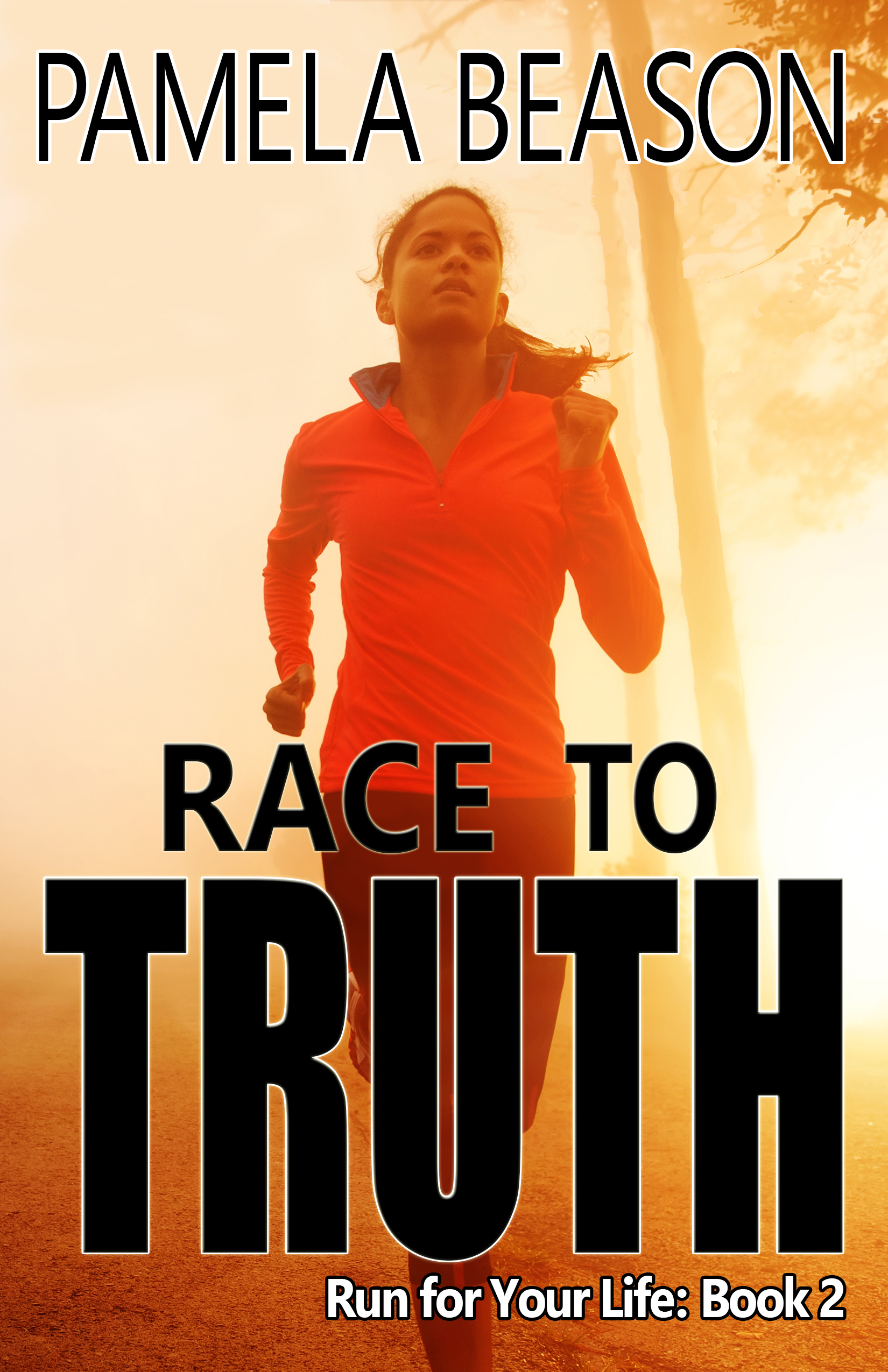
RacetoTruthCover

Most books come both from an author’s imagination and from the author’s experience. That’s certainly true of my stories: my biggest challenge is preventing myself from emptying my brain into every book. I have worked as a mechanical and architectural drafter, geologic research technician, translator, technical writer, managing editor in a multimedia department, and many other jobs too weird to mention. You can imagine what a muddle I could create if I threw it all in.

These days, I am a licensed private investigator, which you might think would be a perfect job for a mystery writer. Alas, the work is not nearly as exciting as it is on television. The biggest reason is that real-life PIs have to obey the law because we may have to defend everything we do in court. Also, discretion is everything when it comes to investigation work, so I can’t write about any case.

But that’s not to say that my investigation experiences don’t go into my books. Lately I’ve focused on my young adult Run for Your Life suspense series. Why did I want to write young adult stories? One, I love to interview teenagers: they are at such an interesting point in life, where all things, terrific and horrific, seem possible. Two, I have met too many teens in the foster care and juvenile justice systems. They often end up there because their parents are criminals, addicts, or just plain negligent, and they are often in danger from relatives, associates, or their own bad decisions.

So I decided to write about a teenager who is forced out on her own because her parents were murdered. The killers are looking for her, too, so Amelia Robinson invents a new identity for herself. She becomes Tanzania Grey, an emancipated minor who learns from undocumented workers how to live under the radar of the authorities. She works hard at picking crops and then at a zoo, gets her GED at age 16, and educates herself though online apps. I was inspired by tough young women athletes to make Tanzania a champion endurance racer. Exotic, challenging, multi-day, cross-country endurance races actually exist and die-hard athletes of both genders seek them out. In my books, my fictional races allow my character to experience adventure and danger around the world.

frontcover_art-kindle_final

In Race with Danger (Book 1), Tanzania is determined to win the Verde Island Race’s million-dollar prize to save the life of her friend Bailey. Treacherous terrain and wild creatures that fly, slither, and crawl around this tropical island turn out to be the least of her problems after she draws the name of Sebastian Callendro as her race partner. Sebastian’s personal life has recently put him in the spotlight, and his nosy followers are exactly the kind that Tana can’t afford.

In Race to Truth (Book 2), the exciting second book in the series, Tana receives an invitation to compete in an extreme version of the Ski to Sea cross-country relay race in her home town: Bellingham, Washington. She has always wanted to be part of Ski to Sea, and returning to Bellingham might allow her to uncover clues about her parents’ murders. But sleuthing around near the scene of the crime could also reveal her true identity and cost Tana her life.

I’m working on Book 3, Race for Justice. But I don’t want to neglect my other series, so I’m also working on Book 4 of my Summer “Sam” Westin wilderness mystery series (Endangered, Bear Bait, Undercurrents). Did I mention I’m a hiker/kayaker/snowshoer/cross-country skier/scuba diver? A lot of my outdoor adventures go into my Sam Westin series. I write about the wilderness not only because I want to share my passion for nature and wildlife, but because even when you can call 9-1-1 in the backcountry, help is unlikely to arrive soon. That means self-reliance is crucial for survival as well as for solving crimes, and that makes a perfect setup for a suspense novel.

And I’ve also begun Book 3 of my Neema Mysteries (The Only Witness, The Only Clue), which feature Neema, a gorilla who has been taught sign language in a psychology project. This series sprang not only from my fascination with animal intelligence, but also from my investigation experience, where I have worked on cases that involve the testimony of small children. A gorilla is believed to have the intelligence of a five-year-old human, so if a five-year-old child can testify, why couldn’t a gorilla who knows sign language? The problem, of course, is whether Neema will be believed, because like a small child, she is easily distracted, has a limited vocabulary and no sense of time, and often invents stories to get what she wants.

And finally, I am about seventy percent of the way to finishing a sequel to my romantic suspense Shaken, in which a handsome (of course) investigator is assigned to look into whether a business owner (Elisa Langston) is committing insurance fraud. I wrote Shaken because I know how difficult it can be to prove innocence when accused of a crime. Elisa is a gutsy half-Guatemalan young woman whose Mayan mother deserted her at age 9, leaving her to be raised by her Anglo father. After his sudden death, Elisa inherits the family plant nursery, and under her watch, the business quickly sinks into trouble. There’s an earthquake, vandalism, and arson, a lot of suspicious quirky characters running around, and of course, romance! The sequel focuses on Elisa’s adoptive mother, Gail Langston, who is afraid to fall in love again after her third husband (Elisa’s father) dies.

PBauthor photo flipped smaller
About the Author:

Pamela Beason often jokes that she suffers from multiple personality disorder. She’s pretty much interested in everything and can never decide what to focus on next, so she constantly juggles multiple book projects. When she tires of creating fictional escapades, she slips off into the wilderness for a real-life adventure. All her books are published by WildWing Press. You can find links to all her books and join her mailing list on http://pamelabeason.com.

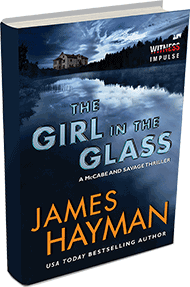
James Hayman: The Girl in the Glass Saturday, Jun 4 2016 

The-Girl-In-The-Glass-3d-web-side
Auntie M is late to James Hayman’s McCabe and Savage series, but she’ll be back for more after reading The Girl in the Glass, its fourth installment.

The action fluctuates between Whitby Island, Maine, in a case from 1904 and the tragic death of the lovely Aimee Whitby, a French artist, whose murder remains filled with speculation but unsolved. This is contrasted against the June 2012 murder of her descendant, Veronica Aimee Whitby, and closely resembles the hallmarks of the first, with the action split between Portland and Whitby Island.

Veronica is the valedictorian of her school, a manipulative young woman killed on the night of her graduation party. Enter McCabe and Savage, determined to find the killer as quickly as possible. Despite the revelations that perhaps Veronica wasn’t the nicest young woman, she was still only eighteen and at the cusp of her life when she is murdered.

But their investigation is thwarted by the different personalities at hand. There’s the dead girl’s father, wealthy to the point of absurdity, her stepmother, and her half sister. There are petty and real jealousies, sibling rivalry, and the kind of complex family situation that you know you wouldn’t want to be at their Thanksgiving dinners.

Hayman gives McCabe and Savage their own relationship issue to struggle with as the case pushes forward, under the eye of a a strident media, dogging their heels. One of the highlights of this is seeing the duo at work, balancing their case and their emotions, trying to make sense out of the various strands. The past come into play in surprising ways as the case races to its finale. Fast paced and reminded Auntie M of the quick read in one gulp action of a John Sanford novel.

Darn Good Reads: Con Lehane, Nancy Allen, Karin Salvalaggio Sunday, May 29 2016 

Auntie M is celebrating her son’s 40th birthday this Memorial Day Weekend (could she really have a child that age? Unlikely.) And she also is flying her flag and remembering those who served our country and their families. Happy Memorial Day to all~

For your reading pleasure, she’s recommending five terrific reads if you find yourself with time to sit on a porch or swing in a hammock. Great company, to be sure. Enjoy your weekend, whatever it brings–and enjoy a good book!

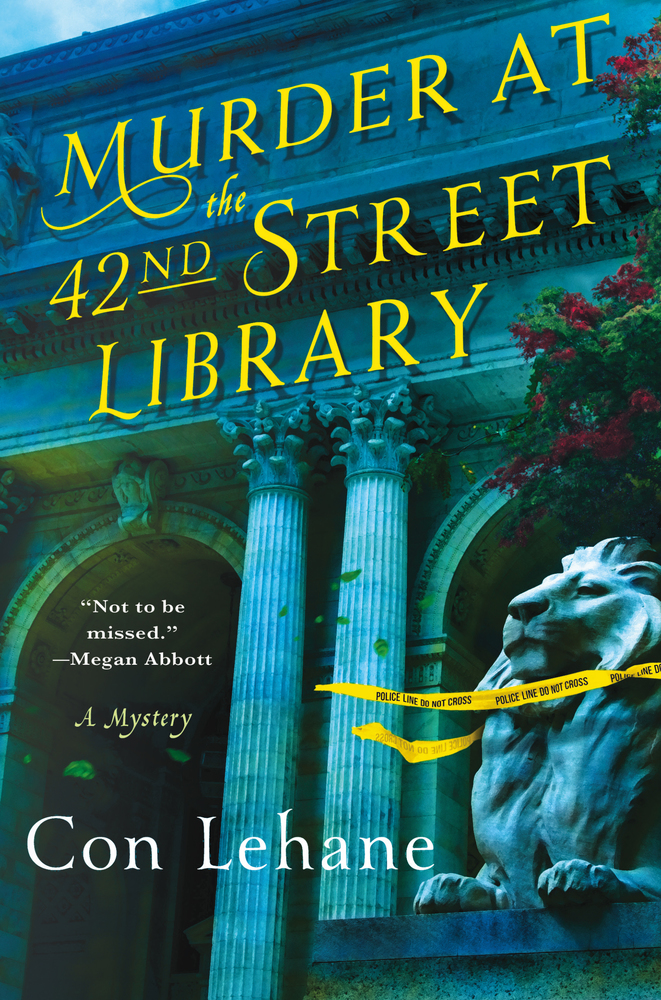
murder at the 42nd street library_MECH_01.indd
Con Lehane takes the protagonist from three previous novels, bartender Brian McNulty, and moves him to the sidelines in his newest, Murder at the 42nd Street Library. The protagonist this time is Raymond Ambler, named in an homage to two of the author’s favorite crime writing masters, Raymond Chandler and Eric Ambler, and provides a clue to the author’s love and knowledge base of crime fiction.

Ray Ambler is the curator of the wonderful NYC library’s crime fiction collection. The wonderful library is a secondary star when the bodies start to pile up in the world renowned institution. Fans who have visited or live in the area, or who have walked past the two stately lions guarding the outside (Patience and Fortitude), will delight in this behind-the-scenes setting.

When a murder occurs on premises, Ambler knows the personalities involved and find himself drawn into the investigation of Mike Cosgrove, the NYPD homicide detective who’s a friend. The two will be plunged, along with a colleague Ray finds himself drawn to and a few other friends, into the twisted world of a celebrated mystery writers whose donation of all of his papers to the library seems to be the catalyst for the murders.
Ray will find himself trying to be protective of several who have entered his life, while being proactive in the investigation and trying to stay on the right side of the law.

There’s a lovely feel of noir in this as Ray untwists the secrets kept for decades that impact on the present.

Let’s hope this is just the first of more appearances by the shrewd and multi-layered Ray Ambler.

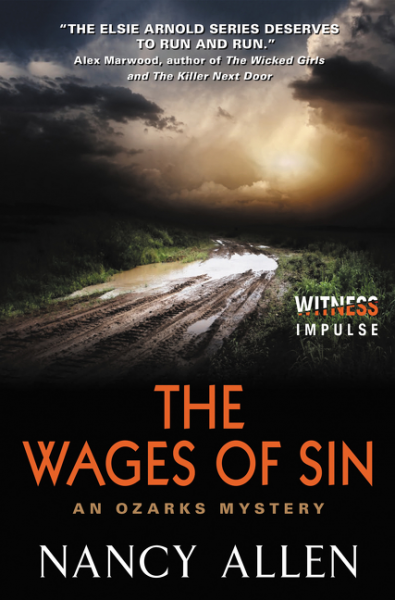
Wages2
Nancy Allen brings back ADA Elsie Arnold in the next taut entry in her Ozark Mystery series, The Wages of Sin.

Elsie finds herself reluctantly chosen by her boss, DA Madeleine Thompson, to assist her in the trial that has captivated the community: a young pregnant woman is found beaten to death in a trailer park. The suspect is the father of the unborn child and Thompson decides this is a death penalty case.

The victim’s six-year-old daughter, Ivy, is the only reluctant and traumatized witness. To make matters worse, Thompson decided to draft in another lawyer from the State Attorney General’s office to help their team. Then Elsie and her team find out the public defender assigned to represent the boyfriend is a well-known merciless trial attorney, Claire O’Hara.

Elsie is determined to find justice for the unborn child and its mother, even as damning evidence about the victim is revealed. It will be up to Elsie and her boyfriend, Barton City detective Ashlock, to keep Ivy safe before and even after testifying.

A gritty and realistic legal thriller.

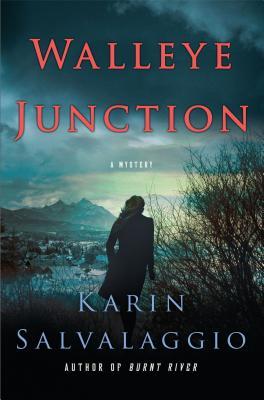
Walleye
The Montana setting is a key element in Karin Salvalaggio’s series featuring Detective Macy Greeley in Walleye Junction.

The small community of Walleye Junction is rocked when outspoken radio journalist, Philip Long, is kidnapped and later murdered in a way that knocks Special Investigator Macy back on her heels and makes it personal, even as takes her away from her young son, Luke, to investigate the case.

It would seem Long’s own investigation of a local militia group is at the heart of the case, especially when two kidnappers are found dead and are known to have ties to the militia community. But there are also discrepancies that trouble Macy. Their son has absconded; the bodies were moved after death, indicating a third person was involved. Then police receive anonymous emails that point them in the direction of prescription drug abuse.

Long’s most recent investigation notes seem to have disappeared, and no one knows what he was working on. His daughter, Emma, has returned to the town for his funeral, which adds to the complications and brings up an old case that sets Macy on alert: Emma’s childhood friend Lucy died from a drug overdose. Emma feels her father may have uncovered something that’s not right about her death.

There will be family squabbles, the rumor mill of a small town in high gear, children in jeopardy, and an old love from Emma’s past that haunts her and annoys Macy. And then there’s Macy’s relationship with Aiden Marsh, and if the couple have any real future in the long-term alliance.

The relationships and characters feel real and readers will be surprised at the twists in the plot of this suspenseful and perceptive look at small towns and the people who live there.

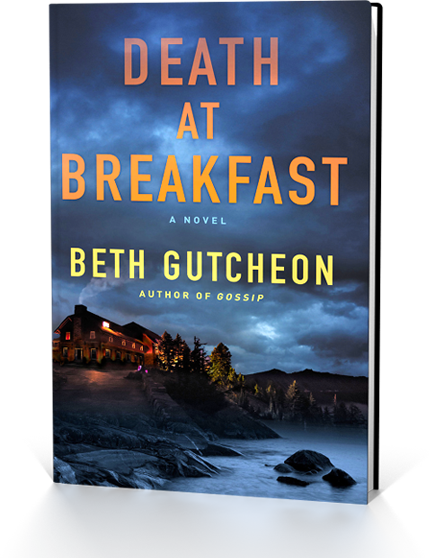
DeathBreakfast
Author Beth Gutcheon has written nine previous novels and several film scripts before turning her hand to mystery in this debut of a new series, Death at Breakfast.

Written with a strong sense of wry humor about the two main characters, readers are introduced to newly retired school headmistress Maggie Detweiler and her friend, socialist Hope Babbin.

The two have arrived for a weeklong cooking class at a picturesque mountain inn. Thinking about how to spend their retirements, this duo are hoping they find themselves compatible enough for traveling companions in the future. The Victorian-era inn seems the perfect spot to try out their time together, and has the added bonus of being the home town of Hope’s deputy sheriff son. Maggie has had Buster as a student; Hope is trying to repair the gulf between them.

They find the Oquossoc Mountain Inn everything they’d hoped for, until the arrival of a Hollywood contingent who threaten to disturb their peace and tranquility. The rude trio are Alexander and Lisa Antippas, and Lisa’s sister, Glory, and don’t forget the little yapping dog who accompanies them, because soon everyone in the inn will be aware of that dog.

When a deadly fire in one wing of the inn happens at night, Alexander’s charred body is found in his bed. Known for sneaking cigars into the No Smoking facility, it’s thought to be a tragic accident–until a second circumstance proves that it most likely was not. With Buster investigating, the two ladies swing into action to help him solve this big case as state’s attorneys and senior law enforcement descend, hoping for a quick arrest.

Maggie knows human nature after a lifetime of evaluating students, and quickly ascertains that the higher-ups will settle for the most obvious suspect, and indeed, a young woman just fired from the inn is soon arrested for arson and murder. Maggie and Hope prove to be a daunting duo as they use their common sense and cheerfulness to disarm witnesses and gather evidence that will help Buster find the real culprit.

A delightful debut that will have readers waiting for the next installment.

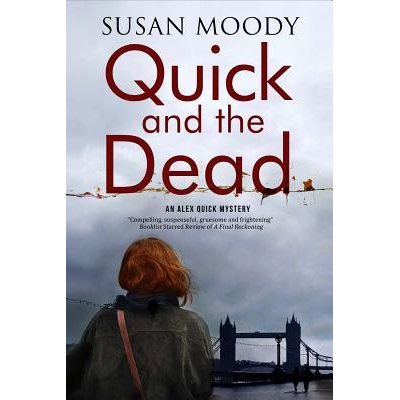
Quick2

Susan Moody debuts a new British mystery series with Quick and the Dead, an original and highly literate mystery. The “Quick” in the title is former detective Alex Quick, who is coping with the loss of her marriage and unborn child by changing careers. With a knack for compiling art anthology books, Alex has formed a business partnership with Dr. Helena Drummond, a university professor and art historian, and a woman who keeps her own life close to the vest.

The book’s action packs a wallop when Alex finds a dead body in Helena’s flat in a disturbing scene that lets the reader know this is not a cozy. Although relieved it’s not Helena, the professor’s disappearance makes her the lead suspect in the murder. This scene simmers in the readers’ mind as it does in Alex’s and lets them know she’s been deeply affected by the murder.

Alex is also guilty because she’d ignored Helena’s complaints of a stalker. She involves herself in finding the murderer, both to clear Helena, p and keep her partner from the jeopardy she must find herself in from the real culprit. Alex is complex and multi-dimensional, a character who can curse like a trooper but has a fine mind for investigating as well as an eye for art. She’s a strong lead for a series, and the reader becomes fully engaged when Alex realizes just how little she knew Helena.

“She comes across as so open and let-it-all-hang-outish, but in fact she gives almost nothing away. So I don’t know anything about her background or her family situation. Nothing. Apart from the fact that she’s been married twice,” Quick says at one point, and is immediately stunned to learn that one of those husbands is a painter whose work Alex has long admired. She’d urged Helena to include his work in one of the compilations of pictures and text that they have published to much acclaim and some profit, and she’d omitted this tidbit of her background.

There are enough twists to keep readers interested, and it will be interesting to see just how Alex’s next adventure proceeds.

Sophie Hannah: A Game for All the Family Sunday, May 22 2016 

GameFamily
Auntie M had previously mentioned Sophie Hannah’s standalone, A Game for All the Family, in a thriller post last fall. But it’s available now in the US and worthy of a second look for those of you who are hooked on this writer’s wicked imagination.

A Game For All The Family, shows Hannah’s deft hand at psychological thrillers, as well as her ability to create an intriguing story from the most seemingly innocuous bits of people’s lives that somehow escalate before the reader’s eyes into full-blown terror. This is the genius of her writing.

Justine Merrison is moving with her family to escape London and her high pressure job to the lovely Devon countryside, home to Dame Agatha, by the way. She has huge plans to do nothing at all, at least for a while, but the family is no sooner moved in than teen daughter Ellen withdraws and exhibits a change in her personality.

It seems Ellen has written a story that describes a grisly murder set in the family’s gorgeous new home and just happened to name a character after herself. What starts out as a school assignment morphs into the story of someone else’s family.

Then her good friend is expelled from school for a trifle and when Justine goes to the school to ask the head to reconsider, she’s told the student doesn’t exist–and that he never attended the school. Who is going crazy–Ellen or the school?

And then anonymous calls start, and Justine finds herself accused of sharing a murderous past with a caller whose voice she doesn’t recognize. Being caught up in this strange story will ultimately affect Justine, Ellen and their entire family, especially when Justine realizes it will be up to her to stop their torment.

How this falls out is part of the fun of reading the unique novel where Justine must find out just whom she’s supposed to be in order to stop the threat to her family. Twisted and entertaining.

« Previous PageNext Page »