From The Cradle: Louise Voss & Mark Edwards Sunday, Feb 8 2015 

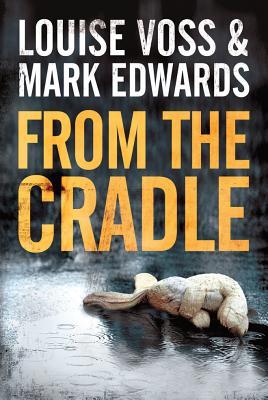
Voss and Edwards are co-authors of four other novels, as well as over eight solo novels between them. This offering, From the Cradle, introduces DI Patrick Lennon in the first of what promises to be an interesting and entertaining series that Auntie M will be certain to follow. fromcradle

It starts out with a fascinating prologue that sets up Lennon’s home situation, which Auntie M won’t reveal here but which is fraught with anxiety, and will shadow this big case, which starts when several young children go missing.

Three-year old Isabel Hartley is snatched from her home on a tony street, taken from the front room in the middle of the afternoon. Two days later two-year old Liam McConnell is abducted from his car when his mum runs into Sainbury’s to pick up her dry cleaning and returns to find the back door ajar and Liam missing.

Then Helen and Sean Philips go out for a rare evening, leaving their teenaged daughter to babysit three-year old Frankie. When they return that evening, teenaged Alice is zonked out on the sofa, and Frankie is missing from her bed.

There will be a host of witnesses who’ve seen noting and several unreliable narrators along the way as Lennon and his partner, DS Carmella Masiello, head a team in a race against time, trying to find the abducted children. Are these the work of a kidnapping ring? Or are there different reasons for the children to go missing just now?

In a most surprising twist, what would appear to be the end of the case instead turns into an even more involved plot switch. It would give away too much to tell more specifics except to say that nothing is what it seems on the surface as buried secrets from the past will return to haunt several of the main characters and affect the outcome.

Fine characterizations, realistic situations and a compelling plot all make this series one you’ll want to watch for. The second installment is due this fall and Auntie M will be in line. Highly recommended.

Ursula Archer: FIVE Sunday, Jan 18 2015 

FIVE

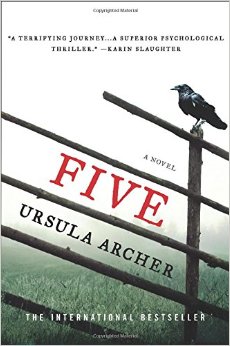
Austrian writer Ursula Archer is a science journalist who has previously published YA and children’s books. Now she turns her hand to police procedural thriller in FIVE and readers will be very happy with her decision.

The book starts out with a bang: “The place where his left ear used to be was throbbing to the rhythm of his heartbeat. Fast and panicked.”

And the pace never lets up as police detectives Beatrice Kaspary and Florin Wenninger become involved in solving a series of increasingly confusing murders. First is the body of a woman who fell from a cliff who turns out to have GPS coordinates tattooed on the soles of her feet.

When the detectives trace the spot of these coordinates, they find a severed hand and more taunts that lead them to yet another site and more body parts. It soon becomes clear they are on the trail of a murderer who is using the sport of geocaching in a far more sinister way than usual.

The clues they are given are frustrating and obtuse, sometimes leading to a witness who then disappears, and all the time the two detectives feel the killer is playing with them. Then he starts to leave Beatrice text messages on her phone and the tension, never abated, ratchets up.

This is a clever and well-plotted mystery with the puzzle at its heart that grabs you and doesn’t let go. That the detectives are compelling figures adds to the mix. Let’s hope this is the first of a series from Archer. Auntie M will be lining up to read the next translation.

Emma Jameson: Marriage Can Be Murder Sunday, Dec 21 2014 

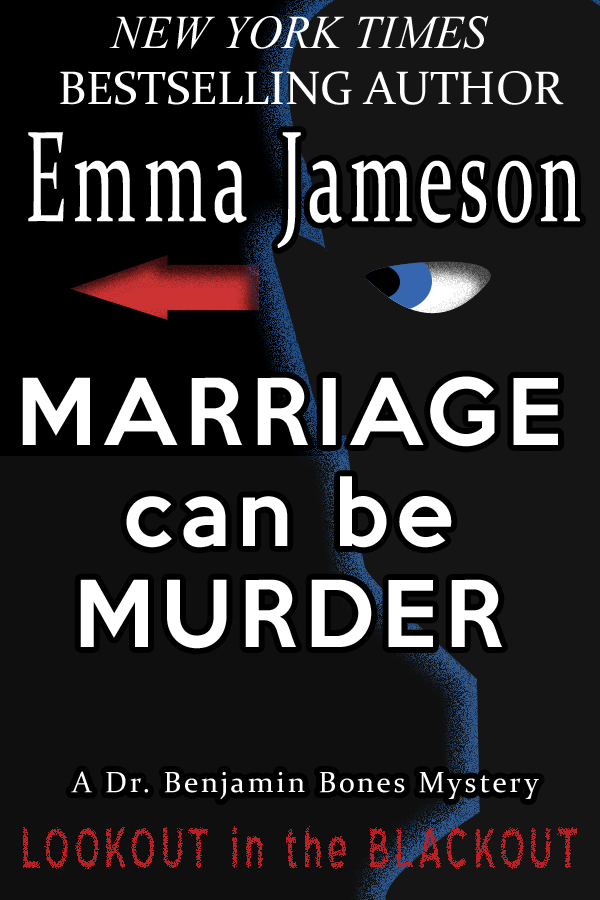
British author Emma Jameson has a new series premiering. The Dr. Benjamin Bones mysteries start out with Marriage Can Be Murder. MCBM Cover

On the eve of World War II, Dr. Benjamin Bones is at war with himself.

While most young men are being sent away to fight the Germans, Ben is chosen to serve on English soil. Ordered to move to wild, beautiful Cornwall, he must trade his posh London office and stylish city life for the tiny village of Birdswing, population 1,221 souls.

But leaving his home and shelving his career ambitions aren’t the only sacrifices facing Ben. His unfaithful wife, Penny, is accompanying him to Cornwall in a last-ditch effort to save their marriage. But moments after their arrival, Penny is run down in the street, and Ben is almost fatally injured. And while the villagers assume Penny’s death to be an accident, Ben quickly deduces it was murder.

As he convalesces in Fenton House, which the locals call haunted, Ben meets Birdswing’s eccentric inhabitants. Mr. Gaston, the volunteer air warden, obsessed with defending his remote village against Nazi spies; Mrs. Cobblepot, a thoroughly practical housekeeper who believes in fairies; and Lady Juliet Linton, a prickly, headstrong aristocrat who won’t take no for an answer.

While adapting to life during Britain’s “War at Home,” a time of ration books, victory gardens, bomb shelters, and the Blackout, Ben sets about solving the mystery of Penny’s murder—with a little help from Lady Juliet and the Fenton House ghost.

As a special treat for Auntie M readers, Jameson has provided an excerpt of the new book:

10 October, 1939

Ben didn’t need to leave his room over the Sheared Sheep to know it was getting colder; he felt it every time a southeaster blew through, penetrating the late Victorian heap as easily as a torn mack. Downstairs, raucous laughter and pint-fueled rows started in midafternoon and carried straight through till closing. After the issuing of the Call-Up Proclamation, it seemed most of the village’s young men were heading into the pub a little earlier each day, either to drown their fears or enjoy what might be a final pint with friends. Ben often overheard long snatches of conversation, provincial and circular in nature, that did nothing to entice him downstairs. And if not for the insistence of his nurse, a curt sister with very definite views on the curative power of sunlight, he would have kept his blackout screens in place night and day. What difference did it make?
The words of the publican, Angus Foss, floated up from the barroom. That is, if the perpetually aggrieved tones of a perpetually aggrieved Scot can ever be said to “float.”
“Aye, I’ll fetch him for ye. Just what my poor spine needs, another wee traipse down the stairs with a full-grown man in my arms. Devil of a way to start the day. And me due to unlock the doors in a quarter hour….”
Ben checked the alarm clock beside his bed. Was it really not yet three o’clock? Dawn was trundling toward dusk even slower than usual.
“… but ye know my temperament. Man o’ the people. Live to serve,” Foss continued morosely. “Still, martyrs and saints have their limits. The Council—meaning your ladyship’s mother, ye ken—had best make restitution for all I’m out in lost rent. That includes meals, housekeeping, and electric current. If I’m not assured payment by tomorrow morning, I’ll put him out, I swear by God I will.”
Foss’s threat didn’t trouble Ben. He’d overheard it many times during his slow convalescence, though never attached to a twenty-four hour deadline. The insistence of some unseen visitor to have him brought downstairs was what bothered him. Foss found the process inconvenient; Ben found it downright humiliating. As for whatever the visitor wished to discuss, it didn’t matter. Unless the person asking represented the British army, Ben would say what he always said: no.
Easing his Edwardian wheelchair, a ghastly contraption fashioned of blond wood and rattan, out of his room, Ben maneuvered onto the landing. There, near the top of the stairs, he couldn’t see the bar, where Foss and his visitor were standing, but he could hear her voice quite clearly.
“I understand he’s lodged here six weeks. So lost rent is fair enough,” she said in the flowing tones of an educated woman. “But surely you customarily provide meals to your guests? I’ve always pitied those souls unfortunate enough to squat in this hovel, but I refuse to believe even you would bill them separately for electric lights. Or what you call housekeeping, which amounts to Edith Hoovering twice a month and linens changed once per solstice?”
Foss cleared his throat. “Now, that’s verra hard—”
“Nonsense. I was being kind to Edith. If I were the sort of woman who engaged in gossip, and I assure you I am not, I would add that outside Birdswing, ‘Hoovering’ is not the common term for Edith’s primary occupation. I might also remark that you virtually never let that room upstairs, except for the sort of exchange that doesn’t require a hot meal to sizzle.”
“That’s a lie!” Foss thundered. “No immoral congress takes place within these walls.”
“Of course there’s no immoral congress. A physician with two broken legs occupies the requisite space.” As the woman laughed, Ben leaned forward, trying to get a look at her. “Mind you, I make no accusations. I never repeat gossip and would prefer not to hear the rumors about poor Edith and your tawdry little room. No doubt she’s a nearly adequate maid, and it’s a nearly bearable cell. So please believe me, my dear Mr. Foss, when I say I perceive your discontent. My mother perceives your discontent. Far away, nestled amongst the most distant stars, advanced life forms perceive your—”
“Dinna ken what you’re on about,” Foss said peevishly.
“Of course not. Being met with slack jaws and faintly suspicious eyes is both my blessing and my curse. But if you could just sublimate your habitual disgruntlement long enough to fetch down—”
“Blessing?” Foss cut in again. “How the deuce is it a blessing that regular folk can’t make heads nor tails o’ what ye say?”
“It reduces the volume of complaints directed toward my mother.” The visitor sounded cheerful. “She’s not a well woman, you know, and heaven knows my childhood travails contributed to her condition. How fortuitous that as I matured, I acquired sufficient vocabulary to speak my mind without ruining her day. Now. Mr. Foss. I’ve very much enjoyed our little talk, but the time draws nigh for you to ply your unsavory trade, and Edith to ply hers. So will you fetch down Dr. Bones, please?”
“Aye, Lady Juliet.” The cantankerous Scot sounded defeated.
Ben wheeled back into his room. Somewhere in the midst of listening to that acid-tongued woman, he’d lost his resolve to say no, at least without hearing her out. But what could she possibly want? Everyone in Birdswing knew of his injuries. His right leg, broken below the knee, was mostly healed, but his left leg had been shattered. During that titanic smack of impact, the moment his torso struck the lorry’s bonnet, his legs had connected with its iron grille, breaking the tibia and fibula in two places each. Moreover, his femur had snapped, either when the lorry hit him or when he struck the ground. Now Ben knew firsthand the truth of the medical school saying: a broken femur was the worst pain a man could experience. Its corollary, that childbirth was the worst pain a human being could experience, made him devoutly glad to be male.
Hearing the stairs creak under Foss’s heavy tread, Ben gripped the arms of his chair and slowly, carefully, tried to rise. His right leg trembled. It had grown weak during the long recuperation. Two seconds later, his left buckled, dropping him back in the wheelchair with a stab of agony.
Perspiration broke out across his forehead. Sighing, he wiped it away. There was no more morphine for him: since the declaration of war, narcotics and other essential medications were strictly rationed. As a result, he’d been undermedicated, at least by London hospital standards, but that was probably a blessing. Morphine didn’t eliminate pain, it just created detachment, placing the patient on a billowy cloud from which discomfort could be ignored. No other substance came close; not even single malt whiskey could compete with an injectable opioid. And Ben, who during his internship had struggled to comprehend the nature of morphine addiction, understood it now all too well. He’d survived the accident. Penny had not. The chance for them to repair their union, or at least face its dissolution together, had been snuffed out without amends or even goodbyes. When real physical pain was entwined with amorphous demons like heartbreak, guilt, or misery, and a substance existed that artificially detached the sufferer for a few precious hours, who on earth wouldn’t be tempted?
He looked around the little room. The books and magazines his mum and dad had brought were long read; the condolence cards and letters from the extended Bones family were tucked away. His last visitor had been an aunt on holiday who’d dropped by out of morbid curiosity; his last telegram, from Penny’s brother George, asking if Penny had any life insurance money due. A fresh distraction might be worth the price of venturing downstairs.
“Dr. Bones! Are ye decent?” Foss bellowed outside the door.
“Yes.” Only due to the efforts of his nurse, who insisted her patients be fully dressed by breakfast, no lazing about in pajamas or dressing gown. Most days, Ben didn’t see the point, any more than he saw the point of looking out the window at this sad little village he refused to call home. But defying such a grimly resolved sister wasn’t worth the wear and tear on his vocal cords. So not only was he decent, he was properly attired to meet this backwater aristocrat, from his silk necktie to his Oxford dress shoes. “Do come in.”
“Do come in,” Foss mimicked. As usual, his hair was wild, his shirt was stained, and a bit of egg clung to his bushy mustache. “I’ve not come to take tea with ye. Here to break me back again in service to her ladyship.”
“You sound like you don’t fancy the task. Shame. Being carried by you is the highlight of my week.” Ben kept his tone light. “So tomorrow morning I’m out on my ear, is that right?”
Foss had the decency to look abashed. “Ye heard?”
“As my mystery visitor put it, beings on faraway planets heard. Never mind, Foss, think nothing of it. If the government hasn’t paid you yet for my room and board, I don’t blame you for feeling ill-used. Tell me about that woman. What does she want?”
“Like anyone kens the answer to that. Beat down me door while I was at lunch and prattled on till I gave in. Her and her mother, Lady Victoria, come from people who once owned every acre of Birdswing. Reckon they still do, or near as makes no difference. I told her you’re fit for nowt, but she wouldn’t listen. That’s how she wound up married to a bounder—not listening.”
“Married to a bounder?” The revelation didn’t surprise Ben; Birdswing brimmed with gossip. Everyone, even his nurse, seemed incapable of simple discourse without tossing in a few nuggets of personal information about someone not present to defend themselves.
“Aye, and not just any bounder, the prince o’ the lot. As flamboyant as Valentino and as phony as they come, stuffed with lies and promises. Made off with half the family fortune, from what I hear. Course Lady Juliet and her mum are close-mouthed about it, but care to wager how it ended?” Foss lifted his eyebrows so high, small eyes gleamed within their narrow sockets. “The ‘d’ word.”
Ben knew he was supposed to respond with disapproval and chose to depart from the script. “Good on her.”
“There’s no call for sarcasm.” Foss adopted a tone of virtuous sorrow. “It’s a stain on Birdswing. All the manor staff deny it—high-minded and high-handed, the lot o’ them. But he’s gone, isn’t he, and Lady Juliet only wears her ring on formal occasions. Still, she’s Mrs. Bolivar, not Miss Linton. Remember that.” Taking a deep breath, he bent over the wheelchair. “Ready?”
“Ready.” Ben steeled himself. Foss, stringy but remarkably strong, slid one arm around his shoulders and another beneath his knees, lifting him out of the chair. Bad enough to be held close by another man, particularly one like Foss, but the mere experience of being carried downstairs set Ben’s left knee on fire. His thigh ached, too. By the time Foss deposited him on the pub’s lone sofa, a red velvet affair long past its prime, fresh perspiration stood out on Ben’s forehead and tears stung his eyes. Fortunately, Foss was too occupied with his own resentment to notice.
“You look like a slender wee lad, but you weigh more than a keg o’ me best. At least when I shift one o’ those, I’m padding me pocket while I strain me back.” Foss sighed theatrically. “Let me fill my lungs and I’ll fetch down your bloody chair.”
It was a bumpy transit via wheelchair down the pub’s front steps, beneath two elms, and into the dazzling afternoon sun. Parked by the curb was a Crossley 20/30, gleaming ebony and clean as a whistle. Its driver leaned against the bonnet, six foot two if she stood an inch, clad in what looked like waterproof trousers, a man’s green Macintosh, and galoshes. Dull brown hair was scraped back in a bun, exposing what seemed like too much face: a vast expanse of forehead and chin and cheeks, all of it sunburned. Ben, aware that during the war, unmarried women would temporarily fill the positions vacated by able-bodied men, thought this she-behemoth was better suited to farm or factory labor. Perhaps when it came to hiring drivers, Lady Juliet’s judgment was as questionable as her taste in men.
“Good heavens, it’s the man himself!” she called. “After such a long wait, I’d nearly succumbed to despair.”
Ben gaped at her. He hadn’t expected that smooth, educated voice to issue from those lips.
His expression must have amused the woman, who laughed. “Don’t look so frightened, Dr. Bones. I don’t eat injured men for lunch. Nor do I dress for dinner, as it were, to run midday errands. Unlike you.” She eyed him critically, as if his London wardrobe were wildly inappropriate. “If my arrival had been foretold, would you have received me in top hat and tails? Mr. Foss, I fear our new village physician is the achingly formal sort. Introduce us properly, would you please?”
Slightly overwhelmed by the torrent of words, Ben tried to frame a rebuttal, but Foss was already speaking.
“Lady Juliet Bolivar, this is—”
“Linton. I’ve taken back my family name,” she cut across him.
Foss’s bushy eyebrows lifted, tiny eyes gleaming again. That new kernel of information would soon take root in his pub’s fertile ground. “Lady Juliet Linton, this is Dr. Benjamin Bones. Old Sully says we ought to call him ‘Broken Bones’ on account of the accident.”
“Ah, yes. An accident which killed his wife.” Lady Juliet’s smile disappeared. “Has Old Sully produced a clever nickname for that aspect of the tragedy, too? ‘Wrecked Widower’? ‘Heartsick Husband’?”
“Come now, Lady Juliet. The lads were just having a bit o’ fun. No need to—”
“Dr. Bones, I see once again why it’s folly to rely on others for introductions or, indeed, almost anything else,” she said. “They omit what you care about, sprinkle in what you don’t, and tie up the package with a ribbon of indifference. Best speak for yourself. I’m Juliet. It’s a terrible name—curse of my life, next to my height—but there it is.” Looming over the chair, she stuck a large hand in his face. The thumbnail was torn off to the quick; the palm was crisscrossed with scratches.
“I’m Ben.” Quickly, aware he might be cut off if he gave her an opening, he continued, “You should know, my knee hurts like the devil and I have no idea why you insisted I come down to meet you. I don’t suppose you’ve received a message from the Army?” More hopefully, he asked, “Are they ready to transfer me to a small hospital or sanatorium where I can continue my convalescence?”
She gave an unladylike snort. “No. I did hear from the Army a week ago—or my mother heard, which is the same thing. They’re under the impression you’re fit to begin work in the village. Still, the Council elected to give you a bit more recuperation time, what with the magnitude of your loss.” She fixed him with light brown eyes. “My deepest condolences.” For the first time, the words weren’t tinged with acid.
“Thank you. But fit? I can’t even walk.”
“Must you walk to attend the sick?” From her great height, Lady Juliet studied him like a blue heron surveying a fish. “Old Dr. Egon was seventy-four. In the end he couldn’t hear, couldn’t see, and most assuredly couldn’t walk, at least more than a few yards, without assistance. Also, he was drunk by eight o’clock every night. Nevertheless, in his final year he delivered eight babies, set eleven broken limbs, and treated any number of fevers and coughs. If the scotch hadn’t killed him, he’d be staggering toward me now, peering through his thick specs and asking me to repeat every third word.” She sighed. “Surely you can do better, even from a wheelchair. I have a—well, a delicate case, a situation that calls for a physician. Someone with discretion and a glimmer of human empathy,” she added, pitching her voice toward Foss. “Are you willing, Dr. Bones?”
It was on his lips to say no. The sun beat down with summer-like intensity, his knee throbbed, and even if Foss helped him into Lady Juliet’s car, heaven knew how much more pain a drive over rutted country roads would bring.
She stared at him, arms folded across her chest.
“Very well.” He heaved a great sigh calculated to let this bossy, ill-dressed woman know how far she’d overstepped. It was drowned out by her crow of delight.
“Capital! Mr. Foss, please help the good doctor into my car before he changes his mind. Yes, there’s room for his chair in back. This heap seats seven, don’t you know.”
“Wheels are a wee bit muddy,” Foss warned after depositing Ben on the front passenger seat’s threadbare upholstery.
“Never mind that.” Climbing behind the wheel, Lady Juliet slammed her door with gusto. “Do I look like the sort who’s afraid of a little mud?”
He struggled to come up with an answer. From this close, he noticed two things: her brown eyes were surprisingly soft, and there was a slender twig in her hair. It stood up, just atop her severe bun, like an intrepid climber who’d scaled a mountain.
“Oh, Dr. Bones, don’t be so taken aback. I wasn’t fishing for a compliment.”
“I know, it’s only… you have a stick in your hair. Now that I mention it—a walking stick. Insect, I mean.”
He expected a shriek. Instead, Lady Juliet looked mildly intrigued. “Do I? It’s a wonder I can’t feel it. Relieve me of this uninvited passenger, there’s a good man.”
Gently, he plucked the stick-insect from her hair. Lady Juliet grinned at it. “I suppose you think you’re terribly clever, catching a ride with me. Come on, then. Step this way,” she ordered the bug, linking her finger with Ben’s until the insect obeyed. “Let’s get you sorted.”
Ben watched her climb out of the Crossley, stride across the meadow opposite the pub, and deposit the insect on a tree stump. He heard her telling it something—parting advice, no doubt—and then she returned to the 20/30, leaving a swath of trampled grass in her wake.
“Now. Keys. Front pocket? Right,” she muttered as she got behind the wheel again. Apparently even she wasn’t exempt from her own constant stream of commands. “Sorry for the delay, Dr. Bones, but I couldn’t drop him too close to the pub. Wouldn’t that be a terribly ignominious end, flattened by Mr. Foss’s heel?”
“I suppose. But my wife, Penny, would have squashed that bug without a second thought.”
“Wrong. She would have screamed for you to do it.”
Ben chuckled. It was his first genuine laugh in ages. “You knew her?”
“Oh, my dear Dr. Bones.” Those soft brown eyes veered away as the car’s engine roared to life. “Everyone in this village knew Penny.”
“Yes, of course. I should have realized.” Ben groped for something more. Penny had mentioned Birdswing many times; she’d relied on it as a punchline while entertaining their metropolitan friends. Her only fond memory of the village, she’d often said, was watching it shrink into oblivion as the train chugged away. “Were you friends?”
For once, Lady Juliet didn’t soliloquize. She shook her head.
They were probably about the same age, Ben thought. They must have been thrown together constantly, at least at school.
“Did you have a falling out?”
“Oh. Well. You know what they say.” Another sidelong glance, quicker this time. “Nothing but good of the dead.” And to Ben’s surprise, she spoke not another word the entire way to Belsham Manor.

MARRIAGE CAN BE MURDER (Dr. Benjamin Bones Mysteries #1) is the new cozy mystery series from New York Times and USA Today bestselling author Emma Jameson. Blog Link: http://emmajamesonbooks.com/ Facebook Author Page: https://www.facebook.com/emmajamesonbooks?ref=bookmarks Buy Links: Amazon: http://amzn.to/10SMu6m BN: http://bit.ly/1xa1kiS Apple Store: https://itunes.apple.com/us/book/marriage-can-be-murder/id936762241?mt=11&uo=4 Kobo Books: http://bit.ly/1ureZoB

Author Photo-2 Emma Jameson is the New York Times and USA Today bestselling author of the Lord & Lady Hetheridge cozy mystery series. Book #1, ICE BLUE, Book #2, BLUE MURDER, and Book #3, SOMETHING BLUE, are available now. She is at work on Book #4, BLACK & BLUE, and also DIVORCE CAN BE DEADLY, the second of her new series starring amateur sleuth Dr. Benjamin Bones.

For the Boys: Great Holiday Gift Reads Wednesday, Dec 3 2014 

Auntie M enjoyed the Bette Midler movie “For the Boys” and decided to title this post after that as these books all have suspense and action in common, popular with male readers. This is NOT to say that women don’t read these books–of course they do! But if you’re looking for a gift for a male reader, try one of these.

white lies
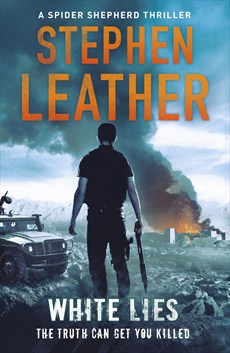
Stephen Leather’s Spider Shepherd series are among top sellers in the UK. This year’s White Lies brings Shepherd back for his 11th outing with MI5. When a former trainee is presumed kidnapped in the wilds of Pakistan, he joins the rescue mission with disastrous results. With Shepherd tortured by al-Qeda terrorist, it will be up to MI5 Controller Charlotte Button to rescue him in the most unorthodox way. Fast-paced and action-filled.

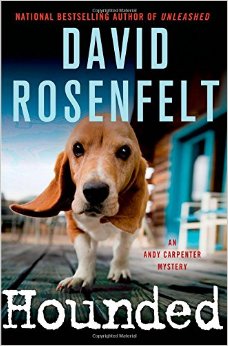
Hounded
For the dog lovers on your list, you can’t go wrong with David Rosenfelt’s Andy Carpenter series. The newest, Hounded
,finds Andy and girlfriend Laurie Collins arriving at a crime scene discovered by his good friend, policeman Pete Stanton. When the body of ex-con Danny Balfour is found, the victim’s four-year old son and basset hound need care and Pete asks the couple to assume to prevent both boy and dog from going into the system. But once Pete comes under suspicion in the death, he will need Andy to put on his lawyer cap to clear him. A nice mix of humor and sleuthing. Why not get the entire series?

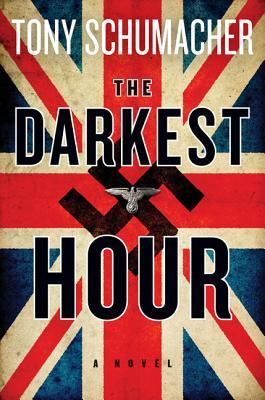
Darkest Hour
Tony Schumacher brings a different ending to World War II in The Darkest Hour
, as he the imagines London of 1946 and how it would be if the Nazis won the war and occupied Great Britain. John Henry Rossett is an unlikely hero: a former war hero and policeman whose family died during the attacks on England and has become an alcoholic. Depressed, with little future before him, Rossett works for the SS in the Office of Jewish Affairs, seemingly unaffected by rounding up Jews for deportation–until he finds an 8 yr-old boy hidden in the chimney of a house he raids. Will Jacob be Rossett’s salvation or his downfall? That remains to be seen as the unlikely duo struggle to stay alive and one step ahead of every group after them as Rossett comes to understand he can trust no one. Intriguing and original, an imaginative thriller.

desert god
South African writer Wilbur Smith’s newest entry in his ancient Egypt series, Desert God , is perfect for the reader who enjoys historical epic novels. Focusing on the character Taita, this slave and advisor to the pharaoh finds himself caught up in a quest to destroy the army of Hyksos and for an alliance with Crete. This takes him on a journey up the Nile through Arabia and over the vast seas of ancient times. With shifting loyalties and never knowing whom can be trusted, Taita’s struggle is as action-packed as any present day novel, as it describes the customs and culture of a time from long ago.

And in Paperback:
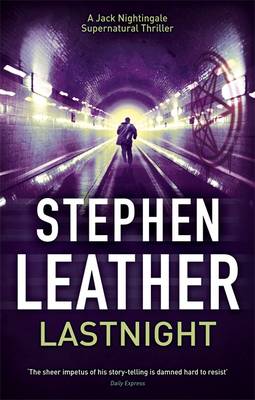
Lastnight-by-Stephen-Leather

We return to Stephen Leather and his Nightingale series for Lastnight. The newest in his supernatural detective series find Nightingale searching for the killer of Goths who all have a tattoo connecting them to a Satanic child-sacrificing cult. Called the Order of Nine Angles, the Order soon has Nightingale himself in its sights and will do anything to stop him bringing them to earth. His solution is unorthodox and will have readers flipping pages to find the resolution.

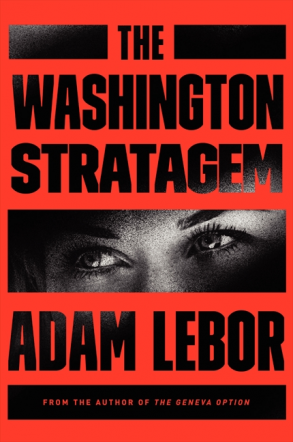
Wash Stratagem
Adam LeBor’s new novel, The Washington Stratagem
, is the sequel to The Geneva Option, which introduced UN covert negotiator Yael Azoulay. Having a strong and sexy woman at the center of the action is a nice twist, as Yael is tasked with confronting a lobbying and asset management group in Washington, DC, about extensive links to US involvement in Middle Eastern wars. Treading a delicate line, Yael must combine international politics and her life as a spy as she races to root out the corruption she finds. Both novels would make a great gift together.

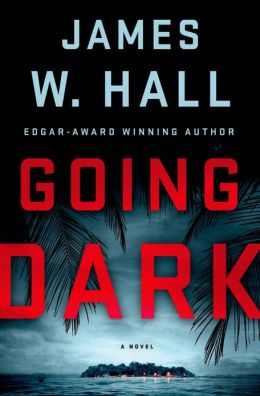
going-dark
James W. Hall has written 13 Thorn novels, all featuring the fly-tying investigator and his sidekick, and returns with Going Dark,a strong entry in the suspense genre. His nemesis this time is ELF, the Earth Liberation Front, an extremist environmental group whose usual means of damage is arson. This time the stakes are raised when they target Florida’s largest nuclear plant, and they’ve managed to involve Thorn’s newly-discovered son, Flynn. Helping Flynn escape from remote Prince Key while at the same time foiling their attempts will lead Thorn to his craziest idea yet. Look for the newest Thorn, Big Finish, later this month.

Runner
Runner follows Patrick Lee’s strong thriller debut, The Breach, featuring former black-ops soldier Sam Dryden. Running at 3 AM has never been so dangerous for Dryden once he encounters 12-yr old Rachel, who only recalls her last two months in a secret prison. Soon it’s obvious protecting Rachel will be more of a chore than he’d expected, as heavily armed crews drive them both across the nation to find answers to whom is pursing her, and why–and all as Dryden suspects that running into Rachel may not have been a coincidence. Warner Brothers has film rights and this action-packed suspense novel will easily translate to the screen.

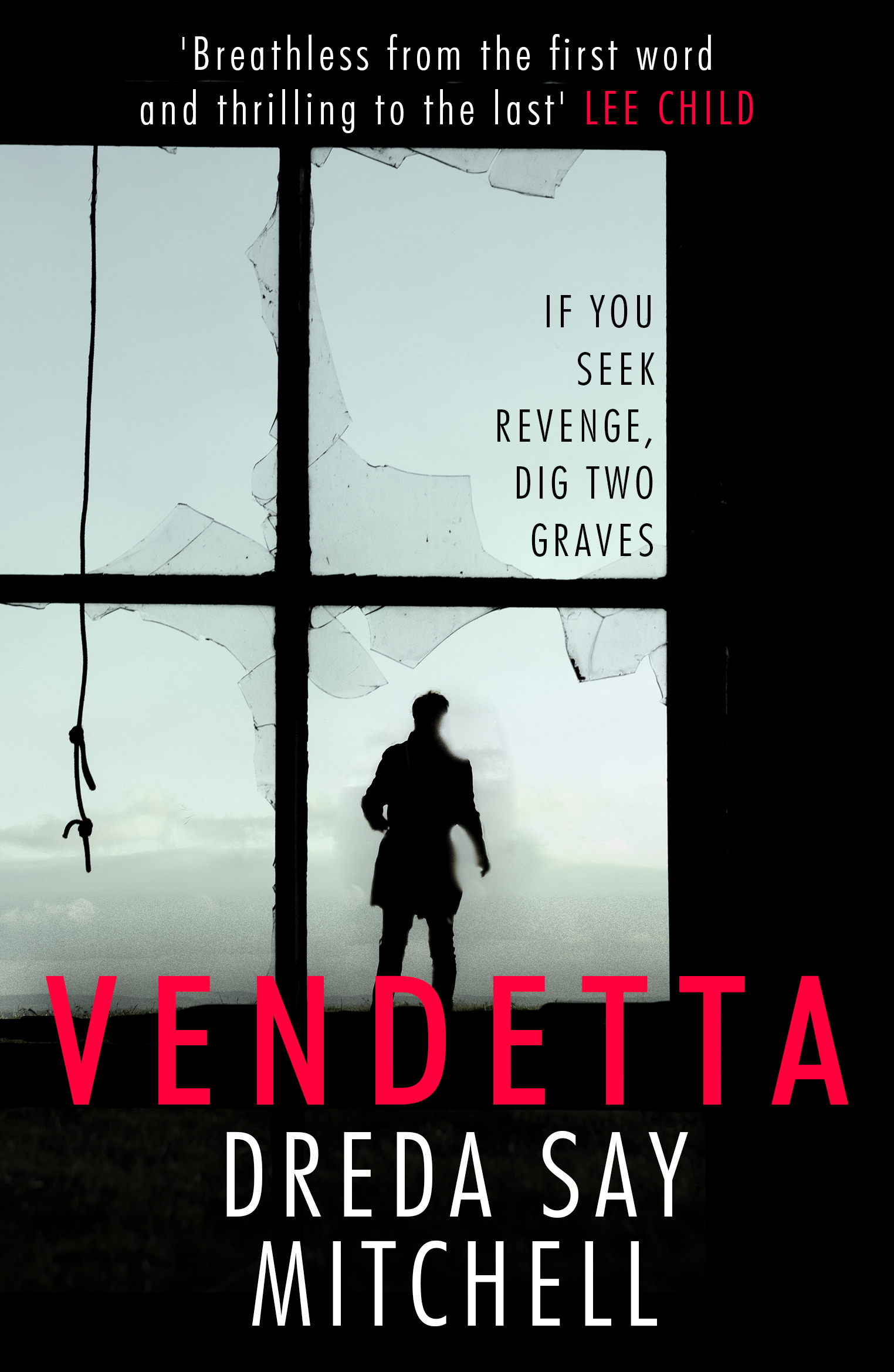
Vendetta-hi-res
It’s easy to see why Lee Child calls Dreda Say Mitchell’s first John MacDonagh novel “Breathless from the first word and thrilling to the last.” Mac wakes up in a trashed hotel room without any memory of how it got that way, bloodied and in pain. He soon discovers his lover’s body in the bathroom, and with evidence pointing to him as her killer, Mac must find the real killer even as he races against time and his grief to clear himself. Tracking him down is none other than DI Rio Wray,an ambitious black female detective on her way to the top, even if it means proving her close friend Mac is a killer. Fascinating look at the world of undercover cops and first of a new series destined to be a winner by this award-winning crime writer.

Maia Chance: Snow White Red-Handed Sunday, Nov 16 2014 

Please welcome author Maia Chance. To be entered to win a copy of SNOW WHITE RED-HANDED, leave a comment~
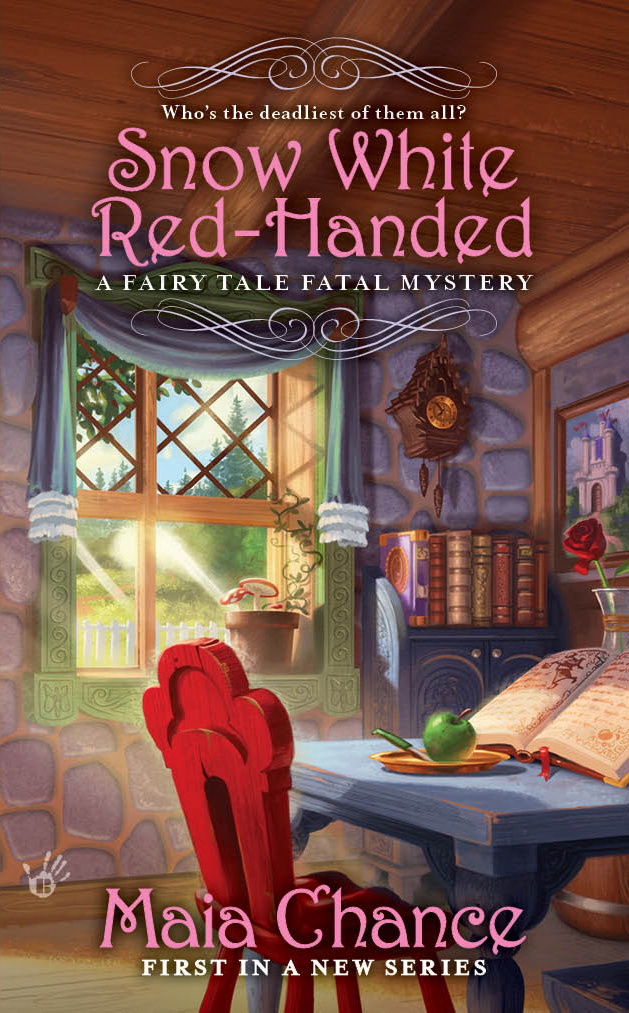
snow white red handed

Bit Part Firecrackers

A reader recently asked me, “How do you create your secondary characters?”

This isn’t talked about much—we writers adore rhapsodizing about our fierce/vulnerable/dauntless/altogether fascinating sleuths and sidekicks instead. But cozy mysteries are character-driven stories, and that refers to all of the characters.

Snow White Red-Handed, my newly-released historical cozy mystery, trots out an eclectic cast of secondary characters, from castle servants and a casino owner to a mysterious Russian princess and an ungainly stepsister. And so—in answer to my Gentle Reader’s question—here is my checklist for secondary characters.

1. They are Fleshed Out.

This applies even to secondary characters who have only one speaking line. Why? Here’s something special about a whodunnit-style mystery: since many of the secondary characters are murder suspects, that means that one of them is really a primary character: the villain. Trippy, right? So, every one of the suspects must have enough punch and intrigue not to seem like a random killer when the truth comes out at the end. My rule of thumb is that everyone has a secret even if it’s not THE secret.

2. They Provide Variety.

Secondary characters can create dimension not provided by the main characters. In Snow White Red-Handed, for instance, I explore class and nationality not only through my sleuth Ophelia Flax (American variety hall actress) and her romantic interest (privileged British professor); I also have a family of American upstarts with a fortune made in the railroad and down-at-heel German servants. And I was able to explore varied settings through secondary characters, too. Because of a couple of sinister guards, the protagonists are lured into a horseback chase through the forest, while my bombastic lady naturalist leads the sleuths to a luxurious health sanatorium. What is more, each of these characters is distinctive in appearance, dress, and mode of speech. Mr. Smith, the American millionaire’s private secretary, speaks like this:

“Like California? Haw! The Black Forest is about as much like California as one of them Arabian racehorses is like a Mexico donkey. Oh, that’s a hoot! No, one thing’s certain, and it’s that I’ve got to get myself back to some real wilderness. That durned police-man, Schubert, has forbidden us all to leave until he gets to the bottom of the murders, but I figure that’ll take about as much time as for him to learn to be a ballerina.”

3. They Provide Absurd (Comic?) Relief.

I admit, Snow White Red-Handed isn’t exactly a serious story. Early readers have called it “fun,” and I can more than live with that. Because even though I will never, alas, be as witty as P. G. Wodehouse (secret fantasy of mine), I do want my books to be at least mildly amusing. I find that my secondary characters, behind my back, tiptoe again and again over the threshold into Absurd Territory. Here is one of the descriptions of the lady naturalist and her elderly, consumptive employer, two characters I immensely enjoyed writing:

“Miss Gertie posed like one of those Viking ladies at the opera, all blond braids and magnificent bosom, in an arched doorway at the far end of the dining room. All that was missing was one of those helmets with horns. She gripped the handles of a wicker wheelchair, which was occupied by what appeared to be a heap of black wool with a white wig.”

4. They Provide Historical Dimension.

Here’s something people have been asking a lot about: how I came up with the attitudes of my German fairy tale scholar, Professor Winkler. His snotty belief that fairy tales are merely the product of debased “peasant” minds is derived from an actual historical essay written by James Russell Lowell (a Harvard professor) in 1870. There was no way I could’ve made it up; Lowell’s assertions have that special outlandish-yet-real flavor. (This is why I compulsively read Wikipedia articles: truth is way, way weirder than fiction.)

5. They Enhance Themes and Motifs.

In Snow White Red-Handed, secondary characters embody or enact themes and motifs from the fairy tale “Snow White and the Seven Dwarves.” For instance, from the fairy tale I pulled the theme of beauty tied to a mother-daughter relationship. Next, I explored that theme through the avenue of the secondary character Prudence Bright, whose actress-and-courtesan mom taught her to value her looks and feminine wiles above all else. As another example, “Snow White” has that little detail about the Wicked Queen wanting to eat Snow White’s liver (or lungs, or heart, depending on the version), so in Snow White Red-Handed I HAD to go there:

“Luncheon, by the by,” Winkler said to Mr. Coop, “was superb. The sautéed liver! Your cook is a sorceress. Did you bring her from America?”

Truthfully, there are lots of writing days when my secondary characters are vastly more amusing to play with than my main characters. On those days I feel like I should, like a theater manager, pull the exuberant bit part actor offstage with a cane. Yet sometimes I indulge, and let them bask in the limelight a moment or two longer.

BIO: FEM_0463 web

Maia Chance writes historical mystery novels that are rife with absurd predicaments and romantic adventure. She is the author of the Fairy Tale Fatal and The Discreet Retrieval Agency series, and her first mystery, Snow White Red-Handed, is available now from Berkley Prime Crime.

Maia is a candidate for a Ph.D. in English at the University of Washington. This means that the exploits of Fairy Tale Fatal’s heroine, variety hall actress Ophelia Flax, were dreamt up while Maia was purportedly researching 19th-century American literature and fairy tale criticism. The Discreet Retrieval Agency series was born of Maia’s fascination with vintage shoes, automobiles, and cocktails combined with an adoration of P. G. Wodehouse and chocolate.

Upcoming titles include Come Hell or Highball (St. Martin’s Press, 2015) and Cinderella Six Feet Under (Berkley Prime Crime, 2015). Maia lives in Seattle, where she shakes a killer martini, grows a mean radish, and bakes mocha bundts to die for.

LINKS:

WEBSITE: maiachance.com
FACEBOOK: facebook.com/MaiaChance
TWITTER: twitter.com/maiachance
GOODREADS: https://www.goodreads.com/author/show/8127322.Maia_Chance

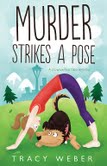
Tracy Weber: Murder Strikes a Pose Sunday, Jan 5 2014 

Please welcome guest Tracy Weber, yoga teacher and author of of the debut mystery Murder Strikes A Pose.

Leave a comment for a chance to win an autographed copy of Tracy’s book.

                                                                                              How in the World did I Get Here?

I never intended to be a writer. But then again, I never intended to be a yoga teacher. If you’d asked me in my early thirties, I’d have told you that yoga was for woo woo Gumby wannabes, and writing was for people who had more talent in their left pinky toe than I possessed in my entire five-foot-two-inch body. a_003

I blame a fender-bender for my yoga career. In the early 1990s I was in a car accident that left me in severe chronic pain for over seven years. That pain was eventually mitigated—if not completely cured—by consistent yoga practice. My life was so transformed by yoga that I quit my corporate job and opened Whole Life Yoga http://www.wholelifeyoga.com/ in order to share the ancient practice with others.

My writing career has more complex origins. For that, I blame a grueling workout, my temperamental German shepherd Tasha, and Susan Conant. http://www.amazon.com/s?ie=UTF8&field-author=Susan%20Conant&page=1&rh=n%3A283155%2Cp_27%3ASusan%20Conant

The ingredients were already inside me, I just didn’t know it. I love dogs. So much so that my husband has nicknamed me the “creepy puppy lady.” I adore my own dog to a fault, even though she’s no Rin Tin Tin. I’ve read cozies since long before I knew there was a genre by that name. And my lifework is yoga. My mystery series was like a stew that had been slow cooking inside of me for years.

The one day, while trying to distract myself from a grueling workout, a passage in Susan Conant’s Black Ribbon made me burst into laughter. I knew I’d found my author soul mate. I jumped off the exercise bike, ran home, got online, and proceeded to buy every book she had ever written. While I was at it, I stumbled across a site about cozy mysteries. http://cozy-mystery.com/

That’s all it took.

I began to wonder, what would happen if a yoga teacher with a crazy dog like mine got mixed up in murder? And if she did, could I write about it? The whole idea seemed crazy. After all, I hadn’t written fiction since I was eighteen—which was way too long ago for me to admit—and I had no writing training. I laughed the whole idea off until a feisty yoga teacher named Kate Davidson popped into my head a few days later.

0_002She insisted that I tell the story of how she found the love of her life—a German shepherd named Bella—while solving the murder of her homeless friend, George. She promised me that her story was both entertaining and important. Kate is one stubborn woman. She refused to leave, no matter how much I begged her to.

Two years later, I gave in and write wrote down her story. The first draft poured out of my fingers in three weeks, though I spent over a year perfecting it. Before I even typed “the end,” Kate had gone and found another body. I’ve not yet finished the second book, but Kate tells me that she’s already involved in a third murder. I have a feeling that she, Bella, and their quirky counterparts will be with me, solving crimes, for many years. At least I hope so.

I hope you will be entertained by their escapades and grow to love them as much as I do.

Please join us, and let me know what you think!

Check out MURDER STRIKES A POSE, the first in the Downward Dog Yoga Mysteries. Available at Amazon http://www.amazon.com/Murder-Strikes-Pose-Downward-Mystery/dp/0738739685/ref=sr_1_1?ie=UTF8&qid=1385096350&sr=8-1&keywords=murder+strikes+a+pose and bookstores everywhere!

Tracy Weber is a certified yoga teacher and the founder of Whole Life Yoga, an award-winning yoga studio in Seattle, where she current­ly lives with her husband, Marc, and German shepherd, Tasha. She loves sharing her passion for yoga and animals in any form possible. When she’s not writing, she spends her time teaching yoga, walking Tasha, and sip­ping Blackthorn cider at her favorite ale house. Murder Strikes a Pose is her debut novel. Connect with Tracy at her author page http://tracyweberauthor.com/ or on Facebook http://www.bing.com/search?q=facebook&src=IE-TopResult&FORM=IE10TR

About MURDER STRIKES A POSE

Seattle Yoga instructor Kate Davidson tries to live up to yoga’s Zen-like expectations, but it’s not easy while struggling to keep her small business afloat or dodging her best friend’s matchmaking efforts. When George, a homeless alcoholic, and his loud, horse-sized German shepherd, Bella, start hawking newspapers outside her studio, Kate attempts to convince them to leave. Instead, the three strike up an unlikely friendship. Then Kate finds George’s body. The police dismiss it as a drug-related street crime, but Kate knows he was no drug dealer. Now she must solve George’s murder and find someone willing to adopt his intimidating companion before Bella is sent to the big dog park in the sky. With the murderer on her trail, Kate has to work fast or her next Corpse Pose may be for real.

Around the World in Crime: Norway, France, Iceland, Denmark and Venice Sunday, Nov 17 2013 

Auntie M’s reading list includes many fine Nordic and European authors she hopes you’ll investigate. These books are all great reads, and with the holidays approaching, make great gifts for the bibliophiles on your list.

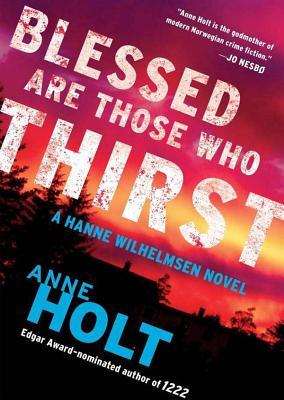
blessed-are-those-who-thirst.jpg.pagespeed.ce.Y23Pst4KrgHanne Wilhelmsen is a police investigator first introduced in Holt’s Blind Justice. Blessed are Those Who Thirst finds her battling a brutal Oslo heat wave, which has set off a huge upward spiral in violent crime in the area. She’s balancing it all with an unsolved rape case which disturbs her.

The newest crime scene she is sent to baffles her at first: in an abandoned shed, covered with blood, an eight-digit number is scrawled in blood on one wall. Is it human blood?

But there’s no victim, at least none at this site. Is this a terrible prank or the mark of a more sinister killer?

More of these bloody crime scenes start to crop up, all in isolated locations throughout the city, all with different numbers. Then Hanne’s colleague discovers the significance of those numbers: they belong to female foreign immigrants who have gone missing.

As her team races to track down this killer, the rape victim and her father separately plan their own vengeance.

How these intersect, with horrifying consequences, will keep readers rooted to the page. This is a well-plotted mystery in a fascinating series.

Holt’s inclusion of Hanne’s domestic situation adds nice texture and reminds us that police personnel all have home lives.


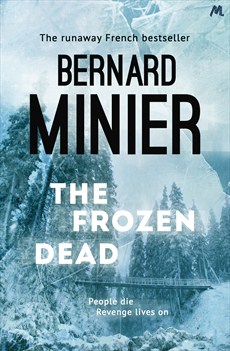
Bernard Minier’s The Frozen Dead was first published in French with the title Glace`, but this translation loses none of the chilling aspects frozen1444732252-detailof the original.

Minier draws on little-known facts to build his suspense, from the bizarre psychiatric methods at some points, to the subterranean power plant that becomes a plot point.

When a headless horse is found suspended from a frozen cliff in southwest France, it annoys the city cop assigned to investigate. Servaz should be dealing with three teens suspect of killing a homeless man.

Yet he cannot ignore this highly unusual and disturbing crime as the rumbling of a cable car brings the horse’s corpse into view. Everyone in attendance is disturbed.

Only miles away, a young psychiatrist named Diane Berg embarks on a journey that will mean so much more than just a year’s assignment in the Pyrenees at the Wargnier Institute.

When DNA from the Institute’s most infamous inmates is discovered on the animal, it is the first hint to Servaz of the nature of the madment he seeks, and sparks a series of horrific murders.

There’s no escaping the cold as theme in this thriller, from the gritty settings to the dark, grisly deeds carried out in the names of healing, and of revenge.

Minier’s novel explains the complicated and different police investigation method of France’s system, which adds to the tone. Readers will look for more by this talented crime writer and await the reappearance of Servaz and his music.


17286708Staying with the cold, we head to Reykjavik, Iceland’s setting for the Erlendur series. This tenth entry is Black Skies, by award-winning author Arnaldur Indridason, who won the CWA Golden Dagger Award for Silence of the Grave.

This time it’s Sigurdur Oli in the spotlight of this subtle and superbly crafted police procedural. Oli finds himself reluctantly agreeing to a friend’s request to head off a blackmail attempt in a scheme of wife swapping. Then he finds the woman accountant found bludgeoned to death was involved with her husband in the scheme.

But Oli is forced to look beyond this obvious motive when the victim’s association with a group of disreputable bankers becomes known.

This has an almost sociological feel to it, without judging or hitting the reader over the head, as Oli follows leads that will take him to the heads of high-finance and the lowest criminals on the economic ladder.

That he becomes disgusted with both extremes speaks volumes. The laziness of the criminals he encounters stands in stark contrast to the greed and flagrantly accepted corruption of the upper class.

By showing how these encounters affects Oli’s own thoughts about his family and marital history, we become involved with him as a real person who happens to be a policeman. That he is tasked with this unenviable job that is sometimes at odds with his personal feelings becomes the heart of the book.


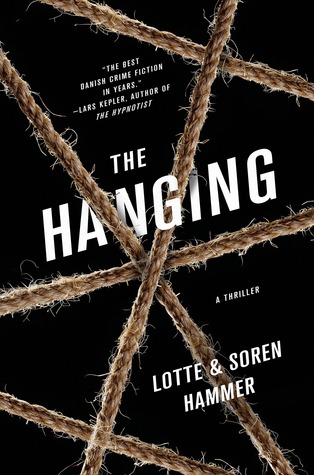
Another Nordic entry not to be missed comes from Denmark’s sibling team of Lotte and Soren Hammer. 16044964The Hanging brings readers the unusual team of lead detective Konrad Simonsen in this startling novel that starts off with a bang and never lets up.

When two Turkish children get to school early, they find the mutilated and naked bodies of five men hanging from the gymnasium ceiling. It doesn’t help the investigation when a prejudiced policeman takes his time responding to the call.

The horrific crime sees Simonsen recalled from a vacation, which stirs a media frenzy that is compounded when the link between the victims is known: all were pedophiles.

Fighting public opinion that their killer should be overlooked complicates his team’s investigation. At the heart of the matter will be the lingering question: when is justice served?

Adding texture to the book is the feel for Copenhagen the authors transmit, as is the team the authors they give to Simonsen. These include a young policewoman feeling her way through the start of her career, and another with independent financial means who doesn’t need the job.

The first of a planned six-part series, Lotte and Soren Hammer have fans already clamoring for the next translation.


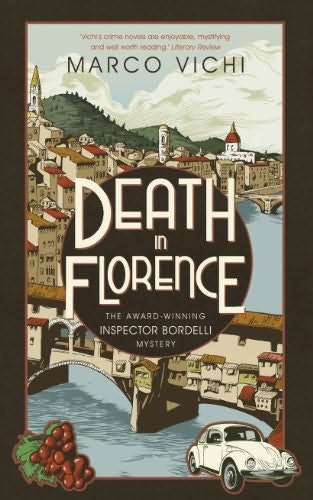
n401410The lovely vintage feel and VW bug on the cover of Marco Vichi’s Death in Florence tell the reader immediately that we are not in contemporary times but rather in 1966.

This is the fourth in the series featuring the novel’s protagonist, Inspector Bordelli, owner of the VW.

“How can a boy vanish into thin air?” That’s the question absorbing Bordelli at the moment.

Giacomo Pellissari seems to have melted into the pouring rain leaving his school. When his mother’s car won’t start, his lawyer father arrives to the school to pick him up an hour late. The boy was seen running into the downpour–and there his trail grows cold.

Bordelli begins an increasingly desperate investigation into the boy’s disappearance with the help of his young sidekick, Piras. They will uncover abuse of power, rape, murder and a ring of homosexuals as they delve deeply into the case.

But he is thwarted by the flood that overwhelms Florence. Based on a real occurrence in November of that year, the swollen river Arno laps over the arches of the Ponte Vecchio, breaks its banks, and completely overwhelms the city.

While streets become rushing torrents, the force of the water sweeps away vehicle and trees, doors and even a coffin lid. Mud piles of debris line the city Bordelli calls home, yet the obstinate detective persists in finding a resolution to the disappearance of a little boy.

Written in an atmospheric and literary style, the ending will leave readers surprised and questioning the next volume to follow.


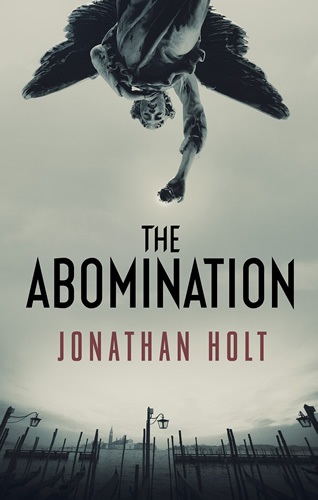
Moving from Florence to Venice, the debut novel The Abomination by Jonathan Holt has been hailed for its complex plot involving two forceful abominationwomen, the Carabiniere Captain Kat, and her American counterpart, Holly.

Their case kicks off when the body of a woman washes up from the Grand Canal wearing the robes of a priest, a desecration seen by the Catholic Church as The Abomination. That this happens on the night of the Feast of the Epiphany with its masked balls add to the drama.

Duality is enhanced with the idea of Carnvia.com, a virtual Venice, a social network revolving around a simulated world that gives users complete anonymity by letting them hide their identities behind carnival masks.

The narrow canals and thick, sewage-scented fog that envelops Venice at times is aptly represented, a counterpoint to the usual image of artworks and tourist cathedrals, and provides the backdrop for the corruption and conspiracy the two women will find.

The action never flags in this combination of mystery, tech thriller and conspiracy. The two worlds of Venice and its cyber-counterpart create a compendium of mysteries that are skillfully rendered.

There are two more volumes in the works from this talented author who blends and balances intriguing characters with multiple story-lines of action.


Triss Stein: Brooklyn Bones Sunday, Mar 10 2013 

Please welcome guest author Triss Stein, a fellow New York gal.

JPG COVBrooklyn_Bones_Final

“Write what you know.”  That is standard advice for a new writer but perhaps what you actually know is not that interesting to others or yourself?  I once tried to write a book about a former long-time job, and soon realized I did not want to spend another mental minute there! A good corollary is “Write what you want to know.”  Hmm. There is a lot one could do with that.

After writing a few mysteries, I came up with another one, or really, I think it came to me. “Write what matters to you.”  All three of the first mysteries (two published, one lost when my publisher dropped their mystery line) had an underlying theme that just crept in. No one knows this except me, but they were all, in some way, about parents and children.  I finally realized I should be writing about that on purpose.

I asked myself: what else matters to me? I love history. I always have. I was fascinated by books that told me how little girls like me lived “a long time ago.” How did things get to be the way they are always seemed like the place to start any subject, and old anything seemed more interesting than new.

I love Brooklyn. I’ve lived here long enough to see it change from a time when young families moving here instead of the suburbs were considered  pioneers, to now, when even in Paris Brooklyn is considered the home of  all things “hip” (!).  That is a good change, a destructive change, or it is just change, the one constant of big city life. It all depends on where you’re standing.  Is there conflict about those changes?  You bet.


After many years, I have a new mystery out and it is called Brooklyn Bones.  Erica, my heroine is a true Brooklyn girl. She is also a somewhat young single mother of Chris, a teen-age daughter. She is a somewhat old graduate student in urban history, pursuing her hometown’s past and encountering both old and new crime in the process.

In this first book, the past comes crashing right into the present when the body of  a teen-age girl is found during her house renovation. The body is not nearly as old as the house. There are still people around who know the tragic who and why, and intend to keep it a secret buried forever.

I’m knee deep in the difficult middle of the next one, which includes the historic and beautiful Green-Wood Cemetery, Tiffany glass windows, and a charming (I hope!) turn of the last century mystery. And some modern crime of course.  Plus some difficulties Erica has on the other end of the parent/child continuum, as the grown child of her own father.

Luckily for me, history keeps happening and Chris is only fifteen, so Erica has a lot of parenting ahead. And trust me on this- there is no end to the stories I can tell about Brooklyn.

Triss Stein is a small–town girl from New York state’s dairy country who has spent most of her adult life living and working in New York city. This gives her the useful double vision of a stranger and a resident for writing mysteries about Brooklyn, her ever-fascinating, ever-changing, ever-challenging adopted home.

You can find Brooklyn Bones, a new mystery from Poisoned Pen Press, at:


Crossbones Yard: Kate Rhodes Sunday, Feb 17 2013 

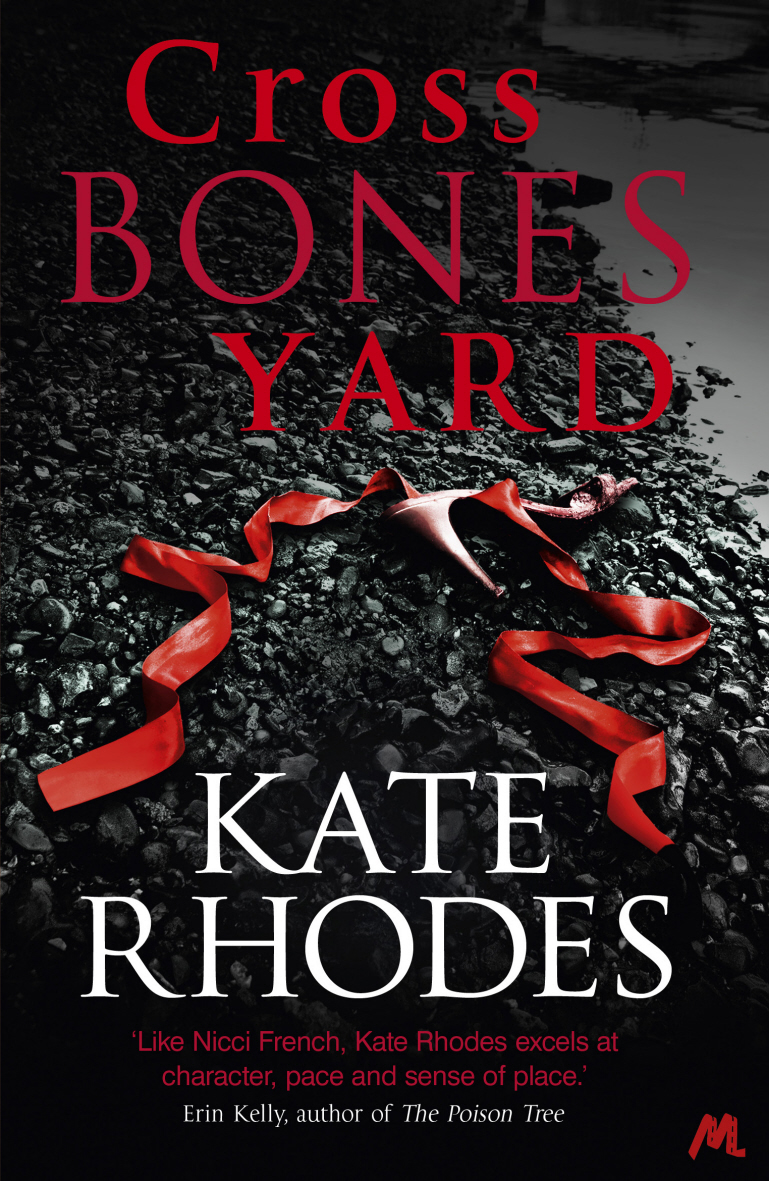
Poet Kate Rhodes brings London’s neighborhoods vividly alive to readers in her debut psychological thriller, Crossbones Yard.

These areas, some glitzy and others tawdry, are all known to psychologist Alice Rhodes, whose daily runs take her places that don’t usually faze her, but do give her the endorphin high that keeps her own painful memories at bay.  Fighting claustrophobia on a daily basis, she sublimates her nightmares by helping others battle theirs.

Life for Alice includes a busy practice schedule and a brother battling his own demons who often ends up on her doorstep, but it is balanced by a good-looking boyfriend and close friends who care about her. Then one evening run brings complications Alice could never expect. Searching the roads for the quickest way home, Alice sees two ironwork gates she’s never noticed before, decorated with dozens of ribbons, cards and bits of paper.

But it’s what she spies inside that will radically change her life: an open hand reaching out for her through the railing, connected to a fragile wrist and from there to the very dead body of a young woman on the other side of the gate.                                                                                        9781444738766

This is Crossbones Yard, a former graveyard for prostitutes. Trying to conceal her emotion, the surly detective who shows up and takes Alice home is annoyed at her pretense of composure.

As part of her duties, Alice has just evaluated a convicted killer about to be released from prison at the behest of the overweight DCI Burns. She’s only mildly surprised to find he’s the investigating detective on the case. He has an uncanny knack for getting Alice to do his bidding, and she soon feels as if she’s become his personal research assistant.  And that surly detective? He’s Burns’ detective sergeant, Ben Alvarez, and soon Alice finds herself in his company more than she’d like.

Then it becomes apparent that the dead woman’s injuries are vastly similar to those of the style of a team of serial killers. Ray and Marie Benson tortured and killed thirteen women before being caught; five of their victims were never found. Before long, Burns has Alice working on a psychological profile of this copycat killer.

Marie is still alive, languishing in prison. Does she hold the key to this gruesome murder? Will she tell Alice is she does?

And what of Morris Cley, the just-released murderer whom Alice feels is not capable of this kind of planning. Cley lived with the Bensons. How is he connected with the new murders?

With ties to her own background, Alice will find herself and those she loves in jeopardy as this case comes too close to home.

This wonderful debut sports an ending that has a switchback twist that will leave you breathless. With it’s swift pacing and brief, staccato scenes, readers will find themselves swept up into Alice’s story. The plotting is complex, and Alice is a protagonist readers will want to follow.

Nele Neuhaus: Snow White Must Die Sunday, Jan 6 2013 

German author Neuhaus is making news with the first English translation of a police procedural that will surprise readers and introduce them to a new detective duo to follow.

9780312604257

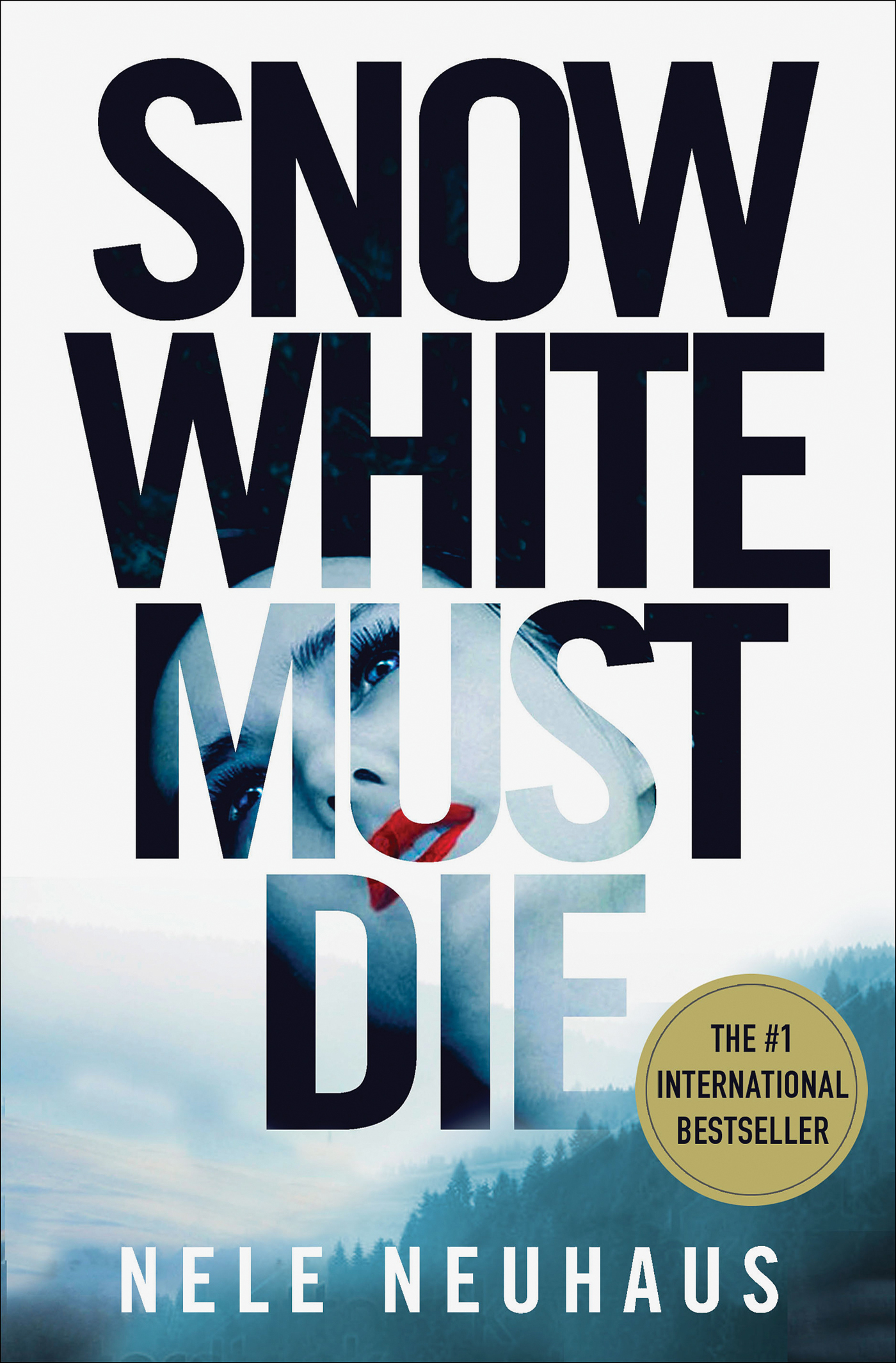
Actually the second in the series, the international best seller features Detective Oliver von Bodenstein, troubled and distinctive, and his partner, Pia Kirchhoff. In this first US import, the Grimm fairy tale describing Snow White becomes a refrain to the story Neuhaus tells of 30-year old Tobias Sartorius. It opens as he leaves prison after serving ten years following the disappearance of two teenaged girls last seen in his company. Having no recollection of most of the events of the evening, his time in prison has been tortuous as he’s come to accept he must have murdered the two girls, despite having no memory of the night in question.

Of the two missing girls, the dark-haired Stefanie Schneeberger had been cast to play Snow White in the local play. On the night the girls disappeared, she was supposed to have broken off her dating relationship with Tobias.

Returning to his small home town, Tobias is shocked to learn the pretense his parents maintained while he imprisoned. They’ve lost their business and separated, and while his father still lives on in the same house, the town has made the family pay for what they feel is Tobias’ murder of the two missing girls by outcasting his parents and damaging their property, with continued harassment.

When Tobias’ mother is pushed from a pedestrian bridge onto the hood of a car below, the two detectives investigation is met with stony silence from the villagers. Then a young girl disappears, and the past seems to be repeating itself. With the villagers certain Tobias is to blame, his life hangs in jeopardy as the Oliver and Pia race against time to find the truth before the villagers take matters into their own hands.

This is lively nuanced mystery, with increasing suspense, and well-crafted characters. The effects of gossip, the use of local power, and the idea of keeping up appearances for outsiders will all be explored, even as Oliver and Pia have their own domestic issues barging into their hectic days. The novel is surprising at times as the events kick up and the pace surges ahead. Readers will become addicted to turning pages as the story engages them. Neuhaus lets them in early on a secret to that they have more information than the detectives, a device which serves to nicely up the suspense factor.

The well-drafted thriller will allow readers to see why Neuhaus is Germany’s top crime writer. In Europe the sixth in the series is in print, and readers here in the US can only hope the translators are hard at work to bring us the next installments of this complex and widely-read crime writer.

« Previous PageNext Page »