World Blog Hop: The Nora Tierney Mysteries and Me Tuesday, Jul 15 2014 

My thanks to Susan Whitfield(www.susanwhitfield.blogspot.com) for inviting me to take part in this blog hop. Susan’s wonderful, wacky books can be found at http://www.susanwhitfield.com, where you’ll be able to choose from her Logan Hunter mysteries and her women’s humor in Slightly Cracked, and even a cookbook, Killer Recipes. This multi-genre writer is hard at work on a historical mystery based on a relative!

My Nora Tierney Mysteries grew out of a desire to write what I most enjoyed reading. I’ve always been drawn to the puzzle of a great mystery and spent many years reading Nancy Drew and the Golden Age writers. Despite a 30 year career in nursing, I always wrote on the side (poetry, essays, nonfiction) and within my profession, writing feature articles for a nursing journal and editing another. During the transition from nursing to writing, I snagged a job as a medical consultant at a NY studio because I knew screenplay format. This was my last nursing job and my favorite: correcting medical scenes to working onset for anything filmed in Manhattan, mostly soap operas and a few series like Law and Order. And as I did that job, I started writing interview articles for Mystery Review magazine.

I’m no a full time writer, a member of Sisters in Crime, and run the Writers Read program in Belhaven, NC. I still write poetry and essays on occasion, but my focus is the mysteries and that’s where I’ve always wanted it to be.

By the time the first Nora Tierney Mystery was published in 2010, I had worked out a story arc spanning six mysteries involving American Nora, a writer from Connecticut, who finds herself living in England and writing children’s books after a stint at a magazine not unlike People.
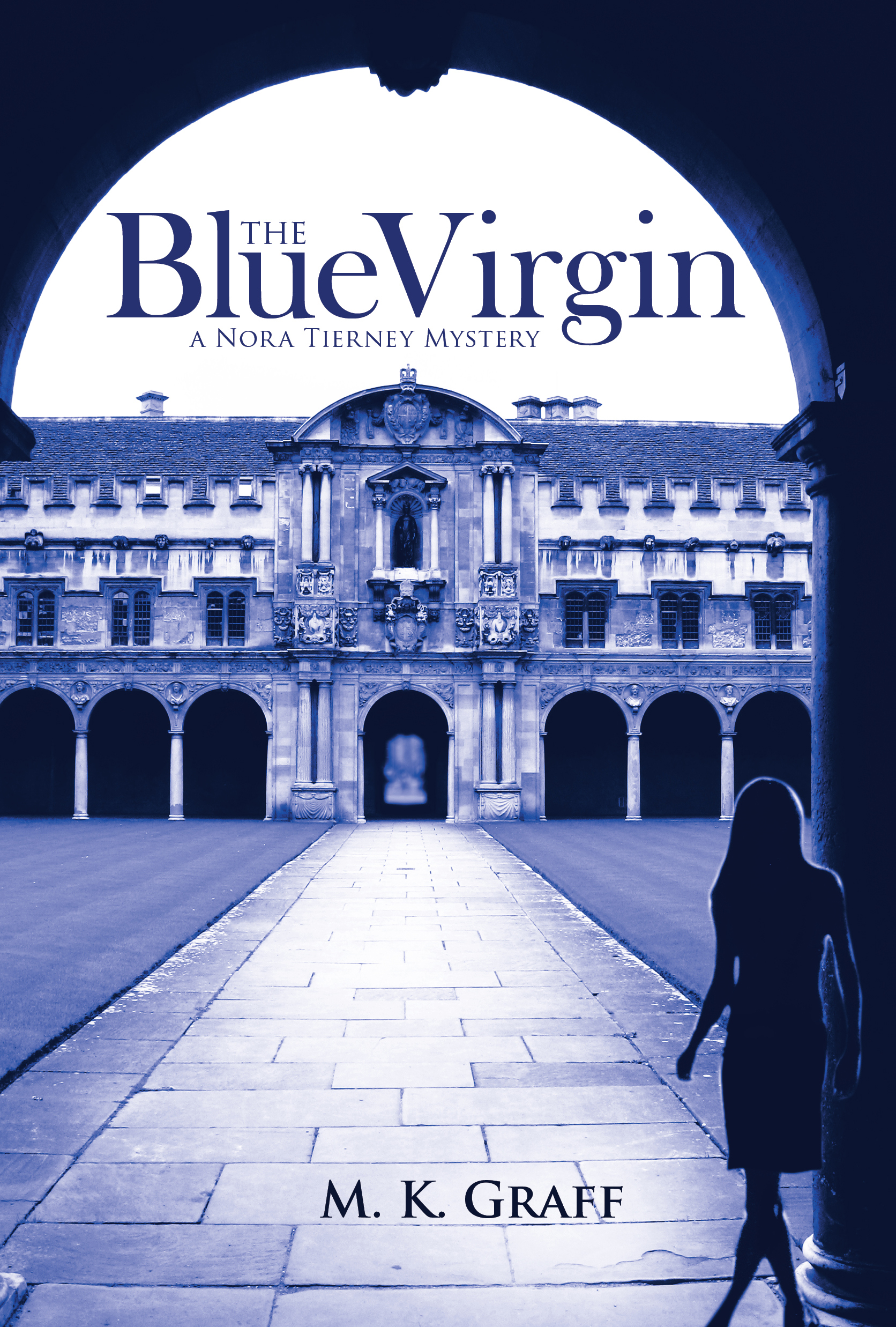
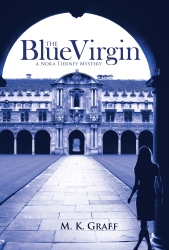
The Blue Virgin_cover_frontonly
In THE BLUE VIRGIN,Nora’s been living in Oxford and become friends with Val Rogan, a textile artist. When Val’s partner, Bryn Wallace, is found dead, Val becomes the prime suspect and Nora swings into action to clear her best friend, despite being in the early stages of an unplanned pregnancy. She frustrates the detective inspector on the case, Declan Barnes,too.

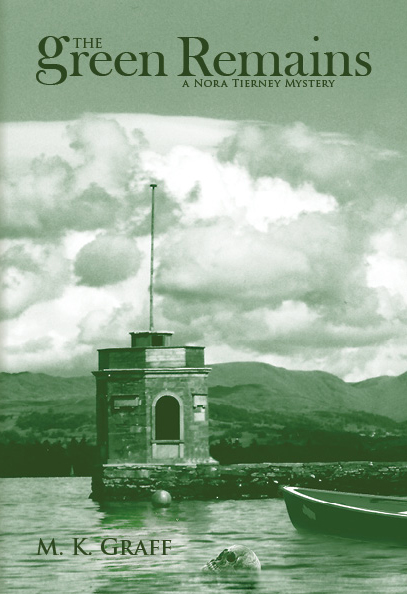
The Green Remains_frontcover_dark
THE GREEN REMAINS follows Nora’s move to the Lake District to work with illustrator Simon Ramsey and involves her staying at Ramsey Lodge, the inn he runs with his sister Kate. When the body of the heir to the Clarendon Estate washed up on the shore of Windermere right outside the lodge, Simon is implicated and Nora noses into the investigation, this time with almost disastrous results to her and her unborn child.

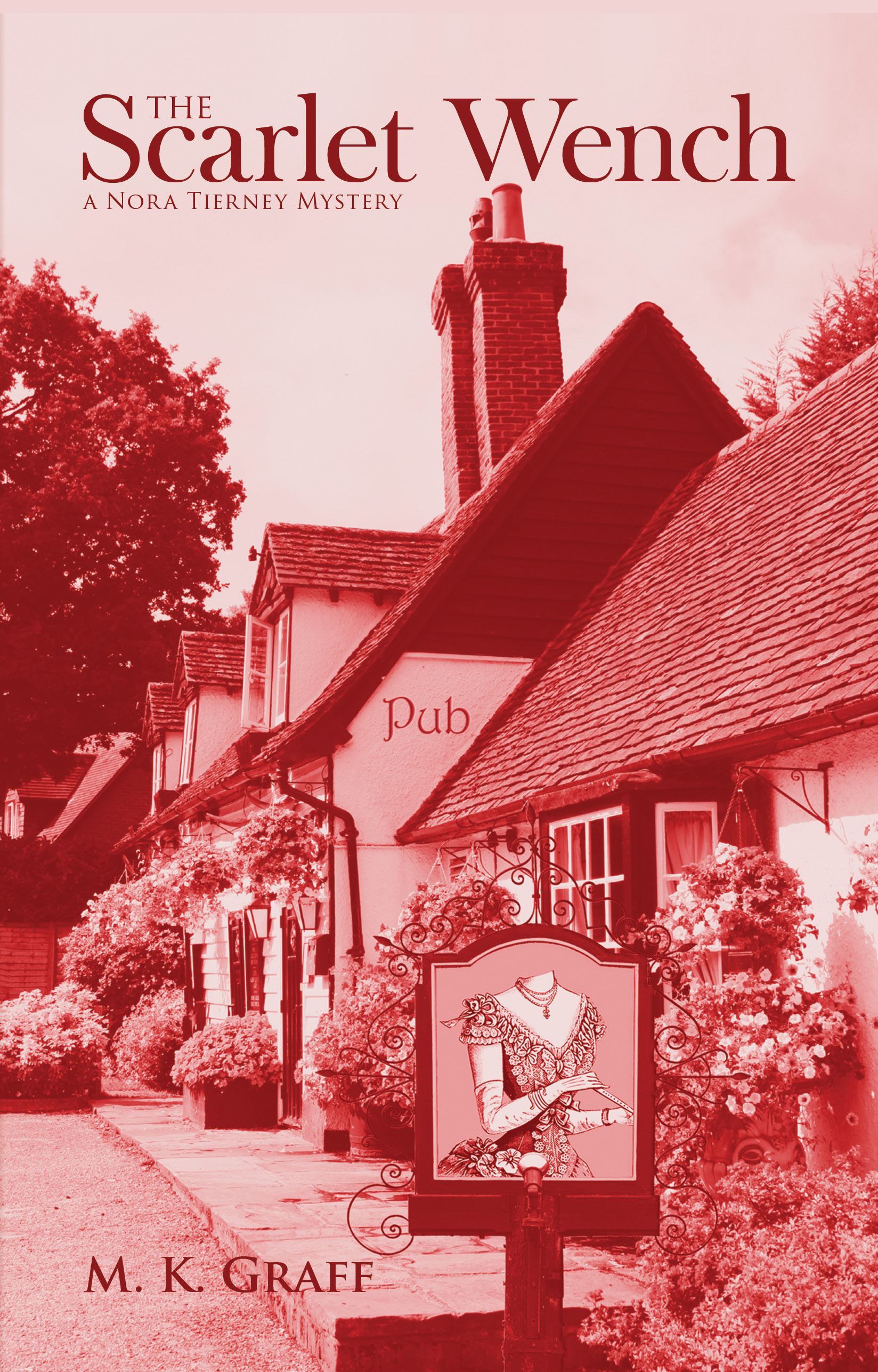
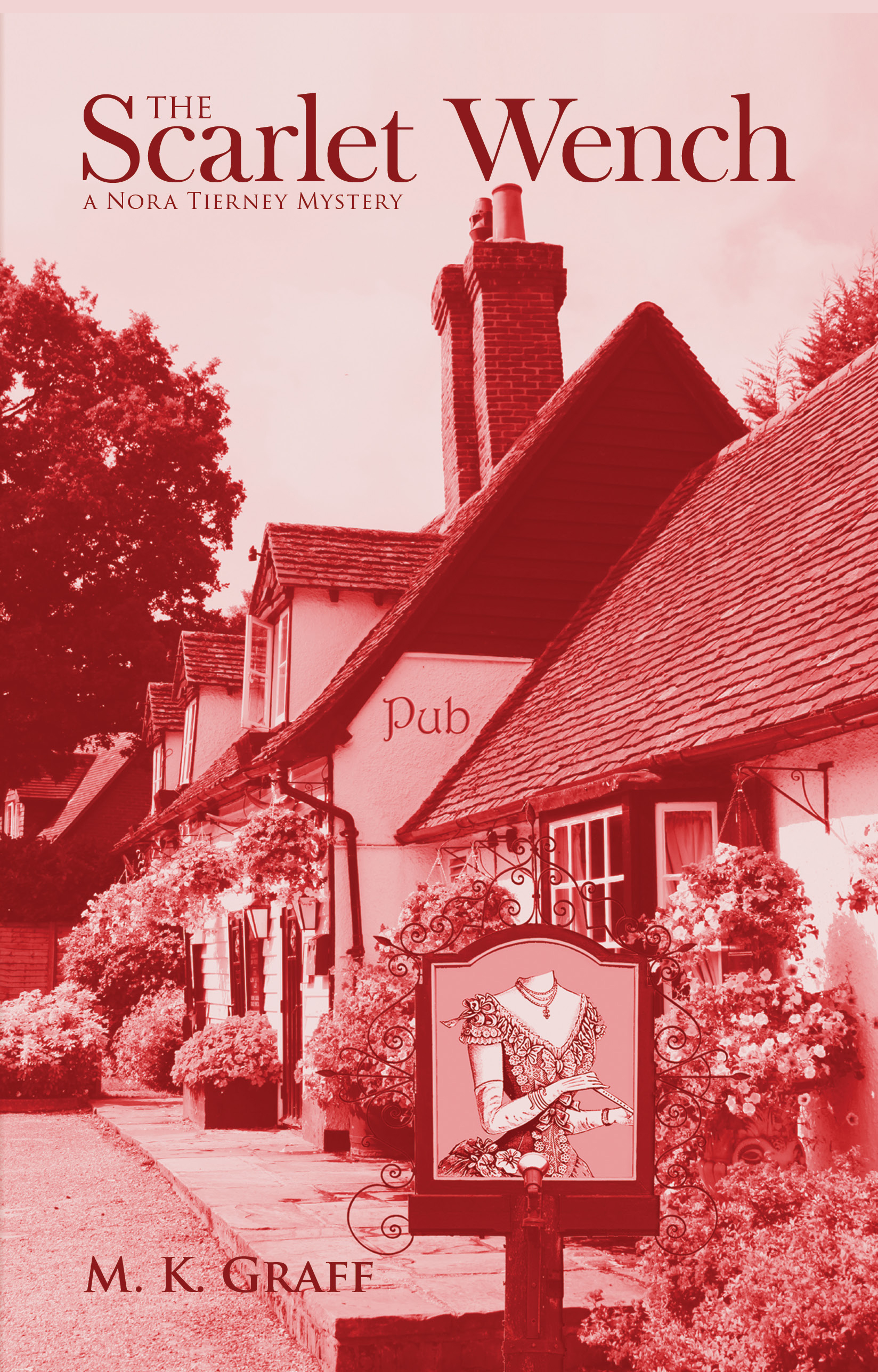
With her baby six months old, Nora is excited to have a theatre troupe arrive at Ramsey Lodge to stage Noel Coward’s farce, “Blithe Spirit.” Declan Barnes will be the only non-cast member staying at the lodge when a series of accidents and pranks escalate to murder. This time Nora’s baby is on the premises and she finagles her way into the investigation in the newly-published THE SCARLET WENCH
scarletwench_cover_front

So what’s up next for Nora? In the months after the April events of The Scarlet Wench, Nora’s taken Declan home to meet her mother and stepfather in Connecticut. The next book in the series follows their deepening relationship as Nora must decide where to make her permanent home. The book I’m writing now is titled THE GOLDEN HOUR, where Nora will be in Bath at the real bookstore Mr. B’s Reading Emporium for a reading and signing of her two children’s books when mayhem and murder follow her once again.

The series are contemporary but written in traditional English mystery style, with less stress on the violence and gore and more on the psychology of the characters. They have chapter epigrams (think: Colin Dexter’s Inspector Morse) and sometimes room layout; they always have a Cast of Characters. A mix of amateur sleuth and police procedural, I’m moving Nora around England so the series won’t suffer from the “Jessica Fletcher” syndrome–how many murders can reasonably happen in one small town? I feel setting is important, too, as it’s the stage you place your characters on and affects the action, so I always start with that, as well as the victim, who is the murderer, and the all-important: WHY.

I’m not writing about serial murderers or psychopaths, although I do read those all the time for my crime fiction review blog, Auntie M Writes (www.auntiemwrites.com). I’m interested instead in seemingly average people who for one reason or another, become convinced it’s reasonable to cross that fine line and commit murder. The stories grow out of the setting, that initial murder, and the why of it all. It’s a fascinating process and as a fiction writer I’m allowed to play the WHAT IF …? game every time I sit down at the computer.

You can find my books at Bridle Path Press (www.bridlepathpress.com) and request a signed copy or autographed to a particular person. They are also on Amazon.com as trade paperback and in ebook format.

Please support the authors who will continue this blog hop on July 21st:

Melissa Westemeier: (www.melissawestemeier.blogspot.com). Green Girl in Wisconsin delights readers with her humorous and heartwarming novels. In print now are Kicks Like a Girl, and Whipped, Not Beaten.. See her site for ordering information.

Linda Lovely: (www.lindalovely.com) Linda’s books are a mix of suspense, romance, mystery and laughter. She writes the Marley Clark Mysteries, Dear Killer and No Wake Zone, and her newest title is Dead Line, Book One in her “Smart Women-Dumb Luck” series.

Malcolm Torres (www.malcolmtorres.tumblr.com

Summer Kickoff: Hannah, Casey, Dahl, Mina, Russell, French, Eriksson Sunday, Jul 13 2014 

Summer beckons with new books ready for you to investigate. Here’s some of the newest summer crop to get you started with great reads:
tellingerror
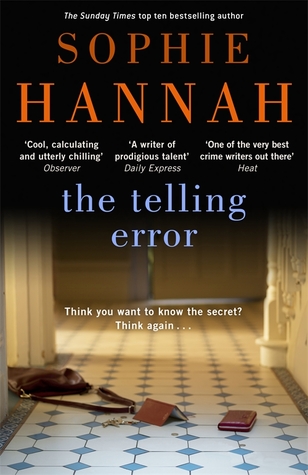
Sophie Hannah’s The Telling Error is her newest entry in the Zailer/Waterhouse series, an unconventional procedural set in England, where the action centers on a participant in the murder.

Nicki Clements is the unlikely focus pulled in for questioning after the unusual murder in her neighborhood of a controversial columnist. Nicki is an easy liar, a woman who holds secrets of her own, but she’s not a murderer. How she’s gotten herself deeply into trouble, and the reasons behind her inability to tell the truth and to fabricate stories, all converge into this tale that has the feel of a nightmare too easily imagined by the average person.

Here’s Nicki in her own words: “This is the thing about deception that some people forget: its practitioners don’t do it solely for their own sakes. Often they do it to make others happy. It’s embedded in the training programme we liars o through; we see that when we tell the truth, our instructors scowl, raise their voices, turn red in the face. Anyone who cares more about pleasing other people than about their own happiness–anyone who believes, deep down, that everyone else matters more than they do–learns fluent dishonesty at a young age.”

Award-winning Hannah has developed the art of telling a story that resonates with readers for her ability to decipher human emotions and actions. Her first Poirot novel will be published this fall.
stranger

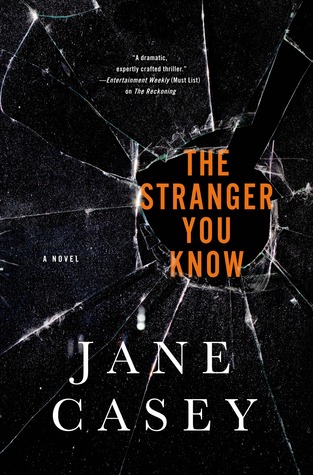
In her fifth Maeve Kerrigan mystery, Jane Casey’s The Stranger You Know brings readers the newest case for the London detective. Three women have been brutally murdered and arranged in a ritualistic manner. Each has had her eyes cut out, their hair sheared off, and lie on a bed or flowers.

The killings echo a death from the past of Maeve’s partner, DCI Josh Derwent, the frustrating man she admires at the same time as he exasperates her with his unprofessional remarks and hot temper. Now she must decide if this man she works beside is wrongfully accused of murder–or if he’s being framed in a most horrendous manner.

A vibrant addition to the series, Kerrigan’s frailties in terms of her own relationships add to the mix.
invisible

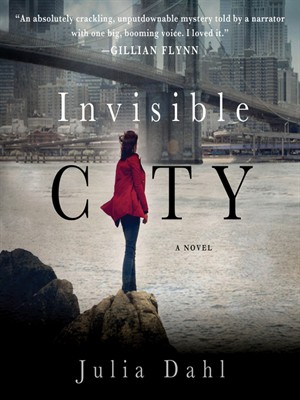
Journalist Julia Dahl makes her crime fiction debut with the riveting Invisible City.
Using her experience in several areas, she bring to life an new protagonist readers will want to follow: Rebekah Roberts, born to a Hasidic Jewish mother from Brooklyn and the Christian preacher from Florida who raised her. Rebekah takes a job in New York to bring her closer to the mother who abandoned her as an infant, convinced her motives are to be in the center of the journalistic scene.

Working as a stringer she’s called to cover the story when the body of a Hasidic woman is found brutally murdered in a junk yard. Calling into question the NYPD’s relationship with the ultra-Orthodox community, she’s shocked to learn the woman will be buried without an autopsy, her husband never questioned by police. She’s determined to find the truth, and perhaps along the way, unravel a thread that may lead to her mother. Original and readable.

Denise Mina’s Alex Morrow series finds the mother of young twins investigating the death of a businessman, only to discover a complicated network of corruption and deceit that reaches back to the Glasgow to the night Princess Diana died, when a 14 yr old girl found herself sitting in a car with a dead body and the murder weapon in her hand.

How Morrow uncovers the real story, and finds a murderer, make for compelling reading in the unsentimental but very well-written series that never shirks at the realities in our world.
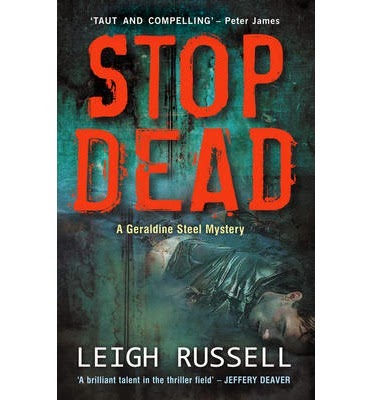
Stop Dead

Leigh Russell’s Geraldine Steel series has been reviewed here before. The newest addition, Stop Dead, finds Steel in her Met job in London, investigating the murder of a highly successful and unorthodox businessman. At first the victim’s business partner are prime suspects–until he, too, is killed in the same gruesome manner, and Morrow races to find the culprit with only one clue in hand: DNA that leads to two women, one dead and the other in prison.cold sacrifice

Russell brings back Steel’s former partner, DS Ian Peterson, in his own series in Cold Sacrifice. Still adjusting to marriage and thinking he may have made a mistake, Peterson’s newest case will take him away from his bride more than ever when three dead bodies pile up quickly. When the first victim, a middle-class housewife, is found stabbed in a nearby park, her husband comes under suspicions, but is soon cleared. That is, until the prostitute who gave him an alibi turns up dead, followed soon by the murder of another prostitute. Peterson will have his hands full trying to placate his wife at home while devoting his time to unearthing a killer.
Waiting

The husband and wife duo of Nicci French have a winner in the Frieda Klein series. Waiting for Wednesday finds a weakened Frieda recuperating from the events that ended Tuesday’s Gone and have left her with physical and emotional wounds. Then DCI Karlsson asked her insights when a health visitor and mother of three is found dead in her home, the victim of a horrific attack. When her niece befriends one of the teens left motherless, Frieda finds the answers may lie closer to home than she thinks. And she’s very aware of her own teeming emotions and fragility, which affects her impulsive actions on several fronts. Another satisfying entry in the series.
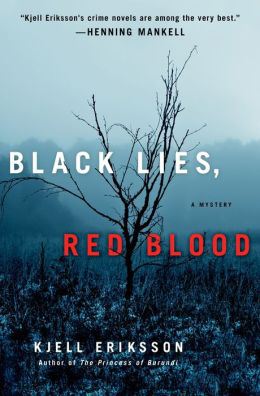
black-lies-red-blood

New to Auntie M but not new to Swedish fans everywhere, Kjell Eriksson’s Ann Lindell series brings the fifth entry, Black Lies, Red Blood. With an interesting protagonist, the female police inspector finds her newest case coming too close to home, when the journalist she’s been having an affair with is implicated in the murder of a homeless man. After his disappearance, Ann must decide if the man she’s fallen in love with could be a killer, while keeping the news of their relationship from her colleagues as she searches for another explanation. Filled with psychological and descriptive details.

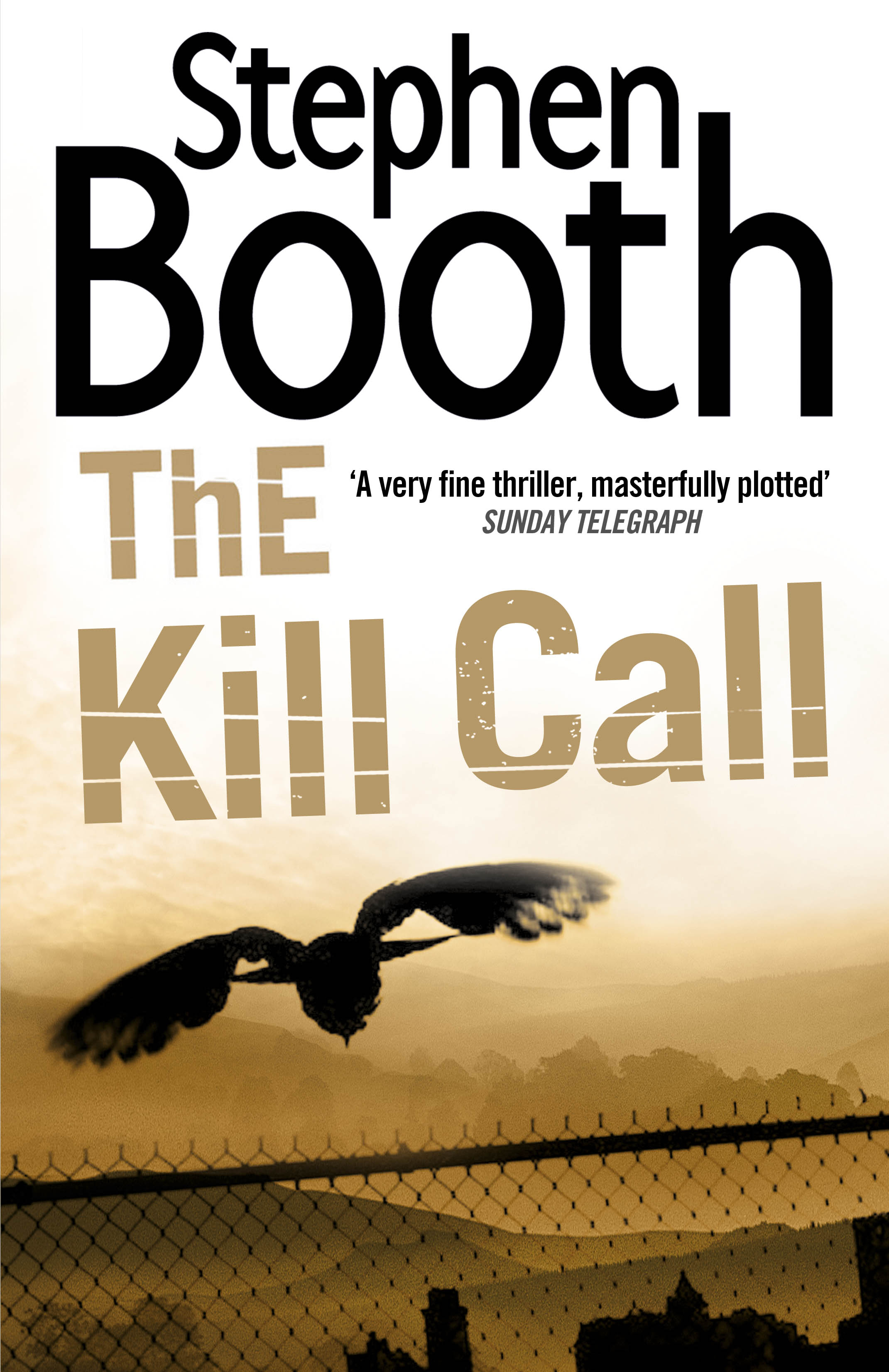
Kill Call
Stephen Booth’s wonderful Fry and Cooper series returns with Kill Call,this time exploring the world of hunting and horses.

The case presents in a strange way, when on a rainy Derbyshire moor, hounds from the local foxhunt find the body of a well-dressed man whose head has been crushed. Yet an anonymous caller has reported the same body lying half a mile away.

DS Diane Fry and DC Ben Cooper investigate and find themselves embroiled in the violent world of hunting and the saboteurs against it, Throw in horse theft and a connection to the meat trade and you have a mystery. Fry tries to unwind the complex and shady business interests of the murder victim, while Cooper decided that the answer to the case just might lie deep in the past.

History is everywhere around him in the Peak District landscape — particularly in the ‘plague village’ of Eyam, where an outbreak of Black Death has been turned into a modern-day tourist attraction. Cooper can’t ignore the instinct that tells him this is at the heart of the case.

New in paperback and in ebook from Witness Impulse, one of the slower-paced books in the series but nonetheless with an interesting and arresting case to follow.

Also from Witness Impulse, the 10th Ben Cooper/Diane Fry Booth, Lost River; previously reviewed. This strong entry in the popular Peak District series revolves around a May Bank Holiday ruined by the tragic drowning of an eight-year-old girl in picturesque Dovedale. For DC Ben Cooper, a helpless witness to the tragedy, the incident is not only traumatic, but leads him to become involved in the tangled lives of the Neilds, the dead girl’s family.

Cooper begins to suspect that one of them is harbouring a secret – a secret that the whole family might be willing to cover up. DS Diane Fry finds herself drawn into an investigation of her own among the inner-city streets of Birmingham, and quickly Fry realises there is only one person she can rely on to provide the help she needs, and that’s Ben Cooper.

Carolina Crimes: Nineteen Tales of Lust, Love and Longing Sunday, Jul 6 2014 

Please welcome Ann Mitchell, who will describe her editorial experience as part of the Triangle Sisters in Crime anthology:

What’s the Deal With Editors, Anyway?
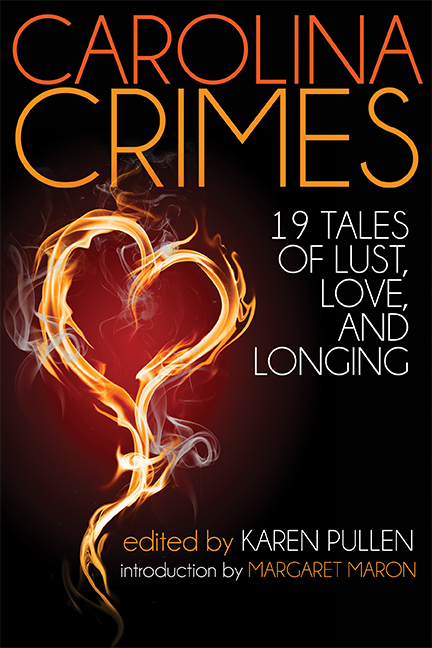
Carolina Crimes cover
As you’re no doubt aware, writing contests are a great way to get your work recognized and hopefully, published. That was the case when the Triangle chapter of the international organization of Sisters in Crime held a contest, open to members of SinC in North and South Carolina. It had to be a crime story, naturally, and the theme was sex. A titillating proposition, to be sure. Short stories selected would be published—a wonderful opportunity in and of itself. However, for me this contest held an extra draw: the chance to work with an editor.

Of course, I knew an editor would give me the basics: correcting grammar, punctuation, and the like. Beyond that, though, I was a bit hazy. I wanted the chance to get my feet wet in other stages of the writing process, so I gave it a shot. Having an interest in technology, I wrote about a futuristic simulation video game that leads to murder. To my delight, my short story was one of the ones selected to be included in the anthology that would become Carolina Crimes: Nineteen Tales of Lust, Love and Longing. I found that Karen Pullen, the editor, was an established writer and I looked forward to her remarks on my story. And before long, that day arrived.

My initial reaction after perusing the marked up copy was, “Hey! What’s the deal? It couldn’t have been THAT bad. After all, it was chosen to be included in the first place!” Even though I was a member of a critique group and used to getting constructive criticism on my work, my ego had become a bit bruised (seriously though, there were A LOT of notes). After ruminating a bit, I licked my wounds and went back to the marked up copy. This time, I had a different reaction. All of Karen’s editorial notes made perfect sense. After stepping away and coming back with an open mind, I realized that none of the suggested changes took away from my original story but made it cleaner, more consistent and readable. So, after one, no, two … okay, several re-workings, the result was an improved story that we were both very pleased with.

Then came the copy editor’s notes. Sigh.

In the end, it was exactly the experience I’d been looking for. I learned a great deal from Karen’s insights that I believe will make me a better writer, which, published or not, is what we all strive for. Most of all, I found that the editing and revision process is a collaborative effort that aims to produce the best result possible for the readers. It’s difficult to be objective about your own work, but a little humility goes a long way. You may just find that your work becomes something better than even you imagined.

I’m very proud to be included in Carolina Crimes: Nineteen Tales of Lust, Love, and Longing, along with these talented writers: Britni Patterson, Tamara Ward, Toni Goodyear, RF Wilson, E.B. Davis, Bonnie Wisler, Donna Campbell, Karen Pullen, Joanie Conwell, Linda Johnson, Ruth Moose, Sarah Shaber, Calvin Hall, Jamie Catcher, Meg Leader, Antoinette Brown, Polly Iver, Judith Stanton.

Marjorie Ann Mitchell is a business analyst for a tech company in North Carolina and freelance writer. She is a member of Sisters in Crime, Write On!, and The Raleigh Write to Publish writing groups as well as The Holly Springs Writers Guild. She graduated with a B.S. in Accounting from Appalachian State University in Boone, N.C. She has an interest in the Science Fiction/Fantasy genres as well as essays that reflect social commentary.

Melissa Westemeier: Kicks Like a Girl Sunday, Jun 29 2014 

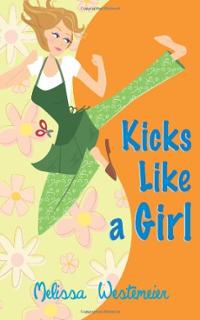
Melissa Westemeier Punches Out New Novel in Kicks Like a Girlkicks-like-girl-melissa-westemeier-paperback-cover-art

Wisconsin writer Melissa Westemeier published her latest novel this February, now available on Kindle and in paperback.

Kicks Like a Girl was inspired by Melissa’s experiences as a karate student. Now a 2nd degree black belt, she recalled her first time stepping onto the mat and how she struggled to keep up with advanced students while mastering the basics of martial arts.

“It was tough and scary, not unlike taking gym class as a new kid when the popular kids pick teams. You feel like a failure at first when you’re the last kid picked, and then you grit your teeth and determine that you will become a success at dodge ball or floor hockey—not unlike my experiences with writing when I think about it.”

The heroine of Kicks Like a Girl, Gretchen Benton, takes up karate to learn self-defense after she’s assaulted by thugs robbing her flower shop. “I wanted to write a mystery, like a whodunit, but it morphed into a book about a woman becoming empowered. The physical strength she gets from karate mirrors the mental strength she acquires and you see that at play throughout different parts of her life.”

Readers report enjoying the book, and feeling inspired to try martial arts themselves, which is exactly what Westemeier intended. “I love karate and I wanted to share my enthusiasm for it. I want readers, especially women, to walk away from this book wanting to try martial arts and feel the thrill of punching and kicking something really hard.”

Those who have read Westemeier’s first book, Whipped, Not Beaten, will appreciate the humor in Kicks Like a Girl, too. The witty banter between the characters, the Bridezillas Gretchen encounters as a florist, and the range of karate students will keep you entertained until the very last page.

Kicks Like a Girl is available online.

Melissa Westemeier’s pboished work includes Whipped, Not Beaten, and Writing in a Changing World. A former high school English teacher-turned SAHM, Melissa blogs about environmental issues, and her adventures raising 3 boys and a ton of fresh produce on her family’s 60-acre homestead in Northeastern Wisconsin. Her current projects included a trilogy about a river town in Wisconsin, earning her 3rd degree black belt in karate and figuring out what to make for dinner tonight.

Amy Shojai: Thrillers With Bite! Sunday, Jun 22 2014 

Auntie M is a real dog fan. She and Doc share their river home with a 7 yr-old Italian Spinone, Radar, a goofy clown of a sweet pup. So when she read about Amy Shojai’s series, she decided to ask Amy about what drove her to her books. Welcome Amy!
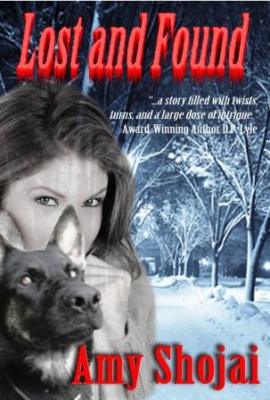
Lost_Found-Shojai-lorez
Auntie M: You wrote nonfiction pet books and articles for years before penning your first novel. What prompted you to decide on this career change?

Amy Shojai: I haven’t stopped writing nonfiction books and articles, but have simply expanded my audience by writing what I call THRILLERS WITH BITE! They incorporate my love for dogs and cats and pet behavior expertise—I’m a certified animal behavior consultant for both cats and dogs. That’s a fancy way of saying I help pet lovers understand problem behaviors and find solutions for them, and preserve the bond we share.

When I first began writing more than twenty years ago, I wanted to publish fiction and wasn’t able to get an agent or publisher interested. When I submitted a YA horror novel to one agent, she had no interest because “YA doesn’t sell” but encouraged me to submit nonfiction book ideas. I became her client and we sold a couple dozen nonfiction pet care books and I became so busy fulfilling those deadlines, the fiction fell by the wayside.

More recently, though, the publishing industry has changed. My nonfiction pet books are prescriptive, information-heavy works and these days, people prefer to “google” and find information for free in the Internet—never mind if it’s accurate or not. Publishers care most if the book sells, so the market for my nonfiction titles shrunk. Today a lot of my pet nonfiction is online at my Puppies.About.com site. And it occurred to me that I could still provide solid pet information—with entertainment—but in fiction books as well. That’s how the September Day Thriller Series was born.

AM: Tell us about your new mystery, and why you decided to write from a dog’s point of view?

AS: HIDE AND SEEK is a stand-alone suspense thriller and the sequel to my debut book LOST AND FOUND. The story picks up where the first one ended, but you don’t have to read the first book to enjoy HIDE AND SEEK.

Now, I’ve read LOTS of novels that include “animal viewpoint” and some are done well while others leave me cold. Most are written as if the animal character is a human wearing a fur coat, LOL! That’s fine in fantasy, and may work in other types of fiction. But I wanted my animal characters to BE ANIMALS in all their furry glory, and to act, react, and sense their world as would their true animal counterpart.

So in other words, the dog character, Shadow, truly behaves like a ten-month-old puppy, and he doesn’t talk—-but he scents, sees and feels the world around him and reacts to that world in a realistic way. I’ve had readers tell me they now understand their dog’s behavior and reactions in a fresh way, and better recognize how easily dogs and people misunderstand each other. Basically I wrote the book that I wanted to read.

I was delighted to receive wonderful praise from one of my favorite authors, veterinarian James Rollins, who also writes in “dog viewpoint” in his Tucker Wayne novels:

“Amy Shojai’s LOST AND FOUND wraps family secrets, murder, and medical miracles around the small form of an autistic child. Riveting, heart-wrenching, and brilliant, here is the debut of a stunning talent.” –James Rollins, New York Times bestseller of Bloodline and The Kill Switch

The first book LOST AND FOUND was so successful that my publisher, Cool Gus Publishing, wanted me to write a series. September’s tragic past that caused her PTSD was only hinted at in the first book, and that past comes back to haunt her in HIDE AND SEEK: A mysterious contagion will shatter countless lives unless a service dog and his trainer find a missing cat . . . in 24 hours.
A STALKER hides in plain sight.
A VICTIM faces her worst fear.
AND A DOG seeks the missing—and finds hope.

Eight years ago, animal behaviorist September Day escaped a sadistic captor who left her ashamed, terrified, and struggling with PTSD. She trusts no one—-except her cat Macy and service dog Shadow.

Shadow also struggles with trust. A German Shepherd autism service dog who rescued his child partner only to lose his-boy forever, Shadow’s crippling fear of abandonment shakes his faith in humans.

They are each others’ only chance to survive the stalker’s vicious payback, but have only 24 hours to uncover the truth about Macy’s mysterious illness or pay the deadly consequences. When September learns to trust again, and a good-dog takes a chance on love, together they find hope in the midst of despair–and discover what family really means.

HIDE AND SEEK is a creepy must-read mystery for animal lovers. Animal behaviorist Amy Shojai knows her stuff.” –J.T. Ellison, NYT bestselling author of “When Shadows Fall”
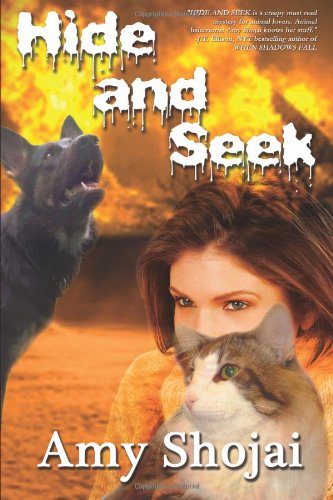
HideSeekLoRez

HIDE AND SEEK proves Shojai’s masterful skill at blending ripped-from-the-headlines urgency with an emotional story of real characters in escalating dangers. Add in revelatory dose of animal psychology and behavior, and you have a thriller that had me turning pages deep into the night. Here is a novel written with authority and with a deft brilliance that any lover of animals or nerve-jangling thrillers will cherish.” –James Rollins, New York Times bestseller of “The Eye of God”

The series continues in the third book SHOW AND TELL, with more adventures for September, her service dog Shadow and trained Maine Coon cat Macy.

AM: You have several pets. Did you model any of your four-legged characters after your own cats or dogs?

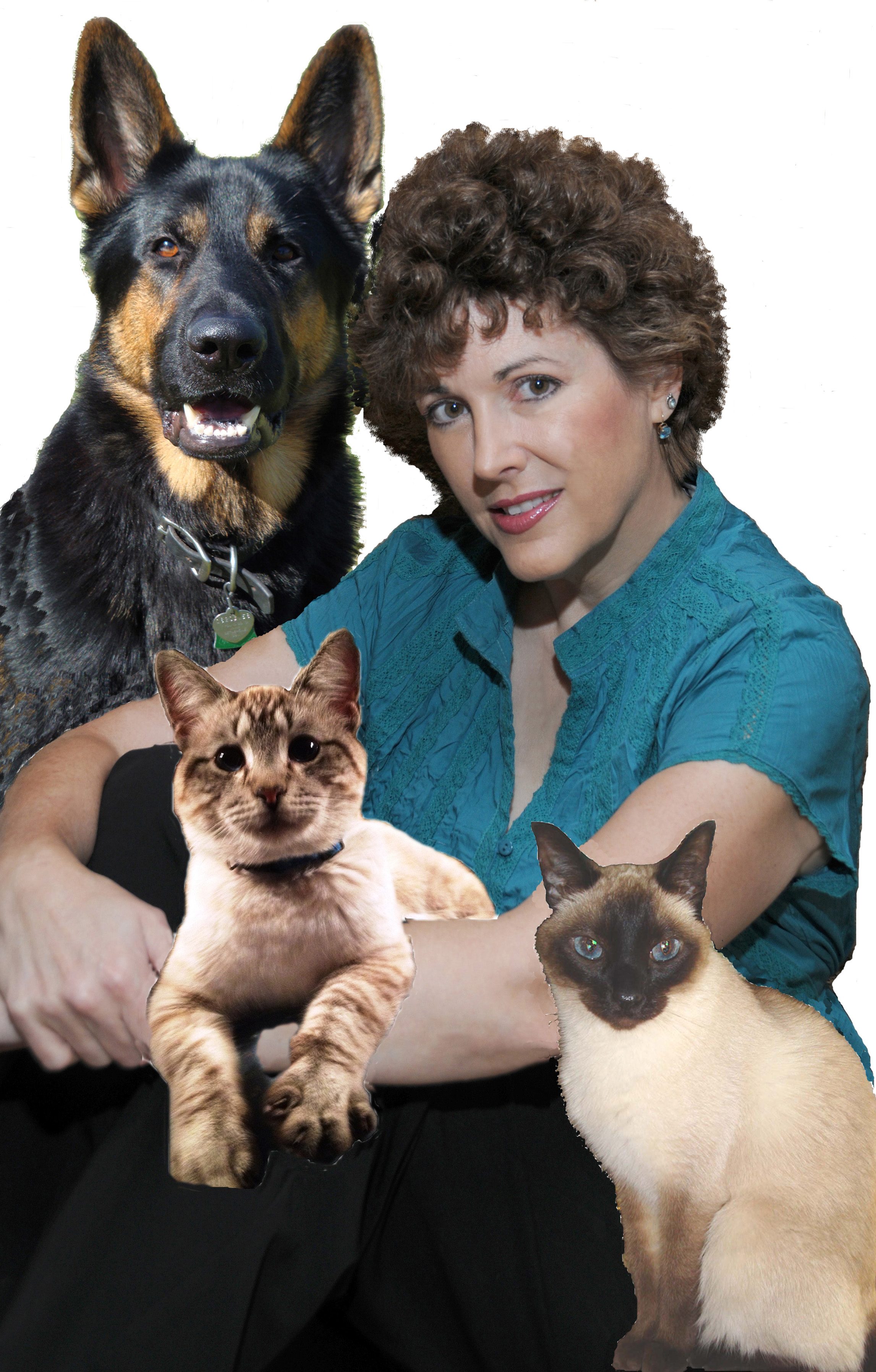
AS: Ha! Absolutely! In my first draft of LOST AND FOUND, the dog character’s name was Magic—that’s my own German shepherd. I began writing LOST AND FOUND when Magic wasn’t too much beyond that puppy-stage and it was very easy to “channel my inner dog” with him as an example.

My cat Seren, though, has only a few things in common with Macy, the trained Maine Coon cat in the book. Seren is also trained, and she does some of the same tricks as Macy. But while Seren is a 6-pound Siamese wannabe and now an old-lady cat at about 17 years old—and very persnickety about strangers—Macy weighs over twenty pounds, is a young boy cat in his prime, and never met a stranger. Although Macy does “nail” the bad guy at the end of the book, it’s not out of meanness but only when prompted by September’s command. I suspect that the new story SHOW AND TELL will incorporate a goofy and clueless young cat, since this year we welcomed a stray (Karma) into our home. Karma has become best friends with Magic and it’s great fun to see the 90+ pound shepherd race around with the pudgy kitten.

AM: Tell us about your work(s) in progress?

AS: I’m recording audiobooks! The first four are already available. Three are nonfiction pet titles covering cat and dog behavior, along with LOST AND FOUND. Fiction is quite a challenge because different voices for characters are needed.

I’m working hard on SHOW AND TELL which will continue September and Shadow’s story. I like to include some kind of animal/pet “issue” in each story to provide some edu-tainment along with the roller coaster ride. I also love medical thrillers, so that aspect will be interwoven in this story as well. LOST AND FOUND focused on autism; HIDE AND SEEK examines animals and people exhibiting Alzheimer’s-like symptoms. You’ll have to wait and see what the third book covers. Bwaaa-hahaha!

AM: Other than writing, what gives you the most pleasure in life?

AS: Music and theater. I have degrees in both and love to perform. This past year, I’ve had the great pleasure to combine my three great loves—writing, music and theater—and collaborated with a co-writer to create and perform my second orginal musical comedy, STRAYS, THE MUSICAL. Together we wrote the script, the 12 original songs, orchestrated the show, and will cast and direct the show this fall at the local theater. What a rush!

Currently I’m performing in A Midsummer Night’s Dream in the first annual Shakespeare In the Grove summer event here in Sherman, Texas.

AM: Who designed your book cover? Did you have any say in the final result?

AS: I’m blessed to work with a small independent publisher, Bob Mayer and Jen Talty, who created Cool Gus Publishing. Jen is my editor, and she also designs a good number of the book covers, and asked me for input. She sent mock ups and we worked through eight or nine versions before we had the final versions. At one point the only dog pictures she could find just weren’t right—-wrong color dog, too old, the look simply wrong. So I offered to find pictures of a young black German shepherd, and set up a photo shoot. The cover dog is a nine-month-old bred and owned by Magic’s breeder.

AM: Tell us a bit about your schedule and work habits as a writer.

AS: I’m a fulltime freelance writer, with weekly and monthly deadlines that pay the bills. So it’s a “real job.” Generally I start work at 9 am, work at least 6 days a week (I try to take Sunday off), and am at my computer until the day’s to-do list is done. For instance, as I type this, it is 3:50 pm on a Sunday night. Play rehearsal in an hour, so I need to wrap up quickly.

AM: How do you motivate yourself to write when you’re not in the mood to create even one more sentence?

AS: I look at what bills are due. That’s a great motivator!

Amy & Magic & Seren-karma copy

Amy Shojai (www.shojai.com) has been reinventing herself for years. She’s a certified animal behavior consultant, and the award-winning author of 27 best selling pet books that cover furry babies to old-fogies, first aid to natural healing, and behavior/training to Chicken Soup-icity. She is the Puppies Guide at puppies.About.com, the cat behavior expert at cats.About.com, and hosts a weekly half hour Internet Pet Peeves radio show. Amy has been featured as an expert in hundreds of print venues including The New York Times, Reader’s Digest, and Family Circle, as well as national radio and television networks such as CNN, Animal Planet’s DOGS 101 and CATS 101. She’s been a consultant to the pet products industry and a host/program consultant for select “furry” TV projects.

Amy blogs at her Bling, Bitches & Blood Blog at http://amyshojai.com. She is also a musician, actor and playwright, and brings her unique pet-centric viewpoint to public appearances and performances, audio books (her own and others), writer webinars, conference keynotes/seminars and THRILLERS WITH BITE!

Diane Gilbert Madsen: The Dog That Did Not Bark in the Night Sunday, Jun 15 2014 

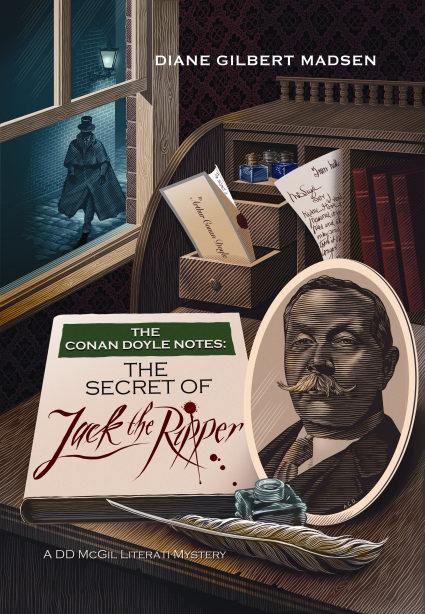
Please welcome Diane Gilbert Madsen, who will tell readers about her newest book: The Conan Doyle Notes: The Secret of Jack the Ripper

“THE DOG THAT DID NOT BARK IN THE NIGHT”

THE CONAN DOYLE NOTES: THE SECRET OF JACK THE RIPPER
By DIANE GILBERT MADSEN
Published May 22nd 2014, MX Publishing, London
3RD IN THE DD McGil Literati Mystery Series

Doyle final-jacket-cover

When everyone else my age was screaming for Elvis Presley and his swiveling hips, I fell head over heels for Sherlock Holmes, the lanky, taciturn, brainy detective whose hips would never be caught swiveling. I adored his aristocratic nose and his cold, impersonal, logic-driven, detail-oriented scientific mind. He was the polar opposite of Elvis – but to me, the British-to-the-core Mr. Sherlock Holmes was irresistible. I’m crazy about him still. His character was so fascinating that he quickly became famous world over. People everywhere not only recognized his name, but also they claimed to “know” what he looked like due to the wonderful drawings accompanying the serialized magazine stories.

My brother Albert was also a Sherlock Holmes addict. Over the years we often discussed why Sir Arthur Conan Doyle had never written a story in which the world’s greatest detective, Sherlock Holmes, matched wits with the world’s most fiendish murderer, Jack the Ripper. Sherlock Holmes, we knew, would definitely have solved the case. But such a match up was never to be. Why? We suspected that Conan Doyle’s silence was something like Sherlock Holmes’ observation about the dog that did not bark in the night.

“Is there any point to which you would wish to draw my attention?”
“To the curious incident of the dog in the night-time.”
“The dog did nothing in the night-time.”
“That was the curious incident,” remarked Sherlock Holmes.
– Conan Doyle, Silver Blaze

When I was searching for a subject for my third Literati Mystery, my brother Albert and my husband Tom both urged me to write “The Conan Doyle Notes: The Secret of Jack the Ripper” to uncover clues and answer the question of why Conan Doyle was silent about the Ripper. Sherlock Holmes concluded that the dog was silent because the dog knew the intruder. In my book, I uncover some facts and clues to help explain why I believe Doyle may have deduced the identity of the Ripper but never revealed it. The book is more about Sir Arthur Conan Doyle and what he knew than about Sherlock Holmes. However, throughout the book I use the Sherlockian “Method” – his famous technique of close observation, careful analysis and keen deduction. This “Method” was based on the uncanny abilities of Conan Doyle’s mentor and colleague, Dr. Joseph Bell, a surgeon and lecturer at Edinburgh University who was in fact the “real” Sherlock Holmes. Bell was renowned for being able to analyze a patient’s illness before the patient uttered one word about his symptoms.

Almost everyone in the world knows something about the Jack the Ripper case in which a person unknown to this day murdered at least 5 women in the Whitechapel District of London between August and November of 1888. An entire school of Ripperologists exists to debate the details of the case and write about their theories. Over 170 suspects have been named as Jack the Ripper, according to the Guardian newspaper, ranging from the most humble to royalty. Some have even accused Lewis Carroll and others have named Conan Doyle himself. There’s also a Jill the Ripper theory in which a woman or a man disguised as a woman commits the murders with impunity.

With all this material available, I decided to examine the case from the police and eye-witness perspectives, using news reports, Ripper letters, noteworthy events and other theories on the identity of the Ripper. I then assembled a series of clues – clues I believe that Doyle – and by extension Sherlock Holmes – would have used to help solve the case. A major one of these clues is the Royal Pardon, hastily issued by the Queen and Parliament immediately after the fifth and last murder, giving a pardon to anyone connected with the murders who came forward with information. The Royal Pardon had never been given before or since – especially to an UNNAMED suspect. It was completely unique.

“MURDER. – PARDON. – Whereas on November 8 or 9, in Millers-court, Dorset-street, Spitalfields, Mary Janet Kelly was murdered by some person or persons unknown: the Secretary of State will advise the grant of Her Majesty’s gracious pardon to any accomplice, not being a person who contrived or actually committed the murder, who shall give such information and evidence as shall lead to the discovery and conviction of the person or persons who committed the murder.
CHARLES WARREN, the Commissioner of Police of the Metropolis, Metropolitan Police-office, 4, Whitehall-place, S.W.,
Nov. 10 [Saturday], 1888.”

I believe that vital intelligence was obtained after the last murder and that is why the Royal Pardon had to be issued. The police acted upon this intelligence and very shortly thereafter, the case was closed for all intents and purposes, and the police patrols were called off in the East End.

This key clue led me to ask the central question — which of the suspects would warrant a Royal Pardon? This question immediately eliminates many of the main suspects who had been identified. It is difficult to see a Royal Pardon being issued in connection with a butcher, schoolteacher or painter. The Royal Pardon shines the light on only a very few possibilities – including suspects who might not have been named at the time — suspects who had connections of such a high ranking that were too important to be named.

With an idea of the identity of the Ripper, I was faced with the task of putting it into the form of a Literati mystery. All the action takes place in the current day using continuing characters from my Literati mystery series, including the rare book dealer Tom Joyce, the Scottish Dragon Auntie Elizabeth, the twins Glendy and Lucille, and the City of Chicago itself which I consider an ongoing character in my books. This segue was neatly handled for me by the fact that Arthur Conan Doyle had visited Chicago in 1894 when he was touring the United States. It was at that time he sold one of his favorite manuscripts, “The White Company,” to David Gage Joyce, a Chicago lumber baron. The manuscript now resides in the Newberry Library in Chicago. The manuscript and the lumber baron both play important roles in the mystery.

As for who was Jack the Ripper – you’ll have to read my book, “The Conan Doyle Notes: The Secret of Jack the Ripper.” I hope you will enjoy learning the secret.
DGM w Corona #3
ABOUT THE AUTHOR

Diane Gilbert Madsen is the author of the award winning DD McGil Literati Mystery Series. She’s the former Director of Economic Development for the State of Illinois where she oversaw the Tourism and the Illinois Film Office and later ran her own consulting firm. She is listed in the World Who’s Who of Women and Who’s Who in Finance & Industry.
Diane is a member of several Sherlockian Associations including the Pleasant Places of Florida. She is a member of Mystery Writers of America, Sisters in Crime, International Association of Crime Writers, the Chicago Writers Association, and Florida Writers Association. She has published articles in The Hemingway Review, Mystery Scene Magazine, Mystery Reader’s Journal, Sisters in Crime Newsletter and The Write City Magazine.
Diane lives with her husband Tom and Angel, their Japanese Chin, at Twin Ponds, a 5-acre wildlife sanctuary on Cape Haze in Florida.

Website – http://www.dianegilbertmadsen.com
Link to book trailer – http://youtu.be/k7M5F-GPihw
Twitter @DianeMadsen
Facebook – https://www.facebook.com/diane.g.madsen

Alyssa Maxwell: The Gilded Newport Mysteries Sunday, Jun 8 2014 

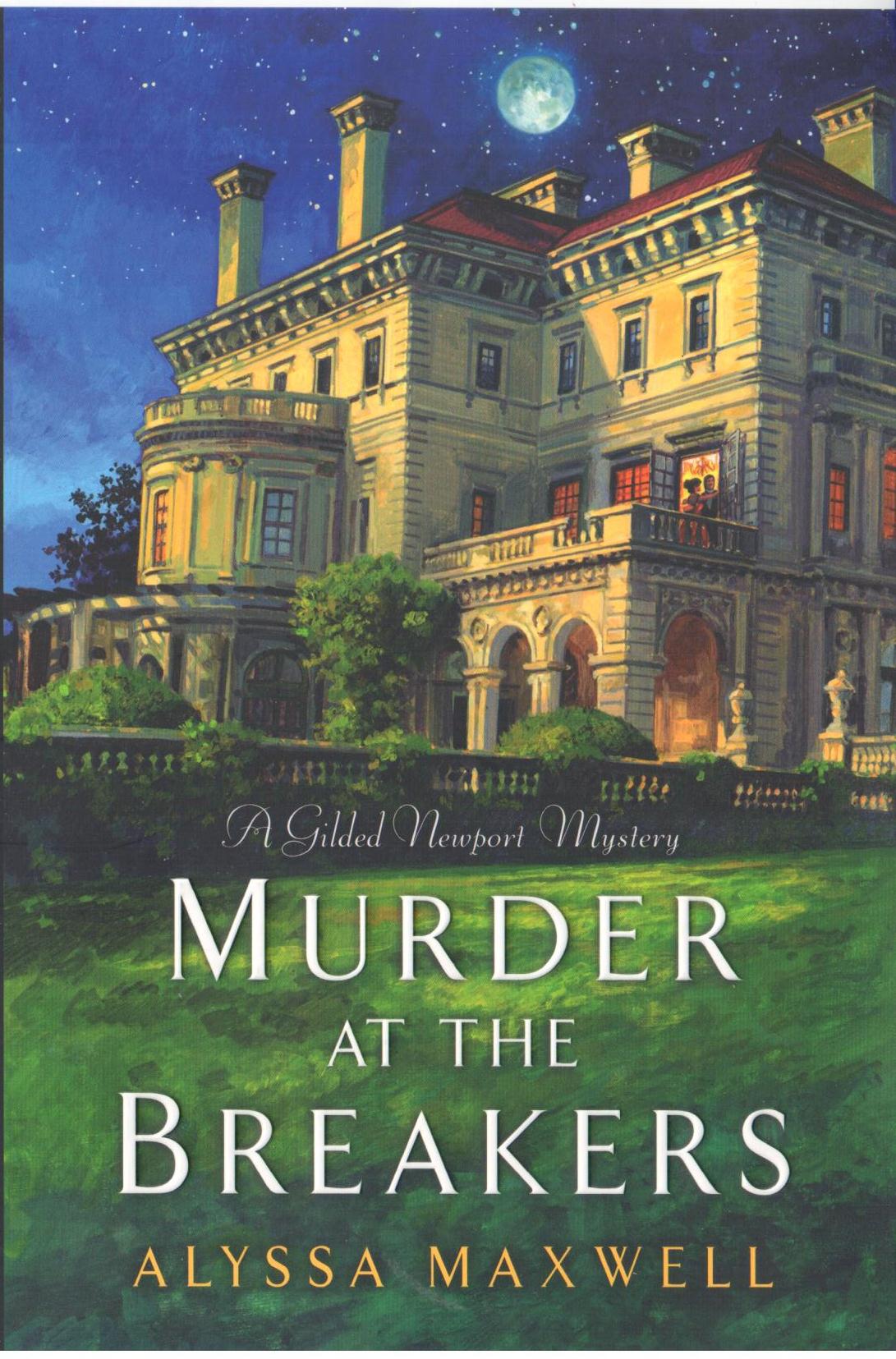
Please welcome the author of the Gilded Newport Mystery series, Alyssa Maxwell, who will give us look into her historical series:

Write What You Know? No! cover front

If you take a look at my website, you’ll see that writing my Gilded Newport Mystery series has been a very special and personal experience for me. With my husband and his family having deep roots in Newport, you could say that I’ve taken the advice so often quoted to aspiring writers: Write what you know.

In many ways, that’s true. I’ve gotten to know the city much better than if I’d merely vacationed there, and having that “insider’s” view has certainly allowed me to breathe more life into these stories.

So yes, I wrote what I know, but there was also so much I didn’t know when I started writing. The Newport of 1895 was much different than the one we know today. To make my stories believable and true to the times, I had to research the burgeoning technologies of the late 19th century – for example my heroine has a telephone and uses a typewriter, and electric trolleys run through town – as well as notions of class consciousness and the relationships between employers and servants.

No books about Gilded Age Newport would be complete without a look at yacht racing, luxury steam ships, and the kinds of carriages people drove. Fashions, occupations, pastimes – these were all on my “to be researched” list. And, of course, since my heroine is also a newspaper reporter, I needed insight on real women reporters of the times – and yes, there were a few, and some of them even managed to push beyond the limitations of society page news.

Besides my main characters, who are fictional, people like the Vanderbilts play important roles in the books. I’d heard of them, of course, and knew they were incredibly wealthy, lived in huge, ornate houses, and were connected to the railroad industry. But I had no knowledge of them as individuals, or how they interacted with each other. I had to get to know them on a much more personal level so I could remain true to their personalities and their family dynamics.

All of these elements, and more, I had to learn. But what kept it exciting for me was my desire to dig around in the past, find the puzzle pieces, and put them together. Let’s face it – after a while what you already know becomes one big bore. Staying inspired means taking risks and forging into new territory. It’s an adventure that keeps your writing fresh and makes you eager to sit down at the keyboard every day. So for me, it’s not “write what you know,” but “write what you want to know, and what you’re excited to learn about.” In other words, find your passion (or passions) and take off running!

Do you have a passion for something? Share below and be entered for a chance to win a signed copy of Murder at The Breakers! Or just leave any old comment – you’ll still be entered!

About Murder at The Breakers:

As the nineteenth century comes to a close, the illustrious Vanderbilt family dominates Newport, Rhode Island, high society. But when murder darkens a glittering affair at the Vanderbilt summer home, reporter Emma Cross learns that sometimes the actions of the cream of society can curdle one’s blood…

Newport, Rhode Island, August 1895: She may be a less well-heeled relation, but as second cousin to millionaire patriarch Cornelius Vanderbilt, twenty-one-year-old Emma Cross is on the guest list for a grand ball at the Breakers, the Vanderbilts’ summer home. She also has a job to do—report on the event for the society page of the Newport Observer.

But Emma observes much more than glitz and gaiety when she witnesses a murder. The victim is Cornelius Vanderbilt’s financial secretary, who plunges off a balcony faster than falling stock prices. Emma’s black sheep brother Brady is found in Cornelius’s bedroom, passed out next to a bottle of bourbon and stolen plans for a new railroad line. Brady has barely come to before the police have arrested him for the murder. But Emma is sure someone is trying to railroad her brother and resolves to find the real killer at any cost…

murder_at_MARBLE_HOUSE
Bio:
Alyssa Maxwell is the author of The Gilded Newport Mysteries, a historical mystery series featuring the glamor of a bygone era and a sleuth who’s a less “well-heeled” cousin of the illustrious Vanderbilts. The series debuted in March with MURDER AT THE BREAKERS, to be followed by Murder at Marble House
in September, and Murder at Beechwood in 2015. Alyssa will also be debuting an English-set historical series, The Foxwood Hall Mysteries, in October 2015. Alyssa and her family live in South Florida, where she is a member of the Mystery Writers of America – Florida Chapter, Sisters in Crime, and The Florida Romance Writers.

For review quotes, an excerpt, pictures, and all kinds of other fun stuff about The Gilded Newport Mysteries, please visit my website: http://alyssamaxwell.com. I love to hear from readers, so while you’re there feel free to drop me a line!

You can also find me at:
https://www.facebook.com/alyssa.maxwell.750


https://www.goodreads.com/author/show/7163135.Alyssa_Maxwell

Irish Author Mel Healy: Do They Speak English in Irish Crime Fiction? Sunday, Jun 1 2014 

Auntie M is thrilled to announce the publication of her third Nora Tierney Mystery, THE SCARLET WENCH. scarletwench_cover_front
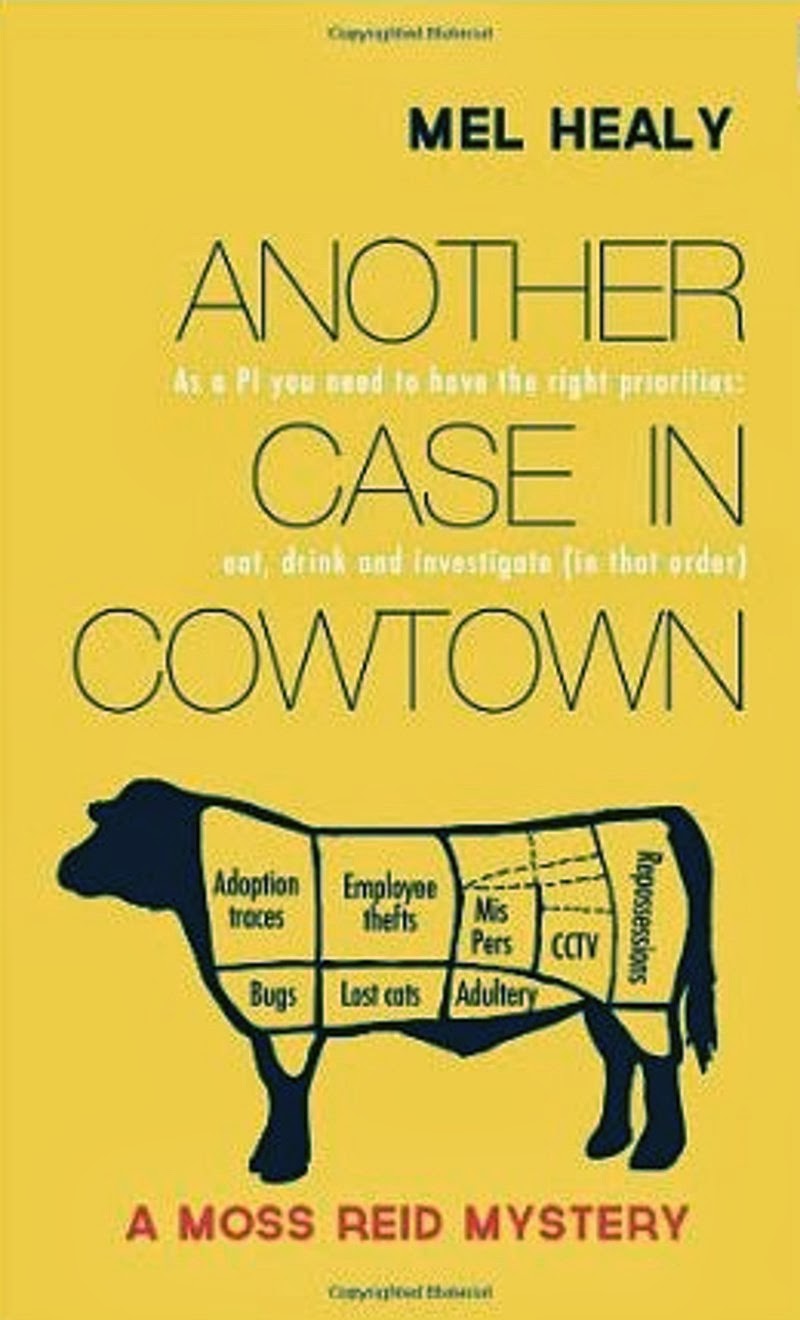
While she’s out on tour, please welcome Irish crime writer Mel Healy, author of the Moss Reid series, who will attempt to explain the vagaries of language he faces as a writer– as soon as we both murder a pint!

Another Case in Cowtown, Mel Healy

Do They Speak English in Irish Crime Fiction?

by Mel Healy

Here’s a little dilemma when writing crime fiction in English: what KIND of English should you use? The answer may seem obvious for US or British authors – simply set your spellchecker to “English (United States)” or “English (United Kingdom)” and off you go.

But it’s not quite so simple in my crime novels, which are mostly set in Ireland with mainly Irish characters. My spellchecker is set to “UK English”, the kind of spelling generally used in Ireland, which Irish readers would expect. Yet there are linguistic differences far deeper than mere spellings, or minor differences in syntax between UK English (as in “I met him on Monday, he killed her on Tuesday”) and US English (“I met him Monday, he killed her Tuesday”).

Take food. My central character, Moss Reid, is a PI and a foodie. His philosophy in life is “eat, drink and investigate – in that order.” So he uses British rather than American terms to talk about his grub – from courgettes (not zucchini) to biscuits (never cookies).

He’ll also talk about specific Irish food and drink: a “sliced pan” (as in a loaf of pre-sliced bread in rectangular prism shape), “colcannon”, “red lemonade” (I’ve an entire chapter on that), “Tayto crisps”. His food is stored in “a press” (the Hiberno-English term for a cupboard or closet) or “the fridge” (rarely “a refrigerator” in Ireland).

He never goes for “a few drinks” either. He goes “for a pint”. One pint, singular – which often descends into the plural because he “could murder another” (i.e. could do with a second one). In England, by contrast, Inspector Morse would drop into an Oxford pub (never a bar of course) for a pint of “real ale”. In Dublin, Moss Reid would have a pint or “a glass” (Irish pub term for a half pint) of “stout” rather than “ale”.

With the obvious exception of “pints”, my characters generally prefer metric to imperial units for food and drink, along with a plethora of Hiberno-English measurements such as the “rake”, “feed” or “clatter”. These mean “a lot”, “many” – as in “a rake of pints”, “a feed of drink”, “a few scoops”.

Hiberno-English uses a rake (sorry) of “British English” nouns in peculiarly Irish ways:

– “A yoke” is an all-purpose noun for objects, gadgets (particularly things whose name escapes you)
– “The jacks” are the toilets / ladies / gents (UK), bathroom / restroom (US), washroom (Canadian English)
– “The messages” refers to the shopping
– And “I’m dying for a fag” – this one always confuses my American friends – simply means someone has a craving for a cigarette.

My characters are more likely to say “grand” or “deadly” than the American “awesome”. In Hiberno-English a “deadly jumper” is a nice piece of clothing while a “deadly weapon” is not nice at all. Or take the word “crack” or “craic”: “a term for news, gossip, fun, entertainment, and enjoyable conversation” (Wikipedia). Hence phrases such as “mighty craic” or “the crack was ninety”.

So my characters use an English that’s quite different even to British English. They occasionally slip in an Irish word or phrase such as “slán” (“goodbye) or, more importantly, use Irish-language loan words when dealing with official state titles – the Taoiseach (head of government), the Oireachtas (parliament), and, of course, the Garda Síochána (police force) or gardaí or plain guards (cops).

Other relatively new phrases in common parlance from the Irish political and economic scene – “NAMA”, “Bertie-speak”, “the Galway tent” – are just the latest layers on top of all the older shorthand and sayings from Ireland’s largely colonial history. Hiberno-English dances at the linguistic crossroads, and does a rake of linguistic borrowing and bending in its merry dance. Hence my characters use terms such as:

– “Acting the maggot” (joking or acting the fool)
– “Culchie” (an unsophisticated rural person)
– “Eejit”, “bollix” (idiot)
– “Mitch” (play truant)
– “Bowsies”, “gurriers”, “gougers” (various nouns for rough or unruly elements)

Cultural reference-points are also quite different. Irish homes get US and British TV shows and know all about Oprah or Dr Who. But the media flow tends to be one-way: outsiders might know about U2 or “Father Ted” but wouldn’t have a clue about most Irish radio and TV, from “Love/Hate” to Mario Rosenstock, or catchphrases such as “Stop the lights” (from a 1970s gameshow).

Hiberno-English has another twist: sentence constructions that echo the Irish language. For example, in Irish you can’t say “I have written another book” – there’s no “have” in Irish. Hiberno-English mirrors this with “I’m after writing another book”. This construction (“I’m after killing him”, “She’s only after losing four stone!”) is called the “hot news perfect” or the “after perfect”.

Or take the question “Is that yourself there?” The reply might be along the lines of “It is.” Because Irish has no words for “yes” and “no”, in Hiberno-English the verb in the question gets recycled:

“Are you going for a pint?”
“I am” (instead of plain “yes”).

“Is your iPad working?”
“It isn’t” (rather than plain “no”). “Cos it’s banjaxed” (broken).

Hiberno-English likes conditionals (“She asked me would I help her” rather than “She asked me to help her”) and negatives (“This wouldn’t be the road to Skibbereen would it?”) and apparently empty words in conversations – like “like”, “know what I mean”, “so”, “sure”, “only”, “at all at all”. And, like Irish, it has both a second person singular (“you”) and second person plural (“youse”).

As the poet Ciaran Carson puts it: “I write in English, but the ghost of Irish hovers behind it.” Hiberno-English is a melting pot, with words and constructions from Irish, and archaic English words that fell out of use in British English. It even fills in certain gaps in English syntax. For example, “amn’t” (as in “am not”) is taken for granted in colloquial speech and literature (James Joyce in “Ulysses”: “Amn’t I with you? Amn’t I your girl?”), yet regarded outside Ireland as ungrammatical.

By now youse are probably wondering “Do the Irish speak English?” That’s also the title of a lecture by Terence Dolan, compiler of a Hiberno-English dictionary. Hiberno-English “is a distillation of the Irish character,” he says. “Irish people over the centuries have been oppressed, so therefore they don’t want people to know what it is they’re thinking or saying.” Hence, he says, Hiberno-English is “devious to start with, and evasive”. A real bonus when you’re writing crime fiction, particularly dialogue.

Without overdoing it, the dialogue in my books tries to give a flavour of all this. Maybe that’s breaking a textbook rule, as well as screenwriter John Yorke‘s sound advice: “Good dialogue doesn’t resemble conversation – it presents the illusion of conversation, subservient to the demands of characterisation and structure”.

But sometimes rules are there to be broken. Especially when speaking “broken English”.

Finally we can’t avoid the questions of (a) how much swearing to include (the Irish do tend to use swearwords as punctuation marks) and (b) the feckin’ weather. Apparently Ireland has more words for rain than the Inuit have for snow, and only in Ireland would a light sprinkling of rain be described as “a soft day”.

At the end of the day, though, let’s not get too hung up on the differences. Readers notice the differences standing out when something is phrased in a way that wouldn’t be heard in their locale. But the strength and beauty of the English language is that it’s both global and local. It spans borders yet enriches itself through its sheer diversity, feeding on the linguistic and cultural differences from place to rainy place.

Right. I’m off to murder a pint.

Mel Healy’s first two novels in the “Moss Reid” series are “Another Case in Cowtown” and “Black Marigolds“. For more info see his Amazon author profile at http://amazon.com/author/melhealy

Daniel Palmer: Desperate Sunday, May 25 2014 

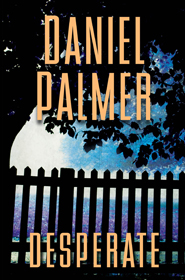
Desperate
Just when you think there can’t be a new twist to a story, along comes Daniel Palmer, who surprises readers yet again with his newest thriller, Desperate.

Told strongly in first person from the point of view of Gage Dekker, he and his second wife Anna Miller are desperate to adopt. Both have survived the loss of a child, and for Gage, the added loss of his first wife, Karen, compounds his despair when he meets Anna in a grief survivor’s group. After a whirlwind courtship, a meeting of the minds and hearts, the two are married six months when they decide to adopt after Anna experiences a miscarriage.

A chance meeting with unwed mother Lily turns their anticipated long wait to adopt into a sudden rush when Lily asks them to adopt her baby. With their upstairs tenant gone, Lily is installed over their heads to await the blessed event.

And then things start to horribly go wrong for Gage in several areas of his life, and Lily seems to be at the bottom of it all.

But Anna refuses to believe Gage when he insists Lily is sabotaging his life. The two women have bonded and Anna is desperate for this child to complete their family; she blames Gage for the seemingly innocuous incidents that have him believing Lily is not who she seems to be.

As the stakes are raised, Gage will find himself embroiled in a fantastical plot he can’t find a way out of, one that leads to murder, and he’s stuck at the heart of it.

This compelling thriller will appear to leave Gage no way out, and then the complicated plot takes yet another twist until it careens around a sharp curve and readers will be left breathless and amazed at the audacity Palmer infuses into his novel.

Compelling and intelligently written, Palmer will hook readers and draw you in, in this inventive thriller with its surprising events. Unexpected and original.

Linda Barnes: The Perfect Ghost Sunday, May 18 2014 

Linda Barnes is best known for her award-winning Carlotta Carlyle novels. Now she returns with an intriguing premise for a crime novel in The Perfect Ghost. perfectghost
Em Moore is the quieter, writing half of the ghost-writing “autobiography” team of T E Blakmore. Her partner, Teddy Blake, the face of the team with his charismatic personality and winning way during interviews of their subjects, has perished in a car accident.

Despite panic attacks and agoraphobia, Em pursues finishing their most recent contract with the actor, director and filmmaker Garrett Malcolm, and travels to his lavish compound on Cape Cod. The son of a family with theatrical ties, Malcolm is known for his attention to detail and his way with women. A widower with an only daughter, Malcolm wins over the impressionable Em.

It’s hard for Em to come out of her shell but she persists, using learned coping mechanisms, and soon winning Malcolm’s interest and finally his respect. She feverishly pursues their remaining interviews while composing the book, all the while distracted by the persistent questions of a local police detective who suspects Teddy’s accident was not quite so accidental.

Along the way she finds herself reluctantly introduced to a local gossip-monger and tries to decipher the clues he’s collected that point to a dark secret Malcolm is hiding.

Told in Em’s narrative to Teddy, we see the action through her eyes and the unfolding of a story that will leave readers with raised eyebrows, and in a final unseen twist, shocked at the ending.

Barnes just a great job folding readers into Em’s world, who will be caught up in her story. She uses devices like police reports, newspaper clippings and the transcripts of some of Teddy’s interviews to weave a compelling story that will leave readers totally unprepared for its surprising climax.

« Previous PageNext Page »