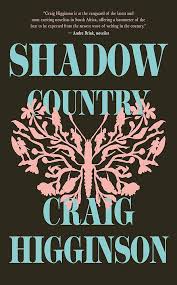
Blending multiple genres, Higginson’s Shadow Country brings Zululand, South Africa to readers.
Writer Daniet Hawthorne has traveled to the Webster family’s pricey Rock Ridge Safari Lodge. His announced motive for the trip is to do research on a disgraced relative, Lt. Charles Hawthorne, who fought in the 1879 Anglo-Zulu War in the area. The planned biography is of the man who was his great-great-grandfather who survived the bloody battle.
But soon Daniel’s thrust becomes to investigate the disappearance of Webster’s lovely daughter, Sam, presumed drowned after a sighting of her body surfaced on the flooded Buffalo River, only to disappear again. With the family absorbed in its grief, Daniel’s amateur detecting soon uncovers different narratives–and motives for who might have wanted Sam to disappear.
The lion-shaped mountain iSadlwana is where the Webster’s land sits, the battlefield dominating the landscape and the characters, filled as it is with unburied bones of British and Zulu soldiers. It’s a haunting reminder and a physical presence that casts its shadow over everyone. When a massive storm floods the river, all of its secrets are exposed.
Daniel’s contemporary investigation into the woman’s disappearance is in direct contrast with his ancestor’s past as he delves into the family’s secrets. That Charles was a lepidopterist is a huge symbol of the delicacy of nature against the dark violence of colonial war. The novel is highly atmospheric, whatever time period the reader is in, with its dual timelines in start contrast, too.
Thought-provoking, above your usual thriller, this showcases the human condition and its unchanging foibles.