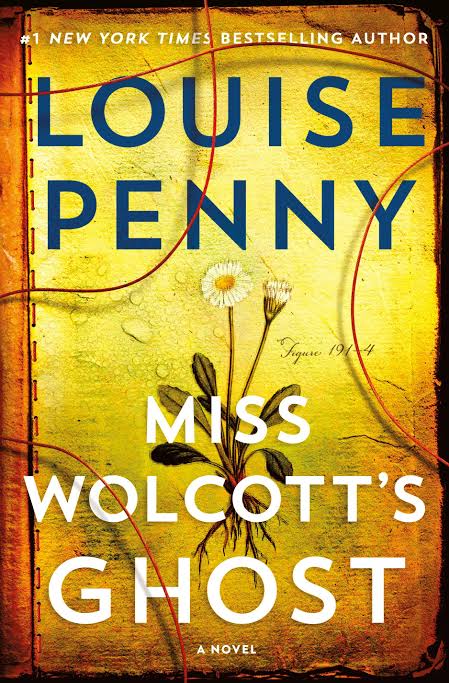
The 21st Inspector Gamache novel bring readers back to the familiar and loved cast of Three Pines, with the well-loved detective being woken by a panicked call, telling him of a body to be found in a remote area of wooded Quebec known as the Lost Nation.
When the site is finally found, it’s a bizarre sight: a dead man wearing clothing from the last century, lying on top of a grave with seedlings growing out of his clothes.
Even more startling, the genesis of the call appears to have originated from Gamache’s close friend and neighbor, artist Clara Morrow.
These early leads take the team on a wild search for not only those who are buried in the Lost Nation, but a maritime disaster that has bearing on the case, ancestors of Clara’s dead husband Peter Morrow, and at the heart of the matter, a Victorian botanist who curated a plant, now extinct.
The ghost of Miss Wolcott is indeed of great importance on several levels, as Gamache and his team investigate the man’s death, which will take them to France and England in addition to their Quebec universities. Miss Wolcott infuses their search at every step.
This is vintage Penny, a Gamache classic, and a real winner in both its complex plot and the humanistic themes it touches on. Wait until you’ve read the novel to read the Acknowledgments that give real insight how these plot lines came together for Penny.
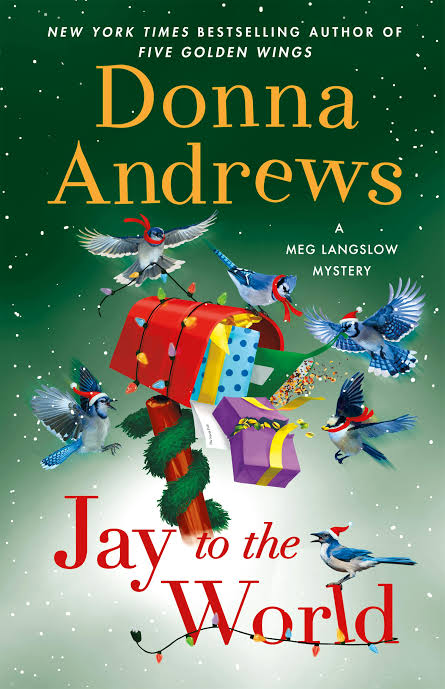
You’d think by the 40th Meg Langslow Mystery that Donna Andrews would have run put of pithy bird-related titles, but have no fear. While in the past there have been ducks, crows, magpies, falcons, larks, toucans, finches, gulls, eagles, even hens and hawks, to name just a few, this time we have Jay to the World.
Specifically, bluejays, who come to earn a pivotal role in the mystery set at Christmas time. It’s a busy time for Meg as she juggles incoming relatives with holiday preparations, along with her mother’s special projects, which this year includes her role in decorating the great room of a mansion for the Garden Club Holiday show house, plus a playhouse she’s having built for her two- year-old granddaughter, Brynn, whose favorite bird is “boojays.”
When the playhouse is vandalized and her mother hurt in the process, Meg’s mother admits she’s been receiving threatening emails. Meg juggles her other holiday responsibilities to investigate those she’s determined are her mother’s potential enemies, all the while arranging nursing care for a wounded boojay.
All of the usual cast of eccentric and lovable characters are on hand to assist Meg, including her twin sons, many other extended family members, and other Caerphilly residents and law enforcement she’s helped in the past. Now it’s their turn to help Meg.
One of my personal favorite characters is Miss Ethelinda Pruitt, an assisted living resident who earns a tidy side sum selling her untraditional yet intricate needlework samplers and pillows with off-color sayings delicately worked into the canvases. I hope Andrews will keep her in future mysteries. The only person missing is Meg’s drama teacher husband, Michael, who is in New York City with the classes yearly theatre crawl, which this year comes too close to the run-up to Christmas.
Andrews gives readers a nicely twisted plot and believable scoundrels, who do more than their share of creating messes that need to be cleaned up. There’s also plenty of the author’s brand of wry humor to round out a more than satisfying mystery that has a surprising ending twist readers won’t see coming.
This is another winner in a long running series that will delight fans and newcomers to Meg and her crew alike.
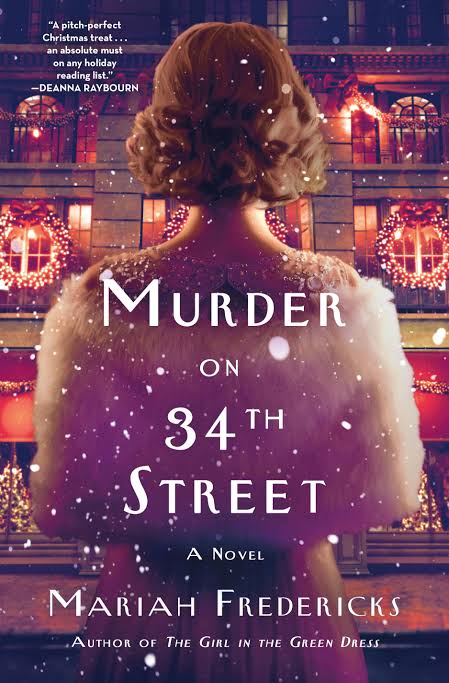
It’s no secret I’m a fan of Frederick’s historical novels (The Lindbergh Nanny; The Wharton Plot) but her newest, Murder on 34th Street, might just be my favorite.
Readers will immediately be drawn in by the voice she has created for protagonist Grace Verlander, with its mix of wryness and keen observation. As the assistant HR person at Macy’s huge Herald Square site, Grace has a knack for keeping things running smoothly when a less accomplished person would flounder. She’s smart and while she has her own baggage, she doesn’t let anything interfere with the position she’s worked hard to achieve.
It’s the run-up to the huge Thanksgiving Day parade in 1932, and New Yorkers need something to look forward to in the Depression, which has affected everyone, especially job seekers. When the store Santa receives a death threat, Grace takes this seriously, and speaks to the store detective, a former policeman, about increasing security around the man chosen to represent Kris Kringle that season.
Yet despite all of their efforts, there is a murder, and Grace is determined to not only find the killer, but to save Macy’s reputation. She will have the help of a window decorator she encounters, but is mostly on her own, using her knowledge of the employees and of the store’s inner workings to investigate as more deaths occur.
And just when she thinks she has it figured out, an ending twist turns things upside down to a surprising climax.
There is plenty here that makes this a great read, from the snappy dialogue, to Grace’s inner thoughts, to the significant research Frederick’s has done about how the Macy’s parade functioned in this era behind the scenes.
New York City springs to life under her talented pen, and gives readers an engrossing read they will devour. Highly recommended.
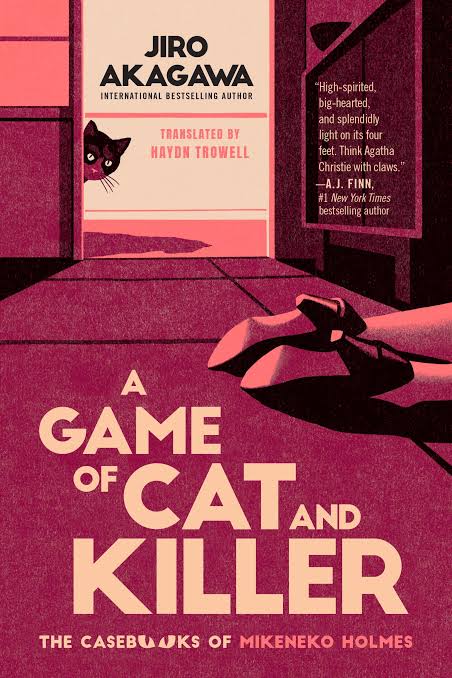
One of Japan’s most read novelists, Jiro Akagawa’s A Game of Cat and Killer is the first in his long-running series first published in Japan in 1978, and now translated into English for the first time.
The cat in question is named Holmes, and while he’s not a talking cat, the feline does have an unusual way of bringing clues to his owners’ attention. After reluctantly adopting Holmes, Detective Yoshitaro Katayama takes a while to realize how Holmes can help him, but once he figures it out, he accepts the cat will be a welcome helper.
Katayama is a shy man with many fears, and it’s only his good instincts and dogged attention to detail that allows him to solve crimes. In this first in the series, he’s called to a woman’s college to investigate when a young female student is found murdered.
Soon he’s mired in more than one investigation, and while his aunt distracts him with matchaking, he’s drawn to a comely student instead.
The writig is sharp, with sprightly dialogue, while the plot is nicely twisted. It’s a heartwarming read from a multiple literary award winner, with sales of his books making him the highest of any Japanese author.
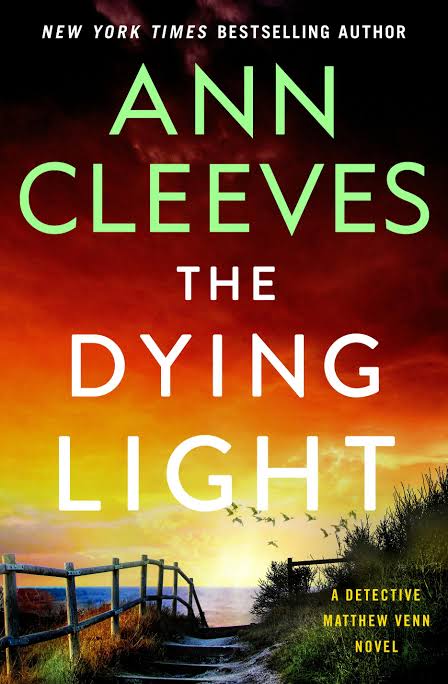
Cleeves’s 4th Detective Matthew Venn novel opens during a heat wave in North Devon, an area Cleeves know well, having grown puu there, and she puts this sense of local knowledge to great use in her setting.
Venn’s new case starts off with the body of young woman found floating in the pool of MP Paul Armstrong’s vacation home. The dead girl, Lottie Caldwell, is friends with Hannah Armstrong, who appears to be missing. With the girls arriving before the family at the end of their exams, they’ve had a few days alone to celebrate, and also it will be revealed to create a particular brand of disquiet in the small town of Millscombe.
The Armstrong parents and two young brothers arrived to find Lottie’s body and Hannah missing. Could this be a kidnap gone wrong? Until tragedy strikes again, and suddenly Venn and his closeknit team have a double murder to solve. With a local folk festival in the area over the past weekend, a nearby farmer’s family who Hannah’s grown close to, and the local pub owners involved with the girls first days home, the suspect pool quickly widens.
There is a sense of claustrophobia in the setup of the local area, with everyone knowing everyone else’s business, and their gossip pervades every aspect of Venn’s investigation. It doesn’t help matters that he’s struggling with his husband Jonathan’s decision to find his birth mother.
The book has a terrific atmospheric sense of setting that buttresses the vivid characters, all finely drawn, distinctive and individual. Introspective and at times unsure of himself, Venn is Vera Stanhope’s direct opposite, yet just as worthy a detective with his own way of pursuing an investigation, and his belief that his leads will come from learning about the victim’s lives and of those around them. How we are perceived can vary greatly, as can what will be said about people when they are alive versus when they are dead. The secrets these characters keep must also be prised open to get to the heart of the matter.
Intriguingly plotted, at times the reader feels as Matthew Venn must, that the elusive truth is just hidden around the next corner, a wisp of reality waiting to be seen. And when the shocking ending occurs, it must be said that it was there all the time in our view and yet remained unseen.
The author of the popular Vera and and Shetland series does not disappoint. This is terrific writing and stands up with the best Cleeves has written. Highly recommended.
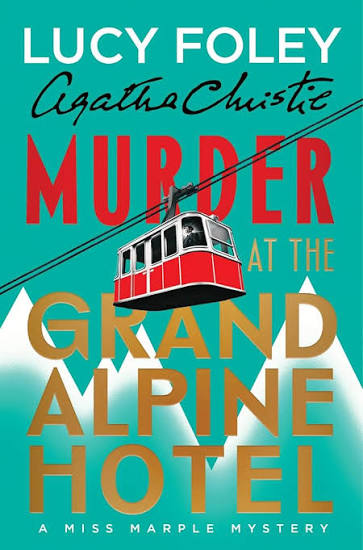
Fans of Miss Marple, take notice! As the Christie estate authorized author Sophie Hannah to write new Poirot mysteries, they have now authorized a new novel featuring the elderly spinster sleuth. Lucy Foley’s own bestselling books (The Guest List, The Paris Apartment, et al) make her the perfect author to bring readers her rich storyteling in Murder at the Alpine Hotel. As a huge Christie aficionado, she makes certain to adhere to the spirit of the Miss Marple we know and love, creating a unique bridge from the original novels to engage us with new stories.
Chrisite fans will appreciate Foley including Mrs. Dolly Bantry (1942’s The Body in the Library) as Miss Marple’s traveling companion when the two women, along with Dolly’s paid companion, travel in the winter of 1950 to the Swiss Alps to the glamorous resort that will give them a winter holiday amongst an interesting mix of guests.
But the holiday feel is soon jeopardized when a huge snowstorm isolates them in the Grand Alpine Hotel, just as a guest’s dead body is found inside the hotel’s mountain gondola. A sealed environment with a cast of suspects makes the perfect setting for the investigation Miss Marple carefully undertakes after volunteering to assist a French detective staying at the resort.
Soon several guests who were associated with the dead man come under the careful scrutiny of Miss Marple as more bodies pile up, with a most surprising climax that has several twists at the end. The post-war setting has its tendrils in the plot, and Foley gets the feel of the time in this European setting just right.
There are scenes from several suspects’ points of view, adding psychological depth to the story that is Foley’s specialty of strong women. There are nuns, a Hollywood actress, an MP and his wife, as well as an Irish Wolfhound, all bound up in a morally complex plot.
At first Miss Marple appears frail and hesitates to become involved, but once she’s in full swing, knitting away while bringing her comparisons of village life to the forefront, the beloved character rises again with her acute observations, and we are satisfied and happy to read the first Miss Marple mystery since Christie’s Sleeping Murder in 1976, the same year Christie died. The British Library is mounting an exhibit on the 50th anniversary of her death. Christie’s books are still outsold only by the Bible and Shakespeare.
Nothing misses the eagle eye of Miss Marple. Readers will agree when Foley has Dolly Bantry tell Marple, “Jane . . . I hope you won’t mind my saying this, but it is almost uncanny, your ability to think yourself into the mind of a murderer.”
Delicious and entertaining, grab this milestone book now.
Brittney’s 7th installment in her Mayfair 100 series, set in London during World War 1, brings the same attention to historical detail as the rest of this fascinating collection of stories that encompass a murder investigation while examining the societal constraints and mores of the era.
With a special task force set up to include women, DCI Peter Beech, invalided out with an injured leg, leads the team that includes two other policemen, Sgt. Arthur Tillman who has come out to retirement to help, and invalided constable, Billy Rigby. The competent women who assist them are Women’s Hospital physician Caroline; Pharmacist Mabel; and solicitor Victoria, who is qualified but unable to practice law as a woman. They are aided by Billy’s mother and aunt, while the team is headquartered in Victoria’s mother’s house. Lady Maud Winterbourne has allowed her Mayfair home to be the center for the team, whileher society connections often prove invaluable.
It’s February of 1916 and The Military Service Act has been passed, which in the US would be called the draft, making military service compulsory for single men between 18-41. The first victim, which Victoria had encountered shortly before her murder, is a young woman who shamed a man for not signing up by handing him a white feather.
The White Feather League used these women to indicate they regarded the men as cowards. While often that was not true, as a man might have served and been invalided out, the league’s actions raise the ire of Victoria, already widowed, who fears her new love will be conscripted.
The dead girl is found with her throat cut in a distinctive way, and soon a young art student designing recruitment posters is murdered with the same unusual implement. When a third woman is attacked but wards her murderer off, there is hope she can identify her would-be killer, but at first she is kept in a medical coma, unable to be questioned. The Mayfair team is tasked with warning women involved in promoting this kind of propaganda, but the numbers are heady and the task difficult, while at the same time they search for details in each killing for leads.
Woven into the investigation, Caroline and Mabel are asked to inspect a factory contructing aircraft where women are falling ill, and there is a suspicion that the chemicals used in their process are causing permanent health damage to the workers. This fascinating subplot will capture readers attention as it leads to new restrictions.
Then the search for the killer ratchets up when one of the team disappears without a trace. Could the killer have taken their member off the street? The compelling story rises to a riveting and surprising climax.
The hallmark of the series is Brittney’s consistent and realistic historical detailing, reflecting the enormous research she must undertake in many areas to bring this kind of multi-layered story to readers.
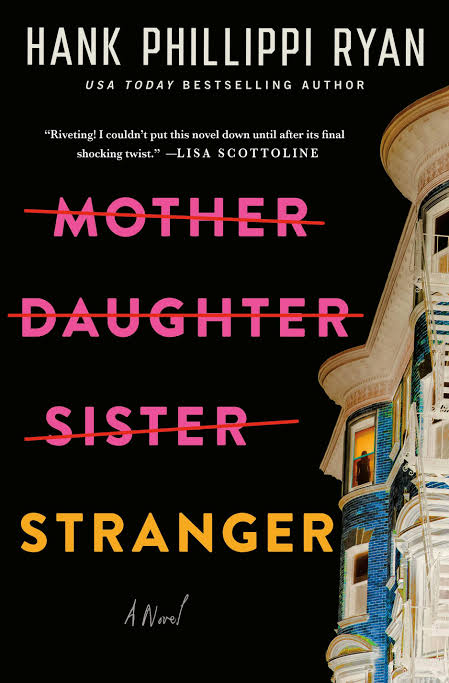
Ryan knocks this one out of the park with a thriller that will have readers flipping pages long into the night.
Filled with a huge packet of lies and secrets, Eliza Ramsey tries to unravel the reality of events that have started with the plane crash that left her and her older sister orphans.
Eleven years later, Eliza is on the hunt for Bea after her sister disappears, leaving her to to care for her niece, Piper. The precocious pre-teen doesn’t understand why her mother hasn’t shown up after being away for a week—and neither does Eliza.
What starts out as a possible miscommunication from Eliza’s point of view soon morphs into something much more diabolical, when a visit to Bea’s home finds all of her clothes are missing. Has she disappeared on purpose? Been kidnapped?
Not knowing whom to trust, Eliza only knows one thing for certain: Bea would never abandon her daughter.
Ryan’s Eliza is instantly recognizable, yet a complex character after losing her parents. We watch her growth through the book as a series on unexpected twists and turns force her to face uncomfortable and even dangerous truths as the tension steadily rises.
The twists keep coming in what may be Ryan’s best thriller yet. Not to be missed.
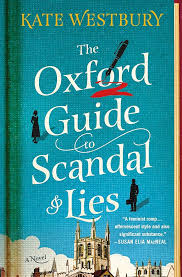
Westbury’s debut perfectly captures Oxford in 1951, encapsulating the societal norms and mores of the time, bringing the foibles and misogyny of the academic world, spiced with espionage, and more than a hint of romance to the story.
The Honorable Ginevra Bishop is studying languages to prove her smarts and rise above the tedium society wants to box her into, when she meets Sidney Braithwaite, trying to find a new path after a painful stint in the war, and longing to find a future that will be more than that of the mines his father worked.
Sparks might fly when they two meet but they’re not instantly of the collegial kind. They are conscripted to work together for MI5 to unmask a Soviet spy who is leaking sensitive information, situation they both initially abhore but soon see the sense of after the killing of a friendly librarian.
There are plenty of suspicious suspects for them to follow as Gin learns the detecting world Sidney knew from his war work that still leaves painful scars. As they get closer and closer to their real target, Gin fends off a would-be suitor she loathes, and learns an uncomfortable truth that will affect her future.
The bantering dialogue and likeable protagonists provide a nicely done setup that should cement this duo readily for a sequel.
Will Thomas’s Barker and Llewelyn series in one one of Auntie M’s favorite historicals with good reason, as his research is meticulous and often based on real events. He returns with the newest in this long-running series with For Services Renderered.
It’s October of 1986, and Barker and Llewelyn, private enquiry agents, have a long established daily routine that is shaken to its very core when their cook, Etienne Dummolard, chef owner at Le Toison d’Or, fails to appear to cook their breakfast. When he is taking his family to Dijon to avoid clashing with his sworn enemy who ate dinner the previous night at his restaurant.
The news is particularly startling because Barker killed Seabastian Nightwine in a duel, yet Eitienne insists he’s alive.
Unfortunately, this turns out to be true. The evil man makes enemies easily and never forgets a grudge. He trained his only daughter to be an assassin, and is dangerous beyond compare as he runs through money and will do anything to earn more, even to kidnapping British citizens who have angered the Qing government years ago in China and still have a reward on their heads. Yet his charm amuses many, including the Prince of Wales, who has not seen his dark side.
So when Barker’s paramour, Lady Phillipa Ashleigh, visits to say she’s received a message from Nightwine, Barker is on instant alert. Coveting Barker’s relationship with Lady Phillipa makes Nightwine doubly treacherous. Soon she and Llewelyn’s wife and young daughter are on their way to Paris, out of harm’s way.
But not before a visitor to their office gives them another, possibly related, case. Dr. James Cantlie begs the two detectives to find his missing friend, a young doctor he mentored who has disappeared, named Sun Yat-Sen.
What follows is a double espionage situation with Nightwine at their heels as the men try to find the young kidnapped doctor, born in China but raised in Hawaii. Learning that the Qing government has declared a price on the man’s head for a letter he sent to the government complaining of their methods, Barker suspects Nightwine is at the heart of the man’s disappearance.
Their investigation will take the two men into the heart of the Cbinese embassy who are holding the young doctor, with Nightwine planning to smuggle him out of England to face execution in China. Only the wits and wiles of Barker and Llewelyn can stop this plan from coming to fruition.
Using Llewelyn as narrator adds an element of the Welshman’s pithy observations in this wholly entertaining novel.