Blunt Impact: Lisa Black Saturday, Mar 2 2013 

blunt cover image

Please welcome guest Lisa Black whose forensic mystery series continues with it’s fifth entry:

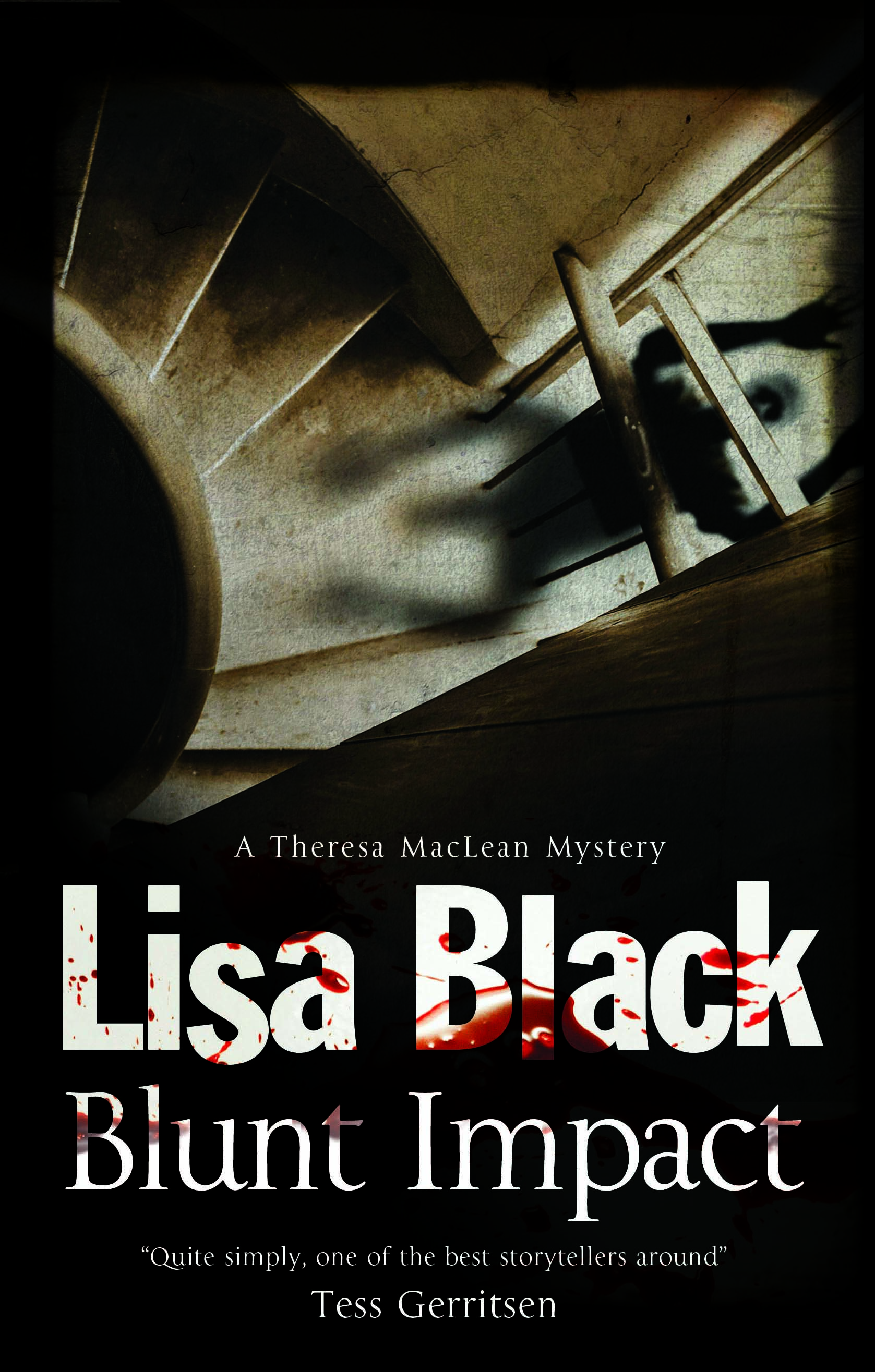
Blunt Impact is the fifth Theresa MacLean forensic mystery and the first to be published by Severn House. Theresa has my old job as a forensic scientist at the coroner’s office in Cleveland, Ohio (now I’m a CSI and latent print examiner in Cape Coral, Florida). I’m also a bit claustrophobic, which is probably why I like to set my murder scenes outdoors. At the lakefront, in the park, on the observation deck of the Terminal Tower or, as in Blunt Impact, on the 23rd floor of a skyscraper under construction.

Theresa is not the butt-kicking gun-carrying bad girl of some TV shows. Nor is she the icy sarcastic genius who likes to point out everyone inadequacies. She prefers to do her work in peace and quiet, unobserved behind the lines—but of course this rarely works out for a good-looking redhead who’s usually found standing over a dead body. And in Blunt Impact she is caught in the knot of unlikely and conflicting human beings surrounding a tough but endangered little girl named Anna, better known as Ghost.

Ghost has a unique lifestyle, loved by her construction worker mother and disabled grandmother but constantly slipping out of her home to roam the back alleys of the large city, looking for the father whose identity has always been kept secret from her. Nothing all that bad ever happens—until she witnesses her mother’s murder, the beautiful young woman thrown from the 23rd floor. Ghost will not rest until she learns the truth, which means that Theresa cannot rest until Ghost is safe.

The building itself is in turmoil, torn by controversy over its purpose as a new county jail. Add in OSHA whistleblowers and missing money, criminal elements using the site for their own purposes and a homely but smart district attorney who becomes more interested in Theresa than the intrigue and Theresa has no choice but to hang on tight as she dangles over the abyss.

Blunt Impact will be available April 1, featuring forensic scientist Theresa MacLean and a series of murders surrounding a skyscraper under construction in downtown Cleveland. The first to die is young, sexy concrete worker Samantha, thrown from the 23rd floor. The only witness is her 11 year old daughter Anna, nicknamed Ghost. Ghost will stop at nothing to find her mother’s killer, and Theresa will stop at nothing to keep Ghost safe.

Also, Kindle owners can find a bargain in my new book The Prague Project, written under the name Beth Cheylan. A death in West Virginia sends FBI agent Ellie Gardner and NYPD Counterterrorism lieutenant Michael Stewart on a chase across Europe as they track stolen nukes and lost Nazi gold, hoping to avert the death of millions of people.    L Black author photo-1

         Lisa Black spent the five happiest years of her life in a morgue. As a forensic scientist in the Cleveland coroner’s office she analyzed gunshot residue on hands and clothing, hairs, fibers, paint, glass, DNA, blood and many other forms of trace evidence, as well as crime scenes. Now she’s a certified latent print examiner and CSI for the Cape Coral Police Department. Her books have been translated into six languages. Evidence of Murder reached the NYT mass market bestseller’s list.

See her website at: http://www.lisa-black.com


Deborah Crombie: The Sound of Broken Glass Sunday, Feb 24 2013 

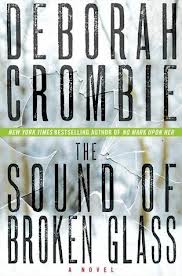
One of the delights of Deborah Crombie’s novels are the British neighborhoods and environs she explores for her murder mysteries. images_067

In this 15th outing between her now-married detective pair of Gemma James and Duncan Kincaid, The Sound of Broken Glass remains firmly rooted in foggy London in the Crystal Palace area. Chapter epigraphs, a device Auntie M highly enjoys, all pertain to the history and destruction of the Crystal Palace building that gave the area its name.

Crombie has kept the series fresh and humanizing by moving along the personal relationships in the Kincaid household and allowing for the growth of the marriage between the main characters. With the addition to their family of a three year-old foster daughter, Charlotte, it is Duncan’s turn to be at home to assist the traumatized little girl through her integration into their family and a more normal life. These moments remind us that police men and women have families of their own, whose absences are noted when normal routines must be adjusted around the demands of a murder investigation.

The main case belongs to Gemma this time, aided by DS Melody Talbot. They investigate the murder of a barrister who has been taking sole care of his wife, suffering from increasing dementia. The body of Vincent Arnott is found in a seedy hotel in the Crystal Palace area, naked, trussed and strangled. The contrast between the man’s public and private faces becomes immediately apparent and startling.

Then a second barrister is killed in the same way and additional evidence ties the cases together. The deaths tie in with a band playing in the area, and especially their talented guitarist, perched on the edge of fame. Is a serial killer at work?

Gemma and Melody must unravel connections going back over fifteen years to tie these murders together. At the heart they will find a bullied and lonely thirteen year-old boy and his relationship with a recently widowed teacher and neighbor. Duncan’s fears rise when a personal connection ties him to one of the suspects and provides the thread between the two murder victims.

When the past and the present collide, Gemma and Melody find themselves in the middle of an ice storm, racing through the steep streets of Crystal Palace to prevent more deaths.

Consistent and compelling, fans of the series won’t be disappointed with Crombie’s latest offering.


Charles Todd: Proof of Guilt Sunday, Feb 10 2013 

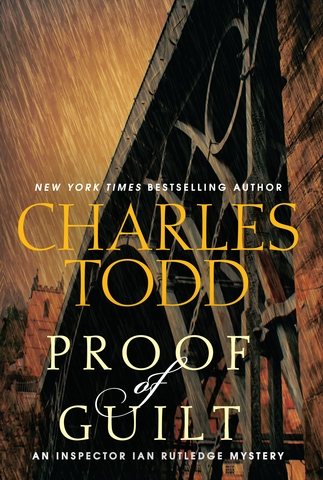
000290326In their fifteenth outing together, mother-and-son team Caroline and Charles Todd follow Scotland Yard Inspector Ian Rutledge into the countryside in search of a murderer in Proof of Guilt.

Those new to the series learn enough of his back-story and WWI experience to understand his personal demons and the reason for the ever-present Hamish, the voice who alternately guides and chides the detective, just over his shoulder and always out of sight.

Readers familiar with the series will enjoy Rutledge’s careful but frustrating investigation. His sister Frances, whom Rutledge has come to depend upon for companionship in his darker days, has her own surprising news.

This time Rutledge is dealing with getting to know his new Acting Chief Superintendent, a man who decides on a course based on reading reports and refuses to listen to Rutledge’s instinctual alternate theories. At times it seems the Super is deliberately thwarting Rutledge in his investigation.

When a car runs over the body of young man, the heirloom pocket watch found on him is the only clue to his identity. It soon becomes apparent the man did not die on the quiet but dignified street where he was found, but was dumped there.

Is this a clue to who he is, or a warning to someone living on that street?

The search for the man’s identity leads Rutledge to the co-owner of a Madeira wine company. Lewis French has gone missing, but it’s not his body on the slab in the morgue. Then how did the dead man end up with French’s watch?

And where is Lewis French?

Rutledge finds French’s sister to be an angry and jealous person who had quarreled with her brother just before his disappearance; his fiancee` seems less concerned than she might be. He also finds himself drawn to the man’s former jilted fiancee`. There seem to be plenty of people who might want French dead.

But if French is dead, where is his body? And how does a second disappearance of a war veteran tie in?

The time period necessitates a slower pace, as Rutledge must navigate by his own motor car to the various country villages outside London that eat into his precious time to follow the slender threads he uncovers.

This is not a fast-paced thriller but more the deliberate and tenacious unraveling of a plot with fingers lasting decades. Rutledge must find evidence to trap the killer before he becomes the latest victim.


Brad Parks: The Girl Next Door Sunday, Jan 20 2013 

Parks’ third mystery featuring journalist Carter Ross is a filled with the wry humor of the protagonist that makes The Girl Next Door a delight to read.9781250013408

Set in the neighborhoods of northern New Jersey, Parks shows the dichotomy of the different areas he has Ross visit in his tenure on Newark’s Eagle-Examiner,  and the different attributes and customs that go along with each one.


Here’s Ross describing his personal attitude after years of experience : “As a newspaper reporter, I’m required to move in all strata of society. I get to observe human behavior everywhere, from the meanest housing projects to the gilded symphony hall. And what always strikes me is that when you strip away the superficial differences in clothing, setting, and dialect, groups of people everywhere are more or less the same . . . most of us are just trying to find a way to fit in.”

Reading the paper’s obituaries leads Ross to come across the death of Nancy Marino, a “girl next door” forties-something carrier for his own paper. When he decides to write a feature story about an everyday woman who dies too young, Ross naturally heads to her wake to meet her family and to hear the stories of this common woman.

So he’s more than surprised and quickly intrigued when one of Nancy’s sisters insists that the hit-and-run accident that claimed Nancy’s life was not an accident at all, but a cold-blooded murder. Adding to his interest is the appearance at the wake of his own newspapers publisher, the smarmy Gary Jackman, who refuses to give him an interview but has an arugment  with another man attending the wake that Ross overhears.

The reporter’s investigation reveals the never-married Nancy held down two jobs while caring for her elderly mother, who lived a few blocks away. Besides being a paper carrier, she worked part-time as a waitress at a local diner and was shop steward for her carrier’s union.

Ross digs into the case, convinced he’s on the right road to find Nancy’s murderer. He’ll get in trouble in far too many places at once, including with his boss and editor, who is his infrequent girlfriend, Tina Thompon. He’ll also become saddled with an intern who reads Emerson and Thoreau and is planning a thesis on Philip Roth, one of New Jersey’s hometown boys.

Parks’ creation is articulate and a pleasure to read; his characters are quirky and colorful. And best of all, his plotting twists and turns as it delves into the gritty world of some of the not-too nicest characters and neighborhoods of New Jersey. And some of those are the friends Carter Ross will depend on when he needs a helping hand.

Filled with action and unexpected turns, it’s difficult at one point to figure out how Ross will come out on top of this one. Keep reading.

Peter Robinson: Watching the Dark Sunday, Jan 13 2013 

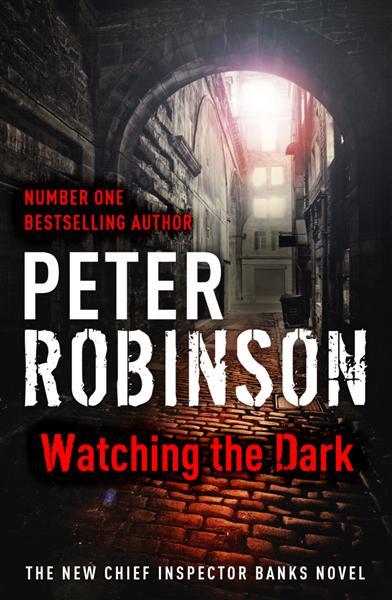
Robinson’s twentieth Chief Inspector Banks novel starts off in an unlikely place: St. Peter’s Police Convalescent Treatment Centre, just north of Eastvale, his stomping grounds. watching-the-dark

Watching the Dark opens with the introduction of DI Lorraine Jensen, recovering from multiple leg fractures, the result of a fall from a second-story tower block chasing drug dealers. Awakened early one morning by the pain her leg, she moves outside to watch the sunrise and wait for her painkillers to kick in.

As she sips her tea she notices a bundle of clothes on the far side of the lake. Using her crutch to get closer, she realizes the bundle is really a very dead man, kneeling forward with his head touching the ground.

When the team arrives and the police surgeon turns the body over, everyone is shocked to see a crossbow bolt sticking out of the man’s chest. A recent widower, DI Bill Quinn was a patient at St. Peter’s for issues with his neck.

When Banks decides to search the victim’s room himself, it appears there is little joy to be found. Quinn’s room sports a series of fishing and gardening magazines and only one book: Practical Homicide Investigation.

The well-practiced team swing into action. Interviews of the twelve resident patients and staff, as well as room searches, are carried out quickly and efficiently. That the Centre pays lip service to security is immediately apparent. The thing left to resolve: was Quinn’s murder revenge from a former convict? Or something more deep and sinister.

Then Banks takes a closer look at the book found in Quinn’s room. Under the endpapers, the detective has secreted a thin envelope containing three photographs of himself and a young woman in compromising positions.

But what do these photos have to do with the man’s murder? And how to they tie in with a dead migrant worker found in an abandoned Yorkshire farmhouse?

Then a cold case appears connected.  19 year-old Rachel Hewitt had disappeared on a hen party in Estonia several years ago and was Quinn’s biggest regret, a case he considered his only failure. Would her case provide the key to unlocking why DI Quinn had to die?

Complicating Banks investigation are two women. DI Annie Cabbot, Banks’ former lover and longtime colleague, due back after six months rehab from a shooting incident, is due to return to work in two days. Will she be up to the task or will her demons prevent her from doing her job?

Then Banks’ ACC throws him a curve ball in the form of a Professional Standards Inspector who is assigned to investigate Quinn’s death alongside Banks. Joanna Passero has her own agenda, and finding out if Quinn was a bent copper is just her surface assignment. She painfully dogs Banks’ steps, hampering his quest.

Robinson moves Banks around to Europe and the change of scenery keeps Banks on his toes and readers turning pages. Not all policemen have the same scruples, he will be quick to learn. But how does that tie in with people trafficking, migrant labor scams, and most importantly, murder?

Fans will be delighted to see Banks in action in this highly readable and compelling new novel from a master at the top of his game.

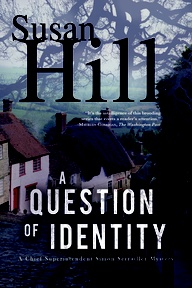
Susan Hill: A Question of Identity Sunday, Nov 25 2012 

Can a person love two people at the same time?

Can a person BE two different people at the same time?

These are the main questions the wonderful Susan Hill addresses in the compelling new Simon Serailler mystery A Question of Identity.

Fans of the series will not be disappointed, as Hill explores Serailler’s relationship with the woman he loves, whose husband is dying.

She continues to weave in his sister, Cat, a young widow raising three children and working hospice, who faces more changes in her future just as she unearths a terrible family secret.

She also gives us an inside look for the first time into the mind of the killer Simon must unveil, by following snatches of his thoughts during the entire investigative process.

The cathedral town of Laffterton that Serailler inhabits hasn’t seen a crime as this: the brutal murder of an elderly woman, newly moved into a brand new housing scheme, posed in a way that marks the murderer’s signature. This is a careful killer, one who wears gloves, doesn’t leave a trace behind, and chooses his victims for their age and inability to react quickly to his appearance.

As the murders escalate, Serailler’s team keeps several bizarre aspects of the murder from the public. Then their investigation finds these signs to be the exact MO of a suspect previously charged with several murders who had been acquitted. But trying to find the murderer takes on an unreal aspect when Serailler learns the suspect has been given a new identity, and simply vanished. And the powers that be refuse to give him any details or acknowledge the man existed.

Hill ups the empathy with Serialler’s frustration by introducing the victims to the reader before the murders, weaving in his private life and snatched moments with his beloved Rachel at times, visits with his sister and her family at others. Realistic happenings in Cat’s life lend even more verisimilitude as she copes with teens, tweens, and the aftermath of a past case on a young doctor who has been living with her family. The first death doesn’t occur until page 137, plenty of time for Hill to ratchet up the suspense as readers come to realize who the victims will be.

This is a satisfying read in a continuing series that is what The Washington Post calls a “. . .  brooding series that rivets a reader’s attention.”

Ruth Rendell has this to say about Susan Hill: “Not all great novelists can write crime fiction, but when one like Susan Hill does the result is stunning.”

Lynda LaPlante: Blood Line Sunday, Nov 18 2012 

Prime Suspect‘s Lynda LaPlante is back with a new Anna Travis novel.

Blood Line follows Anna’s new case as a DCI, heavily watched over with increasing annoyance to her by her mentor and former lover, Superintendent James Langton.

Her first case was a slam dunk that she made her way through numbly, dealing with the aftermath of the death of her fiance`. The pacing here is different from the usual murder novel, as the case starts out as something entirely different and meanders its way into a murder investigation, when a court clerk whose son has disappeared asks Anna to look into the case. Langton concurs, trying to give Anna time to grieve before getting her feet under her in a real murder case.

Alan Rawlins is a good-looking chap, engaged to be married to salon owner Tina Brooks. A shy gentleman, Alan’s sudden disappearance has his father and fiancee` stumped.

Anna’s initial interviews reveal nothing specific. At first glance, Alan is a paragon of virtue, with savings in the bank and a steady job. Tina arrived home from her salon one day after he’d come home early from work with a migraine to find Alan gone; it is his father who insisted a Missing Person’s report be filed when there’s no word from Alan after two weeks.

Meeting Tina for the first interview leaves Anna with a gut feeling something is wrong. The flat is too neat, compulsively so. And despite supposedly in the midst of shopping for a wedding dress and ordering invitations, Tina shows little emotion when discussing her missing partner, stating she feels he’s gone off with another woman. At first Anna feels it’s possible Alan has taken off to escape marriage to Tina and the pressures of his mother’s dementia, especially when a potential second source of income is identified.

Then a better search of the apartment Alan and Tina shared turns up evidence of a blood pool behind the head of the bed, and more Luminol work shows a massive cleanup in the bathtub as the full-scale murder investigation swings into action.

Despite the evidence, the question of the identity of the victim becomes an issue. Someone was murdered in that flat, but just who it was becomes more and more difficult to establish in a series of twists that have Anna, under pressure to solve the case, becoming almost obsessed with all the trails she finds. And over it all, Langton is watching her like a hawk.
The book follows the extensive details and delays of real police work, from waiting for forensic reports to traveling to interview witnesses, always with the budget in mind. Anna also deals with the personalities of her hastily-thrown together team.

LaPlante’s lack of contractions may take some readers aback as it gives her dialogue a more formal feel; but it also serves to keep the British tone in the reader’s ear. This edition comes through the new line of mysteries from HarperCollins, Bourbon Street books.

Ann Cleeves: Silent Voices Sunday, Nov 4 2012 

Anne Cleeves marvelous four Shetland Island mysteries, previously reviewed by Auntie M, are joined by the fourth in her Vera Stanhope series. Silent Voices is Cleeves at her best, with the kind of involved plot that revolves around relationships we’ve come to expect  from this talented and prolific author, whose George and Molly books, Inspector Ramsey series, and several stand-alones rank high with the best of British crime writers.

Vera is an unlikely heroine, living with the ghost of her dead father in his house, overweight and lonely, but with an instinctive intuition that has made her a top detective.

This time she’s reluctantly following her doctor’s advice to lose weight, slogging away in the pool early mornings before work at the Willows, a former grand hotel showing its age, but still with pretensions. The Willows had been  taken over by a chain, who put the health club in its basement to increase its profits. Vera hits the steam room, sharing it with a slender, long-legged woman who looks utterly at ease, head thrown back in complete relaxation. Vera tries to copy the relaxed pose without success. Then as the steam clears a bit, she realizes the subject of her regard is dead, strangled in the steam room where she’d come for a bit of relaxation.

Vera swings into official mode, calling her sergeant, Joe Ashworth, to the scene, cordoning off the steam room. The woman is identified as Jenny Lister, aged forty-one, head social worker in the area for fostering and adoptions. She leaves behind a daughter, Hannah, eighteen, and host of unanswered questions.

With her team interviewing the Willows staff, Vera and Joe try to unearth a motive for the murder. They find a connection to a case Jenny had worked on that had led to the death of young child. Soon it emerges that the caseworker of that same boy has moved to the village.

Cleeves does a fine job of illustrating Joe’s struggle to keep his home life, with a wife and young children, on an even keel as the murder investigation heats up–and so does Vera’s joy at being involved in a murder. Death, and finding the killer, brings Vera a surge of renewed vigor that some might find distasteful but that bring Vera the feeling of worthiness she craves.

There are plenty of characters here to choose from, some with motives clear and others fuzzy, but things unfold in what seems a natural way as Vera pursues the killer. And then a young man is murdered just as a young mother and her child go missing, and suddenly the stakes are upped.

This series is being serialized on ITV3, and stars Brenda Blethyn and has twice been nominated for two Dagger awards.  Cleeves received the 2006 Duncan Lawrie Dagger for Best Crime Novel for Raven Black.


Donis Casey: The Wrong Hill to Die On: An Alafair Tucker Mystery Sunday, Oct 7 2012 

Please welcome Donis Casey, who will tell us about her newest  Alafair Tucker Mystery

The Wrong Hill to Die On: An Alafair Tucker Mystery. 

            Alafair Tucker is a woman in her early forties who lives with her husband, Shaw, and their ten lively children on a prosperous horse farm in eastern Oklahoma during the booming mid-1910s. How, you may ask, does a woman like Alafair go about solving mysteries?  After all, this is one busy woman, and the truth is that she is not at all interested in getting involved with local episodes of violence and mayhem. But when you have ten children ranging in age from early twenties to infancy, somebody is always getting himself or herself in trouble, and needs her mother to get her out of it.  Alafair may not always know exactly what to do, but you can bet she’ll do something. She’s not one to stand by and let anything threaten a child of hers.

When you begin writing the sixth crime novel featuring the same protagonist, you need to shake things up a bit if you want to keep the series fresh and interesting.   After all, how many people can you kill in one small town in Oklahoma before people start to wonder if the residents are crazy for living there at all?*

Nineteen-fifteen had been a tough year for the Tuckers, and 1916 hadn’t started out all that well, either. It had been a tough winter, and Alafair and her husband Shaw deserved a vacation. So I decided to send them on a trip to sunny Arizona to visit Alafair’s witty, brilliant, and beautiful sister, Elizabeth.

But once I started writing, it didn’t take me long to realize that this trip wasn’t going to work out as planned. In the first place, Alafair didn’t want to go.  A daughter was getting married soon, another having a birthday, a son going back to college. After the awful events the family endured in the previous novel, Crying Blood, Alafair simply wanted life to get back to normal.  How, then, was I going to persuade her to go to Arizona?

During my research I discovered that the end of 1915 and the beginning of 1916 had been the rainiest months in decades, accompanied by severe flooding all over the Western United States.  Therefore, a lot of flu and bronchitis was going around that winter.  Handily for my story line, at the turn of the Twentieth Century, Arizona was known as a place for people with lung problems to come and be cured by the desert air.

Alafair may not want to go to Arizona, but her daughter Blanche, only ten years old, cannot shake the bronchitis that has plagued the family all winter. Her best chance to get well is to spend some time in a dry climate. So Alafair and Shaw bundle their sick child onto the train and make a nightmare trip–a thousand miles of diversions and detours due to damaged and washed-out track–from Oklahoma to Arizona.

Yet as soon as they arrive on a bright, seventy-two degree March day, Blanche begins to improve.  Alafair is overjoyed to see her sister Elizabeth again, and for added excitement, a Hollywood motion picture company is shooting a movie right on the streets of Tempe!

But no matter how wonderful it seems at first, all is not well in sunny Arizona.  Elizabeth’s marriage is falling apart, tensions are high between the Anglo and Latino communities following Pancho Villa’s murderous raid on Columbus, New Mexico, and Alafair suspects her sister is involved in an illegal operation to smuggle refugees from the Mexican Revolution out of Sonora and into the U.S.

On top of it all, here lies Bernie Arruda, on his back in a ditch, eyes wide open, seeing nothing on this side of the veil. Just the night before, he had been singing Mexican love songs at the party in Elizabeth’s back yard, his black eyes flashing as he winked at the ladies. He had been such a charmer! Or had he?  He may have romanced half the married women in town.  Or he could have been a spy for Pancho Villa.  Or was he a defector from Villa’s army?  Was it he who hid the money that rained down on the spectators when the movie company blew an abandoned building sky high? As Alafair is about to discover, there are a lot of people who have reason to want Bernie dead.

Alafair’s trip to Arizona didn’t turn out to be the restful get-away I had envisioned for her.  But it was quite an adventure.

___________________

*The fact is, if your book is set in 1910s Oklahoma, you can realistically kill off as many people as you want.  Everybody was armed and dangerous.

Donis Casey is the author of six Alafair Tucker Mysteries: The Old Buzzard Had It Coming, Hornswoggled, The Drop Edge of Yonder, The Sky Took Him, Crying Blood, and The Wrong Hill to Die On (Oct 2012).  Donis has twice won the Arizona Book Award and has been a finalist for the Willa Award and the Oklahoma Book Award. Her first novel, The Old Buzzard Had It Coming, was named an Oklahoma Centennial Book. Donis is a former teacher, academic librarian, and entrepreneur. She lives in Tempe, AZ, with her husband, poet Donald Koozer. The Wrong Hill to Die On is available from Poisoned Pen Press in October, 2012. Readers can enjoy the first chapter of each book on her web site at www.doniscasey.com.

Susan Santangelo: Marriage Can Be Murder Sunday, Sep 23 2012 

LOCATION!         LOCATION!       LOCATION!

            It’s a major selling point when home buyers are looking at properties to buy.
            And for me, location is just as important in fiction. As an avid mystery reader, I find myself more willing to take a chance on a new author I know nothing about if I’m attracted to the locale where the book is set.
            When I started writing the Baby Boomer mysteries, I created the Connecticut town of Fairport. It’s a thinly disguised version of Fairfield, where my family and I lived for many years. And, yes, we lived in an antique house, just like the principal characters in the series, Carol and Jim Andrews.  But because Fairport is a fictional place, I was free to populate it with restaurants, churches, stores, and street names to my heart’s content, as long as they all worked into the story line, without any current Fairfield resident (or, heaven forbid, an elected town official!) contacting me to say that I hadn’t gotten the description down correctly.
            Believe me, that can happen. Don’t ask me how I know, please. Just trust me. I know.
            But when I started to write Book 3 in the series, Marriage Can be Murder, I wanted to include a destination wedding, so I had to move the location out of Fairport. Where did I decide to have the wedding take place? Somewhere I’ve always loved — the island of Nantucket.
I discovered when I started doing some research about Nantucket that the entire island is designated as a National Historic Landmark.  I never knew that before. Nantucket is affectionately referred to as The Little Grey Lady of the Sea because of its many grey-shingled buildings and frequent fog. The island is 14 miles long by 3.5 miles wide, and is 27 miles out to sea. Nantucket is 30 miles south of Cape Cod, and has a year-round population of approximately 10,000. The population increases to about 50,000 during the summer months, which is Nantucket’s peak tourist season.  There are great shopping opportunities at this time of year. Don’t ask me how I know this, either. But, trust me, I know.
Nantucket was the whaling capital of the world from the mid-1700s to the late 1830s, and was made famous by Herman Melville in his classic novel, Moby Dick. Ok, I’ll confess I’ve never read that book. But I’m sure it’s on my to-be-read pile, somewhere in my office. And I did see the movie starring Gregory Peck, so that counts, right?
 
Some atlases describe Nantucket island as crescent-shaped. To really get the picture, take your right hand and fold in all your fingers but the thumb and index finger. Then rotate your hand to the left, palm down, and voila – your own Nantucket island. Madaket is where your thumb is — a tiny community with its own harbor, gorgeous houses and beautiful beaches. Follow your thumb to the right – that’s Madaket Road, which eventually leads you into the town of Nantucket, approximately where your thumb opens as it heads toward the index finger. Picture that opening as the town, and Straight Wharf, where the ferries to and from the mainland dock.
More than 800 houses on Nantucket were built before the American Civil War, and I decided the primary site for my mystery would be one of them. I named it the Grey Gull Inn. You won’t find this inn on Nantucket, because it’s the product of my over active imagination.  And then I really had fun —  I gave  it some history. Here’s what Carol Andrews, my protagonist, finds out about it from the Grey Gull Inn website: “The inn was built in 1825 by Nathaniel Grey, a whaling captain, as a gift to his new bride, Charity.
Tragically, soon after the couple moved into the house, Charity was found dead at the bottom of the house’s circular staircase. An inquest determined her death was a tragic accident. Captain Grey never recovered from the shock of his young wife’s death, and legend has it that he continues to live in the house, searching in vain for his bride. The building was converted in the 1980s to a 10-bedroom inn. The current owners are siblings JoAnn and Skip Wallace, who are direct descendants of Captain Nate, as he was known in the family. They completely refurbished the structure in 2006, adding a new wing to the inn with six more guest room suites.”
I placed the Grey Gull Inn right in the center of Nantucket town, close to historic Main Street, Nantucket’s primary shopping district.  I gave it a full-service gourmet restaurant and one of the most notable wine lists on the island. But I didn’t give an en suite bathroom to the older part of the inn, where the Andrews family is staying.
Why? Well, I won’t tell.
Here’s the back cover blurb for the book. See if you can figure out a clue:
Book Three of the Baby Boomer mystery series, Marriage Can Be Murder, brings the Andrews family to Nantucket. Carol is thrilled when daughter Jenny announces her engagement. She’s dreamed of planning her daughter’s wedding since the day Jenny was born. But with only two months to pull together a destination wedding on Nantucket, Jenny insists on hiring Cinderella Weddings to organize the event. Father-of-the-bride Jim objects to the cost, and Carol objects to having her opinion ignored. When Carol finds the wedding planner dead at the bottom of a spiral staircase at a Nantucket inn, and the husband of Carol’s BFF Nancy is accused of her death, Carol has more to worry about than getting to the church on time!
            If you can’t figure out the clue, you’ll just have to check out Marriage Can Be Murder for yourself. The Grey Gull Inn is open and ready to receive your reservation! But be sure to call ahead for the ferry, if you want to bring a car.

An early member of the Baby Boomer generation, Susan Santangelo has been a feature writer, drama critic and editor for daily and weekly newspapers in the New York metropolitan area, including a stint at Cosmopolitan magazine. A seasoned public relations and marketing professional, she has designed and managed not-for-profit events and programs for over 25 years, and was principal of her own public relations firm, Events Unlimited, in Princeton NJ for ten years. She also served as Director of Special Events and Volunteers for Carnegie Hall during the Hall’s 1990-1991 Centennial season.
 Susan divides her time between Cape Cod MA and the Connecticut shoreline. She is a member of Sisters in Crime and the Cape Cod Writers Center, and also reviews mysteries for Suspense magazine. She shares her life with her husband Joe and one very spoiled English cocker spaniel, Boomer, who is also the cover model for the mystery books.
          A portion of the sales from the Baby Boomer Mysteries is donated to the Breast Cancer Survival Center, a non-profit organization based in Connecticut which Susan founded in 1999 after being diagnosed with cancer herself. 

« Previous PageNext Page »

Mysteries To Die For

For Mystery Listeners and Readers

Amazing Family Books

Featuring The Very Best in Fiction & Nonfiction Books For Children, Parents & The Entire Family

Book Review Magazine

Incredible Books & Authors

Book Sparks News

Writing, Books & Authors News

Book Bug Out

KIDS CLUB

Writer Beware

Shining a small, bright light in a wilderness of writing scams

authorplatforms.wordpress.com/

Books, Reviews & Author News

DESTINATION PROPERTIES

The preview before the visit.<ins class="bookingaff" data-aid="1815574" data-target_aid="1815574" data-prod="map" data-width="400" data-height="300" data-lang="xu" data-currency="USD" data-dest_id="0" data-dest_type="landmark" data-latitude="40.7127753" data-longitude="-74.0059728" data-landmark_name="New York City" data-mwhsb="0"> <!-- Anything inside will go away once widget is loaded. --> <a href="//www.booking.com?aid=1815574">Booking.com</a> </ins> <script type="text/javascript"> (function(d, sc, u) { var s = d.createElement(sc), p = d.getElementsByTagName(sc)[0]; s.type = 'text/javascript'; s.async = true; s.src = u + '?v=' + (+new Date()); p.parentNode.insertBefore(s,p); })(document, 'script', '//aff.bstatic.com/static/affiliate_base/js/flexiproduct.js'); </script>

Auntiemwrites Crime-Mystery Author M K Graff

Award-winning Mystery Author on books, reading and life: If proofreading is wrong, I don't wanna be right!

Lee Lofland

The Graveyard Shift

Sherri Lupton Hollister, author

Romance, mystery, suspense, & small town humor...

The Life of Guppy

the care and feeding of our little fish

MiddleSisterReviews.com

(mid'-l sis'-tǝr) n. the reader's favorite sister

My train of thoughts on...

Smile! Don't look back in anger.

K.R. Morrison, Author

My author site--news and other stuff about books and things

The Wickeds

Wicked Good Mysteries

John Bainbridge Writer

Indie Writer and Publisher

Some Days You Do ...

Writers & writing: books, movies, art & music - the bits & pieces of a (retiring) writer's life

Gaslight Crime

Authors and reviewers of historical crime fiction

Mysteries To Die For

For Mystery Listeners and Readers

Amazing Family Books

Featuring The Very Best in Fiction & Nonfiction Books For Children, Parents & The Entire Family

Book Review Magazine

Incredible Books & Authors

Book Sparks News

Writing, Books & Authors News

Book Bug Out

KIDS CLUB

Writer Beware

Shining a small, bright light in a wilderness of writing scams

authorplatforms.wordpress.com/

Books, Reviews & Author News

DESTINATION PROPERTIES

The preview before the visit.<ins class="bookingaff" data-aid="1815574" data-target_aid="1815574" data-prod="map" data-width="400" data-height="300" data-lang="xu" data-currency="USD" data-dest_id="0" data-dest_type="landmark" data-latitude="40.7127753" data-longitude="-74.0059728" data-landmark_name="New York City" data-mwhsb="0"> <!-- Anything inside will go away once widget is loaded. --> <a href="//www.booking.com?aid=1815574">Booking.com</a> </ins> <script type="text/javascript"> (function(d, sc, u) { var s = d.createElement(sc), p = d.getElementsByTagName(sc)[0]; s.type = 'text/javascript'; s.async = true; s.src = u + '?v=' + (+new Date()); p.parentNode.insertBefore(s,p); })(document, 'script', '//aff.bstatic.com/static/affiliate_base/js/flexiproduct.js'); </script>

Auntiemwrites Crime-Mystery Author M K Graff

Award-winning Mystery Author on books, reading and life: If proofreading is wrong, I don't wanna be right!

Lee Lofland

The Graveyard Shift

Sherri Lupton Hollister, author

Romance, mystery, suspense, & small town humor...

The Life of Guppy

the care and feeding of our little fish

MiddleSisterReviews.com

(mid'-l sis'-tǝr) n. the reader's favorite sister

My train of thoughts on...

Smile! Don't look back in anger.

K.R. Morrison, Author

My author site--news and other stuff about books and things