Paula Brackston: The Return of the Witch Monday, Mar 14 2016 

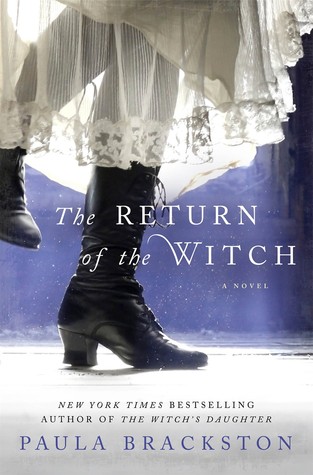
ReturnWitch

Readers, I’m in cahoots with St. Martin’s to offer you THREE giveaway copies of Paula Brackston’s sequel to last year’s debut novel The Witch’s Daughter. This was the little book that could–with a captivating story, remarkable heroine, and eye-catching package, it has now netted over 200,000 copies in all formats.

Now Paula returns with its sequel The Return of the Witch, another bewitching tale of love and magic, featuring her signature blend of gorgeous writing, a fabulous and intriguing historical backdrop, and a headstrong and relatable heroine readers will cheer for.

After five years in the Summerlands, Gideon has gained his freedom. Elizabeth knows he will go straight for Tegan, and that she must protect the girl she had come to regard as her own daughter. In the time since the dramatic night in Batchcombe woods, Tegan has traveled the world learning from all manner of witches, and she is no longer the awkward teenager and novice spellcaster she once was.

However, her skills are no match for Gideon’s dark, vengeful power, and he succeeds in capturing her. Will Elizabeth be able to find her? Will they be able to defeat their nemesis once and for all?

In a breathless journey that takes them through history to the 17th and 19th centuries, witch pursues warlock. Three people steeped in magic weave a new story, but not all will survive until the end. Crime of a different kind here, with suspense and action.

In case you missed The Witch’s Daughter, this is its synopsis:

My name is Elizabeth Anne Hawksmith, and my age is three hundred and eighty-four years. If you will listen, I will tell you a tale of witches. A tale of magic and love and loss. A story of how simple ignorance breeds fear, and how deadly that fear can be. Let me tell you what it means to be a witch.

In the spring of 1628, the Witchfinder of Wessex finds himself a true Witch. As Bess Hawksmith watches her mother swing from the Hanging Tree she knows that only one man can save her from the same fate: the Warlock Gideon Masters.

Secluded at his cottage, Gideon instructs Bess, awakening formidable powers she didn’t know she had. She couldn’t have foreseen that even now, centuries later, he would be hunting her across time, determined to claim payment for saving her life.

In present-day England, Elizabeth has built a quiet life. She has spent the centuries in solitude, moving from place to place, surviving plagues, wars, and the heartbreak that comes with immortality. Her loneliness comes to an abrupt end when she is befriended by a teenage girl called Tegan.

Against her better judgment, Elizabeth opens her heart to Tegan and begins teaching her the ways of the Hedge Witch. But will she be able to stand against Gideon—who will stop at nothing to reclaim her soul—in order to protect the girl who has become the daughter she never had?

THREE lucky winners who leave a comment will be sent copies of the sequel directly from the publisher. To enter the drawing, leave a comment and we’ll use an impartial draw to find the lucky winners. Good luck!!

Kate Parker: Deadly Scandal Sunday, Mar 6 2016 

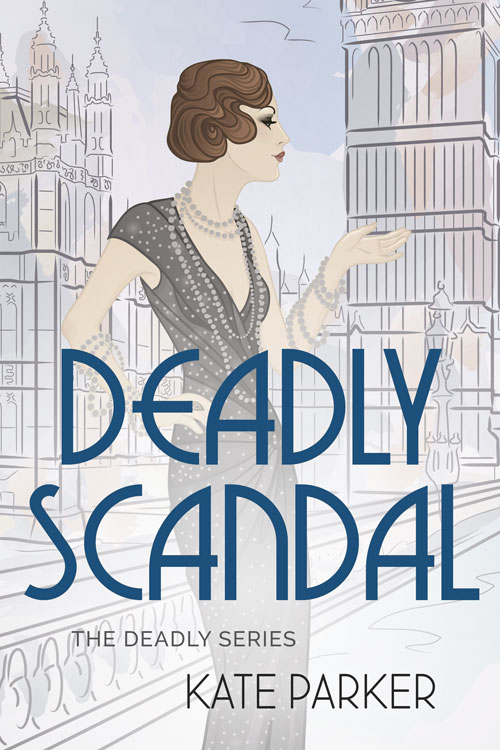
DeadlyScandal-500x750

Please welcome author Kate Parker and her new historical mystery, set in 1930’s London, Deadly Scandal. Kate will describe how she came to create her protagonist, Olivia Denis.

Murder and Fashion Sense

When I was a girl, there was a comic strip in the newspaper called Brenda Starr, star reporter. She was a tall, slender, leggy redhead who worked for a metropolitan daily and went after the hard news, the big stories. She got the exclusives. She never took no for an answer. She was tough and sexy and bright and lucky. I wanted to be her when I grew up.

In the spirit of truth in journalism, I have to admit the only resemblance was in my reddish hair. I might pass as a reporter; no one would ever mistake me for Brenda Starr.

I saved this icon from my childhood, and when it came time to write a mystery about an unprepared woman who lands a job on a metropolitan daily newspaper in 1930s London, I knew what she looked like. She’s a tall, slender, leggy redhead. She’s bright and sexy and lucky.

And that’s where I stopped the similarities.

I gave Olivia Denis a love and flair for fashion. I gave her a talent for sketching dresses, hats, and shoes as well as a fabulous wardrobe. And I gave her a love of shopping that she couldn’t indulge once she was widowed at twenty-five.

But since she had Brenda Starr’s luck, she has a good friend whose father published one of the biggest daily newspapers in London. And so she landed a job as a society reporter, where the publisher thought she couldn’t do much damage.

However, Olivia Denis doesn’t have Brenda Starr’s street savvy. When offered a much higher salary than she expected, along with a requirement to carry out certain unspecified clandestine assignments that she is not to mention – ever – she says yes. She knew no one else would pay her that much. She doesn’t ask about the nature of these assignments. She doesn’t stop and consider. She just thinks about the money and says yes.

So here you have Olivia Denis, young widow, who is going to hunt for her husband’s killer. She owes her livelihood to the father of a school friend who needs her to carry out clandestine assignments under the guise of society page reporting.

Olivia is young and pretty like Brenda Starr. And while she’s a novice, she has something else Brenda Starr had: Determination.

Find out how it all works out in Deadly Scandal by Kate Parker.

Learn more about Kate and her books at http://www.KateParkerbooks.com

Order now at Amazon: http://www.amazon.com/dp/B01AU0KC8E
B&N: http://www.barnesandnoble.com/w/deadly-scandal-kate-parker/1123286621
Apple: https:geo.itunes.apple.com/us/book/deadly-scandal/id1076628067?ls=1&mt=11

Katherine Ashe: The Rogue, Devil’s Duke #1 Tuesday, Mar 1 2016 

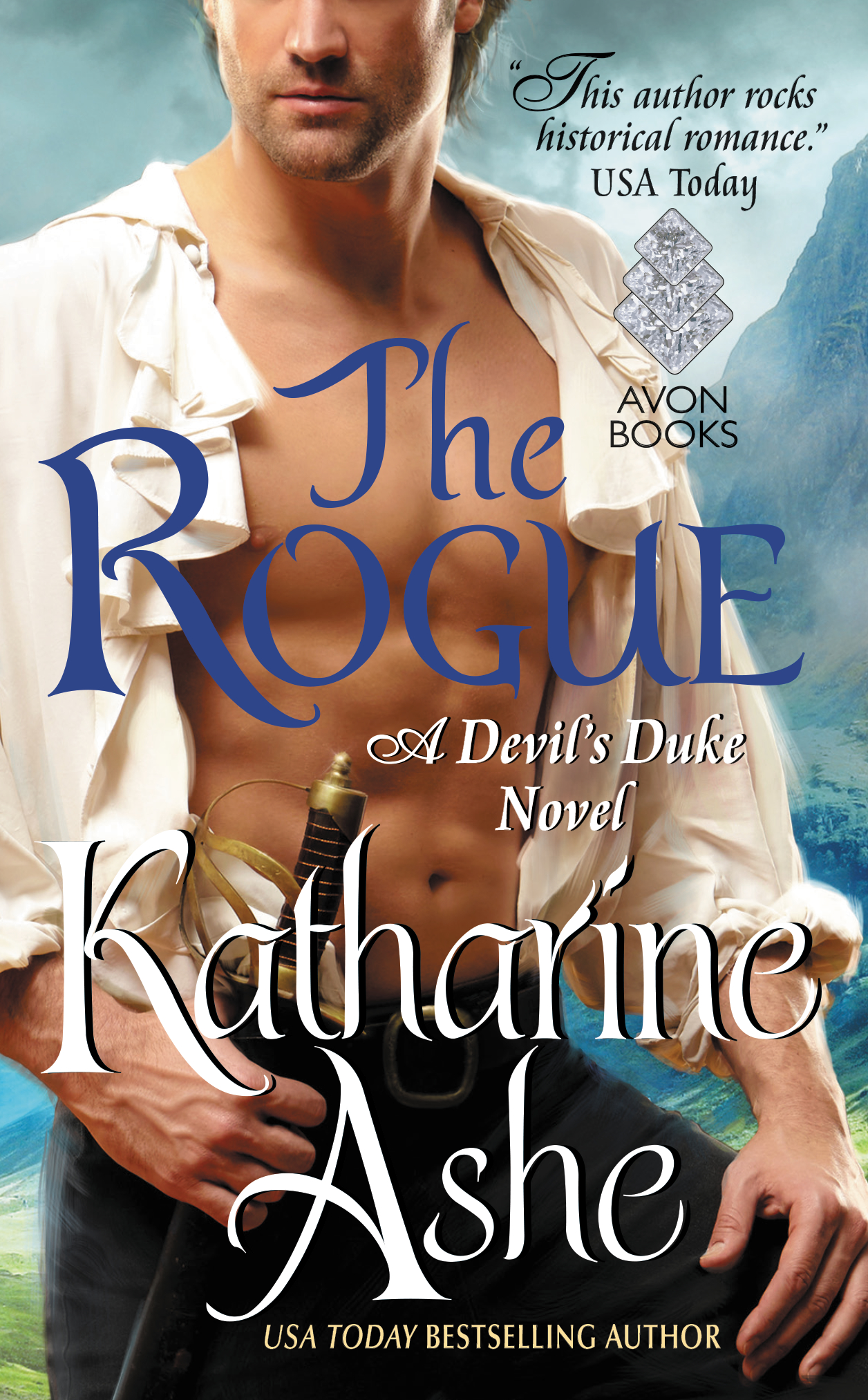
Ashe-THE-ROGUE
Author Katherine Ashe delights readers with her historical romances that have mystery and action all rolled into one. A professor of European History at Duke University, it’s only fitting that her new series is called Devil’s Duke.

The first one in the series, The Rogue, will captivate readers who like a hint of sensuality with their swordplay.

Throw in a secret society practicing dark arts, and of course, a rogue with a heart of gold who will anything for the woman he loves, and you have all the ingredients for a fantastic read.

What sets this one apart is the appearance of TWO rogues and ravishing heroine in the form of a duke’s daughter, Lady Constance Read. The lovely but very independent woman needs a husband, despite her penchant for riding astride a horse instead of the usual side-saddle of ladies. She’s also a great shot with both pistols and bows, a match for any man wishing to share her life.

Here’s Katherine’s recent Q/A that will shed light on her new series~

1. Q: Your new Devil’s Duke series kicks off with a bang in The Rogue; there’s plenty of intrigue, action, and some cameos from Falcon Club members of your previous novels. Yet you’re also telling a very deep love story that touches on many issues, including second chances, abuse, and honesty. As a writer—and as a reader!—what appeals to you about mixing “spy stuff” and adventure with the kind of intensely emotional narrative going on in The Rogue?

A: Truth? I want to be completely swept away. I love getting so immersed in a story that I can’t put it down. I am totally addicted to intense, deep, powerful romance. When I read and write, I want to experience every emotion: I want to laugh, weep, shout, feel my heart racing, and go a little insane-in-love right along with the hero and heroine. If they’re opponents or allies in exciting intrigue—Saint and Constance are both in The Rogue—I get completely caught up in the excitement. It’s romance, so I know they’ll be together by the end. But the more intense the journey to falling in love is, the more I adore it.

2. Q: You write historical romance novels—but you’re also a professor of history! How much does your academic work as a professor overlap with your writing?

A: Now that I teach popular fiction — both romance fiction and other fiction based on medieval history — I can pour my experience with researching, writing and publishing novels into my teaching. And it goes the other way too; teaching nourishes me. I learn from my students all the time. Also, oftentimes I’ll read something to use in class and it will inspire a character or scene or even an entire plot of a novel.

3. Q: The title of the novel, The Rogue, refers to Saint, our roguish hero. But he’s not the only one known to break the rules every now and again: Constance is an extremely independent woman. At every turn, she refuses to let society make her dependent on someone else, and she continually rises against every challenge she is faced with. What inspired you to write such a strong, forward-thinking heroine?

A: Constance is incredibly strong and independent, but she’s also damaged and vulnerable. In a world dominated by men who want to use or control her, she’s come to a place where she’s simply refusing that. She wants to make her own decisions, and she wants to be her own hero (it’s why she asks Saint to teach her how to fight with a sword and dagger). But she wants—and needs—love too. I think this is the struggle of modern women: to be independent and take care of themselves, as well as others who need them, but also to allow themselves to be loved by a good man—a man who won’t try to control them, but will love them for the entire woman that they are.

4. Q: You often speak at conferences and give interviews regarding your views on the romance genre. We’ve seen romance get more time in the mainstream media spotlight this year than ever before—do you think that’s an indicator of things to come? Where do you see the genre going from here?

A: The good press is wonderful! It’s a good sign for the future. We’ve a long way to go, though. I think the new openness to romance fiction in the mainstream media has as much to do with the fabulous novels authors are writing now, featuring independent heroines with real agency, as it has to do with our society very, very slowly shifting toward an honest recognition of the latent misogyny and anti-feminist biases in our culture. These biases are so deeply rooted (they’re thousands of years old!) that it’s going to take more than few decades for real equality. When the romance genre is treated the same way that the mystery or sci-fi or thriller genres are treated, that’ll be a good indicator we’ve come to true equality between the sexes.

5. Q: Tell us a little bit about your upcoming projects!

A: The Earl is next! Through several books my readers have been following the heated banter of Peregrine, the secretary of the Falcon Club, and popular London pamphleteer Lady Justice. She has skewered him again and again in the public press for being an idle elitist, but now she needs his help. They’re thrown together in an unexpected (and dangerous) adventure across the Scottish Highlands. It’s a super intense, funny and exciting love story, and I cried and laughed and gasped and sighed and loved loved loved writing it.

After that, the duke everybody’s calling The Devil gets his story!

Kathy Lynn Emerson/Kaitlyn Dunnett: Keeping More Than One Book in the Air! Wednesday, Dec 30 2015 

Please welcome Kathy, er…Kaitlyn, who will try to explain how she juggles so many fine books!
The Scottie Barked at Midnight (208x300)

Keeping More Than One Book in the Air
(or, How to Juggle)

byKathy Lynn Emerson (aka Kaitlyn Dunnett)

It isn’t at all uncommon for writers of genre fiction to produce more than one novel a year, nor is it all that rare for the same person to write more than one series.

Sometimes they do so under more than one name, but not always. I’ve been juggling two or three books a year for a long time now, going way back to the late 1990s, when I alternated category romances with historical mysteries.

How do I keep more than one book in the air? By not trying to do everything at once. By that I mean that I focus on Book One but never completely lose sight of Book Two. I write myself notes about Two and let my subconscious noodle plot problems. I can see Two out of the corner of my eye even as I’m spending my actual writing time on Book One.

Inevitably, the day comes when I need a break. Perhaps I’ve hit a snag and don’t know what comes next. Maybe I’ve completed a draft and just want a little time to pass before I try to revise it.

Whatever the reason, by then I’m more than ready to tackle Book Two and, because I took a break from it, my enthusiasm for that project is high. I’m brimming with fresh ideas that occurred to me while I concentrated on Book One, so I’ll work on Book Two until, as with Book One, I come to a point where I need a break. That’s when I go back to Book One, armed with a fresh perspective and renewed enthusiasm.

All that sounds fairly simple and if I was completely in charge of my writing time, it would be. It’s both good news and bad news that I currently write for two different publishers. They set the deadlines. Despite my best efforts, those deadlines can end up being uncomfortably close together.

Then, too, time has to be budgeted for revisions an editor asks for, line edits, copy edits, and reading page proofs. When each book is published, add in blogs, interviews, and other publicity-related tasks. Some of that is ongoing. I also chime in twice a month at http://www.MaineCrimeWriters.com and maintain a presence on Facebook (as Kaitlyn Dunnett) and at Goodreads.

I admit there are times when all the books and book-related tasks I have in the air threaten to fall and land squarely on my head. It can be downright dangerous to juggle too many things at once. I have been asked to write faster and produce more than one book in a series in the same year. I resist. That way lies potential disaster. Yes, I could come up with 75,000 words in three months, but they wouldn’t be the best words. I firmly believe that any manuscript needs time to rest before it is revised. Without a break, I’d skim right past trouble spots without noticing them. Ideally, I’d like a year to write each book. I produce two a year by alternating between them. Each manuscript undergoes several complete revisions before I’m satisfied with it. The end result is the best novel I am capable of writing.
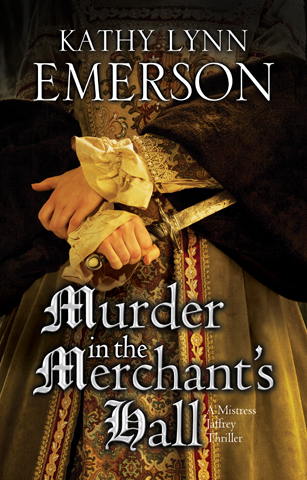
Murder in the Merchant's Hall
What am I juggling right now? Book One is the third Mistress Jaffrey mystery set in Elizabethan England. It’s due in June. Book Two is a proposal for a new contemporary mystery series—synopsis, first three chapters, and brief pitches for future books. Kilt at the Highland Games, the tenth Liss MacCrimmon mystery will be published at the end of July, so it is in production with assorted edits and page proofs still to come. And I’m still doing publicity for the second Mistress Jaffrey mystery, Murder in the Merchant’s Hall, which came out in ebook earlier this month. That’s four books in the air.

Maybe, if I’m very careful, I can add that short story I’ve been meaning to revise . . .

Kathy Lynn Emerson (224x300)
Kathy Lynn Emerson/Kaitlyn Dunnett is the author of over fifty books written under several names. She won the Agatha Award in 2008 for best mystery nonfiction for How to Write Killer Historical Mysteries and was an Agatha Award finalist in 2014 in the best mystery short story category for “The Blessing Witch.” Currently she writes the contemporary Liss MacCrimmon Mysteries (The Scottie Barked at Midnight) as Kaitlyn and the historical Mistress Jaffrey Mysteries (Murder in the Merchant’s Hall) as Kathy. The latter series is a spin-off from her earlier “Face Down” series and is set in Elizabethan England. Her websites are http://www.KaitlynDunnett.com and http://www.KathyLynnEmerson.com

Merry Christmas! Friday, Dec 25 2015 

Yes, it’s Christmas, and despite being mostly in a recliner with an ice pack on her operated back, Auntie M has found her holiday spirit. And to that end, she’s sharing two books with you that are perfect for the season.

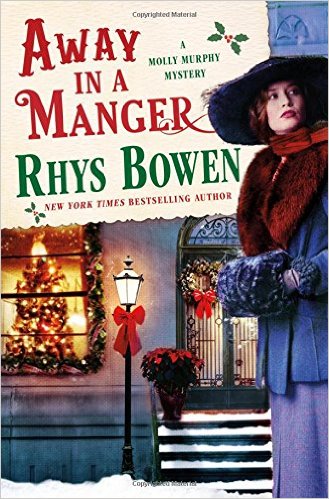
AwayManger
Rhys Bowen’s new Molly Murphy Mystery, Away in a Manger, is filled with Bowen’s usual knack for historical details that bring Manhattan in 1905 to life.

Molly has her own family: her husband, Daniel, a police captain whose business Molly would greatly like to become involved in; their baby son, Liam, and their 12 yr-old ward, Bridie, so Molly is looking forward to these holidays, even with Daniel’s mother there helping out.

A visit to see FAO Schwartz sets the tone for the little family. Then a set of carolers in their New York City neighborhood adds to the festiveness, and one young girl with the voice of an angel catches Bridie’s attention. The family try to help by giving the girl a quarter, which an older boy immediately takes from her.

This is her older brother, and they’ve emigrated with their mother from England, only to have their mother disappear. The aunt they are staying with mistreats them, yet Molly soon sees these children are educated and have been given a proper upbringing before coming to America. So what has happened to their mother?

Molly’s efforts to find the children’s mother soon leads to a tale of family intrigue and probably murder, with more planned unless Molly can stop the villain and save the two children in time to be home to celebrate Christmas. Vintage Bowen, nicely plotted and atmospheric.

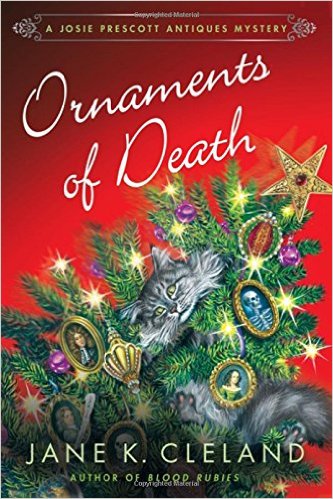
OrnamentsDeath

Jane Cleland’s Ornaments of Death is the next offering perfect for the holidays. The tenth Josie Prescott Antiques Mystery blends her own knowledge of antiques with a mystery during the Christmas season.

Josie’s New Hampshire Antique shop in the coastal town of Rocky Point is dressed as a winter wonderland for her annual holiday party. Josie is excited as Ian Bennington, her distant relative, will be there for the holiday. The recently discovered descendent is the hit of Josie’s party and gives her ties to a royal mistress.

And then Ian suddenly vanishes, and it’s soon discovered that he’s not the only thing that’s missing: two valuable watercolor miniatures Ian had given his daughter are also missing.

It will take Josies’ knowledge of antiques to track the miniatures and wend her way to Ian and solve the dual mystery. A perfect holiday treat for cozy readers who enjoy antiques and New England.

Happy Holidays and Merry Christmas from Auntie M to all of you! Enjoy your celebrations and take time to read a good book~

More Holiday Joy: The US edition Wednesday, Dec 9 2015 

Auntie M divided her recommendations into Holiday Joy for other sites across the pond on Dec, 8th, and this version where the settings are all in the US. While you’re shopping for the readers on your list, don’t forget you deserve one, too!

Up first is a thriller writer Auntie M met at Thrillerfest a few years when she was meeting favorite UK author Peter James. “Come and meet my tennis friend,” James said, and I was introduced to the tall and charming Simon Toyne, whose Santus trilogy Auntie M has previously reviewed.
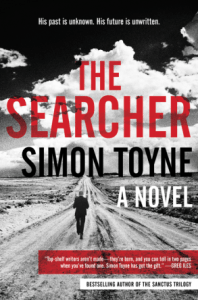
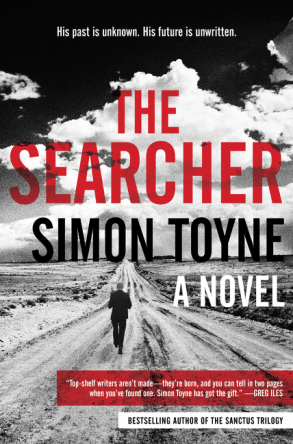
Searcher

Readers familiar with that Trilogy will be more than pleased with his new thriller, The Searcher, set in Arizona this time, the first in his new Solomon Creed series. The white-haired albino is just the kind of Jason Bourne-like character who can sustain several books with ease.

A funeral in the town of Redemption is interrupted by a plane crash, and the man running away from the site not only has no shoes, he has no memory of how he got there–or who he is. His clothes provide minimal clues and his name: Solomon Creed.

Creed understands he’s in Redemption for a reason, and his questions will lead him to the town’s secrets, filled with people who have something to hide. There are lines drawn between good and evil and a touch of the supernatural. Two main points of view of Creed and the town’s founder in the form of diary entries allow the story to keep the reader knowing more than Creed. A strong start to a new series with a complex character, great images, and a vivid story.
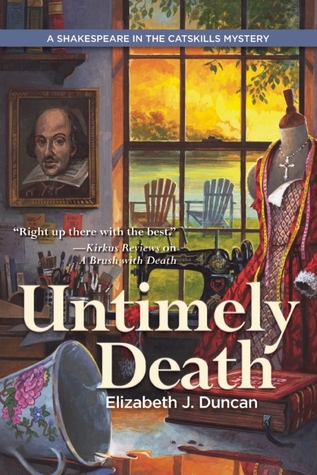
UntimelyDeath

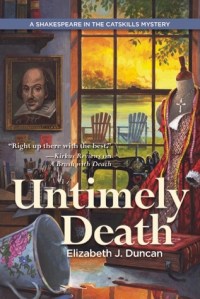
Canadian author Elizabeth Duncan’s Penny Brannigan series, set in the North Welsh countryside, have been previously reviewed by Auntie M. Now Duncan’s turned to a new setting to debut the first in her second series, the Shakespeare in the Catskills Mysteries, kicking it off with Untimely Death.

Duncan takes readers to a Catskill resort, the Jacobs Grand Hotel, whose production of Romeo and Juliet starts off with a bad turn when the leading lady is poisoned. Lauren Richmond is later stabbed and it seems there are far too many suspects who would have wanted the thespian out of their way.

At the center is Charlotte Fairfax, the costume designer who was formerly mistress for the Royal Shakespeare Company and whose shears have been used to commit the murder. The Catskills may not be London, but Charlotte remains Queen of her domain and inserts herself into the lives of her cast and crew as the investigation commences.

There is a nephew of the owner of the hotel who has fingers pointed at him. The aging actor who was the victim’s lover has his own near-death experience, and it turns out he was Charlotte’s former fiancee. Lots of reasons for her to find herself pushed into the middle of the muddle, not the least of which is that she is dating the Chief of Police. An interesting setup for future installments.
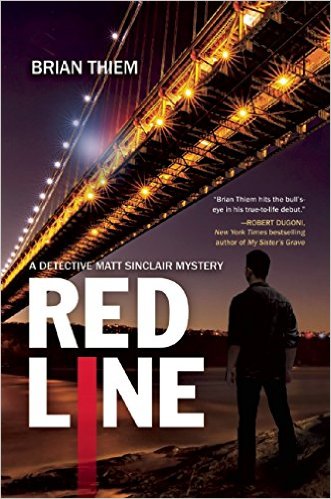
RedLine
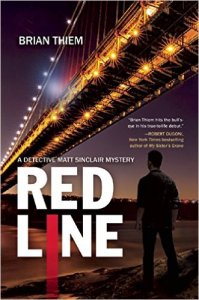
At NE Crimebake this year, Auntie M took a police class from Brian Thiem, a former Oakland Homicide Detective Commander with years of Army experience, too. So it was a pleasure after listening to his expertise, designed for writers to ‘get it right’ about police actions, guns, and forensics, to come home and read his debut crime novel featuring Detective Matt Sinclair, Red Line.

RED LINE is an excellent police procedural with an engaging main character who comes across as real, someone readers can identify with and will want to follow, and that extends to his new partner, Cathy Braddock. Catching his first case after desk duty for a series of incidents that have stained his reputation, Sinclair needs a good case to get back into action.

A teenage boy has been found dead at a bus stop outside a hospital, the son of surgeon at that hospital who lives in an affluent neighborhood. Then a second body is dumped at the same bus stop, and Sinclair and Braddock try to find the connection between the victims.

It doesn’t help that the cases bring back an old case of Sinclair’s from two years ago, when two girls were left at that same bus stop. One in a dazed state wandered into the line of traffic and died as a result of being hit by cars. Sinclair realizes he was too deep into his alcoholism at the time to devote as much time to the case as he should have and works even harder to do them justice.

The daily routine of police work is recreated in perfect detail: the interviews, the reports, the way small bits of information come together to build a case. And as Sinclair works this case he must deal with superiors who want to force him out of homicide.

With a girl friend who is a television reporter whose job often puts them in conflict, readers will come to understand the grueling long hours and high stress of a murder investigation, all as Sincalir struggles with his desire to take to the bottle again. Chapters from the murderer’s point of view add to the well-plotted mystery. A strong debut which will leave readers looking for a sequel, from someone who knows the drill inside out.
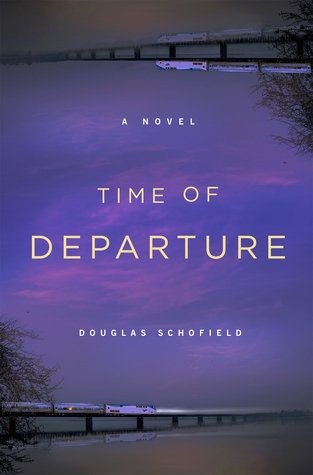
TimeDeparture
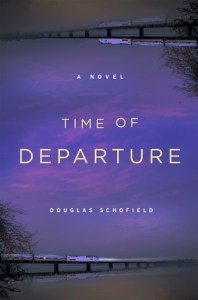
Douglas Schofield has crafted a most unusual police procedural in Time of Departure. Drawing on his own legal experience, he introduces Claire Talbot, a Florida State prosecutor trying to prove herself to her colleagues in her new post a head of their Felony Division.

The action kicks off when a highway construction crew find two skeletons sharing a grave, and Claire is forced to reopen a cold case investigation into a series of abductions. Perusing the case file, she comes across retired fellow cop Marc Hastings, who becomes too close for comfort with some aspects of Claire’s life and this case.

Is his interest more than affection? And what does Hastings know about Claire’s life that she doesn’t?

A compelling debut that shows a clever mind behind it all, mixing genre expectations.
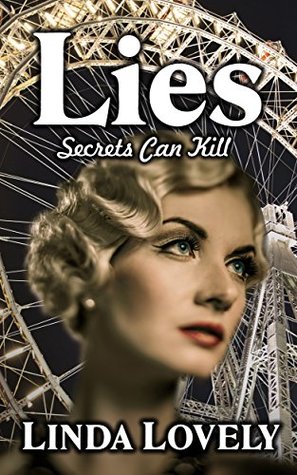
Lies
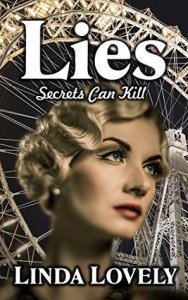
Linda Lovely takes readers to her hometown of Keokuk, Iowa, in the year 1938 for Lies. Using real landmarks and historical happenings mixed with her fictional story and elements, this is a strong showing from a great storyteller. The period leading up to WWII comes alive under Lovely’s talented hand.

Catherine Reedy Black knows she needs to leave her abusive husband, a swindler and con man, in order to have a reasonable future for her two-year old son, Jay. With her family’s support, she just might be able to do it, too, until Dirk Black’s corpse is pulled out of the river, and Cat becomes the prime suspect.

New to the police department, Ed Nelson knows Cat from school, and remembers the bright girl he was attracted to. But he’s hiding his own secrets, and even as he tries his best to help clear Cat, he’s fighting the corrupt police chief who wants nothing more than to see Cat convicted of murder.

With the annual Street Fair in town, the glitzy lights and rides will prove a scary setting as Cat tries to clear her name and almost dies in the effort. It seems there are many in town who are hiding secrets, and among them is the killer with a motive Cat needs to unearth.

A perfect mix of compelling mystery and love story in a well-drawn setting. And a great gift for any reader who enjoys this period.
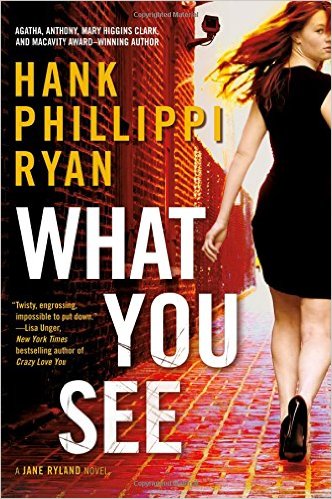
WhatYouSee
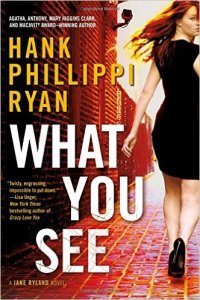
Multi-award winner Hank Phillipi Ryan returns with her fourth Jane Ryland thriller, What You See.

The journalist and her detective boyfriend, Jake Brogan, are in the midst of still trying to figure out how to handle their conflicts of interest in their jobs. She’s interviewing with a new channel, and rushes to the site of a big story: the stabbing death of a man at historic Faneuil Hall–and it’s Jake’s case.

You would think with multiple tourists capturing the murder on their cell phones that this would be one case that’s an easy solve, but Jake and his partner Paul find this investigation isn’t at all what they’d predicted. There’s an injured man in addition to the victim to consider, too.

In the midst of this, Jane’s sister is about to be married, what should be a joyous occasion–until her fiancé’s daughter, the young flower girl, is abducted by her stepfather. Nine-year-old Gracie’s disappearance is just the tip of the iceberg as this story overlaps with the case Jake is following, with fingers leading to dark places.

It gets more and more complicated. Neither the murder victim or the injured man in the alley have any ID on them, making motive and solving the case difficult. Jane is juggling with trying to establish a new place at Channel 2 when her family situation takes precedence. Jake is finding that a murder in broad daylight in front multiple witnesses is full of challenges and directions of interest that have far reaching connections and consequences.

It all places Jake and Jane in a position to test their loyalties to each other and to their jobs.

Ryan does a bang-up job of showing how even in this digital age, looks can still deceive. Filled with family secrets, merciless ambition, and deceitful maneuverings. JT Ellison says, “This is Ryan at the top of her game.” A perfect mix of mystery and romance.
Silent City
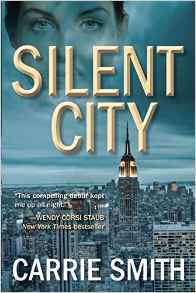
Carrie Smith’s first Manhattan police procedural, Silent City, features protagonist Claire Codella, a detective just back on the case after grueling chemotherapy for an aggressive lymphoma. Still dealing with its after-effects, which Smith details accurately, Codella’ first murder case turns out to a well-liked school principal. And Codella must prove to her colleagues, and to herself, that she’s up to the task.

Hector Sanchez’s murder investigation hands Codella a new partner to break in, newly promoted Eduardo Munoz. They, along with Codella’s former partner, Brian Haggerty, follow numerous leads in their search for Sanchez’s killer. The staging of his body makes it appear that his murder is connected to his job as principal at PS 777 and the three investigators quickly learn there are far too many suspects with a motive to kill him.

Codella is an intelligent detective who follows where the evidence leads her, and whose new boss is not exactly her biggest fan. Yet despite his attempts to undermine her authority, Codella relentlessly pursues all the of the leads in the case, despite battling her cancer treatment’s side effects.

Munoz and Haggerty, also excellent investigators, know they must be loyal to Codella. Munoz must also prove himself worthy of his promotion; Haggerty and Codella are trying to put to bed an old rift that came between them.

This mystery has an engaging storyline and appealing characters. With plenty of suspects, no clear cut motive for the crime and stunning plot twists, Carrie Smith skillfully conceals the killer’s identity until the novel’s climax. A strong series debut.
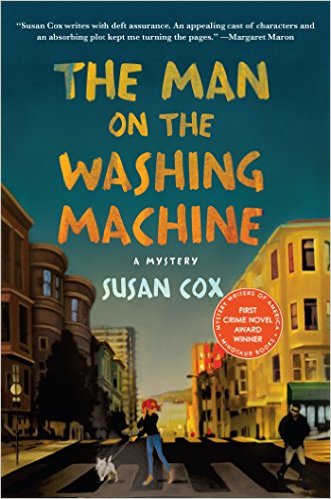
ManWashingMachine
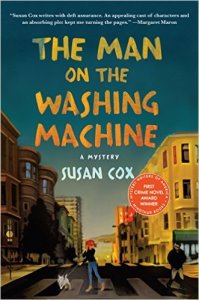
Susan Cox won Minotaur Books/Mystery Writers of America First Crime Novel award. The Man on the Washing Machine is a delightful mix of humor and murder, taking place in San Francisco, and introducing a most unusual sleuth, former party girl and society photographer Theophania Bogart, who hides her own family secrets.

Theo unfortunately sees her neighbor, Tim Callahan, fall from his apartment window, plunging her right into the middle of his murder investigation. Her already complicated new life comes under intense scrutiny. Surrounded by neighbors and friends, Theo is the owner of a small bath and body shop as well as the building housing it, but she is constantly afraid her sordid past will be unearthed.

What will a police investigation do to her carefully crafted identity?

When the police detective suspects murder, not suicide, she lists the entire neighborhood as suspects and that includes Theo. Then another body with direct ties to Theo turns up, making her the number one suspect.

Filled with eccentric characters, this fast-paced mystery is filled with humor and action. A perfect gift for those readers who enjoy a dose of humor with their mystery.

That’s it for the gift listing, folks. Remember that books make wonderful presents for anyone on your holiday list. And enjoy yours, with a few for your stocking as well~

John Bainbridge: A Seaside Mourning Friday, Dec 4 2015 

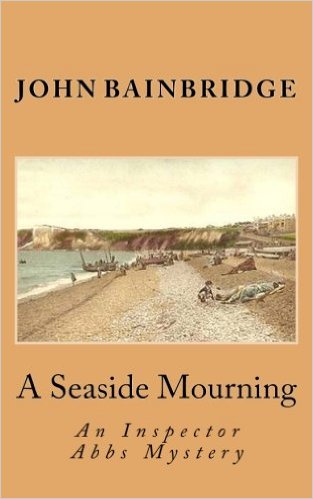
John Bainbridge and his wife Anne are historians and researchers extraordinaire who use their own history in the Inspector Abbs mysteries. Here’s the story of the background to A Seaside Mourning
Seaside

The Background to A Seaside Mourning
Our Victorian murder mystery is set in the fictional town of Seaborough, a small resort in Devon. The plan was to think hard about coming up with a suitable name. However around the same time we were researching John’s family history. When we found that one of his ancestors had the unusual first name of Seaborough, it seemed exactly right.

In the novel Seaborough is in East Devon, an area often overlooked by holiday-makers who travel to the better-known parts of the English Riviera and the South Hams. It is a timeless landscape of rounded hills, old hedgerows, meadows and heaths; villages with thatched cottages and a few quiet seaside resorts. Their railway stations and branch lines are long gone.

The unspoilt coastline has red sandstone, zig-zag cliffs gradually fading to chalk near the county border. Together with the neighbouring county of Dorset, they make up the Jurassic Coast, Britain’s first Unesco natural world heritage site. We know the area well from walking the old footpaths and exploring the villages of my forebears. One of my ancestors was a Victorian police constable, probably much like the ones in the story.

Walk through the streets of any British seaside town, trace back the architecture and you’ll most likely find the beginning was a fishing village. The rise of the seaside resort – offering buildings and entertainment designed to attract tourists – gradually began in the eighteenth century. At that time the concept of an annual holiday for the masses didn’t exist. The wealthy tended to travel abroad on the classical Grand Tour or over-winter on the Continent. Working people had neither the money nor paid leisure to explore new places.

From the mid-1700s physicians began questioning whether sea-water might have healing properties similar to those of spa water. An enterprising Sussex physician Dr. Richard Russell set up a house for patients in the fishing village of Brighthelmstone in 1753. ‘Taking the waters’ at inland spa resorts was fashionable and money was to be made from rich invalids – and hypochondriacs – so there may have been some self-interest involved!

Dr. Russell published works on the rejuvenating powers of sea-bathing and drinking salt water, claiming his treatments cured enlarged glands and all manner of ailments. As well as swimming, his patients were immersed in baths of salt water and encouraged to ‘promenade’ in the sea air. This quickly became prevalent medical opinion.

Just as today, landowners and speculative builders were quick to spot a business opportunity. Scarborough on the coast of Yorkshire had the best of both worlds. Mineral water had been discovered there in the early seventeenth century and they had a flourishing spa by the beach. Wheel out the bathing-machines and the town was well-placed to develop into England’s earliest seaside resort.

Villages along the south coast in particular offered a mild climate and an easier journey from the capital. They began to throw up lodgings suitable for well-to-do visitors. Theatres and assembly rooms were built, promenades and sea-front gardens laid out. New resorts advertised their picturesque scenery, carriage tours and health-giving benefits.

Jane Austen satirised this new enthusiasm in her last unfinished novel, Sanditon. Interestingly Reginald Hill did a witty take on Sanditon – one of his lovely literary jokes – in his Dalziel and Pascoe novel A Cure For All Diseases. Sidmouth in East Devon is a possible contender for Austen’s Sanditon, though several resorts also fit the clues. It’s most likely that Jane Austen was thinking of more than one place. The Austens enjoyed holidaying along the Channel coast. Their stays at Lyme Regis in 1803 and 04 famously inspired part of the setting of Persuasion.

Fashion played a part in putting a watering-hole on the map. When George III’s physicians recommended he try the sea cure in 1788, he chose the village of Weymouth on the Dorset coast. Liking its sheltered sandy bay, he returned many times, making Weymouth one of England’s oldest seaside resorts.

His son, later the Prince Regent, vastly preferred Brighthelmstone, nearer London. Under his patronage it expanded rapidly to cater for his younger and wilder set. It has never lost its stylish and racy reputation. The spelling changed to suit its pronunciation and a new saying became widespread. The wealthy patient often tried the cure of Doctor Brighton.

Some towns started out as the vision of a single developer. In the 1780s a wealthy merchant called Sir Richard Hotham bought up land around the Sussex fishing village of Bognor. He intended to design a purpose-built resort modestly named Hothampton and entice the King away from Weymouth, making himself a second fortune. George III never obliged and the town reverted to Bognor soon after Sir Richard’s death. He did leave the townspeople several fine terraces and a splendid park.

New resorts received a boost to their fortunes when the Napoleonic wars closed the Continent to travellers. Prosperous invalids and people living in seclusion often settled by the sea in smart new villas for the gentry. Lady Nelson came to live at Exmouth in East Devon, after Nelson’s association with Lady Emma Hamilton became public knowledge.

Hunstanton in Norfolk came about as the scheme of one man, though much later. In 1846 Henry Le Strange, an architect and local landowner built a hotel on an empty headland as the flagship of his new town. A typically enthusiastic Victorian ‘entrepreneur’, he gathered investors to fund a railway line from King’s Lynn to his planned site, which was named after the nearby village of Old Hunstanton. It took another 16 years before the railway arrived and further building work began.

Many resorts can date their growth to the arrival of the railway. It became the custom for middle-class Victorian families to send their children to the seaside with nannies and nursery-maids. The first pleasure pier had been constructed at Ryde on the Isle of Wight, as early as 1814. Almost a hundred more followed, mostly in England and Wales. The Bank Holiday Act of 1871 gave workers four days off – five in Scotland. On Whit Monday and in August, railway companies laid on ‘Bank Holiday Specials’ for the day-trippers pouring into popular resorts. At last accessible for the pleasure of ordinary working people, the seaside resort as we know it today had arrived.

In A Seaside Mourning, Seaborough is expanding. It is autumn 1873 and the town has its railway branch line. New houses are going up and some businessmen are keen for a pier and other amenities to be developed.

Many of the characters are on the make, jostling for more money and social position. Some are fighting for security in a precarious society shadowed by the workhouse. Even Inspector Josiah Abbs is not safe. This was an age when policemen were not considered gentlemen. A detective was treated as a distasteful necessity, an embarrassment who should call at the tradesmen’s entrance.

Abbs cannot summon suspects to interview if they are his social ‘betters’ and he must catch a murderer without making enemies. Dismissal without a character is always a threat. He and his young side-kick Sergeant Reeve are both outsiders in Devon. They don’t quite know what to make of one another yet but they’re determined to solve the case somehow…

Our novel “A Seaside Mourning” is now available in paperback and on most eBook readers. Just click on the link below for more information:

And with Christmas on the way, If you enjoy curling up by the fireside with a seasonal mystery, you might like to try our Inspector Abbs novella A Christmas Malice. Set in 1873 during a Victorian country Christmas in Norfolk, our introspective sleuth has a dark puzzle to be solved. As is traditional at this time of year, there will be hope and a happy ending of a sort.

Duncan Simpson: The History of Things to Come Sunday, Aug 23 2015 

Author Duncan Simpson will tell readers of the interesting story behind his novel, the first in a planned DARK HORIZON trilogy:HOTTC-Book-Cover-(Web)

THE HISTORY OF THINGS TO COME

My novel THE HISTORY OF THINGS TO COME was inspired by a true but little-known fact about the celebrated scientist Isaac Newton.

More than any other person, Newton’s extraordinary contributions in the field of science have laid the foundations for the modern study of optics, mathematics, gravity and motion. However, far from being the ultimate rationalist, the scientist was obsessed with unlocking the secrets hidden within Holy Scripture.

It has been estimated that out of Newton’s surviving writings, 700,000 words are concerned with scientific research, 600,000 words relate to alchemy and 1,700,000 relate to his biblical research. Certain of its accuracy, Newton described biblical prophecy as a ‘history of things to come’.

According to John Maynard Keynes, Newton regarded “the universe as a cryptogram set by the Almighty”; through his intellect and incredible ability to focus on a problem, Newton’s mission was to decode it.

Convinced that encoded in the design of Solomon’s first temple was some divine hidden knowledge, Newton became consumed with recreating the floor plan of the Temple from descriptions contained within the Book of Ezekiel. He even learned Hebrew so that he could read the original Old Testament books.

In some ways, Newton perceived himself as the new Solomon and believed that it was his God-given purpose in life to unlock the secrets of Nature.

As a physics graduate with a keen interest in comparative faiths, I have always been fascinated by Newton and the myths surrounding the man. THE HISTORY OF THINGS TO COME interweaves a fast-paced, modern-day thriller with gripping extracts from a fictional Newton notebook. The story centers upon the search for a shocking biblical secret discovered by Newton and kept hidden for over 300 years.

THE HISTORY OF THINGS TO COME is the first book in the Dark Horizon trilogy. I am currently working hard on the second instalment. For more information and updates on new releases, please come and join my mailing list at: http://www.duncansimpsonauthor.com

HOTTC-3d-Book-Covers-(Web)

Read a synopsis of Duncan’s book: The mind of a genius can hold the darkest of secrets.

A Bosnian gangster is gunned down in a packed London restaurant. In his possession is a notebook once belonging to Isaac Newton. This is just the latest in a series of shocking crimes connected to objects once belonging to the famous scientist. The police are stumped and the pressure for an arrest is mounting.
Enter Vincent Blake, London’s leading stolen-art investigator. As Blake sets out to solve the case, a series of devastating events threaten to destroy everything he holds dear. Broken but undeterred, he comes upon a shocking discovery: within the coded pages of a mysterious crimson book, annotated in Newton’s own handwriting, is an explosive revelation. Possessing this secret knowledge turns Blake into a marked man.
Caught in the crosshairs of two sadistic hitmen, Blake is propelled into a breathtaking race through London and its dark historical secrets.
With time running out, will Blake solve Newton’s deadly puzzle before the world is plunged into a catastrophe of biblical proportions?

Set in the murky world of stolen and forged manuscripts, The History of Things to come combines threads of well-researched historical fact with undercurrents of the supernatural and ancient legend. The celebrated scientist Sir Isaac Newton himself once wrote, biblical prophecy is, indeed, ‘the history of things to come’.

‘Taut, razor-sharp, and clever crime fiction.’
‘An endlessly twisting, multi-layered supernatural thriller.’
‘Perfect for fans of Dan Brown’

Duncan-Simpson---Headshot-(Web)-(72dpi)

Thriller writer, Duncan Simpson spent his childhood in Cornwall, England. As a teenager he gained experience in a variety of jobs: from working in a mine, to doing shifts as a security guard in an American airport. After graduating from the University of Leeds with a physics degree, he spent a year backpacking around the world. On returning to the UK, he embarked on a successful career in business. Along the way, he became the finance director for a technology company and a partner in a leading management consultancy firm.

His debut novel, The History of Things to Come was born out of his lifelong fascination with the relationship between science and religion. A keen student of the history of London, he loves exploring the ancient stories and myths surrounding the city. When he’s not writing or consulting, you’ll find him: playing guitar in a rock band, running by the Thames, or drinking tea with his wife and three children in their home in Berkshire, England.

Website & Blog: http://www.duncansimpsonauthor.com
Twitter: http://www.twitter.com/dsimpsonauthor
Facebook: http://www.facebook.com/duncansimpsonauthor

5 Great Reads from Other Eras~ Wednesday, Aug 19 2015 

Auntie M has a stack of great reads written in other eras, so here’s a wealth of resources for those of you who prefer your crime to be set in other than contemporary times.

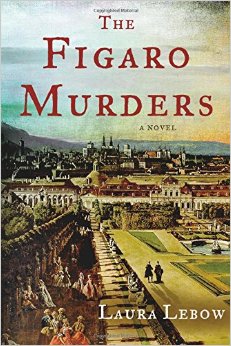
Reaching back into time is Laura Lebow’s The Figaro Murders, which brings 1786 Vienna to life.Figaro

Venetian Lorenzo Da Ponte has lived in Vienna for five years but still misses Venice. As court librettist, his current job for Emperor Joseph II is to finish the libretto for a revised version of Mozart’s The Marriage of Figaro , to please the Emperor, before its premiere the following week. It’s a tense situation as his previous libretto for a Salieri opera in the recent past closed after just one performance. The job is not as glamorous nor as well paid as it sounds, and a morning trip to his barber will change Lorenzo’s life.

The barber, Vogel, is on his way to debtor’s prison for a year, unable to pay the loan he used to open his shop, and begs Lorenzo to visit his fiancee, Marianne. He gives Lorenzo a box he’s found hidden in the closet of his recently-deceased mother–who told him shortly before her death that he had been adopted. Convinced his real family is one of noble origins and as a way to get him out of prison, Vogel expects that Lorenzo will aid Marianne to unearth his real family connections and save him and his marriage.

The box contains three innocuous items as Lorenzo’s only clues: a white fur ladies muff, a French grammar book, and a small ring, perhaps a betrothal ring. These three things will turn out to be the only link left to Lorenzo, and at first glance they appear to be of little value.

Lorenzo has an unusual visit to the Palais Gabler, home to a well-placed diplomat, where Marianne is employed. And then the unthinkable happens: he is arrested for a murder that apparently occurred during his visit to the Gabler home. Now the only way to clear his name is to undercover and find the real murderer, or be hanged for a crime he didn’t commit.

Filled with characters like Mozart and Salieri, the music matters of the Court and the time spring to life in this perspective of a certain period. A solid historical mystery.

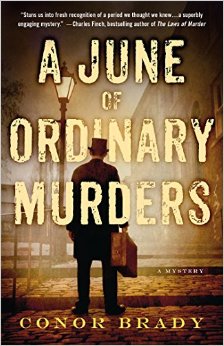
JuneOrdinaryMurders
We switch to Dublin in 1887 for Conor Brady’s intriguing debut, A June of Ordinary Murders. The former editor of The Irish Times has written of the time in Victorian Dublin when crimes were classified as either “special” or “ordinary.” Special was for political crimes; murder was deemed ordinary.

The city readies for its celebration of Queen Victoria’s Golden Jubilee during an oppressive heatwave that everyone suffers under, just as they are under the threat of growing nationalist violence and a rising underworld of master criminals.

Enter DS Joe Swallow, tasked with investigating two murders when the mutilated bodies of an adult and a young boy are found in Phoenix Park. As he digs deeper, he learns he must be politically correct as he delves into the upper reaches of Dublin society. With his own success rooted in the past, Swallow his been a copper long enough to have enemies in the press and in his own department, and he needs to get this one right.

It seems the two deaths are connected, and then a woman’s body is found floating in the Grand Canal, and as the body count rises, so does the pressure on Swallow to effect an end to the string of killings.

Brady’s vivid descriptions bring this time of long ago to life, from the land wars to the country readying itself for the Queen’s visit during the heat, adding to the sense of languidness everyone involved feels. And Swallow has his own dark life to contemplate.

There are plenty of layers and different nuances as the police investigation unfolds. An interesting side component is to see the ‘forensics’ of 1887. Fans of The Murdoch Mysteries will eat this one up.

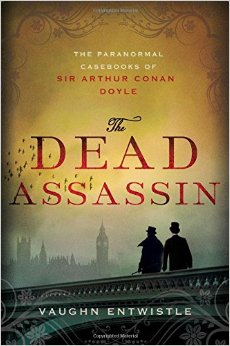
Dead Assassin
Vaughn Entwhistle introduced “the paranormal casebooks of Sir Arthur Conan Doyle” in last year’s The Revenant of Thraxton Hall. This second installment, set in 1895, brings back Doyle and his good friend Oscar Wilde as characters, to the readers delight, in The Dead Assassin.

The atmosphere is tense in London, with bombs detonating and causing anyone of a foreign nature to be suspected of being an anarchist.
Doyle’s dinner out is interrupted when a senior member of the government is brutally murdered, as is his assassin. One of the detectives recognizes the assassin as a pickpocket and petty thief, Higginbotham, who’s lived a life of low level crime. Then it turns out this same man couldn’t be the assassin–he was hanged two weeks ago. So how did he appear to be able to carry off the murder from his grave?

This obvious attempt at obfuscation brings Doyle and Wilde into the midst of a bizarre investigation with so many lives in peril readers will be surprised at how far the tendrils reach. This sequel is heavier and darker than the debut, especially once it’s established that the ongoing killings appear to be committed by criminals who are already dead.

Frankenstein meets Holmes, or in this case, Doyle, in this look at dark Victorian times–what can only be expected from an author who once ran a business that sculpted gargoyles.

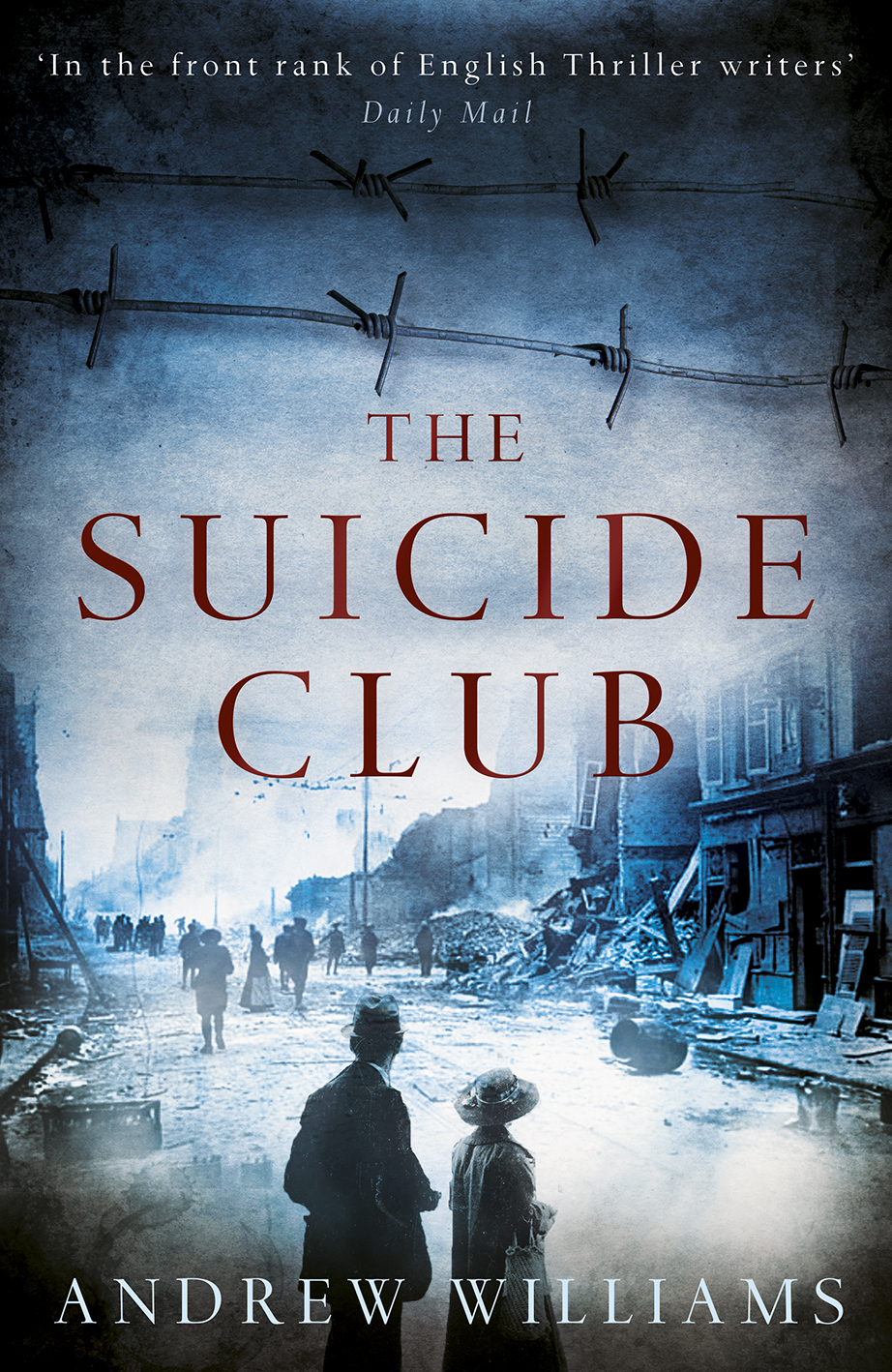
suicideclub0205-2
Andrew Williams takes readers to 1917 Britain with a spy thriller based on real events in The Suicide Club
, a convincing and atmospheric mystery that is as well written as it is well researched.

Passchendaele is a nightmare, and Captain Alexander Innes of the Cameron Highlanders, badly wounded at the Somme, is taken off the front lines and seconded to the Secret Service, working in Belgium with the Resistance.

When he’s recalled to London to General Haig’s headquarters, his new assignment as a spy is to ascertain if the intelligence being delivered to the High Command is reliable.

What he learns is that the intelligence is suspect, and with the leaders using Innes for their own devices, the political tension–and the stakes for the outcome–rise sharply. Innes will find himself send back to Belgium, where the book’s action heats up even more.

The horrors of war are not glossed over, nor are the terrible outcomes for many devoted Resistance members of an occupied country. Fair to its real life characters, even Innes’ love affair feels grounded in reality.

Written with a deft hand, perfect for fans of John LeCarre’ and Alan Furst.

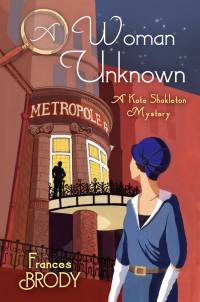
A Woman Unknown
It’s 1920’s England in Frances Brody’s fourth Kate Shackleton mystery, A Woman Unknown.

The accidental private investigator is first called on to uncover where a young woman goes when she tells her husband she is visiting her ill mum.
Cyril Fitzpatrick is concerned about his wife, Deirdre, and wants to know just where his wife really disappears to. Kate is wary of the job–she has come across Deirdre Fitzpatrick before.

When Chief Inspector Marcus Charles of Scotland Yard, Kate’s presumptive love, asks her to meet him at the Hotel Metropole, it’s to identify a man known to Kate who has been found by a chambermaid, dead in bed and not from natural causes. Everett Runcie, a banker facing ruin and disgrace by devious dealings faced divorce from his American heiress wife, tired of his infidelities. But Everett Runcie had not been alone when he checked into the hotel, so who, was his companion?

Could these seemingly unrelated events be connected? As she investigates, Kate recalls an accidental shooting at the start of the grouse season a few weeks back, and begins to wonder if there could be a tie to these cases. The more she delves, the more convoluted and sinister do matters appear. Can Kate untangle the complex threads and get to the truth?

Cleverly plotted, the story is told by Kate in the first person, and by third person narratives from Kate’s assistant Sykes and Deirdre Fitzpatrick. Brody weaves an intriguing set of events for the reader to unravel, which also highlights the difficult divorce laws of the time. The period details add much to the texture of this satisfying entry in the series. Don’t miss this entertaining series if you haven’t found Brody yet.

Medieval Mysteries and Magic Tuesday, Aug 11 2015 

Here are great books for those readers who enjoy theirs set in far away times with the hint of mysterious fairy tale adventures–enjoy!

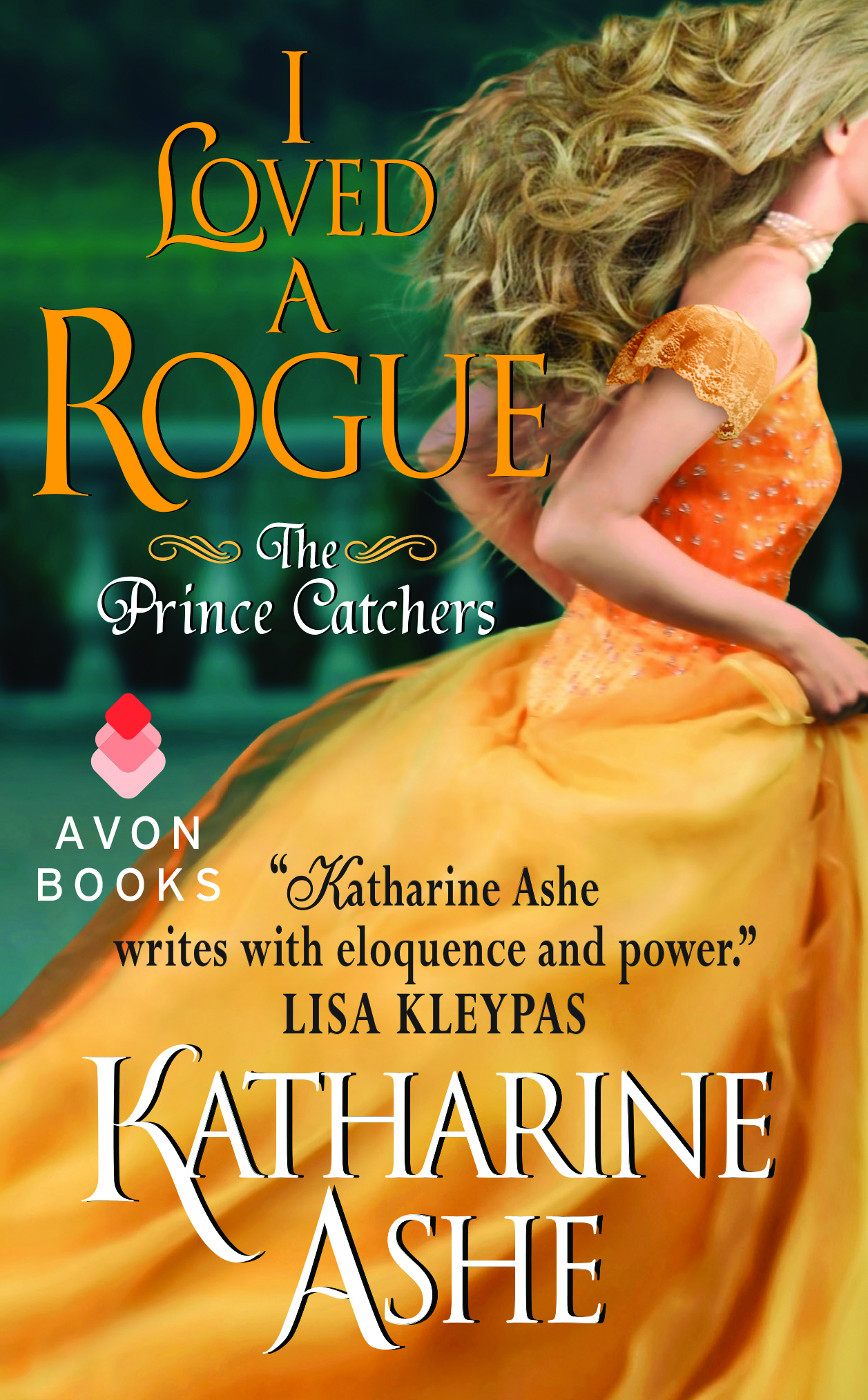
I-LOVED-A-ROGUE
Katherine Ashe’s third in her Prince Catchers series, I Loved a Rogue, has garnered enthusiastic reviews.

A soothsayer has foretold the future for one of three orphaned sisters: one will marry a prince. It’s the stuff of fairy tales for certain, as they await the mystery of their past to be revealed. Only the last sister can fulfill the prophecy, but it comes at a price: resisting the advances of a seductive rogue.

Eleanor Caulfield appears to be the perfect vicar’s daughter, yet she’s been in love with a gypsy, Taliesin, who broke her heart years ago. The only unmarried sister, Eleanor is fast approaching spinster hood. With the marriage of her father, she determines she must unravel the mystery of her parentage. Having almost died as a child, Eleanor’s sisters demand she have an experienced traveler be her guide.

With Taliesin appearing for her father’s wedding, the sisters suggest he accompany her, and Eleanor sets off with mixed feelings.
As they travel the countryside in search of clues to her parent’s identity, flashbacks show the duo’s history: the mixture of awe and devotion Taliesin feels for Eleanor; her fear and infatuation, under the impending doom of society’s disapproval.

Their challenging of each other is what strengthened Eleanor after her sickness and now galvanizes her on the quest for her parents. No spoiler alert here, but definitely an interesting ending to the series by a talented writer.

Auntie M had the pleasure of meeting Katherine Ashe at the Pamlico Writers Conference this year. She’s as charming as the heroines she writes about.
LampBlack
Paula Brackston’s novels of witches and spirits have a commanding following. She’s back with her fifth, Lamp Black, Wolf Grey
, set in Wales, and this time one of her characters is none other than Merlin himself.

Dual stories in different times both feature the legendary Merlin. Laura, a painter, has moved to the Welsh countryside with her husband to make a fresh start after years of infertility. They are looking to trade the noise and busy London lifestyle for the quiet, quaint wilds of the Welsh countryside, and choose an ancient home named Penlan.

Instead of solace and inspiration, Laura finds herself experiencing emotional longings and mysterious unexplained occurrences. Living in a centuries-old house in a remote area rich in lore and mystery, she feels echoes from the past. Her imagination runs wild with tales of Merlin the Magician having lived nearby in his pre Arthur days, and she tells herself it’s her imagination or else she’s losing her mind.

Interspersed throughout Laura and Dan’s story is that of Megan, a servant in the house of a wicked lord, and of her romance with the magician Merlin. This duality fleshes out the story in a nice mix that’s hallmark Brackston. Laura is a complex and likable heroine, with very relatable weaknesses. The mythical Merlin remains more enigmatic and mysterious. The historical parts are well done, yet readers will enjoy the the compelling contemporary plot line.

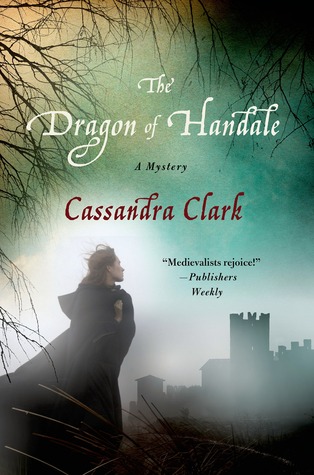
Dragon Handale
Cassandra Clark’s fifth Abbess of Hildegard mystery takes readers to 14th century England in The Dragon of Handale. Clark introduces the characters and their backgrounds so readers who have not read the previous novels can plunge right in.

Hildegard of York is a former nun, something of a sleuth, used to being in a position of authority, a woman who’s become ambivalent about whether she should re-enter a convent or continue on in secular life. Her former prioress suggests that she stay at the remote Handale Priory while she ponders her decision.

Yet once she’s settled at Handale, Hildegard begins to wonder if there was a hidden agenda involved in sending her there. Handale is a place for penitents – but in practice, it appears more a kind of prison for sinning nuns. Life there is harsh and unforgiving.

Everywhere she looks, Hildegard’s sharp and inquiring mind sees suspicious activity. There’s a strange rumor of a vicious ‘dragon’ outside the priory walls. Then a mason, one of a group hired to do work for the abbey, is brutally murdered. The woman in charge seems deliberately cruel. Young novices are desperate to escape. And what is a wealthy merchant doing within the walls?

Hildegard realizes that these strange incidents make it her job to get to the bottom of what’s really going on at Handale. Her investigation will range from small and personal injustices right up to high affairs of state and the politics of the realm. Intriguing to see a mystery and amateur sleuth in this kind of setting.

RedRose

Joanna Hicson’s Red Rose, White Rose takes readers to fifteenth century England in the time of the War of the Roses. This well-researched historical fiction is based on Cecily Neville, the wife of Richard Plantagenet of York and mother of Edward IV and Richard III. Cecily Neville is the youngest daughter of Ralph Neville, Earl of Westmorland, and her advantageous marriage with Richard, Duke of York, combines two of the most powerful families in the land.

But Cecily soon learns that being married to one of the richest men in the country is not without danger, and as she discovers that life so close to English royalty is fraught with both treachery and peril.

Beautifully researched, the story combines the best of both fact and fiction. Throughout the novel, readers learn Cecily’s perspective about her life; we see her maturing from a young and idealistic teenager to a mature woman with her own children and responsibilities for vast estates.

She’s a compelling protagonist, opinionated and controlling at times, but ultimately loyal to those she loves and respects. The co-narrator is Cuthbert, who is described as Cecily’s illegitimate half brother. This fictitious figure provides a much needed male perspective on what it was like to serve the Neville family. And as he gets tangled up in the politics and manoeuvrings of the scheming Plantagenets, we gain insight into the intrigue and deceptions that were so much a part of this deadly game of thrones.

Siege Winter
Ariana Franklin’s death in 2011 left readers clamoring for her unfinished manuscript, and her daughter Samantha Norman has done a grand job of stepping in to finish her mother’s final manuscript, leading many to feel she can more than inherit her mother’s legacy in The Siege Winter
.

Research on everyday medieval life brings real authenticity to the novel. During this era, England’s civil war between supporters of Stephen (grandson of William the Conqueror), and his cousin, the Empress Matilda, for the throne of England forced occupants of cathedrals as well as castles to take sides.

The fictional Kenniford Castle is a pivotal site because it is on a key Thames crossing. The castle’s mistress is 16-year-old Maud, a ward of King Stephen, forced to marry the much older, crass and barbaric John of Tewing, who arrived at the castle for the wedding with both his son and his mistress.

In alternate chapters, readers follow the fate of a young girl who had gone out to gather fuel with her family and was caught by a group of men, led by a sadistic rapist and killer monk with a penchant for red-headed children. Emma was left for dead but was found by Gwilherm de Vannes, a mercenary who had his horse stolen by the very men who ravaged Em.

Gwil nurses the girl back to health and she remembers nothing of the trauma that almost killed her, nor of her life before it. Gwil calls her Penda after a Pagan warlord. He cuts her hair to disguise her as a boy, and he teaches her to defend herself with a bow. The two travel through the countryside earning money by giving archery exhibitions. What Gwil doesn’t share with Penda is his determination to track down and destroy the monk who brutalized her. In addition, he suspects the monk may not be done yet with Penda, because when Gwil found her, she was clutching a valuable parchment that the monk needs to recover.

Events take a turn when Mathilda and two protectors, Alan and Christopher, stumble upon Gwil and Penda during a snowstorm, and take shelter with them. They beseech Gwil and Penda to help them get Mathilda to safety, and the five of them end up at Kenniford castle. Before long, the castle is besieged by the much larger and better armed forces of Stephen, and must survive a brutal winter while avoiding death and destruction.

A fascinating look at medieval times with a mystery within the rages of war.
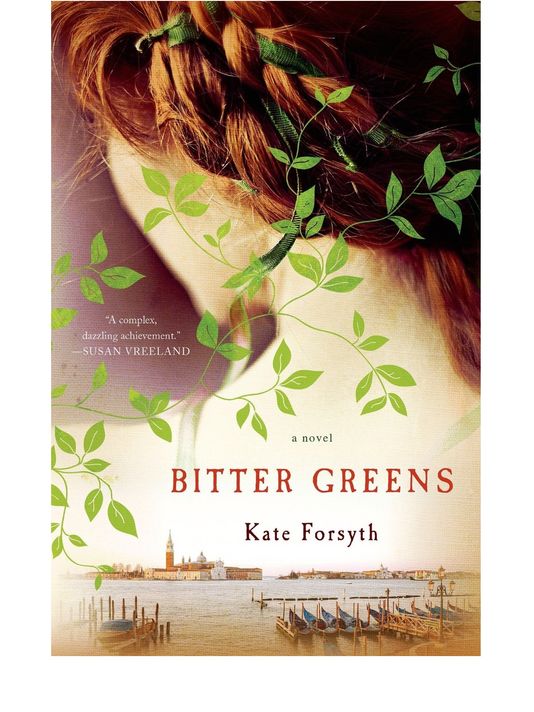
Bitter-Greens-Thomas-Dunne-Books

Kate Forsyth is quickly becoming a name in historical fiction as she explores fairy tales. Her debut, Bitter Greens, won the Best Historical Fiction prize from the American Library Association.

It’s the time of the Sun King, Louis XIV, and novelist Charlotte-Rose de la Force has been banished from the Court of Versailles for behaving like a man in terms of her love life.

Running alongside Charlotte’s story is the thread of the fairy tale of Rapunzel, told to Charlotte by an old nun, which gives the story it’s interesting structure. The two story lines share themes as the female characters struggle for independence and the right to decide their own destinies.

This also echoes the life story of the witch who confined Rapunzel. For the first time we see her backstory and her fight for the freedom to make her own choices. This has her become a more sympathetic character than fairy tale readers recall, even though she remains a dark element in the Rapunzel story. The witch’s fears are common ones with which most people contend: the fear of aging and death. With its echoes of feminism, the themes apply to modern times and keep all the woman deeply human.

wildgirl_forsyth
With The Wild Girl
, another exploration of fairy tales, Kate Forsyth deals with the Brothers Grimm. This is a richly imagined tale of the woman who gave the Grimm brothers some of their best stories. History is very much part of the foreground, as the Napoleonic wars rage around the small kingdom of Hessen-Kassel. The book deals with how the lives of ordinary people, especially the poor or the marginalised, experience history as a material impact on their bodies and minds, and their everyday lives.

The romance between Wilhelm Grimm and Dortchen Wild unfolds slowly and deeply over many years. Dortchen is wild by nature, headstrong and curious. At the hands of her cruel and domineering father, she moves from innocence to experience, and the novel takes a hard turn. Its darkness is relieved by the meetings between the lovers, as she tells Wilhelm tales and they fall deeply into a forbidden love. There is real despair here, not a cliched romance, as the lovers are helpless in the face of circumstance.

Yet the romance becomes almost secondary to the sophisticated and thoughtful power of the stories. “Stories help make sense of things,” Dortchen tells Wilhelm. It’s long been known that many nursery rhymes and fairy tales were commentaries on the politics of their time. And in this novel we see the additional importance of stories in preserving a culture, in remembering history, and in connecting people in time as all good fairy tales do.

Kate Forsyth is a deft writer, her prose elegant and spare, almost Germanic in its precision and placement in this novel in contrast to the different language she uses in the French tale Bitter Greens, which has an almost baroque feel to her chosen words. So besides weaving talented tales and doing complex research of each time, this author manages to tailor her language to each novel’s setting. And the covers are gorgeous~

« Previous PageNext Page »