Robin Burcell: The Last Good Place Sunday, Nov 8 2015 

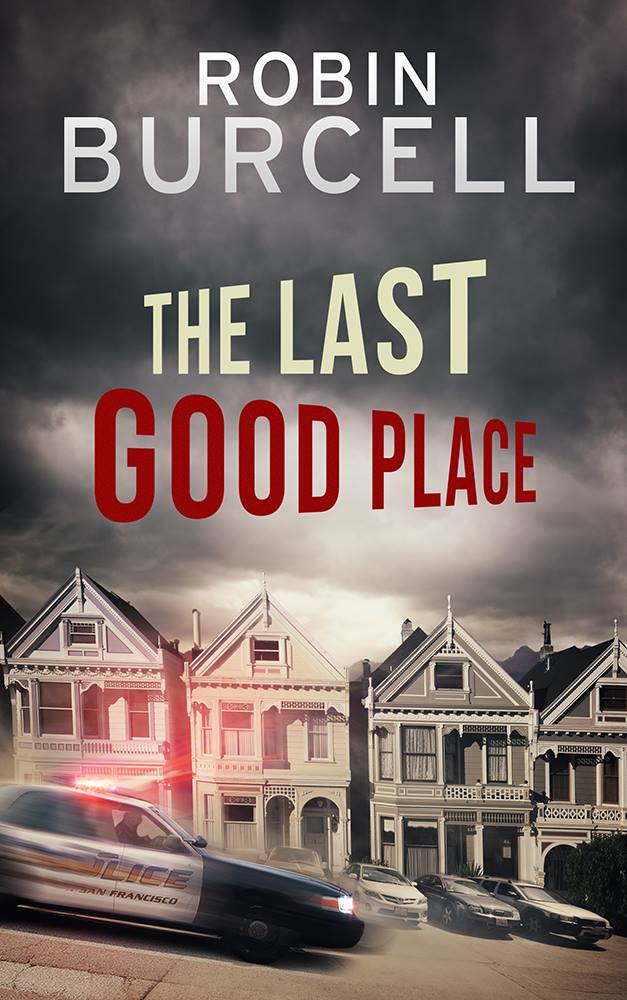
Robin Burcell has written a rebook of the Carolyn Weston books that formed the storyline for The Streets of San Francisco, one of Auntie M’s favorite shows in the 1970s.
The Last Good Place

Way back in the 1970s, an author named Carolyn Weston penned the novel POOR, POOR OPHELIA. That book was the basis for the hit television show, The Streets of San Francisco. I loved that show, and so when Brash Books asked if I’d be interested in continuing the late Weston’s series, I jumped at the chance.

Besides, how hard could it be? I thought. Well… A lot has changed since the 1970s, especially police work. But I was up to the challenge, so I read the three Weston novels and made the startling realization that they were very different from the TV show that I remembered. Or rather Weston’s cops, Al Krug and Casey Kellog, were different from my memory of the TV cops portrayed by Karl Malden and Michael Douglas.

What’s a writer to do? I had a choice about leaving these cops in the 70s, but I wasn’t so sure I wanted to write historical fiction. I started as a cop in 1983 and I’m very happy with the progress departments have made over the years. I had no wish to revisit that time period—and so we made the command decision to update the series to modern day.

LastGoodPlace-1200x628

My personal belief was that Al Krug, the grizzled, older cop Weston wrote as a foil to the younger, college-educated rookie, Kellog, was right for the time period in which he was created. Krug was a kick-ass-take-names-later sort of guy. Unfortunately that wouldn’t fly today, and so I knew I was going to have to temper Krug’s character—to keep him from getting fired—making him more of a mentor to Kellog, but one who was still very much old school.

And then there is the younger Kellog, fresh out of college and still living at home according to Weston’s version. The biggest problem there was that today, Kellog would have to put in at least a decade on the streets before he ever got to homicide, and so I fast-forwarded his time clock, giving him the needed years on the street (and moved him out of his parents’ house!) so that he had the experience to work homicide.

The fun part of the series was melding Weston’s characters with my memories of the television show. I wanted to bring in the best of both worlds. In the end my goal was to write a great police procedural that would pick up where the old books left off, but wouldn’t be out of place in today’s world.

Anyone else out there remember The Streets of San Francisco?

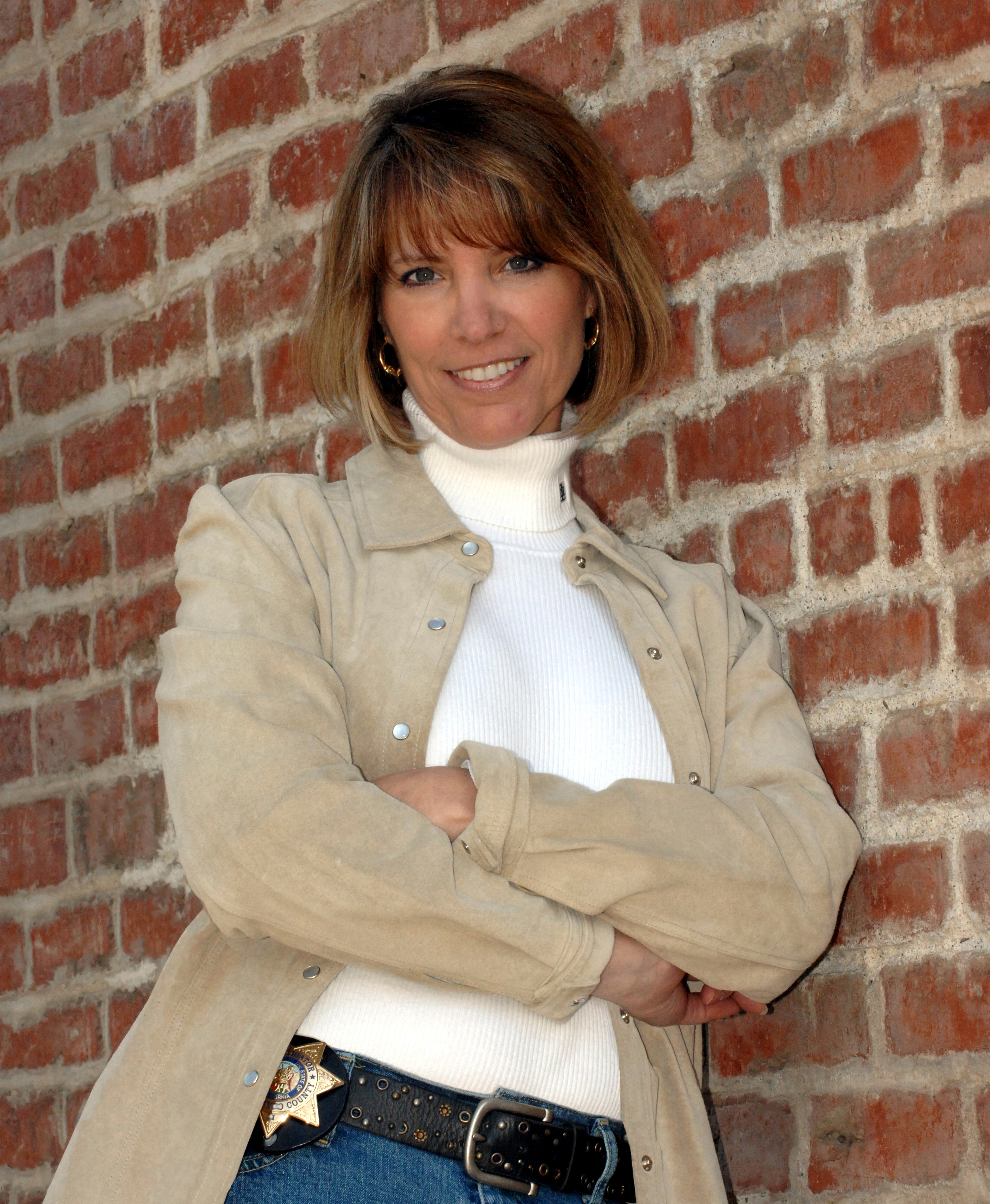
Burcell 2013 Book Photo

Robin Burcell spent nearly three decades as a police officer, hostage negotiator, criminal investigator, and FBI Academy-trained forensic artist. Her most recent book, THE KILL ORDER, was named one of Library Journal’s Best Thrillers of 2014.
Her upcoming book, THE LAST GOOD PLACE, is a continuation of the Carolyn Weston police procedurals which were the basis for the TV show THE STREETS OF SAN FRANCISCO.
More information can be found on her website at: http://www.robinburcell.com/

Sarah Ward: In Bitter Chill Tuesday, Oct 13 2015 

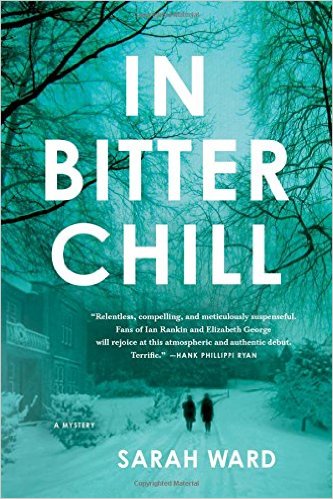
InBitterChill

England’s rural Derbyshire is the setting for Sarah Ward’s debut mystery, In Bitter Chill, introducing introspective DI Francis Sadler, DC Connie Childs and their team. It promises to be the best of police procedurals, where the mystery is strong and setting as stark as the killings being investigated.

Thirty years ago two young children were kidnapped on their way to school. Rachel Jones was found wandering hours later, but her companion, Sophie Jenkins, never surfaced and no trace of her body was ever found.

On the 30th anniversary of what is surely Sophie’s death, her mother commits suicide, which reopens the cold case in hopes the original team overlooked something that might lead to resolution of the case.

Rachel has become a genealogist and a local history expert who lives quietly and would continue to do so but this reopening of the case on the heels of Mrs. Jenkins suicide disrupts the peace Rachel has created, bringing reporters at her door. Worst of all are her efforts to remember details of that horrific day, when the girls were coaxed by a woman into a car with disastrous results.

Then a former teacher of Rachel’s is found strangled in the same woods where the girls went missing, and suddenly no one in the area feels safe, least of all, Rachel Jones. As Sadler and Connie investigate the new and old cases, they uncover secrets long kept buried as the threat rises.

Ward does a nice job of letting the setting become another character, and gives us enough of the inner lives of Sadler and Connie, as well as Connie’s closest competition in the team, the almost-married Palmer, to make readers look for the next installment of this team. Destined to be a series readers will seek out.

Auntie M had the pleasure this past week to meet with Sarah Ward at the Bouchercon Mystery Convention. A blogger for Crimepieces, Ward’s love of crime fiction kept us talking about our favorites and how In Bitter Chill came to be written:

Sarah Ward: I was living and Greece at the time I wrote the book and having a bout of homesickness. It was incredibly hot, and I kept myself cool by thinking of the Derbyshire winter. It seemed natural to use that area, but Stephen Booth has stolen a lot of the popular places! So I made up a fictional town surrounded by the real ones and that’s worked well. I think being at some remove helped me write it, too, although having lived there I obviously know the area well. In the winter the tourists have gone and it’s deserted and feels isolated but very beautiful.

Auntie M: That certainly comes through, the majesty of the area as well as its bleak isolation. What about the sequel, which I hear is written and will be out next year? What it easier or tougher to write?

SW: I was back in Derbyshire by then and it seemed a bit harder to remove myself from the area as I wrote. It’s such a lovely area, with the Peak District National Park owned by private landowners. I’m quite proud of the fact that it was the first national park, this jewel of nature surrounded by South Manchester, Sheffield and Nottingham, great industrial areas.

AM: After you chose the setting, what prompted this particular storyline?

SW: I had a very similar incident happen to me when I was twelve and walking to school. A woman stopped and asked me to post a letter for her, which I did, and then wanted to drive me the rest of the way to school. I didn’t get in her car, but she was persistent until she finally drove off. I never told my parents about it, either. But years later I wondered what would have happened if I HAD gotten into that car . . . so I made the story revolve around two younger girls who had gotten into the car with the woman.

AM: Was there a kind of release in writing it down, exploring that episode?

SW: To a degree, but the most surprising thing about exposing secrets, which the book revolves around, is that people come up to me all the time at signings and tell me their secrets, completely without prompting. It’s usually family secrets of some kind, so I suppose the book has struck a chord with them.

AM: What about the relationships of Sadler, Connie and Palmer?

SW: I have a story arc planned, oh yes, but I’m not giving away secrets except to say there’s a surprise there–you’ll just have to read the next one to see what’s happening!

Elly Griffiths: The Zig Zag Girl–the first Magic Men Mystery Tuesday, Sep 15 2015 

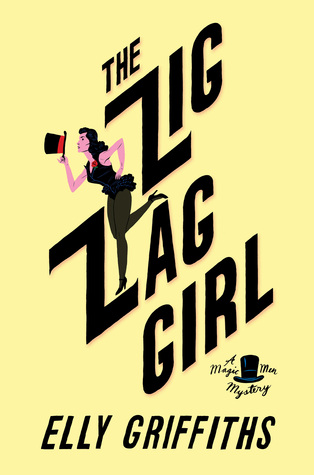
Fans of Elly Griffith’s wonderful Ruth Galloway Mysteries have eagerly anticipated this first of her new Magic Men Mysteries, and readers will be delighted with THE ZIG ZAG GIRL.
zigzaggirl

Brighton in 1950 springs off the pages in all its sparkling and sometimes tawdry glory. DI Edgar Stephens faces a most unusual case: the head and legs of a young woman have been found in two separate black boxes in Left Luggage. Then her center midriff is delivered to Stephens at his police station. The killer is mimicking the famous magic trick where the body of a young magician’s assistant is supposedly cut into three pieces, a trick known as The Zig Zag Girl.

It brings into Edgar’s sphere his former mate, Max Mephisto, from a WWII group called the Magic Men, whose specialty was sleight of hand and camouflage for the Germans benefit, in one case a Highlands posting requiring them to simulate a huge warship. The trick had disastrous results, the brainchild of the magician Mephisto, who still performs and into whose world Stephens is soon introduced.

When the identity of the dead woman is established, followed by a second death built around another magician’s trick, the link to the Magic Men gives Stephens a pattern to follow, and soon he and Mephisto will be off to interview the remaining members of their team as the tricks–and the deaths–multiply. The tension rises as lives are at risk and soon it will be the two old friends who are at in danger–all amidst Mephisto trying to keep up his act from town to town.

Griffiths has done a grand job of illustrating the era’s variety shows and the life the performers led. And there are behind-the-scenes looks at some of the tricks. She shows the days of post-war policing, too, when there were no cell phones or computers to rely on or aid police investigations, and how the detecting must rely on personal visits, long car rides to interview people, and the detective’s reasoning and intuition.

The interesting side bit here is the personal story attached to the series; While Mephisto and the Magic Men are fictional creations, they are based on a real team of camouflage experts call the Magic Gang who served in Egypt during WWII and are credited with impressive illusions, including the supposed disappearance of the Suez Canal! Rich fodder for any writer, but there’s even more of a personal connection for Griffiths: the group was led by the famous magician Jasper Maskelyn, who appeared on villa on the variety show circuit with none other than Griffith’s own grandfather, Frederick Goodwin.

Stephens and Mephisto form a new alliance that will have readers clamoring for the next installment. Rumor to Auntie M has it that Griffiths is hard at work on a sequel, The Demon King, but keep that under your hat or a rabbit may appear!

Duncan Simpson: The History of Things to Come Sunday, Aug 23 2015 

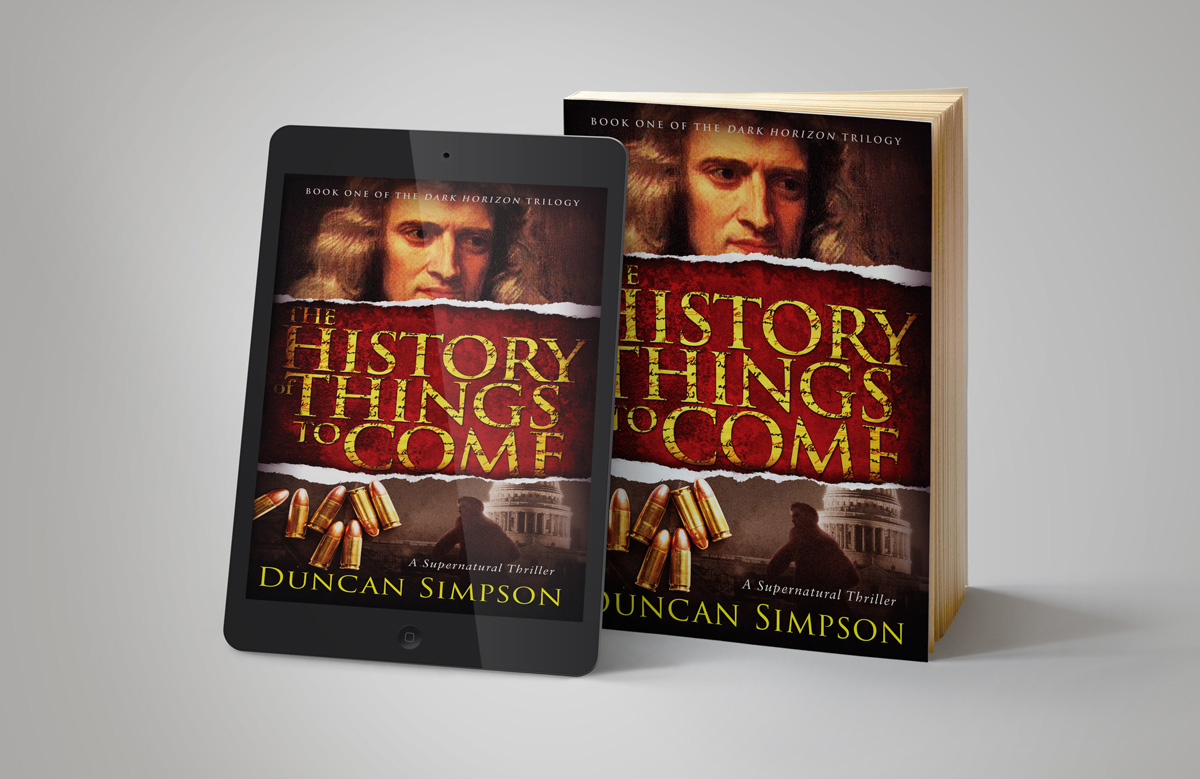
Author Duncan Simpson will tell readers of the interesting story behind his novel, the first in a planned DARK HORIZON trilogy:HOTTC-Book-Cover-(Web)

THE HISTORY OF THINGS TO COME

My novel THE HISTORY OF THINGS TO COME was inspired by a true but little-known fact about the celebrated scientist Isaac Newton.

More than any other person, Newton’s extraordinary contributions in the field of science have laid the foundations for the modern study of optics, mathematics, gravity and motion. However, far from being the ultimate rationalist, the scientist was obsessed with unlocking the secrets hidden within Holy Scripture.

It has been estimated that out of Newton’s surviving writings, 700,000 words are concerned with scientific research, 600,000 words relate to alchemy and 1,700,000 relate to his biblical research. Certain of its accuracy, Newton described biblical prophecy as a ‘history of things to come’.

According to John Maynard Keynes, Newton regarded “the universe as a cryptogram set by the Almighty”; through his intellect and incredible ability to focus on a problem, Newton’s mission was to decode it.

Convinced that encoded in the design of Solomon’s first temple was some divine hidden knowledge, Newton became consumed with recreating the floor plan of the Temple from descriptions contained within the Book of Ezekiel. He even learned Hebrew so that he could read the original Old Testament books.

In some ways, Newton perceived himself as the new Solomon and believed that it was his God-given purpose in life to unlock the secrets of Nature.

As a physics graduate with a keen interest in comparative faiths, I have always been fascinated by Newton and the myths surrounding the man. THE HISTORY OF THINGS TO COME interweaves a fast-paced, modern-day thriller with gripping extracts from a fictional Newton notebook. The story centers upon the search for a shocking biblical secret discovered by Newton and kept hidden for over 300 years.

THE HISTORY OF THINGS TO COME is the first book in the Dark Horizon trilogy. I am currently working hard on the second instalment. For more information and updates on new releases, please come and join my mailing list at: http://www.duncansimpsonauthor.com

HOTTC-3d-Book-Covers-(Web)

Read a synopsis of Duncan’s book: The mind of a genius can hold the darkest of secrets.

A Bosnian gangster is gunned down in a packed London restaurant. In his possession is a notebook once belonging to Isaac Newton. This is just the latest in a series of shocking crimes connected to objects once belonging to the famous scientist. The police are stumped and the pressure for an arrest is mounting.
Enter Vincent Blake, London’s leading stolen-art investigator. As Blake sets out to solve the case, a series of devastating events threaten to destroy everything he holds dear. Broken but undeterred, he comes upon a shocking discovery: within the coded pages of a mysterious crimson book, annotated in Newton’s own handwriting, is an explosive revelation. Possessing this secret knowledge turns Blake into a marked man.
Caught in the crosshairs of two sadistic hitmen, Blake is propelled into a breathtaking race through London and its dark historical secrets.
With time running out, will Blake solve Newton’s deadly puzzle before the world is plunged into a catastrophe of biblical proportions?

Set in the murky world of stolen and forged manuscripts, The History of Things to come combines threads of well-researched historical fact with undercurrents of the supernatural and ancient legend. The celebrated scientist Sir Isaac Newton himself once wrote, biblical prophecy is, indeed, ‘the history of things to come’.

‘Taut, razor-sharp, and clever crime fiction.’
‘An endlessly twisting, multi-layered supernatural thriller.’
‘Perfect for fans of Dan Brown’

Duncan-Simpson---Headshot-(Web)-(72dpi)

Thriller writer, Duncan Simpson spent his childhood in Cornwall, England. As a teenager he gained experience in a variety of jobs: from working in a mine, to doing shifts as a security guard in an American airport. After graduating from the University of Leeds with a physics degree, he spent a year backpacking around the world. On returning to the UK, he embarked on a successful career in business. Along the way, he became the finance director for a technology company and a partner in a leading management consultancy firm.

His debut novel, The History of Things to Come was born out of his lifelong fascination with the relationship between science and religion. A keen student of the history of London, he loves exploring the ancient stories and myths surrounding the city. When he’s not writing or consulting, you’ll find him: playing guitar in a rock band, running by the Thames, or drinking tea with his wife and three children in their home in Berkshire, England.

Website & Blog: http://www.duncansimpsonauthor.com
Twitter: http://www.twitter.com/dsimpsonauthor
Facebook: http://www.facebook.com/duncansimpsonauthor

Medieval Mysteries and Magic Tuesday, Aug 11 2015 

Here are great books for those readers who enjoy theirs set in far away times with the hint of mysterious fairy tale adventures–enjoy!
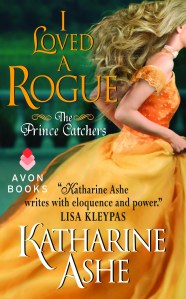
I-LOVED-A-ROGUE
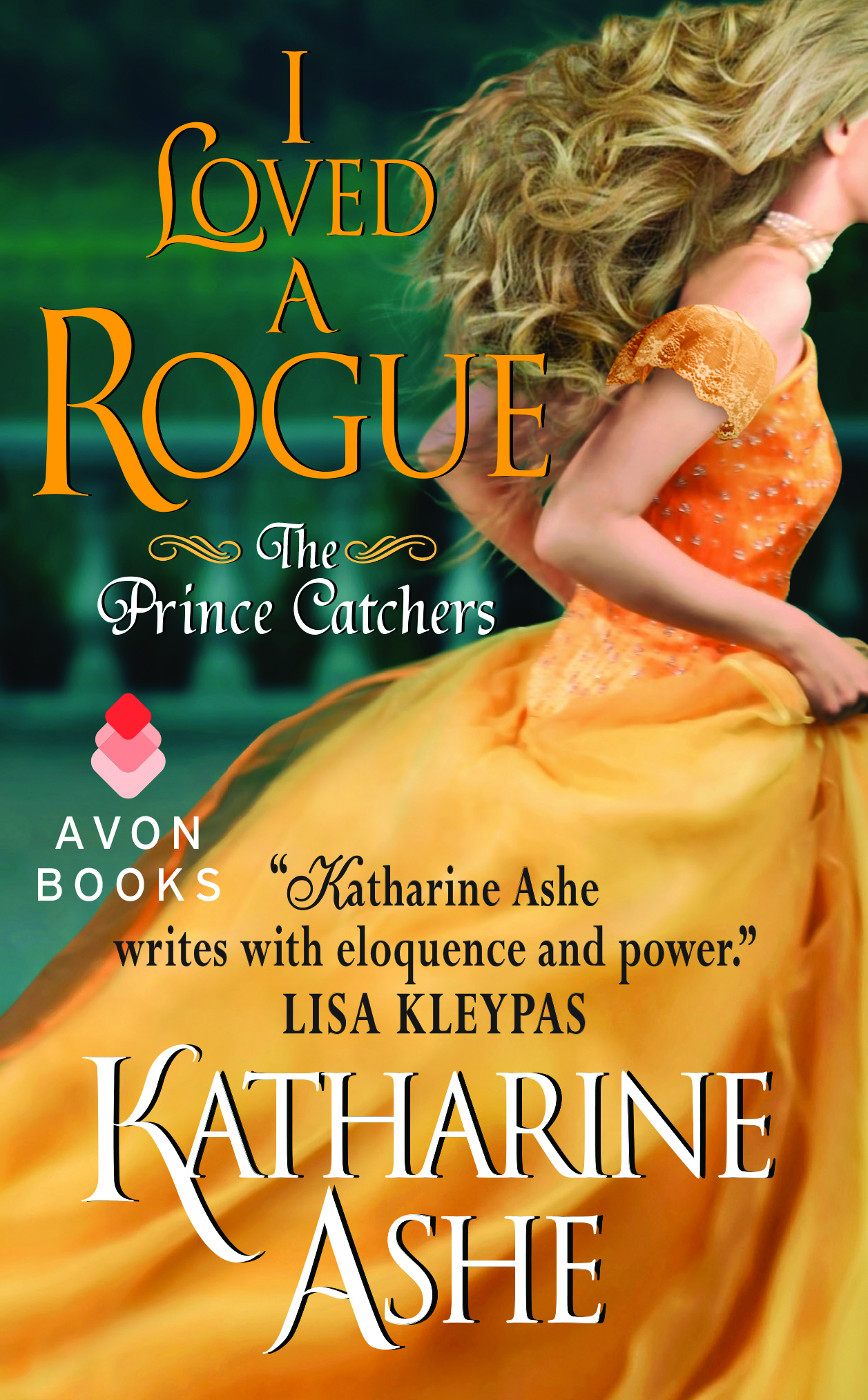
Katherine Ashe’s third in her Prince Catchers series, I Loved a Rogue, has garnered enthusiastic reviews.

A soothsayer has foretold the future for one of three orphaned sisters: one will marry a prince. It’s the stuff of fairy tales for certain, as they await the mystery of their past to be revealed. Only the last sister can fulfill the prophecy, but it comes at a price: resisting the advances of a seductive rogue.

Eleanor Caulfield appears to be the perfect vicar’s daughter, yet she’s been in love with a gypsy, Taliesin, who broke her heart years ago. The only unmarried sister, Eleanor is fast approaching spinster hood. With the marriage of her father, she determines she must unravel the mystery of her parentage. Having almost died as a child, Eleanor’s sisters demand she have an experienced traveler be her guide.

With Taliesin appearing for her father’s wedding, the sisters suggest he accompany her, and Eleanor sets off with mixed feelings.
As they travel the countryside in search of clues to her parent’s identity, flashbacks show the duo’s history: the mixture of awe and devotion Taliesin feels for Eleanor; her fear and infatuation, under the impending doom of society’s disapproval.

Their challenging of each other is what strengthened Eleanor after her sickness and now galvanizes her on the quest for her parents. No spoiler alert here, but definitely an interesting ending to the series by a talented writer.

Auntie M had the pleasure of meeting Katherine Ashe at the Pamlico Writers Conference this year. She’s as charming as the heroines she writes about.
LampBlack
Paula Brackston’s novels of witches and spirits have a commanding following. She’s back with her fifth, Lamp Black, Wolf Grey
, set in Wales, and this time one of her characters is none other than Merlin himself.

Dual stories in different times both feature the legendary Merlin. Laura, a painter, has moved to the Welsh countryside with her husband to make a fresh start after years of infertility. They are looking to trade the noise and busy London lifestyle for the quiet, quaint wilds of the Welsh countryside, and choose an ancient home named Penlan.

Instead of solace and inspiration, Laura finds herself experiencing emotional longings and mysterious unexplained occurrences. Living in a centuries-old house in a remote area rich in lore and mystery, she feels echoes from the past. Her imagination runs wild with tales of Merlin the Magician having lived nearby in his pre Arthur days, and she tells herself it’s her imagination or else she’s losing her mind.

Interspersed throughout Laura and Dan’s story is that of Megan, a servant in the house of a wicked lord, and of her romance with the magician Merlin. This duality fleshes out the story in a nice mix that’s hallmark Brackston. Laura is a complex and likable heroine, with very relatable weaknesses. The mythical Merlin remains more enigmatic and mysterious. The historical parts are well done, yet readers will enjoy the the compelling contemporary plot line.

Dragon Handale
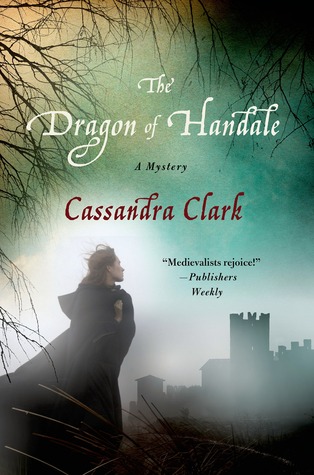
Cassandra Clark’s fifth Abbess of Hildegard mystery takes readers to 14th century England in The Dragon of Handale. Clark introduces the characters and their backgrounds so readers who have not read the previous novels can plunge right in.

Hildegard of York is a former nun, something of a sleuth, used to being in a position of authority, a woman who’s become ambivalent about whether she should re-enter a convent or continue on in secular life. Her former prioress suggests that she stay at the remote Handale Priory while she ponders her decision.

Yet once she’s settled at Handale, Hildegard begins to wonder if there was a hidden agenda involved in sending her there. Handale is a place for penitents – but in practice, it appears more a kind of prison for sinning nuns. Life there is harsh and unforgiving.

Everywhere she looks, Hildegard’s sharp and inquiring mind sees suspicious activity. There’s a strange rumor of a vicious ‘dragon’ outside the priory walls. Then a mason, one of a group hired to do work for the abbey, is brutally murdered. The woman in charge seems deliberately cruel. Young novices are desperate to escape. And what is a wealthy merchant doing within the walls?

Hildegard realizes that these strange incidents make it her job to get to the bottom of what’s really going on at Handale. Her investigation will range from small and personal injustices right up to high affairs of state and the politics of the realm. Intriguing to see a mystery and amateur sleuth in this kind of setting.

RedRose

Joanna Hicson’s Red Rose, White Rose takes readers to fifteenth century England in the time of the War of the Roses. This well-researched historical fiction is based on Cecily Neville, the wife of Richard Plantagenet of York and mother of Edward IV and Richard III. Cecily Neville is the youngest daughter of Ralph Neville, Earl of Westmorland, and her advantageous marriage with Richard, Duke of York, combines two of the most powerful families in the land.

But Cecily soon learns that being married to one of the richest men in the country is not without danger, and as she discovers that life so close to English royalty is fraught with both treachery and peril.

Beautifully researched, the story combines the best of both fact and fiction. Throughout the novel, readers learn Cecily’s perspective about her life; we see her maturing from a young and idealistic teenager to a mature woman with her own children and responsibilities for vast estates.

She’s a compelling protagonist, opinionated and controlling at times, but ultimately loyal to those she loves and respects. The co-narrator is Cuthbert, who is described as Cecily’s illegitimate half brother. This fictitious figure provides a much needed male perspective on what it was like to serve the Neville family. And as he gets tangled up in the politics and manoeuvrings of the scheming Plantagenets, we gain insight into the intrigue and deceptions that were so much a part of this deadly game of thrones.

Siege Winter
Ariana Franklin’s death in 2011 left readers clamoring for her unfinished manuscript, and her daughter Samantha Norman has done a grand job of stepping in to finish her mother’s final manuscript, leading many to feel she can more than inherit her mother’s legacy in The Siege Winter
.

Research on everyday medieval life brings real authenticity to the novel. During this era, England’s civil war between supporters of Stephen (grandson of William the Conqueror), and his cousin, the Empress Matilda, for the throne of England forced occupants of cathedrals as well as castles to take sides.

The fictional Kenniford Castle is a pivotal site because it is on a key Thames crossing. The castle’s mistress is 16-year-old Maud, a ward of King Stephen, forced to marry the much older, crass and barbaric John of Tewing, who arrived at the castle for the wedding with both his son and his mistress.

In alternate chapters, readers follow the fate of a young girl who had gone out to gather fuel with her family and was caught by a group of men, led by a sadistic rapist and killer monk with a penchant for red-headed children. Emma was left for dead but was found by Gwilherm de Vannes, a mercenary who had his horse stolen by the very men who ravaged Em.

Gwil nurses the girl back to health and she remembers nothing of the trauma that almost killed her, nor of her life before it. Gwil calls her Penda after a Pagan warlord. He cuts her hair to disguise her as a boy, and he teaches her to defend herself with a bow. The two travel through the countryside earning money by giving archery exhibitions. What Gwil doesn’t share with Penda is his determination to track down and destroy the monk who brutalized her. In addition, he suspects the monk may not be done yet with Penda, because when Gwil found her, she was clutching a valuable parchment that the monk needs to recover.

Events take a turn when Mathilda and two protectors, Alan and Christopher, stumble upon Gwil and Penda during a snowstorm, and take shelter with them. They beseech Gwil and Penda to help them get Mathilda to safety, and the five of them end up at Kenniford castle. Before long, the castle is besieged by the much larger and better armed forces of Stephen, and must survive a brutal winter while avoiding death and destruction.

A fascinating look at medieval times with a mystery within the rages of war.
Bitter-Greens-Thomas-Dunne-Books

Kate Forsyth is quickly becoming a name in historical fiction as she explores fairy tales. Her debut, Bitter Greens, won the Best Historical Fiction prize from the American Library Association.

It’s the time of the Sun King, Louis XIV, and novelist Charlotte-Rose de la Force has been banished from the Court of Versailles for behaving like a man in terms of her love life.

Running alongside Charlotte’s story is the thread of the fairy tale of Rapunzel, told to Charlotte by an old nun, which gives the story it’s interesting structure. The two story lines share themes as the female characters struggle for independence and the right to decide their own destinies.

This also echoes the life story of the witch who confined Rapunzel. For the first time we see her backstory and her fight for the freedom to make her own choices. This has her become a more sympathetic character than fairy tale readers recall, even though she remains a dark element in the Rapunzel story. The witch’s fears are common ones with which most people contend: the fear of aging and death. With its echoes of feminism, the themes apply to modern times and keep all the woman deeply human.
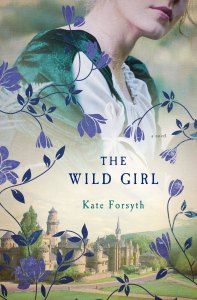
wildgirl_forsyth
With The Wild Girl
, another exploration of fairy tales, Kate Forsyth deals with the Brothers Grimm. This is a richly imagined tale of the woman who gave the Grimm brothers some of their best stories. History is very much part of the foreground, as the Napoleonic wars rage around the small kingdom of Hessen-Kassel. The book deals with how the lives of ordinary people, especially the poor or the marginalised, experience history as a material impact on their bodies and minds, and their everyday lives.

The romance between Wilhelm Grimm and Dortchen Wild unfolds slowly and deeply over many years. Dortchen is wild by nature, headstrong and curious. At the hands of her cruel and domineering father, she moves from innocence to experience, and the novel takes a hard turn. Its darkness is relieved by the meetings between the lovers, as she tells Wilhelm tales and they fall deeply into a forbidden love. There is real despair here, not a cliched romance, as the lovers are helpless in the face of circumstance.

Yet the romance becomes almost secondary to the sophisticated and thoughtful power of the stories. “Stories help make sense of things,” Dortchen tells Wilhelm. It’s long been known that many nursery rhymes and fairy tales were commentaries on the politics of their time. And in this novel we see the additional importance of stories in preserving a culture, in remembering history, and in connecting people in time as all good fairy tales do.

Kate Forsyth is a deft writer, her prose elegant and spare, almost Germanic in its precision and placement in this novel in contrast to the different language she uses in the French tale Bitter Greens, which has an almost baroque feel to her chosen words. So besides weaving talented tales and doing complex research of each time, this author manages to tailor her language to each novel’s setting. And the covers are gorgeous~

Summer Thrillers X 4: Meltzer, Hamilton, Kovacs, Freedland Friday, Aug 7 2015 

Here are four great summer thrillers for readers out right now, whether you’re at the beach or reading before bed. And if you missed Steve Berry’s The Lincoln Myth when it first came out, that one is now in paperback and ebook formats.

Meltzer_ThePresidentsShadow(HC)
Brad Meltzer’s Culper Ring Triology has captivated readers, who are waiting for this third installment. The President’s Shadow shows his love of the National Archives and his relationship with former US President George H. W. Bush and First Ladies Barbara and Laura Bush, who helped to inform the book, adding to the sense of reality that pervades the read.

The book opens with a wallop and never lets up, with First Lady Shona Wallace keeping her secret: she’s stolen a small section of the White House Rose Garden for her own flower garden. As she digs in the dirt early one morning, a persistent root finally gives way–and proves to have fingers attached to it.

That severed arm is only the start of trouble for Beecher White, erstwhile employee of the Nation Archives, who’s been visiting his mentor, Tot Westman, every day. Tot lies in a coma after brain surgery on the bullet wound in his frontal lobe.

The discovery of the arm immediately raises questions about security, the victim and the culprit. Beecher is called to a secret meeting of the Culper Ring, where President Wallace tells him that an item discovered with the arm links back to Beecher’s dead father.

That mystery surrounding what happened to his father has consumed Beecher, and this discovery might finally bring some answers. His membership in the secret organization that dates back to before George Washington became President holds the key, especially since the clue left was meant for Beecher alone.

Meltzer blends history with his fascinating story, mixed with that insider knowledge that lends authenticity to the conspiracy that is unveiled. This is great storytelling in an interesting and absorbing trilogy that blends fact with fiction in a compelling manner.

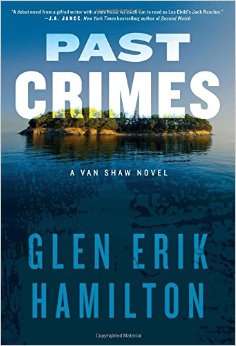
Past Crimes
Switching to a debut, Glen Erik Hamilton and Past Crimes
introduces Army Ranger Van Shaw, who has returned to his Seattle home after receiving a terse message from his grandfather after a decade apart. With flashbacks showing readers Van’s unusual childhood, the reason he joined the Rangers, Van Shaw promises to be an entertaining protagonist in this accomplished book.

Van finds his grandfather, Dono Shaw, bleeding from a gunshot wound to the head. With their complicated past and Dono Shaw’s shady life, Van knows he will be the prime suspect in the shooting and must clear his name. But the only way to do that is to plunge himself into the life he thought he’d left behind when he joined the Rangers.

There will be an enormous diamond theft to handle as Van hunts for the shooter, using the skills he’s learned in his Ranger training, combined with his sharp wit to find the assailant as he works with the team Dono put together for his big jobs and realizes he can trust no one.

Filled with action sequences, the book’s visuality and sharp dialogue will lend itself well to being filmed and Auntie M has no doubt this will be picked up by Hollywood if it hasn’t been already.

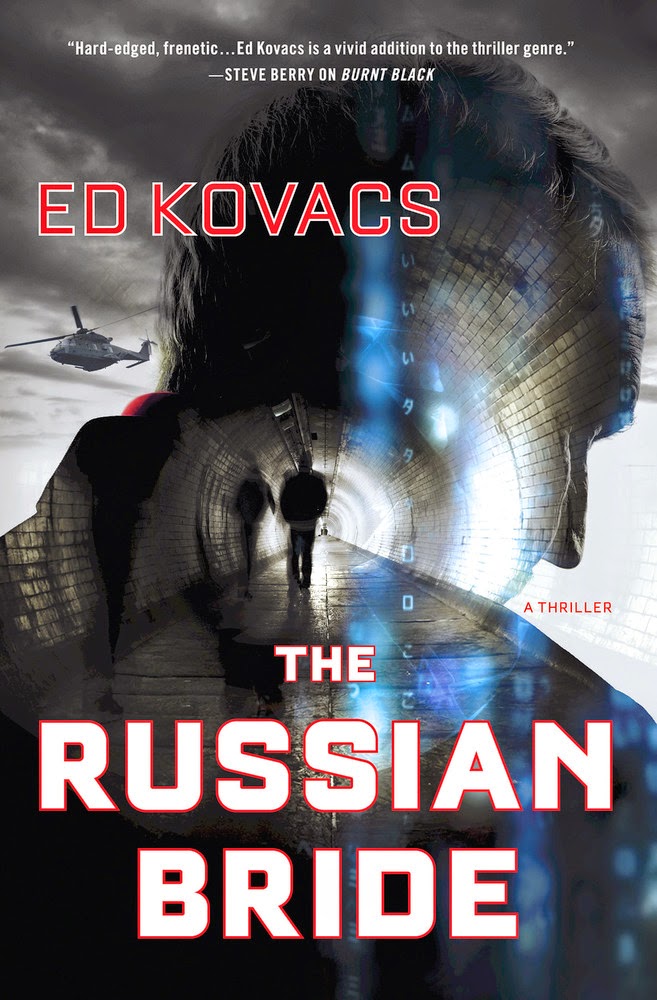
RussianBride
Best known for his Cliff St. James crime novels, author Ed Kovacs is debuting a new series in The Russian Bride.

His protagonist is an elite agent in military intelligence, working undercover in Moscow to find moles in the US Embassy. Major Kit Bennings suddenly finds himself and his family the targets of a former KGB general-turned-Mafia don in a complicated coercion scheme when mobster Viktor Popov has Kit’s mother killed in California.

Popov threatens to do the same to Kit’s sister, Staci, whom he has already kidnapped. To free his sister, Kit must agree to marry a Russian woman, Popov’s niece, Yulana Petkova, and take her to the U.S.

Desperate to save his sister, Kit reluctantly agrees to the marriage but soon learns what Popov really wants: Kit’s help in stealing an electromagnetic-pulse device that could disable the economic and intelligence infrastructure of a large percentage of the U.S. and open the door to massive cyber-theft opportunities.

Now Kit finds himself hunted by killers on both sides of the ocean and saddled with a new wife,\ as he tries to rescue Staci and stop Popov’s plans from coming to fruition. He will call on all of his talented action-oriented friends for help and there’s plenty of specialists who rise to the occasion. There’s so much going on at times readers will feel breathless at the fast pace.

3rd Woman
Jonathan Freedland’s unusual premise makes The 3rd Woman an intriguing read.

Picture an alternate world where US has borrowed more money from China than it can repay–not too hard to imagine–and is forced to allow them a permanent military presence on American soil. It’s the stuff of nightmares.

But to journalist Madison Webb, it’s her reality to live in this America of crisis in every quarter: economic, political and social.

Then the unthinkable happens: her own sister is murdered, and Madison refuses to accept the official line that Abigail’s death was an isolated crime. There are local political elections in process, with Maddy’s ex-boyfriend working for a candidate, and Abi’s murder soon becomes a hot political issue.

After Maddy uncovers evidence that points to Abi as actually being the third victim in a series of killings, she realizes the deaths are being hushed up as part of a major conspiracy. In the new US climate, there are shades of truth and reality.

Maddy will be forced to use all of her connections to get to the truth. The use of social media adds a nice touch as her own life comes into the line of fire.

This is a clever, fast-paced political thriller. Maddy is a strong and capable female lead with a realistic edge who readers will want to see in action again.

Mandy Morton: The No 2 Feline Detective Agency Sunday, Jul 26 2015 

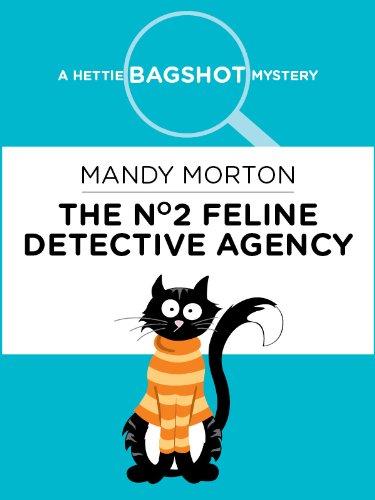
9780749019051 no2 feline detective agency

Welcome to the world of Hettie Bagshot and her best friend, Tilly, named for the author’s cats, in The No. 2 Feline Detective Agency.
And what a world it is! Not one for inserting a cat as a companion to a human, Morton has these cats inhabit their own world, complete with sly references and ripe with innuendo. In the true spirit of the books, sales will help feed, shelter and find loving homes for less fortunate cats.

Hettie Bagshot and Tilly live in the Butter Sisters Bakery back room, a perfect spot for warming ovens and replete with staff luncheon vouchers to hold hunger at bay as the dynamic duo await their very first case. (The idea for becoming a private detective occurred to Hettie when she was watching the long-running play A Mouse Trapped.) When that case turns out to be a search for missing dead cats, the reader knows the hijinks can’t be far behind.

Marcia Woolcoat, the matron of the Furcross Home for slightly older cats, promises a Dignicat burial when each cat’s time has come. Unfortunately for her, three recently deceased cats have been dug up and their corpses stolen, reminding Hettie of the infamous grave robbers Bert and Hair.

The fun keeps piling on as Hettie knows the Furcross cook from her touring days with her band, echoing Morton’s earlier professional days as a songwriter-musician. Marley Toke specializes in Jamaican food for the cats and grows her own catnip in the garden. With financial transactions providing rent and food for Hettie and Tilly, the fact that they have no idea what they’re doing seems besides the point.

Readers will meet Hettie’s plumber friend Poppy Phene, who drives the cats around in his van, while they chorus to Tabby Wynette’s version of “Stand By Your Van.” It’s not like Hettie is the FBI–the Feline Bureau of Investigation–so she has to use her wits to keep her retainer with Marcia going. The guests at Furcross range from the gardner, Digger Patch, to the dashing Marilyn Repel, late of The Prince and the Showcat, with star Larry O’Liver. Marilyn’s daughter, Cocoa is a fashion designer, working in concert with nail specialist Oralia Claw. And there’s the nurse, Alma Mogadon, who is keeping dark secrets of her own.

If Hettie has the brains, Tilly keeps the duo going on a daily basis with her housekeeping and secretarial chores. And don’t forget Tilly’s favorite author, mystery writer Polly Hodge, an homage to the cat of P D James, friend and mentor to Morton. Tilly’s reading Hodge’s newest: An Unsuitable Job for a Cat, along with others by Nicola Uptide and Alexander McPaw Spit.

Auntie M quite enjoyed the twisted plot–yes, there IS a plot–and a mystery to be solved in Hettie’s inimitable fashion, assisted by Tilly. There is genuine love between the two cats, and anyone how who isn’t enamored with the series needs to run right out and adopt a cat–or two.

Their world without humans is quite entrancing, from the details of the food eaten to the clothes worn, and Morton has a real winner for cat lovers everywhere. This delightful series is witty and smart. So enter the world of Hettie Bagshot and her best mate, Tilly, and be prepared to be besotted.

Look for Book Two, Cat Among the Pumpkins, later this year.

Nina Romano: The Secret Language of Women Sunday, Jul 12 2015 

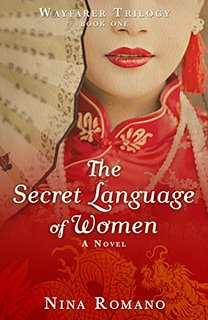
Please welcome author Nina Romano, whose novel THE SECRET LANGUAGE OF WOMEN is available for pre-order on Amazon right now. This is the first in her Wayfarer Trilogy and Book One is set in China during the Boxer Rebellion.

SecretLanguage

Horoscope Helped Me Develop a Realistic Character by Nina Romano

In The Secret Language of Women, the first book of my Wayfarer Trilogy, I decided my main character Lian’s horoscope would be the Year of the Dog. Knowing her horoscope facilitated my understanding the protagonist for this novel. Since the book is set in China, I used Lian’s Chinese Zodiac sign to learn about her qualities and personality traits intimately so that she appeared genuine yet flawed.

She is straightforward, a warm and caring being, courageous and intelligent. When a person born under this sign falls in love, they do not ever change. Lian fell in love with an Italian sailor, and remained faithful to that love, despite the fact that she was forced into a loveless marriage.

Moreover, having visited China, a unique experience that enabled me to see in person Hong Kong, Beijing and its fabulous Forbidden City and Tiananmen Square, I was able to envision Lian’s travels and travails in war-torn China, an era suffused in superstition, intrigue, culture and history.

I incorporated the themes and things I care about, such as: love, family, food and recipes, art, dragons and horses. Why? Simply because it’s straightforward to write what I know and have feelings for, and all of these ideas translated well even to a novel set in China during the Boxer Rebellion.

My own horoscope is the Year of the Horse, which was last year, so I made sure I had an important role for a horse in this novel, and I’m positive that my horoscope had incredible influence on my stars being aligned because I signed a contract for a three-book deal for my Wayfarer Trilogy with Turner Publishing.

While writing, I pictured Chinese New Year, the cleaning of the house, the distributing of red envelopes, and Lian cooking on a wok, serving rice to her beloved. This story takes place in China where live fish, most especially carp, are good Fengshui, which according to Wikipedia is a “philosophical system of harmonizing everyone with the surrounding environment.” For this reason, I put carp into a pool in the Summer Palace in Chapter 1, where Lian meets the love of her life.

Do I believe in the influence of horoscopes and how they can help round out a character? Of that there is little doubt. Here’s an excerpt from The Secret Language of Women:

The things that test you and are vanquished bring everlasting joy. The differences between traditional written Chinese and Nüshu, the secret language of women, made it difficult for me to learn it. My mother and grandmother could not write Chinese and learned Nüshu when they were young and wanted me to grasp it too. I cannot say they harped on me or were tyrannical, but I will say they were insistent, and for this I am eternally indebted. My mother said it challenged me because I wrote like a man and didn’t have to rely solely on Nüshu, the way they did to communicate with other women. The ideograms of Chinese correspond to a word or part of one, whereas each of the seven hundred characters of Nüshu represent a syllable— women’s language is phonetic, in Chéngguān dialect 城关土话, adaptable and pliant for singing, poetry and writing with such delicate strokes they appear as lines of feathers. Though learning was problematical, I mastered it, like I do all things I set my mind to conquer. At the time, I resented the study of it, yet I knew innately one day I would be grateful to possess the knowledge and skill of this secret language, which would offer me strength and solace for a lifetime. And although I was writing in Nüshu, for some reason, I signed with a flourish in Chinese: Wǒ Lián. I am Lian. 我连

nina
Nina Romano earned an M.F.A. in Creative Writing from FIU. She’s a world traveler and lover of history. She lived in Rome, Italy, for twenty years, and is fluent in Italian and Spanish. She authored a short story collection, The Other Side of the Gates, four poetry collections, and two chapbooks. A fifth collection is forthcoming from LLC Red Dashboard. Romano has been nominated twice for the Pushcart Prize. Her Wayfarer Trilogy is forthcoming from Turner Publishing. The first historical novel of the saga: The Secret Language of Women will be published in September 2015. Learn more about the author at: http://www.ninaromano.com

M. P. Cooley: Flame Out Sunday, Jun 28 2015 

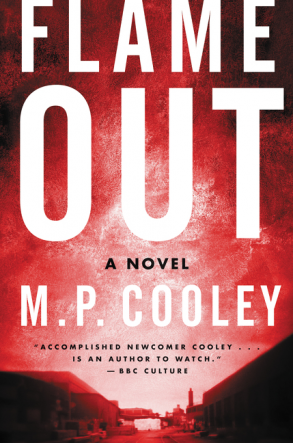
FlameOut
An upstate New York native, M. P. Cooley knows the area well and showed that in her debut Ice Shear, introducing police officer June Lyons. She’s back with its sequel, FLAME OUT and it’s every bit as good a story, set in the rustbelt area of Hopewell Falls, along the Mohawk River.

Auntie M must confess to a bit of added interest unknown to her until she read this book: one of her three sons is Director of the Cohoes Library, and so she knows the area and can attest that Cooley gets it the depressed neighborhoods just right.

The action sets in quickly, when June is out on patrol and she picks up the scent of gasoline as she rides near an abandoned factory. Knowing arson to be prevalent in the area, she calls the fire in and heads into the factory, over a gas slick, fire extinguisher in hand.

She follows the trail into the building and finds a running van door open, and as the flames reach the van, a woman screams and rises from the mattress stuffed in the back, her clothes on fire. June manages to rescue the woman, but her burns keep the victim in a coma and she’s not identified. Until she is …

That’s the beginning of a twisted and complex plot that will have fingers tracing back into Juen’s own family’s past and that of her partner, Dave Batko, and his family. June’s father is a retired cop who is helping her raise her daughter, yet this case brings back the history of his arrest of the factory’s owner, Bernie Mede, for killing his wife and child, despite their bodies never being found. Then while dismantling the burned factory, the body of a woman is found inside a sealed barrel, walled up inside the factory.

The assumption is that this is Mede’s missing wife, but the identity turns out to have more ramifications for June’s partner, Dave, one that will see him sidelined, with June working alongside FBI Special Agent Hale Bascom to solve the murder and arson–and to unravel the past.

A gripping tale with the setting playing an important role, this rural procedural starts out as a small-town police case and soon grows into a tale of corruption and coverup.

The Chessmen/ The Lynchpin: Jeffery B. Burton Sunday, Mar 22 2015 

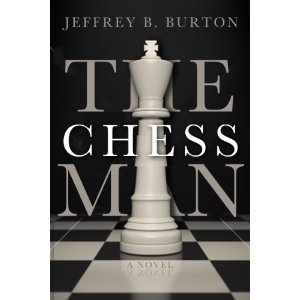
Chessman

Auntie M is happy to have interviewed author Jeffery B. Burton, whose first thriller, The Chessman could be a game of chess, with strategy needed when ex-FBI agent, Drew Cady, finds himself on the trail of serial killer who left him physically and emotionally damaged, the reason for his early retirement.

When an SEC commissioner is murdered, a chess piece, this time a clear glass queen, is found inserted into the wound. This is the MO of the serial killer known as The Chessman, Cady’s nemesis.

But is the notorious killer back at work? Or is someone copycatting his methods, and how will the real killer react? And how does this all tie in to a host of investment CEO’s who can out Madox the real Bernie?

Cady will find himself mixed up in a far-reaching conspiracy as the chase to save lives heats up and takes him on a roller coaster investigation to bring down all of the players in this fast-paced thriller.

With its mix of high action and mental machinations, the unraveling of this political and economic thriller will keep readers flipping pages until the climax.
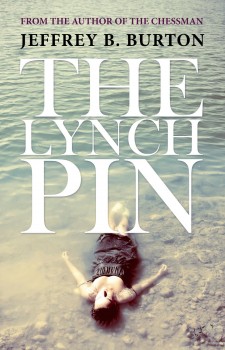
The-Lynchpin-by-Jeffrey-B.-Burton-e1424628005719

Burton follows this enthralling debut with The Lynchpin, out now, bringing back Cady and his fiancee’ Terri Ingram, just the right kind of love interest for the FBI agent who keeps trying to retire.

Recuperating from his injuries in the first book, Cady is helping Terri run her resort in northern Minnesota and works only part-time for the FBI’s Medicare Fraud Strike Force there. He should be low key now, he’s convinced, facing white collar criminals, and Cady is enjoying an easier lifestyle.

Then a young woman’s body is pulled from Lake Superior outside Duluth, and her manner of death bears the hallmark of a sadistic killer. Just as Cady is sucked back in to this investigation, he learns that his former boss, Assistant Director of CID Roland Jund, has killed a fellow agent and is accused of being a spy.

Cady knows nothing could be further from the truth, but even as he tries to clear Jund’s name, he must pursue this brutal murderer. Another fast-paced and compelling thriller.
Now let’s hear from Jeffrey Burton:

AUNTIE M: You Iive in the Minneapolis area as does some of my family. It seems such an innocuous, wholesome place for crime, yet John Sandford has made it seem downright obnoxiously filled with criminal activity in his Prey novels and you’re doing a grand job with Drew Cady in this second book. How much does writing about your own area feel comfortable and also spooky? Do you ever get hate fan mail from your neighbors?

JEFFREY BURTON: Nearly half of The Lynchpin takes place in northern Minnesota, predominantly in Duluth. I lived in Duluth for a couple of college years, absolutely loved the city, but noticed that on overcast, foggy or rainy days, if you spotted a mansion on a hillside with Lake Superior in the background, it had the look and feel of a castle from one of the old Hammer horror films (starring Peter Cushing or Christopher Lee) where Van Helsing and company would have to journey their way through in order to find the vampire’s lair. And though The Lynchpin doesn’t contain a supernatural element, it does contain a certain amount of creepiness, and I always thought it would be fun to weave that kind of imagery into a scene. Needless to say, the Duluth City Council will not be voting to have a parade in my honor anytime soon.

My favorite neighbor stopped by after reading one of my novels and said, “Jeff – you’re an awesome neighbor and I enjoyed reading your mystery, but, based on your writing, I think I’m going to get a restraining order.”

I like to think he was joking.

AM: Your publisher is from the Isle of Man; how did you connect?

JB: MP Publishing, based in the Isle of Man, is relatively new to the scene. They began acquiring and distributing e-books in 2008. They released their first original title, a touching collection of essays by the likes of John Grisham and Pat Conroy called Don’t Quit Your Day Job: Acclaimed Authors and the Day Jobs They Quit in 2010.

The first book in the Agent Drew Cady series, The Chessman, was published by MacAdam/Cage Publishing. MacAdam/Cage had some great success with novels like The Time Traveler’s Wife, but, sadly, David Poindexter, MacAdam/Cage’s President—nice guy and incredible mentor—passed away in 2013 and MacAdam/Cage spiraled into bankruptcy in 2014 (twists and turns not only exist in mystery novels). The Lynchpin then worked its way from MacAdam/Cage to MP Publishing through mutual editors and I signed with MP in the fall of 2013.

AM: An an author I tell people all that time that each writer must find the routine that works for him or her and that these vary widely. Tell readers what a typical writing day for Jeffrey Burton is like.

JB: I’ll jot ideas down on a piece of scratch paper and toss them in my idea drawer. Then I’ll let them ferment for a while in order to frame the rest of the story. A few years back I’d jotted down “serial killer in hot pursuit of his own copycat.” Originally it was going to be a short story, something like Poe’s “The Cask of Amontillado,” where the killer has caught his copycat and, while slowly obtaining his vengeance, he explains exactly why the copycat should never have insulted him by stealing his M.O. But the story kept getting longer and longer, and eventually it grew into The Chessman.

I’m a bit of a binge writer where, if I get in the zone, twelve hours fly past and I have to remind myself to let the dogs out. Usually this occurs when I get it stuck in my noggin that it’s of paramount importance that I complete a series of related scenes or chapters before my ideas fly away or my brain leaks out of my ear. Sometimes this goes on for days, which is a good thing as I’m able to make huge strides. And the dogs have for the most part been good – only a few messes.

AM: As a mystery writer, I know the ending when I start: who is the murderer and why–but I leave what I call the ‘muddled middle’ to figure out as I write. Are you a writer who plots and outlines the entire novel or do you allow for happenstance?

JB: When I begin writing a mystery novel, I’ll come up with a concept that I feel would be interesting to pursue. I’ll put together an informal outline as everything is subject to change once I begin writing. Sometimes I’ll head off in a completely different direction – uncharted territory – and then I’m forced to go back and update my outline.

AM: What’s on your nightstand To Be Read pile?

JB: I’m all caught up on Michael Connelly, Lee Child, John Sandford, Gillian Flynn, and Barry Eisler, but I’ve just begun reading novels by James Ellroy and William Kent Krueger. Plenty of page-turners to keep me up all hours of the night.

AM:Finally, what’s next for Drew Cady?

JB: I’ve begun work on the next Drew Cady mystery, tentatively titled The Eulogist.

JBurton Author Bio: Jeffrey B. Burton’s mystery/thriller, The Chessman (a serial killer is in hot pursuit of his own copycat), came out to excellent reviews in 2012. Jeff’s short stories have appeared in dozens of genre magazines (mystery, horror, sci-fi, literary). Jeff’s short story, “The Soul Fish,” received Honorable Mention in Ellen Datlow’s Best Horror of the Year in 2010. “High Score” and “In This the Era of the Great Wilting” were both published in Murky Depths in the time period that Murky Depths won the British Fantasy Award for Best Magazine. “The Mourning” and “Letters of Transit” were miniStory winners in the MNArtists.org MNLit contest in 2008 and 2010, respectively. Jeff is an active member of the Mystery Writers of America (MWA), the Horror Writers Association (HWA), and International Thriller Writers (ITW).

« Previous PageNext Page »