Merry Christmas! Friday, Dec 25 2015 

Yes, it’s Christmas, and despite being mostly in a recliner with an ice pack on her operated back, Auntie M has found her holiday spirit. And to that end, she’s sharing two books with you that are perfect for the season.

AwayManger
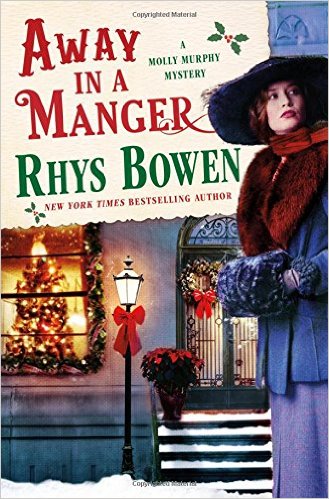
Rhys Bowen’s new Molly Murphy Mystery, Away in a Manger, is filled with Bowen’s usual knack for historical details that bring Manhattan in 1905 to life.

Molly has her own family: her husband, Daniel, a police captain whose business Molly would greatly like to become involved in; their baby son, Liam, and their 12 yr-old ward, Bridie, so Molly is looking forward to these holidays, even with Daniel’s mother there helping out.

A visit to see FAO Schwartz sets the tone for the little family. Then a set of carolers in their New York City neighborhood adds to the festiveness, and one young girl with the voice of an angel catches Bridie’s attention. The family try to help by giving the girl a quarter, which an older boy immediately takes from her.

This is her older brother, and they’ve emigrated with their mother from England, only to have their mother disappear. The aunt they are staying with mistreats them, yet Molly soon sees these children are educated and have been given a proper upbringing before coming to America. So what has happened to their mother?

Molly’s efforts to find the children’s mother soon leads to a tale of family intrigue and probably murder, with more planned unless Molly can stop the villain and save the two children in time to be home to celebrate Christmas. Vintage Bowen, nicely plotted and atmospheric.

OrnamentsDeath

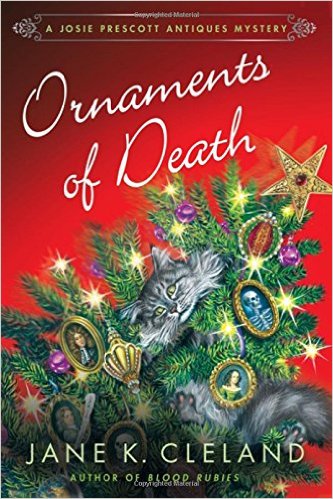
Jane Cleland’s Ornaments of Death is the next offering perfect for the holidays. The tenth Josie Prescott Antiques Mystery blends her own knowledge of antiques with a mystery during the Christmas season.

Josie’s New Hampshire Antique shop in the coastal town of Rocky Point is dressed as a winter wonderland for her annual holiday party. Josie is excited as Ian Bennington, her distant relative, will be there for the holiday. The recently discovered descendent is the hit of Josie’s party and gives her ties to a royal mistress.

And then Ian suddenly vanishes, and it’s soon discovered that he’s not the only thing that’s missing: two valuable watercolor miniatures Ian had given his daughter are also missing.

It will take Josies’ knowledge of antiques to track the miniatures and wend her way to Ian and solve the dual mystery. A perfect holiday treat for cozy readers who enjoy antiques and New England.

Happy Holidays and Merry Christmas from Auntie M to all of you! Enjoy your celebrations and take time to read a good book~

Triss Stein: The Erica Donato Mysteries and Brooklyn Secrets Sunday, Dec 20 2015 

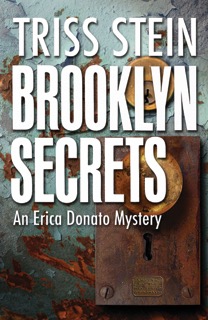
Please welcome Triss Stein, who’s talking today about the importance of setting, something Auntie M always starts with and the newest in her series, Brooklyn Secrets:

Brooklyn Secrets Cover

Choosing a Setting

A mystery series where the place is part of the story is great fun to read and to write. My fascination with Brooklyn, where the diverse neighborhoods often seem like a collection of small (well, small-ish), towns has lasted a long time. Since change is the only constant in any big city, I don’t think that fascination will go away before I run out of stories to tell.

Choosing the exact setting for each book takes some thought, or perhaps a flash of inspiration. The neighborhood, now, is where and when the story takes place, but my heroine, Erica Donato, is a graduate student in urban history and so there is always a mystery from the past, too. The neighborhood setting needs to have scope for both.

Brooklyn Bones, the first in the series, was easy. I just looked outside my front door. Park Slope, where I live, is a lively and beautiful corner of Brooklyn which has gone through a couple of decades of steady gentrification, (for good or ill). However, it was not always the center of chic it has become (Seriously! They think this in Paris!) and I was here just as it was changing. It was not hard to find a story from that darker time.

Brooklyn Graves was directly inspired by a place, beautiful and historic Green-Wood Cemetery, and a series of news stories about priceless stained glass windows being stolen from now neglected, but once affluent, churches and mausoleums. I think any mystery writer, especially one of with a taste for history, would clip those articles. And ponder.

The setting of the new book, Brooklyn Secrets, has raised more questions. It is Brownsville, a remote corner of Brooklyn that is now, and always was, unlovely, uninspiring, and poor. It was built as an extension of the overcrowded, immigrant Manhattan neighborhood the Lower East Side. The shoddy housing of years ago has been long replaced by projects, perhaps equally shoddy; the color of the skin and the accents of the immigrants is now different and guns have changed the nature of everyday crime, but in many ways it is not different at all. Crime, boxing and education remain the roads out and often, the best choice is not even clear.

I started with Erica writing a chapter of her dissertation about crime in Brownsville’s history. In mid-20th century America, it became famous as the home of Murder, Inc, enforcers for organized crime in its heyday. She sort of overlooked the point that in writing about how neighborhoods change, she would also have to deal with Brownsville now. I overlooked it, too, for a while. The challenge became finding a reason for Erica to continue to be involved in the present day mystery I was trying to create.

Did I solve it? Did I weave together the parallel stories of how young people, now and back then, try to find their way when there is no way? Did I write about a place as an outsider and get it right?

Readers, your thoughts will be most welcome.

photo15
Triss Stein is a small–town girl from New York farm country who has spent most of her adult life in New York the city. This gives her the useful double vision of a stranger and a resident for writing mysteries about Brooklyn neighborhoods in her ever-fascinating, ever-changing, ever-challenging adopted home. In the new book, Brooklyn Secrets,s Erica find herself immersed in the old and new stories of tough Brownsville, and the choices its young people make.

Kate Charles on The Detection Club Wednesday, Dec 16 2015 

The wonderful Kate Charles, mover and shaker with Eileen Roberts at St. Hilda’s Mystery and Crime Conference each year, brings readers a view inside the glorified Detection Club. Here is her report on their latest meeting:

I was immensely privileged, in mid-November, to be present for an historic moment in the annals of crime fiction, when the eighth President of the prestigious Detection Club took over the capacious red robe of office – a robe which has been worn by G.K. Chesterton, Dorothy L. Sayers and Agatha Christie in their time, and most recently by Simon Brett.

The new President is Martin Edwards, a writer who is passionately interested in the history of the Detection Club, serving as its archivist for the past few years and recently publishing a non-fiction book on the subject, The Golden Age of Murder.DC 7Martin Edwards with Simon Brett: the torch and the red robe is passed.

As Martin would tell us, the Detection Club was founded in 1930 (or perhaps 1932!) as a dining club for the prominent crime writers of the Golden Age. Its rituals, including an arcane initiation rite, date from those early days, and were once cloaked in secrecy.

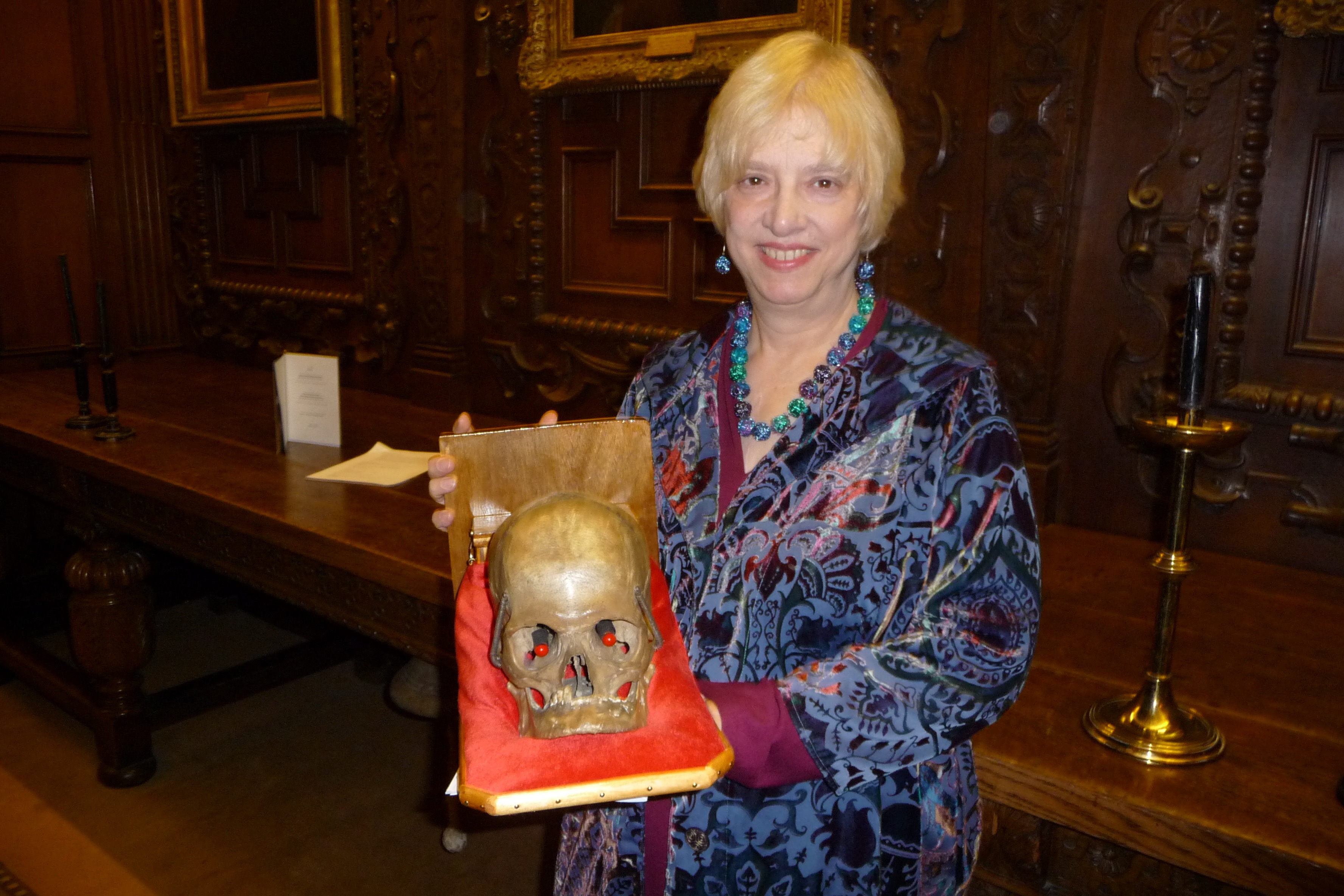
Now, though, in this age of openness (and Wikipedia!), anyone with a bit of curiosity can delve into its mysteries. I don’t think I’ll be struck off as a member for revealing that, in a solemn candle-lit ceremony, new initiates promise that their detectives will not resort to ‘Divine Revelation, Excessive Sanguinity, Lucky Guesses, Mumbo Jumbo, Jiggery Pokery, Coincidence or Act of God’, and that they swear their loyalty to the club on Eric the Skull, with ‘terrible penalties’ threatened for breaking their oath.Kate Charles with Eric the skullKate at her initiation with Eric the Skull.

Members of the Detection Club gather three times a year for congenial dinners in London, as the club continues to fulfil its original function of providing a social outlet for solitary crime writers. These days, though, the writers are far more diverse than those of the Golden Age, as the genre has expanded beyond its cosy beginnings.

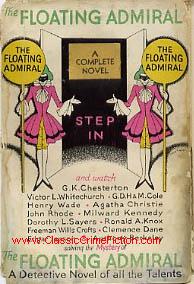
This diversity presented a challenge recently, when the club embarked on a project of creating a serial novel in the grand tradition of the original Detection Club’s The Floating Admiral. As in the original project, fourteen writers contributed, and a good time was had by all. Having read (and loved) The Floating Admiral in my youth, I felt it a huge privilege to be involved in this. The Sinking Admiral (inevitably!) will be published in 2016 – another milestone in the ongoing history of a fascinating institution.floatingadmiral

Kate-Charles
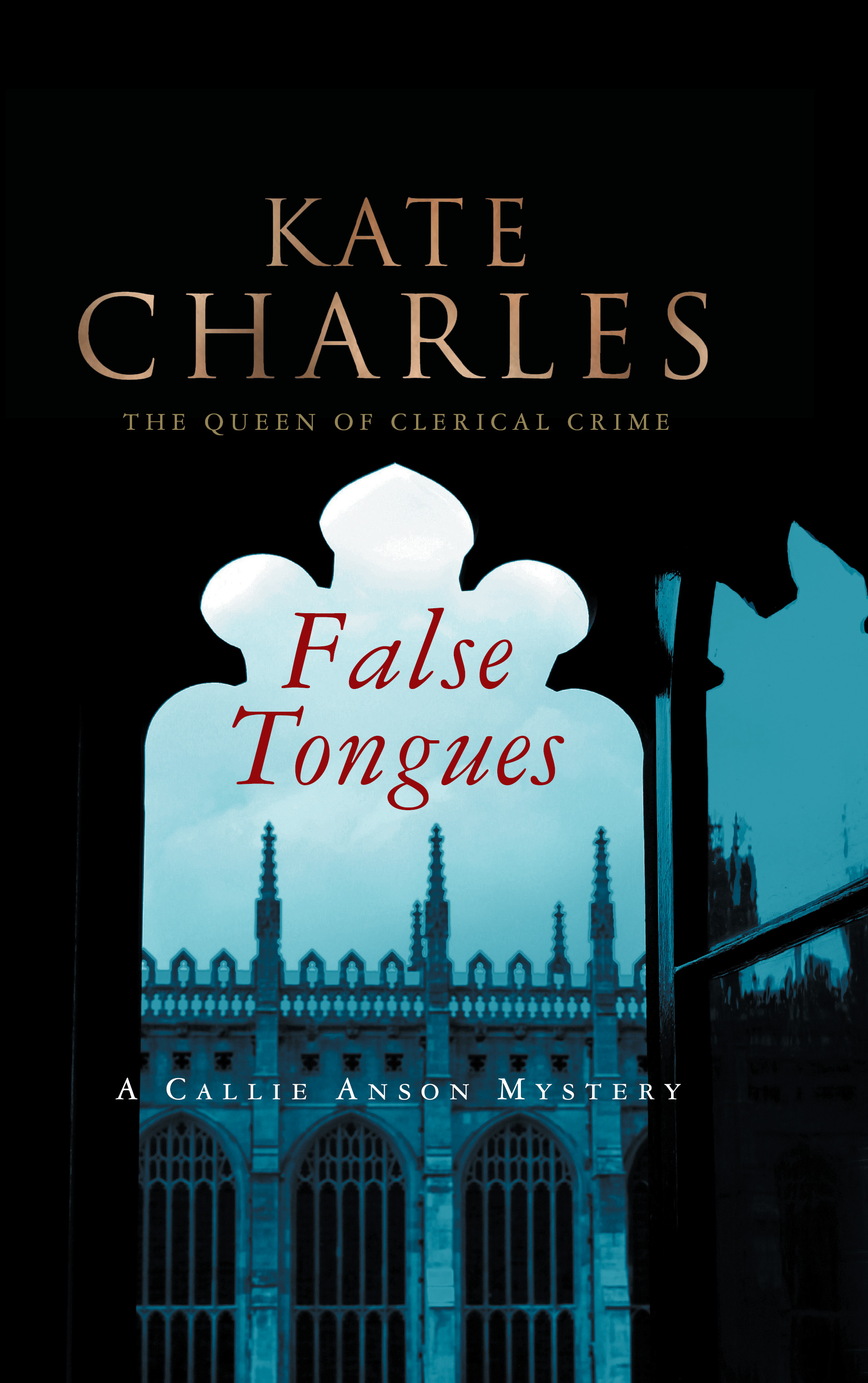
Kate Charles is best known for her ecclesiastical mysteries. These include the Book of Psalms series and the Callie Anson series. Her latest book is False Tongues. False-Tongues-cover
She is a former Chairman of the Crime Writers’ Association and the Barbara Pym Society.

John Bainbridge: A Seaside Mourning Friday, Dec 4 2015 

John Bainbridge and his wife Anne are historians and researchers extraordinaire who use their own history in the Inspector Abbs mysteries. Here’s the story of the background to A Seaside Mourning
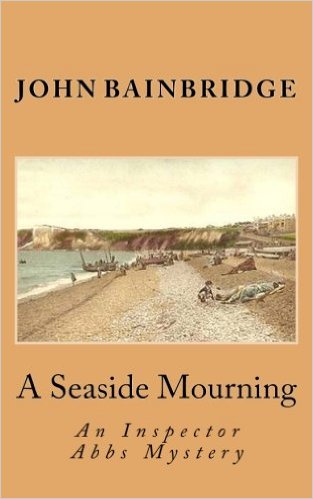
Seaside

The Background to A Seaside Mourning
Our Victorian murder mystery is set in the fictional town of Seaborough, a small resort in Devon. The plan was to think hard about coming up with a suitable name. However around the same time we were researching John’s family history. When we found that one of his ancestors had the unusual first name of Seaborough, it seemed exactly right.

In the novel Seaborough is in East Devon, an area often overlooked by holiday-makers who travel to the better-known parts of the English Riviera and the South Hams. It is a timeless landscape of rounded hills, old hedgerows, meadows and heaths; villages with thatched cottages and a few quiet seaside resorts. Their railway stations and branch lines are long gone.

The unspoilt coastline has red sandstone, zig-zag cliffs gradually fading to chalk near the county border. Together with the neighbouring county of Dorset, they make up the Jurassic Coast, Britain’s first Unesco natural world heritage site. We know the area well from walking the old footpaths and exploring the villages of my forebears. One of my ancestors was a Victorian police constable, probably much like the ones in the story.

Walk through the streets of any British seaside town, trace back the architecture and you’ll most likely find the beginning was a fishing village. The rise of the seaside resort – offering buildings and entertainment designed to attract tourists – gradually began in the eighteenth century. At that time the concept of an annual holiday for the masses didn’t exist. The wealthy tended to travel abroad on the classical Grand Tour or over-winter on the Continent. Working people had neither the money nor paid leisure to explore new places.

From the mid-1700s physicians began questioning whether sea-water might have healing properties similar to those of spa water. An enterprising Sussex physician Dr. Richard Russell set up a house for patients in the fishing village of Brighthelmstone in 1753. ‘Taking the waters’ at inland spa resorts was fashionable and money was to be made from rich invalids – and hypochondriacs – so there may have been some self-interest involved!

Dr. Russell published works on the rejuvenating powers of sea-bathing and drinking salt water, claiming his treatments cured enlarged glands and all manner of ailments. As well as swimming, his patients were immersed in baths of salt water and encouraged to ‘promenade’ in the sea air. This quickly became prevalent medical opinion.

Just as today, landowners and speculative builders were quick to spot a business opportunity. Scarborough on the coast of Yorkshire had the best of both worlds. Mineral water had been discovered there in the early seventeenth century and they had a flourishing spa by the beach. Wheel out the bathing-machines and the town was well-placed to develop into England’s earliest seaside resort.

Villages along the south coast in particular offered a mild climate and an easier journey from the capital. They began to throw up lodgings suitable for well-to-do visitors. Theatres and assembly rooms were built, promenades and sea-front gardens laid out. New resorts advertised their picturesque scenery, carriage tours and health-giving benefits.

Jane Austen satirised this new enthusiasm in her last unfinished novel, Sanditon. Interestingly Reginald Hill did a witty take on Sanditon – one of his lovely literary jokes – in his Dalziel and Pascoe novel A Cure For All Diseases. Sidmouth in East Devon is a possible contender for Austen’s Sanditon, though several resorts also fit the clues. It’s most likely that Jane Austen was thinking of more than one place. The Austens enjoyed holidaying along the Channel coast. Their stays at Lyme Regis in 1803 and 04 famously inspired part of the setting of Persuasion.

Fashion played a part in putting a watering-hole on the map. When George III’s physicians recommended he try the sea cure in 1788, he chose the village of Weymouth on the Dorset coast. Liking its sheltered sandy bay, he returned many times, making Weymouth one of England’s oldest seaside resorts.

His son, later the Prince Regent, vastly preferred Brighthelmstone, nearer London. Under his patronage it expanded rapidly to cater for his younger and wilder set. It has never lost its stylish and racy reputation. The spelling changed to suit its pronunciation and a new saying became widespread. The wealthy patient often tried the cure of Doctor Brighton.

Some towns started out as the vision of a single developer. In the 1780s a wealthy merchant called Sir Richard Hotham bought up land around the Sussex fishing village of Bognor. He intended to design a purpose-built resort modestly named Hothampton and entice the King away from Weymouth, making himself a second fortune. George III never obliged and the town reverted to Bognor soon after Sir Richard’s death. He did leave the townspeople several fine terraces and a splendid park.

New resorts received a boost to their fortunes when the Napoleonic wars closed the Continent to travellers. Prosperous invalids and people living in seclusion often settled by the sea in smart new villas for the gentry. Lady Nelson came to live at Exmouth in East Devon, after Nelson’s association with Lady Emma Hamilton became public knowledge.

Hunstanton in Norfolk came about as the scheme of one man, though much later. In 1846 Henry Le Strange, an architect and local landowner built a hotel on an empty headland as the flagship of his new town. A typically enthusiastic Victorian ‘entrepreneur’, he gathered investors to fund a railway line from King’s Lynn to his planned site, which was named after the nearby village of Old Hunstanton. It took another 16 years before the railway arrived and further building work began.

Many resorts can date their growth to the arrival of the railway. It became the custom for middle-class Victorian families to send their children to the seaside with nannies and nursery-maids. The first pleasure pier had been constructed at Ryde on the Isle of Wight, as early as 1814. Almost a hundred more followed, mostly in England and Wales. The Bank Holiday Act of 1871 gave workers four days off – five in Scotland. On Whit Monday and in August, railway companies laid on ‘Bank Holiday Specials’ for the day-trippers pouring into popular resorts. At last accessible for the pleasure of ordinary working people, the seaside resort as we know it today had arrived.

In A Seaside Mourning, Seaborough is expanding. It is autumn 1873 and the town has its railway branch line. New houses are going up and some businessmen are keen for a pier and other amenities to be developed.

Many of the characters are on the make, jostling for more money and social position. Some are fighting for security in a precarious society shadowed by the workhouse. Even Inspector Josiah Abbs is not safe. This was an age when policemen were not considered gentlemen. A detective was treated as a distasteful necessity, an embarrassment who should call at the tradesmen’s entrance.

Abbs cannot summon suspects to interview if they are his social ‘betters’ and he must catch a murderer without making enemies. Dismissal without a character is always a threat. He and his young side-kick Sergeant Reeve are both outsiders in Devon. They don’t quite know what to make of one another yet but they’re determined to solve the case somehow…

Our novel “A Seaside Mourning” is now available in paperback and on most eBook readers. Just click on the link below for more information:

And with Christmas on the way, If you enjoy curling up by the fireside with a seasonal mystery, you might like to try our Inspector Abbs novella A Christmas Malice. Set in 1873 during a Victorian country Christmas in Norfolk, our introspective sleuth has a dark puzzle to be solved. As is traditional at this time of year, there will be hope and a happy ending of a sort.

D. E. Ireland: Move Your Blooming Corpse Sunday, Nov 29 2015 

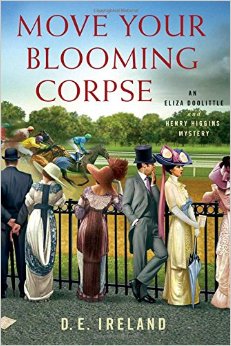
MoveBloomingCorpse
D. E. Ireland burst upon the scene with last year’s witty Wouldn’t It Be Deadly, bringing Eliza Doolittle, Henry Higgins and the cast familiar to readers from Pygmalion and My Fair Lady to life. The sequel, Move Your Blooming Corpse is every bit as charming and witty, taking readers to Royal Ascot and into the world of horse racing.

It’s also the time of the Suffragette movement, with emotions running high, a key element in the mystery when a young woman’s body is found murdered in one of the stables. That she is part owner of Donegal Dancer, the same racehorse that Eliza’s father owns a part of, brings out Eliza’s worst fears: Is her father in over his head and now in jeopardy? Or was the victim, a married woman known to be having affairs with at least two other owners of the race horse, responsible for her own death?

Eliza and Higgins join forces with her Scotland Yard cousin Jack to investigate before another murder takes place. But will they be soon enough? There will be jealous spouses and a young man mad with grief; there will be more races, boating regattas and picnics as the duo race against time to try to keep not only Alfred Doolittle safe, but to find the real culprit just as Eliza becomes embroiled in the Suffragette movement and finds herself learning jujitsu moves>

The writing team get the period details just right, from a the clothing down to the food to the way Society and it mores affected behavior at a time when the world was changing and not everyone appreciated the change. And they keep the characters we’ve come to love true to their nature and their actions, with their dialogue recalling the originals. Take a loverly step back in time with Eliza and Henry Higgins and the crew.

Robin Burcell: The Last Good Place Sunday, Nov 8 2015 

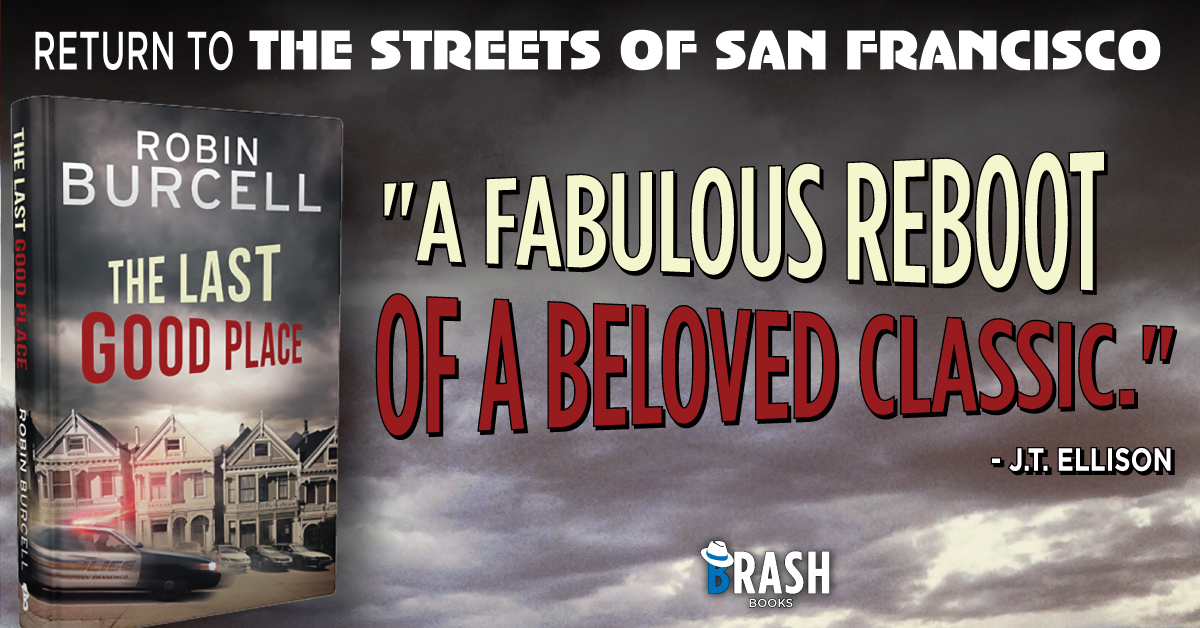
Robin Burcell has written a rebook of the Carolyn Weston books that formed the storyline for The Streets of San Francisco, one of Auntie M’s favorite shows in the 1970s.
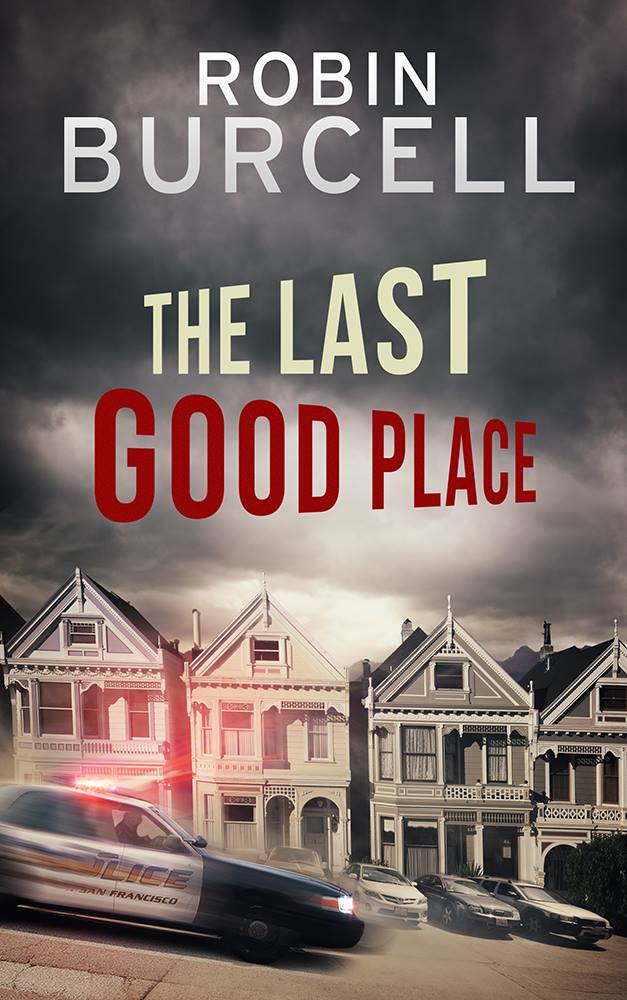
The Last Good Place

Way back in the 1970s, an author named Carolyn Weston penned the novel POOR, POOR OPHELIA. That book was the basis for the hit television show, The Streets of San Francisco. I loved that show, and so when Brash Books asked if I’d be interested in continuing the late Weston’s series, I jumped at the chance.

Besides, how hard could it be? I thought. Well… A lot has changed since the 1970s, especially police work. But I was up to the challenge, so I read the three Weston novels and made the startling realization that they were very different from the TV show that I remembered. Or rather Weston’s cops, Al Krug and Casey Kellog, were different from my memory of the TV cops portrayed by Karl Malden and Michael Douglas.

What’s a writer to do? I had a choice about leaving these cops in the 70s, but I wasn’t so sure I wanted to write historical fiction. I started as a cop in 1983 and I’m very happy with the progress departments have made over the years. I had no wish to revisit that time period—and so we made the command decision to update the series to modern day.

LastGoodPlace-1200x628

My personal belief was that Al Krug, the grizzled, older cop Weston wrote as a foil to the younger, college-educated rookie, Kellog, was right for the time period in which he was created. Krug was a kick-ass-take-names-later sort of guy. Unfortunately that wouldn’t fly today, and so I knew I was going to have to temper Krug’s character—to keep him from getting fired—making him more of a mentor to Kellog, but one who was still very much old school.

And then there is the younger Kellog, fresh out of college and still living at home according to Weston’s version. The biggest problem there was that today, Kellog would have to put in at least a decade on the streets before he ever got to homicide, and so I fast-forwarded his time clock, giving him the needed years on the street (and moved him out of his parents’ house!) so that he had the experience to work homicide.

The fun part of the series was melding Weston’s characters with my memories of the television show. I wanted to bring in the best of both worlds. In the end my goal was to write a great police procedural that would pick up where the old books left off, but wouldn’t be out of place in today’s world.

Anyone else out there remember The Streets of San Francisco?

Burcell 2013 Book Photo

Robin Burcell spent nearly three decades as a police officer, hostage negotiator, criminal investigator, and FBI Academy-trained forensic artist. Her most recent book, THE KILL ORDER, was named one of Library Journal’s Best Thrillers of 2014.
Her upcoming book, THE LAST GOOD PLACE, is a continuation of the Carolyn Weston police procedurals which were the basis for the TV show THE STREETS OF SAN FRANCISCO.
More information can be found on her website at: http://www.robinburcell.com/

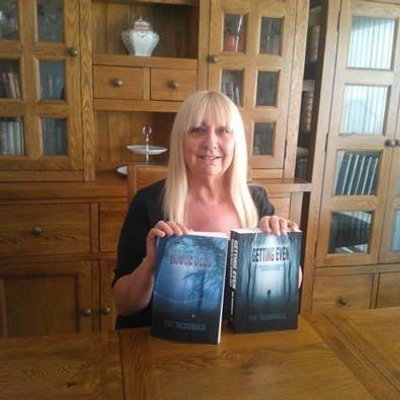
Pat McDonald: The Blue Woods Trilogy Sunday, Oct 25 2015 

From time to time Auntie M likes to mix things up. So today instead of a formal review, she’s introducing readers to a writer they may not have found. And being a series writer and a fan of reading them, Pat McDonald has a great one to seek out. Here’s her background and then in her own words, get to know this remarkable woman who has persevered despite a heavy medical condition to continue to write.

Pat_McDonald
British Crime Author Pat McDonald lives in a rural part of the Midlands, United Kingdom. She has an extensive career working as a researcher, project manager and programme manager within the British National Health Service and in law enforcement and the criminal justice system.

Her work encompassed Heart Disease, Mental Illness and Learning Disability (her formal publications under the name Pat Mounser). Her lifelong ambition has always been to become a writer of fiction; after all, fiction is a reflection of life of which she admits she is a long time voyeur.

“I am a people watcher, and nothing pleases me more than sitting in a public place observing the world as it passes by – hence my penchant for writing my novels in my favourite coffee shop, where I have met some extraordinary people.” She is now a full time novelist.

Her crime trilogy (nicknamed ‘The Blue Woods Trilogy‘ because of an over-active imagination at disposal of bodies!) consists of (1) Getting Even: Revenge is best served cold, (2) Rogue Seed and finally (3) Boxed Off.

Pat’s fictitious detectives D.I Luke Wariner and D.S Aidey Carter tackle a range of Major Crimes against a background of corruption and deception involving some of their own officers. Boxed Off, published in December 2014, brings the plot to its conclusion – or does it? “I only meant to write one book,” Pat confesses, “but I have a real difficulty in ending stories!” Well crime does go on!

Her current work in progress is a move to a different genre. It’s a Young Adult paranormal thriller about stalking, based in the North of Wales, UK, and has a hint of historical W.W 1 drama that is surprisingly haunting!

‘The Blue Woods Trilogy’

When I began writing fiction, I started by writing snippets of my own life which if I ever decide to write an autobiography would contribute as the basis to such a book. But I was far more interested in other people, having spent most of my life watching the world go by with all of its most interesting people.

That is why almost all of the ‘Blue Woods Trilogy’ was written in a coffee shop and other public places. Some of Getting Even was written on a plane out to Dubai and in United Arab Emirates hotels, what I call ‘real’ research; I was there so it had to go in the book.

I love to create my characters from snippets of conversations with strangers; such a character was Hugo Bott, the most unlikely person to become a Police Constable. Having spent seventeen years meeting police officers, I can honestly say my characters are my own creation, within the police setting I knew very well.

I like to take a real situation or setting and say “what if……” just for the sheer hell of it. I loved creating Hugo Bott because he is different with a twist and no psychosomatic testing in the days he was appointed, he became one of my characters.

I have been accused of having too many characters and hence too many personal situations, when what the reader wants is only the action and the thrills. My books are real life with a twist, and my disappointment with most crime books, films and dramas is that the police officers don’t seem to have a life outside of their work. Police officers do. Not only do they have to balance their home life against their work, it can often get in the way and influence it. One impacts on the other. I have tried to reproduce this and then add the – what if.

I don’t really do happy endings, life is not like that or if it is then I would say that these were charmed lives and I have yet to meet someone who has one. It doesn’t mean that my trilogy is all doom and gloom, far from it. I like to weave a theme through each one. The first is about revenge, but explores all facets of it; part of which is life has a natural justice. Rogue Seed was, yes, botanical – a plant growing in the wrong place by force of nature; but also it explores what would happen if a person grew in the wrong place and of course ‘Going Rogue’ is the police concept of going bad. Boxed Off was about finishing the books for me, making one’s life neat and tidy, but also about containing – a body, a person or in one scene people at a ‘rave’.

Finishing the trilogy left me wondering about a character in the first book who drops out of the plot. Needing to know what happened to her became my fourth book (although separate); Breaking Free allowed me to find out. You see I am a ‘free flow’ writer. I don’t plan my plots–they evolve. And so I decided what would happen if she, Livia Morrison, was to come back to the UK? It was my opportunity to explore another genre and is a mix that led me find my ending in Wales at Caernarfon Castle where the Royal Welsh Fusilier’s have their exhibition. This book is a combination of paranormal, historical and crime I wrote for my granddaughters and will be out during 2015.

I am currently editing this book whist I convalesce from a recent operation to remove a brain tumour and take up a new venture. Oh, did I mention the one I’m also writing? It is a humorous look at crime from the villain’s side…..working title ‘A Penny For Them.’

You can find Pat and her books here: Amazon: http://www.amazon.co.uk/Pat-McDonald/e/B00R372WK4/ref=sr_tc_2_0?qid=1434467288&sr=1-2-ent

Face Book: https://www.facebook.com/pages/Pat-Mcdonald/502374626484358?ref=bookmarks

Twitter: @issyblack

Susan Bernhardt: The Kay Driscoll Mysteries Sunday, Sep 27 2015 

Just in time for the holidays – The Kay Driscoll mystery series, cozy mysteries for Halloween and Christmas.

Ginseng
The Ginseng Conspiracy (A Kay Driscoll Mystery Book 1) – http://amzn.to/1oPTsiw – On her way to attend a Halloween Ball, Kay Driscoll, a newcomer to town, witnesses the murder of a local professor. When the official coroner’s report rules the cause of death to be accidental and the community accepts the judgement, Kay decides to uncover the truth for herself. Through her personal investigations, Kay exposes a complex conspiracy, woven deep within the thriving local ginseng industry, that involves some of the more prominent figures and families of Sudbury Falls.

With her new friends, the free-spirited herbalist Deirdre and the untamed modern woman Elizabeth, Kay discusses new clues over tea and pastries at Sweet Marissa’s Patisserie, their crime-fighting headquarters. As Kay gets closer to the heart of the conspiracy, additional murders happen in quick succession. Before long, Kay learns that the villains are gunning for her, too. Phil, her musically talented but preoccupied husband, determined to keep her safe, withholds from her the one thing she needs most: the truth.

MurderUndertheTree_1600x2400__LargeDull

Murder Under the Tree (A Kay Driscoll Mystery Book 2) – http://amzn.to/1tC5krR – While Kay attends a Christmas tea at Hawthorne Hills Retirement Home, a beloved caretaker dies from an allergic reaction to peanuts. When the official coroner’s report rules the cause of death to be accidental, a small group of residents suspect foul play and call upon Kay to investigate.

Kay uncovers sinister plots of fraud, revenge, and corruption at the Home. During this season of peace on earth, good will to men, additional murders occur. Despite multiple attempts on her life, and with the support once again of her best friends, Elizabeth and Deirdre, Kay continues her quest for bringing justice for the victims. Kay’s first Christmas in Sudbury Falls is an unforgettable one, with equal amounts of celebration and danger. ‘Tis the season to be sleuthing!
TheGinsengConspiracySusanKBernhardt.jpg
Susan Bernhardt is the author of The Ginseng Conspiracy and Murder Under the Tree, the first two holiday novels involving amateur sleuth, Kay Driscoll. Susan’s hometown in northern Wisconsin was an inspiration for the quaint setting of her mysteries. Her third Kay Driscoll mystery, Murder by Fireworks, is due out this Fall.

An avid reader of mysteries, Susan is a member of Sisters in Crime, Inc. and the Wisconsin Writers Association. Her holiday mysteries are listed on Cozy-Mystery.com and Cozy Mysteries Unlimited under Halloween and Christmas.

When not writing, Susan loves to travel, bicycle, kayak, and create culinary magic in her kitchen. She works in stained-glass, daydreams in her organic garden, stays up late reading, and eats lots of chocolate.

Maia Chance: Come Hell or Highball Thursday, Sep 24 2015 

While Auntie M is off on the first leg of a book tour for DEATH UNSCRIPTED (now available from Bridle Path Press or on Amazon, soon to be Kindle), please welcome author Maia Chance and her third mystery: Come Hell or Highball, to talk about forcing creativity. And be ready for a treat, folks–this is cute!

Come Hell or Highball

On Not Reinventing the Wheel

When I was in elementary school and junior high, I enjoyed competing (oh so nerdily) in something called Odyssey of the Mind, a sort of team-oriented creativity Olympics for kids. One of the coolest things I learned from O. M. w
as that you can deliberately mobilize or even, under pressure, force yourself to be creative.

Sounds so . . . inartistic, doesn’t it? I mean, what about the fairylike muse and her feelings?

Forget her. When you have work to do, creative work, and if you’ve got deadlines looming, you need tools, not temperamental pixies.

What I took away from all my time in Odyssey of the Mind (which is evidently still going strong) is that if you can’t think of a new idea, you can sort of smush two things together, and if you push hard enough, voilà!, there’s your fresh new idea. It’s like plate tectonics creating new mountains ranges.

For instance:

Random thing 1: DOG
Random thing 2: CHOPSTICKS

New idea: OMG! A children’s picture book about a King Charles Spaniel food critic. And his fatal flaw is dipping his ears in his soup. (I swear I just thought of that right now. I kind of like it. . . .)

It’s mash-up. Pastiche. Synthesis. Synergy. And this is, at its heart, what I think the creative process really is. Although our culture clings to a fantasy of an independent genius who is capable of reinventing the wheel (and isn’t that the Apple company’s whole shtick?), older ways of Making Stuff were more communal.

Fairy tales, for instance, rarely have a single author but are instead the culmination (still going on today!) of long traditions. Some historians even think that Homer was (is?) really an amalgamation of an oral tradition. And really, anyone working inside a genre is simply building upon and tweaking the ever-changing conventions and reader expectations of their genre. Cozy mystery writers like me have Agatha Christie omnipresent, hovering over our writing desks like the North Star.

Pablo Picasso said, “Good artists copy, great artists steal.” First of all, if that’s how PICASSO worked, then by gum, it’s good enough for me. Second, let’s unpack this. To me, this quote means:

Borrowing is kind of . . . wimpy. Borrowing is tentative and all “I PROMISE I’ll give it back and I won’t rip it or stain it. You’ll never even notice it’s gone!” Borrowing results in things like those Sweet Valley High books, all written by different people but with Created by Francine Pascal stamped on their covers. Ugh.

On the other hand, stealing means you take it and make it your own, with audacity and aplomb. You don’t give it back because you can’t give it back, because by the time you’ve had your way with it, it’s unrecognizable.

Speaking purely for myself, I am wholly incapable of producing anything, and I mean anything, out of thin air. Instead, I absorb, fragment, synthesize, and repeat. Over and over. Until I have something to work with.

MChance_Photo2_150px_72dpi

Maia Chance writes historical mystery novels that are rife with absurd predicaments and romantic adventure. She is the author of the Fairy Tale Fatal and The Discreet Retrieval Agency series. Her first mystery, Snow White Red-Handed, was a national bestseller and her latest releases are Cinderella Six Feet Under and Come Hell or Highball.

Oh, a creative influences include P. G. Wodehouse, Janet Evanovich, Are You Being Served?, Agatha Christie, Nathaniel Hawthorne, M. C. Beaton, The Real Housewives of Orange County, and F. Scott Fitzgerald.

Visit Maia on the web at:

maiachance.com
https://www.facebook.com/MaiaChance?ref=aymt_homepage_panel
https://www.goodreads.com/author/show/8127322.Maia_Chance

COME HELL OR HIGHBALL

31-year-old society matron Lola Woodby has survived her loveless marriage with an unholy mixture of highballs, detective novels, and chocolate layer cake, until her husband dies suddenly, leaving her his fortune…or so Lola thought. As it turns out, all she inherits from Alfie is a big pile of debt. Pretty soon, Lola and her stalwart Swedish cook, Berta, are reduced to hiding out in the secret love nest Alfie kept in New York City. But when rent comes due, Lola and Berta have no choice but to accept an offer made by one of Alfie’s girls-on-the-side: in exchange for a handsome sum of money, the girl wants Lola to retrieve a mysterious reel of film for her. It sounds like an easy enough way to earn the rent money. But Lola and Berta realize they’re in way over their heads when, before they can retrieve it, the man currently in possession of the film reel is murdered, and the reel disappears. On a quest to retrieve the reel and solve the murder before the killer comes after them next, Lola and Berta find themselves navigating one wacky situation after another in high style and low company.

Fine Crime Fiction for Fall Reading Monday, Sep 21 2015 

Auntie M has been reading up a storm this summer and brings you some of the finest crime novels out there for your perusal. These have things in common, which is why these particular novels are grouped together: darn fine stories supported by great writing. Enjoy~

ToyTaker
Luke Delany’s third DI Sean Corrigan police procedural will grab you from its creepy opening. The Toy Taker starts out strong and never lets up, with Corrigan’s team at Scotland Yard covering the sickest criminals that roam the metropolitan mecca.

Delany’s experience as a former CID investigator serves him well and makes the story jolt into reality when a young boy is discovered missing from his bed one morning in a tony London suburb. There’s no sign of an intruder and no alarms were tripped; there are no signs of a struggle. Corrigan has a knack of being able to put himself into the mind of the criminal he’s seeking, a device that seems to have left him in this installment, frustrating him, his wife, and his colleagues.

The action doesn’t let up, even when another child is taken. What is the hold this predator has over the children who appear to have gone willingly with a stranger? Tautl written and gGuaranteed to keep you up late at night.

SongDrownedSouls
After the huge success of Bernard Minier’s The Frozen Dead, Auntie M was not the only reader looking forward to the sequel featuring Commandant Martin Servaz of the Toulouse Crime Squad. A Song for Drowned Souls
is the kind of crime novel that presents a fascinating look at the lives of the perpetrator and of the team on the hunt.

A young man is found, stunned, sitting by a swimming pool where dolls float on its surface. He’s discovered his teacher, drowned in her bath in a horrific manner, and is arrested for her murder. Servaz is called by his former college lover, Marianne, and immediately rushes over and takes over the investigation. The arrested boy is her son and she implores Servaz to clear Hugo.

To do so, he must reopen old wounds of his time at the Marsac school in the Pyrenees at the elite school where the victim taught. He will run into former students now teaching there during the case and find a former friend and competitor for Marianne’s affections figures in the case. Servaz’s daughter has just started in the prep division there and her presence will provide both a distraction and a boon to his investigation as it soon becomes apparent there are ties between students at the school and the murdered woman.

Miner examines the way the past haunts our present in a way that is chilling and highly believable.

Even if you’ve never visited the area, Minier will have you breathing in the scent of the trees in this evocative thriller that takes police procedurals to a new height. Highly recommended.

Open Grave
Kjell Eriksson’s Ann Lindell series continues with an unusual installment, not your usual hurried murder investigation at all, in Open Grave. The idea here is one more of a series of incidents that may or may not lead to murder. And the tension is palpable.

An aging professor has just won the Nobel Prize for Medicine, yet instead of rejoicing, the announcement brings problems to the doctor’s upper-class neighborhood. There are jealousies amongst his colleagues, some who are his neighbors, and even his housekeeper of decades seems to be on on the verge of leaving. What is there about the man that causes this reason for celebration to bring out the worst in people?

Eriksson spools out the story of the participants by delving into their pasts as unusual incidents start to happen. When Inspector Ann Lindell tries to sort out what is happening, her own past rears its head into the carefully arranged present she’s trying to fashion. And the expected outcome is far from the ending twist. The author knows human nature and describes it well in this psychological study that is subtle and character-driven.

run you down

Julia Dahl’s first crime novel, Invisible City, garnered multiple award nominations and is still nominated for more. It was a highly rated debut for Auntie M last year so she was looking forward to its newest, run you down, featuring young reporter Rebekah Roberts.

Rebekah’s ties to the Hasidic community started in the first book, her interested piqued by trying to find the mother she doesn’t know after Aviva Kagan abandoned her as a baby to be raised by her Christian father. Not sure she’s ready to meet the woman she’s finally found, Rebekah is drawn into Aviva’s community in Roseville, NY, by a man who contacts her about his young wife’s mysterious death.

Pessie Goldin’s body was found in her bathtub, an apparent accident or unmentionable suicide–but her husband believes she was murdered. As she investigates, Rebekah will find others like her mother who left the ultra-conservative sect and formed their own group. Some rage about the restraints they were forced to live under in their old community. And others find themselves inexplicably mixed up with groups who would kill without a clear thought for the lives and beliefs of others.

Dahl does a lovely job of letting Rebekah tell readers her story from her point of view as an outsider to a culture she’s trying to understand, while developing a wallop of a story that is its own mystery. One aspect Auntie M particularly enjoyed was seeing the protagonist’s growth and maturity in her job and in her personal life, which adds to the compelling aspect of the mystery. Don’t miss this one.

Slaughter Man
Auntie M enjoyed UK author Tony Parson’s foray into crime novels with The Murder Man, which introduced DI Max Wolfe, his daughter Scout, and their personable dog, Stan. With The Slaughter Man,
Max returns to investigate a heinous crime that jumps off the page from the Prologue describing the horrific slaughter of an entire family, except for the youngest child, apparently kidnapped.

It’s New Year’s Day when this occurs and the day after this wealthy family is found inside their gated-community home, all dead from a most unusual method: a cattle gun, used to stun cattle before butchering. When Max visits Scotland Yard’s Black Museum for background, he comes across a murderer who used just this method three decades ago and was dubbed The Slaughter Man by the press. Could the man, now released from prison, be on a murdering rampage? And why this particular family?

The happy family included two teens and parents who were former Olympians. There’s history here and Max is determined to find out how the past of the parents has led to this slaughter, always aware that as time goes by, his chances of finding the kidnapped boy alive grow dimmer.

Auntie M marveled at Max’s ability to withstand physical punishment, but Parsons does a good job illustrating his physical prowess and workouts at a local boxing club to balance what could be seen as super-human. For Max is definitely a very human detective, devoted to his daughter and her safely and happiness, and this makes him a very real character who leaps off the page and who readers will follow anywhere he takes them. Highly recommended.

GameFamily
<a
Sophie Hannah seems to be everywhere, and Auntie M says this with all due respect and admiration. Last year's The Telling Error has been published in the US recently under the title Woman with a Secret and was previously reviewed on this blog on February 1st. It’s the tale of a woman keeping a secret and brings back the unusual husband-and-wife detective duo of Simon Waterhouse and Charlie Zailer, an interesting and intriguing pair, and if you haven’t made their acquaintance yet, now’s the time to do it.

Hannah was also the author of the new Hercule Poirot novel authorized by Agatha Christie’s estate, The Monogram Murders, notable for her outstanding voice of Poirot, which so many readers miss. Now she has a standalone in A Game For All The Family, which shows her deft hand at psychological thrillers, as well as her ability to create an intriguing story from the most seemingly innocuous bits of people’s lives that somehow escalate before the reader’s eyes into full-blown terror.

Justine Merrison is moving with her family to escape London and her high pressure job to the lovely Devon countryside, home to Dame Agatha, by the way. She has huge plans to do nothing at all, at least for a while, but the family is no sooner moved in than teen daughter Ellen withdraws and changes personality.

It seems Ellen has written a story that describes a grisly murder set in the family’s gorgeous new home and just happened to name a character after herself. What starts out as a school assignment morphs into the story of someone else’s family. Her good friend is expelled from school for a trifle and when Justine goes to the school to ask the head to reconsider, she’s told the student doesn’t exist and that he never attended the school. Who is going crazy–Ellen or the school? And then the anonymous calls start, and Justine finds herself accused of sharing a murderous past with the caller whose voice she doesn’t recognize.

How this falls out is part of the fun of reading the unique novel where Justine must find out just whom she’s supposed to be in order to stop the threat to her family. Twisted and entertaining.

« Previous Page — Next Page »