Jeanette DeBeauvoir: Deadly Jewels Sunday, Apr 10 2016 

deadly jewels_MECH_01.indd

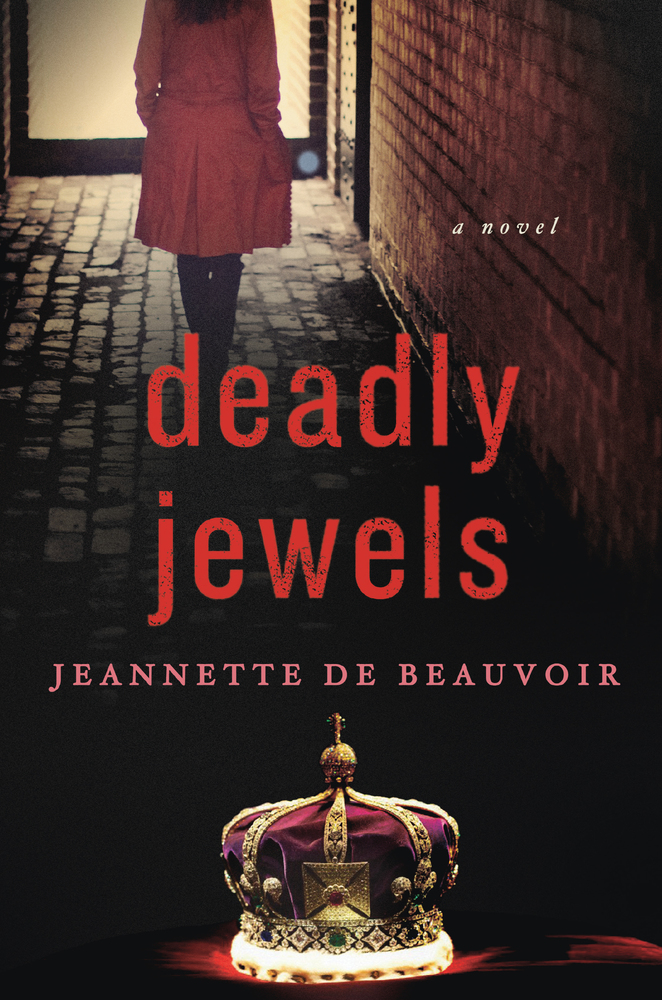
One of Auntie M’s favorite novels last year was Jeannette DeBeauvoir’s debut Asylum, a chilling and often terrifying mystery that introduced Martine LeDuc, the engaging protagonist who is publicity director for the city of Montreal.

Auntie M recently had the opportunity to ask the author a few questions about her work:

Auntie M: You have developed a backdoor to these crime investigations for your protagonist, PR director Martine LeDuc. What made you choose her position and that approach?

Jeannette de Beauvoir: I was looking for someone whose work would, first of all, allow access to a range of different situations, and secondly, be flexible in terms of how the protagonist spent her time. Public relations could arguably have its hand in a lot of different problems, and the person at the top of the department can come and go with staff to cover day-to-day operations if she needs to be elsewhere.

AM: Everyone’s family has a story, and Martine’s home life is grounding, yet it feels very realistic. How important do you feel it is for readers to see that there are other forces pulling at her that require her attention?

JDB: It’s truly about making her a whole person. We’re all made up of mosaics, aren’t we—no one is *only* their job, or *only* their family life, or *only* anything… so it is always important to me to give characters a backstory and a personal life. Doing that offers so many opportunities, especially for a series such as this one, for the character to grow and change, to make mistakes and learn from them… in other words, to develop fully as a human being. The Martine of Deadly Jewels is different from the Martine of Asylum, and will be different from the Martine of the next book should there be one. If the books were *just* about the mysteries, I think they’d be a lot less interesting.

AM: After growing up in Angers, France, you now divide your time between Montreal and Cape Cod. Do you see a difference between the Canadian mind and the American mind when it comes to readers of crime novels and their questions for you? Between the French and the American?

JDB: I’m half-French and half-American, and I often think that if I were a city, I’d be Montréal… with part of me reflecting each culture. But we’re really talking about three different cultures, and three different ways of approaching literature. Readers from the U.S. tend to want to be plunged directly into the story, whereas French readers are looking for more depth—more philosophy, if that makes sense. Neither book has been translated (yet) so it would be interesting to see people’s reactions to them.

AM: A consistent thread is Martine’s love of Montreal, and a highlight for me as a reader is exploring the city through her eyes. The research you’ve done for both Asylum, a first-rate novel, and Deadly Jewels, another winner, adds so many layers to the books. Have you found it easy to obtain access to what might otherwise be off-limits areas for these projects? I’ve found assuring a contact’s name will appear in the Acknowledgments is often a great enticement. Have you had a similar response to your requests?

JDB: I have found people to be amazingly generous with their time and expertise in every project I’ve undertaken. I’ve asked difficult questions and I have never had anyone refuse to help. And people really are the best resource. One of the classes I teach online is writing historical fiction, and I tell students two things: do your research before you talk to people (so that you are suitably immersed in the subject and you don’t ask the questions whose answers you could have Googled), but then find the experts and ask them. Someone who has lived through an era can give so much more information than just reading secondary sources about it. And the same goes for mystery writing: find the experts, be respectful of their time, and you will be astonished at the results.

AM: Your background includes poetry and plays. What made you decide to write a crime series?

JDB: Ah, the poetry and plays are pretty much accidents: I’m really a novelist. I wrote historical fiction for quite a while but realized at some point that what I love to read most is mystery fiction, and I wasn’t writing it—there was a disconnect there. So I co-authored my first mystery novel (mostly because I didn’t think I was terribly good at plots!), got braver and wrote one on my own, then finally discovered what works for me: combining mystery and historical fiction. Not in the same way that an Ellis Peters does, with a character in the past solving a crime from the past—but rather with someone in the present-day finding that the past doesn’t in fact really go away. I think it makes for good storytelling and has the added advantage of teaching a little history as well.

AM: When you have precious down time, whose books would readers find waiting to be read on your nightstand?

Phil Rickman: he’s a brilliant writer, his stories are intricately plotted, his characters are haunting, and he’s just spooky enough to keep your heart rate up. He writes a series about a female Anglican priest who’s also an exorcist, but also has wonderful standalone books that borrow characters from the series, so that you can follow them from book to book. He is one of the authors I admire most for making the *geography* as much a character as the people: he writes about the border between England and Wales and makes the liminality of such a place intrinsic to the plot.

AM: Thank you for that recommendation. I’ve just ordered his first in the series to try. Now on to the review of DEADLY JEWELS:

De Beauvoir’s sequel brings Martine LeDub back for another adventure that has the same chilling suspense as her first, yet manages to be a different book entirely. It still pivots on moral questions, and she shows her love for the city in its exploration by the main characters as they try to stop what amounts to a cult operation from decades ago that has reached fingers into present day Montreal.

Martine has a mutual dislike relationship with the Mayor who serves as her boss. But this time when she’s called to his office, it’s not to be rebuked, but to be introduced to an graduate student who just may have pulled off a PR coup: she’s found proof that long-held rumors are true and that proof has been found during underground excavations taking place under the city. The British crown jewels were once housed there in Montreal during WWII and then returned to London.

It promises to be a grand revelation for all, until Martine accompanies Patricia Mason to the excavation site. Sure, they do find several diamonds, left behind from the original cache. But they also find the skeleton of man shot execution-style decided ago. It appears he swallowed these remaining jewels.

Now it’s a job of containment, as Martine and her colleagues in several places determine how to handle the scandal. And this won’t be great PR for Montreal or for her job.

But then Mason is shot, and she turns to her detective friend from the first book, Julian Fletcher, to help her out with the cold case. And just as things heat up, her stepchildren arrive for a visit and her husband disappears that same weekend to have a meeting with his ex-wife.

There will be several twists and turns along the way as the case unravels, with surprising results. Along the way, Martine will be introduced to and interview Nazi survivors and their families, and those trying to resurrect that regime in a startling way.

As the action heats up, it’s not just Martine who will find herself in jeopardy.
One of the things that set this apart from the usual series is the way De Beauvoir skillfully weaves the modern with the historical. Flashbacks to two key characters explain the historic journey of the jewels and the men involved with them and add substance and key clues to the action.

The author bio for De Beauvoir states in part: “. . . She finds that the past always has some hold on the present and writes mysteries and historical fiction that reflect that resonance.”
You’ll understand the meaning of that line once you read this fine mystery that evaluates many sides of a situation. Highly recommended.
Edith Maxwell: Delivering the Truth Friday, Apr 8 2016 

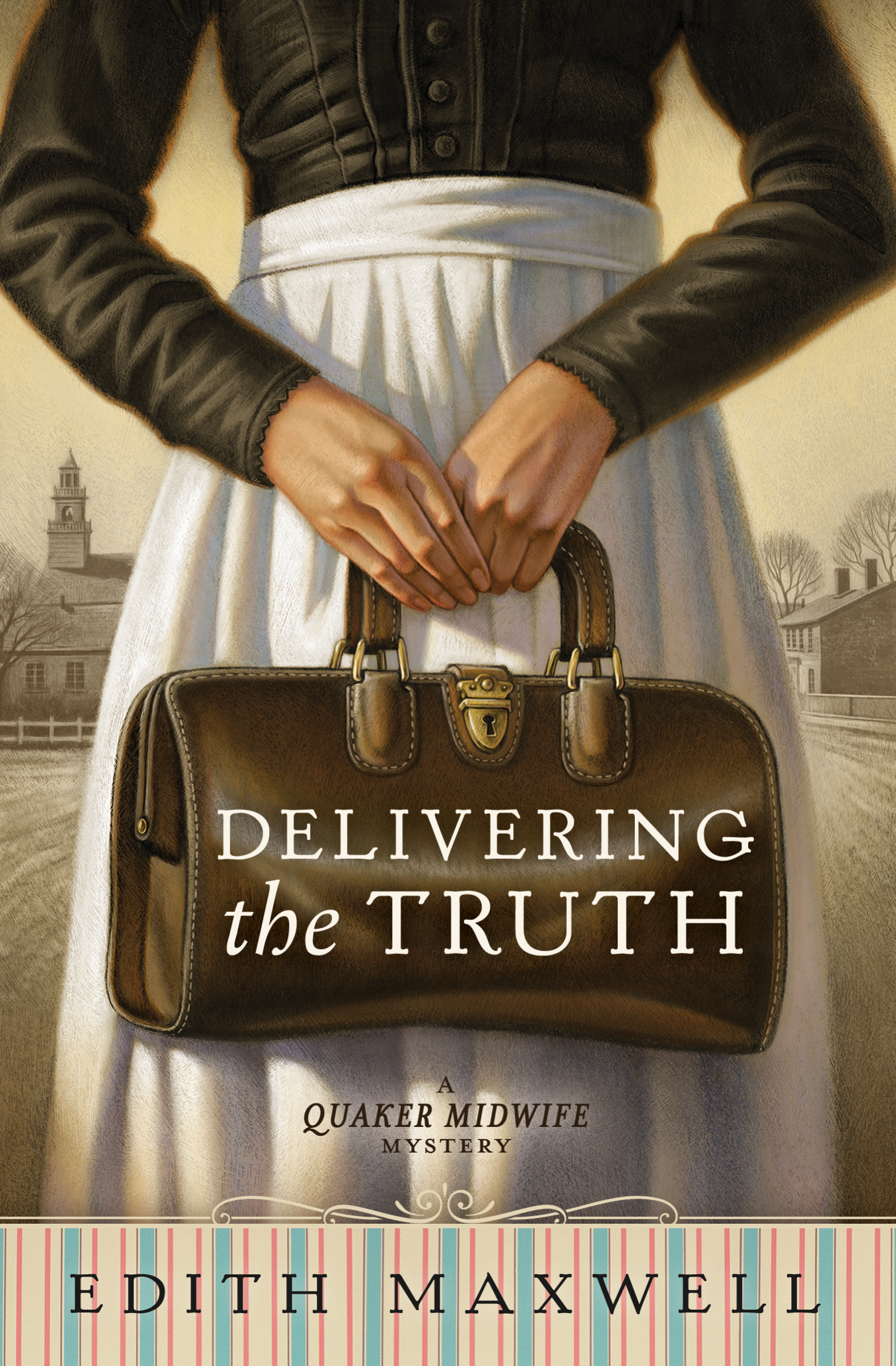
Edith Maxwell is one of the hardest working authors Auntie M knows, juggling now four series and bringing out books that have a wide readership. Today she’s talking about her new historical mystery, Delivering the Truth, the first in her Quaker Midwife Mysteries. Check out that neat cover and discover the mystery inside.

Delivering the TruthCover

Learning about the Past

Thanks for having me back, Auntie M!

My latest venture – historical mystery – involves a level of research I don’t need to do when I write my contemporary mysteries. I had so much to learn about the late 1800s. And there’s nobody still alive to ask.

How would a Quaker speak and act? What did women wear under their outer clothes? Did a modest New England home have indoor plumbing, gas lamps, a coal stove? What were matches like?
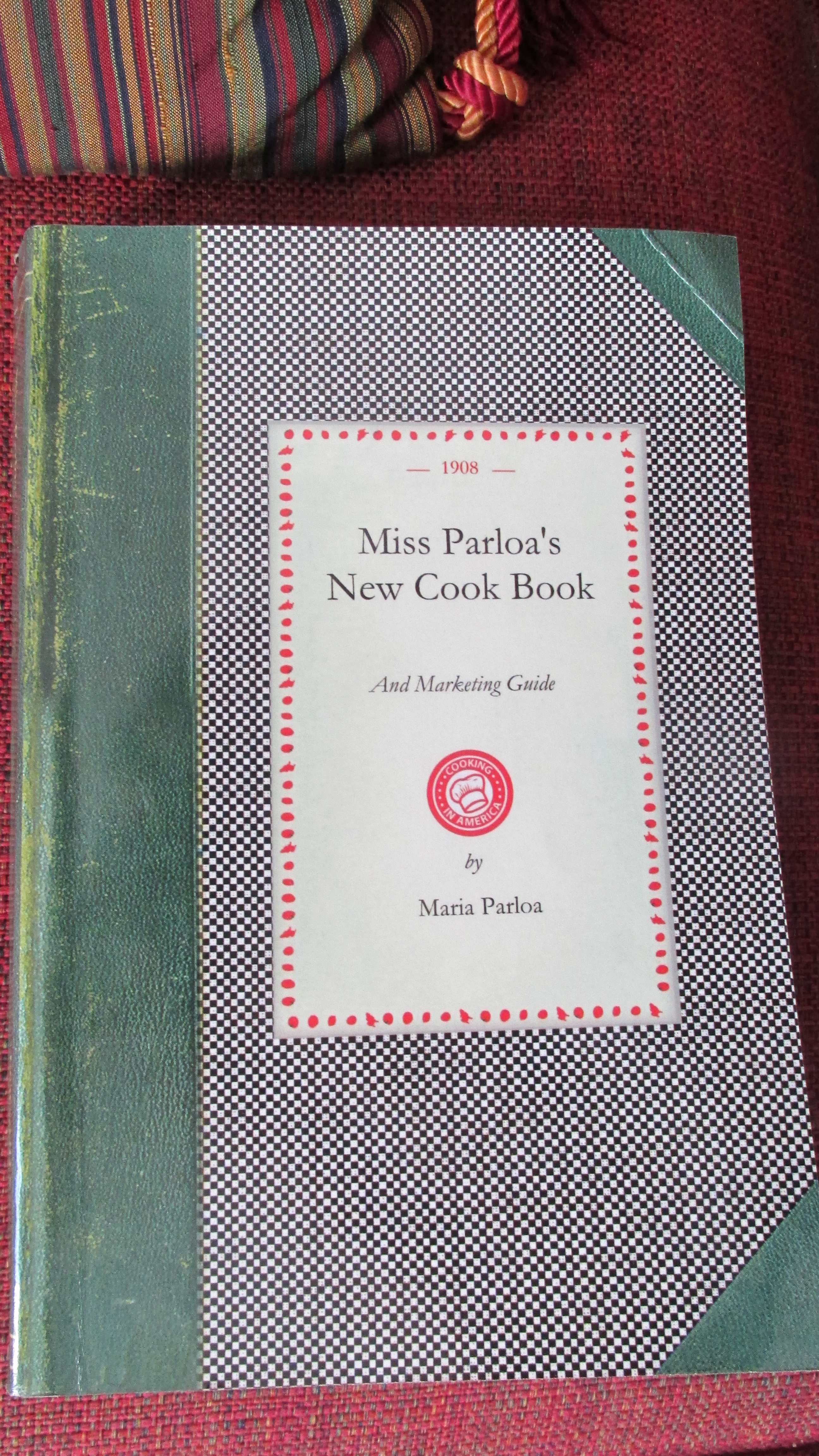
MissParloas-2

I’ve found a couple of good reference books for everyday life. Ruth Goodman’s How to Be a Victorian describes everything from toothbrushes to underwear. Miss Parloa’s New Cookbook and Marketing Guide from 1890 has all kinds of handy tips about the kitchen and foods available in the end of the century. Pinterest provides images of clothing. And then there’s Sarah Chrisman – who lives like someone in 1888 and writes about it! http://www.thisvictorianlife.com/

MontWardCarriages
I needed to learn about all the different types of horse-drawn vehicles. Carriages, wagons, buggies, drays, runabouts, broughtons, phaetons, surries – and so many more. Luckily for me, the town where the series is set, Amesbury, Massachusetts, is where I live and it was world-famed for its carriage manufacturing. There are antique carriages all over town, a thriving Carriage Museum, and many enthusiastic history buffs to call on.

MidwiferyBookLeish
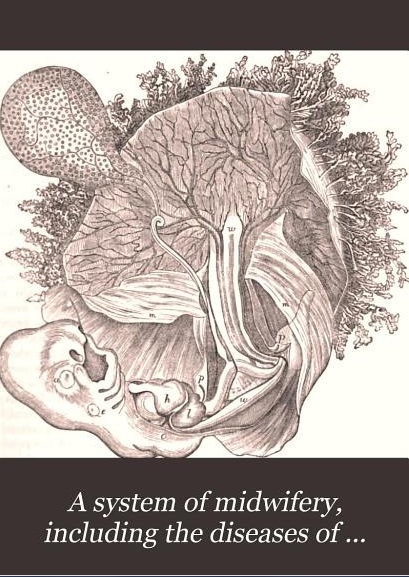
Because my protagonist is a midwife, I delved into medical care of the time. Basic uncomplicated childbirth hasn’t changed that much. But did they know about the importance of washing hands yet? I learned that the germ theory of infection was known. Was there a hospital nearby in case of emergency? Yes, the hospital in the next town was eight years old at the time of Delivering the Truth. I found a midwifery textbook from the era. I learned that blood typing wasn’t yet used but that a lab could find out from a snip of hair if arsenic had been ingested.

Reading local newspapers from a hundred and thirty years ago provide much detail about both news and the prices of goods and services, as do the Sear & Roebuck catalog and the Montgomery Ward catalog, both of which are available on Amazon as reproductions. For example, you could buy a two-spring Phaeton (a single-horse kind of buggy with a roof) for $70, a drop-leaf desk for $9.50, and a pair of Irish lace curtains for $2.35. My midwife Rose bought a new bicycle for $45.
PoliceManualCover
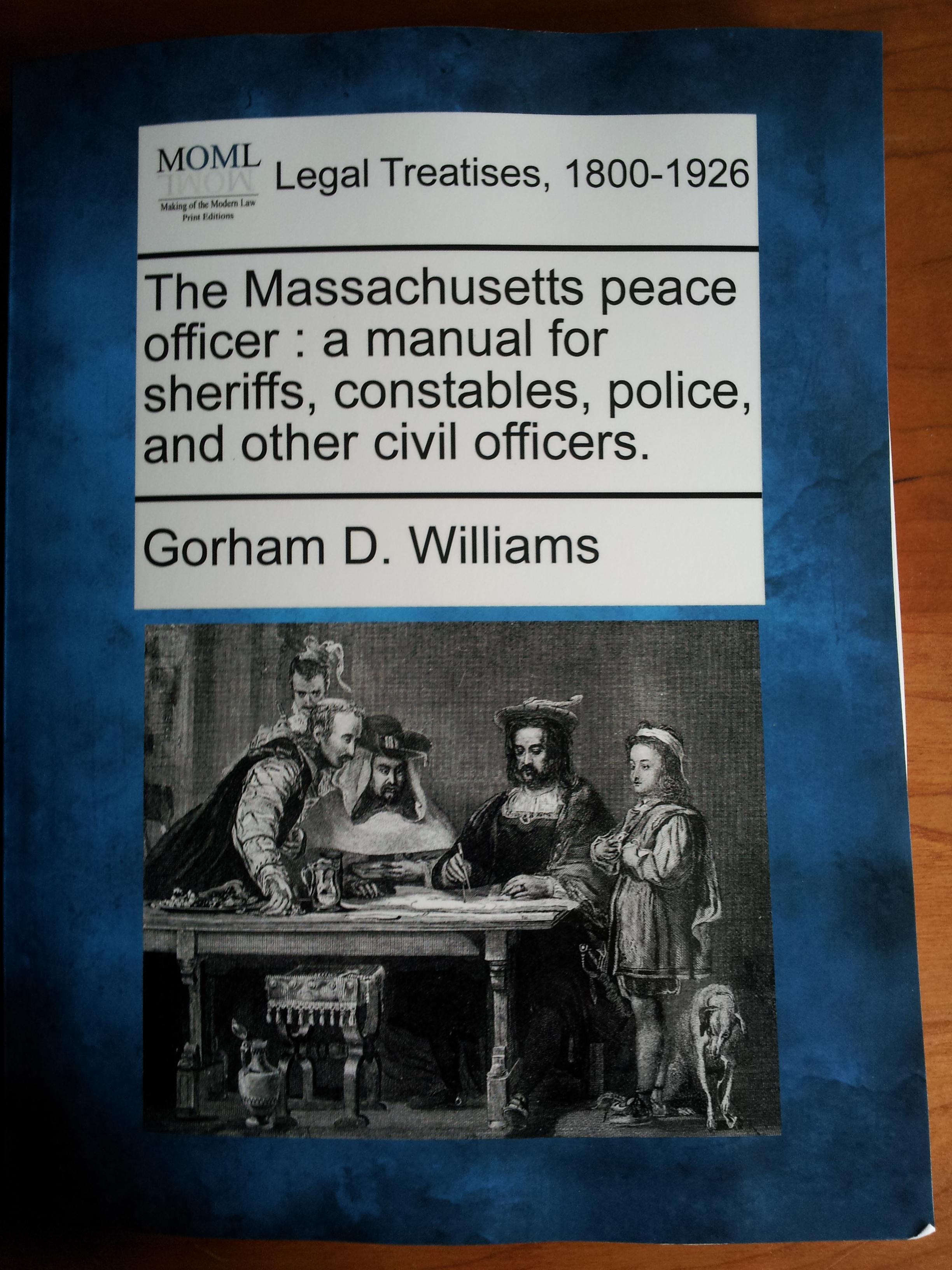
And because I write mysteries, there’s the all-important question of police procedure. I’ve found pictures of the local police force in town, and dug up The Massachusetts Peace Officer: A Manual for Sheriffs, Constables, Police, and other Civil Officers from 1890. An officer had to lay a hand on the shoulder of someone he was arresting, for example. I also learned that they didn’t yet use fingerprinting.

There’s more, of course. Local historical societies and museums are a rich resource. But at some point you just have to write the book!

Readers, do you like doing research? Where do you find resources to learn about the past, or about your current passion, whatever it is?

MaxwellCrop

Edith Maxwell writes the Quaker Midwife Mysteries and the Local Foods Mysteries, the Country Store Mysteries (as Maddie Day), and the Lauren Rousseau Mysteries (as Tace Baker), as well as award-winning short crime fiction. Her short story, “A Questionable Death,” is nominated for a 2016 Agatha Award for Best Short Story. The tale features the 1888 setting and characters from her Quaker Midwife Mysteries series, which debuts with Delivering the Truth on April 8.

Maxwell is Vice-President of Sisters in Crime New England and Clerk of Amesbury Friends Meeting. She lives north of Boston with her beau and three cats, and blogs with the other Wicked Cozy Authors. You can find her on Facebook, twitter, Pinterest, and at her web site, edithmaxwell.com.

Judith Flanders: A Bed of Scorpions Wednesday, Apr 6 2016 

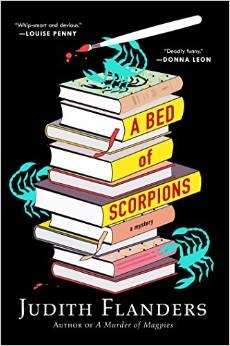
Auntie M enjoyed Judith Flanders first mystery, A Murder of Magpies, and was happy to receive the ARC of her second, A Bed of Scorpions, featuring the smart and savvy London editor, Sam Clair. There’s a nice balance of humor in the series, with Sam’s first person point of view providing a running commentary on the people she runs across, too.
BedScorpions

Fast forward to the summer after the happenings in “Magpie” and Sam is happy in her routine: work, the occasional drink or lunch out, and many evenings spent with her Scotland Yard detective boyfriend, who now has a key to Sam’s flat.

Summer also means Sam is busy setting up her schedule for the Frankfurt Book Fair in October, and one can’t help but wonder if the next installment will take us there . . . but in the meantime, Sam has enough on her plate with the personalities at work. And a long-planned lunch with an old friend, Aidan Merriam, an art dealer, who is an old ex of Sam’s.

But lunch takes a sour note when Aiden tells her that he had the great misfortune to be the one to find his business partner dead of a gunshot wound. Is this an apparent suicide by Frank or his murder? Aiden needs Sam’s help, both to clear himself and to find out if anyone else would want Frank dead. And guess who is the one of the detective’s on the case from Scotland Yard? And who was on the from the night before–a night he spent with Sam, when he neglected to tell her about the death of her friend’s business partner: None other than that same detective, Jake Field.

What’s a girl to do? Sam calls the person she nows who knows the law, and is straight up and business-like to a fault without turning a hair: her mother, Helena, who rushed in to defend Aiden and sort this case out.

Now Sam finds herself stuck between her mother, Aiden, and Jake, and soon after realizes she’s put herself right in the sights of a murderer who assumes she knows more than she really does.

A few of the characters from the first installment return with welcome scenes. There are her upstairs neighbors, including the delightful Mr. Rudiger. There is talk of where Jake and Sam are headed in their relationship, which is clearly not well defined. And then there’s also the pretty big matter of a killer to be caught.

The mixed worlds of books and art are sharply and cleverly defined with Flanders’ trademark humor spiking the pages as the action speeds along. The author’s work as an editor stands her well here, especially her work for the publications department of the National Portrait Gallery in London. That knowledge infuses these books with the kind of inside look readers love, a way to see inside a different world. Wrap that up with a darn good mystery, a hint of romance, and a believable protagonist you wish was your friend, and you’ll surely enjoy A Bed of Scorpions as much as Auntie M did.

Action + Thrills = Great Reads Sunday, Mar 27 2016 

Auntie M has read a stack of high tension, high action books recently, so she’s grouped them for your reading pleasure.

LieinWait
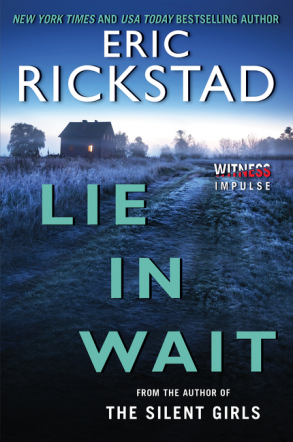
Eric Rickstad’s Lie in Wait starts out with the murder of a young babysitter. The savage attack takes place at the Canaan, Vermont home of the lead attorney in a high-profile case, which convinces detective Sonja Test they must be related. With two children of her own, viewing the girl’s body as her first murder victim while her kids wait outside in the car is a neat juxtaposition to all things normal suddenly gone wrong.

Test will keep digging, uncovering past acts hidden for years that impact on the murder. This fast-paced thriller is heavy with the psychology of the characters which increases the tension. There will be several unexpected twists before the ending. The tension between Test and her job, and her allegiance to her husband and children ramps up the emotions.

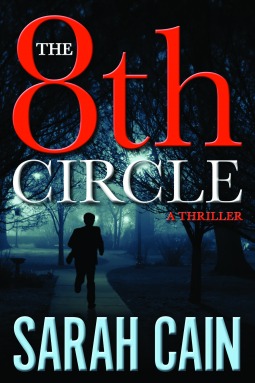
8thCircle
Sarah Cain’s The 8th Circle
finds Philadelphia journalist Danny Ryan still reeling from the tragic loss of his wife and young son in a car accident a year ago. It doesn’t help that his wife was driving Danny’s car at the time. He’s not been back at work since the tragedy. Then his friend, journalist Michael Cohen drives his car right into the pond in front of Danny’s house after being shot.

An obvious murder, Danny is looked at with suspicion, which only adds to the tension as he tries to find out why Michael had to die. He digs into his friend’s last article, supposedly on restaurant reviews, but which turns more to be about Philly politics mixed with a twisted, secret nightlife. It doesn’t help that his father-in-law is a senator, implicated heavily in the secrets he uncovers, secrets the most powerful people in the city are desperate remain hidden. And is it possible that Danny was really meant to die in that accident?

Danny’s migraines interfere with his investigation, a nice side touch that makes him feel very human. A determined detective and a friend of Michael’s, legislative aide Kate Reid, are two other characters whose presence adds to the tension as Danny gets closer and closer to a truth he can’t ignore, one he won’t have seen coming at all.

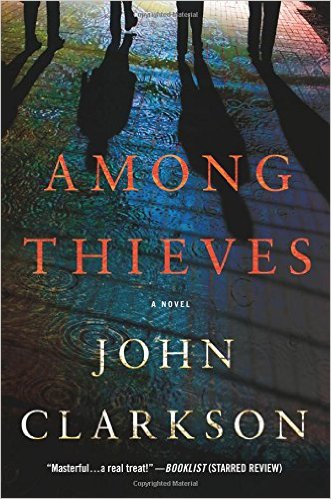
AmongTheives
John Clarkson debuts a new series with Among Thieves with an unlikely protagonist, ex-con James Beck.

The Brooklyn setting has a gritty, noir feel with Beck at the lead of this action-packed thriller. Beck’s spent his years since getting out of prison building a team operating out of the Red Hook area. Then one of the team, partner Manny Guzman, asks for Beck’s help: his cousin, Olivia, working at a NYC brokerage firm, noticed suspicious investment practices that led to her getting a few of her fingers broken, after which she was fired and blackballed from the industry.

Leave it to Beck to right the wrong, but in doing so, he realizes Olivia has found something far more compelling than anyone thought at first. And then all hell breaks loose as there’s a far too much money at stake. Beck and company will face threats from several sources, including Bosnian war criminals, with violence on terrifying levels.

There will be several surprising twists, a bit of sex and a whole lot of action before Beck’s team is finished.

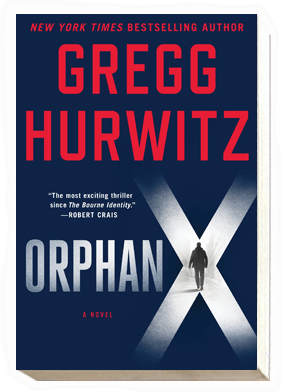
OrphanX

Author Gregg Hurwitz has had many bestselling and award-nominated thrillers in the past, so it’s no surprise the first of his new series, Orphan X, is already being adapted by Hurwitz for a Warner Bros. movie starring Bradley Cooper.

Creating a character for the likes of Jack Reacher fans, there’s all the high-tech gadgets and action readers could want. Evan Smoak was raised in the secret Orphan Program, where the goal was to produce assassins who were so off the grid they didn’t officially exist.

All of his training and skills come into play when Evan breaks away and assumes a new name and persona, and decides to use these to help people pushed to the limit by murderers or kidnappers. Called the “Nowhere Man,” he lives with many layers of protection around him, until someone from his past turns up to ruin everything.

Yes, there’s a lovely woman or two in here, and even the occasional hint of humor to relieve the stress, but that doesn’t stop the heart-rending action nor the sense of outlandishness at times that makes this read even more cinematic. Lee Child says: “Gregg Hurwitz’s Orphan X is his best yet–a real celebration of all the strengths he brings to a thriller.”

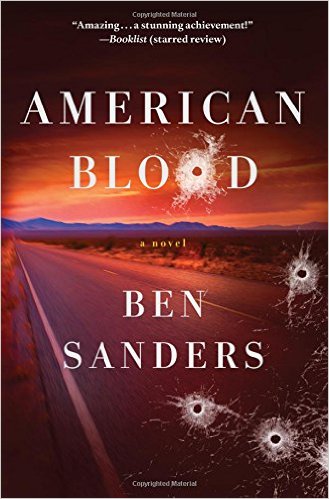
AmericanBlood

New Zealander Ben Sanders fourth novel is his first published in the US, and in concert with high-action thrillers, it’s been sold to Warner Bros with the attached star and producer none other than the afore-mentioned Bradley Cooper. The actor is one busy guy, but he knows how to pick projects with fast-moving action. American Blood introduces Marshall Grade, a likable sort if you like your cops living in a New Mexico Witness Protection Program, trying to keep a low profile.

Marshall’s a bit of a rogue who reminded Auntie M of a tortured New York Longmire–not afraid to get his hands dirty and very persistent. There’s a contract out on Marshall and he’s supposed to be living a quiet life. But his undercover past is littered with bodies and he can’t quite forget them.

Instead he decides to investigate the disappearance of a local woman. Alyce Ray may have been taken by drug traffickers, and the opening scene in a diner where Marshall meets up with two whom he feels have information is a choreographed dance in itself and a clue to his steely nerves.

The plot is more complex than at first glance, with language that flows and lets readers experience a different kind of hero, one who treads a fine line to find justice.

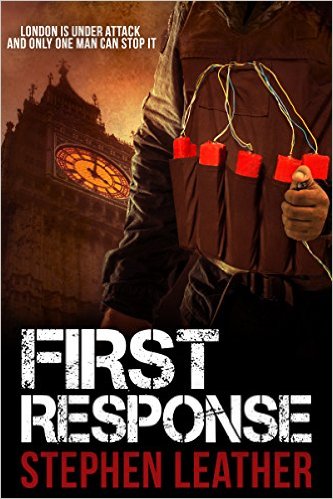
First Response
Auntie M has reviewed thriller author Stephen Leather’s multiple previous books in two series. Stand-alone First Response is ripped from today’s headlines, and all too easily believed.

In London, several scenarios go off at once in nine different locations. Suicide bombers claiming to be from ISIS hold hostages in all of these locations, and they vary from a church to a pub to a childcare center. Their mission is to force the release of jihadist prisoners from Belmarsh prison, and their demands are firm: they are to be released that same evening.

But when Mo Kamran, Superintendent of the Special Crime and Operations branch of the Met investigates, he and his team find no links to ISIS, and none of the men are on known-terrorist watch lists. Are these clean skins, terrorist without a link to any particular group? Or is something else pulling these men together?

Imagine the chaos that would reign in such a situation with a deadline looming. Now imagine trying to coordinate Special Forces, EMS, and armed tactical units, and you have an idea of Mo’s day. The Muslim detective won’t have it easy, especially when he realizes the agenda being played out is not what it seems.

Leather couples clever plotting with detailed knowledge of the way the Government and the Police would respond with strong characterizations. For fans of his two other series, this one’s a sure-fire read. For readers new to Leather, there’s no better place to start than with this contemporary thriller.

Jonathan Moore: The Poison Artist Wednesday, Mar 23 2016 

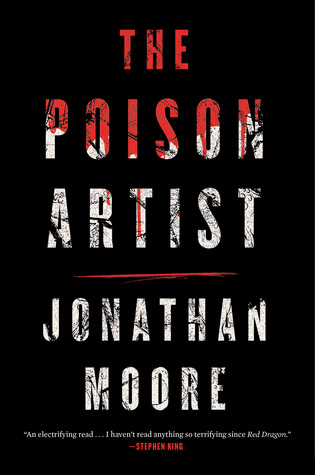
Poison Artist

Auntie M met Jonathan Moore at Bouchercon last October. When Elly Griffiths recommended his book, how could I say no? The quiet, good-looking attorney-and-author currently living in Hawaii caught my interest with his quiet demeanor. But his eyes lit up when talking about his book, and what a book this one is. The Poison Artist starts out strong and stays that way, building with tension that proves unnerving.

The sense of noir is fully realized in the beautiful but lonely San Francisco setting where Dr. Caleb Maddox, a chemist and toxicologist whose specialty revolves around studying pain, lives and works. He’s not in a happy place, having just broken up with the girlfriend he’d thought was his destiny, and in a physically painful way: she’s thrown a glass at his forehead and he’s in the midst of picking out shards and staying in a hotel for the night.

After cleaning up, he heads for the bar across the street, The House of Shields. Meeting an exotic woman drinking absinthe is just the first step on Caleb’s route to obsession. Soon he’s searching for Emmeline, then responding to her calls and meeting at unusual times and places, always with a mysterious air about each event as well as the woman herself. These scenes have the strongest noir setting, from Emmeline’s clothing to her actions and her seductive air.

Caleb embarks on a week of binge-drinking in his quest to find her, right around Christmas that threatens the grant work he’s doing at his specialty lab, just as he becomes involved in helping his medical examiner friend, Henry, hunt for a serial murderer. Henry has realized that a series of men whose bodies wash up under the Golden Gate bridge all show signs of severe and cruel torture and Caleb is determined to find the killer.

There are scenes that feel so real they jump off the page, whether it’s in the autopsy room, at a bar, or simply inside Caleb’s head. This is a book filled with precise details that add to the sense we are experiencing a real situation, which only serves to increase the terror. Moore talked his way into the Honolulu Medical Examiner’s office for hands-on research and it shows.

This is a heart-pounding thriller that Auntie M could see Hitchcock filming, if only he were alive to do it justice. And thankfully for readers, it’s the first in a planned trilogy of thrillers set in San Francisco. THE DARK ROOM will be out in January 2017, followed the following year by THE NIGHT MARKET.

Barbara Ross: Fogged In, A Maine Clambake Mystery Sunday, Mar 20 2016 

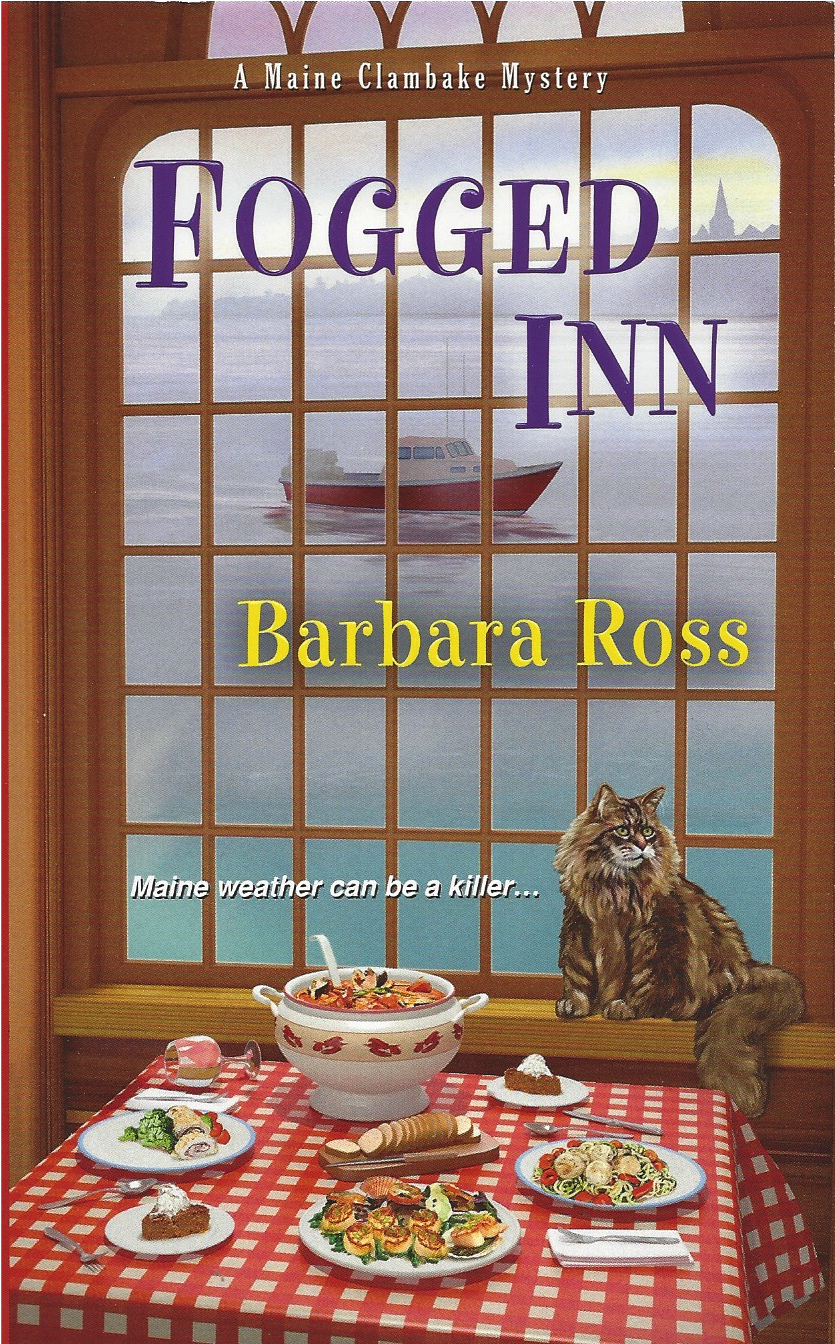
FoggedInnfrontcoveryellow

Please welcome author Barbara Ross, speaking about the influences on her writing and her newest Maine Clambake Mystery, Fogged In.

The Twists and Turns in the Mystery Road

Recently my colleague on the Wicked Cozy Authors blog, Julie Hennrikus, wrote about book-to-movie and book-to-TV adaptations, particularly mystery adaptations. In the comments, people wrote about their favorites and the ones they just couldn’t watch.

It didn’t take me but a second to identify the book-to-movie adaptation that had the most profound impact on my life. On a rainy day at the beach, my grandmother, desperate to keep me entertained, took me to see Murder She Said, the first Miss Marple mystery starring Margaret Rutherford. I was eight and I loved it. In fact, I think I still remember some of the visuals from it. (I haven’t seen it since then, so I must, right?)

Agatha Christie’s novels gave me a natural place to “graduate to” as I outgrew Nancy Drew and kept me in the mystery fold. From there, I discovered Dorothy L. Sayers and a whole host of others.

There followed a long hiatus through college and young adulthood, until I discovered P.D. James and Ruth Rendell and once again became a mystery fan. All these women are the reason I love mysteries and read and write mysteries. Rendell had another impact. She got me reading mystery short stories, which I also write. I spent six years as a co-editor/co-publisher at Level Best Books working on the Best New England Crime Stories series.

What if I’d never seen that movie or discovered these authors? My life would be profoundly different. I’ve pondered that many times recently because my latest Maine Clambake Mystery, Fogged Inn, is about a group of retirees. What twists and turns did their lives take that led them all to a fogbound restaurant in Maine on the night a man was murdered? If any one of them had done one thing differently, would all they have been there on that fateful night?

That’s the question I enjoyed finding an answer to as I wrote, and I hope my readers enjoy discovering as they read.

Barbara Ross is the author of the Maine Clambake Mysteries: Clammed Up, Boiled Over, Musseled Out and Fogged Inn. Clammed Up was nominated for an Agatha Award for Best Contemporary Novel and was a finalist for the Maine Literary Award for Crime Fiction. Barbara blogs with a wonderful group of Maine mystery authors at Maine Crime Writers and with a group of writers of New England-based cozy mysteries at Wicked Cozy Authors.

She is always thrilled to hear from readers. You can find her via her website at http://www.maineclambakemysteries.com, or on Facebook at http://www.facebook.com/barbaraannross, on Twitter @barbross, or on Pinterest at http://www.pinterest.com/barbaraannross.

Arnaldur Indridason: Into Oblivion Wednesday, Mar 16 2016 

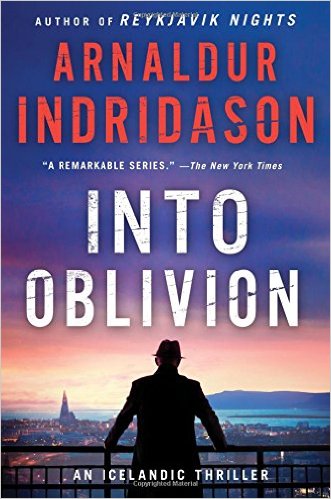
IntoOblivion
Arnaldur Indirdason’s Icelandic thriller series, featuring Inspector Erlendur, continues with this look into his early days as a detective in Into Oblivion, an aspect first explored in last year’s acclaimed Reykjavik Nights. The CWA Gold Dagger Award winner is the only author to win the Glass Key Award for Best Nordic Crime Novel two years in a row, and with good reason.

The book opens a few years after Erlandur decides he wants to be a detective. It’s 1979 and the year springs to life, the mood set by the music, clothing and social mores of the era. The detective is working with Marion Briem, an older, more experienced detective, when the body of man is found in a blue lagoon known for its healing waters.

Examination reveals that the man has fallen from a great height and died before his body was moved to the lagoon. Could he have fallen from a plane? The only immense height in the area is an aircraft hanger on the grounds of the controversial US military base nearby.

When it becomes apparent the base is involved, Erlandur and Briem find themselves tiptoeing around the base to investigate after the US powers that be have stalled their investigation and denied them access to the hanger. It will take an unlikely accomplice to help them get to the bottom of the man’s death, thwarted by a rogue CIA agent.

As the action unfolds, Erlandur also takes it upon himself to run a parallel cold case investigation. A young teen went missing on her way to school, her body never found, and as both cases heat up, the young detective finds himself in his element, conducting interviews and following slender leads to find resolution.

Another hit that gives insight into what made Erlandur the detective he becomes.

Kate Parker: Deadly Scandal Sunday, Mar 6 2016 

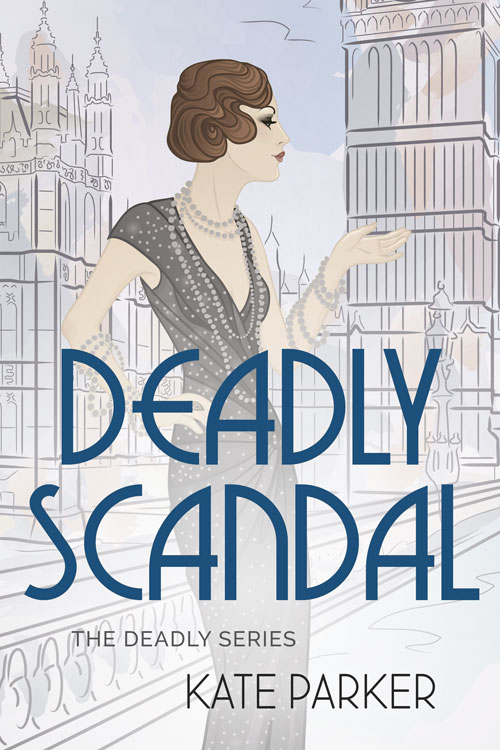
DeadlyScandal-500x750

Please welcome author Kate Parker and her new historical mystery, set in 1930’s London, Deadly Scandal. Kate will describe how she came to create her protagonist, Olivia Denis.

Murder and Fashion Sense

When I was a girl, there was a comic strip in the newspaper called Brenda Starr, star reporter. She was a tall, slender, leggy redhead who worked for a metropolitan daily and went after the hard news, the big stories. She got the exclusives. She never took no for an answer. She was tough and sexy and bright and lucky. I wanted to be her when I grew up.

In the spirit of truth in journalism, I have to admit the only resemblance was in my reddish hair. I might pass as a reporter; no one would ever mistake me for Brenda Starr.

I saved this icon from my childhood, and when it came time to write a mystery about an unprepared woman who lands a job on a metropolitan daily newspaper in 1930s London, I knew what she looked like. She’s a tall, slender, leggy redhead. She’s bright and sexy and lucky.

And that’s where I stopped the similarities.

I gave Olivia Denis a love and flair for fashion. I gave her a talent for sketching dresses, hats, and shoes as well as a fabulous wardrobe. And I gave her a love of shopping that she couldn’t indulge once she was widowed at twenty-five.

But since she had Brenda Starr’s luck, she has a good friend whose father published one of the biggest daily newspapers in London. And so she landed a job as a society reporter, where the publisher thought she couldn’t do much damage.

However, Olivia Denis doesn’t have Brenda Starr’s street savvy. When offered a much higher salary than she expected, along with a requirement to carry out certain unspecified clandestine assignments that she is not to mention – ever – she says yes. She knew no one else would pay her that much. She doesn’t ask about the nature of these assignments. She doesn’t stop and consider. She just thinks about the money and says yes.

So here you have Olivia Denis, young widow, who is going to hunt for her husband’s killer. She owes her livelihood to the father of a school friend who needs her to carry out clandestine assignments under the guise of society page reporting.

Olivia is young and pretty like Brenda Starr. And while she’s a novice, she has something else Brenda Starr had: Determination.

Find out how it all works out in Deadly Scandal by Kate Parker.

Learn more about Kate and her books at http://www.KateParkerbooks.com

Order now at Amazon: http://www.amazon.com/dp/B01AU0KC8E
B&N: http://www.barnesandnoble.com/w/deadly-scandal-kate-parker/1123286621
Apple: https:geo.itunes.apple.com/us/book/deadly-scandal/id1076628067?ls=1&mt=11

Katherine Ashe: The Rogue, Devil’s Duke #1 Tuesday, Mar 1 2016 

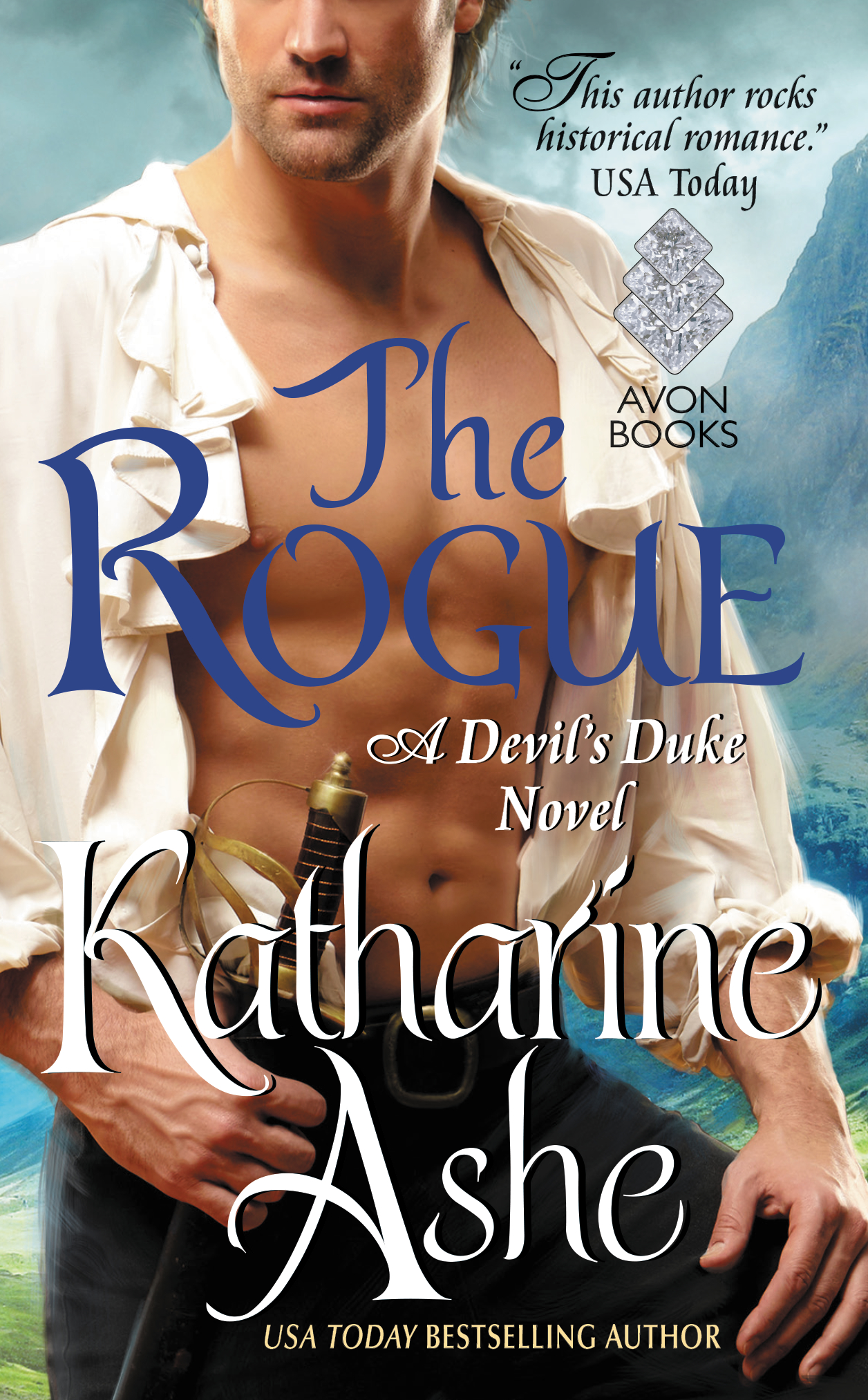
Ashe-THE-ROGUE
Author Katherine Ashe delights readers with her historical romances that have mystery and action all rolled into one. A professor of European History at Duke University, it’s only fitting that her new series is called Devil’s Duke.

The first one in the series, The Rogue, will captivate readers who like a hint of sensuality with their swordplay.

Throw in a secret society practicing dark arts, and of course, a rogue with a heart of gold who will anything for the woman he loves, and you have all the ingredients for a fantastic read.

What sets this one apart is the appearance of TWO rogues and ravishing heroine in the form of a duke’s daughter, Lady Constance Read. The lovely but very independent woman needs a husband, despite her penchant for riding astride a horse instead of the usual side-saddle of ladies. She’s also a great shot with both pistols and bows, a match for any man wishing to share her life.

Here’s Katherine’s recent Q/A that will shed light on her new series~

1. Q: Your new Devil’s Duke series kicks off with a bang in The Rogue; there’s plenty of intrigue, action, and some cameos from Falcon Club members of your previous novels. Yet you’re also telling a very deep love story that touches on many issues, including second chances, abuse, and honesty. As a writer—and as a reader!—what appeals to you about mixing “spy stuff” and adventure with the kind of intensely emotional narrative going on in The Rogue?

A: Truth? I want to be completely swept away. I love getting so immersed in a story that I can’t put it down. I am totally addicted to intense, deep, powerful romance. When I read and write, I want to experience every emotion: I want to laugh, weep, shout, feel my heart racing, and go a little insane-in-love right along with the hero and heroine. If they’re opponents or allies in exciting intrigue—Saint and Constance are both in The Rogue—I get completely caught up in the excitement. It’s romance, so I know they’ll be together by the end. But the more intense the journey to falling in love is, the more I adore it.

2. Q: You write historical romance novels—but you’re also a professor of history! How much does your academic work as a professor overlap with your writing?

A: Now that I teach popular fiction — both romance fiction and other fiction based on medieval history — I can pour my experience with researching, writing and publishing novels into my teaching. And it goes the other way too; teaching nourishes me. I learn from my students all the time. Also, oftentimes I’ll read something to use in class and it will inspire a character or scene or even an entire plot of a novel.

3. Q: The title of the novel, The Rogue, refers to Saint, our roguish hero. But he’s not the only one known to break the rules every now and again: Constance is an extremely independent woman. At every turn, she refuses to let society make her dependent on someone else, and she continually rises against every challenge she is faced with. What inspired you to write such a strong, forward-thinking heroine?

A: Constance is incredibly strong and independent, but she’s also damaged and vulnerable. In a world dominated by men who want to use or control her, she’s come to a place where she’s simply refusing that. She wants to make her own decisions, and she wants to be her own hero (it’s why she asks Saint to teach her how to fight with a sword and dagger). But she wants—and needs—love too. I think this is the struggle of modern women: to be independent and take care of themselves, as well as others who need them, but also to allow themselves to be loved by a good man—a man who won’t try to control them, but will love them for the entire woman that they are.

4. Q: You often speak at conferences and give interviews regarding your views on the romance genre. We’ve seen romance get more time in the mainstream media spotlight this year than ever before—do you think that’s an indicator of things to come? Where do you see the genre going from here?

A: The good press is wonderful! It’s a good sign for the future. We’ve a long way to go, though. I think the new openness to romance fiction in the mainstream media has as much to do with the fabulous novels authors are writing now, featuring independent heroines with real agency, as it has to do with our society very, very slowly shifting toward an honest recognition of the latent misogyny and anti-feminist biases in our culture. These biases are so deeply rooted (they’re thousands of years old!) that it’s going to take more than few decades for real equality. When the romance genre is treated the same way that the mystery or sci-fi or thriller genres are treated, that’ll be a good indicator we’ve come to true equality between the sexes.

5. Q: Tell us a little bit about your upcoming projects!

A: The Earl is next! Through several books my readers have been following the heated banter of Peregrine, the secretary of the Falcon Club, and popular London pamphleteer Lady Justice. She has skewered him again and again in the public press for being an idle elitist, but now she needs his help. They’re thrown together in an unexpected (and dangerous) adventure across the Scottish Highlands. It’s a super intense, funny and exciting love story, and I cried and laughed and gasped and sighed and loved loved loved writing it.

After that, the duke everybody’s calling The Devil gets his story!

The Narrow Bed: Sophie Hannah Sunday, Feb 28 2016 

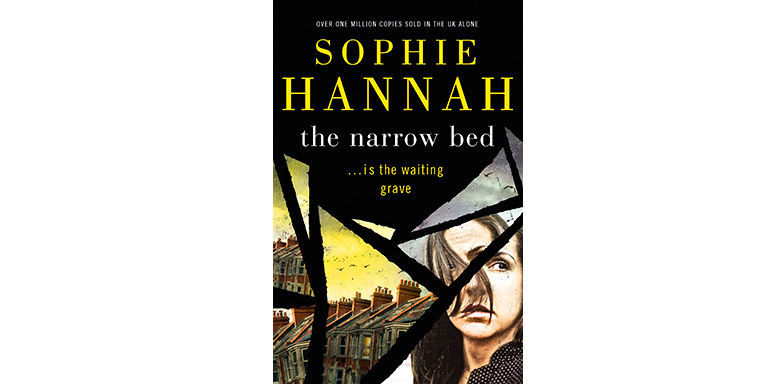
gallery-1452871629-the-narrow-bed

The multi-faceted Sophie Hannah does it all: compelling stand-alones, resurrecting Hercule Poirot for Agatha Christie’s estate, and her Culver Valley police procedural series. But she doesn’t stop there–the hallmark of this series is that the protagonist of each book is a character involved in the action, not the detectives, centered on Simon Waterhouse and his wife, Charlie Zailer.

We learn of the continuing saga of the married duo as a secondary plot, insinuating itself into the main plot of the newest in the series, The Narrow Bed. And a strong feminist will muddy the waters by insisting the killer being sought is a misogynist pig, as three of the four victims are women. Could she be right?

There’s more than a bit of sly humor when your protagonist is a professional stand-up comedian. Kim Tribbeck has received a little white book, mostly blank, with a few lines of poetry inside. She’s tossed it away, but she does remember receiving it.

The importance of this becomes clear when a murderer takes to killing pairs of best friends, four in all over the last four months. In each case he’s given the victim one of these same hand-made books before killing them. Each contains a line of poetry. Each poet was a woman whose name started with an E. So where does that lead them?

Dubbed “Billy Dead Mates” by the police, the detectives have exhausted ways to link the victims. It becomes clear the case revolves around books, but in what way? And if these are truly killings of best friends, why was Kim Tribbeck given a copy and left to live? Could it be that the fact she hasn’t had a best friend in years has saved her life?

At once convoluted yet sharply intelligent, the plot wraps around itself until the mind of Simon Waterhouse is the one who can see beyond the obvious and pull the case together. There’s an almost gothic feel to the book, as the story unfolds by way of excerpts from a book Kim writes after the case is over, added to by conventional chapters of interviews and the thoughts of the various detectives on the team searching for this killer.

The characters are true to themselves, with distinctly-drawn personalities that show Hannah’s expertise at describing the psychology of different people with that wry edge that smacks of verisimilitude until they seem to leap off the page. The Independent has compared Hannah to Patricia Highsmith and Ruth Rendall with good reason.

« Previous PageNext Page »