Sandra deHelen: The Illustrious Client Sunday, Mar 2 2014 

Marni, thank you so much for inviting me to be your guest on your fabulous crime review weekly, Auntie M Writes.

I’d like to start by introducing your readers to my protagonist and her sidekick. Shirley Combs is the world’s greatest detective (in her opinion, anyway), and Dr. Mary Watson, a naturopath, is her sidekick and narrator. They live and work in present day Portland, Oregon, just as I do.

They first met at a self-help weekend workshop in Seattle several years ago. That was when Shirley decided to pursue her passion for private investigation, and Mary started chronicling their exploits. One of the things that drew them together was they were both asexual. Shirley most likely always will be, but in the second book, Mary discovers her sexuality and falls in love.

In the first book,THE HOUNDING, Shirley is hired to find the true killer of Priscilla Vandeleur, a timber heiress, who had a phobia of dogs. Someone took advantage of that fear and set hounds on her to literally scare her to death. Sherlock Holmes fans will recognize this story as similar to The Hound of the Baskervilles. All the stories will be descended from Sherlock Holmes stories as written by A. Conan Doyle. Shirley often uses Sherlock’s methods to solve her crimes. She grew up reading the stories and because her name said fast sounds like his, she was teased all her life. She decided maybe having a name that sounded like his wasn’t a coincidence, but a pointer for her life.

The second book finds Shirley and Mary hired by an emissary for an illustrious client, to try their best to get a young French pop star out of the clutches of a billionaire Afghan player. They travel to France to meet with the young woman’s parents, only to be return immediately to Portland when a crime occurs. This novel is called THE ILLUSTRIOUS CLIENT, as might be expected.

The third book, which is in its infancy, will be called THE VALLEY OF FEAR, and will introduce Shirley’s Moriarty.

It is not necessary to read the books in order. The relationship between Shirley and Mary will grow over time, but if you want to read a mystery, you don’t have to know anything about Sherlock Holmes or read them in a particular order.

THE HOUNDING is available in paperback, ebook, and audiobook. The audiobook is set up with Whisper Sync, which allows the reader to listen for awhile, then pick up the Kindle and find it set at the place she left off — and vice versa. THE ILLUSTRIOUS CLIENT is available in paperback and ebook. Both books can be found (or ordered) wherever books are sold. They are also available online through the usual sources.

Sandra de Helen’s books as well as short stories are available at bookstores, libraries, and online. Her poetry and plays are published in several journals. Samples of her works are on her website SandradeHelen.com.

Even though she says she isn’t a “joiner,” de Helen is a member of the Dramatists Guild, Oregon Writers Colony, the Golden Crown Literary Society, and International Centre for Women Playwrights.

Like her at FaceBook.com/drmarywatson, follow her on Twitter @dehelen, and read her blog at RedCrested.com. She lives with her cat Stanton in Portland, Oregon where they both type.

My website: http://SandradeHelen.com
My blog: http://Redcrested.com
Buy links:
The Hounding: http://amzn.to/1jFW42X
The Illustrious Client: http://amzn.to/1hKb6AH

If you have questions or comments, I’d love to have them. Also, I love book clubs, so if your book club would like me to Skype at your meeting, I’m available for that. If you happen to be within my driving distance, I’ll come in person.

Terry Shames: The Last Death of Jack Harbin Sunday, Feb 23 2014 

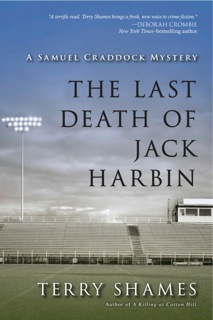
last death 2 copyWhile Auntie M is in Lumberton, NC this weekend for the literacy fundraiser Book’Em NC, please welcome guest Terry Shames.


Now What?


In my first book, A Killing at Cotton Hill, July 2013, I introduced ex-chief of police Samuel Craddock, the best lawman the town of Jarrett Creek ever had. The recent death of his beloved wife left him feeling like his life was basically over. Solving the mystery of an old friend’s death brought him back into action. When the book came out not only did I get some great reviews, but I received emails from people all over the country (as well as from England—who knew I would get an English audience for a series set in Texas?) telling me how much they loved Samuel.


The Last Death of Jack Harbin came out in January, 2014 to more good reviews—including the amazing declaration by a reviewer in the Toronto Times that Samuel Craddock was his favorite new American sleuth (who would have guessed that a Canadian reviewer would love a small-town Texas lawman?). It appeared that Samuel had traits people identified with.


Both of the first two books practically wrote themselves. It seemed as if the inhabitants of Jarrett Creek were eager to tell their stories. I heard the characters talk and watched them go through their daily lives as if I had a movie going in my head.


Then reality struck. When I started writing the third book in the series, the characters suddenly became coy—they refused to cooperate and seemed flat and uninspired. Thinking that I needed to re-spark my imagination, I took a trip back to the small town in Texas that Jarrett Creek is based on. Nope. Still the characters weren’t working. Now what?


I realized that I was confronted with what every writer of a series has to face—the need to have characters grow. Samuel Craddock and his supporting cast could not remain static and still be interesting to readers. The trick was to have characters change in ways that surprise readers—but not surprise them so much that they didn’t believe the characters would behave that way.


Depositphotos_3375880_s


I realized that one of the ways to do this was to use secondary characters to highlight different aspects of the recurring characters. Almost by instinct, in both of the first two books I did this. Like people in real life, citizens of Jarrett Creek came and went, interacting with the main characters like a Greek chorus.

I knew that some of these characters may only appear in one book, while others may come back. I love the character of Walter Dunn in The Last Death of Jack Harbin, and although I don’t think he will ever be a major character, I know I’m not through with him. And one character from A Killing at Cotton Hill showed up to become the victim in book three, Dead Broke in Jarrett Creek.


Settling into writing a series is like committing to a long-term relationship. People go along acting pretty much the same way they always have—and then they surprise you. Readers can look for changes as the series progresses. And as the writer, I have to be prepared for them to change as well.


Blue(1)

Terry Shames is the best-selling author of A Killing at Cotton Hill and The Last Death of Jack Harbin, Seventh Street Books.

Her books are set in small-town Texas and feature ex-chief of police Samuel Craddock. Terry lives in Berkeley, CA with her husband and two rowdy terriers. She is Vice President of Norcal Sisters in Crime and on the board of MWA Norcal. For more information, please visit her website: www.Terryshames.com.

With the chief of police out of commission, it’s up to trusted ex-chief Samuel Craddock to investigate the brutal murder of a Gulf War veteran who was a former high school football star. Craddock uncovers a dark tale of greed and jealousy that extends into the past, and well beyond the borders of the small town of Jarrett Creek.


D. B. Corey: Chain of Evidence Tuesday, Feb 18 2014 

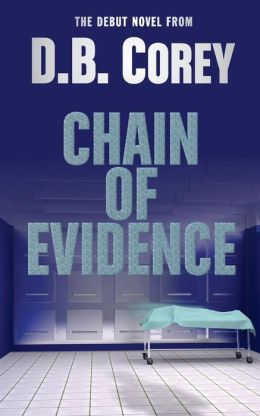
. ChainEvidenceD. B. Corey’s debut crime novel, Chain of Evidence, opens with one of the most chilling chapters Auntie M has read in a while, narrated by a devious and despicable necrophiliac pathologist who enjoys opera. This character grabs you by the throat on page one and doesn’t let up.

It’s a hot August in Baltimore and a killer the press has dubbed the CK Killer is on the loose. DS Moby Truax of the State’s Special Investigation Unit is tasked with finding the murderer who uses cyanide to kill, earning him his sobriquet.

Moby is interesting, a Willie Lomax of a character who is nearing the end of his sterling career, facing the loss of the memory that used to be one of his finest assets. The newest Baltimore victim is a 31 yr-old woman, two weeks after the dead body of 71 yr-old Rosa Neunyo. There were similar killings earlier in San Diego five months prior, but most of the murdered California women were in their late 60’s until this newest victim appears.

After thirty years detecting Moby’s instincts tell him there are TWO killers at work: one killing the older women, the second the younger, copycatting in the shadow of the original CK killer. Try telling his boss that. Under pressure to find the killer, his job on the line, Moby finds himself saddled with the unwanted assistance of an FBI agent from the California cases.

And this is where Corey really gets interesting. Who is smarter? The original CK killer, or the copycat? And how can Moby convince his colleagues and his narrow-minded boss that there are two murderers at work, while he’s

Corey’s meticulously plotted story revolves around Moby and the sick mind responsible for the copycats, evil personified. That the copier is smart enough to know how to mimic the real CK killer adds to the tension. When the end hits with a wallop, there will be one more twist that will surprise readers.

Corey’s book is available in print on Amazon, Barnes & Noble, Books A Million, and in Kindle format. You can order a personalized copy of his book through the Oxford, MD, bookstore Mystery Loves Company, too.

Here’s Corey in his own words from a previous interview:

When did you realize that you wanted to be an author?


                  In 2005, I challenged myself to write a novel; only because my new girlfriend (now my wife) said that my emails were so good I could be a writer. So I cobbled together my first novel just to see if I could write an entire book. After determining that a novel should be around 80-thousand words, I decided on a premise, and wrote the opening line:


“Call me Ishmael.”


                 HA! I wished!


                  Ok. I’m only kidding. But, the truth of the matter is that I started writing a book. After several days of Seek & Destroy on my laptop (I can’t type), I caught myself checking the word count every couple of pages. It was nowhere near 80-thousand words. That was when I decided that writing a novel was not about word count. When I finished about a year later, I had to admit that it was the worst thing I’d ever seen, that I couldn’t write a lick, and should have paid more attention in high school English. But … I also decided that I should try again. And this time, I should do it better.   

Do you think there is a difference between being an author and being a writer?


                  I think the difference between a writer and an author is the publishing part, of course. Being published allows you to claim the title of, author. But if you ask me what I am, I’ll tell you I’m a writer, unless I’m feeling especially full of myself. Then I’ll tell you I’m a novelist.


How did you find your current publisher?


                  Funny story. I stopped by a book signing for Austin Camacho held in Annapolis just off the Main Street docks. I’ve know Austin for several years and always tried to support him, knowing damn well he’d have to respond in kind if I ever managed to get a book into print. While chatting with him over a cup of coffee, he told me that he and his wife Denise were going to launch Intrigue as a full-fledged publishing house in the near future. I asked if he was looking for manuscripts, and he invited me to the Meet & Greet they set up to get it off the ground. As is my way, I couldn’t find the Meet & Greet because I didn’t have a GPS, so I emailed him the material several days later. After reading the manuscript, they requested a meeting. The rest, as they say, is history.


 What ritual do you have when writing? Is there something you do before, during and after you finish your story?


 I have a black tee-shirt my wife gave me. It reads, “Oh, this is SO going in my next novel.” I wear it when I sit down at the laptop. I also have a room that I set up for writing, and writing only. If you’d like a peek, it’s on my Facebook page.

Some writers say they write every day. As a rule, I don’t. I can’t. I have a day job to pay the bills. But I break that pattern when I have a reason. I just took two weeks vacation to finish the 1st draft of my 2nd novel. I wrote 8-10 hours every day because I set December’s end as a deadline, and it still took me into January.  


I write in pieces, or chunks, I guess. An idea for a story or novel will present itself to me (I don’t dream them up), and I’ll write the first scene or two; one Protag and one Antag—just enough so I don’t lose the story line, although this usually changes as things develop. Once that’s down, I mull it over, often during my work commute (radio off in the car) or at night, in bed. When I turn in, my mind doesn’t stop. It works and keeps me awake. Then a thought will occur and I have to get up to write it down. If I don’t, I’ll struggle to remember it over the next day or so and I hate that. Once I had a great idea for a character name and didn’t get up to put it on paper. It was the last name of an NFL player. The next day, I couldn’t remember it, and spent far too much time checking each NFL team roster trying to spark the recollection. It never came back.


            I get my best ideas at night, when my mind is free from the daily drudgery. I like to re-read the last scene or two that I’ve written, and start writing by re-writing to get to the next creative (and I use the term loosely) phase. It’s like picking up a book you’ve been reading,  but have laid aside for a day or so. You open to the bookmark, back up a few paragraphs, and refresh your memory. My writing process is much like that. Then it just kind of flows until I get tired, or my Muse goes to bed.


Who is your biggest supporter and why?


             That’s easy. My awesome wife, Maggie. Why? A few years back, before we were married, I wanted to quit “wasting my time”, as I put it.  She said, “Why do you want to quit now when you’ve learned so much?” She was right and I was wrong. Your writing is a learning process. A personal thing. It grows as you grow. If you stop, it dies.


What does it mean to you that you have a book in print?


              More than I can convey. It was never about the money (don’t tell my publisher that). It’s about accomplishment. I’m in my 60s. I’m a middle-class worker bee. I’ve done some cool things in my life, but never really achieved what I thought I could—what I thought I should—until now. I don’t expect to become  a household word because of one book, but it’s something to be proud of, a small mark I can leave behind that proves I was here,  and I just wish my mom were still alive to see it.


What advice can you give someone who is looking for a publisher?


              Don’t get discouraged. Many a successful writer forged their skills in the crucible of rejection.  Never give up. Keep improving. Become fireproof.


What advice would you give to a young person wanting to be an author?


                  Buy a thesaurus.


Give us five words that describe your novel?


 Shocking—Empathetic—Engaging—Unpredictable—Gratifying


What author would you compare yourself to?


                  A little Vince Flynn, a little Nelson DeMille, a little Lee Child.


                  Oh! Was I supposed to pick just one?


If you could do anything in the world, what would it be?


                  Avoid this question.


How long does it take you to write a story?


                  If I could make the living I am now with my writing, I think I could produce three full-length novels every two years.


Are you a pant’ser or an outliner?


                  You’ll pardon me if I have a little fun with this, but I am actually a little of both. I write outline form until I can’t stand it anymore, and then I cave and write the corresponding scenes to go with it. I guess that makes me an out-pantser … a term I like much better than pants-liner, which sounds like a feminine hygiene product.


Tell us in five sentences or less what your book is about….


                  Chain of Evidence is a story of a medical examiner who fulfills his own twisted urges by duplicating the acts of a serial killer, killing the women he wants. He uses his position to manipulate the evidence, hiding his own involvement while re-directing forensic blame toward the killer he copies. It’s a story of an aging cop confronted with forced retirement, an economically devastated pension, and diminished body and mind. Faced with rapid-fire changes to his world, solving this toughest of cases is his only chance to salvage his pension—and his reputation—before he’s ushered out the door.It’s the story of an attractive FBI agent, and her manipulation of a young, inexperienced state police commander to achieve the revenge she seeks.


I hope you like it.  


D.B. Corey is the debut author of the crime fiction thriller CHAIN OF EVIDENCE.


D. B. Corey lives in Baltimore with his lovely wife Maggie, and after a stint in college, spent twelve years with the U.S. Naval Reserves flying aircrew aboard a Navy P-3 Orion sub-hunter during The Cold War. During his time with the USNR, he began a career in the computer field.


His debut novel—Chain of Evidence—was released August 2013. He continues work on a political thriller, and a second police procedural.


Corey has contributed opinion columns to online periodicals and has appeared on local talk radio, all under the nom de plume, Bernie Thomas


For more information about the author; please visit http://dbcorey.com


James Oswald: Natural Causes & The Book of Souls Sunday, Feb 9 2014 

DUE TO WEATHER ISSUES, PLEASE ENJOY JAMES OSWALD FOR THE NEXT WEEK.

AUNTIE M WILL BE BACK NEXT WEEK WITH A NEW BLOG!


James Oswald is a Scottish livetock farmer who raises pedigreed Highland cattle and New Zealand Romney sheep. He’s also a writer with several different genres  under his belt, who happens to be friends with crime author Stuart MacBride. (MacBride writes a wonderful series featuring DS Logan McRae and several other stand-alones which Auntie M has reviewed at times; check him out.)

Oswald credits MacBride with pushing and supporting him as he turned his hand from other novels, comic scripts, an epic fantasy series, and even a travel book to writing a crime series. Readers will be happy that MacBride has such discerning taste.

Each of the first two books in Oswald’s series featuring DI Anthony MacLean have been shortlisted for the CWA Debut Dagger Award. It should be noted that in his own series, Oswald named a character DC MacBride for his friend and supporter. Ian Rankin gets a mention, and perhaps a character named Dalgliesh is an homage to P D James, although the name is of Scottish origins.

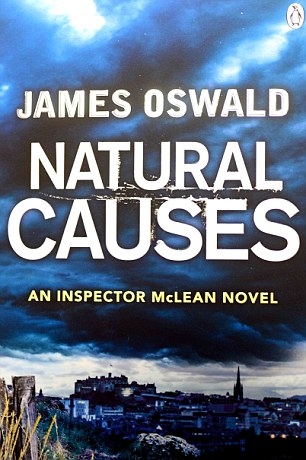
A SCOTS farmer dubbed the new Ian Rankin celebrated his six-figure crime book deal - by buying a new tractor.Natural Causes opens the series and introduces MacLean, man whose grandmother lies in a coma months after suffering a stroke. MacLean has his own demons to deal with in the form of the gruesome murder years before of his fiancee, Kirsty, killed by The Christmas Killer whom MacLean helped put behind bars.

Oswald starts off with one of the most horrifying and gripping first chapters Auntie M has read in a long time, reminiscent of Denis Mina’s early books, with powerful imagery of a grotesque act that is as haunting as the evil that MacLean seems to feel.

This is the same Edinburgh of Rankin, but vastly different in tone with the cast of recurring characters and a fantastical element that doesn’t hit the reader over the head but serves to give pause.

The killer of a prominent city elder is found less than a day after the murder and commits suicide. It appears as if this case closed itself, until  a second murder days later bears haunting similarities to the first, even though once more the murderer swiftly confesses and then kills himself. These scenes are horrifying in their own way as the reader is privy to information that eludes MacLean at first.

Meanwhile McLean is investigating the discovery of the body of a young woman who has been walled up in the basement of an old Edinburgh mansion. She had been brutally murdered, and her internal organs removed and placed around her in six preserving jars. Forensic evidence suggests this happened over sixty years ago, and MacLean’s research shows is possibly linked to an attempt to re-enact an ancient ceremony to trap a demon in the dead girl’s body, thereby conferring immortality on the six men who each took one of her organs.

McLean’s grandmother, who raised him after his parents were killed when he was a young boy, finally dies. When he’s handed the investigation of a series of unusual, violent suicides, plus that of a cat-burglar who targets the homes of the recently dead, he feels fragile and overloaded, unable to process his grief.

Then another prominent Edinburgh businessman is killed, and McLean suspects there may be a connection between the murders, the suicides and the ritual killing of the girl found in the basement as the same names repeatedly appear. What he needs is a rational explanation as to how that connection works. But how can he stop the evil force he feels is behind these coincidences?

MacLean’s supporting cast is well-drawn: Emma, the SOCO he has a loose relationship; pathologist Angus Cadwallader; his friend and old school roommate, Phil; and of course, DC MacBride. They provide a counterpoint to MacLean and feel believably drawn.  Dark Edinburgh, as conceived by James Oswald, provides an excellent setting for this crime series. The multiple plot strands all come together  to create a tight, plausible tale of murder and deception that is as unusual as it is complex.

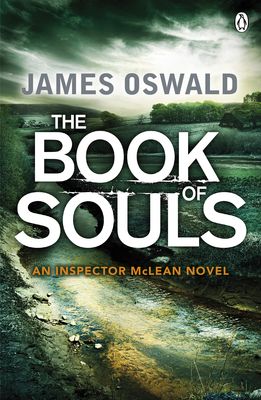
In the second MacLean outing, The Book of Souls,  it’s the Christmas season, a particularly difficult time for MacLean, as this was when      The-Book-of-Souls

Kirsty was murdered. The manner in which MacLean found Donald Anderson is unclear; most of all, to McLean himself. Something took him to the man’s antiquarian bookshop, and something else made Anderson, the Christmas Killer, let down his guard. In a cellar under the killer’s shop, his torture chamber was found. Anderson went to prison and the yearly murders stopped.

Then Donald Anderson is murdered in prison, and MacLean knows he lies in a grave. But soon after, another young woman is found murdered in the same manner as Kirsty: naked, her body washed, her throat slit, all after being kept prisoner and raped.

Did MacLean put the wrong man behind bars? Or is this a copycat killer? In MacLean’s mind he keeps seeing Anderson on the streets of Edinburgh, but he’s seen the man’s grave and knows he’s dead and buried.

Instead of the once a year murders of Anderson, similar abductions and murders start to pile up. Facing added stress from his nemesis, DCI Duguid, MacLean is tasked with investigation a series of arson fires, and these end up including MacLean’s own tenement home.

Once again, those responsible are too close to home and perhaps too close to people MacLean is growing to care for, so the stakes are upped. The fantastical element is subtle and yet the plot has twists and turns that will make it difficult for readers to put this one down. If anything, Oswald’s second is even stronger than the first.

There are two more in this series which will be reviewed at a future date: The Hangman’s Song, and not in print until this July, Dead Men’s Bones. Auntie M can’t wait to share these with you.

Rick Reed: Jack Murphy Crime Series Sunday, Feb 2 2014 

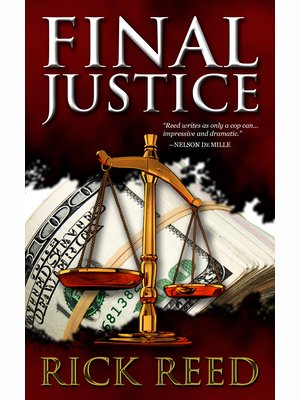
Please take a moment from the Super Bowl to check out Rick Reed’s essay. Rick is the author of true crime plus the Jack Murphy series. Leave a comment to enter a drawing for a free copy of FINAL JUSTICE.

Final Justice Ebook Cover

Lump of Clay


I’ve been asked this question many times. “Do you write from an outline? How do you get your ideas and keep them straight while writing a full length novel?”


The answer I gave in the past is, “I don’t start with an outline. I start with a title (an idea) and then let the characters develop the story.”


But today I realized that’s only partially true. 


Imagine a book as a lump of clay. (And please don’t think I’m comparing myself to an artist.) The definition of sculpting is to create by removing material in order for the shape that is hidden inside to be revealed.


With that in mind, imagine a title such as “Murder in Mind.” What images does that create? What feelings does it bring out? For every one of you it’s different, but will have subtle similarities. For one of you the story would be about a serial killer that fantasizes his murders and tries to make them fit the fantasy. For another of you it might be a nightmare, or the unconscious world of a coma patient. 


Probably most of you work the other way around. You have an idea in mind, and then come up with a title. Either way, the title almost always changes to fit the story. 


My books, The Cruelest Cut, The Coldest Fear, and Final Justice, all started with a title that stuck in my mind. It was my lump of clay. And like any sculptor or potter will tell you, eventually, the clay begins to take over, and the artist is merely the hands and chisel (or laptop) that tells the story. Inside my lump, I saw a number of possible directions for the story, and each one would lead to the characters. Then the characters would take over.


Each character has a different idea how they talk, what they will or won’t do, how a scene turns out, who they interact with. I never know the end until the end because it “ain’t over ’til the fat lady sings.” There is no better feeling in the world for an author than writing those two words…THE END.


Like any writer or artist or athlete, etc., each book is a different experience and you learn from all of them. I’d like to think that I’ve grown as a writer and I can look back at my old books and see where I would have done them differently. But the difference is the beauty of a book. Not everyone will like what you’ve written. Not everyone appreciates a painting or sculpture or song or music, but that doesn’t make it bad. (Like I used to tell my college students, “Not everyone likes asparagus.”)


So I say, “Go forth. Find your lump of clay. Create. Believe.” 


THE END


Sergeant Rick Reed (Ret.) was a member of the Evansville Police Department and Vanderburgh County Sheriff Department in Indiana for 30 years. During that time he served in almost all areas of law enforcement, as a hostage negotiator, handwriting expert, Bunco-Fraud, juvenile, crimes against persons, and homicide.

 In his law enforcement career he was lead investigator on numerous homicides, rapes, home invasion and battery cases. But it was during his stint in Bunco-Fraud (white collar crime) that he tracked and captured serial killer Joseph Weldon Brown. Reed’s acclaimed book, Blood Trail, is the true account of that investigation, which subsequently unearthed a serial killer claiming the lives of fourteen victims. While serving a life-without-parole sentence for these murders, Brown strangled his cellmate, made coffee, and called for the guard to move the body.

 After the success of Blood Trail Rick signed a two-book contract with Kensington Books to write serial killer thrillers. His first book, The Cruelest Cut, released in 2010, introduces detective Jack Murphy and his partner, Liddell Blanchard, as they chase a pair of revenge-driven serial killers through the streets of Evansville. In The Coldest Fear the detectives attempt to follow the reasoning of an unfathomable serial killer who is wielding a bone axe. The Coldest Fear was released in September 2011. Both of these works have been translated into German and Polish.

 Rick’s third detective Jack Murphy thriller, Final Justice, addresses the corruption and failings within the criminal justice system. Final Justice was released September 2013 and re-released in January 2014.Rick is currently at work on his next Jack Murphy thriller, Murphy’s Law, to be released in mid 2014.

 Rick also belongs to BOOKCLUBREADING.COM, an innovative group that pairs authors with book clubs, libraries, universities, domestic violence groups, and writer’s groups. The Internet makes the author available to speak at your event via Skype or iChat, or in person.

To learn more, visit Rick at:

Website:    http://www.rickreedbooks.com

 Blog:      http://rickreed007.blogspot.comRickReed - Copy

 BookClubReading:  http://bookclubreading.com/final-justice/

 LinkedIN:  http://www.linkedin.com/pub/rick-reed/37/535/8a6

 Facebook:  https://www.facebook.com/pages/Rick-Reed-Author-Page/118343444853522?sk=info&edit=eduwork

 Twitter:  @JackMurphy1010

Or contact via email: rick@rickreedbooks.com


Leigh Russell: DI Geraldine Steel Sunday, Jan 26 2014 

Leigh Russell’s Geraldine Steel series is finally available in the US, in paper back on Amazon.com and now through the Witness Impulse series as ebooks. Jeffrey Deaver calls the debut of the series: “A stylish top-of-the-line crime tale” and readers on both sides of the pond are quick to agree.

These are intricately plotted crime novels that  find readers quickly flipping pages as the stories race along, and all in the psychological style of Ruth Rendell or Frances Fyfield. Steel is likeable and human, with her own ghosts that haunt her, and her insecurities and errors in relationships feel realistically drawn.

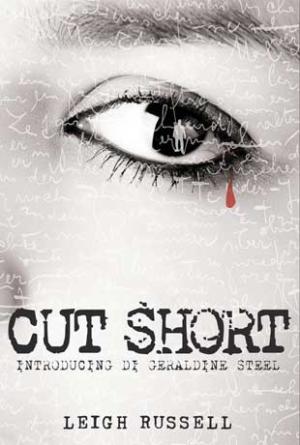
First in the series is Cut Short, which introduces Geraldine and her complicated background as she starts a new job in Kent.  cut-short

Relocating near the small village of Woolmarsh, Steel fully expects her life to take a quiet turn. Still smarting from the end of a six-year relationship to a man who couldn’t handle her commitment to her work, Steel moves into a new flat and prepares to turn a page and start a new chapter. Her flat on a pretty tree-lined street promises to become a haven at the end of her work day for the mobile Murder Investigation Team based in southeast England.

Steel is still unpacking boxes when the call comes to attend the Incident Room being set up in Woolmarsh, a lucky break for Steel for it means she can stay at home instead of traveling to a different site. She’s introduced to her new colleagues, and the DCI she’ll be working with, Kathryn Gordon, a tough but fair detective.

The body of 22 yr-old Angela Waters has been found by children with their nanny, partially hidden in the leaves and shrubs of a nearby park. The crime scene has been compromised by the children, the nanny, and a variety of small animals that have been at the corpse in the day and night she’s lain there.

This is the first of a series of murders by a sick mind preying on young woman. In an interesting twist, several chapters are from the killer’s point of view, so the reader has a very different feel for the motives behind what Steel and her team think is a typical serial murderer.

A great start to an interesting series, with Steel finding her footing in a new environment amongst a new team who may or may not be watching out for her. And of course, one very sick killer who may just get away with murder unless Steel can figure out the culprit.

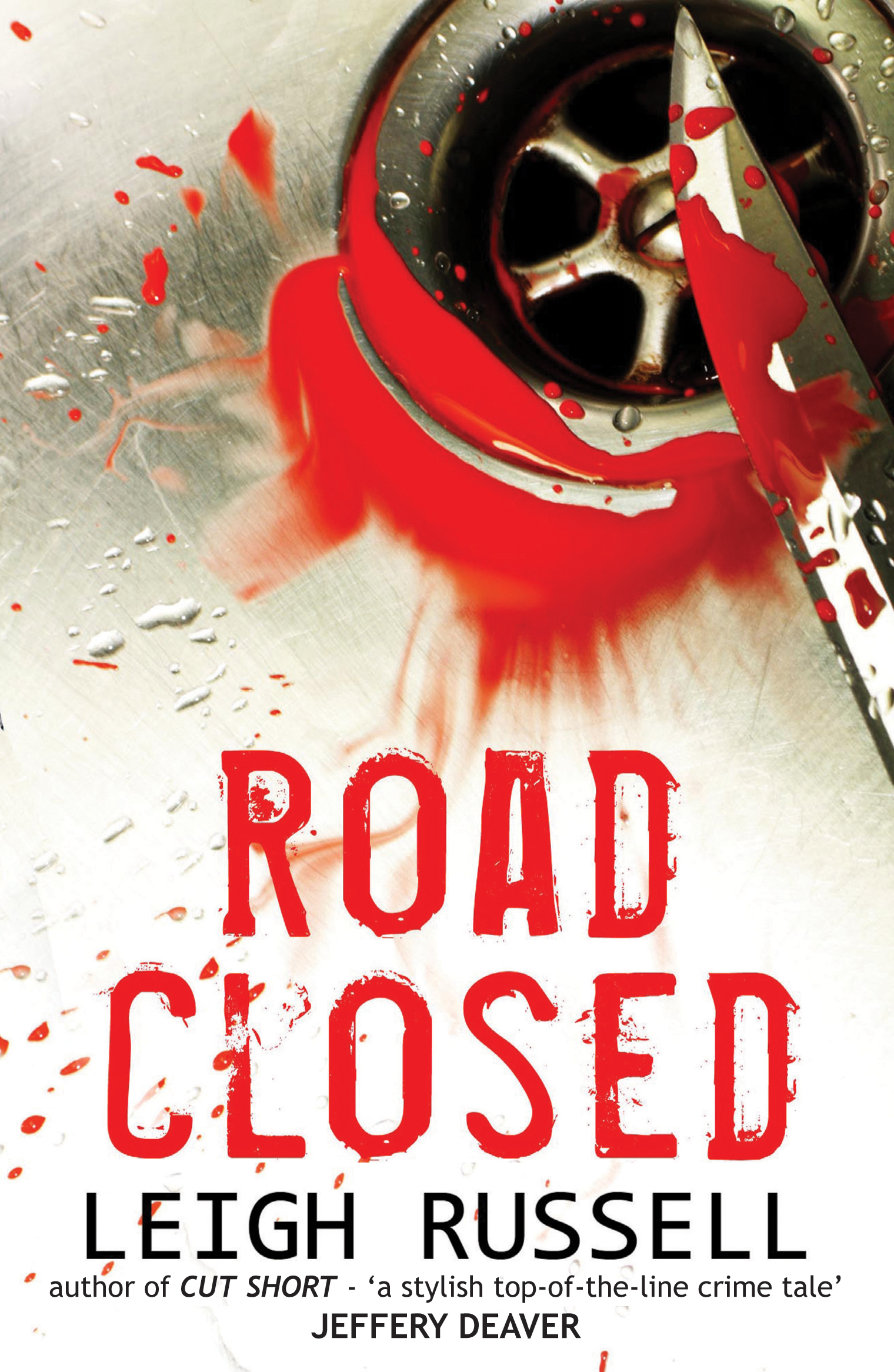
road-closed-coverRoad Closed finds Steel and her team called in after a gas explosion takes the life of a man in his home. Was this a case of arson or that of a desperate woman trapped in a hasty marriage finding a way to end it?

In the midst of the new case, Steel’s affair with a young man seems to waffle. Is that on her end or his? And what of the grieving widow Sophie? Was her husband’s death the result of a pair of bumbling burglars or did he die at her own hand?

An old woman falls down the stairs during a burglary. Or was she pushed? And are these incidents in any way related?

These are some of the questions facing Steel and her team as they try to pick apart what is real and what is not in this second outing that starts with the death of Steel’s mother.

At the funeral, she is forced to face the ambivalence she felt toward her mother as her older sister’s mourning takes its toll. With her small family reduced to just her sister Celia and her husband and their daughter, Steel ponders what it means to have felt throughout her life as an outsider in her own family. the answer will shock her and rock her very core.

But that answer opens up even more for Steel, and will be almost as difficult as Steel’s investigation. With her team not solidly behind her, Steel has to decide if a witness to the previous crimes who dies in a hit-and-run accident is part of the larger picture or just an untimely coincidence.

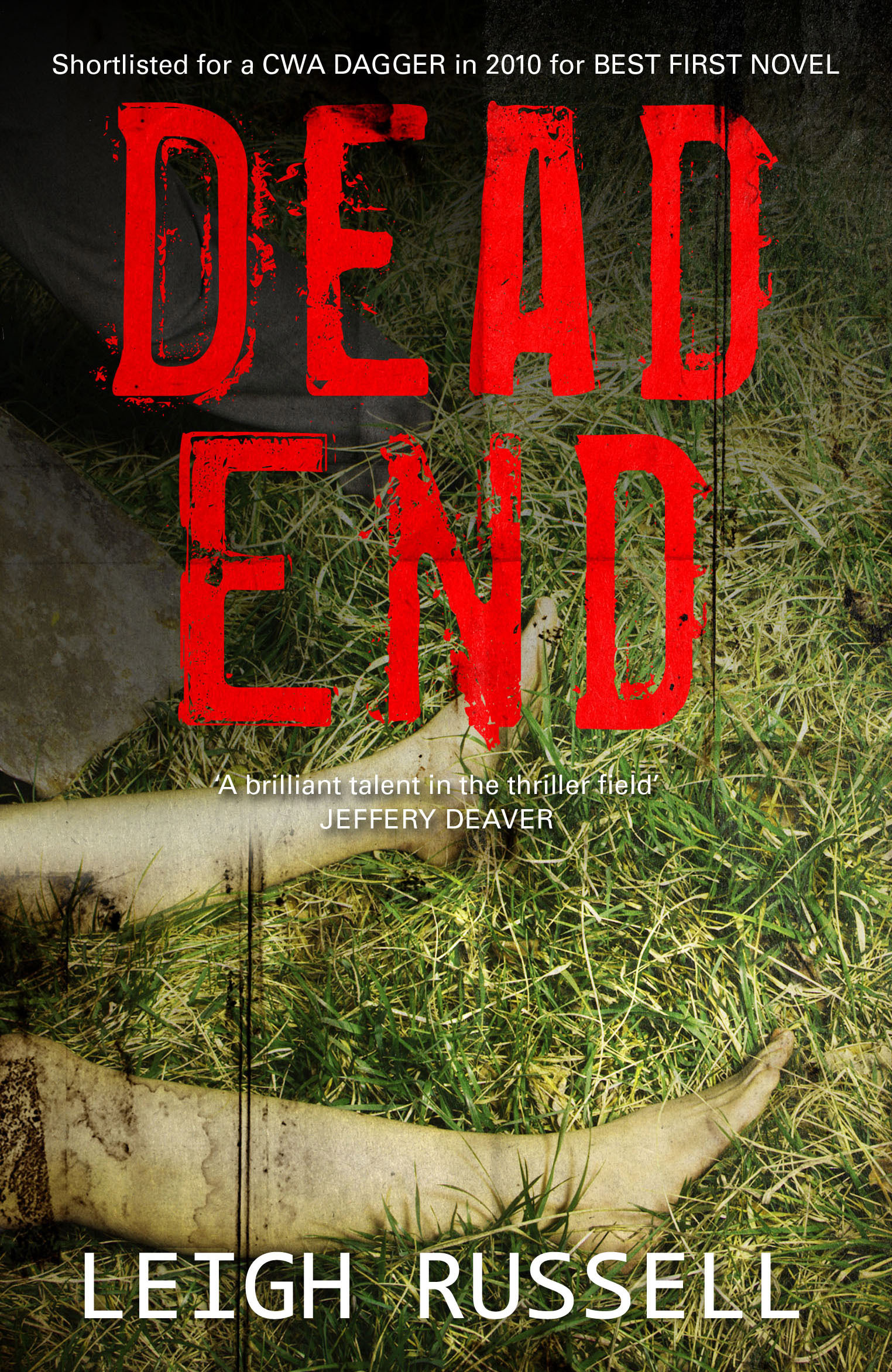
Book Three continues with Dead End, the most disturbing case Steel will have to date. The trail will lead to York and back as her team struggles to find a killer9781DeadEnd just as Steel seems to heat things up with the handsome pathologist, Paul Hilliard.

Abigail Kirby is a determined woman, pushing her way to a new position as headmistress at a private school, uprooting her two teenagers from their schools and homes, despite the crumbling state of her marriage. Young Ben seems to have settled in well to his new school, but 14 yr-old Lucy is socially awkward and on the verge of an eating disorder. Plus, she’s furious with her father for having a relationship outside his broken marriage.

Then Abigail’s corpse is found and as horrible as the fact of murder seems, it takes a decided turn for the worse at the postmortem when it’s discovered her tongue had been cut out while she dying. Could her husband have decided to take the easy way out to have the relationship he wants?

As Steel’s team gets their investigation underway, a second corpse is found, that of a potential witness, who has been blinded. Then Lucy runs away from home to find her new internet friend, the only person who seems to understand her.

Meanwhile, Steel’s DS, Ian Peterson, is having his own troubles at home. He’s gained Steel’s trust, but then goes off on his own to follow a tangent in the investigation.

Steel soon finds herself on the receiving end of a surprising twist as the climax builds to a swift conclusion that will jeopardize her own life.

These complex procedurals are tightly written and the new change in store for Steel at the end of this novel promises to keep the series from becoming formulaic or stale.

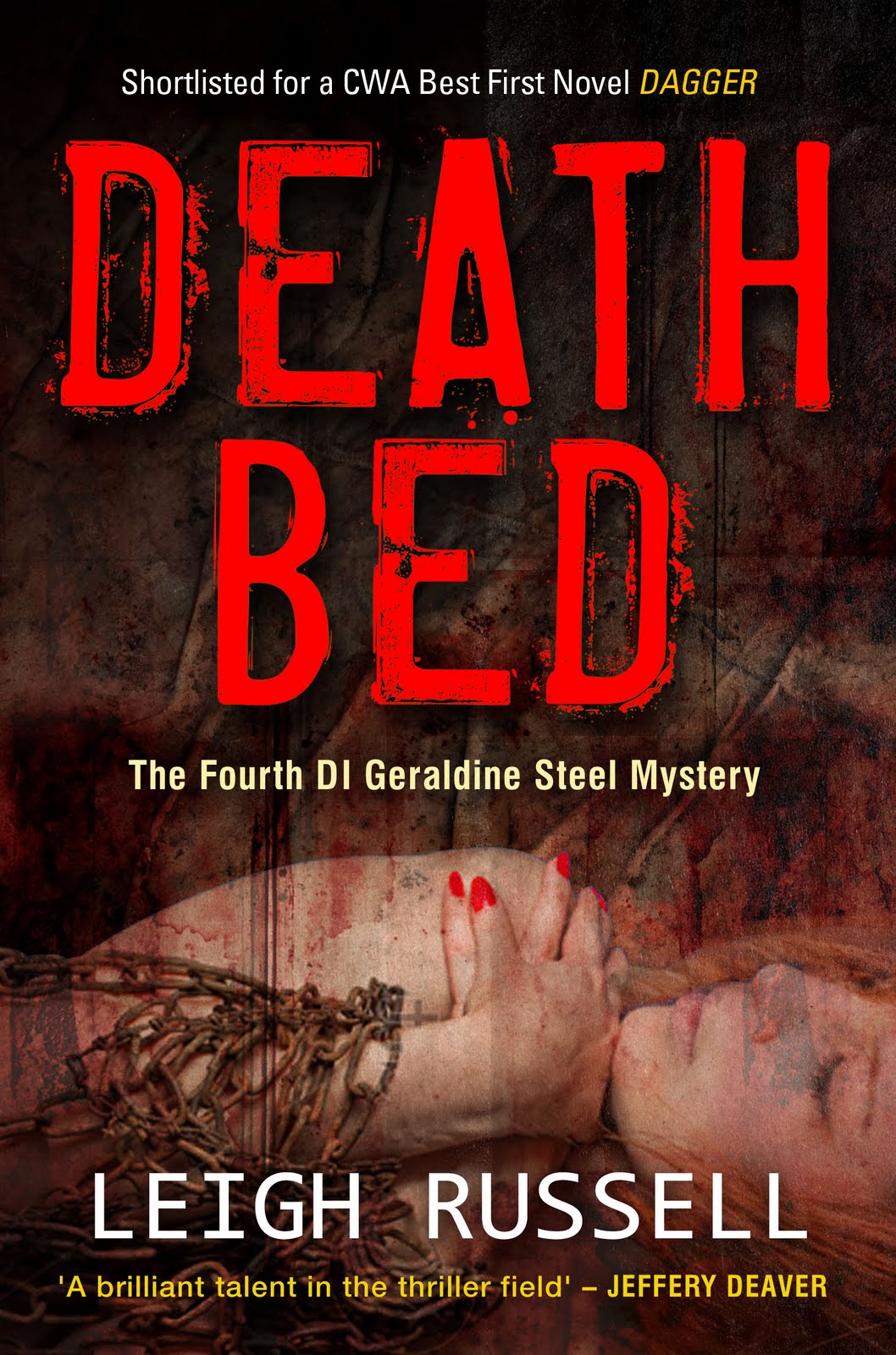
Death BedBook Four follows Steel’s relocation to London in Death Bed. After a surprise discovery about her personal life, which has affected her deeply, she’s forced to tell her sister that she’s received a transfer she’s hoped for: to the Met to work as Detective Inspector on their Murder Squad in London.

Another move for Steel, this time to Islington, with more boxes and new people to meet and fit in with, and this time she’s also fighting what she perceives as their idea that she’s a country bumpkin who won’t be able to handle the hectic pace of the Hendon Squad.

Her new DS is a woman, an adjustment for both of them, but that becomes the least of the two women’s problems when a young black woman is found murdered in North London. Showing signs of severe abuse, dehydration and marks of being held with chains, the discovery is quickly followed by a second body in similar circumstances.

Worried about calls of racism against black women, the team realizes the two murders are connected, especially when it’s found that two teeth are missing from both women. But their individual circumstances are clearly different. So what is the reason this killer has taken them? Is this his idea of a trophy?

In the midst of their investigation, chapters show the victims chained in the attic of their captor, and the chilling account of his rationale for doing what he believes to be a spiritual purpose, adding to the highly unusual “collection” that readers will find a haunting premise.

This is the darkest of the series, and probes the mind of a sociopath who only sees what he needs for his own purposes. It will be up to Steel to put the pieces together to unmask a canny and highly unusual murderer.

This gritty addition to the series delivers a powerful wallop. There are two more in the series with Steel in London that will be reviewed this spring when they are released by Witness Impulse here, along with an interview with the charming Russell. Stay tuned for more with DI Geraldine Steel from Leigh Russell.

Michael Cavender: Revenge on the Fly Sunday, Jan 19 2014 

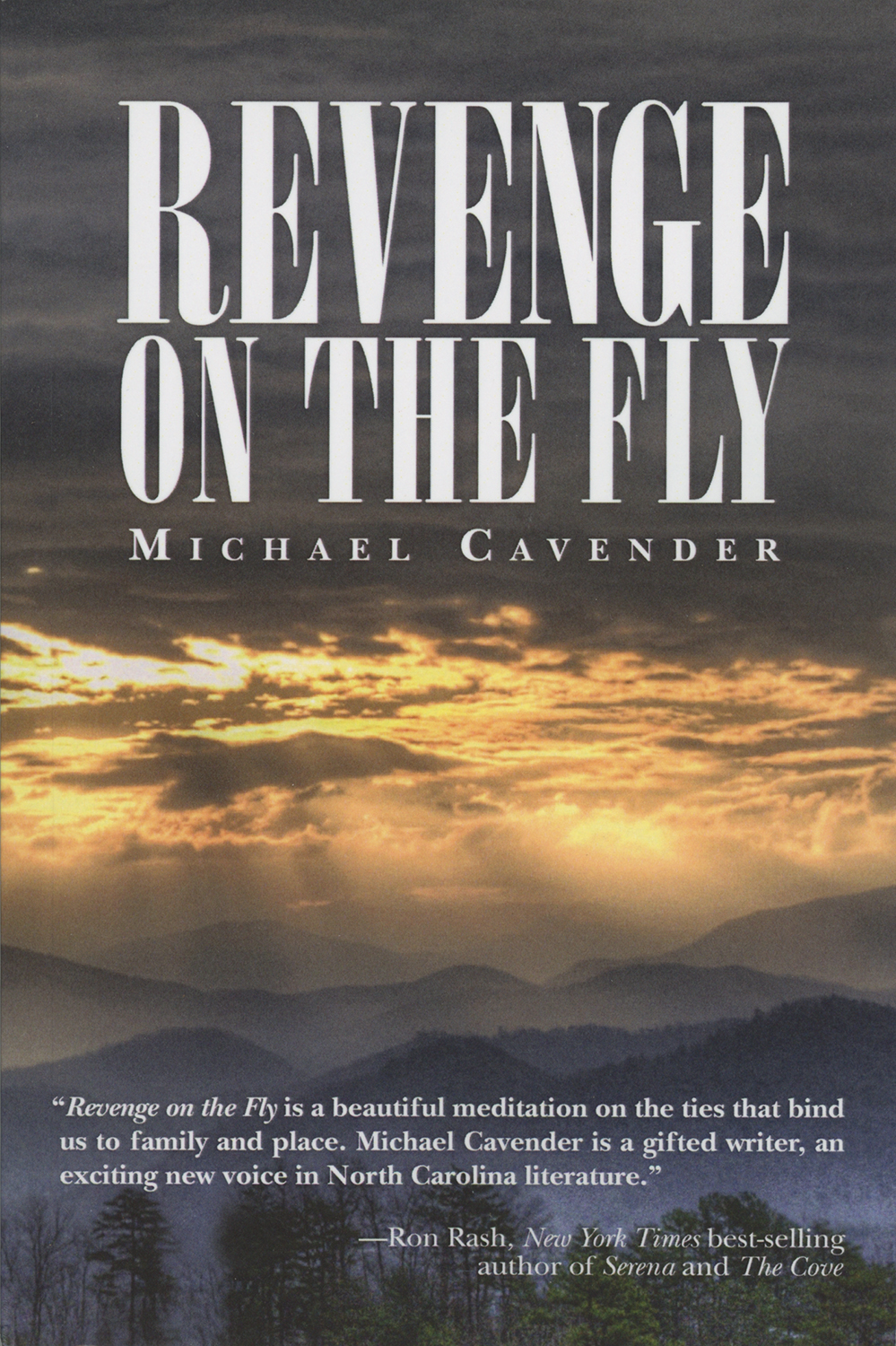
Revenge on the FlyPlease welcome guest Michael Cavender, who will explain the story behind his new novel, Revenge on the Fly:

I wanted to kill off a number of relatives when I started my first novel that eventually became Revenge on the Fly. In notebooks and on scraps of paper, my lists of potential victims who had somehow wronged the upstanding, blameless protagonist grew. A compilation of character flaws bolstered their potential as murderers. Unfortunately, the lists became a futile exercise of life imitating life, my one-dimensional players resembling people I knew who had no remarkable role to play or plot to thrust them along in any provocative way.

After several false starts, I decided my homicidal literary aspirations weren’t sufficiently inspired enough to fuel a well-plotted novel. The notes languished for years in a dark file folder. But the novel’s germ prodded me through the years. I finally found a clear path for my story that didn’t involve murder, but homicide was an essential element to the final plot.

During years of turning over that germ of a story, I realized what really sparked my imagination was the mystery of a character’s journey of last chances. My protagonist, Ben Phelps, was once told a soul-damaging lie by his older brother Watt.

The lie propelled Ben into a dissolute life of missed chances saturated by alcohol, self pity and fear. When Ben learns of the lie, he has a chance for revenge. The nature of that revenge will determine how Ben’s remaining life unfolds. Will his character extract blood or will his better angels seek redemption less gory? The mystery of a character at a crossroads is one of the oldest forms of mystery around.

They say character is plot. Discovering my character was certainly a mystery to me because my novel was unplotted. Only at the beginning of each chapter did I have a notion how that chapter would end. The plot evolved chapter-by-chapter as I discovered how Ben’s character would contend with the obstacles I tossed in his path.

As character, action and plot converged into a novel, thestory evolved over far more years than I originally had anticipated. If I had known how many years would pass until publication, I’ve might never have started. And the rewriting, editing and then more rewriting took at least as long as creating the first draft. Many critical eyes improved Revenge on the Fly into something worthy of publication. A lot of readers call it a page-turner they couldn’t put down, sweet words to any writer.

My next novel better have a much shorter gestation period. It will be a story exploring the darker side of a mountain town in which the protagonist seeks the murderer of a man who dared challenge the community’s comfortable cloak of religious piety. I’m eager for a juicy crime novel and I can’t wait to see who done it, and why!

Author PhotoRevenge on the Fly is available on Amazon.com and at Barnes & Noble.

Local NC bookstores that also carry the book are: Flyleaf Books, Chapel Hill; Purple Crow Books, Hillsborough; Park Road Books, Charlotte; City Lights Bookstore, Sylva.

Charlotte Williams: The House on the Cliff Sunday, Jan 12 2014 

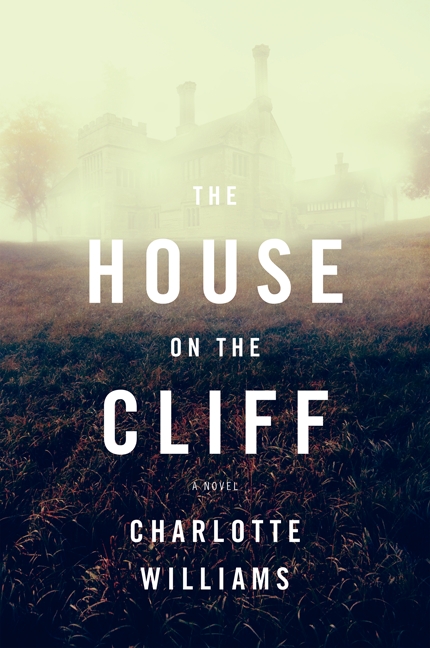
charlotte-williams-the-house-on-the-cliff.jpg?w=450Welcome to Cardiff, Wales, home to psychotherapist Jessica Mayhew and her family.

Jessica has it all: lovely home, two great kids, a successful practice, and a loving marriage. Or so she thinks.

She’s sharp and notices small details with her clients, yet somehow misses that things are wrong in her marriage when her frequent-flyer husband, Bob, admits to a one-night stand while away on business.

Think: frosty at home, and you’d be right. She struggles with picturing Bob and his lover while trying to co-parent young Rose and 16 yr-old Nella. Is her marriage over?

But the thaw for Jessica comes in the form of an interesting new client, actor Gwydion Morgan, who arrives asking for her help with a phobia that may affect his career. The son of Evan Morgan, a womanizing, overbearing man with a string of infidelities to his name, Jessica admires Gwydion’s insistence not to trade on his father’s name and to make his own way.

It seems buttons are a huge problem for the incredibly handsome young man, and Jessica feels drawn to him, especially after Bob’s confession and her inability to forgive him.

Jessica soon susses out that the young man’s button phobia masks a deeper issue, and Gwydion admits to a frightening and recurrent dream involving being locked in a box and hearing a man and woman fighting. He wakes before the end of the scene, and soon Jessica is pushing him to remember more. She’s convinced the end of the dream is the way to his recovery.

When Gwydion’s mother calls and says her son has sunk into a deep depression and she thinks he’s suicidal, Jessica breaks one of her own rules and makes a house call. The foreboding Craigfa House reminds the reader of something out of Rebecca, a cliffside Jacobean melange on West Wales. Arianrhod Morgan is grateful Jessica has come to the house. Beautiful but unhappy, the woman has withstood her husband’s ferocious philandering for years. It’s obvious she is concerned about her son.

A drowning off their cliff years before is glossed over until Jessica learns that the young woman, Elsa Lindberg, was actually Gwydion’s nanny. Jessica begins to delve into the case, never imagining the repercussions she will dreg up. Her snooping into the young woman’s death will coincide with Gwydion remembering more and more of his dream until he reaches the devastating end.

How that will impact Jessica and her family run alongside her own distrust of her husband and her growing attraction to the young actor. Who is telling the truth? And who can she really trust?

With her instincts clouded, Jessica tries to find the answers, only to see that the truth may be harder to take than she ever imagined.

A powerful debut thriller, with an interesting family behind it and a keen sense of the psychology that Jessica practices. Williams has a long history or writing for the arts in journalism and making documentaries for the BBC. More recently she’s worked in radio drama on original plays and adaptations. Readers will hope she brings back Jessica for round two down the road.


JL Greger: Murder: A New Way to Lose Weight Sunday, Oct 6 2013 

Please welcome medical mystery writer JL Greger has taken time off from writing her series to give Auntie M’s readers some great advice on how to lose weight while dieting~

cover Murder- A New Way to Lose Weight

WRITING IS LIKE DIETING


Doubt me? Let’s look at six pieces of advice for writers and dieters.


1. Set realistic priorities. You are more apt to attain small achievable goals (such as losing a pound a week or writing ten pages per week) than larger goals with artificial deadlines (for example losing fifty pounds before your class reunion or writing a three hundred page novel by Christmas).


2. Don’t procrastinate. Start working on your goals today, by skipping dessert at supper and writing at least one page for your next novel tonight.


3. Control problems and distractions. For writers, the distractions on the Internet are comparable to high fat, sugary foods to dieters. Perhaps this advice to Linda Almquist in the first chapter of Murder: A New Way to Lose Weight will help you sort through your clutter.


“There are three types of problems. A few problems are like wine; those situations improve if you delay decisions and let them age. Most problems are like waste paper. You can ignore them because they don’t matter. Unfortunately like waste paper, they tend to be messy when they pile up. And some problems are like manure. You must identify them quickly before they stink.”


                                                                                                                                                                                                                               Coming Flu Front CV


4. Work at it every day. Most successful dieters have changed their lifestyle and eaten less and exercised more for months. If you want to write a novel a year, set aside time to “work on your book” every day.


5. Sweat the small stuff. Little bedtime snacks can undo our good behavior at meals or in the gym. Similarly grammar and spelling errors can ruin a novel with a great plot and characters.


6. Laugh at all those who give advice like this because you know it’s easier to give advice than follow it.


Bug&me5 


JL Greger traded in being a biology professor at the University of Wisconsin-Madison to be a writer who puts tidbits of science into her medical mystery/suspense novels.


In Murder: A New Way to Lose Weight, the protagonist Linda Almquist struggles to lose weight, to fit into a new job where she’s not really wanted, and to help the police discover whether an ambitious young “diet doctor” or a couple of old-timers with buried secrets have the most to gain from the deaths of two women in a medical school. She has to work fast or she may be the next victim.


In Coming Flu, epidemiologist Sara Almquist, Linda’s sister, is trying to stop two killers:  the Philippine flu, which is rapidly wiping out everyone in a walled community in New Mexico, and a drug kingpin determined to break out of the quarantined enclave. Sara (in the third novel in the series, which is due out in November 2013) finds the wrong people from her past follow her to Bolivia when she accepts a public health assignment while Linda stays in Albuquerque and deals with more shenanigans in the medical school.   


The Kindle versions of both medical mysteries are on SALE on Amazon for $2.99 in September.


Coming Flu(http://www.amazon.com/Coming-Flu-ebook/dp/B008WDL84O/ref=sr_1_1?s=digital-text&ie=UTF8&qid=1372715303&sr=1-1&keywords=Coming+Flu ) and


Murder: A New Way to Lose Weight(http://www.amazon.com/Murder-New-Lose-Weight-ebook/dp/B00DFCC3IM/ref=sr_1_1?s=digital-text&ie=UTF8&qid=1372715439&sr=1-1&keywords=Murder%3A+A+New+Way+to+Lose+Weight).


For more, visit http://www.jlgreger.comcast


Susan Sloate: My Cousin Fred & the Power of the Broadway Musical Sunday, Sep 29 2013 

Susan’s original post became garbled when it loaded; some of you might have had trouble reading her neat story about her cousin Fred. So here it is again in its entirely. And don’t miss Susan’s new release, Stealing Fire.

HOW DO YOU RECOGNIZE YOUR SOULMATE?
In glittery 1980’s Los Angeles, Beau Kellogg, a brilliant lyricist now reduced to writing advertising jingles, yearns for one last Broadway hit to compensate for his miserable marriage and disappointing life.
Amanda Harary, a young singer out of synch with her contemporaries, dreams of appearing in Broadway musicals while she holds down a day job at a small New York hotel.
When the two meet in a late-night phone conversation over the hotel switchboard, it’s the beginning of something neither has ever found—an impossible situation that will bring them both unexpected success, untold joy and piercing heartache… until they learn that some connections, however improbable, are meant to last forever.
STEALING FIRE is, at its heart, a story for romantics everywhere, who believe in the transformative power of love.

Stealing_Fire_Front_7

My Cousin Fred & the Power of the Broadway Musical


By Susan Sloate


     Let me tell you about my cousin Fred. Fred was the failure of my family. (And no, I didn’t plan all that alliteration.)  This is my father’s side I’m talking about now. On my father’s side were all people who came from poor backgrounds, who determined they weren’t going to be poor in the future, and in the 1920’s, ‘30s and ‘40s rolled up their sleeves, started their own businesses, worked long hours, sacrificed, and yes, became very wealthy. (And God bless them; I didn’t realize for many years how much I owe them and how hard they worked to make my life wonderful. But that’s another story.)


     My cousin Fred, however, wasn’t a start-your-own-business kind of guy. He had another dream. To support that dream, he took a job in a shoe store in New York in the 1950’s.


     None of my relatives had a problem with the shoe store. They understood starting at the bottom. What they had a problem with was Fred’s dream: he wanted to be a (gulp) songwriter.


     What was worse, in my relatives’ opinion, was that he didn’t even want to write the music. Oh, no. Fred wanted to write just the words for these songs. Seriously.


     “You call that a career?” my aunts, uncles and grandparents would bellow. “What are you thinking? You got a good job at the shoe store; if you work hard, who knows, someday you might become the store manager. Think big, Fred!”


     I don’t know how Fred felt, hearing that ongoing vote of confidence, but he persevered anyway. He teamed up with a composer friend and they wrote their little songs. And eventually they met a young girl with a big voice who had lots of energy and ambition. She wasn’t all that pretty, but she could belt out a song.


     So all three of them worked together and eventually got their big break, with an off-Broadway show they wrote the score for and their singer friend starred in.


     Flop.


     I know; you thought it was going to end with their all showing up my relatives, right?


     My relatives took that failure as proof that they were right; Fred needed to focus on the shoe store. Fred took it differently.


     And my relatives finally did stop bugging him about his career in feet on the night he got them house seats for his new Broadway show … CABARET.


     Seriously.


     My cousin Fred was Fred Ebb, half of the musical team of Kander & Ebb, who also wrote the scores for CHICAGO, ALL THAT JAZZ, and the movie FUNNY LADY. And that energetic young girl they worked with? Her name is Liza Minnelli, and she introduced their most famous song, “New York, New York”. Start spreading the news, indeed.


     Kander & Ebb are not just a Broadway success story; they are legendary. (And I promise, all of the above is true. How can you not believe a family story?) Fred Ebb, sadly, is no longer with us. But for the purposes of this blog, what’s important to know is that by the time I was old enough to hear Fred’s story, he was already a Broadway superstar. Also, my mother had studied voice and wanted to sing on the musical stage herself, and that was my first career dream as well. So I was raised with Broadway musicals—old ones, new ones, famous ones, not-so-famous ones, hits, flops. I knew their stories, I knew their stars, producers and creative teams, I knew how they came to be hits or flops. To this day, I can still sing more than a hundred show scores from memory. I’m praying someday someone invents a game show entirely about Broadway musicals. I’ll be a million-dollar winner, guaranteed.


     So many years ago, when I sat down to write about a complex love affair I was living through and didn’t want my characters to have the same jobs or lives as we did, it was natural for me to set the story in the musical theater. I’d grown up in it; I’d actually written a musical at the age of 14 (book and lyrics), with a close friend. And yes, I still dream of writing for the musical theater. If you should really ‘write what you know’—well, it was something I knew, all right.


     The beginning of what I called for years my ‘baby novel’ was about two characters much like my love and me. Within just a few pages, I found he had become a Broadway lyricist (no, not modeled on Fred, but I’m sure his story was at the back of my mind). I became the girl who was studying to be a singer on Broadway (which I’d once desperately wanted; funny how things change when you realize you have no talent). In real life, the guy was a novelist/screenwriter and I was working at becoming a novelist/screenwriter. It wasn’t the same thing, but on the other hand, it was.


     The novel which finally emerged from many years of writing, putting it down, and picking it up again is titled STEALING FIRE, and it’s just been published by Drake Valley Press. And the reason (apart from plain old fear and procrastination) that it hasn’t been published till now is just that I really had no idea how the story was supposed to end, and for a long time I wasn’t sure it mattered. I told myself for a long time that this was just therapy during a tough period long ago, that it didn’t have any relevance for me now. It had nothing to do with the me of today.


     But it kept nagging at me. It’s hard to ignore 275 pages of passionate pleading, especially when you wrote them. You can’t just throw all that stuff out. I took it out again when I stumbled on the Amazon Breakthrough Novel Award Contest. I had one week to get in my entry, and in that one week, I cut 100 pages, wrote 100 new pages (new scenes, connections between scenes) and basically finished it, though I still wanted to clean it up a little.


     I got it into the contest with about 30 minutes to spare, panting all the way, and was thrilled when it was named a Quarter-Finalist in 2012. I promised myself I’d publish it, and when Drake Valley Press and I found each other earlier this year, all the stars seemed to align.


     STEALING FIRE is about the musical theater, yes, but it’s mostly about a love affair between unlikely soul mates, but soul mates nonetheless—people who have no business understanding each other so well, but because they do, they change each other’s lives. It’s about a love most of us only dream about, but few of us ever know. I’m grateful that what I lived through all these years ago is now down on the page for readers to experience along with me, and I hope they’ll believe such a love is possible—because I know from experience that it is.


     I think what I loved most about writing it was that since Beau was a lyricist, I got to write song lyrics again, something I hadn’t done for many years. The challenge, of course, is that I set up Beau as a really superb lyricist, far above other lyricists in the musical theater. So the lyrics I wrote for him had to be, of course, superb.


     Well… not sure I nailed that, but there are three song lyrics that Beau ‘wrote’ in the novel. Whether you’ll think they’re good or not is debatable. But wherever he is, I hope my cousin Fred is proud.

Susan Author Photo 2013 Author Photo Copyright 2013 Vicki Faith

 SUSAN SLOATE is the author of 20 books, including her latest, Stealing Fire (which went to #2 in its category on Amazon the day it was published), the upcoming JFK time-travel thriller Forward to Camelot: 50th Anniversary Edition (with Kevin Finn) and Realizing You (with Ron Doades), for which she invented a new genre: the self-help novel. The original 2003 edition of Forward to Camelot went to #6 on Amazon, took honors in 3 literary competitions and was optioned by a Hollywood company for film production.
 Stealing Fire has autobiographical elements, including Susan’s love for the musical theater. She is proud to be distantly related to Fred Ebb, the legendary Broadway lyricist of Cabaret, Chicago, All That Jazz, and “New York, New York”.
Susan has also written young-adult fiction and non-fiction, including the children’s biography Ray Charles: Find Another Way!, which won the silver medal in the 2007 Children’s Moonbeam Awards. She has been a sportswriter and a screenwriter, managed two recent political campaigns and founded an author’s festival in her hometown outside Charleston, SC. Visit her online at http://susansloate.com.


« Previous PageNext Page »

Amazing Family Books

Featuring The Very Best in Fiction & Nonfiction Books For Children, Parents & The Entire Family

Book Review Magazine

Incredible Books & Authors

Book Sparks News

Writing, Books & Authors News

Book Bug Out

KIDS CLUB

Writer Beware

Shining a small, bright light in a wilderness of writing scams

Dazzle Reads

Top Books, Reviews & Author News

DESTINATION PROPERTIES

The preview before the visit.<ins class="bookingaff" data-aid="1815574" data-target_aid="1815574" data-prod="map" data-width="400" data-height="300" data-lang="xu" data-currency="USD" data-dest_id="0" data-dest_type="landmark" data-latitude="40.7127753" data-longitude="-74.0059728" data-landmark_name="New York City" data-mwhsb="0"> <!-- Anything inside will go away once widget is loaded. --> <a href="//www.booking.com?aid=1815574">Booking.com</a> </ins> <script type="text/javascript"> (function(d, sc, u) { var s = d.createElement(sc), p = d.getElementsByTagName(sc)[0]; s.type = 'text/javascript'; s.async = true; s.src = u + '?v=' + (+new Date()); p.parentNode.insertBefore(s,p); })(document, 'script', '//aff.bstatic.com/static/affiliate_base/js/flexiproduct.js'); </script>

Auntiemwrites Crime-Mystery Author M K Graff

Award-winning Mystery Author on books, reading and life: If proofreading is wrong, I don't wanna be right!

Lee Lofland

The Graveyard Shift

Sherri Lupton Hollister, author

Romance, mystery, & suspense she writes...

The Life of Guppy

the care and feeding of our little fish

MiddleSisterReviews.com

(mid'-l sis'-tǝr) n. the reader's favorite sister

My train of thoughts on...

Smile! Don't look back in anger.

K.R. Morrison, Author

My author site--news and other stuff about books and things

The Wickeds

Wicked Good Mysteries

John Bainbridge Writer

Indie Writer and Publisher

Some Days You Do ...

Writers & writing: books, movies, art & music - the bits & pieces of a (retiring) writer's life

Gaslight Crime

Authors and reviewers of historical crime fiction

Crimezine

#1 for Crime

Amazing Family Books

Featuring The Very Best in Fiction & Nonfiction Books For Children, Parents & The Entire Family

Book Review Magazine

Incredible Books & Authors

Book Sparks News

Writing, Books & Authors News

Book Bug Out

KIDS CLUB

Writer Beware

Shining a small, bright light in a wilderness of writing scams

Dazzle Reads

Top Books, Reviews & Author News

DESTINATION PROPERTIES

The preview before the visit.<ins class="bookingaff" data-aid="1815574" data-target_aid="1815574" data-prod="map" data-width="400" data-height="300" data-lang="xu" data-currency="USD" data-dest_id="0" data-dest_type="landmark" data-latitude="40.7127753" data-longitude="-74.0059728" data-landmark_name="New York City" data-mwhsb="0"> <!-- Anything inside will go away once widget is loaded. --> <a href="//www.booking.com?aid=1815574">Booking.com</a> </ins> <script type="text/javascript"> (function(d, sc, u) { var s = d.createElement(sc), p = d.getElementsByTagName(sc)[0]; s.type = 'text/javascript'; s.async = true; s.src = u + '?v=' + (+new Date()); p.parentNode.insertBefore(s,p); })(document, 'script', '//aff.bstatic.com/static/affiliate_base/js/flexiproduct.js'); </script>

Auntiemwrites Crime-Mystery Author M K Graff

Award-winning Mystery Author on books, reading and life: If proofreading is wrong, I don't wanna be right!

Lee Lofland

The Graveyard Shift

Sherri Lupton Hollister, author

Romance, mystery, & suspense she writes...

The Life of Guppy

the care and feeding of our little fish

MiddleSisterReviews.com

(mid'-l sis'-tǝr) n. the reader's favorite sister

My train of thoughts on...

Smile! Don't look back in anger.

K.R. Morrison, Author

My author site--news and other stuff about books and things

The Wickeds

Wicked Good Mysteries