Nicola Upson: London Rain Wednesday, Jul 15 2015 

London Rain
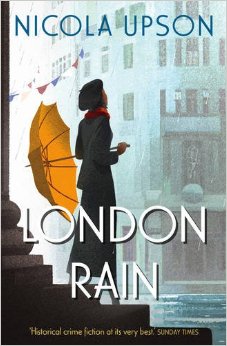
Nicola Upson’s series featuring Josephine Tey has long been a favorite of Auntie M’s, earning her carefully chosen “highly recommended” rating in each previous novel. In London Rain, Upson brings Tey to London during the glorious Coronation ceremonies of George VI after the agony of the abdication of Edward VIII, yet all of the glitter and pageantry becomes secondary to the murder of one of the BBC’s best-known broadcasters.

Josephine is in London for a BBC radio program of her play Queen of Scots, but she’s not immune to the atmosphere at Broadcasting House, the modern bastion that houses the BBC’s offices and studios. The cool, austere building reflects the icy demeanor inside, ripe with petty jealousies, adultery and enough emotion to make itself known to the sensitive Tey.

Some of the gossip makes Josephine acutely aware of her own personal situation and she resolves to define her relationship better with her partner, Marta, a sensitive topic at the best of times. She’s aware that the atmosphere is controlled by Julian Terry, fellow detective novelist and now the BBC’s director of her play. His brother, John, has a lead role in Tey’s play, yet it’s Lydia Beaumont, who Josephine originally wrote the play for, who has been demoted in the radio play to a minor role, a situation that will add to the strain of the women’s relationship with Marta.

Josepine meets Vivienne Bereford, too, acting editor of the popular publication Radio Times; her husband Anthony Beresford is one of the BBC’s top radio broadcasters. Viv’s sister, Olivia Hanlon, was the owner of a sketchy Soho club, and her drowning death ten years ago is still talked about in some circles with suspicion. But that is the old news; the newer is that Anthony Beresford is having an affair with the actress Millicent Grey, who is playing the Queen in Josephine’s play.

Bereford’s murder is no surprise to readers. When Tey’s friend DCI Archie Penrose is called in to head the case, he finds the politics of the place get in his way. With the Coronation as the backdrop, there will be heightened security, the heady trappings of the event, and the major influx of people into London–all of which frustrate Archie’s investigation.

Josephine and even Marta will become involved in helping him sort out the secrets that have led to this murder, leaving Josephine to wonder about her recklessness in the situation and the guilt it leave her with when there’s an unexpected ending twist–and even more of a twist for Archie.

This is Upson’s sixth Tey novel, and it won’t disappoint, both in its characterizations and in the plotting of a terrific mystery. The period details are perfectly done and provide a lovely backdrop to a literate and well-written story. Highly recommended.

Nina Romano: The Secret Language of Women Sunday, Jul 12 2015 

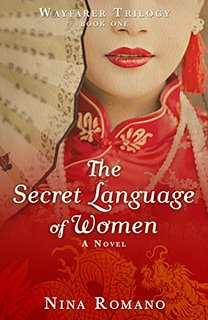
Please welcome author Nina Romano, whose novel THE SECRET LANGUAGE OF WOMEN is available for pre-order on Amazon right now. This is the first in her Wayfarer Trilogy and Book One is set in China during the Boxer Rebellion.

SecretLanguage

Horoscope Helped Me Develop a Realistic Character by Nina Romano

In The Secret Language of Women, the first book of my Wayfarer Trilogy, I decided my main character Lian’s horoscope would be the Year of the Dog. Knowing her horoscope facilitated my understanding the protagonist for this novel. Since the book is set in China, I used Lian’s Chinese Zodiac sign to learn about her qualities and personality traits intimately so that she appeared genuine yet flawed.

She is straightforward, a warm and caring being, courageous and intelligent. When a person born under this sign falls in love, they do not ever change. Lian fell in love with an Italian sailor, and remained faithful to that love, despite the fact that she was forced into a loveless marriage.

Moreover, having visited China, a unique experience that enabled me to see in person Hong Kong, Beijing and its fabulous Forbidden City and Tiananmen Square, I was able to envision Lian’s travels and travails in war-torn China, an era suffused in superstition, intrigue, culture and history.

I incorporated the themes and things I care about, such as: love, family, food and recipes, art, dragons and horses. Why? Simply because it’s straightforward to write what I know and have feelings for, and all of these ideas translated well even to a novel set in China during the Boxer Rebellion.

My own horoscope is the Year of the Horse, which was last year, so I made sure I had an important role for a horse in this novel, and I’m positive that my horoscope had incredible influence on my stars being aligned because I signed a contract for a three-book deal for my Wayfarer Trilogy with Turner Publishing.

While writing, I pictured Chinese New Year, the cleaning of the house, the distributing of red envelopes, and Lian cooking on a wok, serving rice to her beloved. This story takes place in China where live fish, most especially carp, are good Fengshui, which according to Wikipedia is a “philosophical system of harmonizing everyone with the surrounding environment.” For this reason, I put carp into a pool in the Summer Palace in Chapter 1, where Lian meets the love of her life.

Do I believe in the influence of horoscopes and how they can help round out a character? Of that there is little doubt. Here’s an excerpt from The Secret Language of Women:

The things that test you and are vanquished bring everlasting joy. The differences between traditional written Chinese and Nüshu, the secret language of women, made it difficult for me to learn it. My mother and grandmother could not write Chinese and learned Nüshu when they were young and wanted me to grasp it too. I cannot say they harped on me or were tyrannical, but I will say they were insistent, and for this I am eternally indebted. My mother said it challenged me because I wrote like a man and didn’t have to rely solely on Nüshu, the way they did to communicate with other women. The ideograms of Chinese correspond to a word or part of one, whereas each of the seven hundred characters of Nüshu represent a syllable— women’s language is phonetic, in Chéngguān dialect 城关土话, adaptable and pliant for singing, poetry and writing with such delicate strokes they appear as lines of feathers. Though learning was problematical, I mastered it, like I do all things I set my mind to conquer. At the time, I resented the study of it, yet I knew innately one day I would be grateful to possess the knowledge and skill of this secret language, which would offer me strength and solace for a lifetime. And although I was writing in Nüshu, for some reason, I signed with a flourish in Chinese: Wǒ Lián. I am Lian. 我连

nina
Nina Romano earned an M.F.A. in Creative Writing from FIU. She’s a world traveler and lover of history. She lived in Rome, Italy, for twenty years, and is fluent in Italian and Spanish. She authored a short story collection, The Other Side of the Gates, four poetry collections, and two chapbooks. A fifth collection is forthcoming from LLC Red Dashboard. Romano has been nominated twice for the Pushcart Prize. Her Wayfarer Trilogy is forthcoming from Turner Publishing. The first historical novel of the saga: The Secret Language of Women will be published in September 2015. Learn more about the author at: http://www.ninaromano.com

Kate Flora: And Grant You Peace Friday, Jul 10 2015 

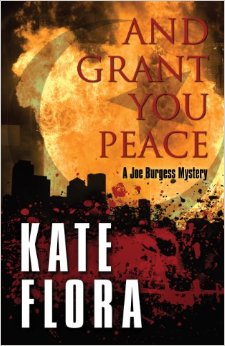
And Grant You Peace
Auntie M owes author Kate Flora an apology: She read, and thoroughly enjoyed, Flora’s Joe Burgess mystery, And Grant You Peace last fall. Then her copy of the book fell behind a stack of many stacked books waiting to be reviewed and was just unearthed. Mea culpa.

Don’t let Auntie M’s tardiness keep you away from this great installment in Flora’s series, that starts out with a fast-paced heart-rending scene and doesn’t let up.

Sitting in his car, waiting for his shift to end, Burgess is ready to go home when a local kid he knows come running up to his door. Jason tells Burgess the nearby mosque is on fire and he can hear screaming from inside. Burgess leaps out of his car, calling the fire department, on the run inside the burning building.

A stranger steps up to help him and the two men tear down a locked door to find a woman and her baby inside the burning closet. His instincts tell Burgess the fire was not accidental, and when he learns the infant has died, Burgess knows the investigation will ratchet up now with the arson unit, fire department investigators and the state fire marshal all digging in along with violent crimes detectives.

But his thoughts turn to the scared young mother, a teenager, who has just lost her child, and gone mute. Who would have locked her and her baby in a closet inside a mosque scrawled with anti-Muslim graffiti and set fire to it? Burgess will work hard to earn her trust and learn her story.

It’s a case that will have Burgess working long hours, despite the chaos of his home situation, where his partner Chris is working and trying to hold down the fort on their newly-created family. Series regulars on Joe’s team Stan Perry, Terry Kyle will aid Burgess along with Remy Aucoin and CID head Vince Melia, as their investigation takes them to the Iman who owned the Somali mosque.

When they try to question one of the Iman’s sons, a car passes, shooting into their faces. And that’s just the start of the trouble Burgess and his team will face as they unravel the story of this young mother and her dead child.

Compellingly told, atmospheric, this proves a great addition to the series.

What Doesn’t Kill her: Carla Norton Wednesday, Jul 8 2015 

What Doesn't Kill Her
Carla Norton caught readers’ attention with last year’s debut The Edge of Normal, which introduced her most unusual protagonist, Reeve LeClaire.

Norton’s back with its sequel, What Doesn’t Kill Her, and Auntie M is happy to report it’s every bit as well done as her first.

Reeve has put some semblance of normalcy back into her life after her years as Darryl Flint’s kidnap victim. She still has some locked memories of her time as his captive, but now she has roommates and is attending college, while Flint languishes in the psychiatric hospital where he’s been held since the car accident that freed Reeve and gave Flint his head injury.

He spends his days in apparently harmless rituals of his own making, until the day he puts his long-held plan into action: Flint manages to escape, killing on his first day out, and bringing Reeve to Washington State to aid in his capture.

Staying with former FBI agent Milo Bender and his family, Reeve and Bender will try their best to figure out Flint’s next move before he can kill again, but not before he manages to damage those close to Reeve.

With some chapters told from Flint’s point of view, the reader possess more information that Reeve or Bender, which ratchets up the suspense. And Norton has done her homework on psychopathic subcategories, educating readers on the scent of fear.

The pacing picks up as the manhunt does and Flint seems destined to elude authorities, with a blocked memory Reeve has holding the key to his capture.

Skillfully done, you’ll be rooting for Reeve and be as surprised as Auntie M at the final ending twist.

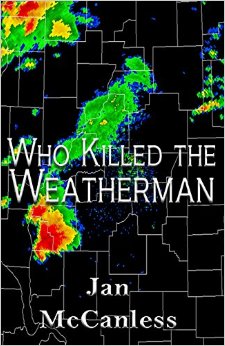
Jan McCanless: Who Killed the Weatherman? Sunday, Jul 5 2015 

Please welcome author Jan McCanless, whose quirky citizens of Beryl Cove, NC, delight mystery readers with her wild sense of humor. Jan’s talking today about her Royal DNA … British with a Southern flair!

Weatherman

My Royal DNA

by Jan McCanless

I come from a predominately smart family; oh, we have our usual quirky oddball (at least that’s the name they have given me),but otherwise, we have some spectacular DNA coursing through our collective veins.

Well, for instance, there I was,sitting at a church breakfast one Easter morning, and as usual, I was bragging about our famous kin, General AP Hill, of confederate fame. You see, the man next to me was a Civil War buff, he even has his own museum, so we were sharing stories of our ancestors. Proud of old Ambrose Powell Hill, I am, and just happened to mention his esteem among his troops and the entire region. David leaned over to me and said, “You know, of course, the man died of syphilis.” I was crestfallen to say the least. He could’ve at least waited on me to finish my meal !!!

Then, there is Colonel David Gregg, kin on my mother’s side, with a big statue of him in Gettysburg cemetery. I don’t know any scandal about him, except, well, um – — he fought for the other side. We don’t speak too much of him naturally, and I won’t tell if you don’t.

AP and Colonel Gregg are not my only outstanding relatives; there is that Indian woman, Pocahontas. You see, Pocahontas married that English chap, Sir Ralph whatshisname, and, they lived happily ever after in England. Why, they even have a statue of her over there, so revered is she. Anyway, Sir Ralph was a distant cousin of the Queen’s, Victoria, if I’m not mistaken, but, it could have been an earlier monarch, not sure at this point, I’m still getting over the fact that cousin Ambrose died of a social disease. I mean a thing like that can rattle ones cage! Back to Poca baby. She married this English chap, cousin of the Queen’s, and had children by him, and those children eventually led to myself and my brother.

Now, bear in mind, my brother isn’t exactly the sort of fellow one would present to the Queen, but, the DNA is there, and should we take up residence in Buckingham palace, (Buck house to those of us in the family) I could always coach him on protocol. He might, just might, look fetching in knee breeches and morning coat.

The thing is, we are kin, Elizabeth and us, and I think it only right that we be included in all this royal folderol that occurs quite frequently over there. Ascot, the coronations, etc. I have even practiced my Royal wave, it’s sorta like screwing in a light bulb. One has to plaster that fixed half-smile on one’s face when waving to the peons. Don’t get me wrong, I love the British Royal family, kin and all. Elizabeth and Phillip share the same wedding anniversary as the spouse and I — November 20th. Every year I invite Liz and Phil (familiarity amongst family members, you know) to come across the pond and join us in celebration, but so far, they have not accepted. Probably don’t know we are kin yet, but I plan on remedying that forthwith. See, I even talk like British Royalty. I’ve known all my life about our Royal connection, but just haven’t gotten around to taking advantage of it, but this is the year!!!

I’ve been led to believe that there are over 200 rooms at Buck house, so I can’t help but think they would not miss a dozen or so of them, so brother and I and our assorted kinfolk can take up residence there. I mean, it’s rightfully ours, too, doncha know.

Hm, wonder how brother is going to look in those knee breeches, maybe we should start smaller, a portion of the civil list perhaps?

Jan McCanless writes the Beryl’s Cove Mysteries. Her newest, Who Killed the Weatherman? is available at Amazon.com. Amateur sleuths Steve and Suzanne Thomas find themselves assisting local police chief, Nathan Sowinski with an automobile accident that turns out to be murder. His car careens out of control right in downtown Beryl’s Cove, and our beach bunch sets out to solve the crime. Their paths soon cross with drug runners, a smarmy lifeguard and an unsympathetic TV station executive. Meanwhile, the residents of the Cove carry on in the midst of personal crises, not the least of which is Steve’s broken leg. One of the more stable Cove marriages appears headed for the rocks, and police chief Sowinski gets news that really rocks his world, turning it upside down. Suddenly, the moon is full, and nothing or nobody is acting quite right.

Jan’s a well-known author throughout North Carolina. Her list of publications and awards she has received would fill a good-sized volume by themselves. In addition to the Beryl’s Cove Mystery series and other books, she is a freelance columnist for The Salisbury Post, and a regular contributor to Senior Savvy; The Saturday Evening Post; Sophie Woman’s Magazine; and a multitude of other periodicals.

M. P. Cooley: Flame Out Sunday, Jun 28 2015 

FlameOut
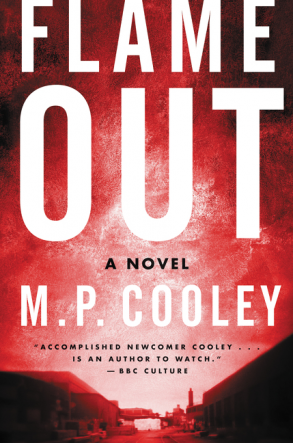
An upstate New York native, M. P. Cooley knows the area well and showed that in her debut Ice Shear, introducing police officer June Lyons. She’s back with its sequel, FLAME OUT and it’s every bit as good a story, set in the rustbelt area of Hopewell Falls, along the Mohawk River.

Auntie M must confess to a bit of added interest unknown to her until she read this book: one of her three sons is Director of the Cohoes Library, and so she knows the area and can attest that Cooley gets it the depressed neighborhoods just right.

The action sets in quickly, when June is out on patrol and she picks up the scent of gasoline as she rides near an abandoned factory. Knowing arson to be prevalent in the area, she calls the fire in and heads into the factory, over a gas slick, fire extinguisher in hand.

She follows the trail into the building and finds a running van door open, and as the flames reach the van, a woman screams and rises from the mattress stuffed in the back, her clothes on fire. June manages to rescue the woman, but her burns keep the victim in a coma and she’s not identified. Until she is …

That’s the beginning of a twisted and complex plot that will have fingers tracing back into Juen’s own family’s past and that of her partner, Dave Batko, and his family. June’s father is a retired cop who is helping her raise her daughter, yet this case brings back the history of his arrest of the factory’s owner, Bernie Mede, for killing his wife and child, despite their bodies never being found. Then while dismantling the burned factory, the body of a woman is found inside a sealed barrel, walled up inside the factory.

The assumption is that this is Mede’s missing wife, but the identity turns out to have more ramifications for June’s partner, Dave, one that will see him sidelined, with June working alongside FBI Special Agent Hale Bascom to solve the murder and arson–and to unravel the past.

A gripping tale with the setting playing an important role, this rural procedural starts out as a small-town police case and soon grows into a tale of corruption and coverup.

Fran Stewart: A Wee Murder in My Shop~ Sunday, Jun 21 2015 

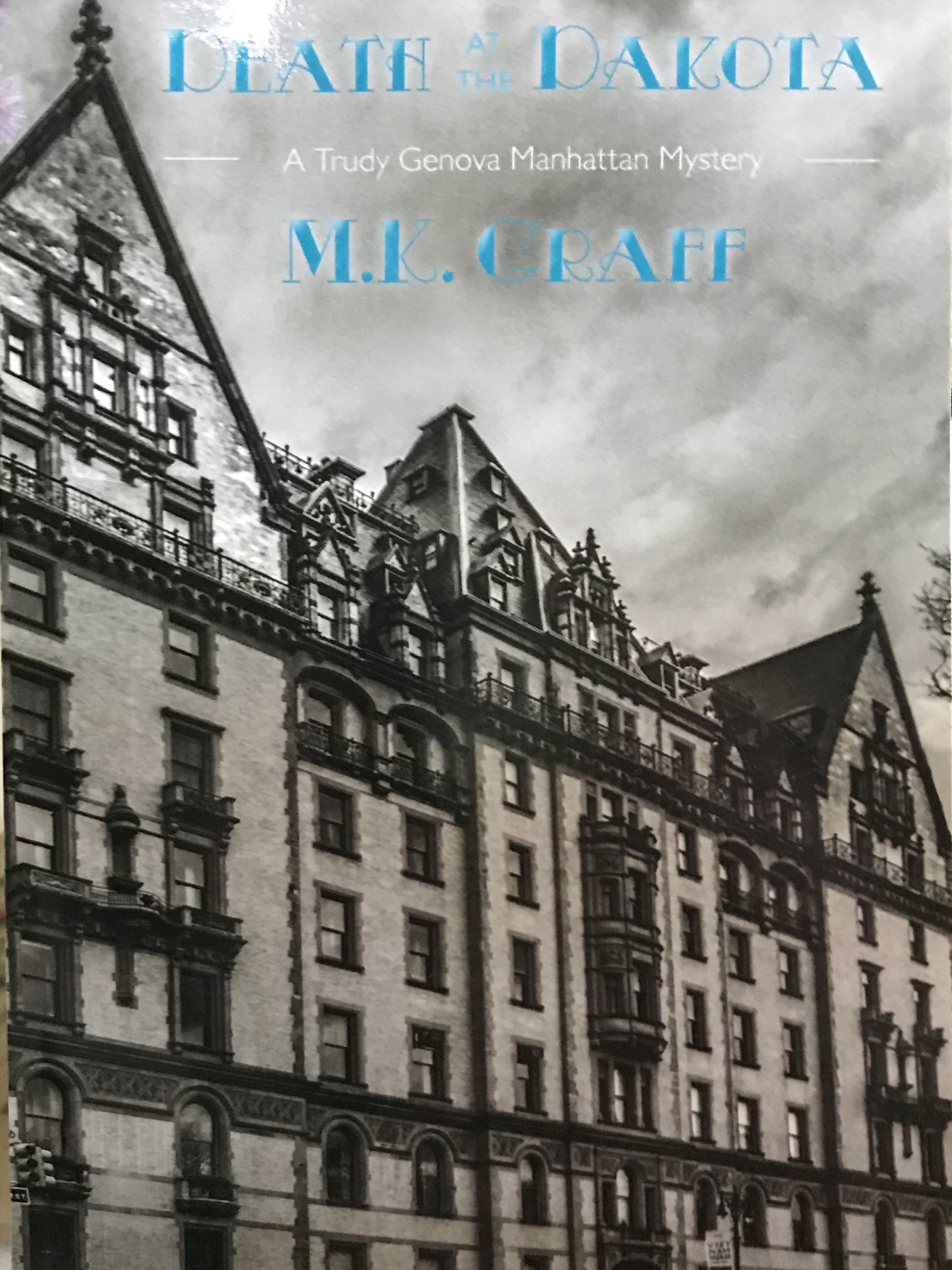
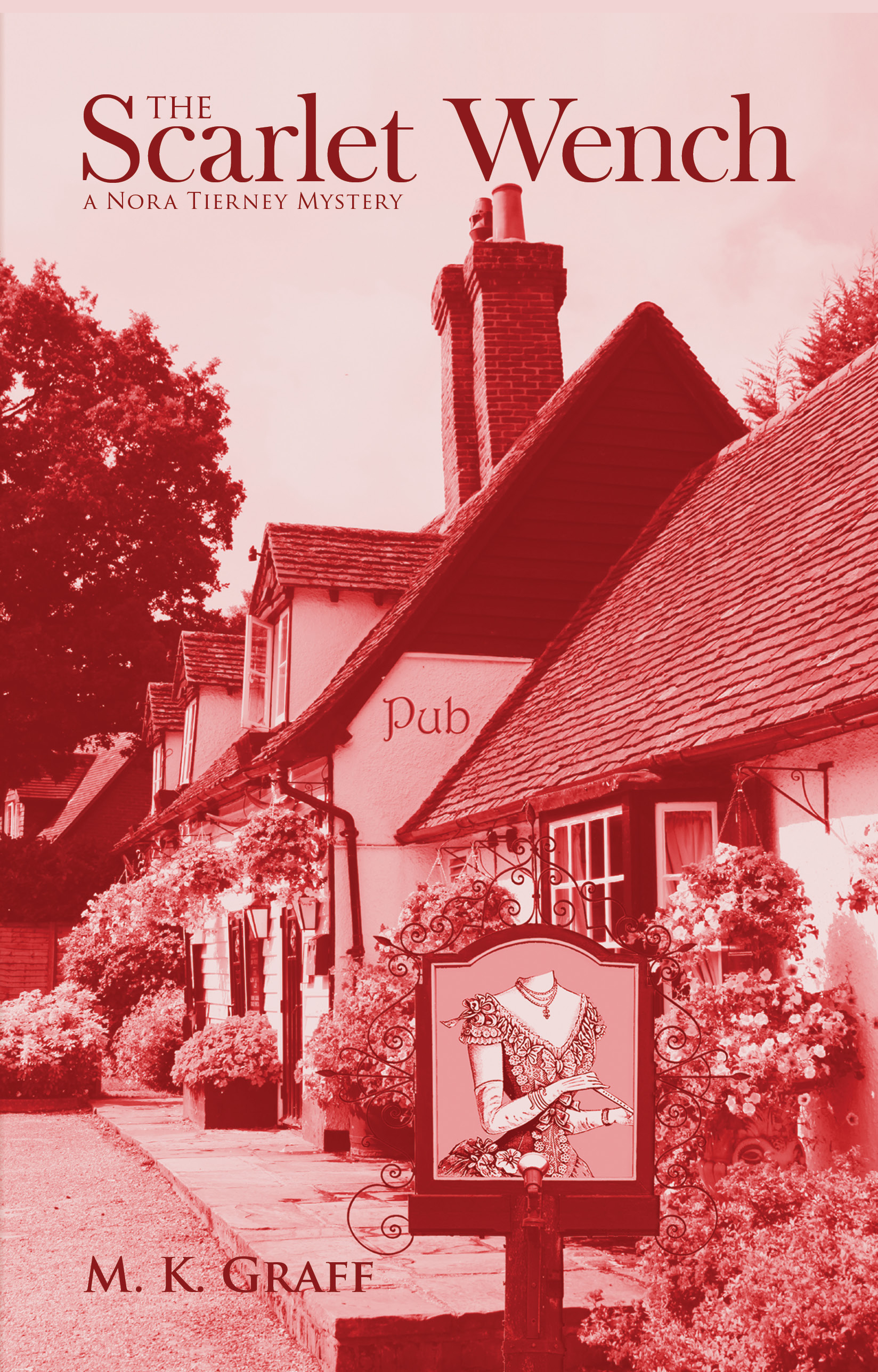
Auntie M is at her writing group, workshopping the opening to the new Nora Tierney (The Golden Hour, for those of you who are wondering what the next color will be). The cover is completed on Death Unscripted, the first Trudy Genova Manhattan Mystery, and she’ll reveal that shortly.

Please welcome author Fran Stewart, who writes two mystery series,The ScotShop and the Miscuit McKee Mysteries:

Wee Murder

In between writing my ScotShop and Biscuit McKee mystery series, I sometimes go off on tangents of sheer whimsy. One of these inspired moments came as I sat beside the creek in my back yard a few years ago, mulling over how I was going to handle Biscuit. I ended up revising what I’d written and using it in the regular monthly column I wrote for the Atlanta Writers Club. Then a publisher grouped six years of those columns together in a workbook—the easiest book I ever had to write.

Here’s what I came up with that day beside the creek, revised slightly once again. Whether you’re a writer or a reader (we writers LOVE our readers!), you just might get some ideas from this “Pencil Play:”

Spring is a good time to take up where I left off last fall and begin to write outdoors. Even if you have a laptop, why not step outside and write with a pencil, just for the fun of it? Pencils have been around since 1565. Anything that’s lasted that long must have a few things going for it.
Let’s see, a pencil . . .
1. is portable.
2. runs without batteries. For that matter, it can run without brains, but I hope that’s not the case here.
3. has an eraser, the 1565 version of a delete key.
4. provides a handy canvas for tooth imprints. I’ve never known anyone who hasn’t occasionally chewed on a pencil. What computer gives a frustrated writer that kind of alleviation? I don’t group solitaire, Sudoku, or Candy Crush in the same league with a yellow number 2 Ticonderoga.
5. can be thrown across the path / room / deck when simple erasure or chewing isn’t active enough (see numbers 3 and 4 above).
6. can be sharpened without a fancy gadget. My Swiss Army knife works just fine. If the circumstances are dire enough, I can even sacrifice a fingernail to tear the wood back away from the graphite.
7. can be broken in half to fit in a tiny notebook or a small pocket. Of course, this eliminates the delete function of one-half of it, but I can use the bare half for my Journal of Work in Progress. That Journal isn’t edited, after all. It just gets me rolling and gives me a chance to air those vague ideas. And the just plain stupid ones that will never show up in my finished manuscript, but need to be released from my psyche before the good ideas can roll out.

Go ahead. I dare you. Try writing outside, under a tree or on a deck or next to a lake. All because of a simple pencil.

Over the years since I originally wrote this, I’ve continued to follow my own advice. Pencils—and the ideas they seem to generate—have saved my story line most than once. Only last night, my fourteenth-century Scottish ghost wouldn’t stay where I wanted him to be. I kept pounding away at the keyboard, trying to force a recalcitrant character into my (sort of) outline, and he kept growling at me with that wonderful Scottish burr of his: I dinna wish to go there, my lass, and ye canna make me do it.

Finally, in disgust, I brewed a cup of tea, grabbed my spiral-bound notebook and my trusty pencil, headed for the loveseat in my living room, chewed for a moment or two (see number 4 in the list above), and began to follow him where he wanted to go. His journey was, I must admit, much more interesting than what I’d had in mind.

Could I have followed him just as well on the computer? Well, okay; I admit the possibility. But the pencil gave me a good excuse to put my feet up, thereby jostling my muse (the cat who had to move her perch when I relocated). Obviously, the newer, better ideas began to flow.
* * *
ABOUT THE AUTHOR: FranStewart

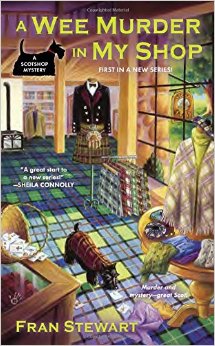
Fran Stewart is the author of the Biscuit McKee Mysteries – GRAY AS ASHES is the seventh book in that series – as well as a standalone mystery – A SLAYING SONG TONIGHT. Her non-fiction work includes FROM THE TIP OF MY PEN: A WORKBOOK FOR WRITERS. Her new ScotShop Mystery Series from Berkley Press begins with A WEE MURDER IN MY SHOP.

Fran lives quietly with various rescued cats beside a creek on the other side of Hog Mountain, Georgia, northeast of Atlanta.
She sings alto with a community chorus and volunteers at her grandchildren’s school library. She is a member of the National League of American Pen Women, Sisters in Crime, and Mystery Writers of America.
Facebook: http://facebook.com/FranStewartAuthor
Website: http://franstewart.com
Buy the book: http://www.amazon.com/Wee-Murder-Shop-ScotShop-Mystery/dp/0425270319/ref=sr_1_1?ie=UTF8&qid=1432127258&sr=8-1&keywords=a+wee+murder+in+my+shop

ABOUT HER BOOK:

Hamelin, Vermont, isn’t the most likely place for bagpipes and tartan, but at Peggy Winn’s ScotShop, business is booming…
While on a transatlantic hunt for some authentic wares to sell at her shop, Peggy is looking to forget her troubles by digging through the hidden treasures of the Scottish Highlands. With so many enchanting items on sale, Peggy can’t resist buying a beautiful old tartan shawl. But once she wraps it around her shoulders, she discovers that her purchase comes with a hidden fee: the specter of a fourteenth-century Scotsman.
Unsure if her Highland fling was real or a product of an overactive imagination, Peggy returns home to Vermont—only to find the dead body of her ex-boyfriend on the floor of her shop. When the police chief arrests Peggy’s cousin based on some incriminating evidence, Peggy decides to ask her haunting Scottish companion to help figure out who really committed the crime—before anyone else gets kilt…

Photo credit: Mozelle Funderburk

Jeannette de Beauvoir: ASYLUM Wednesday, Jun 17 2015 

Asylum

Jeannette de Beauvoir says she personal and moral issues through her work, and that is evident in her new mystery, ASYLUM, which introduces Martine LeDuc, the Mayor’s PR Director in Montreal, and is based on historical events that haunt the middle of 20th century Montreal.

For a nice change readers have a strong protagonist who loves her husband, although Martine worries about her role as stepmother to Ivan’s two children. Martine finds herself working with detective Julian Fletcher when four women’s bodies are found in shocking poses on different park benches around the city over several months.

It’s a PR nightmare of epic proportions for the tourist-laden city, and Martine must act as liaison between her boss and the police department. With nothing connecting the four women at first glance other than their macabre manner of death, Martine and Julian launch an investigation that brings them to an unnerving connection to to orphanages of the 1950’s, hell holes where children were the objects of horrific experimentation and drug companies colluded with the doctors.

With the survivors supposedly compensated by the government, it would seem the issue had been dealt with already, yet for someone, these four women have had to die.

What brings the orphans story horribly to life are diary extracts from a young orphaned girl who was sent to the asylum in question, where orphanages were converted to hospitals for the insane due to the better financial situation. These extracts give the story its basis in fact and verisimilitude, and up the ante for readers to root for Martine and Julian to uncover the mad killer in their midst, even as Martine finds herself in jeopardy.

Auntie M hopes this is not the last we have read of Martine LeDuc.

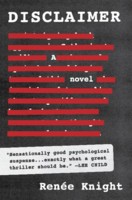
Renee Knight: Disclaimer Sunday, Jun 14 2015 

Disclaimer

Readers can add Renee Knight to their growing list of UK authors who will keep you flipping pages and waiting their next book in this startling thriller. DISCLAIMER presents a very creative and original premise. What if you picked up a book to read, only to find a hidden part of your life documented in the guise of fiction, down to the clothes you were wearing on a specific day, and that book ends with your horrific death?

This is the nightmare that hits Catherine Ravenscroft, a documentary filmmaker, which also happens to be Knight’s background. Catherine and her lawyer husband have just moved house to downsize. Their only child, 25 year-old Nicholas, is finally living on his own and they are still unpacking boxes when Catherine comes across the book that will change all of their lives. The Perfect Stranger is the pseudo-fictinal account of a day Catherine thought she’d stored in her memory banks, written by one Stephen Brigstocke.

Suddenly the tension ratchets keenly, as the details are parsed out of the incident she’d rather forget: a vacation to Spain whene her husband was called home early, leaving her and young Nick alone for a few days to finish the trip; the young stranger who seemed fascinated with her; the day her son almost lost his life.

Many of the chapters are told from the point of view of Stephen, the man who has published the book that destroys Catherine’s life, and we see his reasons clearly as the story unfolds. His wife, although long dead, extends her influence, as does his son.

Just when you think you know what has happened, everything turns and twists into something else entirely. The nightmare extends and extends again as every aspect of Catherine’s life becomes infected by the story of those lost days in Spain. Her husband turns on her; then her son; then her colleagues.

This was a book Auntie M found tough to put down. It creeps into you much in the manner of S. J. Watson’s Before I Go to Sleep. You’ll be waiting for Knight’s next one~ and for the film shortly to go into production. But read the book first. It will grab you all the way through to its unsettling ending. A terrific psychological thriller the centers on revenge, guilt, grief and hiding the truth.

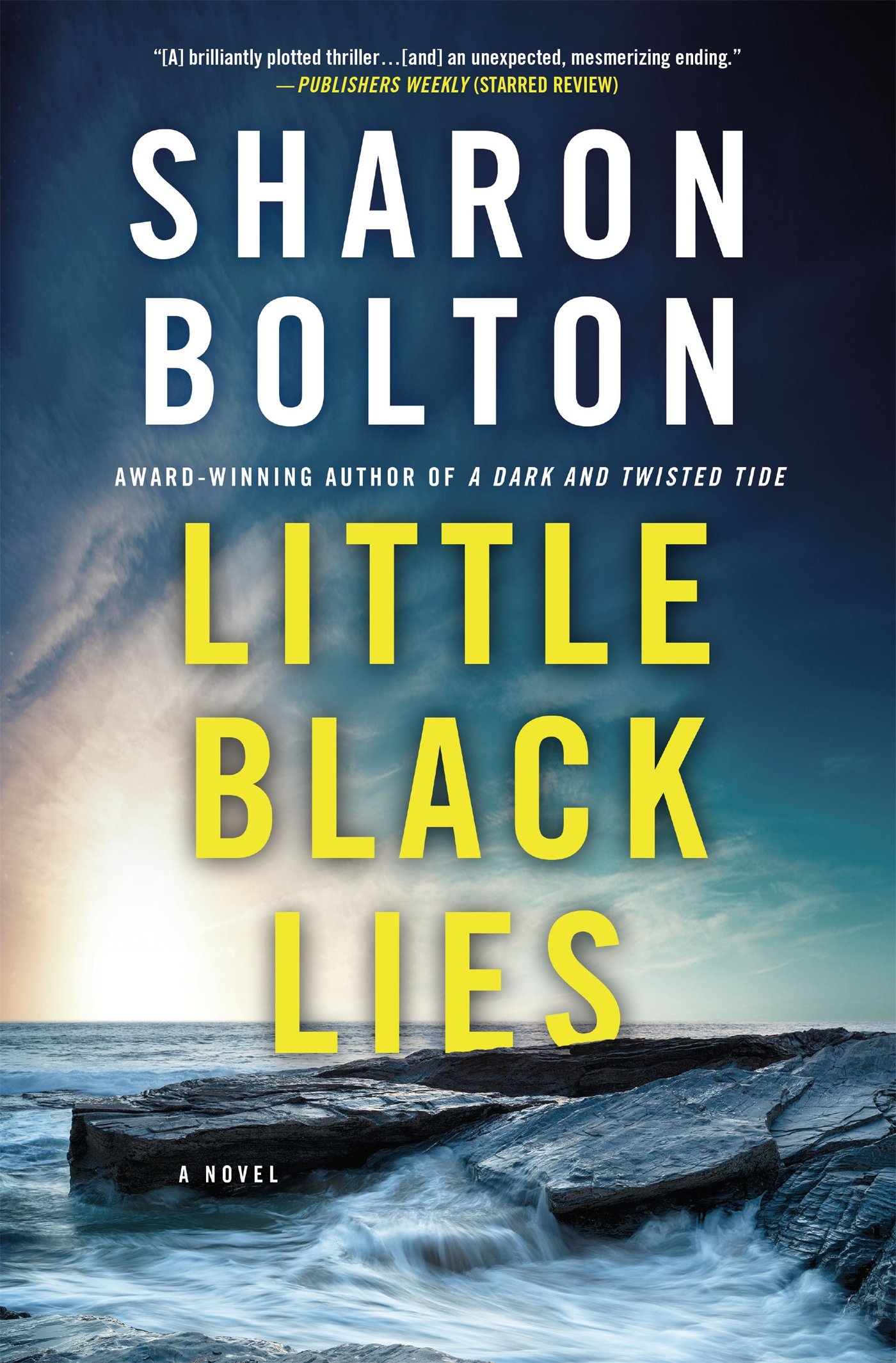
Sharon Bolton: Little Black Lies Wednesday, Jun 10 2015 

Sharon Bolton attracted attention with her fabulously-plotted stand-alines, such as Sacrifice and Awakening, and more recently with her Lacey Flint series (A Dark and Twisted Tide). She returns with a new stand-alone, LITTLE BLACK LIES, as well done as her others and not to be missed.

littleblacklies

Bolton takes readers to the remote wilds of the Falkland Islands, off South America’s southeast coast, where remnants of the UK’s conflict with Argentina still resonate, and which prove an attractive draw for former soldier Callum Murray. The islands are home to Catrin Quinn, nature conservationist, a woman swallowed up in grief after the death of her two young sons, and harboring a terrible secret she plans to act on.

They are also home to Rachel, her childhood friend, who Catrin holds responsible for their deaths. And to Ben, Catrin’s ex-husband, who has moved on in to remarry and has a new child with his second wife. Into this mix are the murmurs of of two missing children whose bodies have never been found. And then a third child goes missing, and it becomes impossible to ignore that there is a killer in their midst.

Told in sections from the viewpoints of Catrin, Callum and Rachel, the readers sees different parts of the story from each view, as what has happened comes together to form a vivid whole. There are lies and untruths told, as the tensions rises and Catrin finds herself the object of people’s suspicions. Each character’s voice is compelling and individual as the various secrets that have held come tumbling out in ways that the reader can’t possibly anticipate.

The setting adds to the story, a place of wild and natural beauty, of fierce and unexplained natural happenings that augment the troubles that fall to these people. It is a well-told story of the ways people can damage each other, deliberately and even without meaning to–and of the terror parents feel when their child is missing.

Publishers Weekly says: “This brilliantly plotted thriller, filled with lies and betrayals, builds to an unexpected, mesmerizing ending.”
Auntie M quite agrees~

« Previous PageNext Page »