Wendi Corsi Staub: Sleepwalker Sunday, Oct 28 2012 

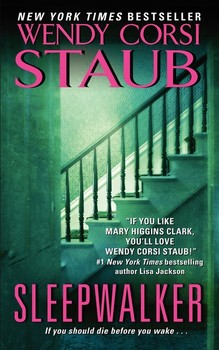
Staub started her trilogy with the fateful backdrop of the horrors of 9/11 in Nightwatcher.  Now the second thriller featuring Allison Taylor, Sleepwalker, picks up her story ten years later.

Allison has married Mack MacKenna, her neighbor who’d lost his wife in the Twin Towers, and they have a lovely home in Westchester and three young children.

Allison has everything she’s always wanted, but the demands of three youngsters and a husband whose job keeps him away from home find her worn down at times. Mack’s chronic insomnia adds to the burden, until at her urging, he starts to take a sleeping pill that allows him to rest but brings back bouts of childhood sleepwalking. Things start to go missing their home; others are moved around. Allison tell herself this is simply due to Mack’s sleepwalking, but she harbors a fear it’s evidence of a far darker menace.

When the man in prison for the Nightwatcher murders commits suicide, Allison knows she should feel relieved. Then why does she have a huge sense of foreboding?

Then their next door neighbor is found by Allison brutally murdered in her own bed, wearing Allison’s nightgown, and killed with the same methodology as the previous murders. Suddenly Allison knows with certainty that the wrong man has been locked up in prison.

What happens next as more murders continue will have readers turning pages as fast as they can read. When a connection between the victims revolves around Mack, Allison must decide if she can trust the man she’s married or if she’s made the most horrific mistake of her life. Then the tension ratchets even higher when her children are kidnapped.

Staub brings back several characters from the first book in the trilogy, including Mack’s friend Ben and his wife, and the NYPD detective who helped clear the first case . . . or did he? She takes on the reality of survivor’s guilt and explores how it touches not only the survivor but those who surround them. And most chillingly, she illustrates the fallacy people have of the feeling of safety in one’s own home in today’s world of technology.

Staub’s third in the trilogy, Shadowkiller, premieres in February 2013. Before then, be prepared to follow Allison as she digs deeply to find the strength to face a killer once again.


Rosamund Lupton: SISTER and AFTERWARDS Sunday, Oct 28 2012 

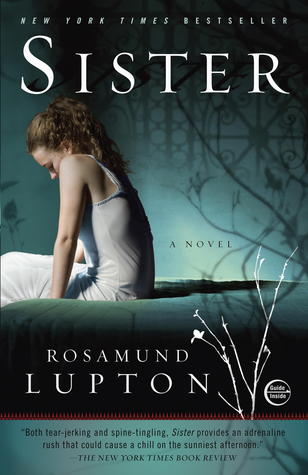
Having a sister of my own, Auntie M was intrigued when another writer insisted I read this 2010 mystery by Londoner Rosamund Lupton, who wrote original screenplays before turning her hand to this debut novel that will knock your socks off. Sister has at its heart an unusual concept of a way to tell a story, and that story will leave you hooked and reeling from page one.

   Beatrice Hemmings has fled her native England to pursue a career in Manhattan and is engaged to be married in three months to an American. While hosting a dinner party with her fiance’ one Sunday,  a call from her mother interrupts the evening when Bee learns that her only sibling, younger sister Tess, has gone missing. Bee soon finds herself flying across the Atlantic to Tess’s Notting Hill apartment.

She find the flat tiny and cluttered. Not even owning a tea kettle, art student Tess has made her bedroom into her studio for the better light. Her bright paintings reflect her personality, open and nonjudgmental, young and talented, with a joy of live Bee has always envied. That central core of Tess’s life will drive Bee fiercely to protect her sisters’ memory.

The suspense starts with a wallop because this is written as Bee is describing the events and what she finds in a narrative to Tess, explaining her actions and tracing her search for her sister, which ends in tragedy. Then Bee’s real investigation starts, to unravel the truth the police would rather leave alone: what really happened to Tess?

Elegantly written, this poignant novel becomes a tribute to sisters as well as a harrowing detailing of the plundering toll of grief. But it is also a wickedly fine mystery that is at once riveting a it moves the reader. By having the reader in such intimate contact with Bee’s thoughts and actions to Tess, Lupton paints a picture of both sisters, the failings of those around them who are meant to do and be more, and the huge sense of loyalty that Bee brings to the forefront of her actions on her sister’s behalf.

There is an element of subdued suspense that heightens as surely as a Hitchcock movie, and indeed, this novel will soon be adapted for the screen. Grab a copy of this highly original book and read it first before the film version. As good as the movie will be, nothing can replace the psychological intensity of the novel and the twists at the ending.

With the same psychological depth of character found in the works of Kate Atkinson, Tana French, and Ruth Rendell, Lupton’s riveting and chilling tale combines true tragedy with a sense of life-affirmation that moved me to tears in several places for the accuracy and depth of its compellingly told story. It’s a quickly-paced, stylish tale, literate and successful.

BookPage calls Sister “A poignant and perceptive depiction of the emotional bonds between two sisters … A superb thriller, full of twists and turns, false leads, and a surprise ending.”
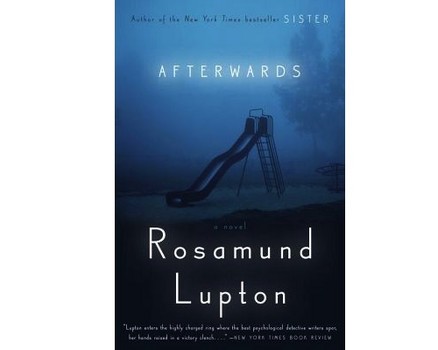
Lupton follows Sister with the same original storytelling in Afterwards, with another clever premise and solid writing the makes her second novel as compelling as her first.

Grace Covey stands with other parents on a grassy field, attending sports day at her son’s school, which coincides with Adam’s eighth birthday. Her teenaged daughter, Jenny, is inside the school, taking the place of the school nurse for minor injuries. When Grace sees black smoke coming from the school, she realizes it’s on fire and races inside to save Jenny.

What happens next is the stuff that makes this book remarkable, as Grace, in an highly unconventional manner, tries to find the person responsible for setting the fire once it appears Jenny was the deliberate target. Grace desperately races to find the culprit to protect both of her children, and in the process, uncovers more than she ever expected to find about the people in her life.

This is a novel about love in its many forms, from that of a mother and her daughter, to the cushion of secure, married love. Ultimately is it about finding courage in the midst of the depths of a mother’s love for her child.

Jeffrey Deaver says of Afterwards: “Uncompromising emotional impact, a poet’s sonorous style, and a gripping story all come together to make this a transcendent literary experience. I guarantee this novel will touch everyone.”

Lupton’s powerful stories and  and her voice will captivate you; Auntie M defies you to put either of these books down once you’ve started reading.

Lisa Black: Defensive Wounds & Tilly Bagshawe: Angel of the Dark Sunday, Oct 21 2012 

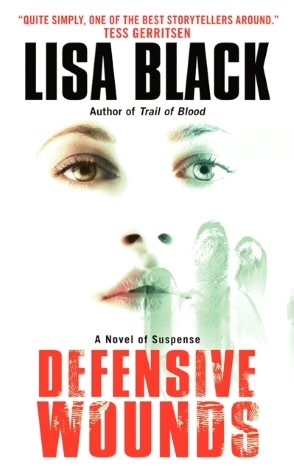
Forensic scientist Lisa Black brings all of her expertise to play in Defensive Wounds, the newest forensic thriller featuring investigator Theresa MacLean.

This is the fourth in the series, and there’s no question Black knows her stuff, so the story spins out with enough CSI-like details to keep crime junkies happy. But Black balances these with a deft hand at sly humor, which keeps the story rolling without becoming too scientific.

The pace hums along when Theresa is called to the Presidential Suite of Cleveland’s Ritz-Carlton to attend the murder scene of defense attorney Marie Corrigan, which happens in the middle of a huge lawyer’s convention. Known her history of corrupting evidence and witnesses, as well as making most forensic and police testifiers look bad, Corrigan’s hate list is too numerous to count. Add in her rampant sex appeal and use of it, and even Marie’s lovers could have had a motive for her murder.

What immediately ratchets up the tension is that Theresa’s only child, daughter Rachael, is working the front desk, dating a young man from the hotel’s kitchen crew. Then a second lawyer is found murdered in the hotel, and just as she gets involved in this second murder, Theresa is given information that leads to serious misgivings about Rachael’s beau. Add in the forensic nightmare of trace evidence left at at the hotel by hundreds of former guests, and Theresa’s nightmare is only beginning.

Black does a fine job of making Theresa complicated and real, as the crime unfolds and the investigation includes a detective with terrific chemistry with her. The struggle between mother and daughter is nicely done, too, and adds to the layered feel of the novel.

Next up is Angel of the Dark, the combined work of the late master storyteller Sidney Sheldon, and using his archives, novelist Tilly Bagshawe to round out the story and the complicated action.

This is novel with a theme of obsessions, dark and brooding, with action and lies at its heart.

Continuing in Sheldon’s style of heavy violence and lusty scenes, Bagshawe introduced LAPD Detective Danny MacGuire and his the big murder case that threatened to do him in. Millionaire art dealer Andrew Jakes has been brutally murdered and his lovely wife raped and beaten, then left died to her husband’s dead body. Drawn to the beautiful widow, but when he tried to question Angela Jakes about an inconsistency in her statement, she’s vanished without a trace.

Ten years later, McGuire is happily living in France, working for Interpol and enjoying life with the love of his life, Celine. Until the day Andrew’s son Matt appears, bringing evidence of three other unsolved identical slayings. Soon the two men are flying around  the globe in pursuit of the most brilliant murderer McGuire has ever seen.

Bagshawe does an admirable job of coming close to the intensity of Sheldon’s original novels. This is one readers will be able to picture on the big screen, larger than life, and filled with those endings that are not real resolutions at all.

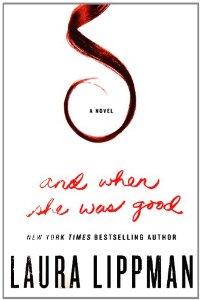
Laura Lippman: And When She Was Good Sunday, Oct 21 2012 

In an author’s note, Laura Lippman explains the genesis of the protagonist of And When She Was Good, Heloise Lewis, a character she first created in 2001 and wrote about years later in two short stories.

Now Lippman has taken the time to explore Heloise and her beginnings and her today, alternating her back story for a good part of the novel, so readers can understand this woman who is meticulously organized, financially comfortable, and oh, yes, a prostitute who runs an exclusive agency.

But Heloise so much more: she’s a successful businesswoman who protects her workers; she’s a self-educated reader with a fondness for history; and she’s fiercely protective of her son, Scott, whose biological father languishes in prison and is unaware of his child.

Despite her insistence on strict compartmentalization in her life between work and home, which has left her without close friends, Heloise finds the lines starting to blur. Her vice squad protector and friend is retiring and will no longer have her back. Then an employee or two break her firm rules. When the wisp of possibility that her son’s father may be released from prison, the carefully wrought life she has constructed is in danger. Heloise is not a perfect person, but she is one with an intelligent, thinking mind and a finely-honed instinct for survival.

Val Deluca has only one way to deal with people who have lied or become a threat to him: he has them killed. And it’s  only a matter of time before the former pimp and casual murderer discovers he is in prison in the first place because Heloise betrayed him.

It is to Lippman’s credit that she is not only able to satisfactorily explain how Helen Lewis became Heloise Lewis, in a direct and unflinching way, but she manages to create a tough and resilient character you will find yourself rooting for as the pages turn.

The New York Times has compared Lippman to England’s Ruth Rendell: “Ms. Lippman writes like a warmer-blooded American Ruth Rendell, keenly observant and giving a faintly spooky charge to every stray detail.”


The Desolate Garden: Danny Kemp Sunday, Oct 14 2012 

Please welcome UK author Danny Kemp, whose spy thriller THE DESOLATE GARDEN has been sold to a London production company.

To try is such a worthy thing. To wait; a worthless thing. Those who try stand to fall. While those who wait gain nothing at all. Danny Kemp.

Living ‘The Desolate Garden’ and the newly found frustrating life of a writer.

An image grows from a dream and becomes ‘real’ to the story teller. My story, The Desolate Garden, came directly from a dream. I saw, in my minds eye, an attractive woman sitting in the martini bar of a famous London Hotel, saying to a ‘supposed’ stranger, “tell me a joke.” I then enlarged on that dream, turning it into the tale that it became.

The writer in me lived that dream all day, going through the life of the central characters as if it was me walking those streets in their shoes.

My father, when alive, said I was deceitful, meaning I told lies . . . That’s really a story in the making, as you become aware that you have to remember the initial ‘lie.’ With a story you write that ‘lie,’ and easily refer back to it. Father was right, incidentally.

Some, I believe, over complicate storytelling with needless grammar that only the esoteric can recognize. I want to understand the tale, not have to refer to a dictionary.

All my life I’ve been around people of different breeding, speaking to them and hearing them speak and, perhaps more importantly, listening to them. Dialogue makes a story solid to me. As a writer you paint the broad strokes, then let the characters come alive and fill in the detail, as you or I would if you come across a stranger who asks about your life. The beginning, the hook, is important. The end is important. The middle is what joins the two together and makes or breaks that story.

If you live an interesting life, and are lucky, it never goes from point A, birth, straight to point B, death. It has many diversions . . . that’s the story.

I saw it once described as packing a suitcase. The stuff you pack in the middle are the essential bits; in my case, that’s the story. Some, I find, fill it with dull, bland prose that rolls on and on, full of dross. In the case of a film they use the bedroom to hide the mundane. To me, the story never stops being told. Never an item of clothing of waste in the suitcase, or a passage in the novel, that isn’t necessary.

I have always a beginning. I have two stories at various stages underway now, and another beginning of one in my head. The middle leads off from that . . . leading to an end that I never know when I start.

It excites me that way, as nothing is forced. If there is a defined ‘end’ when you start, it seems to me that you are governed by that ‘end.’ I’m open all the way until it’s obvious, to me, but not the reader. (There’s that deception that my father recognized.) Then I might go back and change something in that middle if needs be, or simply redefine the dialogue, perhaps a hint of that end. Here’s a brief synopsis of the story of The Desolate Garden, which I hope you will read and enjoy:

Only months before the murders of Lord Elliot Paterson and his youngest son Edward, an address in Leningrad is discovered hidden in the ledgers of the Families Private Bank in Westminster, dating back to the 1930’s.—-There is a spy in the Family, but on whose side?

Elliot’s eldest son, Harry, is recruited into the British Intelligence Service to uncover the traitor. Lord Harry Paterson, Earl of Harrogate, is introduced to an attractive woman from the Foreign Office and together, desperately, they try to unravel the intricate web before the killer strikes again.

The Desolate Garden is a twisting tale of deceit and intrigue, spanning decades when the truth was best not told!

The Desolate Garden is on forty worldwide internet sites and in major bookshops in the United Kingdom. It comes in Hardcover, Paperback, Kindle and Nook.

The Amazon link where four chapters can be read from either the Book or The Kindle is: http://www.amazon.com/The-Desolate-Garden-ebook/dp/B008BJWJ2Y/ref=tmm_kin_title_0

Tana French: Broken Harbor Sunday, Oct 14 2012 

Auntie M is huge fan of Tana French’s novels set in Ireland, starting with Into the Woods, followed by The Likeness and the stunning Faithful Place. Now she’s back with Broken Harbor, and her novels get stronger and more compelling with each offering. In a recent essay on craft, French described her husband not allowing her to use dream sequences in her novels too much. She doesn’t need dreams; the world she creates is startling enough.

Mick Kennedy is a a top Murder Squad detective who’s earned the nickname “Scorcher” for his devotion to the job and its victims. He lands a tragic but high profile murder case on the half-deserted development now called Brianstown, one of the many high-end neighborhoods that have fallen with the down-turned economy, leaving their few owners to cope with shoddy construction and broken promises.

Mick brings along his new partner, Richie, a rookie detective on his first case, thrilled to learn from the master. But before it was Brianstown, the area was known as Broken Harbor, and Mick has his own disturbing and poignant memories of the area that will haunt him almost as much as the scene they find.

Patrick Spain is dead; his wife, Jenny, lies in intensive care. Their blood splatters the downstairs kitchen area. Upstairs, the Spain’s young son and daughter are found dead in their beds. The scene is shocking and disturbing.

What appears to be an easy case to solve quickly proves to be one of the most tangled and difficult of Mick’s career. There are unexplained things in the house: smashed holes in walls, with baby monitor cameras pointing at them; files have been erased from the Spain’s computer. And then Jenny’s sister Fiona tells the detectives her sister has been afraid of an intruder who slipped past their locks and alarms and helped himself to food from their refrigerator.

As he juggles teaching Richie about true detecting and not jumping to conclusions, Mick’s life is complicated by his younger sister, Dina. Her mental illness escalates and barges into his life and his thoughts, bringing back the memories of his family’s last summer at Broken Harbor. Adding to the layers are Mick’s new relationship with Richie. Partnerships are built on trust. But he doesn’t know Richie well enough to trust him–yet.

French’s sense of setting is acute; she brings all the senses to her descriptions and adds nuances that fill the atmosphere of the book with power and emotion. This is as gripping a novel as Auntie M has read this year, a mix of French’s usual police procedural and psychological thriller, created with realistic characters and situations, plot lines that weave and warp, and with a sense of setting so powerful you will feel as if you’ve been to Broken Harbor.


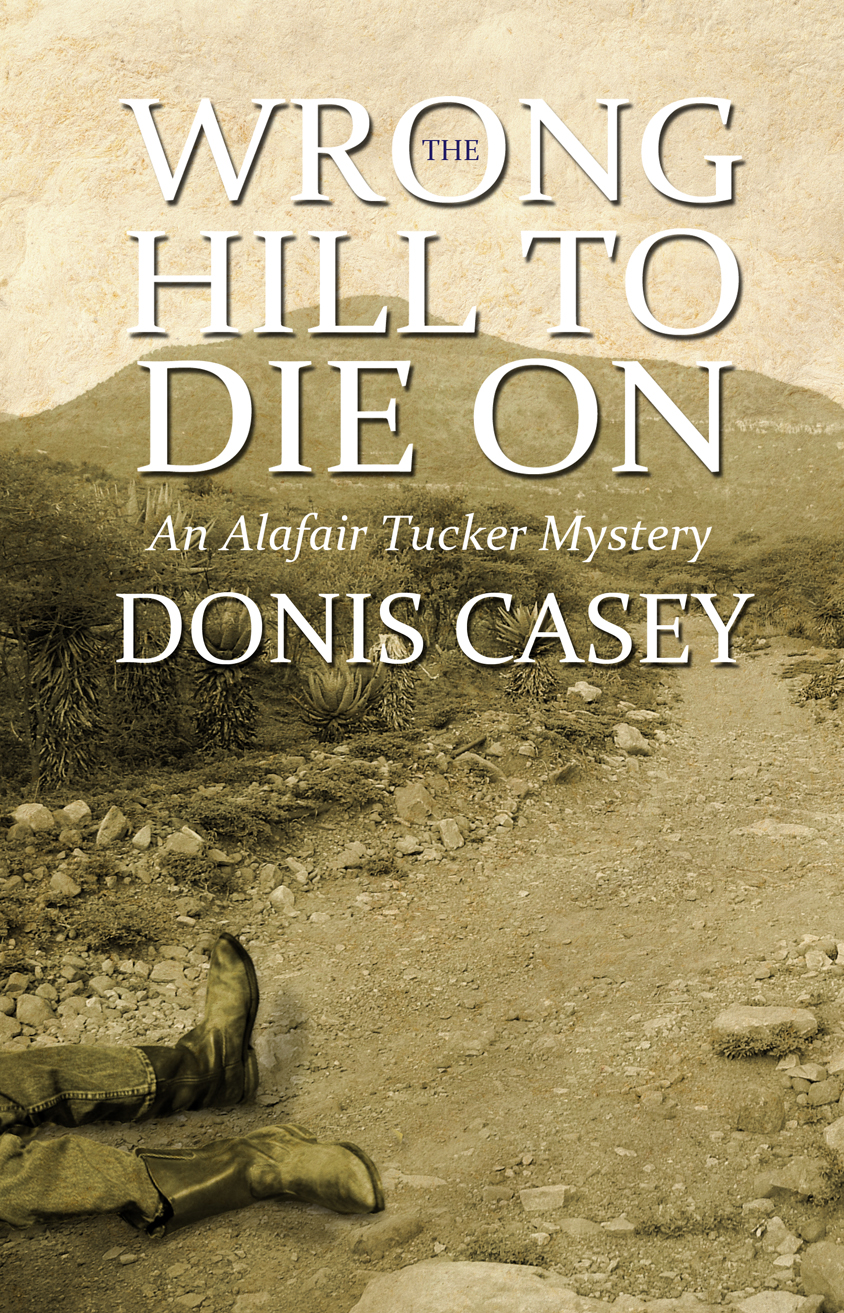
Donis Casey: The Wrong Hill to Die On: An Alafair Tucker Mystery Sunday, Oct 7 2012 

Please welcome Donis Casey, who will tell us about her newest  Alafair Tucker Mystery

The Wrong Hill to Die On: An Alafair Tucker Mystery. 

            Alafair Tucker is a woman in her early forties who lives with her husband, Shaw, and their ten lively children on a prosperous horse farm in eastern Oklahoma during the booming mid-1910s. How, you may ask, does a woman like Alafair go about solving mysteries?  After all, this is one busy woman, and the truth is that she is not at all interested in getting involved with local episodes of violence and mayhem. But when you have ten children ranging in age from early twenties to infancy, somebody is always getting himself or herself in trouble, and needs her mother to get her out of it.  Alafair may not always know exactly what to do, but you can bet she’ll do something. She’s not one to stand by and let anything threaten a child of hers.

When you begin writing the sixth crime novel featuring the same protagonist, you need to shake things up a bit if you want to keep the series fresh and interesting.   After all, how many people can you kill in one small town in Oklahoma before people start to wonder if the residents are crazy for living there at all?*

Nineteen-fifteen had been a tough year for the Tuckers, and 1916 hadn’t started out all that well, either. It had been a tough winter, and Alafair and her husband Shaw deserved a vacation. So I decided to send them on a trip to sunny Arizona to visit Alafair’s witty, brilliant, and beautiful sister, Elizabeth.

But once I started writing, it didn’t take me long to realize that this trip wasn’t going to work out as planned. In the first place, Alafair didn’t want to go.  A daughter was getting married soon, another having a birthday, a son going back to college. After the awful events the family endured in the previous novel, Crying Blood, Alafair simply wanted life to get back to normal.  How, then, was I going to persuade her to go to Arizona?

During my research I discovered that the end of 1915 and the beginning of 1916 had been the rainiest months in decades, accompanied by severe flooding all over the Western United States.  Therefore, a lot of flu and bronchitis was going around that winter.  Handily for my story line, at the turn of the Twentieth Century, Arizona was known as a place for people with lung problems to come and be cured by the desert air.

Alafair may not want to go to Arizona, but her daughter Blanche, only ten years old, cannot shake the bronchitis that has plagued the family all winter. Her best chance to get well is to spend some time in a dry climate. So Alafair and Shaw bundle their sick child onto the train and make a nightmare trip–a thousand miles of diversions and detours due to damaged and washed-out track–from Oklahoma to Arizona.

Yet as soon as they arrive on a bright, seventy-two degree March day, Blanche begins to improve.  Alafair is overjoyed to see her sister Elizabeth again, and for added excitement, a Hollywood motion picture company is shooting a movie right on the streets of Tempe!

But no matter how wonderful it seems at first, all is not well in sunny Arizona.  Elizabeth’s marriage is falling apart, tensions are high between the Anglo and Latino communities following Pancho Villa’s murderous raid on Columbus, New Mexico, and Alafair suspects her sister is involved in an illegal operation to smuggle refugees from the Mexican Revolution out of Sonora and into the U.S.

On top of it all, here lies Bernie Arruda, on his back in a ditch, eyes wide open, seeing nothing on this side of the veil. Just the night before, he had been singing Mexican love songs at the party in Elizabeth’s back yard, his black eyes flashing as he winked at the ladies. He had been such a charmer! Or had he?  He may have romanced half the married women in town.  Or he could have been a spy for Pancho Villa.  Or was he a defector from Villa’s army?  Was it he who hid the money that rained down on the spectators when the movie company blew an abandoned building sky high? As Alafair is about to discover, there are a lot of people who have reason to want Bernie dead.

Alafair’s trip to Arizona didn’t turn out to be the restful get-away I had envisioned for her.  But it was quite an adventure.

___________________

*The fact is, if your book is set in 1910s Oklahoma, you can realistically kill off as many people as you want.  Everybody was armed and dangerous.

Donis Casey is the author of six Alafair Tucker Mysteries: The Old Buzzard Had It Coming, Hornswoggled, The Drop Edge of Yonder, The Sky Took Him, Crying Blood, and The Wrong Hill to Die On (Oct 2012).  Donis has twice won the Arizona Book Award and has been a finalist for the Willa Award and the Oklahoma Book Award. Her first novel, The Old Buzzard Had It Coming, was named an Oklahoma Centennial Book. Donis is a former teacher, academic librarian, and entrepreneur. She lives in Tempe, AZ, with her husband, poet Donald Koozer. The Wrong Hill to Die On is available from Poisoned Pen Press in October, 2012. Readers can enjoy the first chapter of each book on her web site at www.doniscasey.com.

True Crime Twofer Sunday, Sep 30 2012 

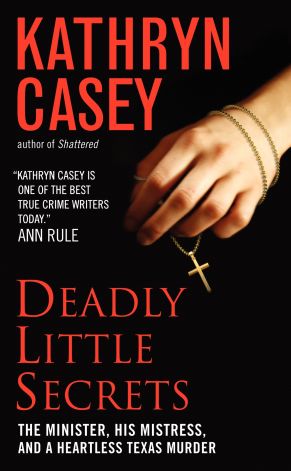
Kathryn Casey is the critically-acclaimed writer Ann Rule has called “one of the best in the true crime genre.” In Deadly Little Secrets, she’s written a meticulously researched account of a cold-blooded pastor in Texas who is convicted of killing the mother of his children. There is also lingering suspicion around the earlier death of his physically ill daughter.

After marrying Matt Baker, a charming and seemingly pious man, Kari Baker gives birth to two daughters, Kensi and Kassidy. Always upbeat and positive, Kari seems to take her husband’s frequent church relocations in stride, never questioning his stories of the reasons for their moves. Matt appears to be a devoted husband and father, but others tell stories of unwanted sexual approaches and inappropriate comments and behavior with young women that Kari refuses to believe.

When Kassidy becomes gravely ill and subsequently dies, to the surprise of her doctors, Kari falls into the very reasonable depression the death of a child would cause, but manages to pull herself up to have another child, Grace. She finishes school and begins teaching. Life was sorting itself out: until the day Kari’s parents receive the inexplicable phone call that their daughter has committed suicide. Just days later Matt is seen with a pretty blond companion who he brings into his daughter’s lives.

What happens next will unravel years of the elaborate show Matt Baker has put on for the public to cover his trail of sexual predator behavior. With only her parents to fight for justice for Kari, a relentless legal battle ensues over years, with the safety and futures of Kari’s two remaining daughters at the heart of her grandparents brave struggle.

This is the well-drawn portrait of a narcissistic individual who believes his own lies and chafes at his family responsibilities. How he is brought to justice by a dogged team of investigators prompted by Kari’s parents will show the dogged determination of a handful of people who became convinced that Kari Baker deserved the justice in death she was denied in life.

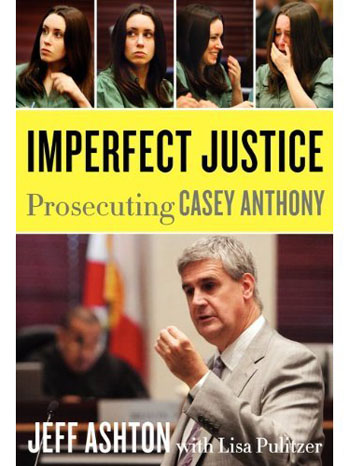
At the opposite end of the spectrum is a case of Imperfect Justice, prosecutor Jeff Ashton’s account, written with Lisa Pulizer, of the Casey Anthony trial.

With exhaustive detail, Ashton takes readers inside the evidence and trial that captured the nation’s attention when the body of missing two-year old Caylee Anthony was found.

Inside the prosecution team, evidence is sifted through and statements compared and contrasted. For most of the thirty-one days Caylee was missing, her mother partied with then-boyfriend Tony Lazzaro. Photos surface of Casey’s antics which as a parent, didn’t make any kind of sense to the prosecutor. He makes particular note that both before and after Casey’s arrest, she exhibited little behavior to suggest she was grieving for her daughter.

Detailed photos accompanying the text show the evidence and Ashton points out little things that were not public knowledge during the trial, like the closeness to the roadside of Kaylee’s remains, which indicated to him the laziness of their placement. He explains the team effort that went into building a case, at times literally sifting through garbage to counter a point made by a defense witness. He explains Casey’s conflicting testimony and contradictions. And he describes how the person he felt most sorry for was George Anthony, Casey’s father.

Everyone who could read a paper knows the stunning outcome of that trial, one that Ashton postponed his retirement for over six months to see to its end. He believes that ultimately little Caylee Anthony was lost sight of in the media circus and trial that followed. In giving this behind-the-scenes story of the complete investigation and trail, he reveals information why he remains convinced to this day of Casey Anthony’s guilt.

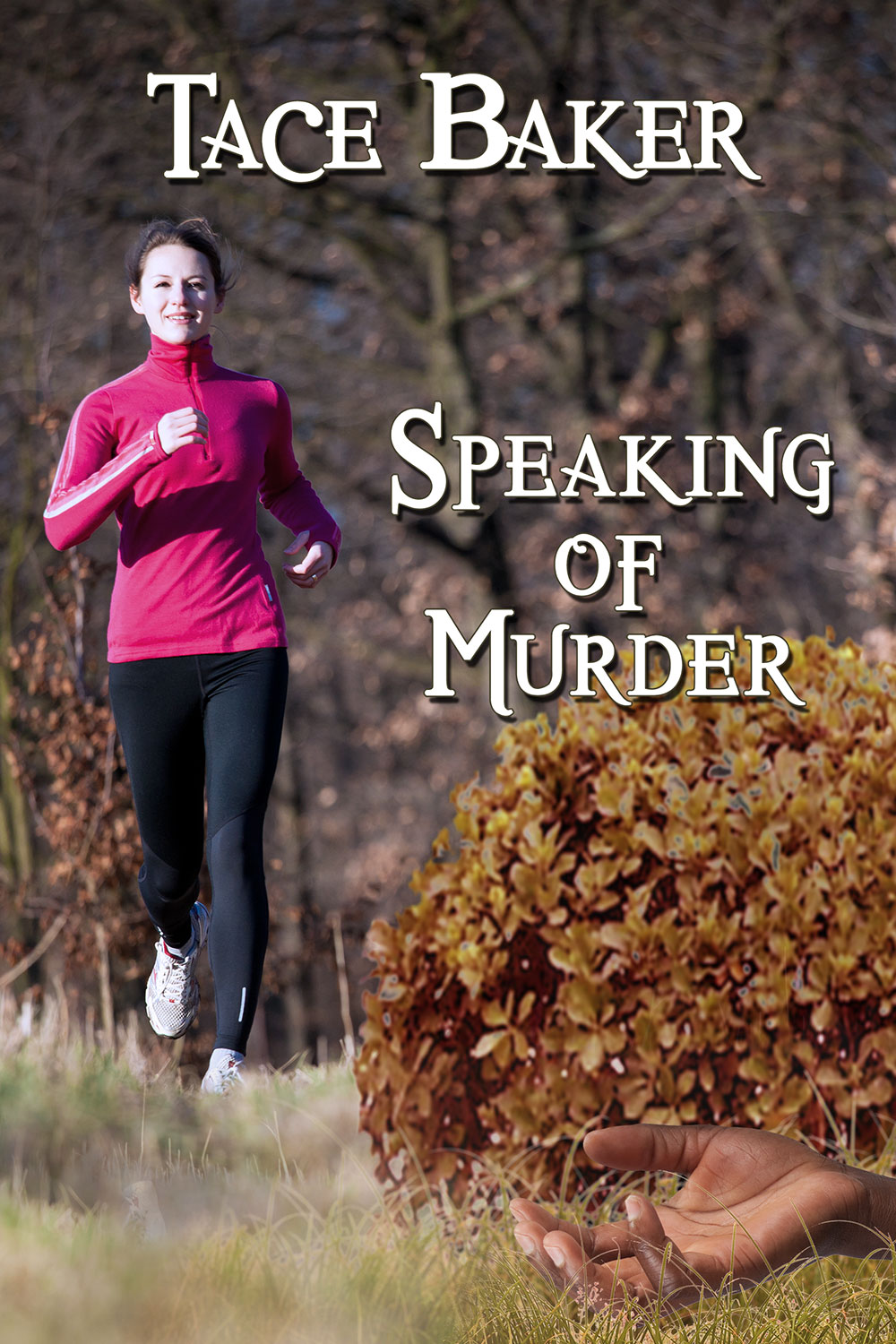
Tace Baker: Speaking of Murder Sunday, Sep 30 2012 

Please welcome Tace Baker, author of Speaking of Murder:

Imagine an attractive and brilliant older undergrad.


Add in his linguistics professor, a Quaker with an ear for accents.

Complicate the story with an addictive friend and a threatening departmental chairwoman.

In Speaking of Murder, murder at a small Massachusetts college, small-town intrigues, and academic blackmail present obstacles as Professor Lauren Rousseau uses her facility with languages to track down the killer. When Lauren puts aside conflicted feelings for her boyfriend, his expertise in video forensics helps her solve the murder. Her own experience in karate enables her to escape from the killer.

Speaking of Murder was first runner up for the Linda Howard Award for Excellence in March of 2012.

One of the key tools used to solve the crimes in Speaking of Murder is video forensics.

Zac, Lauren’s boyfriend, works as a civilian video forensics expert at the local police station. The tool he uses is dTective from Ocean Systems, developed by Grant Fredericks and others. It’s used by police departments around the country to clarify surveillance video and present video evidence in court.

The dTective software works with Avid Media Composer, an award-winning video- and film-editing software for which I wrote technical documentation for 14 years. I knew I wanted to feature this software in my books. Write what you know, right? I was fortunate to be able to consult with the Raynham, Massachusetts police department, and also the Bristol County District Attorney’s office. They each use this software in their daily crime-fighting and each spent a half day with me, demonstrating the software and talking about how they use it.

It was a fascinating look into some of the inner workings of the criminal justice system. I hope I’ve done justice to their expertise. I learned how much this software can do with surveillance video. For example, you can:

* Apply a standard to see how tall someone is

* Lighten a dark image of a license plate

* Zoom in on a tattoo or other unique physical characteristic

* Compare a fingerprint left on a counter to one taken after arrest


It’s very cool stuff.

What about you? Do you know of other software programs that help solve crimes? Or have any questions about linguistics?


Tace Baker is the author of Speaking of Murder (Barking Rain Press, September 2012, ), which features Quaker linguistics professor Lauren Rousseau.

Tace Baker is a pseudonym for Edith Maxwell. Edith holds a PhD in linguistics and has been a member of Amesbury Monthly Meeting of Friends for several decades.

Edith also writes the Local Foods Mysteries.  A Tine to Live, a Tine to Die introduces organic farmer Cam Flaherty and a colorful Locavore Club (Kensington Publishing, June, 2013). Edith once owned and operated the smallest certified organic farm in Essex County, Massachusetts.

A technical writer and fourth-generation Californian, Edith also writes short crime fiction and lives north of Boston in an antique house with her beau and three cats. She’s active in Sisters in Crime and serves on the board of the New England chapter. She can be found at www.tacebaker.com, @tacebaker, and www.facebook.com/tacebaker, as well as at www.edithmaxwell.com, @edithmaxwell, and http://www.facebook.com/edithmaxwellauthor.

Susan Santangelo: Marriage Can Be Murder Sunday, Sep 23 2012 

LOCATION!         LOCATION!       LOCATION!
            It’s a major selling point when home buyers are looking at properties to buy.
            And for me, location is just as important in fiction. As an avid mystery reader, I find myself more willing to take a chance on a new author I know nothing about if I’m attracted to the locale where the book is set.
            When I started writing the Baby Boomer mysteries, I created the Connecticut town of Fairport. It’s a thinly disguised version of Fairfield, where my family and I lived for many years. And, yes, we lived in an antique house, just like the principal characters in the series, Carol and Jim Andrews.  But because Fairport is a fictional place, I was free to populate it with restaurants, churches, stores, and street names to my heart’s content, as long as they all worked into the story line, without any current Fairfield resident (or, heaven forbid, an elected town official!) contacting me to say that I hadn’t gotten the description down correctly.
            Believe me, that can happen. Don’t ask me how I know, please. Just trust me. I know.
            But when I started to write Book 3 in the series, Marriage Can be Murder, I wanted to include a destination wedding, so I had to move the location out of Fairport. Where did I decide to have the wedding take place? Somewhere I’ve always loved — the island of Nantucket.
I discovered when I started doing some research about Nantucket that the entire island is designated as a National Historic Landmark.  I never knew that before. Nantucket is affectionately referred to as The Little Grey Lady of the Sea because of its many grey-shingled buildings and frequent fog. The island is 14 miles long by 3.5 miles wide, and is 27 miles out to sea. Nantucket is 30 miles south of Cape Cod, and has a year-round population of approximately 10,000. The population increases to about 50,000 during the summer months, which is Nantucket’s peak tourist season.  There are great shopping opportunities at this time of year. Don’t ask me how I know this, either. But, trust me, I know.
Nantucket was the whaling capital of the world from the mid-1700s to the late 1830s, and was made famous by Herman Melville in his classic novel, Moby Dick. Ok, I’ll confess I’ve never read that book. But I’m sure it’s on my to-be-read pile, somewhere in my office. And I did see the movie starring Gregory Peck, so that counts, right?
 
Some atlases describe Nantucket island as crescent-shaped. To really get the picture, take your right hand and fold in all your fingers but the thumb and index finger. Then rotate your hand to the left, palm down, and voila – your own Nantucket island. Madaket is where your thumb is — a tiny community with its own harbor, gorgeous houses and beautiful beaches. Follow your thumb to the right – that’s Madaket Road, which eventually leads you into the town of Nantucket, approximately where your thumb opens as it heads toward the index finger. Picture that opening as the town, and Straight Wharf, where the ferries to and from the mainland dock.
More than 800 houses on Nantucket were built before the American Civil War, and I decided the primary site for my mystery would be one of them. I named it the Grey Gull Inn. You won’t find this inn on Nantucket, because it’s the product of my over active imagination.  And then I really had fun —  I gave  it some history. Here’s what Carol Andrews, my protagonist, finds out about it from the Grey Gull Inn website: “The inn was built in 1825 by Nathaniel Grey, a whaling captain, as a gift to his new bride, Charity.
Tragically, soon after the couple moved into the house, Charity was found dead at the bottom of the house’s circular staircase. An inquest determined her death was a tragic accident. Captain Grey never recovered from the shock of his young wife’s death, and legend has it that he continues to live in the house, searching in vain for his bride. The building was converted in the 1980s to a 10-bedroom inn. The current owners are siblings JoAnn and Skip Wallace, who are direct descendants of Captain Nate, as he was known in the family. They completely refurbished the structure in 2006, adding a new wing to the inn with six more guest room suites.”
I placed the Grey Gull Inn right in the center of Nantucket town, close to historic Main Street, Nantucket’s primary shopping district.  I gave it a full-service gourmet restaurant and one of the most notable wine lists on the island. But I didn’t give an en suite bathroom to the older part of the inn, where the Andrews family is staying.
Why? Well, I won’t tell.
Here’s the back cover blurb for the book. See if you can figure out a clue:
Book Three of the Baby Boomer mystery series, Marriage Can Be Murder, brings the Andrews family to Nantucket. Carol is thrilled when daughter Jenny announces her engagement. She’s dreamed of planning her daughter’s wedding since the day Jenny was born. But with only two months to pull together a destination wedding on Nantucket, Jenny insists on hiring Cinderella Weddings to organize the event. Father-of-the-bride Jim objects to the cost, and Carol objects to having her opinion ignored. When Carol finds the wedding planner dead at the bottom of a spiral staircase at a Nantucket inn, and the husband of Carol’s BFF Nancy is accused of her death, Carol has more to worry about than getting to the church on time!
            If you can’t figure out the clue, you’ll just have to check out Marriage Can Be Murder for yourself. The Grey Gull Inn is open and ready to receive your reservation! But be sure to call ahead for the ferry, if you want to bring a car.
An early member of the Baby Boomer generation, Susan Santangelo has been a feature writer, drama critic and editor for daily and weekly newspapers in the New York metropolitan area, including a stint at Cosmopolitan magazine. A seasoned public relations and marketing professional, she has designed and managed not-for-profit events and programs for over 25 years, and was principal of her own public relations firm, Events Unlimited, in Princeton NJ for ten years. She also served as Director of Special Events and Volunteers for Carnegie Hall during the Hall’s 1990-1991 Centennial season.
 Susan divides her time between Cape Cod MA and the Connecticut shoreline. She is a member of Sisters in Crime and the Cape Cod Writers Center, and also reviews mysteries for Suspense magazine. She shares her life with her husband Joe and one very spoiled English cocker spaniel, Boomer, who is also the cover model for the mystery books.
          A portion of the sales from the Baby Boomer Mysteries is donated to the Breast Cancer Survival Center, a non-profit organization based in Connecticut which Susan founded in 1999 after being diagnosed with cancer herself. 

« Previous PageNext Page »

Amazing Family Books

Featuring The Very Best in Fiction & Nonfiction Books For Children, Parents & The Entire Family

Book Review Magazine

Incredible Books & Authors

Book Sparks News

Writing, Books & Authors News

Book Bug Out

KIDS CLUB

Writer Beware

Shining a small, bright light in a wilderness of writing scams

authorplatforms.wordpress.com/

Books, Reviews & Author News

DESTINATION PROPERTIES

The preview before the visit.<ins class="bookingaff" data-aid="1815574" data-target_aid="1815574" data-prod="map" data-width="400" data-height="300" data-lang="xu" data-currency="USD" data-dest_id="0" data-dest_type="landmark" data-latitude="40.7127753" data-longitude="-74.0059728" data-landmark_name="New York City" data-mwhsb="0"> <!-- Anything inside will go away once widget is loaded. --> <a href="//www.booking.com?aid=1815574">Booking.com</a> </ins> <script type="text/javascript"> (function(d, sc, u) { var s = d.createElement(sc), p = d.getElementsByTagName(sc)[0]; s.type = 'text/javascript'; s.async = true; s.src = u + '?v=' + (+new Date()); p.parentNode.insertBefore(s,p); })(document, 'script', '//aff.bstatic.com/static/affiliate_base/js/flexiproduct.js'); </script>

Auntiemwrites Crime-Mystery Author M K Graff

Award-winning Mystery Author on books, reading and life: If proofreading is wrong, I don't wanna be right!

Lee Lofland

The Graveyard Shift

Sherri Lupton Hollister, author

Romance, mystery, suspense, & small town humor...

The Life of Guppy

the care and feeding of our little fish

MiddleSisterReviews.com

(mid'-l sis'-tǝr) n. the reader's favorite sister

My train of thoughts on...

Smile! Don't look back in anger.

K.R. Morrison, Author

My author site--news and other stuff about books and things

The Wickeds

Wicked Good Mysteries

John Bainbridge Writer

Indie Writer and Publisher

Some Days You Do ...

Writers & writing: books, movies, art & music - the bits & pieces of a (retiring) writer's life

Gaslight Crime

Authors and reviewers of historical crime fiction

Crimezine

#1 for Crime

Amazing Family Books

Featuring The Very Best in Fiction & Nonfiction Books For Children, Parents & The Entire Family

Book Review Magazine

Incredible Books & Authors

Book Sparks News

Writing, Books & Authors News

Book Bug Out

KIDS CLUB

Writer Beware

Shining a small, bright light in a wilderness of writing scams

authorplatforms.wordpress.com/

Books, Reviews & Author News

DESTINATION PROPERTIES

The preview before the visit.<ins class="bookingaff" data-aid="1815574" data-target_aid="1815574" data-prod="map" data-width="400" data-height="300" data-lang="xu" data-currency="USD" data-dest_id="0" data-dest_type="landmark" data-latitude="40.7127753" data-longitude="-74.0059728" data-landmark_name="New York City" data-mwhsb="0"> <!-- Anything inside will go away once widget is loaded. --> <a href="//www.booking.com?aid=1815574">Booking.com</a> </ins> <script type="text/javascript"> (function(d, sc, u) { var s = d.createElement(sc), p = d.getElementsByTagName(sc)[0]; s.type = 'text/javascript'; s.async = true; s.src = u + '?v=' + (+new Date()); p.parentNode.insertBefore(s,p); })(document, 'script', '//aff.bstatic.com/static/affiliate_base/js/flexiproduct.js'); </script>

Auntiemwrites Crime-Mystery Author M K Graff

Award-winning Mystery Author on books, reading and life: If proofreading is wrong, I don't wanna be right!

Lee Lofland

The Graveyard Shift

Sherri Lupton Hollister, author

Romance, mystery, suspense, & small town humor...

The Life of Guppy

the care and feeding of our little fish

MiddleSisterReviews.com

(mid'-l sis'-tǝr) n. the reader's favorite sister

My train of thoughts on...

Smile! Don't look back in anger.

K.R. Morrison, Author

My author site--news and other stuff about books and things

The Wickeds

Wicked Good Mysteries