Guest Author Lane Stone, on the Worth of a Good Laugh~ Sunday, Dec 11 2011 

Please welcome Debut Author, Lane Stone, on the worth of a good laugh –

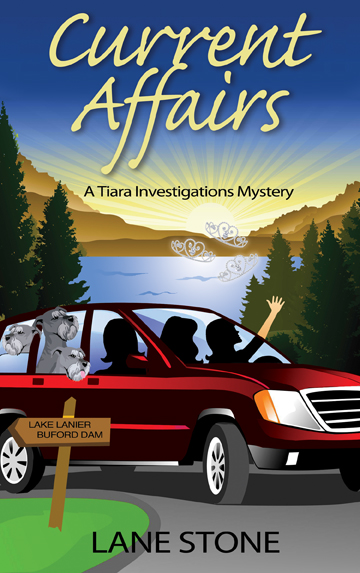
The setting for Current Affairs, the first book in the Tiara Investigations Mystery series, is Sugar Hill, Georgia.  My husband and I split our time between Alexandria, Virginia and Sugar Hill.  I could have set the book in either location but Sugar Hill is a funnier place.  You knew that already, right?  That’s one secret to writing humor – you just heard which was funnier.

I decided I wanted to write a humorous mystery when a series of extremely funny books got me through a rough patch.  While hiking someone told me about a book group for E. F. Benson fans, called the Rye Society.  That week while foraging in the clearance bin at Barnes & Noble, I saw a compilation of the “Lucia” books.  It was three or four inches thick and cost five bucks.  How could anyone turn that down?  It’s called excellent money management.  The first time I tried to read the tome I put it right back on my bookshelf.  I thought it was silly and not my cuppa.   Months later I picked it up again, and had the same reaction.  I knew that these books inspired not just loyalty, but obsession, still ….

In December, 2001, my mother died, and I hadn’t really recovered from 9/11.  My husband was working at the Council on Foreign Relations in Manhattan, and we were living in exile in Fort Lee, New Jersey.  You could see the twin towers from our balcony.  Then all you saw was smoke and rising ash – for months.  If the largest thing in your backyard disappeared you’d never stop looking for it.  So in this time of feeling unable to get my footing,  I gave Make Way for Lucia another go.  It was the funniest thing I had ever read!  I fell in love!  These books had been waiting for just the right time.  They got me through that hellish month.

I had written my first book, which never had nor ever will see the light of day.  Not to get too technical here, but it was crap.  I wasn’t writing in my own voice – don’t know who’s voice it was written in, but it was a boring book.  My goal became to do for some reader, somewhere, what E. F. Benson had for me, either in a difficult time, or just at the end of a long day.  The idea of three former beauty queens from Georgia starting a detective agency came to me and I went on from there.  After about three years of writing, and then another three or four revising and querying, I was offered a contract by Mainly Murder Press. (During the getting pub’d time I was getting edits, both from my critique partner, Jacqui Corcoran, and Sisters in Crime’s Guppy manuscript swap program.  We writers are told to send out fifty query letters then send out fifty more.  My advice from the other side of the fence is this:  make your writing better, then make it better again, then again.  That’s how you’ll get published.)

According to reviewers, Current Affairs is, indeed, funny.  Crime and Suspense Reviewer, Wil Emerson, said, “Lane Stone’s style is both witty and charming … join her on this latest adventure.  And hold onto your belly, it’s a bumpy ride and you can’t stop laughing.”  Sandra Parshall, author of the Rachel Goddard Mysteries, said, “Current Affairs is hilarious and thoroughly entertaining.”  These blurbs made my heart sing.

I hope you’ll give the Tiara Investigations detectives, Leigh, Tara and Victoria, a try and let me know what you think.  I can be reached through www.LaneStoneBooks.com, or on facebook (LaneStoneBooks) and you can follow our standard schnauzer, Abby, on twitter at TheMenopauseDog.  Here’s a link to the video-  http://youtu.be/1mrMqarGPS4

Keep in touch!

Lane

Lane Stone is a member of that rare species known as the native Atlantan, and is a graduate of Georgia State University. She and her husband, Larry Korb, along with the real Abby, really do divide their time between Sugar Hill, GA and Alexandria, VA. Lane is a proud member of the Chessie Chapter and the Atlanta Chapter of Sisters in Crime


Guest Blogger Susan Sloate: Book Research: When You Do It Right and It Still Comes Out Wrong Sunday, Dec 4 2011 

Folks, Auntie M’s son is getting married, so the next two posts will feature guest bloggers.

Please welcome Susan Sloate and her very interesting story~

https://mail.google.com/mail/u/0/?ui=2&ik=cb5e064ea5&view=att&th=13406808a8ce227b&attid=0.2&disp=inline&zw     I’ll admit it up front: I’m a real snob about book research. When I read historical fiction, I expect the author to have gotten the facts right. I love losing myself not only in a great story, but a story that’s teeming with details, large and small, which make me believe I’m there.

A writer’s job, first and foremost, is to tell a good story. But in the process of telling that good story – and persuading the reader of its truth – the writer also owes the reader something critical: factual accuracy.

If an author is sloppy with facts, how can a reader believe the rest of the tale? The bond between writer and reader – that pledge to tell the truth – is broken when there are misspellings, bad grammar (except in dialogue), and most glaringly, errors of historical fact.

I am severe on such errors. (Think of a schoolmarm wielding a big hickory stick.) It takes work to check the details, correct the spelling errors and see to the punctuation. But it’s part of the job.

I’ve always accepted that, and enjoyed writing stories with historical backgrounds. The challenge of burrowing for facts – often obscure ones – and populating my stories with them, to surprise and (hopefully) fascinate the reader, was part of the pleasure (also an excellent excuse for putting off the actual writing, which as any writer knows is half the job, anyway). There is endless room for creativity after you’ve founded it on historical fact.

… Which brings me to my own novel, FORWARD TO CAMELOT, co-authored with Kevin Finn. CAMELOT is a story about an actress who travels back in time from the year 2000 to November of 1963, and while trying to retrieve  priceless artifact, finds a way to save President Kennedy from assassination in Dallas.

We did plenty of research. Years worth. Probably a hundred books, a dozen films, hundreds of newspaper and magazine articles, audio tapes, trips to Dealey Plaza in Dallas, the JFK Library in Boston and Arlington National Cemetery, several symposia on the assassination, conversations with archivists, historians, researchers. We really tried.

Getting it right was important, because we were presenting historical figures as major characters in the story, and we wanted to show them, as much as possible, as they really were. Finding both President Kennedy and Lee Oswald in the mists of fantasy, legend and just plain prejudice, was not easy. But we think we finally did.

We were also blending historical fact with the plot we created, such as the car crash in Dallas on November 18th (4 days before the assassination) that revealed hundreds of stolen rifles, part of a gunrunning operation that had been going on for years, and was tied to the perpetrators of the assassination. (True; you can look it up.)

That gunrunning operation was originally set up by – wait for it – Jack Ruby, the man who shot Oswald. (I am not inventing this.) And it did become an important part of our plot, which most people thought we had made up. (Wish we were that creative.)

So getting the details right in this case was important because we were mixing them right into the creative stew of our story.

So what happens when you realize you’ve committed the cardinal sin – you’ve gotten it wrong?

     The plot of FORWARD TO CAMELOT turns on an artifact that our heroine, Cady, is sent back in time to retrieve: The Bible owned by JFK, which was used to swear in Lyndon Johnson as president on November 22, 1963. According to William Manchester’s excellent DEATH OF A PRESIDENT, the Bible disappeared after Sara Hughes, the judge who swore in LBJ, left Air Force One in Dallas and was asked by an unknown man at the bottom of the ramp to give it back.

Intriguing? You betcha. This is a novelist’s dream – to find some obscure fact no one else has ever used, that we can then work up into a grand story.

But … we also wanted to be sure of the facts. Manchester’s book is the ONLY one of the hundreds we read that even mentioned the Bible’s disappearance. (The other books, understandably, dealt with the continuing questions over whodunit.) Jim Bishop’s excellent book on the same subject says the Bible was in fact a Catholic missal (prayer book), but never mentions that it was lost.

What’s a mother to do?

What we did was call the Kennedy Library in Boston, asking if the Bible had ever been returned. Manchester says the Kennedy family wanted it back, but that was in 1967. The archivist said very definitely that the Bible had not been returned.

That’s when we knew we had a winner: A totally original take on the assassination story, a treasure worthy of the hunt, that if recovered today would be priceless. Jackpot!

      The book was published in November 2003, to coincide with the 40th anniversary of the assassination. It became a #6 Amazon bestseller, took honors in three literary competitions and was optioned (though alas not yet made) by a Hollywood film company.

Everything was grand – until Kevin called me in despair a few years ago and said, “We have to pull the book. We made a huge mistake.”

Uh – excuse me?

He then told me that two of his friends had called to let him know that they knew where the Bible (rather, the prayer missal – Jim Bishop was right) actually was, and of course it was the one place you would never expect.

According to them, it was at the Lyndon B. Johnson Presidential Library in Austin, Texas, where it had been, on display, since the library opened.

To make matters worse, they had found out this interesting fact on JEOPARDY. Yes, America’s game show had mentioned it, in front of millions.

Who knew?

Apparently, according to the LBJ Library archivist I belatedly consulted, Sara Hughes, the judge, did hand off the Bible to a Secret Service agent, who returned it to Mrs. Johnson (not Mrs. Kennedy), who then turned it over to her own press secretary, Liz Carpenter, because she knew that reporters covering the story would be interested in the details of the swearing in.

But … nobody ever asked. No one was interested in how LBJ was sworn in; to them, the story was the dead president, not the live one. (That must have been a real kick to LBJ’s considerable ego.)

So the Johnson family kept the missal and when they were setting up the LBJ Presidential Library, asked the Kennedy family whether they wanted it back. The Kennedys said it had been a recent gift to JFK from an admirer; it did not have sentimental value for them, and they didn’t care about it.

Thus it landed in the LBJ Library – which neither of the authors ever thought of consulting. We figured a JFK librarian would have information on JFK’s possessions and spent considerable time cross-checking other books about the assassination, looking for references to it.

So there you are. Our Bible, which was really a prayer missal, was never a cherished possession of JFK’s (as Manchester stated) and in fact was never `missing’.

We did not pull the book, though. I suppose there’s egg all over our faces, but even so, it’s hard to get mad about this one. We read something in a well-written, well-researched book that turned out to be wrong, and tried hard to corroborate the facts in logical places, except that the people we consulted knew less about it than we did. And therefore, we believed our assumptions to be true, and acted on them.

Frankly, I can’t feel too bad about it. Because if we had gone to the right source in the first place and learned that the Bible (missal) had never really been misplaced, we might have thought twice about trying to save JFK from assassination in FORWARD TO CAMELOT. And I’m convinced that giving up on this novel would have been the real mistake.

I’m still very proud of the book – glaring inaccuracy and all – and if I need comfort, I go back to my favorite time-travel book, Jack Finney’s TIME AND AGAIN. Finney’s classic was set in New York in 1882 and featured the Dakota apartment house in the plot. In a research note at the end of the novel, Finney said that the Dakota was actually built in 1885, but … he needed it for his story in 1882, so he used it.

Well, that works for me. We needed a lost Bible, and using it helped us save JFK (on paper anyway) from tragedy. Anyway, that’s my story, and I’m sticking to it.

So to you writers of historical fiction: Sometimes getting it wrong helps you to surprising new revelations. I wish you lots of interesting research, and many wonderful surprises along the way.

Susan Sloate is the author of 17 young-adult books and the co-author (with Kevin Finn) of FORWARD TO CAMELOT, the 2003 time-travel novel about the JFK assassination, which became a #6 Amazon bestseller, took honors in 3 literary competitions and was optioned for Hollywood film production. Her biography for children, RAY CHARLES: FIND ANOTHER WAY!, was honored in the 2007 Children’s Moonbeam Book Awards. Her unpublished 2007 novel, STEALING FIRE, was a semi-finalist in the 2008 and 2009 Amazon Breakthrough Novel Award contests. She has written and co-directed two one-act plays in their world premieres, optioned two screen properties to Hollywood film companies, written feature articles for sports publications, and is a sought-after speaker for conferences and classrooms. She appears in volumes of WHO’S WHO IN AMERICA, WHO’S WHO IN ENTERTAINMENT and WHO’S WHO AMONG AMERICAN BUSINESSWOMEN. Visit her online at http://susansloate.com.

Simon Beckett: The Calling of the Grave Sunday, Nov 27 2011 

Simon Beckett’s novels featuring forensics expert Dr. David Hunter display the kind of in-depth research that keeps readers like Auntie M coming back. With his painstaking approach to detail Beckett’s novels have a sense of authenticity that at times is eerie, and which applies to other character’s specialties, as well.

When Beckett was writing for the Daily Telegraph Magazine, one assignment took him on a field trip to the world-famous Anthropological Research Facility in Tennessee known as The Body Farm. That visit inspired not only the character of David Hunter, but this recent offering in the series, The Calling of the Grave. “Nothing stays hidden forever” is the last line of the prologue and an apt theme for this absorbing novel that will end in an entirely different way from the reader’s first expectations.

Almost a decade ago a body was found buried on Dartmoor, presumably the work of the psychotic rapist and multiple murderer Jerome Monk. The bodies of two other victims, twin sisters, were never recovered. Called upon to be a part of the recovery team, Hunter is eager to be included in a search of the area when Monk offers to point to where the bodies are buried. The premise allows us to go back into Hunter’s private life as he recalls the the days of the first search, and brilliantly ties those events to others that have severely affected his life.

On the moors Hunter meets Leonard Wainwright, a Cambridge don turned consultant to the police, renowned as a forensics expert, especially in the area of archeology. Part of the team will be the local pathologist, Dr. Pirie, and also Sophie Keller, a Behavioral Investigative Advisor, who will advise on offender’s characteristics and motivations, and will help to plan the strategy and assessment of Monk. DI Terry Connors is a surprise: his wife and Hunter’s own were friends years ago and the men used to see each other socially.

The moor is beautiful described, in all its dark and wild glory, and provides the perfect setting for the shackled prisoner as he arrives after a decoy has shaken reporters off in a different direction. The real prisoner has a hulking presence, powerful presence, with a ghastly congenital indentation in his forehead, “as though he’d been struck with a hammer and somehow survived.” With his crooked mouth and small, empty eyes, the murderer has a chilling effect on those present.  

The the unthinkable happens: a nightmarish scenario develops and Monk tried to escape. With great difficulty the police manage to subdue and contain him, but not before he has ruined the career Sophie Keller. With Monk safely behind bars, Hunter returns to London and his wife and daughter–until his own nightmare begins.

Eight years later, Hunter is surprised to find Terry Connor on his doorstep. Both of their lives have changed, not for the better, and Hunter is not happy to see Connor. Then the detective tells him his news: Jerome Monk had suffered a heart attack, and on transfer to a civilian hospital, managed to break his restraints, subdue his guards, and escape into the night. When a panicked Sophie Keller contacts Hunter a few days later, begging him to visit her, he acquiesces. But Keller fails to show up at the pub where they were to meet, and Hunter drives out to her house, only to find her beaten into unconsciousness.

What happens next will bring Hunter into the realm of a murderer, as the members of the original search team begin to be hunted down and murdered, and Hunter realizes he only knows half the real story of the events of eight years ago.

This is a gripping and solid read, with the pacing ratcheted up as Hunter and Sophie try to flee from a maniac on the loose. Or is the real threat closer to home?

Another solid offering from Simon Beckett.

Denise Mina: The End of the Wasp Season Sunday, Nov 20 2011 

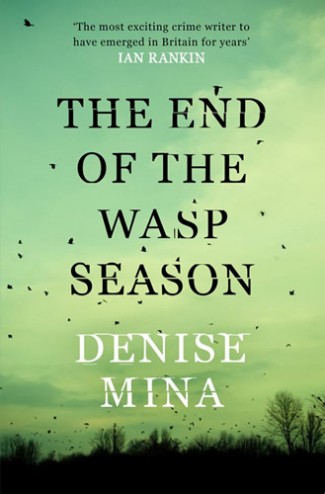
Ian Rankin calls fellow Scot Denise Mina: “The most exciting crime writer to have emerged in Britain in years.” Readers of Auntie M will know that she follows Mina’s crime novels, from her stand alones to her Paddy Meehan series. With a law degree in her pocket, Mina also writes short stories, has authored a play, and is a regular contributor to TV and radio.

Mina is back with a new protagonist, as original as any of her others. DS Alex Morrow is pregnant with twins when she catches a murder case that will send shock waves through the wealthy suburb of Glasgow where the victim lived. It will also touch Morrow’s personal life and impact her career as she tries to keep her own ghosts at bay.

Sarah Erroll had taken exceptional care of her ailing mother until the woman’s recent death, providing round-the-clock care in the home Joy Erroll loved. When Sarah is found brutally murdered at the bottom of the stairs of that home, it appears to be a vicious but random attack. Then Morrow listens to the recording made when Sarah tried to call 999 and hears her tell one of her murderers: “I know you.” The case is further complicated when stacks of cash are found hidden under the kitchen table, totaling close to $700,ooo Euros. What was the source of Erroll’s money? Who knew about it?

In a seemingly unrelated event in Kent, millionaire banker Lars Anderson hangs himself from the oak tree standing on the sacred lawn of his mansion. Under investigation for fraudulent business practices that have left his clients destitute, his death is seen by many as a penance for his lifetime self-serving attitude, a just decision in a world damaged by ever-widening recession. Although left in financial straits, his deeply damaged family mostly feel  a sense of release at his death. But just how damaged are they?

Stonewalled by DCI Bannerman, a man who’s learned how to turn rudeness into an art form, it will be up to Morrow to sort out the tangled web that connects both deaths. Travel to London follows as Morrow begins to unravel the threads that will lead to a shattering resolution.

This is a complex and multilayered novel, full of plot turns, with Mina illustrating a deft rendering of the complicated emotions of the people in the book’s world. This talent makes her characters eminently human, and her novels are ones easily gobbled up as the pages turn.


Two for Sorrow: Nicola Upson’s third winner Sunday, Nov 13 2011 

Auntie M has been encouraging readers to investigate Nicola Upson. With her background in theater and as a crime fiction critic, it is easy to see how Upson’s research into the life of Elizabeth Mackintosh led to this very original series. Upson is also the author of two non-fiction books, and studied English at Cambridge.

Upson became interested in writers working between the two World Wars, which led her to Mackintosh, who wrote plays and mainly historical fiction under the pen name of Gordon Daviot. When she turned her hand to some of the most original crime novels of 1930’s-1950’s, Mackintosh wrote under the name Josephine Tey.

It is Upson’s own original device in this series to star Tey as the protagonist in her mystery novels, and it is highly effective. Following the authorship of Tey’s real novels and life events, Upson brings to life the era and settings that Mackintosh inhabited, weaving in aspects of her life with that of Tey and her friends in the theater.

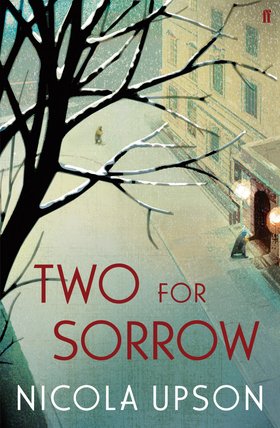
In her third Tey novel, Two for Sorrow, Upson has Tey in London doing research for a possible novel based on the last double female hanging at Holloway Prison in Britain. The book follows two stories: Tey’s research into the life of the two women convicted of murdering newborn infants taken from their mothers for adoption; and the murder of a young seamstress who has been found murdered under horrific circumstances in the design studio of the Motley sisters, Tey’s friends.

Tey is staying at the Cowdray Club, a club for nurses and professional women where Mackintosh was a member from 1925 until her death in 1952. The club is the planned setting for a lavish charity gala with surperstars headlining the fundraiser, and the Motley sisters are designing many of the dresses for the prominent women attending. Inspector Archie Penrose and his team investigate the young woman’s death, which at first appears to be laid at the door of her abusive father. Penrose is not convinced this is the case, and he enlists Tey’s help in finding the real murderer, even as she continues her own novel’s research, which includes a visit to Holloway.

The lives of several women living at the Cowdray Club are brought under Archie’s spotlight, and Tey finds herself at times uncomfortable with Archie’s investigation. Then as he becomes convinced he is on the trail of the murderer, a second young woman suffers a terrible accident and the race is on to unearth a sadistic killer.

Upson’s settings are vividly described and recall the era perfectly. She also mines the reserve of the time and the simmering emotions that lie just beneath the surface of most personal relationships. Her research is exhaustive and we are the happy recipients as she expertly overlaps the real with the fictional.

The two main story lines overlap in several places that heighten the tension. The entire novel is bolstered by an intriguing subplot featuring Tey’s private life. Auntie M had to do a little research of her own to find that this, too, was based on what can be gleaned from Mackintosh’s very private life.

P. D. James has remarked that Upson  “. . .  is to be congratulated” and Auntie M agrees. Don’t miss this third strong outing in a consistently entertaining and well-written series.


Two Jewels by Barry Maitland Sunday, Nov 6 2011 

Award-winning novelist Barry Maitland was born in Scotland, but grew up in London. Although he’s lived in Australia since 1984, Maitland takes us to a different London neighborhood in each of his police procedurals featuring Metropolitan police detectives David Brock and Kathy Kolla. Despite their age difference and relationships with other people as the series has advanced, the bond between the more experienced Brock and his acolyte Kolla has deepened, even as the younger woman’s strengths as an investigator have grown.

Auntie M’s readers know she follows this series, and Maitland’s two most recent novels won’t disappoint fans or newcomers. Both offer the ingenious plotting based on a solid framework that Maitland’s architectural background lends, one of his hallmarks. Perhaps credit should also be given to his great-grandparents skills as weavers. Whatever the source of his talent, Maitland’s main plot and subplots all hang together without becoming obtuse or unnecessary, even when characters from the personal lives of Brock and Kolla take the stage and become woven into the plot of the story.

His books also display extensive research into an area of obsession for that novel’s characters, so that readers learn about a subject important to the main personalities. It is to Maitland’s credit that this information forms a vital part of the story and yet keeps the reader intrigued, without lapsing into a travelogue or primer feel that would take away from the novel. Auntie M knows when she opens a new Brock and Kolla novel that her knowledge of a new area will be enriched as she follows the investigative trajectory.

Dark Mirror takes Brock and Kolla into the world of the Pre-Raphaelites, when a student has a seizure at the London Library and dies shortly after. Marion Sommers was a diabetic, but what seems to be a simple tragedy becomes the object of investigation when it is determined that the graduate student, an Ophelia-lookalike, died from arsenic poisoning. Was this a deliberate ingestion by a depressed young scholar, or the work of a devious murderer?                                                   Kathy Kolla has just been promoted to Detective Inspector of Scotland Yard’s Serious Crime Unit and holds herself up a role model for the younger members of her team. In her first big case she is determined to find the truth behind the death of the pretty student . With the help of DCI Brock and other members of their team, she begins to unravel the complicated story behind the young woman’s ties to a world where it was once common to use arsenic for a variety of household uses.  Kolla is immediately thwarted in her investigation when she experiences difficulties finding the dead woman’s residence and next of kin.

When Kolla eventually finds Marion’s home and her family, both raise more questions than answers for the detective. Kolla tries to understand Marion and her work, exploring the world of Dante Gabriel Rossetti, Lizzie Siddal, Janey Burden Morris, and the lesser-known Pre-Raphaelites who figure in Marion Sommers work. The detective is led to Marion’s faculty tutor, her research assistant, and eventually, to the killer of the young woman whose research threatened someone’s existence to the point of murder.

Just published in the US is Maitland’s newest offering, Chelsea Mansions, named for a residence block near one of the tourist highlights of London, the annual Chelsea Flower Show. Leaving the show, an American tourist is horrifically killed in what at first appears to be a random act of violence. When Brock and Kolla’s team investigate, they realize the killer has skillfully kept his face and his escape from the neighborhood from being captured on CCTV cameras mounted near the accident site. What appears to be a random act begins to feel like the planned, deliberate murder of Boston widow Nancy Haynes.

Before any resolution can occur, a wealthy Russian businessman is murdered in the garden across the street from Nancy’s hotel. Mikhail Moszynski’s lavish home encompasses the rest of the block where Nancy’s hotel is situated. As questions mount and the investigation heats up, Kathy becomes convinced the two killings are connected, just as Brock falls seriously ill and his survival is in question. With her professional life at stake, Kolla travels to Boston to explore Nancy’s background.

Maitland gets Boston just right and his subplots involving other characters showcase the author’s skill at devising a multi-layered story. He manages to coalesce threads concerning biological warfare, MI-5, a scurrilous MP we’ve met in a previous novel, Russian agents, and a Canadian university professor into a highly satisfactory conclusion which answers all the questions that have been raised, and all in a believable manner.

It is to Maitland’s credit that he started writing with the pairing up of a male-female protagonist team before it became fashionable. If you haven’t had the pleasure of reading Barry Maitland, Auntie M suggests you begin with the delightful series opener, The Marx Sisters, to follow the careers and private lives of the two detectives these eleven novels revolve around. But no matter in which order you read them, Barry Maitland’s novels, in the UK and Aussie idiom, go down a treat.

Peter James: Riveting Two-fer Sunday, Oct 30 2011 

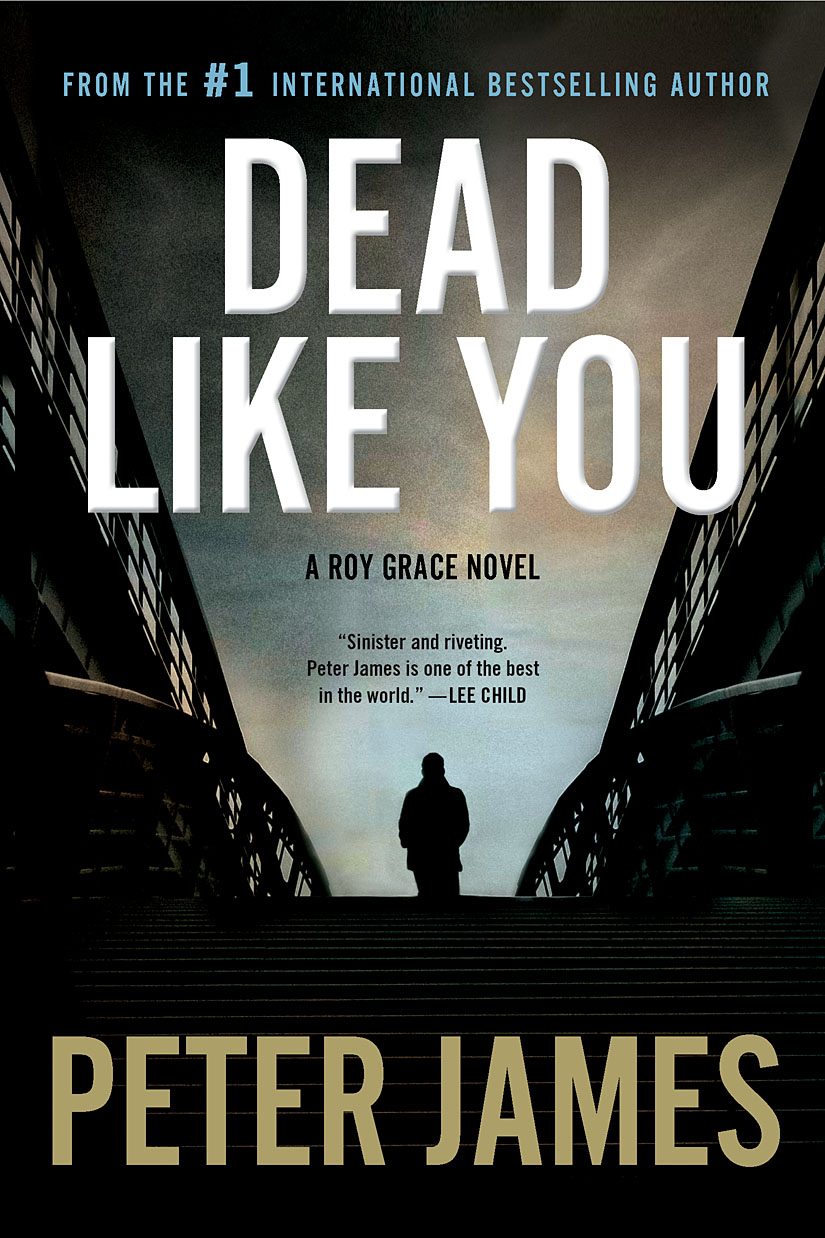
Peter James two latest Roy Grace novels reveal why Lee Child calls him “. . .  one of the best in the world.” James has produced numerous films (The Merchant of Venice with Al Pacino, Jeremy Irons and Joseph Fiennes) and his novels have a cinematic appeal, visual and complex. Indeed, three of the novels have been filmed and the books have sold over five million copies and been translated into thirty-three languages, a track record any author would envy.

James  blames being burgled for the realistic bent he brings to Detective Superintendent Roy Grace and his Brighton team. A detective James met at the time offered to help him with his series research, and later became the model for Grace. James says becoming friendly with the policeman and his cohorts led him to see that they live in an inclusive world of their own compatriots, looking differently at their surroundings from the average citizen: they have a healthy dose of suspicion most of us lack. James credits another detective friend who reads and comments on his novels-in-progress for being an invaluable resource. Auntie M agrees: her own Cumbrian source for The Green Remains (due out early in 2012) helps with details of everything, from the colors of the lights on top of Lake District panda cars, to the distance to the police station from the major crime scene.

Dead Like You opens in Brighton at the Metropole Hotel on New Year’s Eve. A woman is brutally raped; a week later, a second woman is attacked. Both victims have their shoes taken by the offender.


The cases jog Grace’s memory back to a series of remarkably similar crimes which remain unsolved from 1997. Are these crimes the work of a copycat perpetrator, or has the “Shoe Man” resurfaced?

By shifting between the past and present, James presents us with the fullest picture yet of Grace’s personal life, taking readers into the time before his beloved wife went missing and changed his world irrevocably. He also offers a fascinating story of sexual obsession. As the crimes mount, Grace’s team race to save the latest victim.

The novel is inventive and engrossing, blending aspects of the police procedural with the psychological suspense that has become the hallmark of James’ novels, which Jeffery Deavers say echo ” . . . the heart and voices of such authors as P. D. James and Ian Rankin at their best.”


James’ newest addition to the series will be on sale here at the end of November. Auntie M scored an Advance Readers’ Edition of Dead Man’s Grip and feels this is the strongest entry yet in the Roy Grace series.

This one sizzles off the page, building from chapter to chapter, as the action ranges through several countries and surges with emotional charges on several levels.                                                                                                                                                  

The action starts in a seemingly innocuous way, with widow Carly Chase hurrying to the office after dropping her son at school. A terrible motor vehicle accident occurs, with the resultant death of a Brighton University student. Too much wine the evening before is still in Carly’s system, but when she’s eventually cleared of any wrongdoing in the accident, she has no idea that the repercussions will extend far beyond the loss of her driving license.

When Grace’s Sussex team become involved, it becomes clear that the dead student had connections to organized crime in America, and several scenes are set in New York on Long Island’s tony Hamptons. Since this is Auntie M’s homeground, she was particularly keen to read these bits, but the routes used to get there from Manhattan are correct and descriptions of the area hold up well.

Then revenge killings of the others involved in the accident begin, accompanied by some of the most horrific torture imaginable. It becomes obvious to Grace that Carly is next on the killer’s list.

Besides James’ terrific plotting, this novel is notable for two other aspects. The first is the hit man involved, and here Grace does a sensational job of getting inside the mind of the kind of freakish sociopath who would be able to carry out these detailed killings. This may be one of the most evil characters to come out of James’ imagination yet.

The second is the weaving in of Grace’s personal life, which takes an surprising and unforeseen turn. Readers of the series will be chomping at the bit for the next book to see how this newest twist plays out. Don’t miss this latest entry from Peter James for a satisfying read and a wild ride.


S J Watson: Before I Go To Sleep Sunday, Oct 23 2011 

Before this novel hit, ninety percent of its readers thought S J Watson must be a woman.

Instead, the author is a 40 yr-old audiologist with the British National Health System. Before I Go To Sleep is one of the finest psychological thrillers I’ve read in years.

The jacket blurb reads: Memories define us. So what if you lost yours every time you went to sleep? This is the rich premise that Watson mined when he was accepted in 200 into the first Faber Academy Writing a Novel course. The result is nothing short of spectacular, leaving Dennis Lehane to comment: “Exceptional . . . It left my nerves jangling for hours after I finished the last page.”

Watson’s protagonist wakes up in the morning in a strange bed, lying next to a man she doesn’t recognize. When she went to sleep she was in her twenties; the face that looks back at her in the mirror is middle-aged and unfamiliar. So begins the Christine’s journey, over and over, as each day her husband has to explain that she has suffered a terrible accident twenty years ago that has left her without the ability to form new memories. Her husband, Ben, is the soul of patience as he explains that Christine is now forty-seven, has been in and out of hospitals and institutions, and that he has to go through this with her each morning when she wakes up.

Christine is stunned, and the reader feels her struggle every day to comprehend what has happened to her. Then one day she is at home when Ben is working and she answers a call from a Dr. Nash, who claims he is a neurologist she’s been working with without Ben’s knowledge. He explains she has a hidden journal and tells her where to find it in the back of her closet. For the past few weeks, she has been recording her thoughts and actions. Christine turns the pages, reading past entries about her mornings with Ben’s patient explanation, her secret sessions with Dr. Nash, and even small flashes of memories of scenes from her former life.

The reader cannot help but be drawn into Christine’s plight. Even as the awfulness of her situation becomes apparent, it raises unsettling questions. Is it possible to love or trust without memory?

As she reads more and more of her journal, and documents the memories she is having, her questions to Ben also become unsettling. What was their life like before her accident? What happened to her plans to be a novelist?

Christine reads more and more of her journal each day and keeps documenting the memories she is having, while her  questions to Ben become unsettling. What was their life like before her accident? What happened to her plans to be a novelist? Why has her former best friend deserted her? And perhaps most disturbing: why didn’t they have a child? For inside, deep down in an irrevocable place, Christine is convinced that she’s a mother.

As Christine’s makes journal entries build, she begins to pick up inconsistencies in Ben’s story. A huge one concerns the details of the accident that robbed her of her memory. She tries to reconstruct her past as her memory flashes start to build. The tensions rises as the pieces of Christine’s past life don’t seem to hang together, and the story builds to a stunning climax.

It would be a shame to tell you any more of this intriguing plot; you’ll simply have to read it for yourself, and I promise you’ll stay up at night to have the resolution revealed.

Watson says this past year has been “the weirdest year of my life.” His debut novel has quickly risen in the charts, and been translated into several languages and published in foreign countries. Ridley Scott has optioned the movie and signed Rowan Jaffe to write the screenplay and direct. It will be interesting to see how this novel translates to the screen, and who is cast as Christine, as the entire novel is told from her point of view. Don’t miss the chance to read this original story before the movie hits the screen.


Aline Templeton X 3 Sunday, Oct 16 2011 

Auntie M had been enjoying Aline Templeton’s DI Marjory Fleming series and earlier this summer brought her to readers attention. (See blog of 7/31) She is also the author of six previous stand-alones.

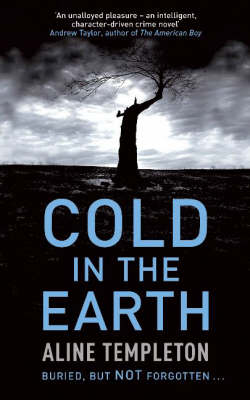
Now she’s successfully tracked down a copy of Templeton’s first novel in the Fleming series, Cold in the Earth, which introduces Marjory, her family, and recurring members of her team. From this beginning, it’s easy to see how the series launch attracted so much attention.

Played out against the real-life tragedy of hoof-and-mouth disease that devastated sheep and cattle farms and destroyed lives, Templeton gives us the people of the Scottish countryside near Galloway who must endure this unspeakable loss. Enter psychologist Laura Harvey, newly returned to the UK from New York, leaving behind a failed marriage and facing her mother’s funeral. The loss of her last family member gives her the impetus to renew a search for her sister Diana, “Dizzy,” who argued with her parents at the age of twenty and left home, never to be heard of again. Fifteen years later, a chance encounter brings Laura on the trail to the place her sister was last seen, the small town of Kirkluce.

The catastrophic disease comes too close to home for Marjory and her sheep farmer husband, and just as she feels she should take a leave of absence to be home with her husband, teams digging a pit for dead cattle at the Chapelton estate turn up the bones of a dead woman. Is this the missing Dizzy, or the mother of the Mason’s , who deserted the obnoxious family before Dizzy came to work there? Marjory’s investigation will turn up a family’s sinister obsession with bull running, providing an background to her first murder investigation. We see how she relies on DS Tam MacNee, the Burns-quoting sergeant, and how her family relationships affect her work and her work affects her family. With its strong atmosphere and taut narration, Cold in the Earth will leave you reaching for the next Marjory Fleming novel in a compelling new addiction.

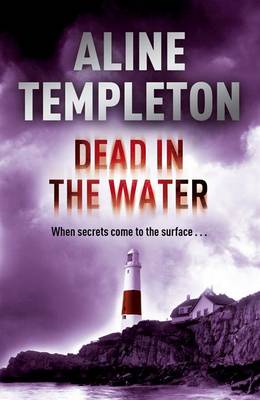
2009’s Dead in the Water takes us to the other end of the spectrum in terms of Marjory’s growth as the head of an investigative team. The fifth novel in the series, Marjory’s family has faced growth and change, as has her team. Now a new challenge faces the detective. For political reasons she’s asked  to reopen a cold case that her late father, also a policeman, was unable to solve: the real reason behind the death twenty years ago of a young, pregnant woman, who washed up on the rocks.

Templeton shows  a woman in a high-powered, responsible position who often has to make tough choices between her job and her family. When a television crew arrives in town to film an episode of a popular detective show, the complications rise. The show’s star, Marcus Lindsay, is a local-born hero and scenes are to be filmed in his family home. He is also a former boyfriend of the dead girl, and the man the victim’s mother insists was responsible for her murder.

He brings with him an aging film star who is to have several cameo scenes in the episode, an homage to the woman he considers a step-mother, his father’s mistress. Although confined to a wheelchair, Sylvia Lascalles manages to charm the town and even Marjory’s sergeant and right-hand man, Tam MacNee.

Complicating the matter are the Polish workers whose presence antagonizes the less desirable town hooligans, adding a barrage of assaults to Marjory’s already-hectic schedule, and interfering with the immigrant Polish family who reside in the cottage at Marjory’s farm and help with the sheep and the housework, which have lightened Marjory’s home load.

Templeton manages to combine all of these subplots into a satisfying chain of events that escalate, even as charges from the Procurator Fiscal threaten to destroy Marjory’s career. The ending will provide resolution, but at a high cost to Marjory and her career, and to the memory of her father.

One thing Auntie M enjoys about this series is that Templeton’s storylines are always fresh and individual.

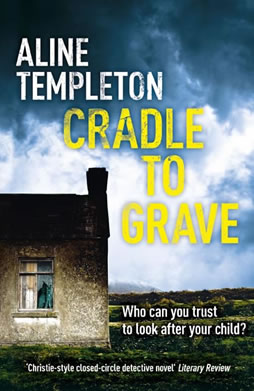
She continues the threads of Marjory’s home life and those of her team we’ve come to know and care about in the next novel in the series, 2010’s Cradle to Grave.

Hellish summer downpours have created flooding and may cancel plans for a three-day pop music festival planned on the grounds of Rosscarron, owned now by local lad Gillis Crozier, who has done well in the music business and bought the former shooting lodge on the Rosscarron headland as a second home.

With multiple business interests, he is also responsible for a spate of new homes  built at the mouth of the Carron, which the overflow have devastated. Questions of planning permission have led to demonstrations in the area, and there is vandalism at Rosscarron before the festival even gets started.

Then a landslide changes everything. Several small cottages on the coast are destroyed, some buried under the landfall from the overhanging cliff. A few people staying there are rescued, but a body is found in one cottage, and when it turns out the man was murdered before the landslide, the hunt is on for a killer. When the only approach bridge washes out, it sets the stage for an escalation of harm and tension, as Marjory and McNee are trapped for days at Rosscarron house.

Complicating matters is the appearance of Lisa Stewart, a young woman whose past includes being accused of allowing an infant in her care to die. Not convicted, nevertheless her past has followed her, and when she returns to the area, the bodies start to pile up. Once Marjory’s team uncovers Lisa’s ties to Gillis Crozier and his dysfunctional family, they must decide if Lisa is a victim or a ruthless murderess, settling old scores.

Fighting her own recent past actions, plus a part of her history she hadn’t faced in decades, Marjory’s investigation is also hampered by the tension between her and McNee, her most valued team member and her go-to sounding board. Something is going on in Tam McNee’s life, but the events from the last book have meant he hasn’t felt able to confide in Marjory. Will she be able to uncover the truth? As she unravels the history of those involved, the stories overlap and interconnect in unseen ways. What first started out as appearing to be a simple revenge scheme, turns out to be so much more.

This one is slickly plotted, with a high tension level thoughout the entire book. Templeton has vivid characters and uses the landscape to ratchet up her scenes. Templeton never goes for the easy fixes, and things are resolved in messy and often surprising ways.

Thanks once again to the wonderful Louise Penny for recommending this series. Auntie M hopes new readers will discover Aline Templeton’s  satisfying Marjory Fleming series.

Guest Blogger Suzanne Adair: Regulated for Murder Sunday, Oct 9 2011 

Please welcome  award-winning novelist Suzanne Adair, a Florida native who lives in a two hundred-year-old city at the edge of the North Carolina Piedmont, named for an English explorer who was beheaded. Her suspense and thrillers transport readers to the Southern theater of the Revolutionary War, where she brings historic towns, battles, and people to life. She fuels her creativity with Revolutionary War reenacting and visits to historic sites. When she’s not writing, she enjoys cooking, dancing, hiking, and spending time with her family. Welcome Suzanne!

  Recipe for a Historical Thriller: Unexpected Hero + Hungry Readers + Neglected History

Regulated for Murder, a thriller set during the Southern theater of the American Revolutionary War, will be released 14 October. Reviewer Grace Krispy  says the plot is “…a tightly woven storyline that rang true and felt complete.” Of the protagonist, Michael Stoddard, she says, “Driven by a desire to see justice done, no matter what guise it must take, he is both sympathetic and interesting.”


Michael Stoddard appears as a criminal investigator and a minor character in my earlier mysteries Paper Woman, The Blacksmith’s Daughter, and Camp Follower. Michael is a redcoat. More than a year ago, I queried my readers about how much of a challenge the concept of redcoat as hero would present to their belief systems and comfort zones. Turns out I needn’t have been concerned. As an archetypal hero, Michael proves himself a more-than-worthy opponent for villains, particularly the archetypal shadow of the series, Dunstan Fairfax. Reviewer Debbi Mack says,” Hey! I’m cheering for the redcoat. Whose side am I on here? LOL”

All this redcoat business started back in the late 90s, when I went hunting for exciting fiction to read about the Southern theater of the Revolution—and found none. Other readers bemoaned the dearth of such fiction, so I took it upon myself to plug the gap. The result was a trilogy that showcased wartime experiences of women during the Revolution through three female protagonists. Paper Woman won the Patrick D. Smith Literature Award. Camp Follower was nominated for the Daphne du Maurier Award and the Sir Walter Raleigh Award.

I enjoy treating readers to the little-known history of the South’s role in the war. Readers enjoy exploring and learning this history. And not only does my fiction educate and entertain, it helps readers escape the “slings and arrows” of life in the 21st century. Huzzah!

What readers learn is a piece of the past skipped over in American History class. From January through November 1781, North Carolina was a strategic military focal point because the Eighty-Second Regiment, commanded by Major James Henry Craig, occupied Wilmington. We don’t often hear about a successful British campaign in American History class, so I’ve made this occupation the baseline event for Michael’s series. If you never learned that Major Craig’s activities dramatically reduced the efficacy of the Continental Army in the South and prolonged the war almost a year, you probably also don’t know about the strategic importance of Cross Creek (now called Fayetteville, North Carolina) to both the British and Continental Armies early in 1781. Or Major Craig’s desperate attempts to run dispatches to Lord Cornwallis concerning Cross Creek in January and February 1781. Or Cornwallis’s occupation of Hillsborough, North Carolina in February 1781. And history about the Regulator Rebellion, which left its scar on Hillsborough in June 1771 with Governor Tryon’s execution of six men there, is completely overshadowed by the activities of the Revolutionary War a decade later.

I folded all this neglected history into Regulated for Murder. I set Michael up as Major Craig’s dispatch runner to a loyalist contact for Cornwallis in Hillsborough in early February 1781. Then I asked, “What if?” What if Michael found the loyalist contact freshly murdered upon his arrival in Hillsborough? What if Michael had no way to continue his mission except by solving the murder? What if the executions of six Regulators ten years earlier figured into Michael’s February 1781 woes? And what if Michael had a secret that, if exposed, could earn him courts martial and execution? The result was a historical thriller titled Regulated for Murder.

And there’s much more to the Revolutionary War history of North Carolina in 1781. A full, exciting series worth. Welcome to Michael Stoddard’s series. It’s my honor and pleasure to let the rollout of real historical events dictate Michael’s external conflicts while I develop his internal growth across the year 1781 and persuade you to cheer for the redcoat.

For ten years, an execution hid murder. Then Michael Stoddard came to town.

Bearing a dispatch from his commander in coastal Wilmington, North Carolina, redcoat Lieutenant Michael Stoddard arrives in Hillsborough in February 1781 in civilian garb. He expects to hand a letter to a courier working for Lord Cornwallis, then ride back to Wilmington the next day. Instead, Michael is greeted by the courier’s freshly murdered corpse, a chilling trail of clues leading back to an execution ten years earlier, and a sheriff with a fondness for framing innocents—and plans to deliver Michael up to his nemesis, a psychopathic British officer.

Thanks, Suzanne! Readers can look for Regulated for Murder at Amazon, Smashwords, and Barnes and Noble.

Visit her blog (http://www.suzanneadair.typepad.com/) and web site (http://www.suzanneadair.com/) for more information.

Follow her on Facebook (http://www.facebook.com/Suzanne.Adair.Author/), Twitter (http://twitter.com/Suzanne_Adair/), and Goodreads (http://www.goodreads.com/author/show/1188958.Suzanne_Adair/).

Did you like what you read? Learn about downloads, discounts, and special offers from Suzanne Adair and her author friends. Subscribe to Suzanne’s free newsletter (http://tinyletter.com/Suzanne-Adair-News/).

« Previous PageNext Page »

Amazing Family Books

Featuring The Very Best in Fiction & Nonfiction Books For Children, Parents & The Entire Family

Book Review Magazine

Incredible Books & Authors

Book Sparks News

Writing, Books & Authors News

Book Bug Out

KIDS CLUB

Writer Beware

Shining a small, bright light in a wilderness of writing scams

authorplatforms.wordpress.com/

Books, Reviews & Author News

DESTINATION PROPERTIES

The preview before the visit.<ins class="bookingaff" data-aid="1815574" data-target_aid="1815574" data-prod="map" data-width="400" data-height="300" data-lang="xu" data-currency="USD" data-dest_id="0" data-dest_type="landmark" data-latitude="40.7127753" data-longitude="-74.0059728" data-landmark_name="New York City" data-mwhsb="0"> <!-- Anything inside will go away once widget is loaded. --> <a href="//www.booking.com?aid=1815574">Booking.com</a> </ins> <script type="text/javascript"> (function(d, sc, u) { var s = d.createElement(sc), p = d.getElementsByTagName(sc)[0]; s.type = 'text/javascript'; s.async = true; s.src = u + '?v=' + (+new Date()); p.parentNode.insertBefore(s,p); })(document, 'script', '//aff.bstatic.com/static/affiliate_base/js/flexiproduct.js'); </script>

Auntiemwrites Crime-Mystery Author M K Graff

Award-winning Mystery Author on books, reading and life: If proofreading is wrong, I don't wanna be right!

Lee Lofland

The Graveyard Shift

Sherri Lupton Hollister, author

Romance, mystery, suspense, & small town humor...

The Life of Guppy

the care and feeding of our little fish

MiddleSisterReviews.com

(mid'-l sis'-tǝr) n. the reader's favorite sister

My train of thoughts on...

Smile! Don't look back in anger.

K.R. Morrison, Author

My author site--news and other stuff about books and things

The Wickeds

Wicked Good Mysteries

John Bainbridge Writer

Indie Writer and Publisher

Some Days You Do ...

Writers & writing: books, movies, art & music - the bits & pieces of a (retiring) writer's life

Gaslight Crime

Authors and reviewers of historical crime fiction

Crimezine

#1 for Crime

Amazing Family Books

Featuring The Very Best in Fiction & Nonfiction Books For Children, Parents & The Entire Family

Book Review Magazine

Incredible Books & Authors

Book Sparks News

Writing, Books & Authors News

Book Bug Out

KIDS CLUB

Writer Beware

Shining a small, bright light in a wilderness of writing scams

authorplatforms.wordpress.com/

Books, Reviews & Author News

DESTINATION PROPERTIES

The preview before the visit.<ins class="bookingaff" data-aid="1815574" data-target_aid="1815574" data-prod="map" data-width="400" data-height="300" data-lang="xu" data-currency="USD" data-dest_id="0" data-dest_type="landmark" data-latitude="40.7127753" data-longitude="-74.0059728" data-landmark_name="New York City" data-mwhsb="0"> <!-- Anything inside will go away once widget is loaded. --> <a href="//www.booking.com?aid=1815574">Booking.com</a> </ins> <script type="text/javascript"> (function(d, sc, u) { var s = d.createElement(sc), p = d.getElementsByTagName(sc)[0]; s.type = 'text/javascript'; s.async = true; s.src = u + '?v=' + (+new Date()); p.parentNode.insertBefore(s,p); })(document, 'script', '//aff.bstatic.com/static/affiliate_base/js/flexiproduct.js'); </script>

Auntiemwrites Crime-Mystery Author M K Graff

Award-winning Mystery Author on books, reading and life: If proofreading is wrong, I don't wanna be right!

Lee Lofland

The Graveyard Shift

Sherri Lupton Hollister, author

Romance, mystery, suspense, & small town humor...

The Life of Guppy

the care and feeding of our little fish

MiddleSisterReviews.com

(mid'-l sis'-tǝr) n. the reader's favorite sister

My train of thoughts on...

Smile! Don't look back in anger.

K.R. Morrison, Author

My author site--news and other stuff about books and things

The Wickeds

Wicked Good Mysteries