Nele Neuhaus: Snow White Must Die Sunday, Jan 6 2013 

German author Neuhaus is making news with the first English translation of a police procedural that will surprise readers and introduce them to a new detective duo to follow.

9780312604257

Actually the second in the series, the international best seller features Detective Oliver von Bodenstein, troubled and distinctive, and his partner, Pia Kirchhoff. In this first US import, the Grimm fairy tale describing Snow White becomes a refrain to the story Neuhaus tells of 30-year old Tobias Sartorius. It opens as he leaves prison after serving ten years following the disappearance of two teenaged girls last seen in his company. Having no recollection of most of the events of the evening, his time in prison has been tortuous as he’s come to accept he must have murdered the two girls, despite having no memory of the night in question.

Of the two missing girls, the dark-haired Stefanie Schneeberger had been cast to play Snow White in the local play. On the night the girls disappeared, she was supposed to have broken off her dating relationship with Tobias.

Returning to his small home town, Tobias is shocked to learn the pretense his parents maintained while he imprisoned. They’ve lost their business and separated, and while his father still lives on in the same house, the town has made the family pay for what they feel is Tobias’ murder of the two missing girls by outcasting his parents and damaging their property, with continued harassment.

When Tobias’ mother is pushed from a pedestrian bridge onto the hood of a car below, the two detectives investigation is met with stony silence from the villagers. Then a young girl disappears, and the past seems to be repeating itself. With the villagers certain Tobias is to blame, his life hangs in jeopardy as the Oliver and Pia race against time to find the truth before the villagers take matters into their own hands.

This is lively nuanced mystery, with increasing suspense, and well-crafted characters. The effects of gossip, the use of local power, and the idea of keeping up appearances for outsiders will all be explored, even as Oliver and Pia have their own domestic issues barging into their hectic days. The novel is surprising at times as the events kick up and the pace surges ahead. Readers will become addicted to turning pages as the story engages them. Neuhaus lets them in early on a secret to that they have more information than the detectives, a device which serves to nicely up the suspense factor.

The well-drafted thriller will allow readers to see why Neuhaus is Germany’s top crime writer. In Europe the sixth in the series is in print, and readers here in the US can only hope the translators are hard at work to bring us the next installments of this complex and widely-read crime writer.

G. M. Malliet: Wicked Autumn & A Fatal Winter Sunday, Dec 2 2012 

Tis the season for murder and Agatha Award winning author (for Death of a Cozy Writer) G. M. Malliet brings a new series to life with vicar Max Tudor, a former MI5 agent seeking a different kind of life. The tragic killing of his partner had left him guilty and resulted in a depression, a leave of absence,  and finally resignation and the search for something more meaningful. He entered the Anglican Church after schooling at Oxford and seminary training. This backstory fuels Max’s ability to get involved in murder.

In the first installment, Wicked Autumn,  Max thinks he’s found the peace and quiet he desires at his post at St. Edwold’s in Nether Monkslip, until murder erupts and spoils any sense of the idyllic village Max thought he’s found.

Wanda Batton-Smythe has led the Nether Monkslip’s Women’s Institute with an iron hand and a shrill voice that shuts out any contenders for her role. Browbeating the residents into performing as she wishes for the annual Harvest Fayre has only increased their general dislike of the formidable woman. When her body is found on the day of the Fayre, any sense of leaving his past behind vanishes for Max, thrust into the middle of distraught parishioners and suspecting what looks like an accident is actually a case of well-planned murder.

DCI Cotton, whom Max knows from the past, quickly ropes Max into helping with the investigation. Although familiar with the petty grievances and animosities of small-town life, Max is thrown by the idea that one of the residents of his lovely English village is capable of murder; yet he is realistic enough to see that there are many villagers who might have wished for Wanda’s demise. The suspects include Lily Iverson, a timid woman who nonetheless owns a local knitting business but often bore the brunt of Wanda’s assaults. There’s the owner of the Cavalier Team Room, Elka Garth, who often felt Wanda’s pressure, especially when it came to donating her services to the Harvest Fayre; and the chef and restaurateur Guy Nicholls, who felt the same pressures. Then there’s Frank Cuthbert, the local historian an author who often clashed with Wanda over his books. And that’s just the start of the list.

As the investigation heats up, readers will meet more villagers, several who will reappear in Malliet’s second book in the series, A Fatal Winter. But not before Max and Cotton team up to unmask a murderer.

In Book Two, winter has come to Nether Monkslip, and finds Max struggling with his Christmas sermon, but even more with the feelings he’s developed for Awena Owen, the New Age goddess who runs a shop in town. What would his bishop have to say about such an alliance? And should he care?

These are Max’s thoughts as he returns to the village after a brief London stay. A chance meeting on an early train between Max and Letitia, Lady Baynard, of nearby Chedrow Castle is soon put out of Max’s thoughts until Cotton calls him late that same night. The DCI has been at Chedrow Castle since earlier in the day, called just after the body of Lord Footrustle, Letitia’s brother Oscar, has been found murdered in his bed.

Only minutes after that call on his way to the castle, a second call had notified Cotton of the finding of a second body in the garden, that of Letitia herself, at first glance of natural causes. But with assorted relatives ensconced for the holidays in an extremely poor excuse for a family a reunion as orchestrated by the fated Oscar, Cotton knows his handful of CID officers, good as they are, won’t be enough to find this wiley killer.

His ace up his sleeve is his good friend Max Tudor, who will be his feet on the ground and his ears to the family.  Max is called to the castle by Lamorna, Lady Baynard’s religious grand-daughter, as special advisor to the family on the double funeral to be held.  Pastoral duties farmed out, Max leaves for a few days at the castle, and for an experience he’s not soon to forget.

The assorted Footrustle family  includes Letitcia’s Baynard side: two sons and the grand-daughter Lamorna, who had been adopted by Letitia’s dead daughter and son-in-law and left for her to raise. But Oscar’s side is well-represented, as he’d been married twice; three assorted children and one ex-wife are in attendance. This eccentric group includes the washed up actress, Lady Jocasta, Oscar’s daughter, and her American husband Simon Jones. Oscar’s ex-wife, Gwynyth Lavener, brings her teenaged children: Alec, Viscount Edenstarted, and his sister, Lady Amanda, two indulged but intelligent youths.

If this sounds like too much Debrett’s for you, Malliet thoughtfully includes a family tree, which you will find yourself consulting until the character’s become firmly rooted in your mind.

Basically a locked room puzzle, Max will eventually figure out who’s behind the deaths, but not before a third murder is committed, in a great twist that readers won’t see coming.

Readers of the Golden Age mysteries will be entertained by this series, which has all the hallmarks of village mysteries: that lovely English setting, a handsome protagonist, and just a hint of romance to round things out. Booklist says: “Malliet has mastered the delights of the cozy mystery so completely that she seems to be channeling Agatha Christie.”

Susan Hill: A Question of Identity Sunday, Nov 25 2012 

Can a person love two people at the same time?

Can a person BE two different people at the same time?

These are the main questions the wonderful Susan Hill addresses in the compelling new Simon Serailler mystery A Question of Identity.

Fans of the series will not be disappointed, as Hill explores Serailler’s relationship with the woman he loves, whose husband is dying.

She continues to weave in his sister, Cat, a young widow raising three children and working hospice, who faces more changes in her future just as she unearths a terrible family secret.

She also gives us an inside look for the first time into the mind of the killer Simon must unveil, by following snatches of his thoughts during the entire investigative process.

The cathedral town of Laffterton that Serailler inhabits hasn’t seen a crime as this: the brutal murder of an elderly woman, newly moved into a brand new housing scheme, posed in a way that marks the murderer’s signature. This is a careful killer, one who wears gloves, doesn’t leave a trace behind, and chooses his victims for their age and inability to react quickly to his appearance.

As the murders escalate, Serailler’s team keeps several bizarre aspects of the murder from the public. Then their investigation finds these signs to be the exact MO of a suspect previously charged with several murders who had been acquitted. But trying to find the murderer takes on an unreal aspect when Serailler learns the suspect has been given a new identity, and simply vanished. And the powers that be refuse to give him any details or acknowledge the man existed.

Hill ups the empathy with Serialler’s frustration by introducing the victims to the reader before the murders, weaving in his private life and snatched moments with his beloved Rachel at times, visits with his sister and her family at others. Realistic happenings in Cat’s life lend even more verisimilitude as she copes with teens, tweens, and the aftermath of a past case on a young doctor who has been living with her family. The first death doesn’t occur until page 137, plenty of time for Hill to ratchet up the suspense as readers come to realize who the victims will be.

This is a satisfying read in a continuing series that is what The Washington Post calls a “. . .  brooding series that rivets a reader’s attention.”

Ruth Rendell has this to say about Susan Hill: “Not all great novelists can write crime fiction, but when one like Susan Hill does the result is stunning.”

Lynda LaPlante: Blood Line Sunday, Nov 18 2012 

Prime Suspect‘s Lynda LaPlante is back with a new Anna Travis novel.

Blood Line follows Anna’s new case as a DCI, heavily watched over with increasing annoyance to her by her mentor and former lover, Superintendent James Langton.

Her first case was a slam dunk that she made her way through numbly, dealing with the aftermath of the death of her fiance`. The pacing here is different from the usual murder novel, as the case starts out as something entirely different and meanders its way into a murder investigation, when a court clerk whose son has disappeared asks Anna to look into the case. Langton concurs, trying to give Anna time to grieve before getting her feet under her in a real murder case.

Alan Rawlins is a good-looking chap, engaged to be married to salon owner Tina Brooks. A shy gentleman, Alan’s sudden disappearance has his father and fiancee` stumped.

Anna’s initial interviews reveal nothing specific. At first glance, Alan is a paragon of virtue, with savings in the bank and a steady job. Tina arrived home from her salon one day after he’d come home early from work with a migraine to find Alan gone; it is his father who insisted a Missing Person’s report be filed when there’s no word from Alan after two weeks.

Meeting Tina for the first interview leaves Anna with a gut feeling something is wrong. The flat is too neat, compulsively so. And despite supposedly in the midst of shopping for a wedding dress and ordering invitations, Tina shows little emotion when discussing her missing partner, stating she feels he’s gone off with another woman. At first Anna feels it’s possible Alan has taken off to escape marriage to Tina and the pressures of his mother’s dementia, especially when a potential second source of income is identified.

Then a better search of the apartment Alan and Tina shared turns up evidence of a blood pool behind the head of the bed, and more Luminol work shows a massive cleanup in the bathtub as the full-scale murder investigation swings into action.

Despite the evidence, the question of the identity of the victim becomes an issue. Someone was murdered in that flat, but just who it was becomes more and more difficult to establish in a series of twists that have Anna, under pressure to solve the case, becoming almost obsessed with all the trails she finds. And over it all, Langton is watching her like a hawk.
The book follows the extensive details and delays of real police work, from waiting for forensic reports to traveling to interview witnesses, always with the budget in mind. Anna also deals with the personalities of her hastily-thrown together team.

LaPlante’s lack of contractions may take some readers aback as it gives her dialogue a more formal feel; but it also serves to keep the British tone in the reader’s ear. This edition comes through the new line of mysteries from HarperCollins, Bourbon Street books.

Val McDermid: The Vanishing Point Sunday, Nov 11 2012 

Prolific Scots writer Val McDermid is back with a stand alone that will grab you from page one and keep you flipping until its surprising and eventful resolution. If you aren’t a McDermid fan by now, despite Auntie M expounding this gifts through reviews of her several series and excellent stand alones, now is the time to meet her acquaintance.

The Vanishing Point opens with UK ghost writer Stephanie Harker and her adoptive son trying to enter the US for a much-needed vacation.

The metal in Stephanie’s leg always sets off the security alarm, and she’s prepped young Jimmy to mind their luggage whilst she’s escorted to the clear cubicle to await her pat-down.

Then a kidnapper, disguised as a TSA agent, leads Jimmy away, and Stephanie’s attempts to rescue him are seen by the real TSA agents as an attempt to breach security. She’s detained over her protests and ultimately tasered, helpless to prevent Jimmy being kidnapped as they disappear into the crowded airport.

Once the situation is finally explained, valuable time has been lost, but FBI agent Vivian McKuras soon realizes this is a highly unusual situation, one heightened by the confusing first moments which have allowed a kidnapper to spirit Jimmy away. The boy’s birth mother was the reality star Scarlett, who gave Stephanie custody of her only child when she was dying of cancer, believing the writer would be the best person to provide Jimmy a stable life after her death.

Scotland Yard detective Nick Nikolaides, who knows Stephanie and her complicated background, investigates in England. Both Stephanie and Scarlett have had negative relationships with men in their pasts, and Nick and Stephanie are all too aware of the various ways Jimmy’s abduction could turn out very badly.

This compelling thriller touches every parent on a visceral level, while the possible causes for the kidnapping multiply as McDermid has Stephanie explain the back story to the FBI agent.

The reader follows the timeline of Stephanie’s relationship with Scarlett and their blossoming friendship that led to Stephanie being named as Jimmy’s legal guardian. There are enough players and possibilities for suspects to chose from as their story unfolds: the boy’s pampered, drug-addicted father’s family; a stranger after ransom from the wealthy Scarlett’s estate; or even a demented fan who might have wanted a piece of Scarlett.

When the truth of the situation is made evident, this well-plotted thriller will have you in awe of McDermid’s talents to keep readers on the edge of their seats. Her powerful and unexpected climax is nothing short of a writer’s dream, which is why McDermid recently received the Crime Writers’ Association Cartier Diamond Dagger Award for outstanding achievement in the field of crime writing.

Ann Cleeves: Silent Voices Sunday, Nov 4 2012 

Anne Cleeves marvelous four Shetland Island mysteries, previously reviewed by Auntie M, are joined by the fourth in her Vera Stanhope series. Silent Voices is Cleeves at her best, with the kind of involved plot that revolves around relationships we’ve come to expect  from this talented and prolific author, whose George and Molly books, Inspector Ramsey series, and several stand-alones rank high with the best of British crime writers.

Vera is an unlikely heroine, living with the ghost of her dead father in his house, overweight and lonely, but with an instinctive intuition that has made her a top detective.

This time she’s reluctantly following her doctor’s advice to lose weight, slogging away in the pool early mornings before work at the Willows, a former grand hotel showing its age, but still with pretensions. The Willows had been  taken over by a chain, who put the health club in its basement to increase its profits. Vera hits the steam room, sharing it with a slender, long-legged woman who looks utterly at ease, head thrown back in complete relaxation. Vera tries to copy the relaxed pose without success. Then as the steam clears a bit, she realizes the subject of her regard is dead, strangled in the steam room where she’d come for a bit of relaxation.

Vera swings into official mode, calling her sergeant, Joe Ashworth, to the scene, cordoning off the steam room. The woman is identified as Jenny Lister, aged forty-one, head social worker in the area for fostering and adoptions. She leaves behind a daughter, Hannah, eighteen, and host of unanswered questions.

With her team interviewing the Willows staff, Vera and Joe try to unearth a motive for the murder. They find a connection to a case Jenny had worked on that had led to the death of young child. Soon it emerges that the caseworker of that same boy has moved to the village.

Cleeves does a fine job of illustrating Joe’s struggle to keep his home life, with a wife and young children, on an even keel as the murder investigation heats up–and so does Vera’s joy at being involved in a murder. Death, and finding the killer, brings Vera a surge of renewed vigor that some might find distasteful but that bring Vera the feeling of worthiness she craves.

There are plenty of characters here to choose from, some with motives clear and others fuzzy, but things unfold in what seems a natural way as Vera pursues the killer. And then a young man is murdered just as a young mother and her child go missing, and suddenly the stakes are upped.

This series is being serialized on ITV3, and stars Brenda Blethyn and has twice been nominated for two Dagger awards.  Cleeves received the 2006 Duncan Lawrie Dagger for Best Crime Novel for Raven Black.


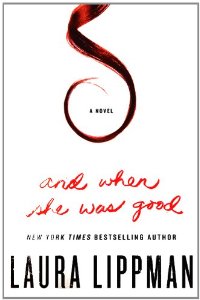
Laura Lippman: And When She Was Good Sunday, Oct 21 2012 

In an author’s note, Laura Lippman explains the genesis of the protagonist of And When She Was Good, Heloise Lewis, a character she first created in 2001 and wrote about years later in two short stories.

Now Lippman has taken the time to explore Heloise and her beginnings and her today, alternating her back story for a good part of the novel, so readers can understand this woman who is meticulously organized, financially comfortable, and oh, yes, a prostitute who runs an exclusive agency.

But Heloise so much more: she’s a successful businesswoman who protects her workers; she’s a self-educated reader with a fondness for history; and she’s fiercely protective of her son, Scott, whose biological father languishes in prison and is unaware of his child.

Despite her insistence on strict compartmentalization in her life between work and home, which has left her without close friends, Heloise finds the lines starting to blur. Her vice squad protector and friend is retiring and will no longer have her back. Then an employee or two break her firm rules. When the wisp of possibility that her son’s father may be released from prison, the carefully wrought life she has constructed is in danger. Heloise is not a perfect person, but she is one with an intelligent, thinking mind and a finely-honed instinct for survival.

Val Deluca has only one way to deal with people who have lied or become a threat to him: he has them killed. And it’s  only a matter of time before the former pimp and casual murderer discovers he is in prison in the first place because Heloise betrayed him.

It is to Lippman’s credit that she is not only able to satisfactorily explain how Helen Lewis became Heloise Lewis, in a direct and unflinching way, but she manages to create a tough and resilient character you will find yourself rooting for as the pages turn.

The New York Times has compared Lippman to England’s Ruth Rendell: “Ms. Lippman writes like a warmer-blooded American Ruth Rendell, keenly observant and giving a faintly spooky charge to every stray detail.”


Tana French: Broken Harbor Sunday, Oct 14 2012 

Auntie M is huge fan of Tana French’s novels set in Ireland, starting with Into the Woods, followed by The Likeness and the stunning Faithful Place. Now she’s back with Broken Harbor, and her novels get stronger and more compelling with each offering. In a recent essay on craft, French described her husband not allowing her to use dream sequences in her novels too much. She doesn’t need dreams; the world she creates is startling enough.

Mick Kennedy is a a top Murder Squad detective who’s earned the nickname “Scorcher” for his devotion to the job and its victims. He lands a tragic but high profile murder case on the half-deserted development now called Brianstown, one of the many high-end neighborhoods that have fallen with the down-turned economy, leaving their few owners to cope with shoddy construction and broken promises.

Mick brings along his new partner, Richie, a rookie detective on his first case, thrilled to learn from the master. But before it was Brianstown, the area was known as Broken Harbor, and Mick has his own disturbing and poignant memories of the area that will haunt him almost as much as the scene they find.

Patrick Spain is dead; his wife, Jenny, lies in intensive care. Their blood splatters the downstairs kitchen area. Upstairs, the Spain’s young son and daughter are found dead in their beds. The scene is shocking and disturbing.

What appears to be an easy case to solve quickly proves to be one of the most tangled and difficult of Mick’s career. There are unexplained things in the house: smashed holes in walls, with baby monitor cameras pointing at them; files have been erased from the Spain’s computer. And then Jenny’s sister Fiona tells the detectives her sister has been afraid of an intruder who slipped past their locks and alarms and helped himself to food from their refrigerator.

As he juggles teaching Richie about true detecting and not jumping to conclusions, Mick’s life is complicated by his younger sister, Dina. Her mental illness escalates and barges into his life and his thoughts, bringing back the memories of his family’s last summer at Broken Harbor. Adding to the layers are Mick’s new relationship with Richie. Partnerships are built on trust. But he doesn’t know Richie well enough to trust him–yet.

French’s sense of setting is acute; she brings all the senses to her descriptions and adds nuances that fill the atmosphere of the book with power and emotion. This is as gripping a novel as Auntie M has read this year, a mix of French’s usual police procedural and psychological thriller, created with realistic characters and situations, plot lines that weave and warp, and with a sense of setting so powerful you will feel as if you’ve been to Broken Harbor.


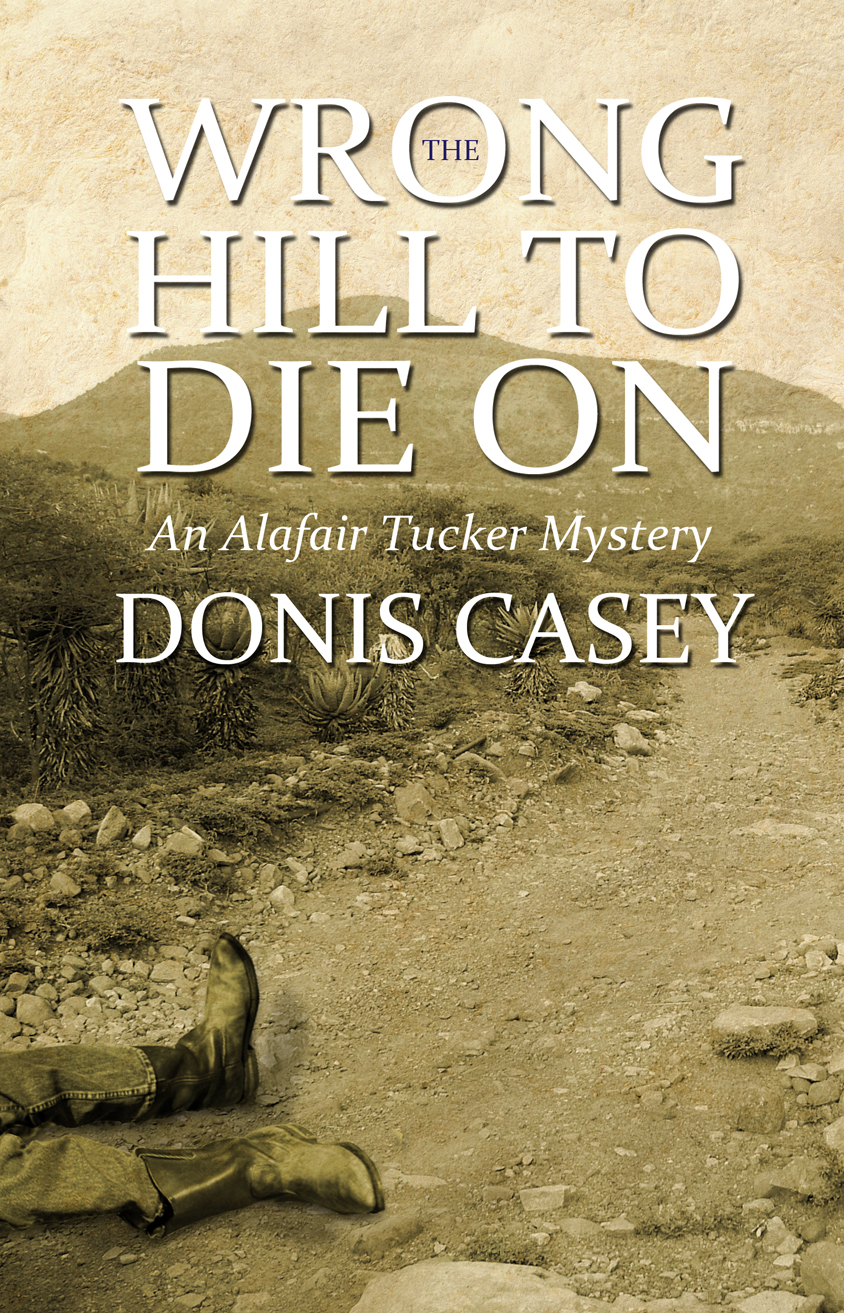
Donis Casey: The Wrong Hill to Die On: An Alafair Tucker Mystery Sunday, Oct 7 2012 

Please welcome Donis Casey, who will tell us about her newest  Alafair Tucker Mystery

The Wrong Hill to Die On: An Alafair Tucker Mystery. 

            Alafair Tucker is a woman in her early forties who lives with her husband, Shaw, and their ten lively children on a prosperous horse farm in eastern Oklahoma during the booming mid-1910s. How, you may ask, does a woman like Alafair go about solving mysteries?  After all, this is one busy woman, and the truth is that she is not at all interested in getting involved with local episodes of violence and mayhem. But when you have ten children ranging in age from early twenties to infancy, somebody is always getting himself or herself in trouble, and needs her mother to get her out of it.  Alafair may not always know exactly what to do, but you can bet she’ll do something. She’s not one to stand by and let anything threaten a child of hers.

When you begin writing the sixth crime novel featuring the same protagonist, you need to shake things up a bit if you want to keep the series fresh and interesting.   After all, how many people can you kill in one small town in Oklahoma before people start to wonder if the residents are crazy for living there at all?*

Nineteen-fifteen had been a tough year for the Tuckers, and 1916 hadn’t started out all that well, either. It had been a tough winter, and Alafair and her husband Shaw deserved a vacation. So I decided to send them on a trip to sunny Arizona to visit Alafair’s witty, brilliant, and beautiful sister, Elizabeth.

But once I started writing, it didn’t take me long to realize that this trip wasn’t going to work out as planned. In the first place, Alafair didn’t want to go.  A daughter was getting married soon, another having a birthday, a son going back to college. After the awful events the family endured in the previous novel, Crying Blood, Alafair simply wanted life to get back to normal.  How, then, was I going to persuade her to go to Arizona?

During my research I discovered that the end of 1915 and the beginning of 1916 had been the rainiest months in decades, accompanied by severe flooding all over the Western United States.  Therefore, a lot of flu and bronchitis was going around that winter.  Handily for my story line, at the turn of the Twentieth Century, Arizona was known as a place for people with lung problems to come and be cured by the desert air.

Alafair may not want to go to Arizona, but her daughter Blanche, only ten years old, cannot shake the bronchitis that has plagued the family all winter. Her best chance to get well is to spend some time in a dry climate. So Alafair and Shaw bundle their sick child onto the train and make a nightmare trip–a thousand miles of diversions and detours due to damaged and washed-out track–from Oklahoma to Arizona.

Yet as soon as they arrive on a bright, seventy-two degree March day, Blanche begins to improve.  Alafair is overjoyed to see her sister Elizabeth again, and for added excitement, a Hollywood motion picture company is shooting a movie right on the streets of Tempe!

But no matter how wonderful it seems at first, all is not well in sunny Arizona.  Elizabeth’s marriage is falling apart, tensions are high between the Anglo and Latino communities following Pancho Villa’s murderous raid on Columbus, New Mexico, and Alafair suspects her sister is involved in an illegal operation to smuggle refugees from the Mexican Revolution out of Sonora and into the U.S.

On top of it all, here lies Bernie Arruda, on his back in a ditch, eyes wide open, seeing nothing on this side of the veil. Just the night before, he had been singing Mexican love songs at the party in Elizabeth’s back yard, his black eyes flashing as he winked at the ladies. He had been such a charmer! Or had he?  He may have romanced half the married women in town.  Or he could have been a spy for Pancho Villa.  Or was he a defector from Villa’s army?  Was it he who hid the money that rained down on the spectators when the movie company blew an abandoned building sky high? As Alafair is about to discover, there are a lot of people who have reason to want Bernie dead.

Alafair’s trip to Arizona didn’t turn out to be the restful get-away I had envisioned for her.  But it was quite an adventure.

___________________

*The fact is, if your book is set in 1910s Oklahoma, you can realistically kill off as many people as you want.  Everybody was armed and dangerous.

Donis Casey is the author of six Alafair Tucker Mysteries: The Old Buzzard Had It Coming, Hornswoggled, The Drop Edge of Yonder, The Sky Took Him, Crying Blood, and The Wrong Hill to Die On (Oct 2012).  Donis has twice won the Arizona Book Award and has been a finalist for the Willa Award and the Oklahoma Book Award. Her first novel, The Old Buzzard Had It Coming, was named an Oklahoma Centennial Book. Donis is a former teacher, academic librarian, and entrepreneur. She lives in Tempe, AZ, with her husband, poet Donald Koozer. The Wrong Hill to Die On is available from Poisoned Pen Press in October, 2012. Readers can enjoy the first chapter of each book on her web site at www.doniscasey.com.

Judy Alter: Trouble in a Big Box Sunday, Sep 9 2012 


An award-winning novelist, Judy Alter has written fiction for adults and young adults, primarily about women in the nineteenth-century American West. Judy’s western fiction has been recognized with awards from the Western Writers of America, the Texas Institute of Letters, and the National Cowboy Museum and Hall of Fame. She has been honored with the Owen Wister Award for Lifetime Achievement by WWA and inducted into the Texas Literary Hall of Fame at the Fort Worth Public Library.

Now she has turned her attention to contemporary cozy mysteries. Trouble in a Big Box, the third Kelly O’Connell mystery, follows Skeleton in a Dead Space and No Neighborhood for Old Women, which received good reviews and popular enthusiasm. Welcome, Judy!


In Trouble in a Big Box, Kelly O’Connell has her hands full: new husband Mike Shandy is badly injured in an automobile accident that kills a young girl, developer Tom Lattimore wants to build a big-box grocery store in Kelly’s beloved Fairmount neighborhood, and someone is stalking Kelly.

Tom Lattimore pressures her to support the big box, and when his pressure turns to threats, Kelly activates a neighborhood coalition to fight the project. She also tries to find out who is stalking her and why, and her sleuthing puts her in danger that terrifies Mike.

But he isboth powerless to stop her and physically unable to protect her and her young daughters from Lattimore’s threats or the stalker. After their house is smoke-bombed and Kelly survives an amateur attack on her life, she comes close to an unwanted trip to Mexico from which she might never return.


Kelly is fighting to save her neighborhood and its old-time small-town atmosphere and historic buildings, to keep from displacing a lot of mom-and-pop businesses. But she’s fighting a larger battle, though she doesn’t realize it. We’ve seen it played out across the country for years: Wal-Mart moves in and the small businesses in a town are forced to close; syndicates take over newspapers until there are only a few if any locally-owned papers in major cities; chains force independent bookstores to close. What do we value? Big business or the individual? Of course I didn’t realize all this when I wrote. I simply wanted to involve Kelly in a new adventure and tell a good story.


I’m reminded of Dorothy Johnson who wrote A Man Called Horse, The Hanging Tree, and The Man Who Shot Liberty Valance, among many others (you have to be a bit old to remember). Dorothy once wrote me that she was astounded at all the symbolism critics—and teachers—found in her work, because she didn’t put it there. Maybe we’re all that way, even though our goal is simply to be good storytellers.


  Follow Judy on Facebook (at https://www.facebook.com/#!/judy.alter) or  http://www.judyalter.com or her two blogs at http://www.judys-stew.blogspot.com or http://potluckwithjudy.blogspot.com. Her mysteries are available in print or as e-books, and some of her western fiction is in e-book form.Judy lives in Fort Worth, Texas, with her two dogs and frequently sees her four children and seven grandchildren.


« Previous Page — Next Page »

Chick Lit Book Café

CLBC Multi-Genre Book Reviews

Miss Demeanors

A Blog for Readers and Writers of Mystery, Crime, and Suspense Fiction

Mysteries To Die For

For Mystery Listeners and Readers

Chick Lit Book Café

CLBC Multi-Genre Book Reviews

Miss Demeanors

A Blog for Readers and Writers of Mystery, Crime, and Suspense Fiction

Mysteries To Die For

For Mystery Listeners and Readers

Amazing Family Books

Featuring The Very Best in Fiction & Nonfiction Books For Children, Parents & The Entire Family

Book Review Magazine

Incredible Books & Authors

Book Sparks News

Writing, Books & Authors News

Bookish Trends

Subscribe - Free List of the Top Reads of the Month

Book Bug Out

KIDS CLUB

Writer Beware

Shining a small, bright light in a wilderness of writing scams

authorplatforms.wordpress.com/

Books, Reviews & Author Spotlights

DESTINATION PROPERTIES

The preview before the visit.<ins class="bookingaff" data-aid="1815574" data-target_aid="1815574" data-prod="map" data-width="400" data-height="300" data-lang="xu" data-currency="USD" data-dest_id="0" data-dest_type="landmark" data-latitude="40.7127753" data-longitude="-74.0059728" data-landmark_name="New York City" data-mwhsb="0"> <!-- Anything inside will go away once widget is loaded. --> <a href="//www.booking.com?aid=1815574">Booking.com</a> </ins> <script type="text/javascript"> (function(d, sc, u) { var s = d.createElement(sc), p = d.getElementsByTagName(sc)[0]; s.type = 'text/javascript'; s.async = true; s.src = u + '?v=' + (+new Date()); p.parentNode.insertBefore(s,p); })(document, 'script', '//aff.bstatic.com/static/affiliate_base/js/flexiproduct.js'); </script>

Auntiemwrites Crime-Mystery Author M K Graff

Award-winning Mystery Author on books, reading and life: If proofreading is wrong, I don't wanna be right!

Lee Lofland

The Graveyard Shift

Sherri Lupton Hollister, author

Romance, mystery, suspense, & small town humor...

The Life of Guppy

the care and feeding of our little fish

My train of thoughts on...

Smile! Don't look back in anger.