Charlot King: Poison Sunday, Apr 2 2017 


Charlot King’s new Cambridge Murder Mysteries debuts with Poison. Bringing her personal knowledge of Cambridge, its colleges, and environs, written in present tense, with a prodigious use of commas, this delightful first in a series proves to be one readers will enjoy.

King’s sense of Cambridge as a setting brings it to life under her talented pen–she also takes lovely photos of the area she posts on Twitter, and has an artistic eye. Readers will feel they’ve been there, walking through the colleges, punting on the Cam, and following Dr Elizabeth Green as she solves a murder of a colleague who lands right at the end of her garden.

A specialist in plants and their poisons, King has done exhaustive research to show Green’s expertise and it shows. Still grieving over the loss of her husband, Green teams with Inspector Abely, the golf-playing detective who admires her and whom she’s helped previously. Aided by her grandson, living with her for the term, they will sleuth out the murderer from amongst the victim’s family and close friends.

King was kind enough to answer a few questions for Auntie M, and here are her thoughts:

Auntie M: Your debut mystery, Poison, introduces Professor Elizabeth Green. What made you decide on this particular person to be your protagonist, as your research is meticulous on her plants/poisons knowledge?

Charlot King: Thank you. It’s a really interesting question, how characters develop. For me Professor Elizabeth Green just came to me, like I’d known her all my life (that doesn’t often happen). I wanted to write about a woman who on some level is invisible, who has been sidelined, or who society categorises as an irritant. When women hit their forties, fifties I think this happens all too frequently. They become invisible in stories too, a lot. I like the writer Nancy Meyers in the states, who is bringing back this age group into the movies – with ‘Somethings Gotta Give’ and ‘It’s Complicated’. It’s not just women she writes about, older men too (in ‘The Intern’). They get written off, when they’ve still got a lot to give. Anyway, I’m talking about the movies when I should be talking about books (!). I guess I am interested in those women and how they deal with the society that does that. After all, she (Elizabeth) was a little girl once too, a young woman, someone’s wife, someone’s mother. Women do so much and yet society finds it harder to applaud them for their achievements. Elizabeth’s flaw is that she is strong, very strong. What’s wrong in that? That makes her annoying by society’s standards. It makes her a closed book, and an island. Not the vulnerable woman, not deferential or ‘ladylike’. I wanted to read more of that, so I wrote it (I guess that’s what writers do)… As for the research, I bought books on poisons. It was a lot of fun, and I learned a lot. My oh my, it’s easy. I did wonder if anyone looked at my online search history and purchases whether they might think I was trying to bump someone off. But Poison is a work of fiction, not a reference book of accuracy or to give anyone ideas.

AM: Elizabeth is aided by her grandson. How did you decide to have Godric be involved? I thought him a bit like Bertie Wooster. Since Elizabeth’s cat is named Bertie, I’m assuming you’re a Wodehouse fan, too?

CK: I am a huge Wodehouse fan, huge, and yes you are right the cat is named Bertie because of that. Ha ha. I once stayed in Tuscany for a month and it was early spring and quite cold when we woke up. In the mornings I would lay in bed waiting for the sun to heat up the day, and I would read Wodehouse. I must have read them all. And I was completely in love with Bertie Wooster by the end of it. His enthusiasm, optimism and just irrepressible jollity, well, it is intoxicating. I didn’t deliberately think of Bertie for Godric. I guess they are not totally dissimilar. Godric is posh, a buffoon, and by his very nature he always gets into scrapes. But he’s different in that he’s also a bit of a chip off his nanna. Ultimately he’s much smarter than Wooster. What I find enjoyable to write about Godric is his air of mischief and play. And I wanted to bring Godric into Elizabeth’s life as ultimately – although she’d never admit it – she’s alone right now and at a low ebb after losing her husband. So Godric is the joy in her heart and her life. Perhaps he’s what saves her.

AM: Then there’s Cambridge detective Inspector Abley. He admires Elizabeth, but is frustrated by her, too, although her involvement gets him to the golf course faster. Does he continue in the series as her police link?

CK: Yes, he’s in all the books. He was the person who first asked Elizabeth to help the police force, and he’s been leaning on her ever since. Not because he’s a bad policeman, just because she’s of a superior intelligence. He’s a man of honour, who is loyal to his friends, who has a warm demeanour (cuddly jumpers and a kind heart). It’s true, he’s not always great at his job – and I’m sure in the real world he wouldn’t last in the force – but then I’m writing fiction. When Elizabeth’s husband dies, to a certain extent Abley fills a little of his shoes for her. He’s her rock, or most of the time. He is dependable, he cares about Elizabeth and is one of the few who understands her and sees beneath her hard exterior. She doesn’t need him as she doesn’t need anyone, but he makes her life better than it would be without him.

AM: Elizabeth’s husband has died in an accident. Will that be an issue down the road or remain part of her backstory?

CK: That would be telling . . .

AM: Poison really brings Cambridge alive. The town and the colleges spring to life. I have friends who live there, but have only visited them for a day, and need to go back. What’s it like to live there?

CK: I lived in Cambridge through a lot of my twenties, and there was something about it that stuck with me after I’d moved away. I think places do that to people. We all travel more these days, but places still have a huge effect on us. Yes, I found myself at a crossroads in my life and it wasn’t hard to decide where to move back to when I needed to escape and feel free again. I feel like I’m on holiday all the time in Cambridge and it suits me living in the centre, as the river runs through it, there are commons (large expanses of fields often with cattle), so although you can pop to the cinema or restaurant with your friends you only have to turn and walk the other way and you can feel like you are in the countryside. Well, you are in a way. I mean if you walk to Fen Ditton or to Grantchester. And these places just outside the centre feel like villages from the old days to me. So much has been done in Cambridge to preserve the best of the city. And of course then there is the university, which oozes culture. I have met so many interesting people here. I can’t imagine living anywhere else. It’s in my veins.

AM: Your photography showcases some of the best of Cambridge. Is that a new interest for you?

CK: Ah, I like walking and I am lucky enough to live somewhere where around almost every corner there is something beautiful. So I just snap things, nothing more. I’m no photographer, I just use an old phone. Cambridge does the rest. You really don’t need any talent to take a beautiful picture here. They are to share with people who feel the same way about Cambridge as I do. We do have quite good weather in Cambridge – as it is on the drier side of the country, and often sunny so we are lucky for that too.

A: Your second in the series, Cursed, is out in the US in Kindle now. Can you give readers a tickler to interest them?

CK: I’d say read Poison first, as they are in order. But if you fancy reading on, and have already tried the first book, then Cursed will take you on another journey through Cambridge with the three key characters – Elizabeth, Inspector Abley and Godric. You will get to know them more and hopefully like them more. As for the plot, I don’t want to say much, but a tease would be that a porter dies in College in suspicious circumstances. Inspector Abley is not on the ball with the case, and Elizabeth steps in to help find out what’s happened. So she starts to lead the investigation. As curses, death threats and other witchy goings on are left at the Porters’ Lodge, Elizabeth is left wondering if it’s an inside job. But at the same time a very important stone has gone missing at another College. The story is set right in the heart of university life, with students and professors caught up in it, alongside townsfolk. Everything starts to unravel, as Abley isn’t helping and Sergeant Lemon struggles. Will Elizabeth be able to find out the truth before more are dead? If you like puzzles and Cambridge, then hopefully you might enjoy reading the book.

AM: Why do you write mysteries vs another genre? Who were your influences in crime writing?

CK: I have always been drawn to books by people like Agatha Christie, Colin Dexter, Raymond Chandler, the whodunnit authors have always appealed. I’m fascinated by that stereotypical British under reaction, too. Someone’s been murdered, so let’s have a cup of tea. We are taught not to reveal our feelings when catastrophes happen. And to a certain extent, we also have that Dunkirk spirit, and almost a black comedy about us. So when you have a murder and people react that way, then the story becomes all about the puzzles and the clues. I like reading stuff like that. I’m currently writing a fiction book about dogs, departing entirely from the Cambridge Murder Mysteries for a short break. But will be back to write Book 3 soon, as I’ve already plotted it out. I just need to sit down and write.

AM: Who’s books are on your nightstand, waiting to be read?

CK: I read a lot of autobiographies, mainly by comedians. I think often comics are the most brutally honest about themselves and about the human condition. They hold up a mirror and tell us the truth. There is often a lot of tragedy in there, too, and the juxtaposition often makes for an interesting read. I finished Paul Merton’s book recently. At the moment I’m also reading the Old English Training Guide (!) as we have just been joined in the family by an Old English Sheepdog puppy, who recently chewed my glasses (good job they’re not reading glasses). In terms of crime, I’m about to start reading P.D. James The Lighthouse. Not sure why I’ve never read it before. But it’s queued up and I’m looking forward to that.

And I’m sure Charlot King will enjoy the James as much as readers will enjoy Poison and Cambridge.

Jorge Brekke: The Fifth Element Friday, Mar 31 2017 


Jorge Brekke’s Inspector Odd Singsaker series brings the stark Norwegian cold to life in his most ambitious novel yet in The Fifth Element.

Odd is recovering from the short-term effects of the last book, and the long-term effects of a brain tumor that’s been mostly removed. With his wife, Felicia, missing, he’s still on sick leave, but returns to this station to help search for his wife. Felicia was on her way to reconcile with Odd after their brief separation when she disappeared.

Told in what at first seems to be unconnected storylines, the novel pulls all of the threads together in a manner so complex yet compelling, it’s like reading a Rubrik’s cube that makes complete sense by the end in a masterful way.

But what a ride it is to that point. There will be the college student who has stolen a huge amount of cocaine at a party, and the thugs sent to find it. There is a corrupt policeman who may or may not be an abusive husband who has murdered before. There will be a young boy kidnapped and left to die, as well as a woman, tired of her abusive husband, who hires a hit man to kill him. But is she all she seems? It seems these are disparate issues, but they all come together.

And then there’s Odd, who finds himself holding a shotgun, with a corpse next to him. Who’s in trouble now?

Outgragously plotted in the most intricate puzzle Auntie M has read in a while, readers will be amazed at how the threads are pulled together in a surprising and satisfying ending.

Sally Andrews: The Satanic Mechanic: A Tannie Marie Mystery Tuesday, Mar 28 2017 

Sally Andrews created a most unusual protagonist in Tannie Maria in last year’s Recipes for Love and Murder. The sequel is just as captivating–perhaps even more so–with The Satanic Mechanic, filled with eccentric characters, a budding romance, and an interesting mystery. Set in South Africa’s Klein Karoo, the landscape becomes a character all its own. Here’s the author on a bench in the Karoo:

Photo by Andrea Nixon

Mixing Tannie Maria’s recipes with her love and advice column, the woman uses food as a means to help others solve their issues for the local Gazette. The South African Klein Karoo comes alive under Andrews talented writing, as Maria inexplicably finds herself investigating another murder, to the chagrin of Henk Kannemeyer, the detective with whom she is trying to build a relationship.

When Slimkat, a local Bushman activist, is poisoned in her presence, Tannie Maria feels a responsibility to become involved, despite Henk’s warning. She’s seen something in his eyes, something primal that speaks to her as much as it warns her. She feels compelled to find his killer.

At the same time, flashbacks of the abuse from her dead husband, and the secret she holds surrounding his demise, threaten any intimacy she tries to achieve with Henk. Maria soon becomes part of a counseling group for Post Traumatic Stress Disorder sufferers, run by a man known as the Satanic Mechanic.

How the counseling group, a second murder, and Slimkat’s murder are related, plus how the counseling helps Maria to heal, form the prongs of this most delightful murder mystery. Maria’s inclination is to deal with life’s highs and lows with food, and her descriptions of the meals and sweets she devises add a lovely visceral texture to the book. She’s also in touch with the animals that surround her, sometimes to interesting effect. This is a common occurrence when trying to navigate the roads of the Karoo and a herd of cows have their own idea:


Photo: Andrea Nixon

Andrews, who lives on a Klein Karoo nature preserve most of the year, also brings the landscape and its creatures to life, imbuing them both with a sense of wonder and connection to Maria. Here she is with a friendly leopard.

Photo: Bowen Boshier

Thankfully, Andrews also includes many recipes of the dishes Maria prepares, even describing how a hotbox works. Readers will end the book feeling they wish they knew Sally Andrews AND Tannie Maria.

Photo: Andrea Nixon

This inventive mystery series is one readers won’t want to miss. Highly recommended.

New and Different: DePoy, Oregon, Greaney, Grippando, Kline, Mignola/Sniegoski Friday, Mar 24 2017 

Auntie M receives many new books and decided to group these with most unusual settings or premises together to bring you something new and different.


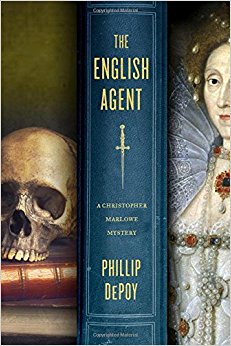
Philip DePoy is best known for his plays and mysteries, several which feature Fever Devilin, so it’s no surprise that his new historical series features a most unusual protagonist: Christopher Marlowe, in The English Agent.

It’s 1583 and young Christopher is morose after a new play, held in a downtrodden Cambridge pub, is a dismal flop. When he’s attacked in the streets he decides he’s had enough, and gladly accepts when Francis Walsingham, spymaster to the Queen,sends him on assignment to Holland. His goal is to stop the Spanish assassination plot directed toward William the Silent.

Marlowe proves a witty and capable spy, as he navigates his way to unmask the Spaniards behind the scheme. He neatly sidesteps disaster and becomes almost an action hero in the process. Coupled with DePoy’s meticulous research, the action is balanced with humor that serves the fictional story, set alongside really historical figures. Thoroughly engrossing and engaging.

Off to Tokyo, with Nicolas Oregon’s original debut, Blue Light in Yokohama. Inspector Iwata is trying to overcome a painful case, and reinstated to the Homicide Division, must prove himself when he’s assigned to a multiple murder investigation. His reluctant partner, Noriko Saki, is less than thrilled to be his partner.

And it’s a disturbing case, the brutal slaughter of an entire family with no motive or suspects on the horizon. Indeed, the former detective assigned to case has committed suicide.

The case has all the hallmarks of a serial killer, with ritualistic details including incense and a large black sun symbol, which earn the killer his sobriquet: The Black Sun Killer.

This moody, complex mystery sustains a level of suspense with an intricate plot that has a real depth of characters. The dark setting adds to the feeling of jeopardy that pumps up this original detective into someone who will soon have an army of followers.

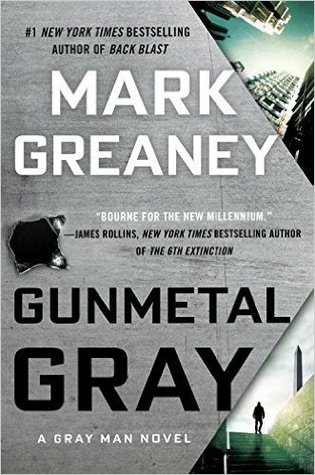
Mark Greaney already had the successful Gray Man series when he was tapped as Tom Clancy’s co-writer. Now juggling the Jack Ryan and Gray Man novels, Greaney’s newest Gray Man offering is Gunmetal Gray.

Greaney’s novels are known for their realistic details, the outcome of his exhaustive research and travels. He brings the Gray Man, Court Gentry, to Hong Kong where he almost loses his life to Chinese agents. With his friend Donald Fitzroy being held captive by the Chinese, Gentry swings into action to find the man who’s intel is wanted by the Chinese. Add a assassin squad led by a sexy agent, action readers will be thrilled to take this new adventure.

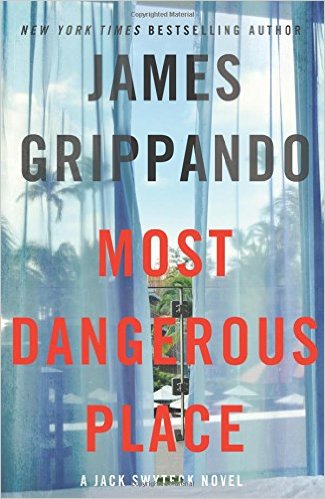
James Grippando brings his Miami criminal defense lawyer his toughest case yet in Most Dangerous Place, when a woman stands trial for murdering the man who sexually assaulted her a decade ago. It’s a sad truth that one in four female college students will be sexually assaulted during her college years.

The master of legal thrillers blends a wild story with legal issues, when Jack’s high school friend, Keith Ingraham begs him to help Kieth’s wife Isabelle, arrested for conspiracy to murder her college rapist.

Jack readily agrees to represent his friend’s wife, known as Isa, but the tension rises when he starts to doubt his own client. Is Isa who she seems to be? With surprises hitting Jack as he tries to craft his case, readers will be shocked at the ending.

Inspired by a true case, Grippando wrote the book to bring awareness to the difficult road rape victims still travel.

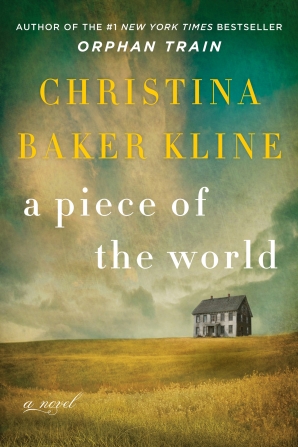
Think of a most unusual premise and you’ll reach for Christina Baker Kline’s A Piece of the World, which is the fictional tale inspired by Andrew Wyeth’s famous painting, “Christina’s World.”

In real life, Christina Olson was the muse of Wyeth portrayed in the painting, which features the mysterious Christine in the pink dress sitting in the grass and gazing at a weathered house in the distance. The original hangs in the Museum of Modern Art in New York City.

Kline brings Christina to life, and we learn of her birth in the remote Maine farmhouse of the painting. Incapacitated by a generative muscular illness, she has difficulties ambulating and would probably have remained a hermit, until the young painter finds her and she becomes his focus.

A most unusual and highly entertaining tale.

Auntie M saved the most unusual for last, with the illustrated book of Mike Mignola and Thomas E Sniegoski: Grim Death and Bill, the Electrocuted Criminal.

Moody illustrations accompany the dark fantasy tale, perfectly capturing this mix of steampunk-horror-mystery in an adventure tale that feels like an action adventure thrown into the middle of a 1930s pulp novel, where organized crime is rampant on the streets in war between good and evil.

Bentley Hawthorne, accompanied by his manservant, Pym, must punish murderers. Taking on the persona of Grim Death, he hunts down those pointed out to him by graveyard voices who deserve to be punished. Bill is William Tuttle, on death row for a crime he didn’t commit and soon to become part of a dynamic duo with Grim Death.

The two join forces, and of course, there’s a beautiful woman involved, in a creative and compelling story that’s unlike anything you’ve read. This will delight fans of illustrated novels, anyone who enjoys creative crime novels, and teen YA readers as well. Good creepy fun.

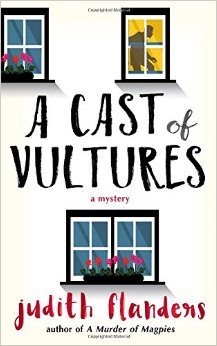
Judith Flanders: A Cast of Vultures Sunday, Mar 12 2017 

castofvultures

Judith Flanders’ series featuring editor Samantha Clair is one Auntie M looks forward to reading, with good reason. The series has grown stronger, and with this third outing, A Cast of Vultures, demonstrates everything that’s good about Sam, mixing the smart and witty amateur sleuth-by-default with her Scotland Yard partner, Jake. There’s something to be said for a strong heroine who doesn’t really need anyone, but who chooses to be human enough to let people into her world.

An elderly friend traps Sam into helping her check on a missing neighbor while a series of minor arson fires range in the area. Then one fire turns deadly, with a body whose identity changes everything, and Sam unwittingly finds herself in the midst of being chased by thugs, forced to take drastic measures to defend herself.

The highlights of this series are many: Sam’s self-deprecating humor gives readers a clear-eyed, wry view of herself and those around her. Her mother and the neighbors who pepper the stories range from eccentric to phobic, but all are realistically drawn multi-faceted people. Auntie M is especially fond of Sam’s reclusive, brilliant, and understated upstair neighbor, Mr. Rudiger. We all wish we had a neighbor like Mr. Rudiger at times.

Then there’s the mystery itself, with a many-pronged approach that makes it complex and satisfying, overlapping at times with Jake’s work. And don’t forget Sam’s work world, which in this story provides a nice subplot as her publishing house undergoes what might be a restructuring.

From her Goth assistant, Miranda, who keeps an eye on Sam, to navigating the nature of her relationship with Jake, Sam Clair is someone you will want to spend time with as she finds herself embroiled in what turns out to be a humorous yet fast-paced mystery. Highly recommended.

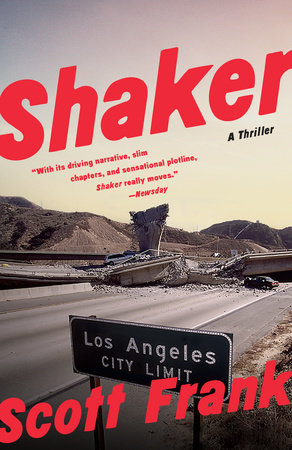
Scott Frank: Shaker Friday, Mar 3 2017 

shaker

Scott Frank is a talented screenwriter and director, penning movies such as Dead Again, one of Auntie M’s favorite movies, Get Shorty,Out of Sight, Minority Report and The Wolverine, to name just a few.

So it’s no surprise that his debut thriller, SHAKER, has short, declarative chapters and is filled with characters whose lives you will become immersed in, all wrapped up a well-plotted novel that comes alive on the page as it explores the dark underbelly of LA.

Hit man Roy Cooper is unlike any other character. You will not come to like him but you will understand him. You may even have empathy for the predicament he finds himself in. Just days after a major earthquake hits the area, and after fulfilling his most recent contract, Roy becomes a media hero after an onlooker catches him on video standing up to a gang where a mugging in an alleyway has turned deadly.

Soon everyone wants Roy, and no one more so than the hit man who taught him everything he knows, and who thought Roy was long dead.

Frank does a remarkable job of exploring the history and psychology of Roy Cooper, the gang members, and LA detective Kelly Maguire. There are themes of family and political corruption, as well as race, but what stands out is Frank’s ability to craft a book that will take readers on a bloody wild ride before the gripping conclusion.

There’s humor and pathos along with the action. Readers will be flipping pages faster and faster–Auntie M read it in one night. What Frank has done is to allow the reader to clearly understand each of these tormented and damaged characters. Stunning.

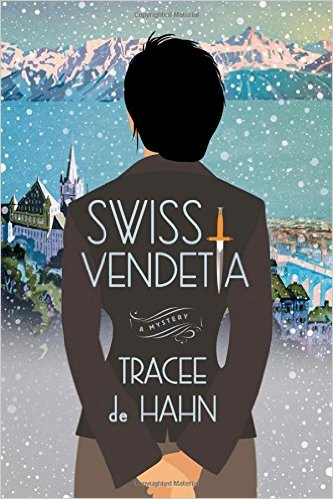
Tracee de Hahn: Swiss Vendetta Wednesday, Mar 1 2017 

swiss-vendetta

Tracee deHahn’s debut bring readers to Lausanne, Switzerland, in Swiss Vendetta.

Perfectly capturing the setting during an ice storm, she introduces detective Agnes Luthi, a Swiss-American who has left behind her work with Financial Crimes to shed her old life before her husband’s death. Being new to Violent Crimes, Agnes is juggling her three sons’ care and grief, while living with a mother-in-law who blames her for her husband’s death.

Her first case will turn out to be a locked-room style, when she is called to investigate the murder of a young woman at the grand Chateau Vallotton, on Lac Leman. The ensuring blizzard and ice storm will keep Agnes and several others at the Chateau for days as the investigation continues and they are cut off from the outside world.

It’s not just the intense cold that has Agnes in its grip–it’s the eerie candlelit vastness of the Chateau, with too many rooms to count or explore; it’s the emotions and guilt she carries after her husband’s death; and it’s the knowledge that a murderer is among the people she’s staying with, eating with, talking with.

This Swiss family includes servants loyal to them for generations, and so Agnes worries her questions are not being answered truthfully when a young appraiser for a London auction house is found stabbed to death on the grounds.

Everyone she comes into contact with is a suspect; and she despairs of trusting anyone.

An complex mystery with plays out on several emotional levels, making it an accomplished debut. Highly recommended.

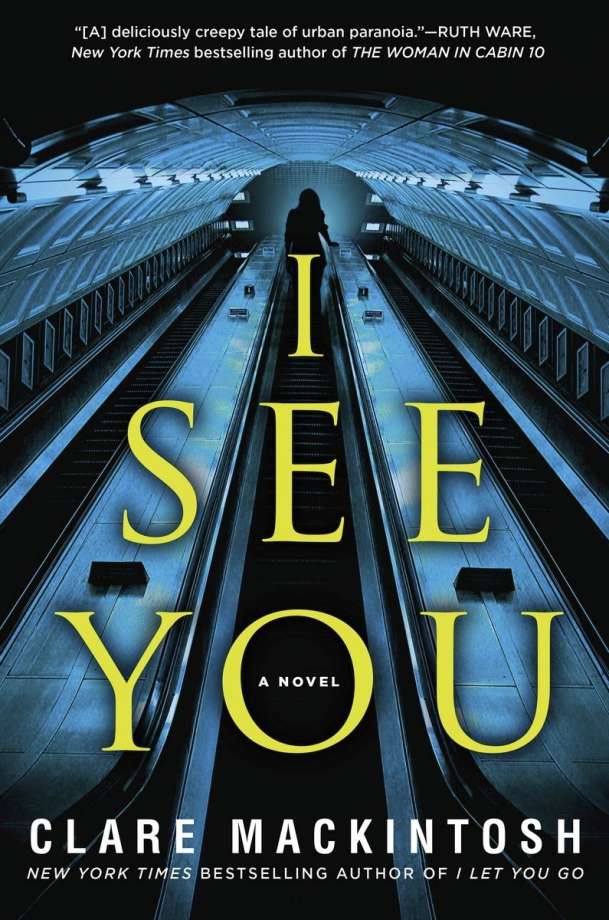
Clare MacKintosh: I See You Sunday, Feb 26 2017 

i-see-you

After Clare MacKintosh’s I Let You Go comes the chilling tale of an average woman in an average town, where nothing about her life becomes average at all, in I See You.

Zoe Walker has two children still living at home and a partner who adores her. She’s even civil with her ex, after a failed marriage. Working means a long commute into London, which she uses to people-watch and she passes the time reading magazines and newspapers.

Then an ad catches her eye: is that her own picture staring back at her from the site FindTheOne.com? What starts out as a possible mistake soon turns into something much more, when Zoe’s nervousness at the ad has her scouring back issues and she uncovers sees a pattern. Other women whose photos were in these ads were raped, had their houses broken into, or worse–were murdered.

Kelly Swift it a policewoman on a mission, determined to show her superiors she’s learned from an early mistake when she let her rage get the best of her when dealing with a rapist. After time spent paying her dues on different details, she begs for a chance to prove herself once she and Zoe convince the powers-that-be that these cases are connected.

They soon uncover that these women were stalked by people who pay into a website to gain their daily routine. It’s a nightmarish concept that has Zoe and everyone around her looking over their shoulders.

This is a multi-layered story, with Kelly’s as strong as Zoe’s, and interlaced with snippets of the voice of the person behind the scheme. Soon Zoe doesn’t trust anyone, and the spectacular twist at the end evolves into a double twist.

MacIntosh’s twelve years on the police force give her police scenes authenticity, whether Kelly is dealing with police politics or interviewing a suspect in the custody suite.

Readers won’t be able to put down this accomplished psychological thriller.

As a special treat, here’s a short video of Clare MacKintosh talking about her first piece of writing and the surprises of a writer’s life:

https://youtu.be/bY0ku9BwfcU

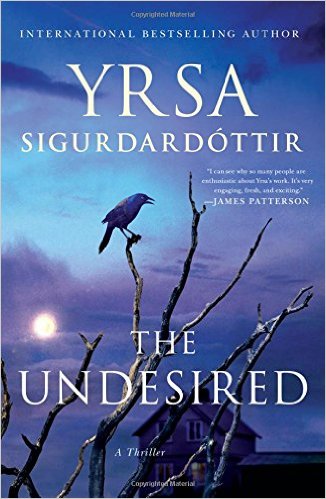
Yrsa Sigurdardottir: The Undesired Sunday, Feb 19 2017 

undesired
Yrsa Sigurdardottir’s latest novel veers from her outstanding series featuring Reykjavik lawyer Thora Gudmundosdottir into a different realm. The queen of Icelandic Noir has written a chilling stand-alone in The Undesired.

Alternating between to storylines, she tells of a bleak boys home in the 1970s, where young Aldis slaves away under the unsympathetic couple who run the home, saving her money to leave for the big city. Drawn to one young man, Einar, that decision will have disastrous consequences.

In the present, Odinn has been given his full charge of his 11-yr old daughter, Run, after the accidental death of his ex-wife. The government employees has been given the task of investigating alleged abuse that boys home, decades after the time.

The creepy factor ratchets up high once the two storylines being to merge with the accident that killed his wife.

This not the fast-paced ride of a thriller, but a slow, psychological build to a chilling and inexorable climax.

Lynn Chandler Willis: Tell Me No Lies Saturday, Feb 18 2017 

Please welcome Lynn Chandler Willis, to talk to readers about:
Small Town Newspapers Make For Great Fiction:

tell-me-no-lies-front

Title: Small Town Newspapers Make For Great Fiction
By: Lynn Chandler Willis

When it comes to writing advice, one of the more common statements is write what you know. We writers hear it all the time. I usually ignore it all the time. My newest release, Tell Me No Lies, is the exception.

I never intended for the main character, Ava Logan, to be a shadow of myself. Yes, she’s the publisher and owner of a small town newspaper. So was I. Yes, she’s the single mom of two kids—a son and a daughter. So am I. Yes, she has a border collie named Finn. So do I.

But that’s where the similarities end. The other 97% of what makes fictional Ava Logan, well, fictional, is—-fiction.

Ava tends to be hot-headed. I’m laid back like my father. I’m the apologizer—you know, the one who apologizes even when I shouldn’t just to keep the peace. Ava struggled through a not-so-happy childhood. I was raised by Ozzie and Harriet. Well, not really, but pretty darn close. Couldn’t have asked for a better childhood.

So what part of Ava Logan is real? Not so much Ava, as it is the what—the newspaper she owns. The Jackson Creek Chronicle is fictitious. But is it real. Every small town newspaper publisher struggles with the issues Ava faces in Tell Me No Lies.

How many different ways can you write a story about the local pumpkin festival and make each one new and exciting? How many “public service announcements” for fundraisers, benefits, and soccer sign ups are going to run before someone actually buys ad space? And how many town council members are going to be livid at something published that more-or-less refers to them as nitwits? Since small town councils rarely ever totally agree on anything, at least one, maybe more, will at one time or another be on the publisher’s side.

Small town politics can be, and often are, downright ruthless. It pits neighbor against neighbor. That guy across the street, the one whose son plays T-ball with your kid, asked for a special use permit to build some chicken houses on his property. The neighborhood is against it, but the guy is within his rights. How are you going to vote Mr. Council Member? And better yet, how is the newspaper going to cover it? Will they make the council look like a bully if the council denies it? Or will they take the neighborhood’s side? Or will they present both sides equally and fairly?

That isn’t as easy as it sounds. There’s an awful lot of gray area in the world of small town newspapers which often lead to a moral dilemma for the publisher. That makes for great conflict and good drama. Which makes great fiction.

Tell Me No Lies: Ava Logan, single mother and small business owner, lives deep in the heart of the Appalachian Mountains, where poverty and pride reign. As publisher of the town newspaper, she’s busy balancing election season stories and a rash of ginseng thieves. And then the story gets personal. After her friend is murdered, Ava digs for the truth all the while juggling her two teenage children, her friend’s orphaned toddler, and her own muddied past. Faced with threats against those closest to her, Ava must find the killer before she, or someone she loves, ends up dead.

Lynn Chandler Willis has worked in the corporate world, the television industry, and owned a small-town newspaper. Her novel, Shamus-Award finalist, Wink of an Eye, (Minotaur, 2014) won the SMP/PWA Best 1st P.I. Novel, making her the first woman in a decade to win the national contest. Tell Me No Lies is the first title in the Ava Logan Mystery Series with Henery Press. She lives in North Carolina with a border collie named Finn.

Website: lynnchandlerwillis.com

« Previous Page — Next Page »