Hot Thrillers for a Chilly Day:Leather, Quirk, Hurwitz,Krentz Saturday, Feb 9 2019 

With the arctic chill hovering over so much of our nation, here are new action-packed thrillers for your reading enjoyiment. Stay home with a good book and a cup of hot chocolate!


Stephen Leather’s fast-moving Spider Shepherd and his photographic memory are back. The series includes Tall Order now available in paperback, where Spider is present at a suicide bombing at a football ground. With Spider knowing that the killer looks like, he’s the logical choice to track him and his cell. Topical and addictive.

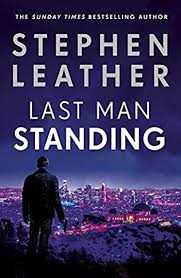
Leather’s new thriller Last Man Standing, takes readers on one wild ride and into the world of SAS trooper Matt Standing, who will call on old friend Spider to help him save his own friend.

When Standing hears from the sister of the navy SEAL who once saved his life that he’s needed, he flies to LA to help Bobby-Ray Barnes.

Barnes is now working as a bodyguard, but the tables are turned when the man he was guarding is killed, along with three other bodyguards. With Barnes accused of the murders, he’s in hiding for his life.

The dead client turns out to be none other than a Russian oligarch, whose Kremlin connections made him a target. But who actually is behind the murders, and the framing of Barnes?

These are the questions Standing must answer as he calls on his network of friends and that includes Spider. Before it’s over, there will be torture, crashes, and non-stop twists in what turns out to be often brutal action. Leather’s in-depth characterizations are present with Matt Standing as one to watch.

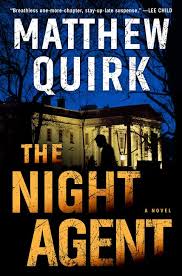
The Russians are at it again in Matthew Quirk’s The Night Agent, this time with a mole in the White House.

FBI Agent Peter Sutherland is working in the in the White House Situation Room at the night desk, determined to leave his father’s breach and downfall behind. That alone puts Sutherland at a disadvantage, but he’s fought to do things by the book, until a call comes that changes everything.

Rose is the caller and she brings him news that will start a chain of events Sutherland will rise to master, without knowing who he can trust.

Tough and realistic, and in current times, believeable, this is non-stop action with the threat of foreign influence reaching deep inside our government. Anyone in the White House could be the secret agent, a deeply unsettling thought.

With its topical storyline, quick action, and moral dilemnas, this is one to grab.

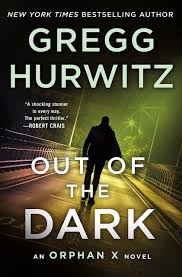
Gregg Hurwitz’s Orphan X series has a huge following who have eagerly awaited the new installment, Out of the Dark.

Evan Smoak is Orphan X, who’s recast himself as The Nowhere Man, someone who helps those who have desperate problems. But this time he’s after the killer of his mentor, when the remaining Orphans, along with their trainers, are being eradicated.

The man behind this trail of murder is none other than the current President of the US, a man surrounded by Secret Service agents at all times. With a very small coterie of help available to him, Evan must outwit all of the President’s counter moves in an effort to save himself, just as the Nowhere Man receives his next call.

With nearly constant action and a tight plot, this is one action thriller that piles complication upon repeated twists in breatahless fashion.

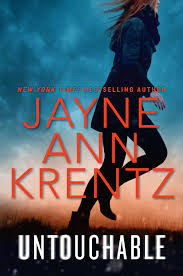
Jayne Ann Krentz has moved into the thriller category with several books and brings readers Untouchable as her latest entry. FBI Consultant Jack Lancaser was raised in a cult until a fire changed everything he’d known.

Drawn to cold cases where arson is involved, his expertise has become his ability to crawl inside the mind of the killers. The satisfaction he feels at closing these old cases also bring him closer to the person from his past who is to blame for that original fire, long presumed dead.

Quinton Zane is that person. With vengence his motivating thrust, Jack is in his sights as the prime target who could threaten his future plans.

Before it’s over, there will be romance, family entanglements, and an adoptive father. This can be read as a stand-alone, but readers of Krentz will see ties to two others with several of these characters in this series.

Quirky characters keep readers’ interested, and there’s plenty of clever dialogue.

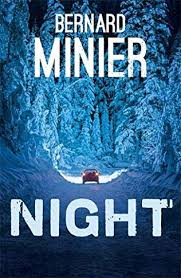
Bernard Minier: Night Thursday, Feb 7 2019 

The fourth Commander Servaz thriller, Night, brings the Toulouse detective under the scrutiny of all of those around him after a death-defying opening, with its resultant effects.

In a church in Norway, a woman’s body is found on the altar. A female detective, Kirsten Nigaard, is investigating that case due to her own name being discovered. Then she becomes coupled with Martin Servaz, when photos of the French detective are found on the offshore oil rig where the dead woman worked.

Both feel this is the work of serial killer Julian Hirtman, Servaz’s nemesis, the most dangerous man Servaz has encountered. Indeed, the Daily Mail has called Hirtman “…a villain possessing the intelligence of Thomas harris’ immortal Hannibal Lecter…”

It’s a chase throughout Europe, from France to Austria, in search of Hirtman and young boy in his custody who desperately needs to be saved. Along the way, they will encounter acolytes of Hirtman, and foes in the form of parents of his victims, until the ultimate surprise is coupled with a huge betrayal.

This has a complicated and complex plot, with fast action and yet Minier never stints of the emotions behind several of the main characters. It’s easy to see why this was a number one bestseller in France, where Servaz’s first case, which introduced Hirtman, was made into a six-part series now available on Netflix.

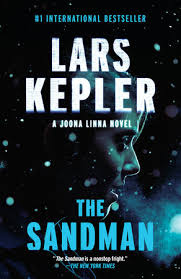
Lars Kepler: The Sandman Sunday, Feb 3 2019 

Lars Kepler’s The Sandman is the kind of action-packed book that will have readers nibbling their nails as they read the short, sharp chapters, bouncing back and forth between the two main characters and the trail of bodies they find.

Detective Joona Linna has lost more than his family in tracing the serial killer, Jurek Walter, who languishes in a secure psychiatric facility after Linna caught him. But the detective has always maintained that Walter couldn’t have pulled off the family-linked murders he’s in prison for without an accomplice.

One man who’s lost his children to Walter is Reider Frost, a renowned author–until his son Mikael is found wandering a railroad track, emaciated and confused. Thirteen years ago the boy and his sister were both abducted and feared dead, but finding Mikael confirms what Linna has felt: that some victims were often kept alive, under cruel conditions, until their deaths.

When Mikael recovers enough to tell police his sister, Felicia, is also still alive, a race starts to find the young woman. Linna will enlist the help of agent Saga Bauer to enter the hospital undercover where Walter is being held as a patient. Her goal is to post as a schizophrenic patient and plant a microphone to record any conversations she has with Walter, in hopes of obtaining clues to his accomplice and his hideout.

It’s a highly charged cat and mouse game. Walter is a genius at manipulation, making Linna use every bit of his intelligence and his intuition to outsmart the killer, if such a thing is possible, as the body count rises to a startling climax.

This is the sixth Linna novel, written by a husband and wife writing team of novelists under the pen name of Lars Kepler. One can only wish to be a fly on the wall during their daily writing routine, developing the twisted, unrelenting plot, and these characters whose fates hang in the balance.

Gabriel Valjan: The Company Files: 2. The Naming Game Friday, Feb 1 2019 

Please welcome Gabrile Valjan, to give readers an insight into his writing and talk about his newest release in The Company Files, 2. The Naming Game:

Auntie M: You have two distinct series from Winter Goose Publishing. Your first series, the Roma Series, is presently at five novels. Readers receive a panoramic sweep of Italian culture and food, along with some light humor, while your characters solve crimes. Then you go dark into John le Carré territory with The Company Files. Why the switch?

GV: It’s important to me that I show readers that I have range. I make no distinction between ‘literary’ and ‘genre’ fiction, yet I’ve encountered both readers and agents who do. All writers, myself included, want to tell an engaging story and, in the case of a series, want repeat readers. The two series are indeed different. The Roma Series owes a debt of gratitude to the Sicilian writer Andrea Camilleri, who created Inspector Salvo Montalbano. I wrote the Roma Series while I was dealing with a life-threatening illness, which is why food is prevalent, and because I respect Italian culture.

I have two books in The Company Files series. Both The Good Man and The Naming Game look back at the US during the Cold War, and I try to show that some attitudes have changed, while others have not. For instance, contemporary ICE raids can be traced back to J. Edgar Hoover’s response after the Wall Street bombing in 1920. Same MO. Same extrajudicial deportations.
Hoover pushed for a concentration camp for political dissidents. Not internment or detention camps, but a concentration camp.

AM: Your last Roma Series novel, Corporate Citizen, was quite violent, yet showcases your love for animals. Have you always loved animals?

GV: I do love animals. Bogie and Bacall are two cats in that novel. One of my characters, Silvio, agrees to take care of them for a friend. Anyone who follows me on social media knows I post pictures of my two cats on Saturday aka #Caturday on Twitter, and dogs for #WoofWednesday at a local dog park near me in Boston’s South End. Pets are family.

AM: Let’s jump back to your Company Files series. Book 2: The Naming Game is out in May, 2019. You said earlier that you wanted to show range. What do you do in this series that sets you apart from other authors in contemporary crime fiction?

GV: Crime is about transgression, in all its perverse and violent forms. Psychopaths. Serial killers. Sexual predators. There’s no escaping it. However, I explore crimes that governments commit for a variety of motives. When it comes to characters in most contemporary crime fiction, I have difficulty with unlikeable protagonists as the good guys, and I have an issue with profanity and violence for its own sake. Do you really need to have the f-word fifteen times within the first three pages to be ‘gritty’? I accept ‘realism’ but it sometimes seems slathered on thick. Also, give me a glimmer of hope in a dark story because I don’t read to get depressed. Real life and politics accomplishes that, thank you. I also question the logic of how effective a detective can be at his job if he’s an alcoholic or alienates everyone in the room. I’m weary of the battles with the bottle, the bitter ex-wife, the kid who won’t talk to mom or dad. I question how a character who doesn’t change over the course of several books can keep a reader coming back for more.

I offer readers different flaws in my characters. For instance, I show vulnerability as an asset. I have a character, Walker, in The Company Files, whose major obstacle is his lack of confidence. He fell in with the CIA, because he’s trying to find his way in life and love after the trauma of World War II. You’ll meet Leslie, an experienced operative who doesn’t want to return to the kitchen just because she’s a woman and the war is over; Sheldon, a damaged person with a complicated past who does the wrong things for the right reasons; Tania, the beautiful and traumatized refugee child brimming with rage; and then there’s Jack Marshall, the boss and mastermind who somehow orchestrates everything and everyone, while staying one step ahead of his nemesis, J. Edgar Hoover.

Another thing I do differently than most authors is I write three to five books and then revise the character development of all of my characters for a better arc before I search for a publisher for the novels. As for violence in my works, I prefer to imply it, or not go into graphic detail because we have all become desensitized to violence, whether it’s from media or, sadly, real life experiences. There are creative ways to imply sex, violence, and criminal misconduct. Watch Fritz Lang’s M, or any of the Pre-Code films, or catch the subtext about poverty and class distinction in most films from the 1930s.

Another major difference: one of the joys in writing The Company Files is I get to dispel the myth that life was better in the past. It wasn’t. Racism and sexism were so ingrained in American culture that it was accepted without question. I’ve talked to educated people who came of age in the 40s and 50s and was told nobody blinked at using the N-word, or at calling an adult African-American man ‘boy.’ How far we’ve come and how far we have yet to go.

AM: Who were your influences in crime fiction when you started writing?

GV: My first foray into crime fiction was reading Agatha Christie. I read all her mysteries in the seventh and eighth grades. Then I discovered Margaret Millar, Raymond Chandler, and Dashiell Hammett, in that order. I ventured to discover other writers: Cain, Highsmith, etc. Christie appealed to me for her plotting and how her detectives solved mysteries. Hammett and Millar wrote in a clean direct style I admired, while Chandler introduced a seductive and poetic use of language, often at the expense of plot. I enjoy crime fiction because I found that most (but not all) ‘literary fiction’ can get tedious and the stories go ‘nowhere.’

AM: What’s a typical writing day like for you?

GV: Exercise and shower. Coffee. Write for three hours.

AM: A controversial question. Do you think writing can be taught?

GV: I think techniques can be taught, but here’s the catch: it requires critical thinking, and I think that’s Hit or Miss in today’s education. I’m not saying education in the past was better; it was different, for better or worse. Overall – and I know it’s generalization — education in America is not about becoming a better human being; it’s about getting a job. There’s a terrible irony in this drive for the practical and pragmatic approach. Formal education shouldn’t encourage conformity; it should unbridle curiosity and teach you analysis and critical thinking, so you can teach yourself. For example, I did not know how to edit until I read Dave King’s book, Self-Editing. I realized I had a deficit, and my curiosity compelled me to find a solution, determine whether the content of his book would work for me (it did). A curious and critical writer reads everything they can find to improve their writing and broaden their horizons as a human being.

Education that fosters regurgitation of one interpretation of a literary text so you can earn the high grade kills critical thinking; kills curiosity. Education should convey an understanding of how a story works or doesn’t. Follow? All that aside, there’s more to telling a story than book smarts. I’ve met some very intelligent people in my life, people with advanced degrees, best scores on all the standardized tests; and yet, when they write, their stories are dead, they lack heart, or their ego interfered with the story.

No, I don’t think writing can be taught because we all have our unique relationship to language, and we all interrupt the world around us in unique ways, and that is the special something nobody can teach you. What I am saying is you have to know yourself and the gift for storytelling – if it’s there – comes from decades of reading, of curiosity and wrestling with language. Literature comes from empathy and connection. When I pick up a book, I don’t look to an author to validate my existence and my life experiences. I couldn’t care less about gender and ethnicity either. I want a story. I want an experience. Transport me and call it entertainment, or rip my skin off and call it Art. I don’t care. For me to write well, I need the sum of all possibilities.

The fundamentals of the human condition have not changed: we need stories to survive and better ourselves. Stories are essential. I have no doubt that out there somewhere in this country’s slums and cornfields or in the cube farms of corporate America, language is alive and there are stories worth being told. The question is, Visibility, access to those authors, so they are read and heard?

AM: Finally, whose books would we find on your nightstand, waiting to be read, and what’s on the immediate horizon for you?

GV: Jane Goodrich’s The House at Lobster Cove and Louise Penny’s Kingdom of the Blind. I’m waiting to edit five novellas that precede my Roma Series with my publisher, and I’m writing the third book in another series, set in Shanghai.

Thanks so much for stopping by today, Gabriel. You are one busy writer! See you at Malice Domestic in May~

Gabriel Valjan is the author of two series available from Winter Goose Publishing. The Roma Series features forensic accountant Bianca on the lam from a covert US agency in Italy. Drawn from the historical record, Gabriel’s second series, The Company Files series introduces readers to the early days of the CIA and its subsequent rivalry with the FBI. His short stories have appeared in Level Best anthologies and other publications. Twice shortlisted for the Fish Prize, once for the Bridport Prize, and an Honorable Mention for the Nero Wolfe Black Orchid Novella Contest, he is a lifetime member of Sisters in Crime National, a local member of Sisters in Crime New England, and an attendee of Bouchercon, Crime Bake, and Malice Domestic conferences.

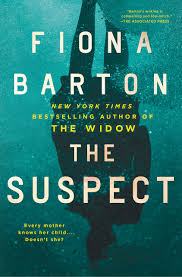
Fiona Barton: The Suspect Tuesday, Jan 22 2019 

Fiona Barton returns with her series featuring reporter Kate Waters, along with detective Bob Sparkes, in a startling third novel that kept Auntie M up all night to finish it. The Suspect is that good and that compelling. Once it’s started, readers won’t be able to stop.

When two girls go missing in Thailand, Bob reaches out to Kate to involve the press. This hits close to home, as Kate’s son Jake dropped out of university two years ago to travel in Thailand and has rarely been heard from since.

Kate soon finds herself on the way to Thailand to investigate a fire that involves the girls, but also finds to her surprise and dismay that Jake might have been on the premises at the time. Turning her usual position on its head, Kate soon finds she is the one being hounded by her reporter colleagues, not all well-meaning, as she tries to find her son while investigating what happened to the girls.

Things escalate, if that’s possible, from there. The parents of both girls have very different reactions to the situation. Social media posts from one of the girls tracks their trip, but is this the reality?

It’s a complicated situation, one that explores the complexities of families,husbands and wives, sons and mothers, and loss and grief, alongside one humdinger of a thriller. No character is left untouched by this story. The inner voices of each character ring true in a moving and realistic way that will bring a catch to your breath. It’s a complicated tour de force of emotions and situations, a beautifully written novel that delves into the psychology of us all.

By turning the tables on Kate and involving her own family, the reporter who usually tells other peoples stories must acknowledge that we can’t really know the people we love totally and completely. Highly recommended.

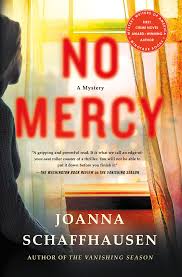
Joanna Schaffhausen: No Mercy Friday, Jan 18 2019 

Schaffhausen brings back tenacious police officer Ellery Hathaway in No Mercy, the follow-up to The Vanishing Season with FBI profiler Reed Markham. Readers will pick up on the action from the last book with Ellery on forced leave.

After shooting a murderer, and refusing to apologize for it, political correctness has forced Ellery into group therapy. Not a people person to start with due to her childhood horrors, she has difficulty getting close to people and this is a kind of torture for her.

Two people there come to her attention: a wheelchair-bound woman, scarred from the fire that cost her young toddler’s life decades ago, and a young woman whose life has been changed forever after a brutal in-home rape.

Ellery turns to Markham on both counts, the man who freed her from a killer’s closet when she near death as a child. The event tied the two together in a way that neither has tried to investigate–until now, when the threat to Ellery is raised in a way she might not survive.

With Ellery determined to explore both of these cases, divorced father Markham finds himself involved at a level that may cost him the promotion that would let him spend more time with his beloved daughter, especially when his boss and mentor’s former actions are called into question.

The flawed Ellery allows affection only from her adorable basset hound, Bump. Along with Markham, both unusual characters do more than carry this suspenseful plot. With fast pacing as the two cases heat up, Ellery is never far from the memories of her own violent past.

Stefan Ahnhem: Eighteen Below Thursday, Jan 10 2019 


Stefan Ahnhem’s Fabian Risk novels have a growing audience for the international bestelling author. His third, Eighteen Below, brings the same twisted plot to the Swedish detective and his well-drawn team.

Risk has always been torn between his family and his job, and this dilemna takes center stage with a serial killer on the streets of Helsingborg. The opening is particularly strong, bringing a whiff of the monster they are dealing with, slotted alongside the head of the crime squad, Tuvesson, who can’t get over her divorce and is drinking too much.

There are more secrets within the team, but they often must take a back seat when dealing with the evil at work here, for most victims are found to have been frozen alive at eighteen below, and their identity taken over for financial gain.

How Risk and his team, with great personal jeopardy, must uncover who is behind this sophisticated scheme and stop it.

There’s a lot of darkness here, and the resolution, while it answers some questions, raises different ones for the next book. An intricate plot will have readers glued to the book.

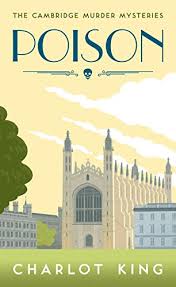
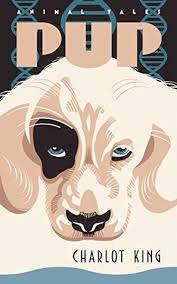
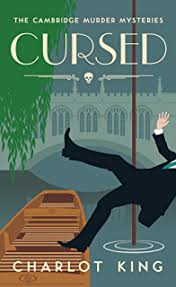
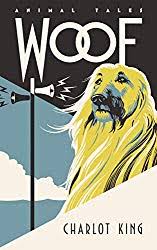
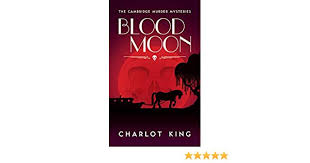
Charlot King: The Cambridge Murder Mysteries, and Animal Tales Sunday, Jan 6 2019 


Auntie M recently had a chance to interview Cambridge author Charlot King. She’ll tell readers about her two series, The Cambridge Murder Mysteries, and Animal Tales.

Auntie M: You write the Cambridge Murder Mystery series but just brought out a new series, Animal Tales, very different. What prompted the switch?

Charlot King: Stories pop into my head, and I write them. I reckon it’s more of an addition than a switch. I’m still writing a lot more Cambridge Murder Mysteries if I’m spared, as I enjoy writing them. But sometimes, it’s nice to try something different, and the two series could not be more different. I hope that those readers of the Cambridge Murder Mysteries who try the Animal Tales will enjoy them. I don’t have a long-term plan; the strongest story or character at the time gets my attention.

AM: The covers on both series are wonderful, very eye-catching. Who designs them for you, and do you have input?

CK: I’ve commissioned Robin Howlett to illustrate all my stories so far. I have initial ideas of how I’d like each of the covers to look. I then give Robin a brief, and he brings each one to life. I wanted to find an illustrator who could draw art deco well. I struck lucky with Robin. I found him by spotting his poster illustrations and only afterwards discovered that he lives really near me. We have since been to the pub together on more than one occasion, and I count him as a friend!

AM: The mysteries give readers a great setting in Cambridge. Was it always on your mind to set them there?

CK: Places leave a strong impression on me, like they’re a living character or someone I know. I’m sure lots of people feel the same way. I write about other places in other books that I love, too, but the Cambridge Murder Mysteries are an homage to the city I live in that’s captured my heart. Cambridge is a very beautiful place, and there are so many little streets and alleyways, perfect for setting a murder or two. I don’t think I’d ever run out of places to stage the next murder mystery.

AM: You do a series of photographs of Cambridge taken on walks with your dog, Moobear . I keep telling you they should be made into notecards or postcards; they’re that good. Is your photographer’s eye something you call on when writing the mysteries?
Charlot King and Moobear:

CK: That is kind of you, I’m a total amateur, and all the photos are on my iPhone. Just snaps. I like to capture moments, steal them for later. I’m in awe of beauty generally. Who isn’t? I don’t set out to photograph Moobear either, she just mostly walks into the shot! I find walking more than therapeutic. It is part of who I am. Wherever I am, if I’m indoors for too long I get a strong urge to get outside. I don’t mean that I’m a mountain climber, but if I had all the time in the world, I’d love to walk from Land’s End to John o’ Groats. At rambling or wandering pace. With lots of stop offs for tea and cake. Perhaps it’s something about slowing down? Chatting to people through happenstance? The photographs are just something I do when I’m out walking. If I had to give up one of them, it would be the photography.

AM: The Animal Tales showcase your affinity for animals. Have you always loved animals?

CK: Wouldn’t it be a boring and strange planet without them? If they could talk, everything would be so different… When I was younger, the family always had dogs and cats. We mostly lived in towns, and when I was very little, I wanted a pony, mainly from reading the Norman Thelwell books. I also wanted a lion, after watching Daktari on Saturday morning television. I suppose as I grew older I realised that would be a bad idea. But I’ve always wanted to share my life with animals as I think they teach us so much. They are humbling and awe-inspiring. And they deserve better than they get from humanity.

AM: Elizabeth Green is the professor who does the sleuthing in your Cambridge Murder Mysteries. How did you develop her character?

CK: Back in the early 2000s, I was on a walk in Chilham near Canterbury in Kent – of all places. My father had been the head teacher in the village, and I wanted to go back and take my family to see it. While walking, we saw this lady standing outside her back gate. She had such an intelligent face and was engrossed in conversation. Her voice boomed out as we walked by. The idea came to me as I was walking past her. I have no idea who she was, but she inspired me. As we drove back home, I already had the first murder in my head.

AM: There’s a lot of science involved in those plots. Do you do the research yourself or have a good resource?

CK: I studied politics for my first degree, but then for my PhD, I studied public policy and biotechnology. Specifically, I looked at the deliberate release of genetically manipulated organisms and public policy. I am not a biologist, but I did have to read up on an awful lot of genetics, biology and botany. So I draw heavily on memory and books on poisons. I try as best I can to be accurate, but my novels are in no way police procedural. They are just stories, so I’d hope my readers like them for other reasons than for their scientific precision.

AM: Who were your influences to turn to crime fiction when you started writing?

CK: Colin Dexter and Agatha Christie for sure, but I don’t read crime fiction these days. I used to read a lot when I was younger. I think the books that influenced me the most – which I think this question is about – came to me when I studied the Politics of English Literature as a module for part of my first degree at the L.S.E. It covered the whole sweep of political novelists, poets and playwrights. I was in heaven on that course, reading Woolf, Wilde, Shaw, Thomas, Huxley, Yeats, Joyce, Orwell, the list goes on. Our teacher, Professor Black, would take us to Ronnie Scott’s Jazz Club for some of our lessons.

I also like a bit of poetry. Favourites at the moment include: ‘The Old Vicarage, Grantchester’, by Rupert Brooke (there’s a lovely recording of that poem on YouTube by the way!) Also, love listening to Dylan Thomas’s ‘Under Milk Wood’, read by Richard Burton. Dylan Thomas’ poem, ‘Do Not Go Gentle Into That Good Night’ was particularly helpful recently, as I lost my father just last year. Perhaps that’s why I’m going through a phase of reading a number of autobiographies by comedians. My heart belongs to comedy. I’m just not a funny writer. I’ve tried.

AM: What’s a writing day like for Charlot King when you’re working on a manuscript?

CK: I aim to write 1,000 words a day. Sometimes it comes quickly. Sometimes it takes ages. I find writing the first draft the most enjoyable. But, I spend most of the time rewriting a book. Probably 80% is rewriting for me. That is a much more agonising task. I much prefer making up the story in the first place. I like the puzzle. I expect one day a computer will do all the hard rewriting for us. Can’t wait.

AM: Finally, whose books would we find on your nightstand, waiting to be read?

CK: I’ve mentioned I like reading autobiographies about British comics. I’ve just bought Paul O’ Grady’s ‘Country Life’. I don’t tend to read at night, as my eyes are pretty shot and need the rest.

AM: Where can readers find your books?

CK: Amazon around the world, and if they are in Cambridge, Heffers Bookshop. And if any of your readers are on Twitter, please do get in touch. I’m @queencharlot. Or Instagram is charlot_king_cambridge, and my website is charlotking.com.

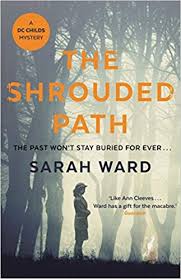
Sarah Ward: The Shrouded Path Monday, Dec 31 2018 


Almost Happy New Year to Auntie M’s readers, and she leaves you for 2018 with one of her favorite reads of this year.

Sarah Ward’s newest DC Childs mystery, The Shrouded Path, has led the Guardian to note: “Like Ann Cleeves . . . Ward has a gift for the macabre.”

Auntie M hadn’t really thought of Ward’s series that way, but she supposed it fits, as that sort of creepyiness that infiltrates the best of Cleeves work is at play in this series, too.

The plot centers around events of 1957, with some details dropped in from that time period alerting the readers to a well, macabre incident that happened then but isn’t made clear until near the end of the book. All in good time . . .

For DC Connie Childs, getting used to DI Matthews covering for DI Sadler, having a staycation, news that an elderly woman has been found dead sitting upright in her own living room sounds like nothing more than a routine death, if death can ever be routine to the person whose died. Then why does Connie feel like she should pursue the matter? Is it simple boredom, or a wish to impress their new DC, Peter Dahl?

At the same time, Mina Kemp, a gardener known locally as the Land Girl, has been visiting her dying mother in hospital. When her mother becomes agitated over a girl known as Valerie, it soon becomes apparent that to ease her mother’s mind, she must find this Valerie, whom her mum keeps insisting has visited her. But then the oddest thing happens. Mina’s mum confesses Valerie is dead.

With Connie using her instincts to push on the investigation, a second death of an eldery woman comes to light, and when it seems the two women knew each other, Connie and Peter Dahl are alert to the connection. And then a third woman dies, and this time there can be no pretending this was a natural death, especially when she’s linked to the other two women.

With tales of old, secrets kept, and people who’ve learned to cope moving on, even Sadler will be surprised at the turn of events in this fully realized, compelling mystery. A strong entry in a fine series, this one just keeps getting better and better, and earns Auntie M’s ‘highly recommended rating’ for the last day of 2018.

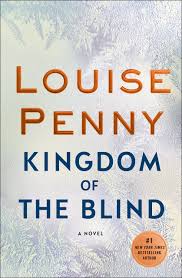
Louise Penny: Kingdom of the Blind Tuesday, Dec 25 2018 


Merry Christmas to all of Auntie M’s readers, and Happy Holidays if you celebrate another.

And the merriest of holidays to readers everywhere for Louise Penny’s newest, Kingdom of the Blind, a holiday gift to her readers everywhere that many thought wouldn’t occur this year.

No one would have blamed Penny for not giving us an Inspector Gamache book this year after the death of her beloved husband, Michael, the model for Armand Gamache. And indeed while it is later than her usual August publication, it’s a wonder and a delight she found the courage and stamina to write at all. So thank you to Louise Penny for giving her readers another Gamache to savor and enjoy.

With Gamache on suspension and still being investigated after the events of last year’s Glass Houses, the detective is enjoying Three Pines and his lovely wife, Reine-Marie, but is intrigued when a letter arrives expecting him to be present at an old farmhouse outside of town. Derelict and looking ready to collapse, it is there he meets, to his surprise, his good friend, bookstore owner and former psychologist Myrna Landers, also summoned, plus a rather eccentric young builder named Benedict.

All three are puzzled to learn they have been named the liquidators, or executors we would say in the US, of the will of a local cleaning woman most knew by sight, who liked to be called “the Baroness.”

Why did Bertha Baumgartner entrust the liquidation of her estate to three people she barely knew? And what of the odd bequests in the will itself?

What starts out as an oddity soon turns into tragedy when a body is found, connected to the old woman, and under most unusual circumstances. While the case begins for some, and leads to surprising quarters, Gamache is still bound up in trying to find the opiods he allowed to be brought into Quebec in order to end the large US-Quebec cartel operating in the area.

It’s why he’s on suspension, and with the deadly drug ready to hit the streets, the reason he’s racing against time, using any means possible to find the location of the drug. And he will find help in a most unlikely quarter, but at what cost to himself, his career, and others he cares about?

In her books Penny always manages to bring tears to Auntie M’s eyes, and this one is no exception. As the climax approaches with tremendous suspense, readers will be flipping pages wildly to seek the result.

With her keen ability to use Gamache to illustrate her characters as he sees them, readers become entwined with even the most secondary character and their outcomes. And to those who are repeat characters, readers attach a deep affection and interest in their lives.

While able to pierce the darkest parts of a human soul, Penny has a unique gift that allows those holes to let in the light and grace deep within us all.

Highly Recommended~

« Previous PageNext Page »