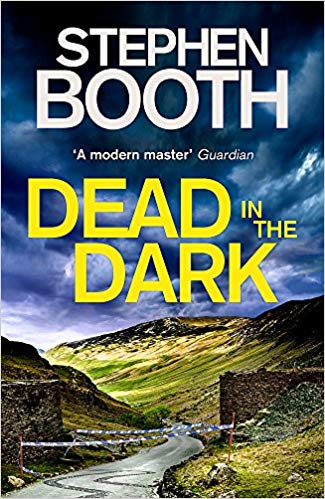
Stephen Booth: Dead in the Dark Wednesday, Aug 1 2018 


A new Ben Cooper/Diane Fry mystery is always a read to look forward to, and Auntie M was happy to finally get her hands on Dead in the Dark, the 17th in a series that has lost none of its attraction and only grown over the years.

Ben is a DI now and reviews an old case that was never solved. A decade ago police believed that Reece Bower had killed his wife, Annette, but the case was never brought to court after the woman’s own father thought he saw her alive several weeks after she disappeared.

Now Reece himself has disappeared, and this time the old and new case are being investigated together. Reece’s new wife is pushing for answers for her and their two sons.

Ben would like the aid of the Major Crimes Unit and his old compatriot, DS Diane Fry, but can’t until he can produce a body.

A body is exactly what Diane Fry has on her hands, in a town that has a large Polish population who concern the locals to varying degrees. When a man is found dead at home, stabbed to death, it appears he was knifed in the alley outside his rented flat.

The victim’s landlord is someone being watched for right-wing extremist activites, and just might be involved in something more dangerous.

Add in arson cases, and family issues for both Ben and Diane, and you have a nicely plotted set of cases to keep both detectives busy.

Once again, the landscape will prove itself to be more than just a setting in this very satisfying addition to a prime series.

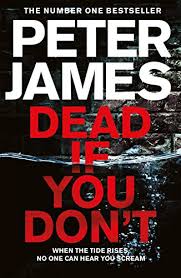
Peter James: Dead If You Don’t Sunday, Jul 29 2018 


Peter James returns with his newest Roy Grace police procedural in Dead If You Don’t, where the Brighton Detective Superintendent has a strange case to solve.

He’s at the new Amex Stadium for a highly anticipated football match with his older son when a bomb threat is called in and he’s on high alert, eventually acting in a heroic manner Auntie M won’t spoil.

Kipp Brown, seen previously as a suspect, figures as the main character when his gambling debts merge with the kidnapping of his teen son, Mungo, from the stadium.

But that’s just the beginning of the twisted tale, as Kipp contacts the police, despite being warned not to by the kidnappers. That’s when Roy’s path crosses that of Jorgji Dervishi, son of a reputed Albanian mobster. Jorgji’s son, Alek, is Mungo’s best friend, and he’s not returned home that same evening. Could both boys have been kidnapped?

The race is on to chase down those responsible while battling the bomber, whose threats continue. And when photos sent of Mungo show hi battling for his life, Roy and his team know the time they have to find the boy is fast running out.

With the action taking place over just a few days, detailed chapter headings with the time show the pressure the police are under as the plot unspools. Shorter chapters heighten the suspense and allow of points of view to change and illustrate different characters’ movements.

It all adds up to a masterful suspense procedural. One of the highlights of this series is the detailed account of how police really work, and the stumbling blocks they often come up against, from budgetary concerns to paperwork.

Of course, James’ mention of the police’s “Golden Hour” gave Auntie M a chill of delight to see her own THE GOLDEN HOUR Nora Tierney Mystery title explained.

Another winner from the CWA Diamond Dagger for Lifetime Achievement.

Robin Minnick:The Mackenzie Wilder/Classic Boat Mysteries and more: author spotlight Friday, Jul 27 2018 

Today’s Author Spotlight is on NC writer Robin Minnack, whom I first had the pleasure of meeting at a Fayetteville writers festival. Here’s Robin’s story with a little prodding from Auntie M:
Auntie M: Tell Auntie M’s readers a bit about your background and how you started writing.

Robin Minnack: When I was a child, I loved playing let’s pretend. I had a partner in crime who loved to play the hero and rescue me from burning buildings and play cowboy to my cowgirl. My imagination also activated whenever I rode the school bus or had to wait for someone. At home, reading over lunch or even informal dinner was the norm. Soon I was applying vocabulary and story structure I learned from reading to stories of my own. In 5th grade, I wrote a mystery in my notebook in cramped, ballpoint-smudged script that was 11 tightly-written pages long. All I remember about it now is that it was a mystery involving a magic vase. But I had completed my first mystery, and I was hooked on the idea of writing more stories from the ones that played inside my head.

AM: What genre do you write in and how did you come to choose this?

RM: Primarily mystery, although I’ve written a mainstream novel as well and have others planned. I have three books in the Mackenzie Wilder/Classic Boat series, with two more planned. All four of my books are available at amazon.com or barnesandnoble.com.
I was raised on Agatha Christie, Phyllis Whitney, and Mary Stewart. My mother loved Christie, and it was she who started me collecting Christie’s books. I love the puzzle; I love the idea of drama and justice; and I love the romance that is inevitable in so many mysteries, the relationship that develops when people are thrown together in dramatic circumstances.

AM: What was the genesis for your storylines? Where do you find your ideas?
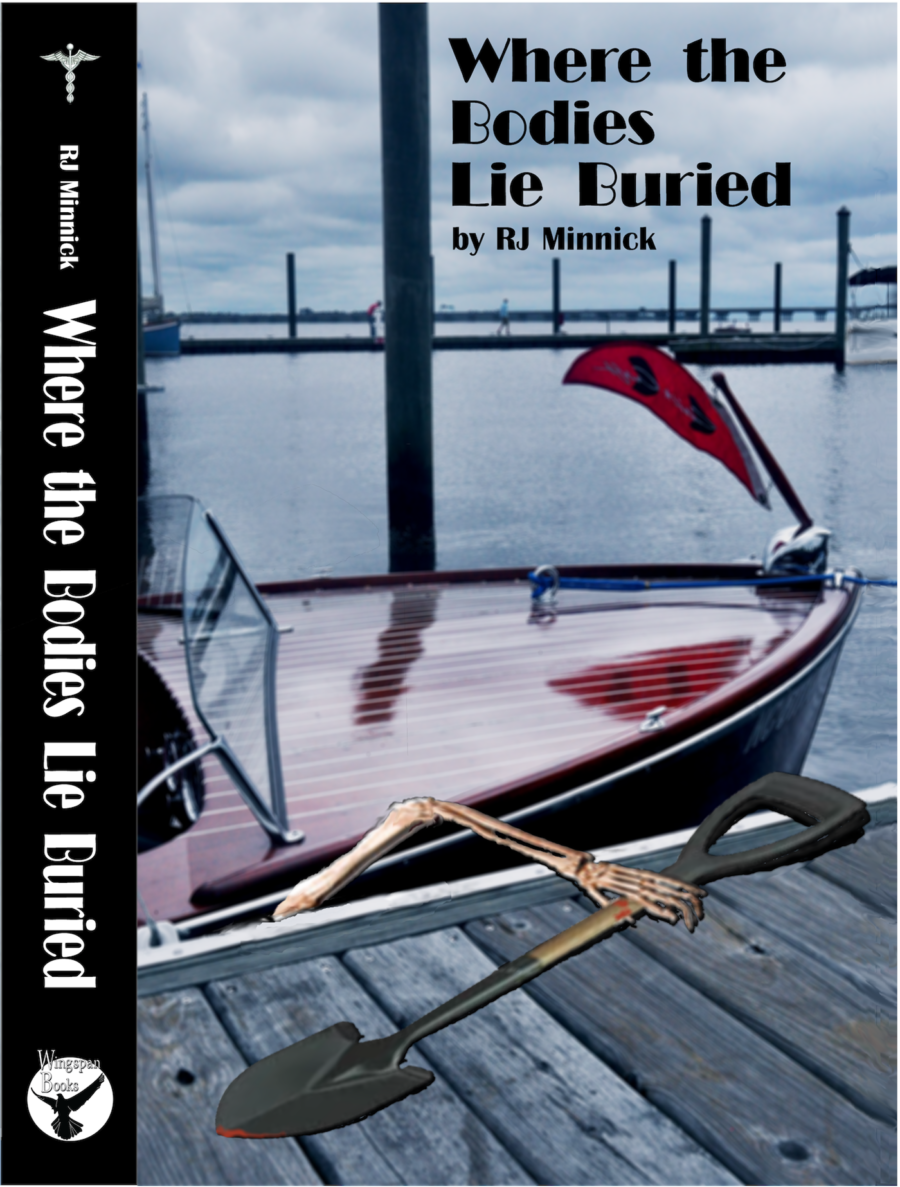
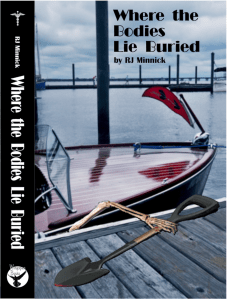
RM: As it turns out, that little boy who always rescued me? He went into law enforcement. When I wrote WHERE THE BODIES LIE BURIED, he became the model for Lt. Bryan Jamison. I hasten to add, he knew nothing of this, and it was only so I could have a mental model for the character. That’s one thing I do. I take people I’ve seen – actors and real people – to play the roles of my characters. Having a physical image in my head to build on helps.
The other feature of my books, the classic boat part, comes from the vintage or antique boats my husband introduced me to in his hometown of Clayton, New York. Clayton is home to both the Antique Boat Museum and the Antique & Classic Boat Society. Every August since 1964 classic boats from all over the country converge on Clayton (Clayton is located on the St. Lawrence river, in the Thousand Islands region.) My husband took me to my first show, and I fell in love with these wonderful wooden boats. Sleek and shiny with layer upon layer of varnish after they’ve been restored, they carry history with them. Antique boats set my books a little apart, I think, and allow me to share my interest through my protagonist (Mackenzie’s) passion.

WHERE THE BODIES LIE BURIED stemmed from a nightmare I had as well as the experience of growing up in a small town/rural area.


SWEET CORN, FIELDS, FOREVER
came about from our living a good portion of our lives in Nashville TN. Our kids did some recording work there, and I got a peek at the inside of the music industry. Now I’ll admit to being a frustrated songwriter. Best compliment I ever got was when I attended a workshop with a Nashville songwriter. I showed him a song I wrote for SWEET CORN, FIELDS, FOREVER, and he liked it. I floated home from that workshop and went on to write all the songs for the book. Probably not good enough to be real songs, but good enough to be believable.


The third book, FLYING PURPLE PEOPLE SEATER, was actually inspired by a 1938 Chris Craft cruiser that we were privileged to board. My mother-in-law made friends with a couple who brought their boat across Lake Ontario each year to the Antique Boat Show. The year we had our first baby, when she was only 6 weeks old, they took us aboard the cruiser for the Antique Boat Show Parade. Then again when we visited with our oldest three, and one more time when we brought all six of our kids with us. When I was finished writing the book, I tracked down the owner via the internet. At 91 he still enjoys life and his boat, and he was happy to give us permission to devise the book’s cover from a photo my husband had taken of his boat, The Roscommon.
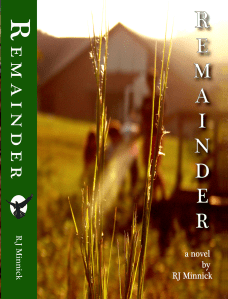
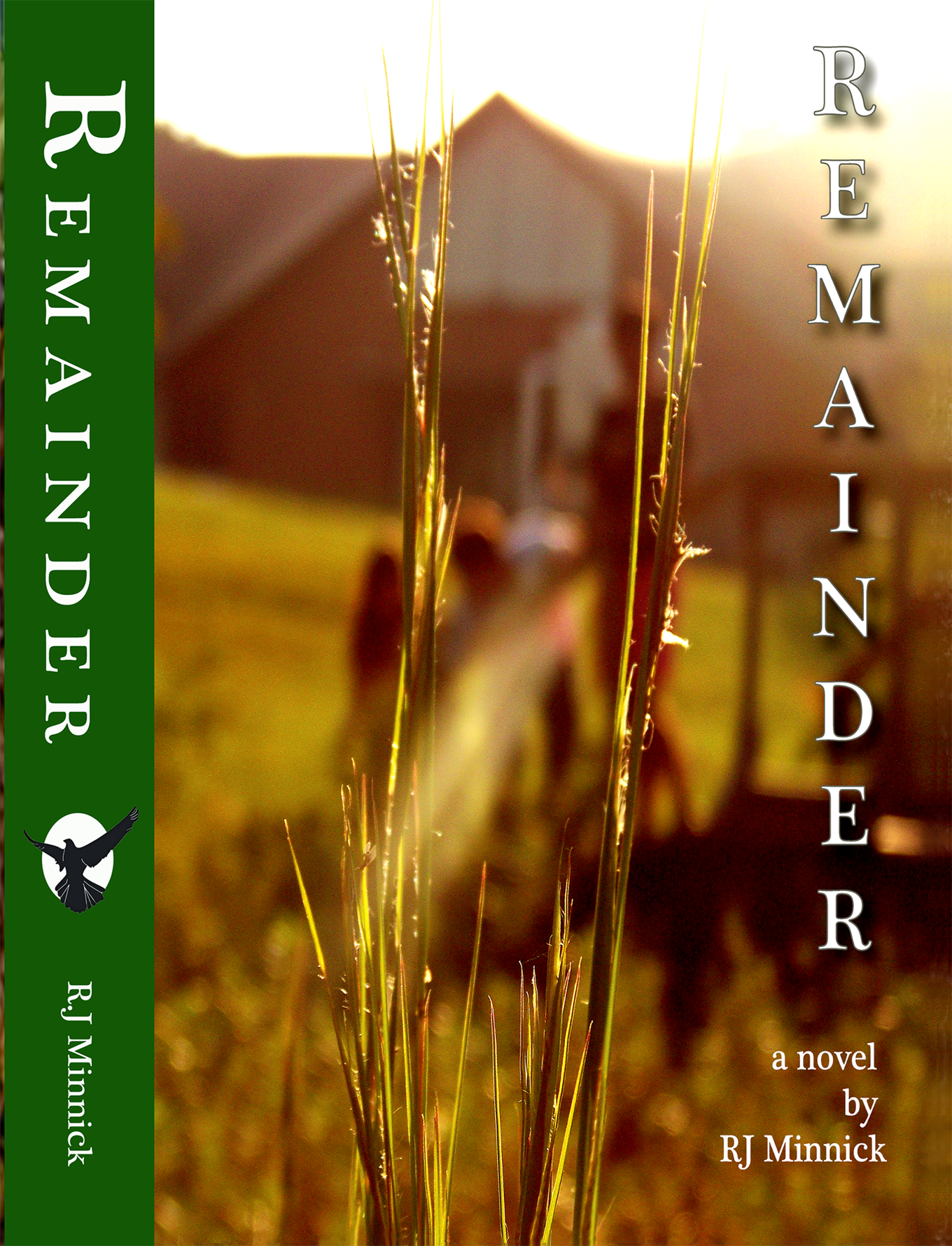
My novel, REMAINDER, stems from life in a small town, events in 2001, and from living in Nashville for 24 years. The initial inspiration was when my daughters’ godfather died from pancreatic cancer. He was deeply involved in our church, and to keep up with his journey in the illness, a listserv was set up to send out communications. This was a new thing at the time, and it kept everyone in close touch in a moving way. REMAINDER is also available at amazon.com and barnesandnoble.com.

AM: Readers love to hear about a writer’s process. Can you describe a typical writing day in your life?

RM: Writing day is nearly every day for me. Other than when I work my morning job or when I’m cooking (which I do for pleasure as well as preparing meals) I might be writing. Before work, after work, after dinner, if there is writing needing to be done, I might be at it.

For many years, raising our family, I fit my writing into bits and pieces wherever I could. With more time at my disposal, I am still in the habit of writing whenever I can. I am so in love with the process that I lose track of how much time I spend at it. I actually feel uncomfortable when I go for a few days without writing.

I confess to usually writing with music playing or the tv on. It’s a habit left over from when I used to do homework – I didn’t say it was a good habit! Sometimes I walk or stretch out in the hammock while I plot. If a scene is particularly difficult, I might even lie face down on my bed, hands cupped around my eyes, reciting ‘concentrate, concentrate’ or ‘focus, focus, focus,’ until I am unable to think of anything other than my story.

While all my submission drafts are done on the computer, I get a kick out of handwriting outlines and early drafts on different papers with things like colored pens or pencils. Or maybe I switch the program I’m using on the computer. Changing up my tools helps freshen my mind and stimulates the process.

And while I never thought I’d like research, I’ve gotten a kick out of what the Internet can turn up for me. I’ve browsed some strange goods on eBay, the weirdest being shoe tops sold to morticians for use by the dearly departed in the casket. I’ve looked up the types of guns carried by the Coast Guard Investigative Service as opposed to other branches of law enforcement.

Off-computer, I’ve traipsed around boat shows bugging owners about how they restored their boats and begged my doctor to vet a scene I’ve written for medical accuracy. I’ve interviewed servers at the Biltmore estate about how they handle it when attendees at the wine tastings taste too much and taken a helicopter tour of the Smokeys for the experience my characters are going to have.

AM: Who were your influences in reading? Who do you enjoy reading now for pleasure?

RM: My influences were Agatha Christie, Anne McCaffery, Isaac Asimov, and Dick Francis, with just a touch of James Michener (something I didn’t realize until just now, answering your question!) Also Anne George, writer of the Southern Sisters mysteries, poet laureate of Alabama, and one of the most delightful speakers I’ve ever heard. If any of my work evokes her writing, I am tremendously pleased.

Currently I enjoy J. Evanovitch for her Stephanie Plum series, a certain Marni Graff for modern classical-style cozies, and Fannie Flagg for Southern humor. My reading is eclectic, as I enjoy a touch of nonfiction, and authors as wide-ranging as Celia Rivenbark, Craig Johnson, and Piers Anthony. I will not read Stephen King, however. He’s too darn good at what he does. I can’t handle it.

AM: What’s next for Robin in her writing life?

RM: I have two more books to complete in the Mackenzie Wilder/Classic Boat series, two mainstream novels, and a Christmas epic to finish as well. That makes 5 books already planned. First drafts are mostly completed for 3 of them. I am also contributing to and editing an anthology our writing group is putting together. My son joined our group, and he headed up the committee to build the world all our stories are set in. After that, I am not sure. I was thinking about the state of things the other day, and an idea sort of came to mind, something I might call The Last Smuggler…. We’ll see.

RJ Minnick was born in the Capital District region of New York State. The youngest of five girls, she spent her childhood in a centralized school district on a farm that grew – when it grew anything – Christmas trees. She went to the State University of New York at Oswego in the days Al Roker was a student there; she can actually say she knew him then, although he might not remember her. Her major was sociology, and she knew she was destined for great things in that field. What she was actually destined for turned out to be quite different.

She’s spent a lifetime working at various jobs (she even sold Fuller Brush!) and another lifetime raising six terrific offspring with her husband. During all that time she kept writing – poetry, reviews, short stories, nonfiction, mysteries, mainstream novels, and Christmas epics. Some of it was for hire, some was freelance, some independently published.

Currently RJ Minnick lives in Fayetteville, North Carolina with her husband, two dogs, four cats and – from time to time – a child or two.

Contact Robin here:
http://www.findingrobinsstory.com website and blog

https://www.facebook.com/MWCBauthorRJMinnick facebook page for the Mackenzie Wilder/Classic Boat mysteries

https://www.facebook.com/authorRJMinnick facebook page for Remainder (novel)

Linda Greenlaw: Bimini Twist Friday, Jul 20 2018 


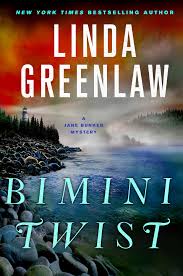
Linda Greenlaw’s fourth Jane Bunker mystery is Bimini Twist
.

This time the Maine deputy and insurance investigator she takes on a missing person’s case when a young girl in the country on a work exchange visa for the summer goes missing from the Bar Harbor resort where she’s employed.

After first suspecting that Bianca, a Roumanian exchange student, has run off with a lover, a local naval cadet, Jane has to revise that fairly quickly.

There will be the death of a fisherman and more missing students before Jane figures out what’s really going on. And what about that good-looking Pete, the boat captain who becomes her date to the exclusive Summer Solstice Soiree?

A blend of mystery and mayhem with a nautical theme and just a hint of romance.

Three for Summer: Cleland, Stanley, Bannalec Sunday, Jul 15 2018 

Three delightful reads for summer fun:

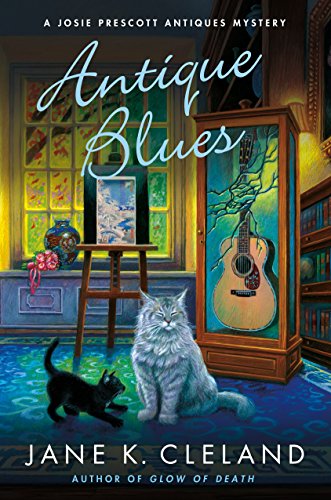
Jane Cleland’s Josie Prescott series, set along the New Hampshire coast, brings antiques into focus. Her newest, Antique Blues, revolves around her friend Mo, who asks Josie to appraise a Japanese woodblock print Mo has acquired.

The woodblock has come from Mo’s sister’s boyfriend, who raises Josie’s hackles in all the wrong ways, including questioning the provenance of the print.

It doesn’t help that Cal appears to be abusing Mo’s sister, Lydia. And when Mo is found murdered and Cal disappears, he’s the likely suspect.

All the usual characters are here, from the young reporter Wes Smith and Rocky Point’s own police chief, Ellis Hunter, as Josie tried to track Mo’s killer. And don’t forget her fiance, Ty. There’s a bit of controversy over just how big their wedding should be.

There will be an appraisal of a vintage guitar, and a chance to merge businesses on the Josie’s horizon. With all she has going on, she still manages to pull off a murder investigation.

Josie’s job as an antique expert and appraiser teaches readers about many areas that Cleland has knowledge of, having once owned her own antique business.

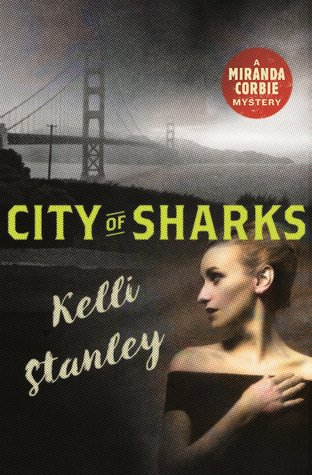
City of Sharks is Kelli Stanley’s new Miranda Corbie Mystery, and takes readers into the world of the San Francisco private detective in the 1940s. The strong and capable protagonist is evocative of the era and woman’s new roles with the world on the brink of WWII.

When a secretary at a publishing house, Louise Crowley, convinces Miranda she’s afraid of being killed, with multiple good reasons, the PI puts her England travel plans on hold to investigate.

Then Louise’s publisher is killed, with Louise and possibly her sister targeted as suspects. Miranda’s investigation will bring up a host of other possible suspects, and there are even encounters with John Steinbeck and CS Forester, as well as newpaperman Herb Caen.

With period details that bring that height of that time to life, this one’s like having a noir movie play out in front of readers in an interesting mystery.

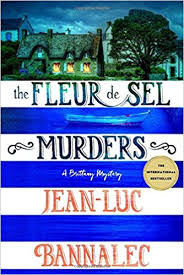
It’s atmosphere of a different sort when Jean-Luc Bennalec takes his Commissaire Georges Dupin away from his job in Concarneau to the salt marshes in The Fleur De Sel Murders.

The landscape is lovingly described, the scent of violets in the air from the harvested salt in the strange completely flat area. This is where Dupin has come, to the Brittany area, after a tip from a journalist he knows that something odd is going on in the marshes involving blue barrels. As he sniffs around, almost hallucinating by the scent of the area, trying to decide what might be wrong, Dupin is grazed by a shot coming at him. Is this to warn him away?

It’s hardly the way he’d hoped the case to proceed, and he’s not in his own district. It makes him miss a planned birthday dinner in Paris with his girlfriend, and thrusts him into an investigation with the local commissaire, a woman who is less than happy to have him on her patch.

When the journalist is found dead, Dupin stays to uncover her killer, amidst the wonderful cuisine in the area that will have readers’s mouths watering. The area is presented beautifully, with details galore that bring it to life.

You’ll feel you’ve been to Brittany. Now where are my fleur de sel caramels?

MJ Arlidge: Love Me Not Friday, Jun 29 2018 

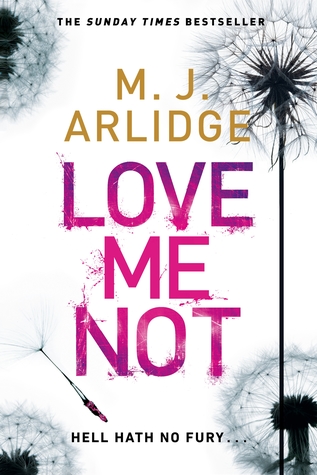
This Helen Grace thriller opens with a jolt, as Helen finds the body of a woman killed savagely at the side of the road. Readers are aware of the circumstances that Helen can only guess at, which adds to the tension.

Out of prison for 9 months after a wrongful conviction was finally overturned, Helen is struggling to maintain her team at Southampton Central, many of whom had turned on her, and she is finding it difficult to know whom to trust. Only Charlie Brooks has been a stalwart defender and the one person Helen can trust.

But this case turns the team on its head when the killings continue and there seems to be no rhyme or reason for the chosen victims. It soon becomes apparent there are two killers, and the reasons for the young couple’s killings are dire.

The action is swift and non-stop, taking place over the course of one day, highlighted by the time as chapter headings.

Of course, arch enemy reporter Emilia Garanita is on hand to record everything. And then the impossible happens and one of Helen’s team is lost, leading Helen to question if she can continue to live herself.

A strong entry in a compelling series.

Martha Grimes: The Knowledge Wednesday, Jun 27 2018 


A friend of Auntie M’s had just seen a documentary about the arduous course London taxi drivers follows, called The Knowledge, when Martha Grimes turns up with her newest Jury that’s titled . . . The Knowledge.

Indeed, the complicated course, where London drivers must know every street, every theatre, every landmark and which roads are one-way or not, becomes of essence when a group of kids the drivers use as insiders become involved in a murder case.

Cab driver Robbie Parsons finds a man with a gun in his cab, right after that man has shot a husband and wife to death in front of the tony Artemis Club, a casino mixed with a high-end restaurant that contains an art gallery.

The chase extends to Nairobi, where the culprit is followed by one of these accomplished teens, while Superintendent Richard Jury becomes involved in the case when he recognizes the victims. There is astrophysics, specialized African art, and the possibility of smuggling jewels in the case.

Soon Melrose Plant and even Marshall Trueblood become involved. There will be an African safari for one and a stint as a croupier for another before the scheme is unwoven. And then there is the pub called the Knowledge, that’s not on any maps and no London cabbie will take anyone to…

An entertaining and wild ride in which Jury finally manages to pull one over on Melrose Plant and Vivian Rivington. Delightful ending.

Author Spotlight on Micki Browning: Adrift & Beached Sunday, Jun 24 2018 


Auntie M had the pleasure of meeting author Micki Browning at Malice Domestic this year, where she was an Agatha nominee for Best First Novel for Adrift. That led to Auntie M asking Browning several questions about her two releases, Adrift, and Beached, the Mer Cavallo Mysteries. In addition, the retired law enforcement commander saw her debut net the Daphne du Maurier Award for Excellence and the Royal Palm Literary Award.

Let’s hear from Browning:

Auntie M: You retired as a division commander in law enforcement. What drove you to write crime fiction? Why chose NOT to do a police procedural?

Micki Browning: I’d be silly to squander twenty-two years of law enforcement experience! I speak the language. I’ve felt the buck of a handgun, the kick of a shotgun, and the steadiness of a rifle. I learned how to manage a four-wheel drift on a tight curve and not end up in a pile of twisted metal along the side of the road. I’ve also experienced the less exciting aspects of law enforcement: the tedium of paperwork, the heartbreak that goes with certain types of investigations, the long hours, missed birthdays.

After all that, I needed to decompress a bit, so while I knew all my stories would have a criminal element, they wouldn’t all be procedurals. My husband and I moved to the Florida Keys to take advantage of its gin-clear waters and dive. While living in Key Largo, I hit upon the inspiration for Adrift. It could only be told from the point of view of an amateur sleuth and Mer Cavallo was born. She’s had two adventures. She’ll return for a third in Chum, after I complete the procedural I’m currently writing.

AM: Ah, so there IS a procedural in the works! Louise Penny has said after the success of Still Life, she had a difficult time writing the second Gamache. You won the Dapnhe du Maurier and Royal Palm Literary Awards for your debut, ADRIFT. Did that early success and notice make writing BEACHED easier or harder for you?

MB: I had an easier time writing Beached, but I attribute that to already knowing many of the characters that would romp across the pages. I’d also learned more about the mechanics of writing and structuring a novel. I’ve since been named an Agatha Award finalist for Best First Novel. I have to confess, I’m glad I had Beached wrapped up before that was announced. The book I’m currently writing gave me fits until I realized I was trying to fit a round peg into a square hole. Once I realized who really needed to tell the story, the elements started to fit together nicely. Is there pressure? Yes, but it’s self-imposed and only because I want every book I write to be better than the one that came before it.

AM: You have made your protagonist, Dr. Mer Cavallo, currently work at a Key Largo dive shop. Those scenes are the height of realism. How long have you been diving? What is it about SCUBA you enjoy most?

Before I became a cop, I briefly entertained becoming a marine biologist. I earned my open water scuba certification in 1986. I was living in California and did the majority of my diving off the Channel Islands. The kelp forests were captivating and the water was cold. Flash forward to the Keys where I discovered warm water and coral reefs. I became a professional divemaster and worked in the industry. Being able to explore the depths is both humbling and liberating. The barrier reef that runs along the coast took a beating from Hurricane Irma, but it is rebounding. I particularly enjoy diving the many shipwrecks that dot the Keys. There are stories found around every corner, on every deck. Plus, there are no cell phones.

AM: Who are your influences in crime fiction? Whose books do you enjoy reading now when you have down time?

MB: Gosh, how much time do you have? Recent favorites include Jane Harper, Anthony Horowitz, Lou Berney, and Lori Roy. I’ve recently discovered Alafair Burke. Some of my go-to crime fiction authors include Dennis Lehane, Lisa Gardner, and Daniel Woodrell. I’m looking forward to the next release from Bruce Robert Coffin. For beauty in all its simplicity, I turn to Kenneth Rexroth’s translations of Chinese poems from the early dynasties. I revisit Tolkien every five years or so, and I blame him for my love of all things medieval and/or mythical.

And Harry Potter. Because there is a bit of Harry, Hermione, and Ron in us all.

AM: Well said, Micki Browning! And now to discuss the books themselves.

Adrift introduces Dr. Meredith Cavallo, sea researcher whose specialty is octopuses, and don’t let anyone tell you it’s octopi. She’s been in the Arctic at the North Pole doing research but these last two months she’s warming up by working at a dive shop in Key Largo.

When the dive boat she’s out on rescues an unconscious diver, not from her boat, he comes to with the story of seeing a ghost on the Spiegel Grove, a wreck five miles from where he’s picked up. Impossible. But Rob Price insists it’s true, and soon ghost hunters and reproters clog the docks, with more who appear to film aboard the Spiegel.

This ghostly news has spread to YouTube and brought The Spirited Divers to the Keys. Documentarians known for their work on deep sea paranormal activities, the team is led by Ishmael Styx. Soon Cavallo is sent on their night dive as safety diver on their latest film project.

But a number of unexplained events occur as the dive commences, followed by a panic attack by a less experienced member of the team. As Cavallo seeks to assist with the ascent, she leaves Styx behind, believing him capable of reaching the surface alone.

When he doesn’t appear, he is presumed dead after days of searching, and Cavallo is the suspect in the sights of the detective on the case. It doesn’t help that Cavallo doesn’t believe in ghosts but in scientific process and searches for a rational explanation.

With the rest of the Spirited Divers mourning the likely loss of their leader, Cavallo is forced to help them finish the documentary, only to discover that things may be more paranormal that meets the eye.

Complicating things is someone from Cavallo’s past who resurfaces, and the biologist must wrestle with relaxing her strong scientific mind when presented with much she cannot explain.

The supporting cast of recurring characters is strong and finely drawn, different and distinct. The characters that people this particular mystery are also individuals. As Cavallo battles to disprove there are ghosts and clear her name, the stakes are raised when there’s a second murder.
A strong debut that will lead readers to quickly reaching for Beached.
h
After the events of the first book, Mer Cavallo has decided to stay for a while in the Keys, and continues her work at the dive shop while she evaluates her complicated relationship with Selkie, the man who broke her heart 12 years ago and now is her next-door neighbor.

Against this backdrop, she’s out on a dive with Captain Leroy when they come across what she learns is called a “square grouper,” a bale of marijuana wrapped in black garbage plastic and bound with twine. Leroy explains they will call the Coast Guard when they are closer to the dock and turn it in.

Checking the bundle, the two find a coin from 1733, and a list of names on a brittle page in between the drugs. Also in the bundle is a GPS tracker, and before they can get their divers aboard and take off for safety, a speed boat appears and starts shooting at them.

As they speed for the dock, Mer pushes the bale off the boat and the speedboat veers off.

But this is the just the start of the troubles that will come to roost upon Cavallo, as she’s kept the coin to track its provenance.

Cavallo sounds finds herself drawn into the world of pirates, legends, and an 18th century shipwreck in her research, but brushing up agianst. modern pirates, also after the treasure aboard this centuries-old Spanish galleon.

There will be museum paintings, a wheelchair-bound philanthropist and soon it turns personal against Cavallo and her home. With a man’s life hanging in the balance, she will do everything she can to find the culprit and the treasure.

In each book, the author describes what is real and what is fictional, but the strength of her diving background lends a serious realistic feel to those scenes. If you’re not a diver, you will learn about the process as you read. Likewise, her police background allows the investigation by the professionals to follow established procedures, even when those are sometimes at odds with what Cavallo would wish.

A fine action-packed series with a likeable protagonist.

Tony Parsons: Girl on Fire Friday, Jun 22 2018 

Auntie M doesn’t understand why she doesn’t see Tony Parsons’ name on more short lists for UK crime fiction awards. His series featurning DC Max Wolfe and his daughter, Scout, is one of her personal favorites, and mixes a darn good police procedural with a huge dose of humbling humanity in his little daughter and the family dog, Stan.

Parsons returns with Girl on Fire, the latest crime novel that touches on a timely situation in England. The opener is strong: Max is in a West End London shopping centre getting Scout a new backpack when an Air Ambulance is shot out of the sky and falls into the shopping centre, killing over forty, injuring scores of others.

Seeing the first-hand devastation in close quarters brings the situation home to Max. When ties to a particular family are shown and missing grenades for further devastation sought, a manuveur goes terribly wrong when the lead of the Specialist Firearms Unit is gunned down right in front of her team as they attempt to apprehend the Khan brothers.

That sets off a chain reaction that will have repercussions for the entire team, Max included. How this is interwoven with the Khan family members judged to be innocent forms the most devastasting part of the book. It’s a close look at a complicated situation, touching on assimilation of immigrants and innocent family members tainted by others who might be terrorists.

Max has had a complicated emotional life, especially when his wife, Anne, left him and Scout behnd for a man she’s now married and their new son. Max has been the best father he can be to Scout, but somehow Anne decides it’s time Scout lived with her. Then an ugly court hearing is in the offing, with judges and social workers who don’t know Scout planning to interview her and take away even more of her innocence. But the silver lining is the new depth of his relationship with fellow cop Edie Wren.

How it all turns out will surprise readers, who will be carried away on a wave of emotion with the end results on all fronts. A stunning entry in a wonderful series. If you’re ot a Max Wolfe fan yet, start now. Highly recommended.

Arnaldur Indridason: The Shadow Killer Tuesday, Jun 19 2018 


The second book in Indridason’s new series, The Shadow Killer, builds on the tone set in The Shadow District.

It’s 1941 and Iceland is occupied by British forces, with American GIs arriving, too. When a man is found murdered in a basement apartment in Reykjavik, shot in the head with an American pistol, it’s up to the thinned out resources of officer Flovent, assisted by serviceman Thorson, to investigate. The Canadian/Icelandic officer knows the language, which becomes a boon to Flovent.

The two officers complement each other, and the suspense builds through the tone of their investigation, which illustrates how sometimes tedious investigative work can be, as they split their interveiwing duties, following threads they find.

The dead man is first identified incorrectly, adding to the confusion, but soon turns out to have been a traveling salesman whose girlfriend left him recently.

Whether this has bearing on the case is unknown, but what is known is equally disturbing: shot in the head, the man’s killer then drew a swastika on the victim’s forehead.

One avenue the men follow concerns another salesman, whose family had Nazi ties at one time, and questions of wild experiments done on youths add to the secrets being kept. And just what does a possible visit from Winston Churchill have to do with it all, if anything?

The two men will face a wall of suspicion and untruthful answers from many of the people they investigate. Each man will also face his own concerns amid the wild days when the world is turned upside down, strangers walk amongst the small towns, and nothing is as it seems during the days of occupation.

A realistic look at what it must have been like during those days with period details creates a haunting, dark mood.

« Previous PageNext Page »