Lake District Murders with Style: Martin Edwards and Rebecca Tope Sunday, Nov 24 2013 

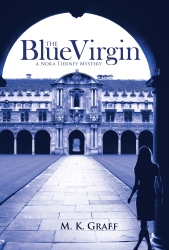
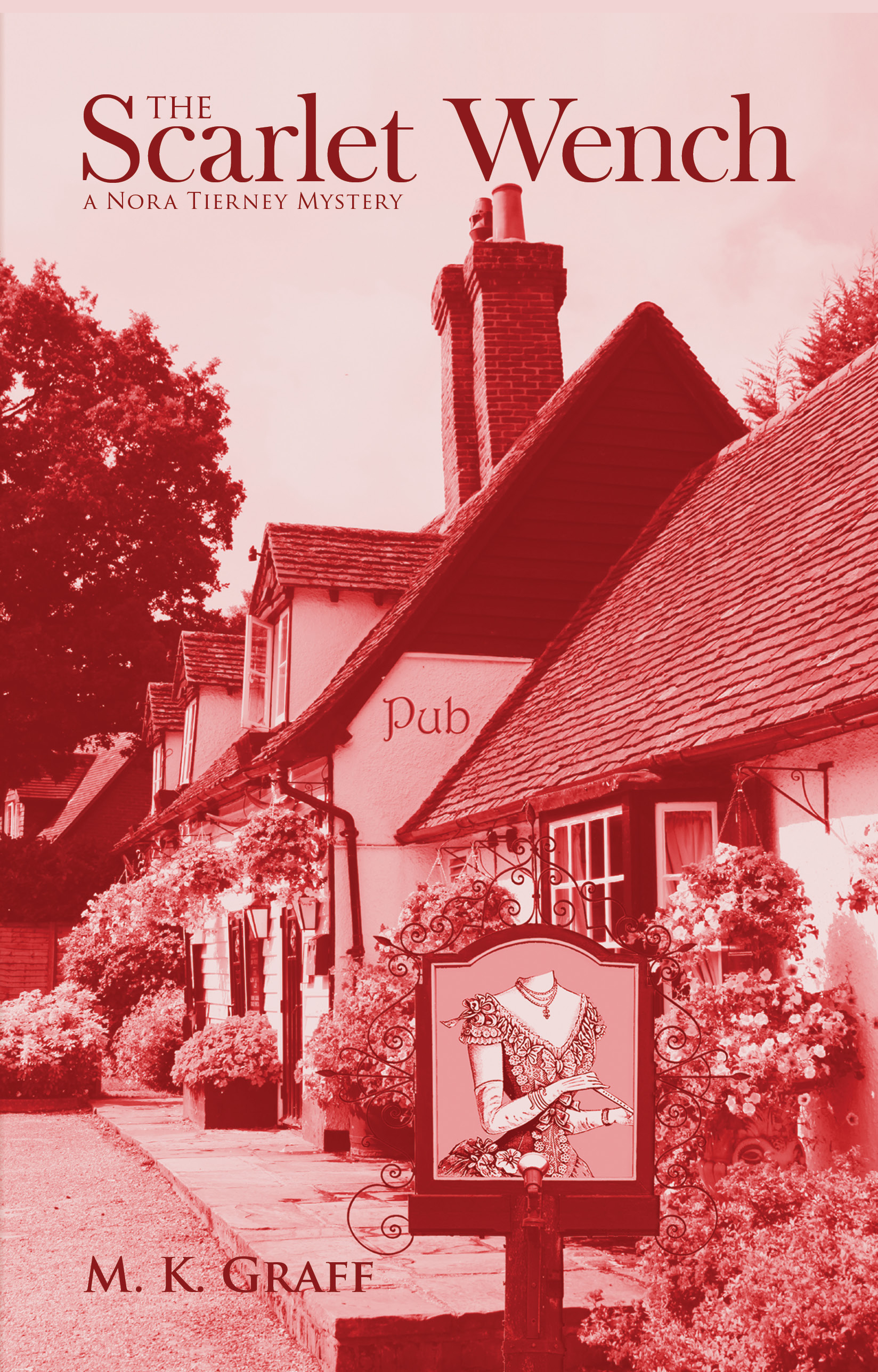
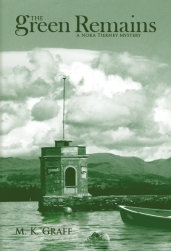
The glorious natural beauty of England’s Lake District, which contains its largest lake, rising fells, and every kind of tree found in the UK, hardly seems to present typical murder landscape. Yet Auntie M has chosen it twice for her own Nora Tierney Mysteries–The Green Remains and 2014’s The Scarlet Wench–and she’s certainly not alone. Two masters have series set in the land of Wordsworth and Beatrix Potter.

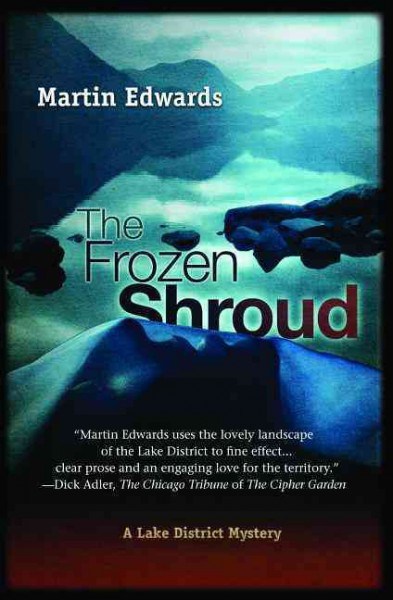
the-frozen-shroud-by-martin-edwards1With a strong feeling for the history of crime novels, Martin Edwards is the archivist for both the Crime Writers Association and for the Detection Club. His talk this year at St. Hilda’s reminded us that the Golden Age authors had more psychological depth than is generally acknowledged. Edwards’ knowledge of crime novels and history is extensive and he is a fascinating speaker.

Author of stand-alones, short stories and multiple essays on crime, he is best known for two series: the Liverpool Harry Devlin series and  the newer one that explores the Lake District and features DCI Hannah Scarlett and historian Daniel Kind.

The Frozen Shroud explores the hidden depths of the small yet remote and diverse locale. Highlighting the landscape and its ability to capture loveliness with menace are the hallmark of this series, confirmed in this sixth offering in the series.

With his vivid descriptions and an overlapping of murders to be solved, The Frozen Shroud capitalizes on a creepy local legend with links to the past and two murders on Hallowe’en that bear the same characteristics. Daniel Kind’s love of research of murder adds to the atmosphere, and Hannah Scarlett’s work situation, fraught with stress and coupled with the the rising tension between these two fascinating characters, adds to the texture of the novel.

There are plenty of red herrings that bring this series along classical lines, making it a totally satisfying and complex crime novel. The dialogue and prose are literate and realistic. Old hurts, revenge, misconceptions and plain old jealousy rear their head as motives. The characters living near the haunted ground of Ravensbank all have secrets with ties to the past, and it would be cruel to tell readers more without spoiling the plot. If you haven’t read this atmospheric series, now’s the time to grab one and then gobble them all up.


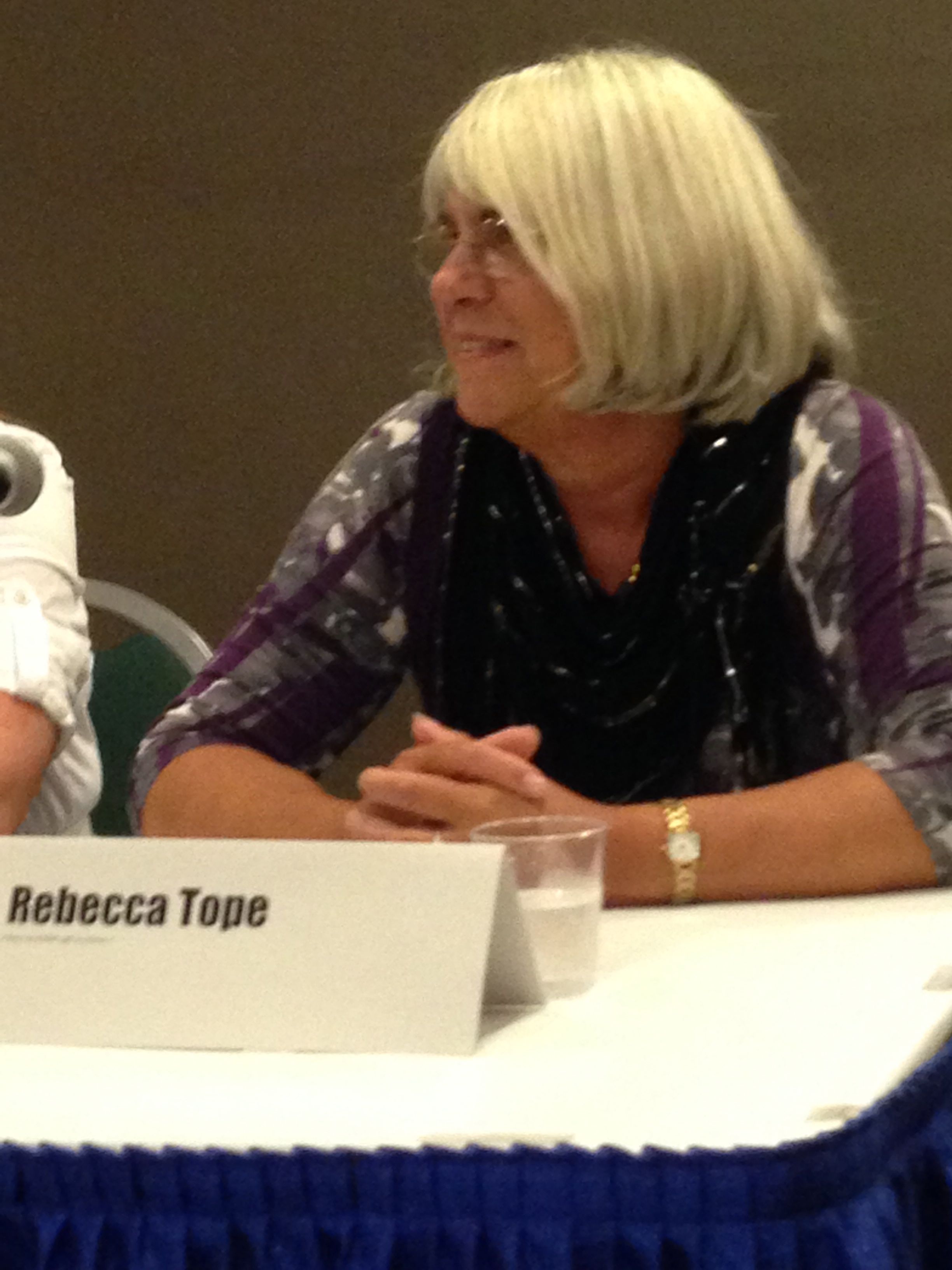
toprRebecca Tope, journalist and author, has four murder series in print: Den Cooper, Devon police detective; Thea Osborne, house sitter in the Cotswolds; rebecca topeundertaker Drew Slocombe; and now her newest series set in the Lake District and featuring florist Persimmon Brown.

I met Tope at St Hilda’s and again in September at Bouchercon, where her British perspective on the differences of mysteries by English and American writers added to her panel discussions. Warm and lively, Tope seems to find the time to write prolifically while living in rural Herefordshire, on a smallholding situated close to the beautiful Black Mountains. She raises Cotswold sheep along with two elderly dogs. Her evenings are spent spinning, knitting and weaving, and she takes commissions for big  pure wool throws and blankets.  Recently added alpacas will make soft baby blankets available. Now where does she find time to write?

Tope’s mind must be working all the time her hands are busy on new plots and characters. Introduced in The Windermere Witness, Simmy Brown’s Windermere florist shop seems an unlikely setting for involving her in murders. With her unconventional parents living nearby, running a B&B, Simmy is getting used to her new home post-divorce in Troutbeck. Her shop assistant, Melanie, and a smart teen, Ben, with a bent for investigation, form Simmy’s “team,” to the chagrin of the local detective, DI Moxon.    

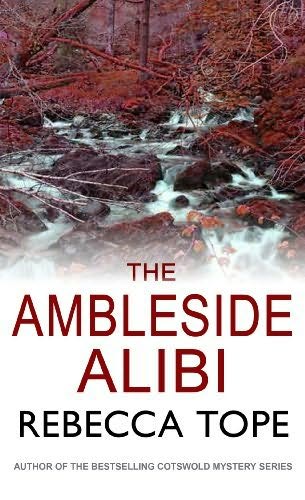
The Ambleside Alibi, book two in the series, finds Simmy unwittingly providing an alibi for a murder suspect, immediately after delivering a bouquet to a grandmotherly sort, sent from a granddaughter the old woman apparently didn’t know she had.  

Then another elderly woman is found murdered and a host of family secrets will be unearthed that may or may not tie the two women together. Against her better judgement, Simmy finds the peaceful new life she envisioned for herself once more fraught with danger and murder. When an attempt is made on her life, she knows she’s become more involved than she’d ever imagined.

Moxon provides a nice foil to Simmy, a reluctant witness and even more reluctant investigator, as he becomes exasperated in his attempts to protect Simmy while finding a murderer. The relationship between these two seems unlikely yet possibly inevitable down the road, a side aspect to drive readers look for the third installment in the series premiering in 2014, The Conistan Case.


Around the World in Crime: Norway, France, Iceland, Denmark and Venice Sunday, Nov 17 2013 

Auntie M’s reading list includes many fine Nordic and European authors she hopes you’ll investigate. These books are all great reads, and with the holidays approaching, make great gifts for the bibliophiles on your list.

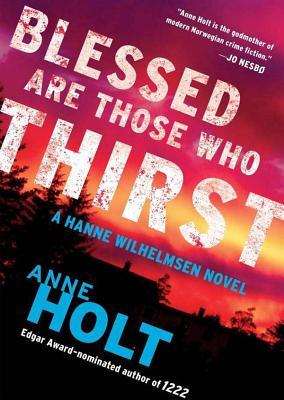
blessed-are-those-who-thirst.jpg.pagespeed.ce.Y23Pst4KrgHanne Wilhelmsen is a police investigator first introduced in Holt’s Blind Justice. Blessed are Those Who Thirst finds her battling a brutal Oslo heat wave, which has set off a huge upward spiral in violent crime in the area. She’s balancing it all with an unsolved rape case which disturbs her.

The newest crime scene she is sent to baffles her at first: in an abandoned shed, covered with blood, an eight-digit number is scrawled in blood on one wall. Is it human blood?

But there’s no victim, at least none at this site. Is this a terrible prank or the mark of a more sinister killer?

More of these bloody crime scenes start to crop up, all in isolated locations throughout the city, all with different numbers. Then Hanne’s colleague discovers the significance of those numbers: they belong to female foreign immigrants who have gone missing.

As her team races to track down this killer, the rape victim and her father separately plan their own vengeance.

How these intersect, with horrifying consequences, will keep readers rooted to the page. This is a well-plotted mystery in a fascinating series.

Holt’s inclusion of Hanne’s domestic situation adds nice texture and reminds us that police personnel all have home lives.


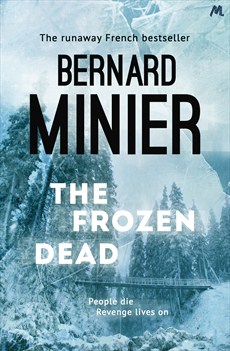
Bernard Minier’s The Frozen Dead was first published in French with the title Glace`, but this translation loses none of the chilling aspects frozen1444732252-detailof the original.

Minier draws on little-known facts to build his suspense, from the bizarre psychiatric methods at some points, to the subterranean power plant that becomes a plot point.

When a headless horse is found suspended from a frozen cliff in southwest France, it annoys the city cop assigned to investigate. Servaz should be dealing with three teens suspect of killing a homeless man.
Yet he cannot ignore this highly unusual and disturbing crime as the rumbling of a cable car brings the horse’s corpse into view. Everyone in attendance is disturbed.

Only miles away, a young psychiatrist named Diane Berg embarks on a journey that will mean so much more than just a year’s assignment in the Pyrenees at the Wargnier Institute.

When DNA from the Institute’s most infamous inmates is discovered on the animal, it is the first hint to Servaz of the nature of the madment he seeks, and sparks a series of horrific murders.

There’s no escaping the cold as theme in this thriller, from the gritty settings to the dark, grisly deeds carried out in the names of healing, and of revenge.

Minier’s novel explains the complicated and different police investigation method of France’s system, which adds to the tone. Readers will look for more by this talented crime writer and await the reappearance of Servaz and his music.


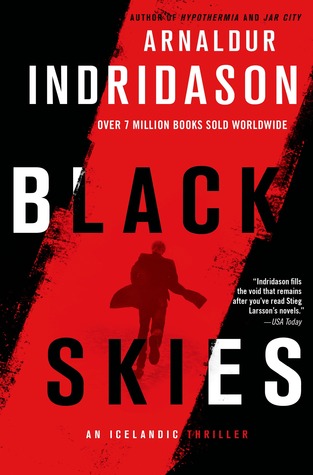
17286708Staying with the cold, we head to Reykjavik, Iceland’s setting for the Erlendur series. This tenth entry is Black Skies, by award-winning author Arnaldur Indridason, who won the CWA Golden Dagger Award for Silence of the Grave.

This time it’s Sigurdur Oli in the spotlight of this subtle and superbly crafted police procedural. Oli finds himself reluctantly agreeing to a friend’s request to head off a blackmail attempt in a scheme of wife swapping. Then he finds the woman accountant found bludgeoned to death was involved with her husband in the scheme.

But Oli is forced to look beyond this obvious motive when the victim’s association with a group of disreputable bankers becomes known.

This has an almost sociological feel to it, without judging or hitting the reader over the head, as Oli follows leads that will take him to the heads of high-finance and the lowest criminals on the economic ladder.
That he becomes disgusted with both extremes speaks volumes. The laziness of the criminals he encounters stands in stark contrast to the greed and flagrantly accepted corruption of the upper class.

By showing how these encounters affects Oli’s own thoughts about his family and marital history, we become involved with him as a real person who happens to be a policeman. That he is tasked with this unenviable job that is sometimes at odds with his personal feelings becomes the heart of the book.


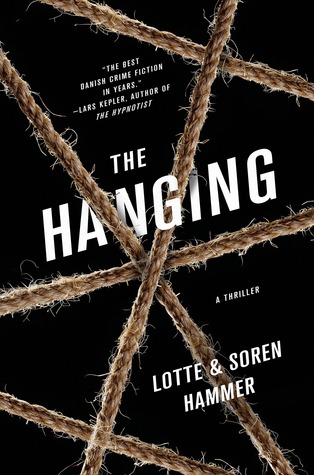
Another Nordic entry not to be missed comes from Denmark’s sibling team of Lotte and Soren Hammer. 16044964The Hanging brings readers the unusual team of lead detective Konrad Simonsen in this startling novel that starts off with a bang and never lets up.

When two Turkish children get to school early, they find the mutilated and naked bodies of five men hanging from the gymnasium ceiling. It doesn’t help the investigation when a prejudiced policeman takes his time responding to the call.

The horrific crime sees Simonsen recalled from a vacation, which stirs a media frenzy that is compounded when the link between the victims is known: all were pedophiles.

Fighting public opinion that their killer should be overlooked complicates his team’s investigation. At the heart of the matter will be the lingering question: when is justice served?

Adding texture to the book is the feel for Copenhagen the authors transmit, as is the team the authors they give to Simonsen. These include a young policewoman feeling her way through the start of her career, and another with independent financial means who doesn’t need the job.

The first of a planned six-part series, Lotte and Soren Hammer have fans already clamoring for the next translation.


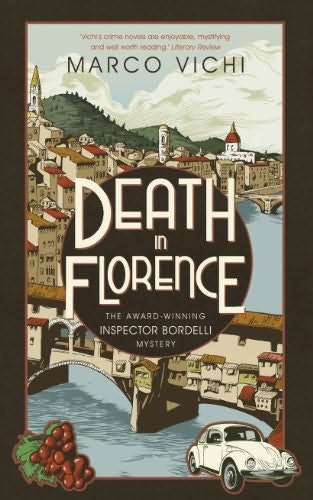
n401410The lovely vintage feel and VW bug on the cover of Marco Vichi’s Death in Florence tell the reader immediately that we are not in contemporary times but rather in 1966.

This is the fourth in the series featuring the novel’s protagonist, Inspector Bordelli, owner of the VW.

“How can a boy vanish into thin air?” That’s the question absorbing Bordelli at the moment.

Giacomo Pellissari seems to have melted into the pouring rain leaving his school. When his mother’s car won’t start, his lawyer father arrives to the school to pick him up an hour late. The boy was seen running into the downpour–and there his trail grows cold.

Bordelli begins an increasingly desperate investigation into the boy’s disappearance with the help of his young sidekick, Piras. They will uncover abuse of power, rape, murder and a ring of homosexuals as they delve deeply into the case.

But he is thwarted by the flood that overwhelms Florence. Based on a real occurrence in November of that year, the swollen river Arno laps over the arches of the Ponte Vecchio, breaks its banks, and completely overwhelms the city.

While streets become rushing torrents, the force of the water sweeps away vehicle and trees, doors and even a coffin lid. Mud piles of debris line the city Bordelli calls home, yet the obstinate detective persists in finding a resolution to the disappearance of a little boy.

Written in an atmospheric and literary style, the ending will leave readers surprised and questioning the next volume to follow.


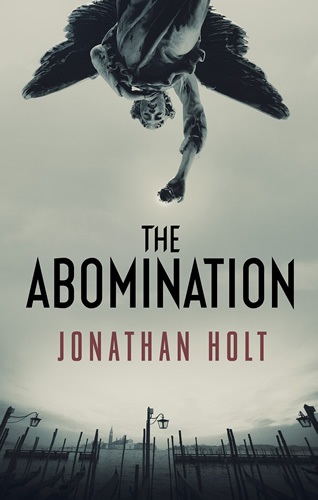
Moving from Florence to Venice, the debut novel The Abomination by Jonathan Holt has been hailed for its complex plot involving two forceful abominationwomen, the Carabiniere Captain Kat, and her American counterpart, Holly.

Their case kicks off when the body of a woman washes up from the Grand Canal wearing the robes of a priest, a desecration seen by the Catholic Church as The Abomination. That this happens on the night of the Feast of the Epiphany with its masked balls add to the drama.

Duality is enhanced with the idea of Carnvia.com, a virtual Venice, a social network revolving around a simulated world that gives users complete anonymity by letting them hide their identities behind carnival masks.

The narrow canals and thick, sewage-scented fog that envelops Venice at times is aptly represented, a counterpoint to the usual image of artworks and tourist cathedrals, and provides the backdrop for the corruption and conspiracy the two women will find.

The action never flags in this combination of mystery, tech thriller and conspiracy. The two worlds of Venice and its cyber-counterpart create a compendium of mysteries that are skillfully rendered.

There are two more volumes in the works from this talented author who blends and balances intriguing characters with multiple story-lines of action.


Susan Sloate: Forward to Camelot Sunday, Nov 10 2013 

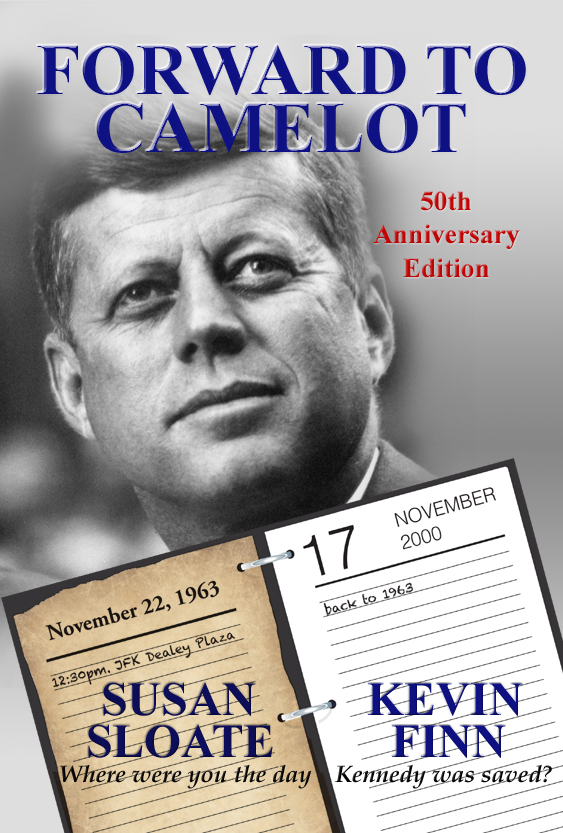
Camelot_Cover_11 (1)(2)

Guest Blog – Cutting Down to Size

By Susan Sloate

     You would think that cutting your manuscript was relatively easy. I mean, compared to getting the words down on paper in the first place, cutting what’s already there should be a snap. Didn’t Michelangelo say airily, “I just took a chisel and cut away everything that wasn’t David”?

     Well, that sounds simple enough. You drop an extraneous phrase here, a flabby sentence there—and suddenly your manuscript is ten pages shorter and you’re all ready for the next step.  Nothing to it, right?

     Uh—wrong.

     I hadn’t realized how much I needed to do it until I began a much-needed revision this summer on FORWARD TO CAMELOT, the 2003 time-travel thriller I co-authored with Kevin Finn. We had both loved the book as written, but with a 50th-anniversary edition about to be published (commemorating the 50th anniversary of the Kennedy assassination, which is the subject of our novel), we felt it was a good time to fix some of the usage and grammar errors that had slipped by us the first time, and especially to tweak a couple of small historical points that had bothered me for ten years.

     That was the intention. Make sure the quotation marks are facing the right way, check the history and turn in the book to our publisher.

     Then Kevin and I began to look at what we had, and we realized there were other issues we wanted to address. What started as a simple fix became a much more complex, line-by-line scrutiny, and what we were eventually looking for were the words, sentences and even paragraphs we could cut to bring down the length. Our publisher, Drake Valley Press, explained gently that a book as long as the original version (almost 500 printed pages) would cost so much that we might not see any profit on it at all in paperback, and it could affect eBook sales as well. But if we could significantly reduce the word count, we would do a lot better. And besides, the narrative really did have its flabby moments. Keep the story, by all means—just make it, you know, a lot shorter and simpler.

     I began to feel as though I had an “Everything Must Go!” sign on my computer screen.

     While I began the historical fixes, Kevin began streamlining the manuscript, pulling out sections he felt could safely be cut while maintaining the pace, the plot and the flavor of the original. While we both resisted cutting entire scenes—we cut only one full scene, and that one only reluctantly—there were certain scenes that we also knew we wanted to rewrite; we hadn’t got them right in 2003 and we had another chance now.

     But when I finally saw Kevin’s long, meticulous (did I mention long?) document listing all the changes—which ran about 30 pages—I almost cried. Then began the bargain-with-your-partner phone calls: “Look, we have to keep the hunt scene at the end.”

     “But it’s ten pages; that’s way too long.”

     “Okay, okay. I’ll cut it way down, as long as I can keep the gist of it.”

     “You can have the gist. Just get rid of the gristle!”

     Thus began the slash-and-burn portion of the rewrite, where I began incorporating Kevin’s notes. (“Did you realize you write everything twice?” he asked me. “If you could cut it down to one telling, we could really cut through this manuscript.” By this time the word ‘cut’ or ‘slash’ had a queasy effect on me.)

     We argued, and we both agreed to accept less than what we wanted. Kevin let me keep almost all the scenes intact, as far as intent; I swallowed a good deal of bile and pride and slashed away at anything that wasn’t strictly necessary.

     Within a couple of weeks we’d brought down the 488-page original manuscript to 382 pages, cutting 100 pages (25,000 words) in the process. It was still the longest book either of us had ever written, but it was no longer a project you had to schedule in order to read. The word count was in the ballpark.

     Did I enjoy the process? Most of it, no. But on some level I did like examining a paragraph and finding a way to cut straight to the heart of what we were trying to say. It’s a process writers need to go through all the time—understand what we want to say and say it as effectively—and as simply—as we can. We can never afford to forget that part of our process, especially writers who become very successful, and whose editors then seem to somehow mysteriously evaporate (or more likely, are intimidated or overpowered by the author at that point).

     I know I’ll do the same process from now on: I’ll look for stuff I’ve said twice and hack away at it, along with everything else the reader doesn’t absolutely need to know.

     And maybe that snob Michelangelo was right: when you finish slashing with your machete, what you end up with looks a lot less like a flabby ‘before’ picture and a lot more like that glistening David in marble.

     That alone makes it worthwhile.

     Good luck with your own machete …

WHERE WERE YOU THE DAY KENNEDY WAS SAVED

On the 50th anniversary of the JFK assassination comes a new edition of the extraordinary time-travel thriller first published in 2003, now extensively revised and re-edited, and with a new Afterword from the authors.
On November 22, 1963, just hours after President Kennedy’s assassination, Lyndon Johnson was sworn in as President aboard Air Force One using JFK’s own Bible. Immediately afterward, the Bible disappeared. It has never been recovered. Today, its value would be beyond price
In the year 2000, actress Cady Cuyler is recruited to return to 1963 for this Bible—while also discovering why her father disappeared in the same city, on the same tragic day. Finding frightening links between them will lead Cady to a far more perilous mission: to somehow prevent the President’s murder, with one unlikely ally: an ex-Marine named Lee Harvey Oswald.
Forward to Camelot: 50th Anniversary Edition brings together an unlikely trio: a gallant president, the young patriot who risks his own life to save him, and the woman who knows their future, who is desperate to save them both.
 
History CAN be altered …
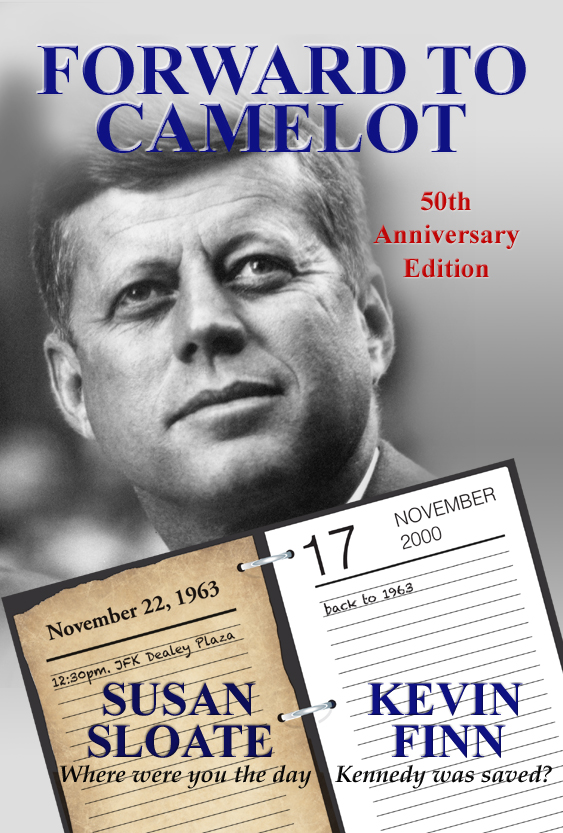
Camelot_Cover_11 (1)
SUSAN SLOATE is the author of 20 previous books, including the recent bestseller Stealing Fire and Realizing You (with Ron Doades), for which she invented a new genre: the self-help novel. The original 2003 edition of Forward to Camelot became a #6 Amazon bestseller, took honors in three literary competitions and was optioned by a Hollywood company for film production.
Susan has also written young-adult fiction and non-fiction, including the children’s biography Ray Charles: Find Another Way!, which won the silver medal in the 2007 Children’s Moonbeam Awards. Mysteries Unwrapped: The Secrets of Alcatraz led to her 2009 appearance on the TV series MysteryQuest on The History Channel. Amelia Earhart: Challenging the Skies is a perennial young-adult Amazon bestseller. She has also been a sportswriter and a screenwriter, managed two recent political campaigns and founded an author’s festival in her hometown outside Charleston, SC.
After beginning his career as a television news and sports writer-producer, KEVIN FINN moved on to screenwriting and has authored more than a dozen screenplays. He is a freelance script analyst and has worked for the prestigious American Film Institute Writer’s Workshop Program. He now produces promotional trailers, independent film projects including the 2012 documentary SETTING THE STAGE: BEHIND THE SCENES WITH THE PIRATES OF PENZANCE, and local content for Princeton Community Television.
His next novel, Banners Over Brooklyn, will be released in 2014.
For updates and more information about Forward to Camelot: 50th Anniversary Edition, please visit http://susansloate.com.

Elly Griffiths: A Dying Fall review and brief interview Sunday, Nov 3 2013 

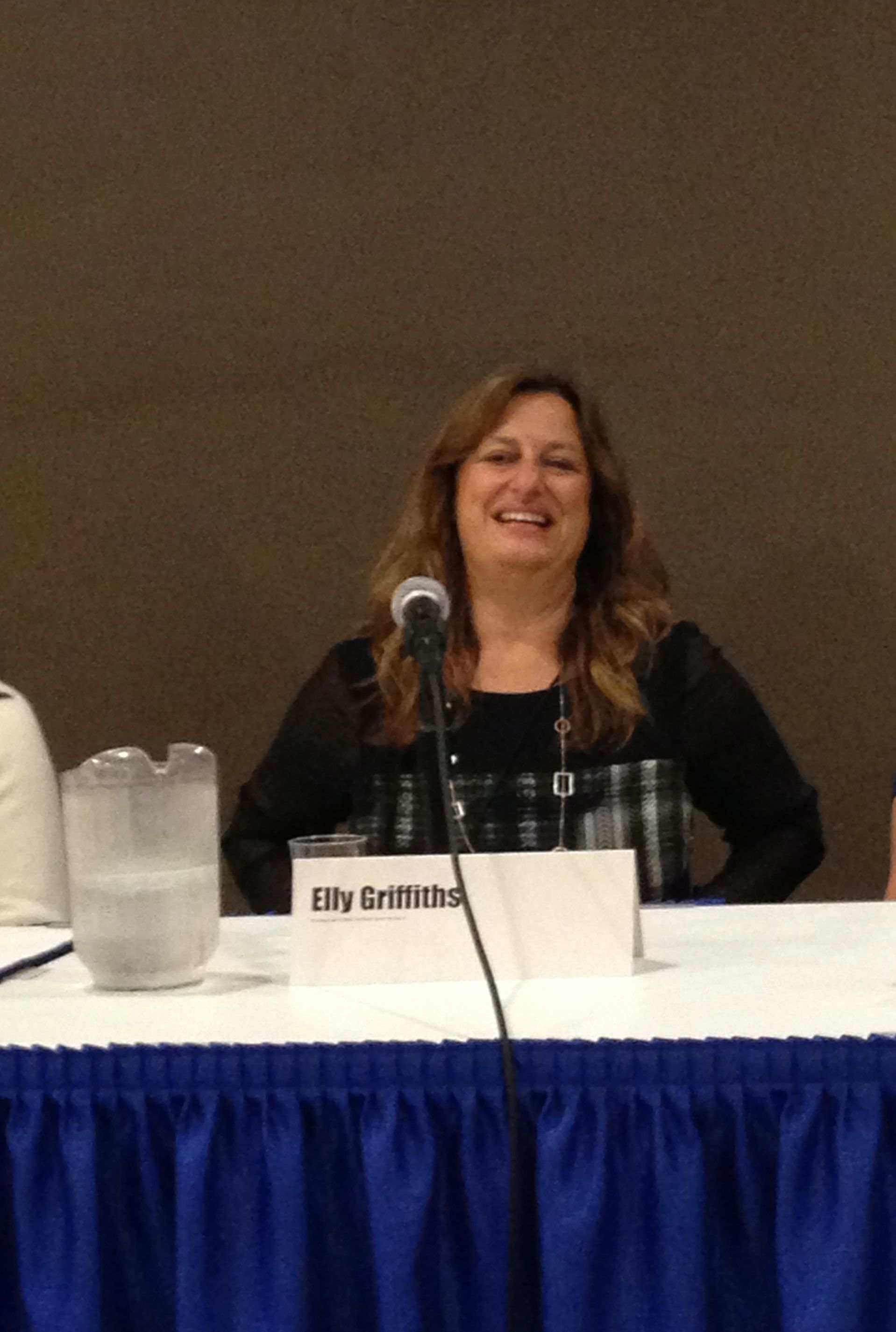
EllyGriffithAuntie M had the pleasure of meeting and talking with Elly Griffiths at Bouchercon, Albany.

The author of the Ruth Galloway series and winner of the Mary Higgins Clark award has a lively sense of humor and a warm personality.

She talked about the origins of her series, featuring the down-to-earth forensic archeologist whose independence and intelligence make her a delightful character readers are eager to follow.

Auntie M: Tell readers how you came up with the idea for the series.

Elly Griffiths: My husband was a lawyer who came to me one day and said he wanted to go back to school to be an archaeologist. I became interested in his studies and his work, and the idea was born.

AM: And Ruth?

EG: With my husband in school, we took a family vacation back to the Norfolk coast where I’d spent summers in my youth. I was thinking about a series as we walked along the beach by the marsh on a foggy day. Out of the mist, Ruth literally came walking to me, fully realized. I saw what she looked like, what she wore, down to knowing  what kind of cracker she would eat!

AM: Ruth is such a realistic, well-rounded person–smart, stubborn, still anxious about her role as a mother. You’ve handled Ruth’s relationship with Harry Nelson, the father of her child, with a great aching tenderness.

EG: They find themselves in an unusual situation. Harry is Catholic, so there’s that to consider, and he loves his wife. Can you love two people at the same time? I’m still working that one out . . .

AM: And readers will be waiting to see what you and Ruth have decided!                                            15814458

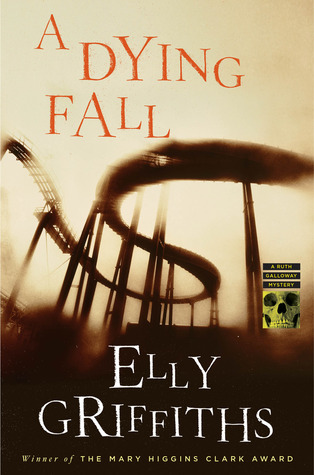
A Dying Fall is book five in the Ruth Galloway series.

Ruth is surprising herself by juggling motherhood of an 18-month old with the demands of her teaching and the annual university dig.

A call from a former classmate with news that one of their circle from university days has died in a fire brings Ruth memories of their time together: shared secrets, drinking bouts, sharing a flat.

Her memories take on a golden light and she rues she hasn’t stayed in touch Dan Golding. “Now she will never hear from him again.”

But the very next day after years of silence, Ruth receives a letter from Dan that changes everything. When Ruth asks Harry to look into Dan’s death, he asks an old colleague’s help–only to find the professor’s death was anything but an accident: the man’s door had been locked from the inside.

Then Ruth receives a call from Pendle University in Lancashire to consult on an important finding of Dan’s just before his death. She packs up toddler Kate and heads north with her friend, the Druid Cathbad, to Lytham, far too near where DCI Harry Nelson and his family are taking vacation with Harry’s family in Blackheath. Cathbad’s presence will lend its own surprising connection.

Dan was on the verge of a major announcement based on his discovery, which intrigues Ruth in her professional capacity as much as she longs to unearth the truth about the link between Dan’s theories and his murder.

What follows is a brew of old bones, neo-Nazis and New Age hippies mixed with trips to Blackpool Pleasure Beach and the archaeology of early Britain. The plot has enough twists and turns to keep the mystery alive, while Harry’s extended family are on the scene and their interactions add to the texture, at Harry’s obvious discomfort.

Griffiths weaves the archaeology into a compelling plot while she manages to update the characters’ private lives and move those forward. It makes for an intriguing crime story that will have readers looking forward to the next mystery featuring Ruth Galloway.


Elizabeth Haynes: Interview/ Human Remains: Review Sunday, Oct 13 2013 

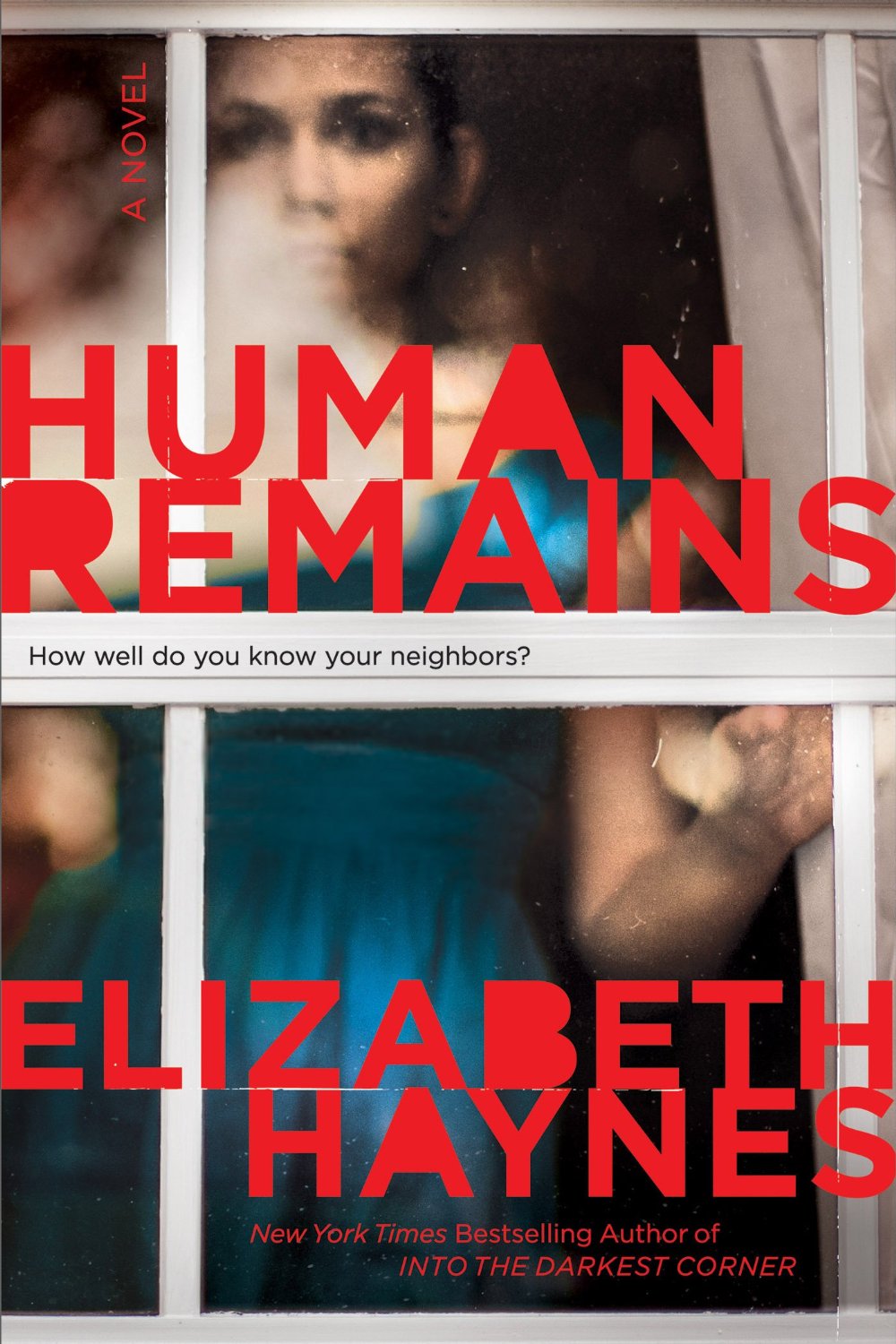
One of the goals Auntie M has in writing this blog is introducing US writers to great UK authors they may be missing. Elizabeth Haynes (Into the Darkest Corner; Dark Tide) writes quality crime novels you’ll want to seek out. Auntie M had the privilege at Bouchercon of interviewing Haynes about her newest thriller Human Remains. The first photo is of Elizabeth charming the audience as she moderates a panel. She is warm and personable with a wicked sense of humor, and we shared a delightful time together. Here are her thoughts on her work; the review follows.

IMG_2517HaynesAuntie M: Your first two books drew on your experience as a police intelligence analyst, yet Human Remains is the first to give your protagonist that actual job, a real glimpse into a civilian working for the police. Tell us how your job sparked this book’s storyline.

Elizabeth Haynes: Every morning we received a bland document, the Chief Constable’s report of all reported incidents for the last 24 hours. “Human remains found” is often noted with no name or details or identifier.  It’s an incident but not necessarily a crime if these people appear to have died from natural causes, yet it happens more often than you’d think and I wondered about these forgotten people.

Then I saw a documentary called Dreams of a Life, about 38 yr-old Joyce Vincent, whose decayed body was found in her flat three years after her death.  She was sitting on her sofa surrounded by Christmas presents she was wrapping and the telly was still on! No one had missed her, no had checked on her–she had no “key layer” of people who would have raised the alarm. I started to think: what if someone out there was responsible for these seeming natural deaths, how would I search for this to find a pattern? I gave that job to my character, Annabel.

AM: You have created some really creepy bad guys. How do you get close to them?

EH: The first two books were concerned with relationships and it felt easier to write them. This one differs significantly. Both Annabel and Colin are unsocial people, but for vastly different reasons. I see my books as a snapshot of my characters, a window to them. I love them all, even the baddies. At first Colin didn’t want to talk to me, and I suspect he’s more intelligent than I am. He does hideous things but he sees the beauty in what he does and believes in it.

AM: Whether it’s OCD, pole dancing, or neuro-linguistic programming, you do extensive research. It’s one of the bits I enjoy most in my mystery series–do you?

EH: I do enjoy research but I’ve learned there’s a fine line for me between what’s productive and getting track-tracked on something else that catches my fancy. For this book, I was comfortable with the analyst side of it but less so with the NLP and hypnosis. The forensics of decomposition were the hardest. I was sitting in a coffee shop with this huge book on decomposing bodies and after the first picture, I slapped Post-It notes over them all. I could read the text and absorb the words but that photo was disturbing and still haunts me.

AM: With a husband and young son, how do you fit writing into your personal life?

EH: I have a very good husband who gives me space to write when I’m in the thrall of it, although I’m very good at procrastination. I’m not predictable in my writing habits; it seems to come to me in waves or with the pressure of a deadline. I write in my hut with my dog, Bea, a Portuguese rescued podenco, sleeping on a bed next to me.

AM: When you read for pleasure, whose books are on your nightstand? And what writer influence you?

Elizabeth Haynes, cr Ryan Cox                                                                                                                                      Photo courtesy of Ryan Cox

EH: I receive free books all the time and have found some gems, but the authors I look for and read consistently are Ruth Rendell/Barbara Vine, John Harvey and Mark Billingham, amongst others. I’m going to start Michael Robotham’s in order soon. I’d say Alison Lurie’s Love and Friendship was a big influence on my wanting to write.

AM: What’s up for fans of your writing after Human Remains?

EH: Next spring’s Under a Silent Moon will be a police procedural with a twist: the appendix contains actual flow charts that are used by the police analyst for the DCI, Louisa Smith. There are multiple narrators, and in the next few in this series, several characters from previous novels will appear.

AM: Thanks to Elizabeth for sharing her thoughts with readers. Now on to the review of her latest thriller, Human Remains.  

          HUMAN REMAINS00_Annabel is a police analyst who keeps herself busy with work, her cat and her aging mother, while trying  to persuade herself she’s not lonely. When her cat investigates the next door neighbor’s house with shocking results, its Annabel who discovers the woman’s decomposing body. The woman’s absence was not noted, least of all by Annabel, who is disturbed to the point of paying attention to the other cases of “human remains found” in her area. Her talents at investigation soon lead her to find a surge in such cases, but she’s unable to convince her police colleagues to pay attention.

Colin is also a loner, but more by choice. His one friend invites him to meet the woman he’s interested in, with disastrous results. Colin is fastidious and highly intelligent, stuck in a mind-numbing job that pays the bills, and he takes multiple courses at night in subjects all related to the human mind. He has his own study of the human psyche in progress with appalling results, yet he’s convinced he has embarked on a wondrous experiment.

How the paths of these characters intersect, and the devastating results, form the basis for Haynes’ most chilling thriller yet. Readers will find themselves compelled  to trace the trajectory of this story that weaves several threads expertly. One of the hallmarks of all of Haynes books is the level of research she does that adds multiple layers of plausibility to her stories.

The story is told in first person by both narrators, bringing the reader right into their minds and emotions. Sprinkled in between are newspaper articles of the discovery of these bodies, and in a specially insightful twist, chapters from the victims point of view. How these ordinary people living ordinary lives fall prey to Colin through circumstances that could happen to any of us adds to the book’s harrowing tone.

This is an all-too-believable story of what can happen to people who live alone. Highly recommended.

Michael Robotham: Say You’re Sorry Sunday, Mar 24 2013 

The incomparable Michael Robotham is back with my favorite psychologist, Joe O’Loughlin, in his newest addition to this stunning series. 13528436

The book opens with the musings of one of the two Bingham girls, two teens who went missing one night three years ago. It is Piper who talks to readers throughout the novel as she writes in her journal. Through her they learn of the horrors the girls have lived through for years. until one of them risks a daring escape.

Joe struggles with broken marriage and his relationship with his two daughters, most notably the older, Charlotte, a teen who prefers “Charlie,” and whom Joe describes as having “a smart mouth and a dozen different moods.”

Despite the heavy snow, Charlie is on her way up to London to spend four days with her father in Oxford. He’s to counsel her on a doubtful boyfriend and her behavior with the boy;  they will spend time together after his talk at a mental health symposium.

From the train window just outside Oxford, the train slows with the weather. Joe and Charlies glimpse a line of policemen moving across a snowy field. As their train moves slowly forward, they sees white-clothed crime scene officers struggling in the wind, trying to erect a canvas tent over the edge of a lake. They see what they are trying to shield: a body, trapped beneath the ice.

Their first full day together is interrupted by the sudden appearance of detectives, looking for Joe to consult on the ghastly murder of a couple in nearby farmhouse. Joe is not inclined to cooperate; this kind of thing has gotten him into trouble before. But Charlie, bored with the ancient town after one shopping spree, wants to see her dad at work, and soon Joe agrees to help with the case.

As he investigates, it soon becomes clear that these murders and the disappeared girls are related.

But will Joe figure out the murderer in time to save one of the missing girls?

The device Robotham uses of having Piper document her past and current habitats is chilling; her thoughts, so controlled and matter-of-fact to reality, show readers a young woman who was barely seen before, but will never be forgotten again.

For readers of the series who understand the struggle Joe has endured over several books, the ending will move you to tears.

Well-written, compelling, with complex characters, Say You’re Sorry‘s layered title will show readers its true meaning.


P M Terrell: Dylan’s Song Sunday, Mar 17 2013 

dylans-song With past clients ranging from the CIA, Secret Service and Department of Defense, it’s no wonder that author P. M. Terrell uses her computer expertise and technical knowledge to highlight the drama in the fourth book in her Black Swamp Mystery series. Dylan’s Song is a romantic suspense novel with just a hint of the paranormal.

The book is a rousing good read. Suspense Magazine calls Terrell’s books “powerfully written and masterfully suspenseful; you have to hang on for the ride of your life.”

Terrell brings the reader to the Irish homeland of Dylan Macquire, whose character was first introduced in Vicki’s Key, a finalist in the 2012 International Book Awards and 2012 Best Book Awards in mystery/suspense.The charming Irishman is running from secrets in his homeland, secrets which will be laid bare in this latest episode.

Vicki Boyd is a psychic who uses her abilities in conjunction with the CIA. Able to travel to remote locations in her mind, Vicki provides startlingly realistic information for her boss Sam. Rounding out the main characters is Brenda Carnegie, a brilliant computer hacker related to Vicki and the best traveling companion Vicki could have when Sam sends the trio to Ireland on a dangerous retrieval mission.

Vicki and Dylan are a couple, which tangles Dylan’s proposed mission on several levels. She’s withholding important information from him, and the stubborn Dylan doesn’t want to go anywhere near his home town. Then a call from Father Rowan, who had been like a brother to Dylan, draws him back reluctantly to the village. The grandmother who raised him is dying and wants to see him one more time.

Suddenly, retrieving operative Stephen Anders seems more urgent. But a tricky complication exists: Vicki’s images show Anders has been kept in the cells of a former castle, one that now exists under one of Ireland’s famous peat bogs.

Dylan is a charmer and his love for Vicki is a big as it can be exasperating. Brenda proves herself to be a necessary compatriot, and Father Rowan in Ireland comes to the trios aid in several important ways. The spy angle is tinged with the sadness of Dylan’s last visit with his Mam, while the local traditions and customs are winningly described.

There will be local intrigue, too, as Dylan returns to the village he escaped from years ago, after hoping his past and its secrets would never catch up with him. All this raises the tension and the hurdles Dylan and the women will have to conquer: to rescue Anders, and to save their own lives.

Terrell does a fine job of getting inside each character while she transports readers from the small southern town of Lumberton, NC, where Vicki and Dylan have been living, to the rolling, fertile countryside of Ireland and the small village where they stay. The tension mounts as the retrieval operation for Anders goes horribly wrong, and just when it seems there’s time for readers to catch their collective breath, terror and danger strike again.

NC author Terrell has written fifteen books, including the historical suspense novel River Passage, which won the 2012 Best Book Award. Her original manuscript is so accurate it is now housed in the Nashville Metropolitan Government Archives for future use by researchers and historians in Tennessee. She is also the co-founder of The Book’Em Foundation, committed to raising public awareness of the correlation between high crime and illiteracy rates. You can read more about the yearly NC wing of Book’Em North Carolina, held in the town of Lumberton that features in her series, by visiting www.bookemnc.org.


Triss Stein: Brooklyn Bones Sunday, Mar 10 2013 

Please welcome guest author Triss Stein, a fellow New York gal.

JPG COVBrooklyn_Bones_Final

“Write what you know.”  That is standard advice for a new writer but perhaps what you actually know is not that interesting to others or yourself?  I once tried to write a book about a former long-time job, and soon realized I did not want to spend another mental minute there! A good corollary is “Write what you want to know.”  Hmm. There is a lot one could do with that.

After writing a few mysteries, I came up with another one, or really, I think it came to me. “Write what matters to you.”  All three of the first mysteries (two published, one lost when my publisher dropped their mystery line) had an underlying theme that just crept in. No one knows this except me, but they were all, in some way, about parents and children.  I finally realized I should be writing about that on purpose.

I asked myself: what else matters to me? I love history. I always have. I was fascinated by books that told me how little girls like me lived “a long time ago.” How did things get to be the way they are always seemed like the place to start any subject, and old anything seemed more interesting than new.

I love Brooklyn. I’ve lived here long enough to see it change from a time when young families moving here instead of the suburbs were considered  pioneers, to now, when even in Paris Brooklyn is considered the home of  all things “hip” (!).  That is a good change, a destructive change, or it is just change, the one constant of big city life. It all depends on where you’re standing.  Is there conflict about those changes?  You bet.


After many years, I have a new mystery out and it is called Brooklyn Bones.  Erica, my heroine is a true Brooklyn girl. She is also a somewhat young single mother of Chris, a teen-age daughter. She is a somewhat old graduate student in urban history, pursuing her hometown’s past and encountering both old and new crime in the process.

In this first book, the past comes crashing right into the present when the body of  a teen-age girl is found during her house renovation. The body is not nearly as old as the house. There are still people around who know the tragic who and why, and intend to keep it a secret buried forever.

I’m knee deep in the difficult middle of the next one, which includes the historic and beautiful Green-Wood Cemetery, Tiffany glass windows, and a charming (I hope!) turn of the last century mystery. And some modern crime of course.  Plus some difficulties Erica has on the other end of the parent/child continuum, as the grown child of her own father.

Luckily for me, history keeps happening and Chris is only fifteen, so Erica has a lot of parenting ahead. And trust me on this- there is no end to the stories I can tell about Brooklyn.

Triss Stein is a small–town girl from New York state’s dairy country who has spent most of her adult life living and working in New York city. This gives her the useful double vision of a stranger and a resident for writing mysteries about Brooklyn, her ever-fascinating, ever-changing, ever-challenging adopted home.

You can find Brooklyn Bones, a new mystery from Poisoned Pen Press, at:


The Day is Dark: Yrsa Sigurdardottir Sunday, Mar 3 2013 

The Icelandic author with a large international following brings the next installment of her series featuring lawyer and sleuth Thora Gudmundsdottir in this translation of The Day Is Dark.images_017

Divorced with two children and a surprise grandchild, Thora is involved in relationship with banker Matthew, which leads to her involvement in accompanying him to the remote east coast of Greenland. Looking for a change from her usual cases at her Icelandic law firm, Thora is intrigued with the idea of helping the bank establish why work has stopped at a mining operation. The few days away with Matthew and hint of romance she longs for will not materialize once they arrive at the harsh reality of the mining site.

Two workers have disappeared, which is the reason workers have given for leaving the site and refusing to return, halting all work in the unforgiving, wild area, where snow and cold are unlike any Thora has known. She soon finds an additional disappearance of a woman from the site occurred several months prior, which adds to the mystery of what exactly has happened at the remote site.

The icy, wintry landscape provides an unsettling atmosphere for the investigation of the team sent with Thora, her assistant Bella, and Matthew. This team include two members from the previous worker group who are familiar with the site and its functioning, plus a physician in case the missing men are found alive but injured. Then bones are found in random desk drawers and the dread ratchets up.

Damage to the compounds satellite leaves the team with little contact with the outside world. Concerned the missing people may have succumbed to a disease, the doctor rations their food and water, adding to the team’s discomfort.

Trying to get information from the few locals in the nearest town proves almost fruitless. With the depressed economy and a high incidence of alcohol abuse, most townspeople are superstitious and believe the area of the mine is cursed. The one person who will speak to Thora warns her to return to Iceland. And then she finds herself outside, alone, when a figure appears out of the shadows.

There are plenty of creepy happenings in this cold and unforgiving setting which add to the unease and tension, even as readers learn about age-old differences in the culture. The slow parsing out of new information annoys Thora as much as their restricted food, uncomfortable shelter, and lack of knowledge with local history which pervades the mystery.

Past recriminations play a factor, as will long-held ideas about the land and its spirits and family secrets. Sigurdardottir writes a complex puzzle of a mystery while giving outsiders a glimpse far removed from their comfort zones.


Blunt Impact: Lisa Black Saturday, Mar 2 2013 

blunt cover image

Please welcome guest Lisa Black whose forensic mystery series continues with it’s fifth entry:

Blunt Impact is the fifth Theresa MacLean forensic mystery and the first to be published by Severn House. Theresa has my old job as a forensic scientist at the coroner’s office in Cleveland, Ohio (now I’m a CSI and latent print examiner in Cape Coral, Florida). I’m also a bit claustrophobic, which is probably why I like to set my murder scenes outdoors. At the lakefront, in the park, on the observation deck of the Terminal Tower or, as in Blunt Impact, on the 23rd floor of a skyscraper under construction.

Theresa is not the butt-kicking gun-carrying bad girl of some TV shows. Nor is she the icy sarcastic genius who likes to point out everyone inadequacies. She prefers to do her work in peace and quiet, unobserved behind the lines—but of course this rarely works out for a good-looking redhead who’s usually found standing over a dead body. And in Blunt Impact she is caught in the knot of unlikely and conflicting human beings surrounding a tough but endangered little girl named Anna, better known as Ghost.

Ghost has a unique lifestyle, loved by her construction worker mother and disabled grandmother but constantly slipping out of her home to roam the back alleys of the large city, looking for the father whose identity has always been kept secret from her. Nothing all that bad ever happens—until she witnesses her mother’s murder, the beautiful young woman thrown from the 23rd floor. Ghost will not rest until she learns the truth, which means that Theresa cannot rest until Ghost is safe.

The building itself is in turmoil, torn by controversy over its purpose as a new county jail. Add in OSHA whistleblowers and missing money, criminal elements using the site for their own purposes and a homely but smart district attorney who becomes more interested in Theresa than the intrigue and Theresa has no choice but to hang on tight as she dangles over the abyss.

Blunt Impact will be available April 1, featuring forensic scientist Theresa MacLean and a series of murders surrounding a skyscraper under construction in downtown Cleveland. The first to die is young, sexy concrete worker Samantha, thrown from the 23rd floor. The only witness is her 11 year old daughter Anna, nicknamed Ghost. Ghost will stop at nothing to find her mother’s killer, and Theresa will stop at nothing to keep Ghost safe.

Also, Kindle owners can find a bargain in my new book The Prague Project, written under the name Beth Cheylan. A death in West Virginia sends FBI agent Ellie Gardner and NYPD Counterterrorism lieutenant Michael Stewart on a chase across Europe as they track stolen nukes and lost Nazi gold, hoping to avert the death of millions of people.    L Black author photo-1

         Lisa Black spent the five happiest years of her life in a morgue. As a forensic scientist in the Cleveland coroner’s office she analyzed gunshot residue on hands and clothing, hairs, fibers, paint, glass, DNA, blood and many other forms of trace evidence, as well as crime scenes. Now she’s a certified latent print examiner and CSI for the Cape Coral Police Department. Her books have been translated into six languages. Evidence of Murder reached the NYT mass market bestseller’s list.

See her website at: http://www.lisa-black.com


« Previous Page — Next Page »

Chick Lit Book Café

CLBC Multi-Genre Book Reviews

Miss Demeanors

A Blog for Readers and Writers of Mystery, Crime, and Suspense Fiction

Mysteries To Die For

For Mystery Listeners and Readers

Amazing Family Books

Featuring The Very Best in Fiction & Nonfiction Books For Children, Parents & The Entire Family

Book Review Magazine

Incredible Books & Authors

Book Sparks News

Writing, Books & Authors News

Bookish Trends

Subcribe for Free List of the Top Reads

Book Bug Out

KIDS CLUB

Writer Beware

Shining a small, bright light in a wilderness of writing scams

authorplatforms.wordpress.com/

Books, Reviews & Author Spotlights

DESTINATION PROPERTIES

The preview before the visit.<ins class="bookingaff" data-aid="1815574" data-target_aid="1815574" data-prod="map" data-width="400" data-height="300" data-lang="xu" data-currency="USD" data-dest_id="0" data-dest_type="landmark" data-latitude="40.7127753" data-longitude="-74.0059728" data-landmark_name="New York City" data-mwhsb="0"> <!-- Anything inside will go away once widget is loaded. --> <a href="//www.booking.com?aid=1815574">Booking.com</a> </ins> <script type="text/javascript"> (function(d, sc, u) { var s = d.createElement(sc), p = d.getElementsByTagName(sc)[0]; s.type = 'text/javascript'; s.async = true; s.src = u + '?v=' + (+new Date()); p.parentNode.insertBefore(s,p); })(document, 'script', '//aff.bstatic.com/static/affiliate_base/js/flexiproduct.js'); </script>

Auntiemwrites Crime-Mystery Author M K Graff

Award-winning Mystery Author on books, reading and life: If proofreading is wrong, I don't wanna be right!

Lee Lofland

The Graveyard Shift

Sherri Lupton Hollister, author

Romance, mystery, suspense, & small town humor...

The Life of Guppy

the care and feeding of our little fish

My train of thoughts on...

Smile! Don't look back in anger.

K.R. Morrison, Author

My author site--news and other stuff about books and things

The Wickeds

Wicked Good Mysteries

John Bainbridge Writer

Indie Writer and Publisher

Chick Lit Book Café

CLBC Multi-Genre Book Reviews

Miss Demeanors

A Blog for Readers and Writers of Mystery, Crime, and Suspense Fiction

Mysteries To Die For

For Mystery Listeners and Readers

Amazing Family Books

Featuring The Very Best in Fiction & Nonfiction Books For Children, Parents & The Entire Family

Book Review Magazine

Incredible Books & Authors

Book Sparks News

Writing, Books & Authors News

Bookish Trends

Subcribe for Free List of the Top Reads

Book Bug Out

KIDS CLUB

Writer Beware

Shining a small, bright light in a wilderness of writing scams

authorplatforms.wordpress.com/

Books, Reviews & Author Spotlights

DESTINATION PROPERTIES

The preview before the visit.<ins class="bookingaff" data-aid="1815574" data-target_aid="1815574" data-prod="map" data-width="400" data-height="300" data-lang="xu" data-currency="USD" data-dest_id="0" data-dest_type="landmark" data-latitude="40.7127753" data-longitude="-74.0059728" data-landmark_name="New York City" data-mwhsb="0"> <!-- Anything inside will go away once widget is loaded. --> <a href="//www.booking.com?aid=1815574">Booking.com</a> </ins> <script type="text/javascript"> (function(d, sc, u) { var s = d.createElement(sc), p = d.getElementsByTagName(sc)[0]; s.type = 'text/javascript'; s.async = true; s.src = u + '?v=' + (+new Date()); p.parentNode.insertBefore(s,p); })(document, 'script', '//aff.bstatic.com/static/affiliate_base/js/flexiproduct.js'); </script>

Auntiemwrites Crime-Mystery Author M K Graff

Award-winning Mystery Author on books, reading and life: If proofreading is wrong, I don't wanna be right!

Lee Lofland

The Graveyard Shift

Sherri Lupton Hollister, author

Romance, mystery, suspense, & small town humor...

The Life of Guppy

the care and feeding of our little fish

My train of thoughts on...

Smile! Don't look back in anger.