Frederick Wysocki: On careers, lessons and sagas Sunday, Feb 21 2016 

Please welcome thriller writer Frederick Wysocki, who will explain to Auntie M’s readers how he changed careers, the lessons he’s learned, and how he gets his inspiration for new books~
Startup
A NEW CAREER
My wife has always called me a storyteller, as if it were a bad thing. However, I never thought I could muster the patience to write a hundred-thousand word novel. Now I have written five within in just over two years and I’m currently working on number 6. (My imaginary friends keep telling me more of their secrets.)

In my first career, I was in high technology having started my first company in 1975. It involved constantly flying somewhere. During those trips, I always packed a thriller or two to read.

I retired early and was finally inspired to start my second career of writing while sharing a golf cart with a movie producer. It turned out he was playing slow because he was finalizing the writing of a novel. We talked. I told him some stories about the tech industry and he told me they were fascinating and to write them down.

I decided to try it and started to learn the craft by going to writer’s groups I found on meetup.com. I am now a Mister with the Sisters in Crime and DesertSleuths.
I still find I’m drawn to writing crime fiction novels inspired by real events.

LESSONS
The most important lessons I’ve come to learn are:
• That one should only write something you truly enjoy, as you will have to reread the darn thing a hundred times before it’s ready.
• That readers love obstacles, suspense and twists.

INSPIRATION
I find myself inspired daily by what I hear on the news and read about in technology blogs. I start by doing research then writing out a rough plot. Then I layer in subplots and decide how my characters will change. I avoid lengthy descriptions. I tend to write short chapters that are heavy on dialogue.

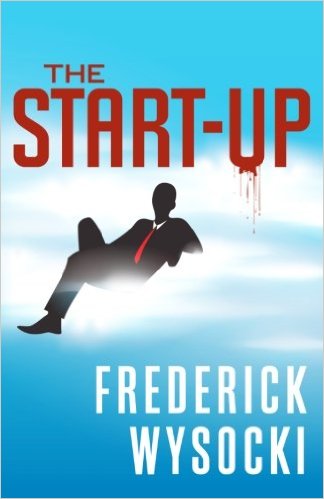
THE START-UP for example, started with a news headline about a still ongoing FBI investigation.
I was curious. How does someone (Anthony Rizzo) start a computer software company and sell it months later for billions of dollars? Then the buyer finds out that it was all a scam and calls in the FBI. With a diverse Board of Directors and countless lawyers and investment bankers, how does a large tech company get duped? How does the FBI deal with it? And yes, it is still in the news today. That was the plot behind THE START-UP.
BloodRivals

Against that backdrop I layered in a ‘Hero’s Quest’ character arc of a young man (Frank) facing increasingly ruthless tasks in order to make his share and how it changed him and his girlfriend.
Upon publishing, I discovered eighty percent of my readers of THE START-UP were women and they wanted to know what happened to Frank. The answer came in the form of books 3 & 4. (More on them in a minute.)
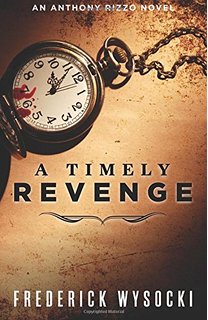
TimelyRevenge
Reader feedback also gets my creative juices flowing. Two examples of reader feedback:
• A former FBI agent told me that his first undercover job with the Bureau was similar to my plot for A Timely Revenge. He told me I got the era, events and motives of the crooks just right.
• A relative of a mob family told me she recommended my books to her family as they were the best portrayal of modern Mafia white collar crime she had ever read.

It seems every reader that meets me thinks they know each books’ inspiration and are asking me things like: is Anthony Rizzo (insert name of major CEO)?
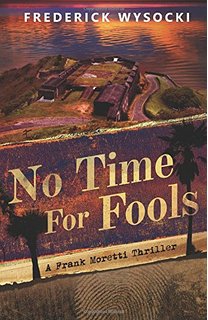
NoTime

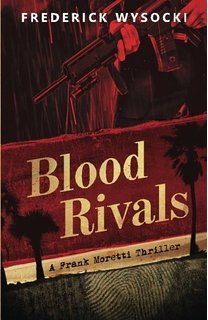
What happened to Frank and his girlfriend? That was the question I explored in BLOOD RIVALS and NO TIME FOR FOOLS.
The inspiration behind BLOOD RIVALS came from an interview I did with Fiona Quinn of ThrillWriting.com. I told her about a case where the FBI had mistakenly focused on the wrong suspect from an inconclusive fingerprint.

Naomi Dolphin was introduced in BLOOD RIVALS as a young female bodyguard who Frank hires.
My next novel – THE ARABIAN CLIENT – should be out in a few months and is a prequel of how Naomi went from being a maid and nanny on the island of Anguilla to becoming the bodyguard for a Saudi princess in Saudi Arabia. She struggles to overcome the Islamic culture and terrorists, as well as her clients.

THE ARABIAN CLIENT is very different for me since it’s a psychological thriller and is written from a female point of view. It goes behind the headlines and answers the questions about what is really happening in the Middle East. I’ve had Middle Eastern Muslim women review it for accuracy.

A critical part of my process is reaching out to friends who seem to know unique ways to kill someone.
For example in NO TIME FOR FOOLS:
• A doctor from Florida gave me three methods of killing someone with a cigar lighter.
• The former helicopter pilot for a USA President explained the best way to crash a jet plane without using a bomb.

FROM STAND ALONE, TO SERIES, TO SAGA
I did not start out to write more than one book, nor did I want to do a series. Now with prequels and sequels, I find myself in the midst of writing a saga.

At first, I thought I was writing a single novel, THE START-UP. Readers were all asking me what happens next for the main characters. I had already started on a prequel of Anthony Rizzo – the family crook. That became A TIMELY REVENGE.
Readers were unanimous in asking me what happened to Anthony’s nephew – Frank Moretti. Thus were born BLOOD RIVALS and NO TIME FOR FOOLS. Both those books feature a female bodyguard – Naomi – for Frank.
Readers asked me how she became a bodyguard and that is why I am currently finishing THE ARABIAN CLIENT. It chronicles Naomi, her time in Israel and her first assignment in Saudi Arabia.

Book 6 (takes place in Russia) will pick up where NO TIME FOR FOOLS left off.
As long as my real world readers keep asking me about my imaginary friends, I’ll keep writing.

Thanks very much for hosting me!

RickWysocki

My novels are available on Amazon in print and ebook.
THE START-UP – http://amzn.com/0991375602
A TIMELY REVENGE – http://amzn.com/B00OQH20U6
BLOOD RIVALS – http://amzn.com/B00SOZYCW0
NO TIME FOR FOOLS – http://amzn.com/B014E9FFAW

Website Links:
Website: http://www.frederickwysocki.com
Facebook: https://www.facebook.com/FrederickWysocki
Twitter: @FredWysocki
Alison Bruce: The Promise, DC Gary Goodhew #6 Wednesday, Feb 17 2016 

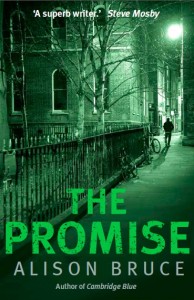
The-Promise-194x300

Auntie M is a huge fan of Alison Bruce’s DC Gary Goodhew series. She’s back with the sixth in the series, The Promise, and found it as compelling a read as the others in this series with the unusual protagonist, still recovering from injuries suffered in the sad and dramatic ending of The Backs, which has left him and several colleagues still reeling.

Whether Gary is up to returning yet is somewhat beside the point when the body of a homeless man who knew is found on Market Hill. The unusual signature of the murderer has the team scouring local haunts and reviewing CCTV tapes for witnesses, but as usual Gary has his own unique way of working a case.

Kyle Davidson, undoubtedly suffering from PTSD from the Afghan War, has a wife he barely tolerates and a baby boy he adores. The marriage is over, but an action by his wife sends him spiraling into a desperate scramble to protect his son, his sister and his mother. Does he tell what he knows and hope to save them all, or will that put him squarely into the bulls eye of a merciless killer?

The the investigation twists with a rented garage is found to have only one thing inside: a freezer containing the body of a murdered young woman, bearing the same signature as the homeless man. Suddenly the hunt is on for a serial killer and no one, it seems will be safe.

In Gary’s personal life, his grandmother and his police mentor have both been keeping a secret from Gary, one that happened when he was a small boy, and one that threatens now to destroy him unless they can tell him before he founds out from someone else. Although there were good reasons for keeping this secret at the time, it’s unclear how Gary will feel once he finds out he’s been lied to all these years by the very people he thought he could trust most.

Bruce’s menacing plot keep increasing as the tensions rises, all against the backdrop of Cambridge and the very different mind of a young man with incredible instincts who runs against the pack. Steve Mosby calls Bruce: “A superb writer,” and Auntie M heartily agrees.

Nele Neuhaus: I Am Your Judge Sunday, Feb 7 2016 

German author Nele Neuhaus’ police procedurals featuring Oliver von Bodenstein and Pia Kirchhoff and their team have now been published in fifteen countries with over FIVE million copies in print. Last year’s The Ice Queen is now in paperback, for those who missed the third installment. Each case is solved in a book so you can start anywhere but for readers who like to follow the personal lives of the two main detectives, the first is Snow White Must Die, followed by Bad Wolf.

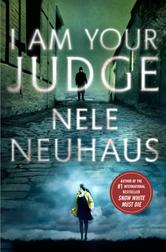
I+Am+Your+Judge

I Am Your Judge is the newest and the team will face it toughest case yet. With many out sick with the flu as the holidays approach, Pia is packing to leave for her honeymoon when a phone call will change her plans. An elderly woman out walking her dog has been shot, sniper style. Then a second woman is killed in the same way, this time standing in her own kitchen talking to her grand-daughter. Neither one had enemies and no motive can be found, nor a link between the two victims.

Is this sniper out killing indiscriminate people, or are they targeted?

Then two more murders follow in rapid succession just as Pia and Oliver discover a most unlikely connection–and the sniper starts leaving cryptic messages. It seems the victims are chosen for their relation to some other person the sniper wants to hurt deeply for an issue that happened years ago.

There will be unreliable witnesses, messages sent to the newspaper, and one of the victim’s daughters who starts her own investigation, determined to find out who killed her mother and why. Tightly plotted, with a sense of real police work and frustrations, conflicting personalities, and interfering and sometimes unhelpful consultants.

Meanwhile, Pia’s new husband has gone off on their honeymoon alone, the holidays occur, and Oliver has his own familial and relationship issues. One of the highlights of Neuhaus’ writing is how the lives of this duo overlap with their work and thoughts in a realistic manner that has them one of Auntie M’s favorite series.

It should be mentioned that the book is translated by Steven T. Murray. Highly recommended.

Happy Birthday Edgar Allan Poe! Thursday, Jan 21 2016 

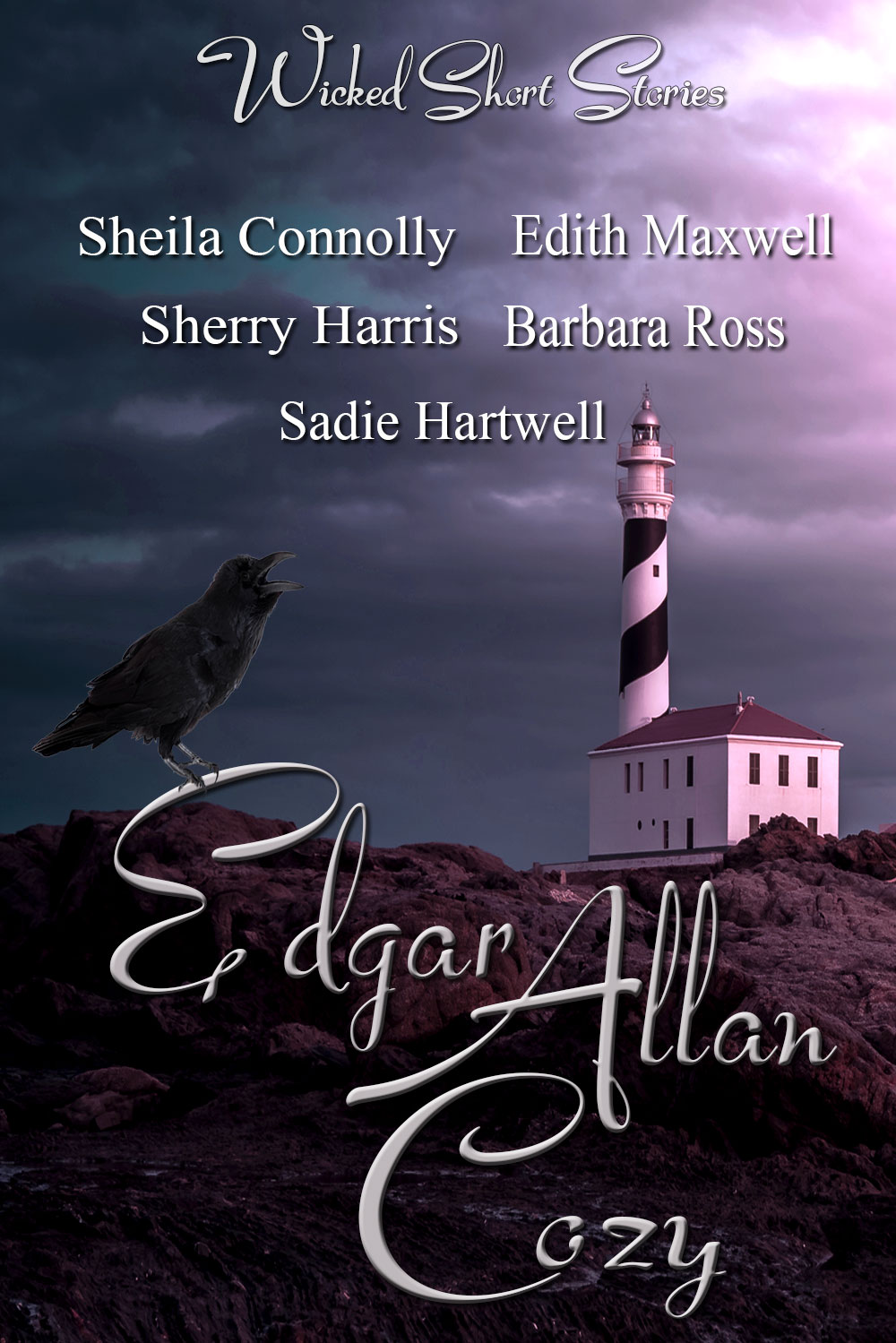
EdAllanCozyCover

Auntie M wanted to help celebrate Edgar Allan Poe’s Jan 19th birthday by sharing what spurred the publication of The Wicked Cozy Authors new anthology. Thanks to Sherry Harris who posted this on his actual birthday, all the gals of this great New England Cozy Author group who contributed, and to Edith Maxwell for sharing the cover jpg and the okay to mirror it today. Auntie M has a special fondness for this group of talented New England cozy authors and has absolutely no doubt you will enjoy their new book, EDGAR ALLAN COZY:

Auntie M has visited Poe’s Baltimore home with her Screw Iowa! writing group, where today you can be treated to his stor, with an actor portraying bits of his stories. We also visited his grave, a total-immersion-in-Poe day. So a belated happy birthday to this famous author with the sad life, a small man who wrote giant tales and poetry we still read, quote, and admire–and whose influence has touched many a writers’ life.

Here now in their own words, how this interesting anthology came to be:

Edgar Allan Cozy — Wicked Short Stories
Posted on January 19, 2016 by Sherry Harris

We are celebrating Edgar Allan Poe’s birthday with a new short story anthology! Last year Jane Haertel, aka Sadie Hartwell (aka Susannah Hardy), asked the Wickeds if we’d be interested in doing a short story anthology based on Edgar Allan Poe’s short stories — only these stories would have a twist — a cozy take on his original stories. The result is the ebook Edgar Allan Cozy. Here’s how we chose our stories:

Edith: At a young age I was haunted – haunted, I tell you! – by the “The Tell-Tale Heart.”
And by young I mean nine or ten. When the light went out in my room at night, I knew I could hear that heart beating under the floor. I didn’t know anything about sanity or insanity. I didn’t know what a rheumy eye was. But I could feel that story. I’m not sure my mother was entirely sane letting her third daughter read Poe and the tales of Sherlock Holmes in the fourth grade. Read them I did, though, over and over, and that reading started me on the path to where I have ended up: writing mystery, heart-stopping suspense, and even a bit of horror now and then. I tried to craft “An Intolerable Intrusion” after the manner of “The Tell-Tale Heart” — only with a modern twist.

Sadie/Susannah/Jane: My story, “Within These Walls,” about a Shriner clown’s wife who inherits a brooding mansion set high on a bluff in Raven Harbor, Maine, is based on Poe’s “Cask of Amontillado.” While I love all the Poe stories and poems, this is the one that sticks with me. Our narrator gets his friend Fortunato drunk on Amontillado, a rare wine, then proceeds to wall him up–alive!–in his ancient house. I’m not in the least claustrophobic, but whenever I think of poor Fortunato dying, alone and desperate, in his dank, dark, sealed-up prison, I feel a little short of breath. A little palpitate-y. And it’s always driven me a bit mad that we never find out exactly what Fortunato did to his frenemy Montresor that motivated Montresor to get his revenge in this dreadful way. We’ll never know. But not to worry… I gave the characters in my tribute story some specific motivations, so you won’t have to spend a lot of years wondering.

Sherry: A strange thing happened on the way to picking a Poe story for the anthology — I stopped to read the poem “Annabel Lee” because I hadn’t read it in years. And as soon as I finished reading it the story of Anna, Belle, and Lee popped into my head. It was one of those glorious moments in writing when something really flows. But because the poem is short, I needed to write a story, too. I kept sorting through them and good heavens a lot of those stories are grim!

Then I came across the partially finished story of “The Lighthouse” which is a diary with only three entries. It in itself is a mystery. Why isn’t it finished? Or is it finished? No one really knows and I liked that. In my story I write about a relative who tries to find out what happened to her missing great-great-great grandfather using his diary entries. But she has some problems of her own.

Barb: We’ve all been transported by the rhythms, internal rhymes, and relentless story-telling of “The Raven.” But I’ve always wondered–what if the poem was moved to modern times? And what if the narrator was driven mad, not by a bird, but by the haranguing of a telemarketer? To answer these questions, I offer my updated version.

Sheila: While I had read most of Poe’s short stories years ago, I wanted to find something I wasn’t familiar with, and discovered the 1883 story “MS. Found in a Bottle.” The narrator is a sailor who encounters some rather extreme circumstances during a voyage on a cargo ship at sea. Or does he? Some early readers have asked if Poe meant this as a satire, or a parody of some contemporary sea stories—although they never quite agreed on which author Poe was poking fun at. Still, the editor who published the story called it “distinguished by a wild, vigorous and poetical imagination.” I thought it might be interesting to see what would happen if I recast the story with the sailor telling his story to a modern audience, and whether he would be believed under different conditions.

Thanks for this overview, Wickeds! Readers can find this fascinating update on Poe’s stories at:

Favorite Reads of 2015 Tuesday, Jan 5 2016 

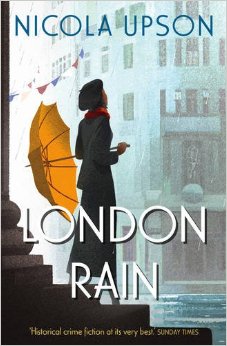
London Rain
My Favorite Reads of 2015

Last year Auntie M reviewed around 145 books in 85 posts plus hosting guests. Those don’t include the books she reads for herself, like the one her grand-daughter loved and insisted she read (Doerr’s All the Light We Cannot See—she loved it, too!); or for sheer delight, like the Judi Dench photo-autobiography Behind the Scenes (huge Dench fan).

Out of all of those books, there are always those that remain firmly in her mind as ones where she’s looking forward to more from these authors. They impress her for their creativity, their characters, their storytelling. In no particular order, she went through her posts and pulled out these highlights, most of which received her “highly recommended” citation. There could have been even more . . .

Series continuations:
London Rain by Nicola Upson: Her Josephine Tey series continues with a strong entry, set in 1927 London at the time the BBC ruled the radio and broadcasting. Well-researched and written, with absorbing characters and a few twists you won’t see coming, set against the backdrop of the Coronation of George VI. An accomplished series.

The Strange Death of Fiona Griffiths and This Thing of Darkness by Harry Bingham: One of the most unusual and compelling characters to head a series, Griffiths remains a feisty detective in search of her past and herself whilst she figures out how to be human. The second was not formally reviewed so let Auntie M add here that Fiona’s story continues with a punch that proves Bingham deserves to be more widely known in the US.

The Kill and After the Fire by Jane Casey: The Maeve Kerrigan series just keeps getting stronger with each installment. With irascible DI Josh Derwent as her partner, the duo are working together like a well-oiled machine, despite the occasional dig. Could grudging respect be far behind?

Behind Closed Doors by Elizabeth Haynes: DCI Lou Smith heads a team investigating when a young woman missing for a decade suddenly reappears. Haynes uses primary policing source materials reproduced for the reader: police reports, interviews, analyst research, even phone messages, which add a depth and texture to the books.

The Ghost Fields and The Zig-Zag Girl by Elly Griffiths: The next Ruth Galloway installment is a grand mix of the kind of ancient mystery only working mum Ruth could solve, coupled with tremors in her personal life. A satisfying series with original characters. Griffiths also debuted a second period series, and Brighton of the 1950’s comes to life with two unlikely friends, a detective and his magician friend, who need to stop a killer.

The Nature of the Beast by Louise Penny: Inspt. Gamache and his lovely wife try to settle down to retirement in Three Pines, until a young boy prone to telling tall tales turns out to be telling the truth. All the eccentric regulars appear to help solve the mystery, a bit different from Penny’s usual but just as engaging, a mix of bittersweet and heartwarming.

Banquet of Consequences by Elizabeth George: After taking time to introduce the family who feature largely in the case to follow, Lynley manages to have Havers and Nkata assigned to investigate a poisoning case. A piece of bacon figures here. Just read it. The plot is as complex as the players involved, and will leave readers thinking about what constitutes justice.

The Slaughter Man by Tony Parsons: A slaughtered family and a missing child prove a tough case for DI Max Wolfe, juggling his young daughter and personable dog, Stan. The weapon used fits the MO of an earlier murder years ago, and that man is now out of jail. Could this be history repeating itself?

The Secret Place by Tana French: With a few characters you’ll recognize if you’ve read her others, and you should, detectives investigate the murder of a young man at a private school. You hardly realize until it’s over that the action takes place all in one day—she’s that good.

Deadly Measures by Jo Bannister: Policewoman Hazel Best and her friend, Gabriel Ash, face their most dangerous and upsetting period together when arms pirates who have kidnapped Ash’s family agree to return them—if he’ll kill himself online for all to see. And yes, Patience, the dog who talks to Ash, is along for the ride.

A Song for Drowned Souls by Bernard Minier: Minier’s second French crime novel finds Commandant Servaz trying to prove his former lover’s son is not a murderer while he protects his own daughter. A rich tale of history and emotion mixed up in murder and secrets from the past.

The Storm Murders by John Farrow: Newly-retired detective Emile Cinq-Mars is known as the Poirot of Canada and can’t get used to not working. Then murders inside a snowed-in house in his neighborhood catch his eye—there are no footsteps in the snow. And he’s asked to intervene and finds himself in New Orleans and his own wife kidnapped.

Winter Foundlings by Kate Rhodes: The psychologist with interesting friends and family returns, working short-term at a hospital for the criminally insane. A taut plot, a compelling story and a protagonist you can’t help but admire in Alice Quentin who should have it all and keeps getting very close.

Run You Down by Julia Dahl: Journalist Rebekah Roberts finds herself investigating the possible murder of a young ultra-Orthodox woman whose contacts might just put Rebekah in touch with the mother she’s not sure she wants to find. Dahl’s first, Invisible City, won multiple awards this year, with good reason. An equally impressive follow-up.

Debuts:
The Unquiet Dead by Ausma Zehanat Khan: An undeniably strong debut, backed with meticulous and absorbing research, this Toronto mystery introduces a Muslim detective working with his Canadian female partner to unravel if a dead man fell, committed suicide, or was pushed off a cliff. A series to watch for, with a sequel out soon that’s every bit as good as the first, and will be reviewed shortly.

Recipes for Love and Murder by Sally Andrew: The South African Klein Karoo landscape, nature, food, language and habits of the area come alive through the eyes of Tannie (Auntie) Maria, a widow who happens to be a brillant cook. Mevrou van Harten knows that her food works magic in people’s hearts, not just their stomachs, and uses her knowledge to help solve the murder of an abused woman. Recipes included.

Crucifixion Creek by Barry Maitland: Anyone who reads Maitland’s English Brock and Kolla series know he’s far from a debut novelist, but this marks the debut of a new series set in Australia, Maitland’s home. He introduces detective Harry Belltree, suddenly overwhelmed with three homicides to investigate: a woman shot during a meth-addict biker siege; an elderly couple who commit apparent suicide at their favorite outdoor cafe’; and a white male stabbed to death in the street, who turns out to be his brother-in-law. A strong start to a new and absorbing series.

Five by Ursula Archer: The Austrian children’s lit author tries her hand at mystery and writes an absorbing police procedural with geo-caching at its heart and a realistic, harried, divorced mother of two as the detective.

A Murder of Magpies by Judith Flanders: A wry inside look at London publishing with the protagonist an editor who fears one of her favorite authors has been murdered and becomes drawn into the investigation. With humor and a hint of romance, book two arrives soon.

In Bitter Chill by Sarah Ward: Accomplished debut procedural finds detectives looking into a cold-case murder of a young girl when her mother suddenly commits suicide over thirty years later. Absorbing and well-developed characters. First in a series.

Disclaimer by Renee Knight: A most unusual premise explores a family torn apart when a woman’s hidden secret appears suddenly as the plot of a book in her own home. Original and creative.

Stand-Alones:
Everything She Forgot by Lisa Ballantyne: Ballantyne masterfully connects two threads: a young girl’s kidnapping, and a grown woman traumatized in a car accident, to show how secrets buried in the past have come full circle. Creative and compelling.

Sheer Delight:
The No. 2 Feline Detective Agency by Mandy Morton: Of all the humorous novels Auntie M read, this one stands out for its sheer ingenuity and creative premise: a world of cats, peopled and run by cats, who sometimes resemble humans we might recognize. PI Hettie Bagshot and her sidekick Tilly, their team of friends and their world are filled with Morton’s wry humor. Sales help find homes for less fortunate cats. CCat Amongst the Pumpkins coming soon.

Merry Christmas! Friday, Dec 25 2015 

Yes, it’s Christmas, and despite being mostly in a recliner with an ice pack on her operated back, Auntie M has found her holiday spirit. And to that end, she’s sharing two books with you that are perfect for the season.

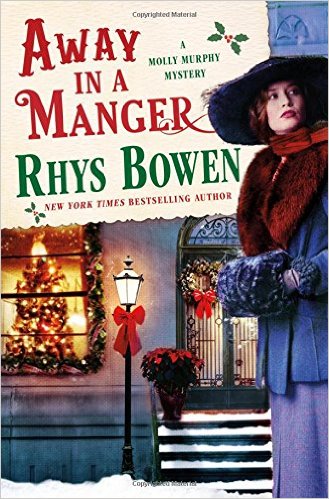
AwayManger
Rhys Bowen’s new Molly Murphy Mystery, Away in a Manger, is filled with Bowen’s usual knack for historical details that bring Manhattan in 1905 to life.

Molly has her own family: her husband, Daniel, a police captain whose business Molly would greatly like to become involved in; their baby son, Liam, and their 12 yr-old ward, Bridie, so Molly is looking forward to these holidays, even with Daniel’s mother there helping out.

A visit to see FAO Schwartz sets the tone for the little family. Then a set of carolers in their New York City neighborhood adds to the festiveness, and one young girl with the voice of an angel catches Bridie’s attention. The family try to help by giving the girl a quarter, which an older boy immediately takes from her.

This is her older brother, and they’ve emigrated with their mother from England, only to have their mother disappear. The aunt they are staying with mistreats them, yet Molly soon sees these children are educated and have been given a proper upbringing before coming to America. So what has happened to their mother?

Molly’s efforts to find the children’s mother soon leads to a tale of family intrigue and probably murder, with more planned unless Molly can stop the villain and save the two children in time to be home to celebrate Christmas. Vintage Bowen, nicely plotted and atmospheric.

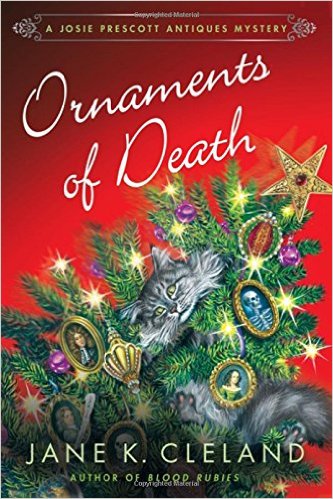
OrnamentsDeath

Jane Cleland’s Ornaments of Death is the next offering perfect for the holidays. The tenth Josie Prescott Antiques Mystery blends her own knowledge of antiques with a mystery during the Christmas season.

Josie’s New Hampshire Antique shop in the coastal town of Rocky Point is dressed as a winter wonderland for her annual holiday party. Josie is excited as Ian Bennington, her distant relative, will be there for the holiday. The recently discovered descendent is the hit of Josie’s party and gives her ties to a royal mistress.

And then Ian suddenly vanishes, and it’s soon discovered that he’s not the only thing that’s missing: two valuable watercolor miniatures Ian had given his daughter are also missing.

It will take Josies’ knowledge of antiques to track the miniatures and wend her way to Ian and solve the dual mystery. A perfect holiday treat for cozy readers who enjoy antiques and New England.

Happy Holidays and Merry Christmas from Auntie M to all of you! Enjoy your celebrations and take time to read a good book~

Triss Stein: The Erica Donato Mysteries and Brooklyn Secrets Sunday, Dec 20 2015 

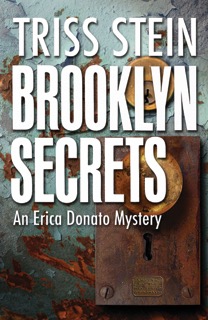
Please welcome Triss Stein, who’s talking today about the importance of setting, something Auntie M always starts with and the newest in her series, Brooklyn Secrets:

Brooklyn Secrets Cover

Choosing a Setting

A mystery series where the place is part of the story is great fun to read and to write. My fascination with Brooklyn, where the diverse neighborhoods often seem like a collection of small (well, small-ish), towns has lasted a long time. Since change is the only constant in any big city, I don’t think that fascination will go away before I run out of stories to tell.

Choosing the exact setting for each book takes some thought, or perhaps a flash of inspiration. The neighborhood, now, is where and when the story takes place, but my heroine, Erica Donato, is a graduate student in urban history and so there is always a mystery from the past, too. The neighborhood setting needs to have scope for both.

Brooklyn Bones, the first in the series, was easy. I just looked outside my front door. Park Slope, where I live, is a lively and beautiful corner of Brooklyn which has gone through a couple of decades of steady gentrification, (for good or ill). However, it was not always the center of chic it has become (Seriously! They think this in Paris!) and I was here just as it was changing. It was not hard to find a story from that darker time.

Brooklyn Graves was directly inspired by a place, beautiful and historic Green-Wood Cemetery, and a series of news stories about priceless stained glass windows being stolen from now neglected, but once affluent, churches and mausoleums. I think any mystery writer, especially one of with a taste for history, would clip those articles. And ponder.

The setting of the new book, Brooklyn Secrets, has raised more questions. It is Brownsville, a remote corner of Brooklyn that is now, and always was, unlovely, uninspiring, and poor. It was built as an extension of the overcrowded, immigrant Manhattan neighborhood the Lower East Side. The shoddy housing of years ago has been long replaced by projects, perhaps equally shoddy; the color of the skin and the accents of the immigrants is now different and guns have changed the nature of everyday crime, but in many ways it is not different at all. Crime, boxing and education remain the roads out and often, the best choice is not even clear.

I started with Erica writing a chapter of her dissertation about crime in Brownsville’s history. In mid-20th century America, it became famous as the home of Murder, Inc, enforcers for organized crime in its heyday. She sort of overlooked the point that in writing about how neighborhoods change, she would also have to deal with Brownsville now. I overlooked it, too, for a while. The challenge became finding a reason for Erica to continue to be involved in the present day mystery I was trying to create.

Did I solve it? Did I weave together the parallel stories of how young people, now and back then, try to find their way when there is no way? Did I write about a place as an outsider and get it right?

Readers, your thoughts will be most welcome.

photo15
Triss Stein is a small–town girl from New York farm country who has spent most of her adult life in New York the city. This gives her the useful double vision of a stranger and a resident for writing mysteries about Brooklyn neighborhoods in her ever-fascinating, ever-changing, ever-challenging adopted home. In the new book, Brooklyn Secrets,s Erica find herself immersed in the old and new stories of tough Brownsville, and the choices its young people make.

Kate Charles on The Detection Club Wednesday, Dec 16 2015 

The wonderful Kate Charles, mover and shaker with Eileen Roberts at St. Hilda’s Mystery and Crime Conference each year, brings readers a view inside the glorified Detection Club. Here is her report on their latest meeting:

I was immensely privileged, in mid-November, to be present for an historic moment in the annals of crime fiction, when the eighth President of the prestigious Detection Club took over the capacious red robe of office – a robe which has been worn by G.K. Chesterton, Dorothy L. Sayers and Agatha Christie in their time, and most recently by Simon Brett.

The new President is Martin Edwards, a writer who is passionately interested in the history of the Detection Club, serving as its archivist for the past few years and recently publishing a non-fiction book on the subject, The Golden Age of Murder.DC 7Martin Edwards with Simon Brett: the torch and the red robe is passed.

As Martin would tell us, the Detection Club was founded in 1930 (or perhaps 1932!) as a dining club for the prominent crime writers of the Golden Age. Its rituals, including an arcane initiation rite, date from those early days, and were once cloaked in secrecy.

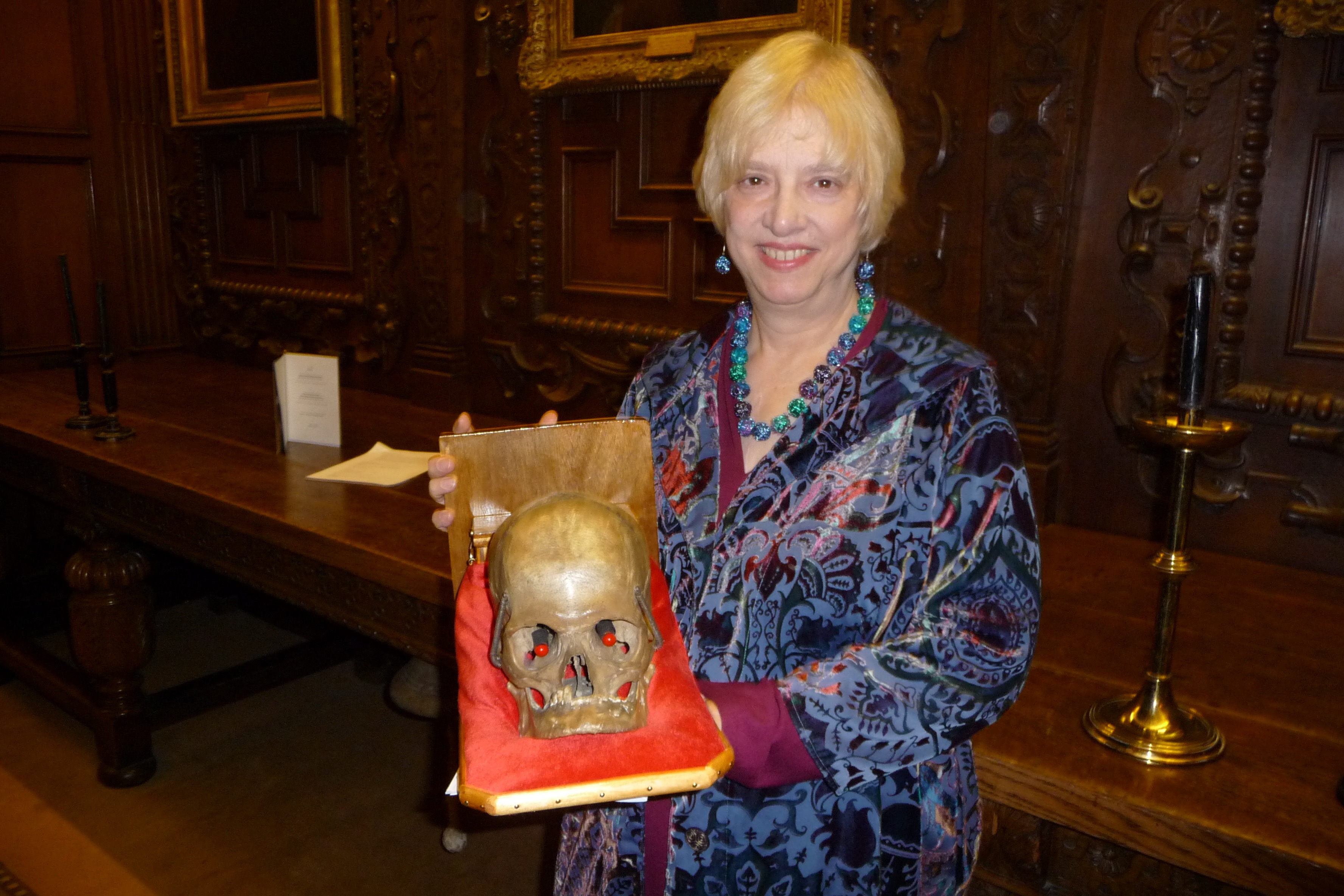
Now, though, in this age of openness (and Wikipedia!), anyone with a bit of curiosity can delve into its mysteries. I don’t think I’ll be struck off as a member for revealing that, in a solemn candle-lit ceremony, new initiates promise that their detectives will not resort to ‘Divine Revelation, Excessive Sanguinity, Lucky Guesses, Mumbo Jumbo, Jiggery Pokery, Coincidence or Act of God’, and that they swear their loyalty to the club on Eric the Skull, with ‘terrible penalties’ threatened for breaking their oath.Kate Charles with Eric the skullKate at her initiation with Eric the Skull.

Members of the Detection Club gather three times a year for congenial dinners in London, as the club continues to fulfil its original function of providing a social outlet for solitary crime writers. These days, though, the writers are far more diverse than those of the Golden Age, as the genre has expanded beyond its cosy beginnings.

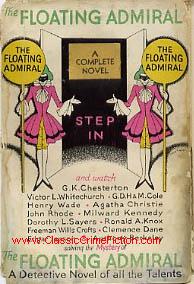
This diversity presented a challenge recently, when the club embarked on a project of creating a serial novel in the grand tradition of the original Detection Club’s The Floating Admiral. As in the original project, fourteen writers contributed, and a good time was had by all. Having read (and loved) The Floating Admiral in my youth, I felt it a huge privilege to be involved in this. The Sinking Admiral (inevitably!) will be published in 2016 – another milestone in the ongoing history of a fascinating institution.floatingadmiral

Kate-Charles
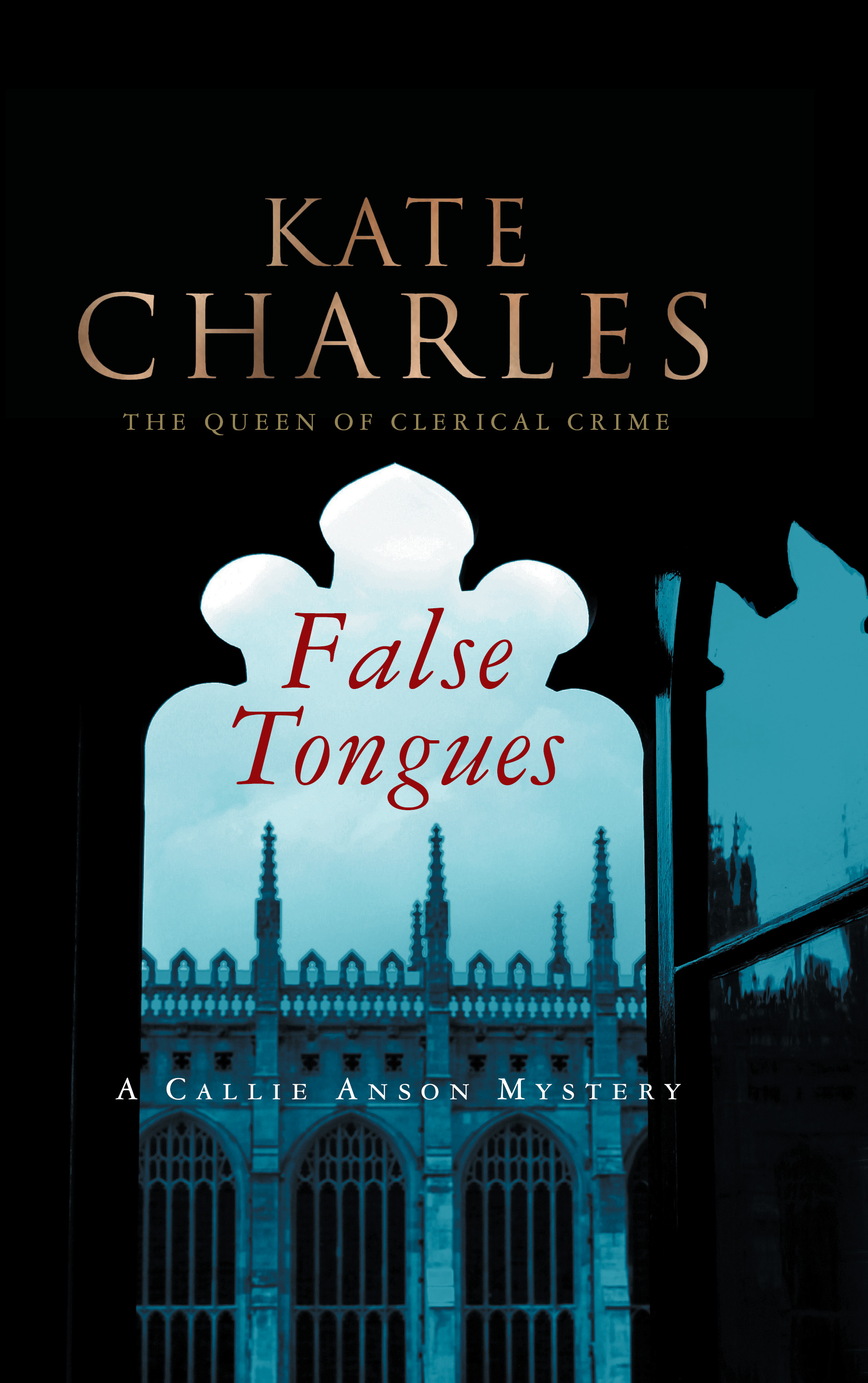
Kate Charles is best known for her ecclesiastical mysteries. These include the Book of Psalms series and the Callie Anson series. Her latest book is False Tongues. False-Tongues-cover
She is a former Chairman of the Crime Writers’ Association and the Barbara Pym Society.

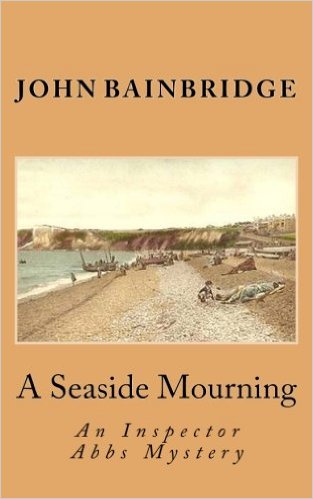
John Bainbridge: A Seaside Mourning Friday, Dec 4 2015 

John Bainbridge and his wife Anne are historians and researchers extraordinaire who use their own history in the Inspector Abbs mysteries. Here’s the story of the background to A Seaside Mourning
Seaside

The Background to A Seaside Mourning
Our Victorian murder mystery is set in the fictional town of Seaborough, a small resort in Devon. The plan was to think hard about coming up with a suitable name. However around the same time we were researching John’s family history. When we found that one of his ancestors had the unusual first name of Seaborough, it seemed exactly right.

In the novel Seaborough is in East Devon, an area often overlooked by holiday-makers who travel to the better-known parts of the English Riviera and the South Hams. It is a timeless landscape of rounded hills, old hedgerows, meadows and heaths; villages with thatched cottages and a few quiet seaside resorts. Their railway stations and branch lines are long gone.

The unspoilt coastline has red sandstone, zig-zag cliffs gradually fading to chalk near the county border. Together with the neighbouring county of Dorset, they make up the Jurassic Coast, Britain’s first Unesco natural world heritage site. We know the area well from walking the old footpaths and exploring the villages of my forebears. One of my ancestors was a Victorian police constable, probably much like the ones in the story.

Walk through the streets of any British seaside town, trace back the architecture and you’ll most likely find the beginning was a fishing village. The rise of the seaside resort – offering buildings and entertainment designed to attract tourists – gradually began in the eighteenth century. At that time the concept of an annual holiday for the masses didn’t exist. The wealthy tended to travel abroad on the classical Grand Tour or over-winter on the Continent. Working people had neither the money nor paid leisure to explore new places.

From the mid-1700s physicians began questioning whether sea-water might have healing properties similar to those of spa water. An enterprising Sussex physician Dr. Richard Russell set up a house for patients in the fishing village of Brighthelmstone in 1753. ‘Taking the waters’ at inland spa resorts was fashionable and money was to be made from rich invalids – and hypochondriacs – so there may have been some self-interest involved!

Dr. Russell published works on the rejuvenating powers of sea-bathing and drinking salt water, claiming his treatments cured enlarged glands and all manner of ailments. As well as swimming, his patients were immersed in baths of salt water and encouraged to ‘promenade’ in the sea air. This quickly became prevalent medical opinion.

Just as today, landowners and speculative builders were quick to spot a business opportunity. Scarborough on the coast of Yorkshire had the best of both worlds. Mineral water had been discovered there in the early seventeenth century and they had a flourishing spa by the beach. Wheel out the bathing-machines and the town was well-placed to develop into England’s earliest seaside resort.

Villages along the south coast in particular offered a mild climate and an easier journey from the capital. They began to throw up lodgings suitable for well-to-do visitors. Theatres and assembly rooms were built, promenades and sea-front gardens laid out. New resorts advertised their picturesque scenery, carriage tours and health-giving benefits.

Jane Austen satirised this new enthusiasm in her last unfinished novel, Sanditon. Interestingly Reginald Hill did a witty take on Sanditon – one of his lovely literary jokes – in his Dalziel and Pascoe novel A Cure For All Diseases. Sidmouth in East Devon is a possible contender for Austen’s Sanditon, though several resorts also fit the clues. It’s most likely that Jane Austen was thinking of more than one place. The Austens enjoyed holidaying along the Channel coast. Their stays at Lyme Regis in 1803 and 04 famously inspired part of the setting of Persuasion.

Fashion played a part in putting a watering-hole on the map. When George III’s physicians recommended he try the sea cure in 1788, he chose the village of Weymouth on the Dorset coast. Liking its sheltered sandy bay, he returned many times, making Weymouth one of England’s oldest seaside resorts.

His son, later the Prince Regent, vastly preferred Brighthelmstone, nearer London. Under his patronage it expanded rapidly to cater for his younger and wilder set. It has never lost its stylish and racy reputation. The spelling changed to suit its pronunciation and a new saying became widespread. The wealthy patient often tried the cure of Doctor Brighton.

Some towns started out as the vision of a single developer. In the 1780s a wealthy merchant called Sir Richard Hotham bought up land around the Sussex fishing village of Bognor. He intended to design a purpose-built resort modestly named Hothampton and entice the King away from Weymouth, making himself a second fortune. George III never obliged and the town reverted to Bognor soon after Sir Richard’s death. He did leave the townspeople several fine terraces and a splendid park.

New resorts received a boost to their fortunes when the Napoleonic wars closed the Continent to travellers. Prosperous invalids and people living in seclusion often settled by the sea in smart new villas for the gentry. Lady Nelson came to live at Exmouth in East Devon, after Nelson’s association with Lady Emma Hamilton became public knowledge.

Hunstanton in Norfolk came about as the scheme of one man, though much later. In 1846 Henry Le Strange, an architect and local landowner built a hotel on an empty headland as the flagship of his new town. A typically enthusiastic Victorian ‘entrepreneur’, he gathered investors to fund a railway line from King’s Lynn to his planned site, which was named after the nearby village of Old Hunstanton. It took another 16 years before the railway arrived and further building work began.

Many resorts can date their growth to the arrival of the railway. It became the custom for middle-class Victorian families to send their children to the seaside with nannies and nursery-maids. The first pleasure pier had been constructed at Ryde on the Isle of Wight, as early as 1814. Almost a hundred more followed, mostly in England and Wales. The Bank Holiday Act of 1871 gave workers four days off – five in Scotland. On Whit Monday and in August, railway companies laid on ‘Bank Holiday Specials’ for the day-trippers pouring into popular resorts. At last accessible for the pleasure of ordinary working people, the seaside resort as we know it today had arrived.

In A Seaside Mourning, Seaborough is expanding. It is autumn 1873 and the town has its railway branch line. New houses are going up and some businessmen are keen for a pier and other amenities to be developed.

Many of the characters are on the make, jostling for more money and social position. Some are fighting for security in a precarious society shadowed by the workhouse. Even Inspector Josiah Abbs is not safe. This was an age when policemen were not considered gentlemen. A detective was treated as a distasteful necessity, an embarrassment who should call at the tradesmen’s entrance.

Abbs cannot summon suspects to interview if they are his social ‘betters’ and he must catch a murderer without making enemies. Dismissal without a character is always a threat. He and his young side-kick Sergeant Reeve are both outsiders in Devon. They don’t quite know what to make of one another yet but they’re determined to solve the case somehow…

Our novel “A Seaside Mourning” is now available in paperback and on most eBook readers. Just click on the link below for more information:

And with Christmas on the way, If you enjoy curling up by the fireside with a seasonal mystery, you might like to try our Inspector Abbs novella A Christmas Malice. Set in 1873 during a Victorian country Christmas in Norfolk, our introspective sleuth has a dark puzzle to be solved. As is traditional at this time of year, there will be hope and a happy ending of a sort.

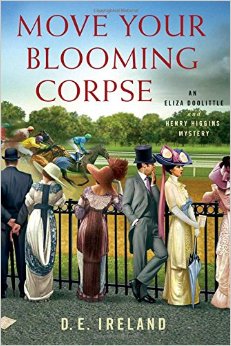
D. E. Ireland: Move Your Blooming Corpse Sunday, Nov 29 2015 

MoveBloomingCorpse
D. E. Ireland burst upon the scene with last year’s witty Wouldn’t It Be Deadly, bringing Eliza Doolittle, Henry Higgins and the cast familiar to readers from Pygmalion and My Fair Lady to life. The sequel, Move Your Blooming Corpse is every bit as charming and witty, taking readers to Royal Ascot and into the world of horse racing.

It’s also the time of the Suffragette movement, with emotions running high, a key element in the mystery when a young woman’s body is found murdered in one of the stables. That she is part owner of Donegal Dancer, the same racehorse that Eliza’s father owns a part of, brings out Eliza’s worst fears: Is her father in over his head and now in jeopardy? Or was the victim, a married woman known to be having affairs with at least two other owners of the race horse, responsible for her own death?

Eliza and Higgins join forces with her Scotland Yard cousin Jack to investigate before another murder takes place. But will they be soon enough? There will be jealous spouses and a young man mad with grief; there will be more races, boating regattas and picnics as the duo race against time to try to keep not only Alfred Doolittle safe, but to find the real culprit just as Eliza becomes embroiled in the Suffragette movement and finds herself learning jujitsu moves>

The writing team get the period details just right, from a the clothing down to the food to the way Society and it mores affected behavior at a time when the world was changing and not everyone appreciated the change. And they keep the characters we’ve come to love true to their nature and their actions, with their dialogue recalling the originals. Take a loverly step back in time with Eliza and Henry Higgins and the crew.

« Previous PageNext Page »