Tara Laskowski: One Night Gone Tuesday, Oct 1 2019 

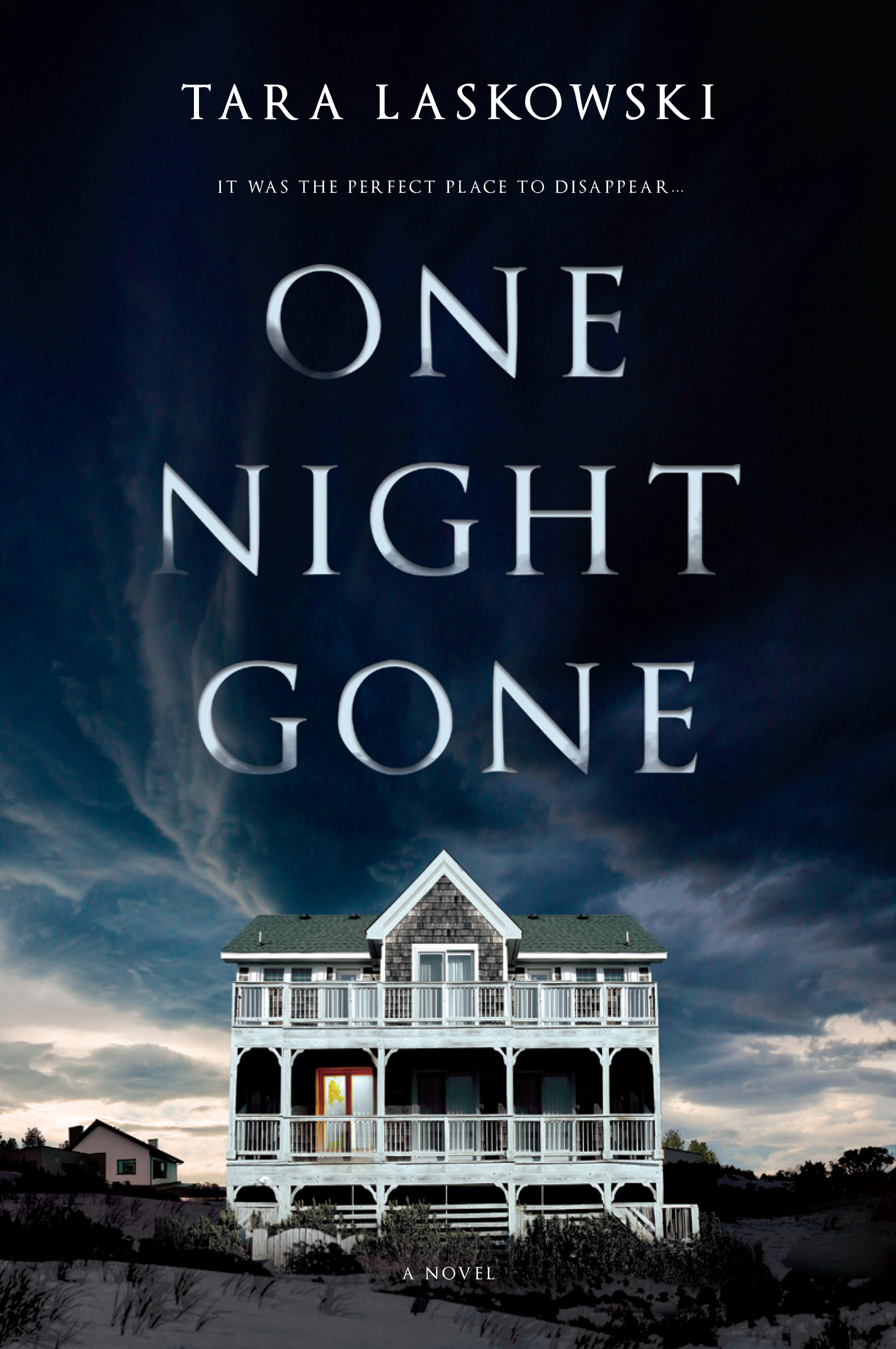
Please welcome award-winning author Tara Laskowski, to talk to readers about switching from short stories her writing her debut thriller. One Night Gone, told in two voices, is garnering stellar reviews. Don’t miss it!

I have always considered myself a short story writer. A very very short story writer, to be specific. I feel most comfortable at about 745 words, two pages max. I’ve been editing a journal of flash fiction for nearly 10 years, where we publish stories that are 1000 words or less, so I’ve been trained to think at that length. I like tiny moments, small epiphanies. I like seeing a story in its entirety.

So, I never really thought I’d be able to write a novel. I tried it several times. My MFA thesis was a doorstop 500+ page novel that spanned over several decades, that I worked on for 6 years. For the longest time, my longer projects never really seemed to work out.

But then after I published two short story collections, I felt like I needed a next step. A new challenge. And so I decided to try writing a novel one more time. Just to see what happened.

I took the plunge, immersed myself in my book, determined not to come up for air until I had a first draft. The alluring Siren calls of flash fiction ideas tried to beckon me away, but I ignored them as best I could. I dealt with the pain of not being able to see my plot in its entirety. If I had an idea for a short story, I wrote the idea down in my notebook and carried on with the novel.
It worked, for the most part. I was able to complete the draft of my book, One Night Gone, in a little over a year. I had done it. I’d written a novel, bird by bird, scene by scene, chapter by chapter. Somewhere along the way, I’d gotten into a rhythm with it. Dare I say it—I even liked it?

Then, once the editing was over and my book was on its way, I turned to all those notebook ideas. I thought—yay! Now I can go back to my short story babies and make them happen.

Except for one problem. I’d trained myself so well on writing a novel that I had forgotten how to write a short story.

That summer was painful. All these ideas! And none of them were working. I couldn’t write a succinct story to save my sanity. It all felt dull and tired.

There are writers who say they can switch back and forth between forms—writing poetry alongside their novels, flash fiction while working on a nonfiction book. I’ve realized I am not one of them. I have so little time to write in my packed, hectic schedule that I need to focus or I’ll be lost forever, shipwrecked on the beach endlessly searching for the seashell pieces of my fiction. Therefore, I realized that since it takes me a while to get in my groove, once I get in it, it’s very hard to pull out of it into another one.

That summer, I did end up getting a few decent short stories completed. But there is still an embarrassing amount of stories started and never finished, ones I may never be able to work out. Or maybe I will. Maybe, like wine, they just need to sit and age for a bit.

They have plenty of opportunity to do so, as I’m about to start writing my second book soon. And when I do take that deep breath and plunge under the surface, I probably won’t be emerging for a while!

Wish me luck! And while I’m out at sea, be sure to keep those Sirens entertained!

Tara Laskowski


TARA LASKOWSKI is the award-winning author of two short story collections, Modern Manners for Your Inner Demons and Bystanders, which was named a Best Book of 2017 by The Guardian. Her debut novel One Night Gone was published in October 2019 by Graydon House Books. She is the editor of the online flash fiction journal SmokeLong Quarterly, an Agatha Award winner, and a member of Sisters in Crime. A graduate of Susquehanna University and George Mason University, Tara grew up in Pennsylvania and lives in Virginia.

Linwood Barclay: Elevator Pitch Friday, Sep 27 2019 

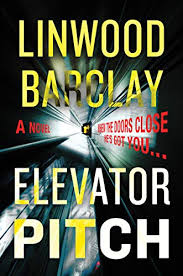
Linwood Barclay’s Elevator Pitch will have readers thinking twice about using an elevator and gravitate toward taking the stairs after this suspenseful read.

New York City finds itself in the grip of a terror-filled nightmare when several elevator accidents cause horrific deaths. People are afraid to get on an elevator in what is essentially a vertical city with its plethora of skyscrapers.

At the same time, a duo of detectives is investigating the death of a man found on the High Line, his face a bloodied pulp and his fingertips cut off to blur his identity. What’s this man’s connection, if at all, to these elevator incidents?

In town, ostensibly to celebrate his wedding anniversary, is the head of an alt-right group called the Flyovers, who are trying to bring attention to their cause.

The terror notches up higher when a taxi explodes, claiming more lives. Are the incidents connected? Is this a way to bring a city that’s a haven for finance, fashion, and entertainment to the verge of collapse?

The mayor does what he can but his own history betrays him. Not known to be the nicest of men at times, his own son ridiculed at every turn, the mayor tries to contain the panic in the city with his eye on his political future. And a hard-talking reporter with a secret of her own takes on the mayor when things start to spiral out of control and involve the one person she loves.

There are plenty of twists and surprises as Barclay keeps upping the suspense until an ending that a reader might begin to anticipate but that will turn on itself with devastating and unforeseen consequences.

Barclay invokes the backstories of many of his characters so that readers become involved in them and their outcome. Addictive and enthralling.

Robert Pobi: City of Windows Sunday, Sep 1 2019 

City of Windows is Robert Pobi’s thriller set mostly in New York City that will have readers on edge with its relentless pace during the worst blizzard NY has seen.

The whiteout conditions and slippery roads mean it’s doubly difficult to track a sniper when an FBI agent in a moving car is killed. It’s not just a tough shot–between the the winds, low visibility, and moving vehicle, it’s almost impossible. Almost.

Only one man can figure out where the shot came from, former FBI agent and astrophysicist Lucas Page. His ability to see trajectories means he’s the person who can give them an edge to finding this killer. But Page has already given an eye, one arm, and a leg to the FBI, and now teaches at Columbia.

So when the agent who heads up Manhattan, Brett Kehoe, tries to get Page onboard, it’s not surprising he at first resists. Married, with a slew of adopted and foster kids, he’s ready to settle in for a few weeks at home during the Christmas holidays.

Then Page finds out the murdered man was his former partner, and he agrees to help pinpoint the site on just that one case. But more deaths of law enforcement officers occur, all in impossible situations. Soon Page finds himself being ferried around the city but his own FBI agent and dealing with Bureau political hacks, with a surprising lack of crucial evidence to assist him.

And then his family becomes the target.

A well-crafted and fast-paced plot make this a thriller that’s tough to put down. Auntie M started it one morning and the rest of her day became consumed by the read. Lucas Page and his unusual family add a nice counterpoint to the stark plot, and this reader is hoping to see them all in print again. Highly recommended.

Vivian Barz: Forgotten Bones Thursday, Aug 1 2019 

Vivian Barz brings the most unusual and highly original protagonist Auntie M has read about in a long time to be one half of an investigating team in her thriller Forgotten Bones. With a strong storyline and two equally strong characters leading, this promises to be a the start of thrillers readers will be clamoring for.

A car accident leads to the discovery of a young boy’s buried body in small town California. But despite this body being decades old, that’s just the tip of the iceberg.

Soon FBI are soon swarming the town, unearthing multiple bodies in various stages of decomposition, and closing out the local police, including Susan Marlan, one of their officers. Dedicated, smart, and tenacious, Susan can’t let the thought of that little boy go, or the others as the numbers mount to double digits. Someone has been killing people for a very long time, most of them children. Frustrated by her own boss and the FBI, Susan takes it upon herself to do a bit of off the record investigating.

Meanwhile, Eric Evans is new to the area, starting work as a geology professor at the local community college. He knows no one in the area, has no friends or relatives near by, and right now he likes it that way. He’s running from his former life and marriage in Philadelphia, in the throes of a divorce from the wife who he discovered having an affair with his older brother.

As if that’s not enough to be dealing with, Eric is a schizophrenic who’s learned to take his medication and manage its side effects, until the day he starts to see a young boy in denim overalls.

The overall suspect for the killings is a pedophile recently released from prison. Not only are the bodies on his property, he disappeared the day the first boy’s body was found. What could be clearer?

As more and more bodies are found, what Eric thinks are hallucinations starat to increase, until there are physical things happening inside his house that lead him to suspect that little boy is trying to send him a message. But how can he get anyone to believe him?

When Susan’s path ovelaps Eric’s, an unlikely duo are formed as the two try to figure out the clues they are being given amid secrets held for decades. And can they do it in time to save themselves?

This is the first in a planned trilogy, and Auntie M won’t be surprised if Barz finds herself giving these two a series of their own beyond that. The contemporary romance writer (writing as Sloan Archer) has found an exhilarating way to combine a police procedural with a modern ghost story while illustrating how some people suffering from mental illness can lead almost-normal lives.

Victoria Helen Stone: False Step Friday, Jul 19 2019 

A young boy goes missing from his Denver home, and Veroncia Bradley, along with everyone else in the area, looks at her own young daughter and prays he will be found safely in Stone’s compelling False Step.

When the miracle happens, it’s her own husband, the charming Johnny who finds young Tanner Holcomb, grandson of a wealthy local family, when he’s out on one of his hikes. The rescue brings Johnny notoriety and something he needs even more: new clients for his fitness trainer business. With Veronica an occupational therapist, the little family has struggled financially.

Their young daughter, Sydney, is the focus of Veronica’s life. With her own father a philanderer who broke her mother’s heart before their divorce, Veronica never plans to divorce Johnny, even if their marriage has gone stale.

But Veronica does have a secret life that keeps her going, and it revolves around Johnny’s best friend. It’s an intense time at the Bradley house, made worse by the media focus, and all of Johnny’s fair weather friends coming to party.

Then news comes that Tanner didn’t just wander off, and suddenly things are changed. Veronica’s secret under threat, she treats everyone Johnny has in his circle with suspicion, as the police circle Johnny and the scrutiny becomes intense.

With a twisted tension that never leaves, readers will watch as Veronica desperately tries to maintain the facade she’s set up to get through her life. Until it all falls apart in a devastating manner.

A page-turner that feels all too believable.

Alex Dahl: The Heart Keeper Wednesday, Jul 17 2019 

Alex Dahl’s newest Scandanavian Noir, The Heart Keeper, comes with a giveaway! One lucky reader who leaves a comment will be chosen to receive a copy of the book, so all you readers and lurkers out there, leave a comment today!

The book has a harrowing premise that makes it irresistible. Alison is the former celebrated journalist who became a mother later in life, and then lost her little girl to a drowning accident. The tragedy is one she cannot get over, and she’s consumed with grief. It’s ruining her health and her marriage.

But one thought helps her through her sorrow: that other children have been helped by the donation of Amalie’s organs.

Iselin has her own daughter, a sickly child who needed a heart transplant. She has received Amalie’s heart, and two struggle to find normality after the effects of the huge surgery Kaia’s had.

The single mother, hurting for money, is surprised but welcomes Alison’s interest in her and her child, not realizing the connection.

Alison becomes convinced that Amalie lives in Kaia as things start to spiral out of control. The pace becomes frenetic as Alison puts in force a plan she’s been working on–a plan that will allow her to recapture Amalie, even a little bit.

It’s an all-too believeable premise that makes for a gritty tale of motherhood and obsession as Alison spirls out of control. A dark thriller.

Paul Burston: The Closer I Get Friday, Jul 12 2019 

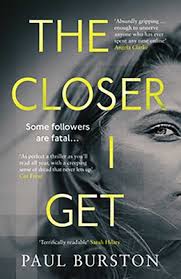
Paul Burston’s The Closer I Get, examines the world of social media and how strong the connection can be between people who meet there—and how those relationships can sometimes go disastrously wrong.

Tom Hunter’s a successful novelist with a first book made into a movie that’s brought notoriety, who’s stumbling with his third book after a bomb of a second. He blames his writer’s block on the suffocating admiration of a woman he’s met online who won’t—or can’t—leave him alone.

Evie is a bit unstable, and has become obsessed with Tom. But online relationships are necessarily two-sided. Just how culpable is Tom? And what of his close friend, Emma? Despite Tom’s homosexuality, Emma has always been a shoulder for Tom to lean on, and he does so now.

What’s at play here for the reader is the idea that perhaps neither Evie nor Tom as reliable narrators, when the police become involved after Tom lodges a complaint about Evie’s obsession with him and her behavior. Cyber-stalking is very real, which makes this a timely and completely believeable story.

Here are two manipulative main characters, finely drawn, and the reader will find themselves siding with each one at times. There are mind games and reversals and lies told to others, but more interestingly, those we tell to ourselves.

A fascinating look at the personas that can be created online that come to be believed. Burston’s observant eye lends total credence to a plausible and chilling tale.

Lexie Elliott: The Missing Years Tuesday, Apr 23 2019 


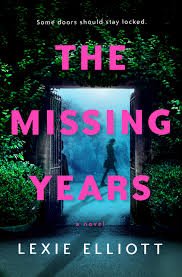
After last year’s explosive debut, The French Girl, Lexie Elliott returns with another strong psychological thriller that explores the ideas of shifting memories and truths in The Missing Years.

Meet Ailsa Calder, a producer of investigative journalism who’s inherited her family home, The Manse, set in the hills of the Scottish Highlands, a nicely gothic setting for the story she unfolds. When her mother dies, Ailsa finds her inheritence is her mother’s half of the home. With her father missing for decades, she must have him declared legally dead in Scotland to inherit his half of the creeky old place.

She brings her half sister, actress Carrie, with her as she sets up camp in the house and tries to figure out if she even wants the old home. Foreboding and far too large, she feels she will sell it at as soon as possible. But this is a chance for her and Carrie to spend time together, even if she feels, ridiculously so, that the house doens’t want her there.

Ailsa, traveling the world on assignment, has had a long-term relationship with an older reporter, and she’s unclear about their future together. Then strange things start to happen at The Manse, from threatening notes to dead animals turning up on her doorstep, and she’s uncertain she has a future at all.

The locals Ailsa meets and becomes involved with are distinctly drawn, and function to serve not only as steadying influences but also devil’s advocates of a kind, as Ailsa starts to have difficulty deciding what is real and what is her imagination. Does the house want her to leave, or to uncover its secrets? Who can she trust amongst her new cadre of friends?

With overtones of Gaslight, the tension rises as the mystery into her father’s past rises to the surface in a chilling climax.

This one will have readers flipping pages long after the lights should be out. Elliott owes Auntie M a night’s sleep! Highly recommended.

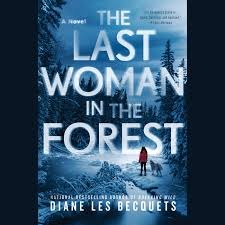
Diane Les Becquets: The Last Woman in the Forest Wednesday, Apr 10 2019 


Author Les Becquets calls on her love of nature, coupled with a a string of real-life murders, and brings the experience of her own horrific assault to meld The Last Woman in the Forest into a consuming and deliberate high tension thriller.

Loner Marian Engstrom loves working with rescue dogs to help her track endangered wildlife amidst conservation efforts from the oil industry. A personal tragedy in northern Alberta has her questioning everything she once believed about the man she loved, Tate, and puts Marian on a quest to find the still-open serial killer of at least four women.

There are scenes of breath-takiing beauty and wilderness survival as Marian enlists the help of a retired forensic profiler, Nick Shepherd, to help her reach the truth–could the man she loved have been a serial killer?

With victim reports interspersed throughout, this character-driven thriller moves around timelines. Getting inside the head of a serial killer is done well, and as the two investigate, every time Marian thinks she’s uncovered something that points to Tate’s innocence, another clue points to his guilt.

With a startling climax, this is one that will keep readers wondering until its climax. The result is that women must take their own instincts into account, perhaps more than they are trained to do. A suspenseful thriller that will grip readers.

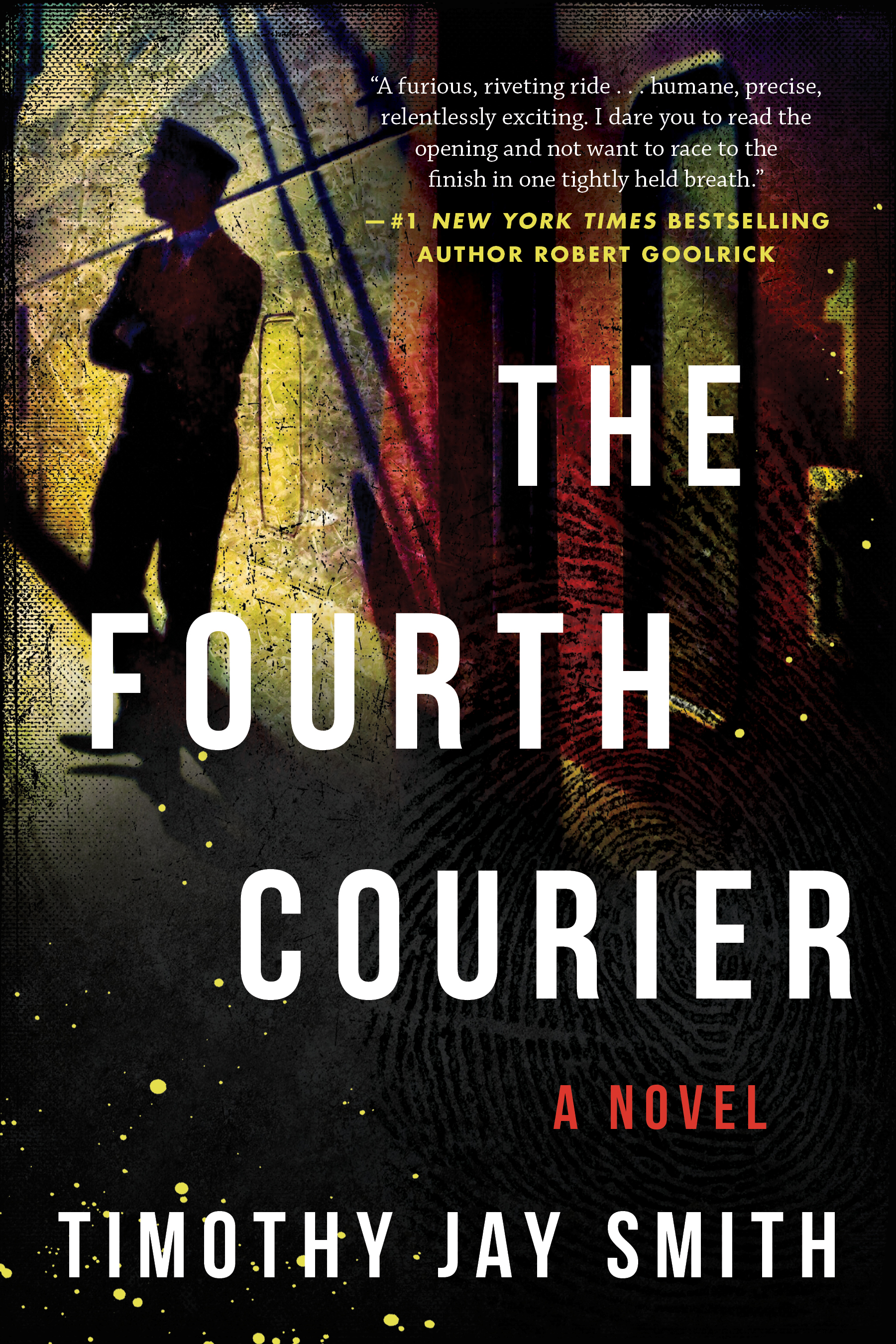
Timothy Jay Smith: The Fourth Courier Wednesday, Apr 3 2019 


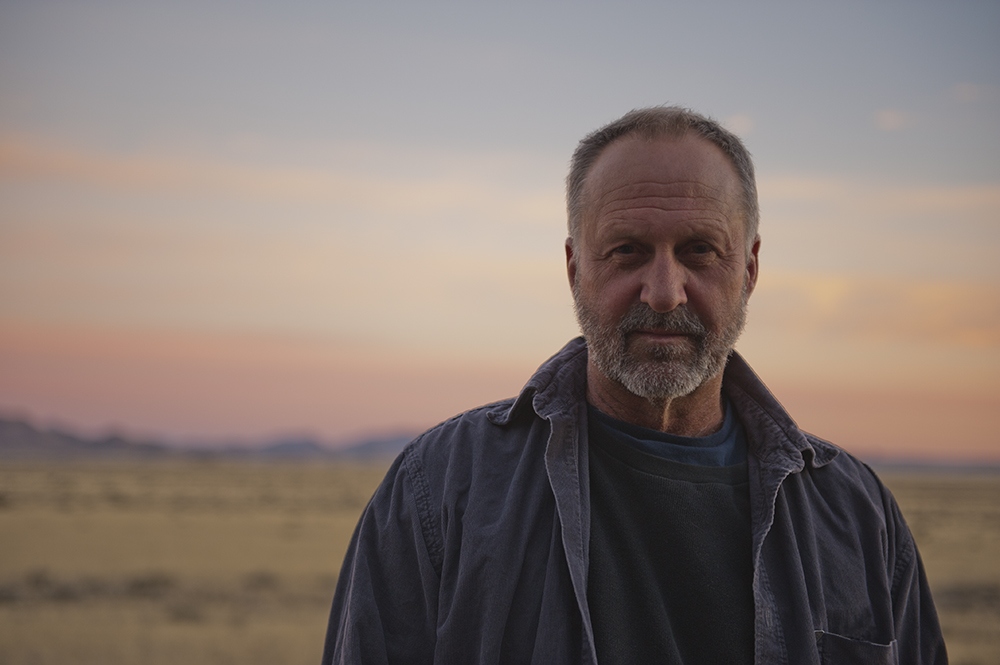
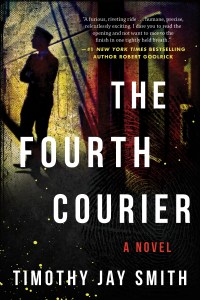
Auntie M recently had the pleasure of interviewing Timothy Jay Smith about his new thriller, The Fourth Courier. Having lived in Warsaw in the early 90’s, Smith witnessed the upheaval of that time, and his experience brings a clear eye to the time. Don’t miss the video at after the interview, where you can see the town and listen to Smith explaining his premise. Welcome Timothy!

Auntie M: Your new novel, The Fourth Courier, is set in Poland. Tell readers what it’s about:

Timothy Jay Smith: The Fourth Courier opens in the spring of 1992, only four months after the collapse of the Soviet Union. A series of grisly murders in Warsaw suddenly becomes an international concern when radiation is detected on the third victim’s hands, raising fears that all the victims might have smuggled nuclear material out of Russia.

Poland’s new Solidarity government asks for help and the FBI sends Special Agent Jay Porter to assist in the investigation. He teams up with a gay CIA agent. When they learn that a Russian physicist who designed a portable atomic bomb is missing, the race is on to find him and the bomb before it ends up in the wrong hands.

My novels have been called literary thrillers because I use an event or threat to examine what the situation means to ordinary people. In The Fourth Courier, Jay becomes intimately involved with a Polish family, giving the reader a chance to see how the Poles coped with their collective hangover from the communist era.

AM: What prompted this particular story?

TJS: The Fourth Courier goes back a long way for me. In 1989, the Berlin Wall fell and Solidarity won the first free election in Poland in over sixty years. In the same year, Mikhail Gorbachav introduced new cooperative laws in the Soviet Union, which was an area of my expertise. I was invited to the Soviet Union as a consultant, which led to my consulting throughout the former Soviet bloc, eventually living for two years in Poland.

At the time, there was a lot of smuggling across the border between Russia and Poland, giving rise to fears that nuclear material, too, might be slipping across. While on assignment in Latvia, I met with a very unhappy decommissioned Soviet general, who completely misunderstood my purpose for being there. When an official meeting concluded, he suggested we go for a walk where we could talk without being overheard.

I followed him deep into a forest. I couldn’t imagine what he wanted. Finally we stopped, and he said, “I can get you anything you want.” I must have looked puzzled because he added, “Atomic.”

Then I understood. In an earlier conversation, there had been some passing remarks about the Soviets’ nuclear arsenal in Latvia, for which he had had some responsibility, and apparently still some access. While my real purpose for being there was to design a volunteer program for business specialists, he assumed that was a front and I was really a spy. Or perhaps he thought, I really did want to buy an atomic bomb!

AM: Have you always been a writer?

TJS: In the sense of enjoying to write, yes. I actually wrote my first stage play in fourth grade and started a novel in sixth grade, but I didn’t become a full-time fiction writer until twenty years ago. The first half of my adult life I spent working on projects to help low income people all over the world. I always enjoyed the writing aspects of my work—reports, proposals, even two credit manuals—but I reached a point where I’d accomplished my career goals, I was only forty-six years old, and I had a story I wanted to tell.

AM: And what was the story?

TJS: For over two years, I managed the U.S. Government’s first significant project to assist Palestinians following the 1993 Oslo Accords. One thing I learned was that everyone needed to be at the negotiating table to achieve an enduring peace. So I wrote a story of reconciliation—A Vision of Angels—that weaves together the lives of four characters and their families.

If anybody had ever hoped that a book might change the world, I did. Unfortunately I didn’t manage to bring about peace in the Middle East, but I’ve continued writing nevertheless.

AM: The Fourth Courier has a strong sense of place. It’s obvious that you know Warsaw well. Other than living there, what special research did you do?

Warsaw is a city with a very distinctive character. It’s always atmospheric, verging on gloomy in winter, and the perfect location for a noir-ish thriller.

I had left Warsaw several years before I decided to write a novel set there, so I went back to refresh my memory. I looked at it entirely differently. What worked dramatically? Where would I set scenes in my story?

It was on that research trip when all the events along the Vistula River came together for me. There was a houseboat. There was Billy’s shack, and Billy himself whose “jaundiced features appeared pinched from a rotting apple.” There were sandbars reached by narrow concrete jetties and a derelict white building with a sign simply saying Nightclub. Fortunately, Billy’s dogs were tethered or I wouldn’t be here to answer your questions.

My main character is an FBI agent, and I didn’t know much about that. A friend, who was an assistant to Attorney General Janet Reno, arranged a private tour of the FBI’s training facility in Quantico. That was before 9/11. I don’t think that could be done now. Maybe for James Bond himself but not for a wannabe writer.

If I was going to write a novel about smuggling a portable atomic bomb, I needed to know what a bomb entailed. Weight, seize, basic design, fuel? How would a miniature bomb be detonated? So I blindly contacted the Department of Energy. I explained what I wanted and was soon connected to an atomic expert who agreed to meet with me.

We met on the weekend at a Starbucks-like coffee shop in Rockville, MD. We met in line and were already talking about atomic bombs before we ordered our coffees. He had brought basic drawings of them. He was an expert and eager to share his knowledge.

Can you imagine having that conversation in a café today, openly looking at how-to schematics for building an atomic bomb while sipping skinny lattés?

AM: No, actually, I can’t! Today you’d probably be on the NSA’s radar just by making those calls. You’ve mentioned ‘scenes’ a couple of times. I know you also write screenplays. Do you find it difficult to go between the different formats or styles?

TJS: The sense of scene is crucial to my writing. It’s how I think about a story. Before I start new work, I always have the opening and closing scenes in my head, and then I ask myself what scenes do I need to get from start to finish.

I think it comes from growing up in a house where the television was never turned off. My sisters and I were even allowed to watch TV while doing homework if we kept our grades up. Sometimes I joke that canned laughter was the soundtrack of my childhood. I haven’t owned a television for many years, but growing up with it exposed me to telling stories in scenes, and it’s why my readers often say they can see my stories as they read them.

For me, it’s not difficult to go between prose and screenplays. In fact, I use the process of adapting a novel to a screenplay as an editing tool for the novel. It helps me sharpen the dialogue and tighten the story.

AM: I can see that and have a similar way of writing, visualizing the story in scenes. In your bio, you mention traveling the world to find your characters and stories, and doing things like smuggling out plays from behind the Iron Curtain. Was it all as exciting as it sounds?

TJS: It was only one play, and yes, I confess to having an exciting life. I’ve done some crazy things, too, and occasionally managed to put myself in dangerous situations. Frankly, when I recall some of the things I’ve done, I scare myself! By comparison, smuggling a play out of Czechoslovakia in 1974 seems tame. But I’ve always had a travel bug and wanted to go almost everywhere, so I took some chances, often traveled alone, and went to places where I could have been made to disappear without a trace.

AM: It sounds like you have a whole library full of books you could write. How do you decide what story to tell and who will be your characters?

TJS: I came of age in the 1960s during the Civil Rights Movement and the anti-Vietnam War demonstrations, so I developed a strong sense of social justice. That guided my career choice more than anything, and when I quit working to write full-time, it was natural that I wanted my books to reflect my concerns. Not in a “big message” way, but more in terms of raising awareness about things that concern me.

For example, take Cooper’s Promise, my novel about a gay deserter from the war in Iraq who ends up adrift in a fictional African country. It was 2003, and in a few days, I was headed to Antwerp to research blood diamonds for a new novel. I was running errands when NPR’s Neal Conan (Talk of the Nation) came on the radio with an interview with National Geographic photographer Jodi Cobb about a project on modern-day slavery. It was the first time I heard details about human trafficking, and was so shocked by its enormity that I pulled my car off the road to listen.

I decided on the spot that I needed to find a story that touched on both blood diamonds and trafficking. When I went to Antwerp a few days later, I visited the Diamond District as planned, but also visited a safe house for women who had been rescued from traffickers.

AM: In The Fourth Courier, you team up a white straight FBI agent with a black gay CIA agent. Even Publishers Weekly commented that it seemed like an ideal set-up for a sequel. Do you plan to write one?

TJS: Probably not. My to-be-written list is already too long.

I’m close to finishing the final edits on a book set in Greek island village, which is more of a mystery about an arsonist than a thriller. I’ve already started a new novel set in Istanbul about a young refugee who’s recruited by the CIA to go deep undercover with ISIS. I’ve never written a novel set in the States but I have the idea for one.

To date, my books have been stand-alones with totally different settings, characters, and plots. I try to write what I like to read: smart mysteries/thrillers with strong plots and colorful characters set in interesting places. I suppose like me, I want my stories to travel around and meet new people.

AM: You’ve had gay protagonists or important characters since your first novel over twenty years ago when gay literature had not yet become mainstream. How would you say that affected your choices as a writer, if it did?

TJS: Friends warned me that I shouldn’t become known as a gay writer because it would pigeonhole me and sideline me from consideration as a serious writer. At the time, I think the general public thought gay books were all about sex and more sex. Of course, already there were many emerging gay literary writers; it was more stigma than reality.

The world of thrillers and mysteries is still largely uninhabited by gays. Hopefully I am helping to change that. I also hope that my novels expand my readers’ understanding of homosexuality in the places where I set them. In The Fourth Courier, the gay angle is key to solving the case. In my other novels, too, the plot turns on something gay, and the way it does is always something that couldn’t have happened in the same way anywhere else because of the cultural context.

AN: What do you want your readers to take away with The Fourth Courier?

TJS: What motivated me to write The Fourth Courier was a desire to portray what happened to ordinary Polish families at an exciting albeit unsettling moment in their country’s history. I hope my readers like my characters as much as I do—at least the good guys. The people are what made Poland such a great experience. The Fourth Courier is my thank-you note to them.

AM: Now that your interest is on high alert, here’s a link to purchase the book:

AM: And now as promised, here’s Timothy in Warsaw:
https://www.youtube.com/watch?v=kr4DNhjeXRU&t=1s.

« Previous PageNext Page »

Amazing Family Books

Featuring The Very Best in Fiction & Nonfiction Books For Children, Parents & The Entire Family

Book Review Magazine

Incredible Books & Authors

Book Sparks News

Writing, Books & Authors News

Book Bug Out

KIDS CLUB

Writer Beware

Shining a small, bright light in a wilderness of writing scams

Dazzle Reads

Top Books, Reviews & Author News

DESTINATION PROPERTIES

The preview before the visit.<ins class="bookingaff" data-aid="1815574" data-target_aid="1815574" data-prod="map" data-width="400" data-height="300" data-lang="xu" data-currency="USD" data-dest_id="0" data-dest_type="landmark" data-latitude="40.7127753" data-longitude="-74.0059728" data-landmark_name="New York City" data-mwhsb="0"> <!-- Anything inside will go away once widget is loaded. --> <a href="//www.booking.com?aid=1815574">Booking.com</a> </ins> <script type="text/javascript"> (function(d, sc, u) { var s = d.createElement(sc), p = d.getElementsByTagName(sc)[0]; s.type = 'text/javascript'; s.async = true; s.src = u + '?v=' + (+new Date()); p.parentNode.insertBefore(s,p); })(document, 'script', '//aff.bstatic.com/static/affiliate_base/js/flexiproduct.js'); </script>

Auntiemwrites Crime-Mystery Author M K Graff

Award-winning Mystery Author on books, reading and life: If proofreading is wrong, I don't wanna be right!

Lee Lofland

The Graveyard Shift

Sherri Lupton Hollister, author

Romance, mystery, & suspense she writes...

The Life of Guppy

the care and feeding of our little fish

MiddleSisterReviews.com

(mid'-l sis'-tǝr) n. the reader's favorite sister

My train of thoughts on...

Smile! Don't look back in anger.

K.R. Morrison, Author

My author site--news and other stuff about books and things

The Wickeds

Wicked Good Mysteries

John Bainbridge Writer

Indie Writer and Publisher

Some Days You Do ...

Writers & writing: books, movies, art & music - the bits & pieces of a (retiring) writer's life

Gaslight Crime

Authors and reviewers of historical crime fiction

Crimezine

#1 for Crime

Amazing Family Books

Featuring The Very Best in Fiction & Nonfiction Books For Children, Parents & The Entire Family

Book Review Magazine

Incredible Books & Authors

Book Sparks News

Writing, Books & Authors News

Book Bug Out

KIDS CLUB

Writer Beware

Shining a small, bright light in a wilderness of writing scams

Dazzle Reads

Top Books, Reviews & Author News

DESTINATION PROPERTIES

The preview before the visit.<ins class="bookingaff" data-aid="1815574" data-target_aid="1815574" data-prod="map" data-width="400" data-height="300" data-lang="xu" data-currency="USD" data-dest_id="0" data-dest_type="landmark" data-latitude="40.7127753" data-longitude="-74.0059728" data-landmark_name="New York City" data-mwhsb="0"> <!-- Anything inside will go away once widget is loaded. --> <a href="//www.booking.com?aid=1815574">Booking.com</a> </ins> <script type="text/javascript"> (function(d, sc, u) { var s = d.createElement(sc), p = d.getElementsByTagName(sc)[0]; s.type = 'text/javascript'; s.async = true; s.src = u + '?v=' + (+new Date()); p.parentNode.insertBefore(s,p); })(document, 'script', '//aff.bstatic.com/static/affiliate_base/js/flexiproduct.js'); </script>

Auntiemwrites Crime-Mystery Author M K Graff

Award-winning Mystery Author on books, reading and life: If proofreading is wrong, I don't wanna be right!

Lee Lofland

The Graveyard Shift

Sherri Lupton Hollister, author

Romance, mystery, & suspense she writes...

The Life of Guppy

the care and feeding of our little fish

MiddleSisterReviews.com

(mid'-l sis'-tǝr) n. the reader's favorite sister

My train of thoughts on...

Smile! Don't look back in anger.

K.R. Morrison, Author

My author site--news and other stuff about books and things

The Wickeds

Wicked Good Mysteries