Holiday Joy: Books that make grand gifts~ Tuesday, Dec 8 2015 

Every year at this time Auntie M likes to give readers a listing of great suggestions for the readers on your gift list. Auntie M has saved some of her favorite recent reads for this year’s list and there’s something for every type of reader. Several have received Auntie M’s coveted “Highly recommended,” which she doesn’t hand out to many over the course of the year, so you know these are special reads she’s been saving for you when you see them here.

And don’t forget to pick one up for yourself. Reading a good book is one of the nicest things you can do for yourself. Reading takes us on travels, teaches us things we didn’t know before, shows us other cultures, all wrapped up in a good story. So look over these and find something for everyone. And enjoy whatever holiday you celebrate!

recipes
Sally Andrew’s first Tannie Maria Mystery, Recipes for Love and Murder, is one of the most original and interesting mysteries Auntie M has read this fall. And when she was done reading, she was already looking for the next installment, like you would like for an old, wise friend.

Set in contemporary South Africa, the Klein Karoo landscape, nature, food, language and habits of the area come alive through the eyes of Tannie (Auntie) Maria, a widow who happens to be a brillant cook. Mevrou van Harten knows that her food works magic in people’s hearts, not just their stomachs.

Her recipe column is a staple in the local paper until she’s forced to add an advice column to it, and of course, food figures heavily as she fights her own loneliness and tries to help others through food. But when she receives a set of letters from a woman being abused by her husband, they bring painful echoes of Tannie Maria’s own abuse at the hands of her dead husband and underscore her lonely existence.

Then that woman is murdered, and Tannie and her young reporter colleague forge into the murder investigation in indignation and outrage. There will be a host of characters as viable suspects and others who just muddy the waters, but all respond to Tannie Maria’s food and wisdom. There are laugh-out-loud characters and others who bring a quiet grace. And then there’s Detective Lieutenant Henk Kannemeyer, who brings his own sage wisdom to Tannie Maria’s life.

You will learn Afrikaan words and phrases, and yes, there are recipes at the end that you will find yourself looking for as you read the descriptions of the food. A wise woman and a wise book. Highly recommended.

forgot
Lisa Ballantyne’s The Guilty One was one of Auntie M’s favorite reads last year and she makes the list again with Everything She Forgot, as different from her first as it is just as special.

With a creative, original premise, Ballantyne introduces readers to Margaret Holloway, a working mom with a full plate, who is distracted on a traffic-filled road when she’s caught up in a horrific accident. When her car erupts in flames she narrowly escapes death, freed in the nick of time by a good samaritan who is not as fortunate and winds up in hospital hanging onto his life.

Despite what are externally minor injuries, Margaret’s core has been shaken and she can’t concentrate or relax, nor can she forget her rescuer and finally makes attempts to find out who he is. At the same time, an alternate storyline tells of the kidnapping of a young girl in 1985 and the days she spends with her captor, time that gradually has moments of enjoyment as the two learn about each other, until that part of the story ends dramatically.

But in the present Margaret struggles, feeling disconnected from her life, her husband and her children, as she tries to return to normalcy after the accident. Once she finds him, she’s drawn to the hospital to visit the man who saved her life, as she starts having flashbacks of memories long buried from her childhood.

Ballantyne masterfully connects the two threads–and the reader senses this before Margaret does–as she comes to see that the answers to her buried past have come full circle. Highly recommended.
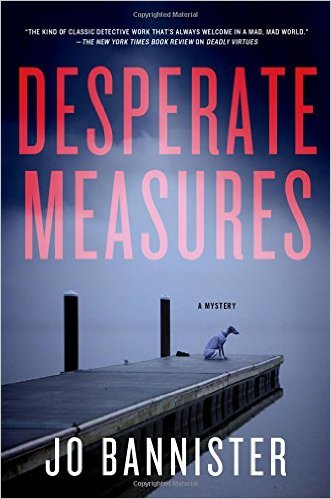
DespMeasures

Jo Bannister’s previous two crime novels featuring policewoman Hazel Best and her friend Gabriel Ash and his dog, Patience, have been two of Auntie M’s favorite reads, so she was anxious to read the third installment, Desperate Measures. Four years ago Ash’s wife and two sons were kidnapped by Somali pirates, and when Hazel Best came across him, he had left his job and struggled to maintain his sanity, not knowing if his family were alive or dead. With Hazel’s help, progress was made, along with her own situation at the police station taking a sharp turn.

The book opens with Gabriel’s knowledge that his wife is alive giving him hope and despair at once. Will he be able to save her? Are their sons still alive? And then the demands of the pirates for his family’s safe return seem impossible to fulfill, an horrific act of online sacrifice.

Once this demand is met, Gabriel’s wife and two sons are returned to England, but Hazel is left bereft and grieving, until she’s forced to pull her own life together, and in doing so, finds that all is not as it seems and once again she must be there to pick up the pieces for the young man she mentors.

There’s more here than meets the eye on several levels. At one point the reader will be as angry with Bannister for the events that unfold as Hazel is, but no one will be more hurt than Gabriel when he learns who he has to blame for the breakup of his family. The plot is complicated and it would be difficult to describe more without spoilers, so full stop here. Just get yourself a copy for a bloody good read.

A terse unusual police procedural that’s filled with suspense, Bannister’s characters leap off the page and demand your attention and devotion. Even Patience, the most unusual dog to be written on the page, comes across with her own personality. Highly recommended.

Jane Casey, After the Fire

Jane Casey’s Maeve Kerrigan series gets stronger with each entry. After the Fire follows Maeve and her irascible DI Josh Derwent as they investigate a fire at Murchison House, part of the Maudling Estate, a London tower block that has a bad association for Maeve, who is already having a difficult time trying to find a way to expose her stalker, Chris Swain.

The fire takes the lives of two victims trapped in one of the units and severely injures a young girl, left fighting for her life. But there’s another victim, the reason Maeve’s team has been called in by DCI Una Burt, who is not Maeve’s favorite superior. MP Geoff Armstrong’s body has been found shattered, lying on top of a wheelie bin. The question is: did he jump to avoid the fire or was he pushed?

The motives for Armstrong even being on this estate are suspect. A controversial right wing politician with strong views that put most people off, his presence on the kind of estate that houses the culturally diverse and deprived people he despised surely bears examining.

All of the families living on the floor of the fire will have to be investigated, and the menace grows in far too many areas as the pair go about their work, all the time aware the Maeve’s every movement is being monitored by her stalker–and it’s time for her to get her life back.

The twisted plot will surprise readers as there are threads that come together that make this ending a heart-pounding climax. And just when you think it’s over, there’s even more for Maeve to deal with. Addictive and highly recommended.

HideSeek
And while you’re reading Jane Casey, if you have any younger readers on your list, her newest YA Jess Tennant Mystery is a perfect choice. Hide and Seek follows Jess when her classmate is apparently kidnapped shortly before Christmas in the small town of Port Sentinel where Jess lives now with her mom.

It should be a magical time, with fairy lights and even a mini-ice rink at the Christmas market, until Gilly Poynter disappears. Is this a case of an unhappy teen running away from home, or a more sinister kidnapping?

Casey’s teens are realistic: self-centered at times, helpful at others, always with a sense that they are just this little bit away from leaping off the page and leaving their dirty dishes in your living room. Jess will find there are secrets that have been harbored for years that will affect her relationship with boyfriend Will, too, and her own future. A satisfying read for any YA reader without reservations, and for adults, too. Auntie M is giving this book to her 15 year old grand-daughter for Christmas, but don’t tell her please.

The-Dungeon-House-cover
Martin Edwards, newly-inducted head of The Detection Club (congratulations, Martin!), has a new Lake District Mystery out, The Dungeon House. For followers of the series, Detective Hannah Scarlett and historian Daniel Kind have had a complicated relationship in the past that just may be smoothing itself out. His father, Ben Kind, was Hannah’s mentor as a young detective, and Ben’s presence is felt in this mystery that takes Hannah’s Cold Case team back to the recent past and then even further back than she’d thought possible.

The book opens twenty years ago in the remote west coast area of Cumbria. The Dungeon House is a mansion with extravagant gardens overlooking the fells, a nuclear plant, and boasting its own small quarry. It’s been home to Malcolm Whiteley, his attractive wife, Lysette, and their teenaged daughter, Amber.

But this is not a case of Happy Families, as Malcolm’s drinking is out of control over financial pressures. He assumes his wife is having an affair and sinks into despondency and then alcoholic rages. After a yearly barbecue at Dungeon House, where Malcolm’s erratic behavior sets tongues wagging, Lysette finally tells Malcolm she’s leaving him. But before she can, tragedy occurs when Malcolm shoots and kills her. His body is found next to Amber’s broken body at the bottom of the quarry, an apparent suicide. Did Amber hear him shoot her mother and run from him in terror, falling over the unrailed edge to the quarry’s bottom? Or was she pushed during an argument with her father, who then committed suicide?

The case worried Ben Kind and becomes handed down to Hannah twenty years later when she’s asked to look into a three year-old case of the disappearance of Lily Elstone, daughter of Malcolm’s longtime accountant. Another teen has just disappeared, related to Malcolm through his brother’s son, Nigel. It’s Nigel’s daughter, Shona, who has disappeared, and coincidentally, Nigel now owns and lives in Dungeon House, which he’s renamed Ravenglass Knoll.

Hannah’s investigation will take her to dig up a long-ago car accident that had disastrous effects for those involved, just as one of the survivors shows up in town, bringing everyone’s secrets to the forefront. There will be few happy endings when it all falls out, but Hannah is determined to get to the bottom of it all, and with Daniel’s help, she just might get there.

resortmurder
Martin Edwards also edited the anthology Resorting to Murder: Holiday Mysteries. This is part of the British Library Crime Classics brought out by Poisoned Pen Press in the US which all have distinctive and delightful cover art. For any reader on your list who enjoys vintage stories, these fourteen mysteries will give them holidays without ever leaving home. Each story is introduced by Edwards, who describes the author’s life and background. There are some familiar names here–Conan Doyle and Chesterton, for example–but also pearls that are seldom seen in print, by writers such as Phyllis Bentley, Helen Simpson, and one of Agatha Christie’s favorite plotters, Anthony Berkeley. A real delight.

RiotUncouth
Lord Byron as detective? Daniel Friedman’s Byron believes his skills as a poet make him a perfect detective in the humorous and beguiling Riot Most Uncouth. The young student Byron, supposedly studying at Cambridge with his pet bear, decides to solve the gruesome murder of a young woman, one of the few females he hasn’t tried to bed.

His detecting skills are soon proven lacking by private investigate Archibald Knifing. When the bodies keep piling up, a second investigator, Fielding Dingle, becomes involved and the killings escalate. For the egotistic student detective, the challenge becomes throwing aside his assumption a vampire is running around Cambridge and settling down long enough to unmask a killer. Totally original and perfect for fans of historic mysteries who enjoy sly humor.
blackriver
Auntie M met Tom Harper at one of St. Hilda’s Mystery and Crime Conferences, where his papers and talks proved him to be a charming, erudite young man with a great love of history. He brings that intelligent perspective to his new thriller, Black River, and he knows how to tell a story with a great sense of setting, too, having been there.

This one’s for the reader on your list who enjoys action that never stops, as Harper introduces the happily married Dr. Kel MacDonald, a man who realizes he needs one great adventure and finds it handed to him in the lure of using his medical expertise. He’s given a chance to journey to find a lost medical expedition on their way to the fabled lost city of Paititi in the Amazon jungle.

The fact that Kel has absolutely no surivial skills doesn’t stop him from joining expedition of Anton’s crew with five men and two women– but does make him totally reliant on the others in the group.

There will be encounters with natural dangers, medical issues, and guerrillas, and Kel soon finds himself not knowing whom he can trust, but knowing his life hangs in the balance. And that’s if he makes it back to civilization. Peter James calls Harper “… a master storyteller.”
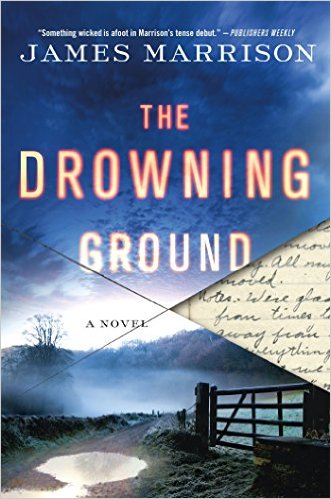
drowning ground
It might be a Cotswold setting, but this is no Miss Marple in James Marrison’s strong debut The Drowning Ground.

The fish out of water this time is native Argentinian Chief Inspector Guillermo Downes, who carried his grief across the pond to head up the police department. When a witness tells him he’s not from here, meaning Englnad, Downes tells the reader: “I get this a lot.” By having Downe’s point of view in first person, the reader becomes close to the detective and how his mind works, filled with memories of Argentina, suffused with the contrast of the two places he’s lived.

History haunts Downes. When two young girls go missing within days of each other, Downes made it his mission to find out what had happened, promising the second child’s mother he would find her daughter. In describing the case to his new sergeant, Downes tries to explain how much worse a child vanishing can be than murder: “Because the family never know, you see. There’s hope, but such hope is worse than despair. It’s poison.”

Years elapse with no progress on the case. Then a local man is found dead dead. Downes recalls his wife’s drowning, and that many in the small town felt Frank Hurst had murdered this second wife. In thinking about Hurst after looking at his corpse, killed in a most horrific way, Downes muses:
“His whole life would now be defined by this moment. You were remembered if you were murdered.”

So when a connection between Hurst and the missing girls seems likely, Downes jumps at at the chance to keep his promise.
Downes has a new Sergeant to break in, too, and as he and Graves get used to each other, the nuances of two very different men become apparent.

Marrison fills the book with visual and sensory details. With a keen eye to the life of a small English town, Marrison gets inside the head of his characters so well, your reader will be asking for the next in the series to follow the brooding Downes. A well done debut.

November-Rain-1_r1_c1
Many years ago when Auntie M was taking a class at the University of Iowa’s Summer Writing Festival, she wandered into Prairie Lights, the town’s premier independent bookshop with a strong literary history. It happened that a local radio station was doing their live broadcast of writers reading from their works that evening, and the guest was the debut mystery by a deputy sheriff of Clayton County, Iowa. Donald Harstad read from that first book, Eleven Days, a Carl Houseman mystery.

Now retired, Harstad’s sixth Houseman mystery hits all the right notes in November Rain. This time, though, Houseman leaves his beat in rural Iowa and steps unwittingly into the world of international intrigue.

With his daughter studying in the UK, Houseman steps up when Jane’s best friend, Emma, is kidnapped. Wanting to protect his daughter, he agrees to become a consultant to Scotland Yard. Soon he finds himself embroiled in the activities of Emma’s ex-lover, a former professor whose activism for a pair of Muslim political prisoners has had severe side effects that now extend to Houseman.

The Iowa sheriff becomes involved with Special Branch members. The use of time at scene headings keeps the reader oriented to place and to feel the pressure Houseman feels as the case unravels. Told in the first person from Houseman’s point of view, a tense procedural.

Third Sin
Auntie M is a huge fan of Aline Templeton’s Marjory Fleming series. The Third Sin explores what happens to a group who call themselves the Cyreniacs, espousing sex, drugs and pleasure as their main principle. After one young woman dies from an overdose, it appears a second commits suicide, and the group disbands.

Then a body turns up two years later in a wrecked car on the Solway mud flats. And while this man is definitely now dead, it’s a very recent death, and he couldn’t have committed suicide two years ago.

Then another death tragically occurs just as a young woman out of the country for years returns. What do they have in common? And how do they tie in to the man’s death?

With DI Fleming and her team on the investigation, she finds new cross-sectional rules sound good on paper, but cooperation from her opposite is truly absent. She faces hostility and downright obstruction as the cases cross counties. It will take all of her smarts and detecting instincts of Fleming and her team to figure out how to piece together the reality of the situation.

One of the charms of this series is following the growth of Fleming’s family: her sheep farmer husband and son and daughter, now grown and finding their way. This edition gives readers enough balance of that life for Marjory to feel fully developed and someone they can, and should, admire. Another strong entry in a great series.

Look for the next installment of Holiday Joy, where the settings will be in the US~
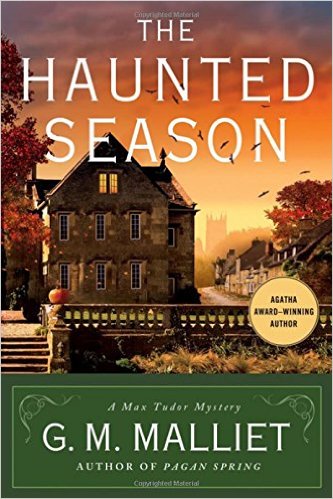
G. M. Malliet: The Haunted Season, A Max Tudor Mystery Sunday, Dec 6 2015 

Auntie M had the pleasure at this year’s Raleigh Bouchercon to spend time with G. M. Malliet and talk about her Max Tudor series and the ending of her newest, The Haunted Season, as well as what else she has in the works:

HauntedSeason

Auntie M: This book had a decidedly different feel, from trailing the antagonist to the darker ending. Care to say what’s in store for Max without giving any spoilers?

G. M. Malliet: Max definitely has a lot on his mind, with a new baby and his clerical work. But chasing the bad guys has given him a taste of what he was once very good at, working with MI5. So while he’s still going to be a vicar and be based where he is, I wouldn’t discount him becoming involved with his old MI5 cronies down the road . . .

AM: Wonderful! And a way to provide new interest for readers. So while Max is busy, what else do you have percolating?

GMM: I’m working on a stand alone, also set in England, what I call a domestic noir with a female protagonist. I’m doing it in first person and finding that’s a real challenge I’m enjoying.

AM: Readers will look forward to that for certain. Do you have any plans to do more in your award-winning St. Just series?

GMM: I hear from readers all the time that they’d like to read more of that series. I would pick it up if I can find an agent who’s interested in selling more.

AM: You’d have an easy sell there, for sure. The satire in those rang so true and were done so well. Who are you reading right now when you find you have a few minutes of down time?

GMM: I’m working my way through Tana French’s series, take the books to the gym and get some reading in. Enjoying those and her plotting. Broken Harbour has been my favorite so far.

AM: I enjoy those, too, and her newest, The Secret Place, was amazing for her ability to keep interest going through an entire book that takes place in one day. So what’s the best writing advice you’ve ever received that you’d like to share?

GMM: People used to say ‘write what you know’ but I’ve found that can be interpreted to mean “write what you’re interested in” because it gives you the passion you need. In my case, I’m fascinated by English villages and the life we find there.

AM: Me, too! Now on to the review:

G. M Malliet’s fifth Max Tudor mystery may be her best one yet. The Haunted Season finds the hunky vicar enjoying his role as husband and father to infant Owen. It’s a pastoral setting with dog Thea completing the little family, and the only things of worry at this point are funds for St. Ewold’s organ pipes, and a parishioner whose crush on the vicar becomes worrisome.

Balancing this out is his new curate, the Rev. Destiny Chatsworth, who will help to take some of his workload on her shoulders and seems to have the built-in empathy required for the job. Then a murder occurs too close to home to be ignored, bringing Max under the Bishop’s radar once again.

The manor house of Nether Monkslip is Totleigh Hall, mostly unoccupied with the Lord and Lady spending time in Spain, yet at present the entire family is in attendance: Lord Baaden-Boomethistle and his very attractive second wife; son Peregrine and daughter Rosamund, college students who are at war with each other constantly; and the Dowager Vicountess, “Crazy Caroline,” who writes steamy romance novels.

There are petty squabbles at meals between the members that hint at the underlying tensions in the household, until the rather ghastly murder of the Lord occurs, and Father Max is once again pressed into service for help to find a killer.

Malliet’s wry humor, sprinkled throughout the mystery, adds a touch of whimsy to the investigation headed by DCI Cotton. With the entire family under suspicion, it soon becomes clear that Max has his work cut out for him.

There will be interviews with previous nannies, and much delving into the family’s background. Max finds himself recalling Josephine Tey’s Brat Farrar, and has dreams that seem designed to point him in the right direction.

What sets this episode apart is the darker tone the story takes near its end once the murder is solved, and the thread that hints at a new direction in the next chapter. Readers will be anxiously awaiting the next installment to see where Max Tudor goes next.

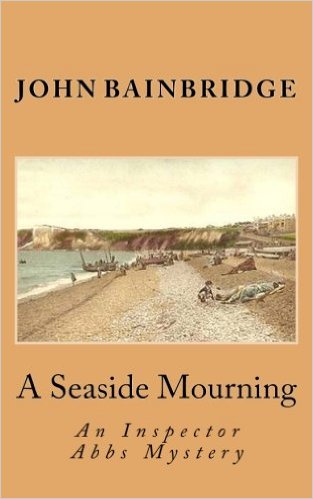
John Bainbridge: A Seaside Mourning Friday, Dec 4 2015 

John Bainbridge and his wife Anne are historians and researchers extraordinaire who use their own history in the Inspector Abbs mysteries. Here’s the story of the background to A Seaside Mourning
Seaside

The Background to A Seaside Mourning
Our Victorian murder mystery is set in the fictional town of Seaborough, a small resort in Devon. The plan was to think hard about coming up with a suitable name. However around the same time we were researching John’s family history. When we found that one of his ancestors had the unusual first name of Seaborough, it seemed exactly right.

In the novel Seaborough is in East Devon, an area often overlooked by holiday-makers who travel to the better-known parts of the English Riviera and the South Hams. It is a timeless landscape of rounded hills, old hedgerows, meadows and heaths; villages with thatched cottages and a few quiet seaside resorts. Their railway stations and branch lines are long gone.

The unspoilt coastline has red sandstone, zig-zag cliffs gradually fading to chalk near the county border. Together with the neighbouring county of Dorset, they make up the Jurassic Coast, Britain’s first Unesco natural world heritage site. We know the area well from walking the old footpaths and exploring the villages of my forebears. One of my ancestors was a Victorian police constable, probably much like the ones in the story.

Walk through the streets of any British seaside town, trace back the architecture and you’ll most likely find the beginning was a fishing village. The rise of the seaside resort – offering buildings and entertainment designed to attract tourists – gradually began in the eighteenth century. At that time the concept of an annual holiday for the masses didn’t exist. The wealthy tended to travel abroad on the classical Grand Tour or over-winter on the Continent. Working people had neither the money nor paid leisure to explore new places.

From the mid-1700s physicians began questioning whether sea-water might have healing properties similar to those of spa water. An enterprising Sussex physician Dr. Richard Russell set up a house for patients in the fishing village of Brighthelmstone in 1753. ‘Taking the waters’ at inland spa resorts was fashionable and money was to be made from rich invalids – and hypochondriacs – so there may have been some self-interest involved!

Dr. Russell published works on the rejuvenating powers of sea-bathing and drinking salt water, claiming his treatments cured enlarged glands and all manner of ailments. As well as swimming, his patients were immersed in baths of salt water and encouraged to ‘promenade’ in the sea air. This quickly became prevalent medical opinion.

Just as today, landowners and speculative builders were quick to spot a business opportunity. Scarborough on the coast of Yorkshire had the best of both worlds. Mineral water had been discovered there in the early seventeenth century and they had a flourishing spa by the beach. Wheel out the bathing-machines and the town was well-placed to develop into England’s earliest seaside resort.

Villages along the south coast in particular offered a mild climate and an easier journey from the capital. They began to throw up lodgings suitable for well-to-do visitors. Theatres and assembly rooms were built, promenades and sea-front gardens laid out. New resorts advertised their picturesque scenery, carriage tours and health-giving benefits.

Jane Austen satirised this new enthusiasm in her last unfinished novel, Sanditon. Interestingly Reginald Hill did a witty take on Sanditon – one of his lovely literary jokes – in his Dalziel and Pascoe novel A Cure For All Diseases. Sidmouth in East Devon is a possible contender for Austen’s Sanditon, though several resorts also fit the clues. It’s most likely that Jane Austen was thinking of more than one place. The Austens enjoyed holidaying along the Channel coast. Their stays at Lyme Regis in 1803 and 04 famously inspired part of the setting of Persuasion.

Fashion played a part in putting a watering-hole on the map. When George III’s physicians recommended he try the sea cure in 1788, he chose the village of Weymouth on the Dorset coast. Liking its sheltered sandy bay, he returned many times, making Weymouth one of England’s oldest seaside resorts.

His son, later the Prince Regent, vastly preferred Brighthelmstone, nearer London. Under his patronage it expanded rapidly to cater for his younger and wilder set. It has never lost its stylish and racy reputation. The spelling changed to suit its pronunciation and a new saying became widespread. The wealthy patient often tried the cure of Doctor Brighton.

Some towns started out as the vision of a single developer. In the 1780s a wealthy merchant called Sir Richard Hotham bought up land around the Sussex fishing village of Bognor. He intended to design a purpose-built resort modestly named Hothampton and entice the King away from Weymouth, making himself a second fortune. George III never obliged and the town reverted to Bognor soon after Sir Richard’s death. He did leave the townspeople several fine terraces and a splendid park.

New resorts received a boost to their fortunes when the Napoleonic wars closed the Continent to travellers. Prosperous invalids and people living in seclusion often settled by the sea in smart new villas for the gentry. Lady Nelson came to live at Exmouth in East Devon, after Nelson’s association with Lady Emma Hamilton became public knowledge.

Hunstanton in Norfolk came about as the scheme of one man, though much later. In 1846 Henry Le Strange, an architect and local landowner built a hotel on an empty headland as the flagship of his new town. A typically enthusiastic Victorian ‘entrepreneur’, he gathered investors to fund a railway line from King’s Lynn to his planned site, which was named after the nearby village of Old Hunstanton. It took another 16 years before the railway arrived and further building work began.

Many resorts can date their growth to the arrival of the railway. It became the custom for middle-class Victorian families to send their children to the seaside with nannies and nursery-maids. The first pleasure pier had been constructed at Ryde on the Isle of Wight, as early as 1814. Almost a hundred more followed, mostly in England and Wales. The Bank Holiday Act of 1871 gave workers four days off – five in Scotland. On Whit Monday and in August, railway companies laid on ‘Bank Holiday Specials’ for the day-trippers pouring into popular resorts. At last accessible for the pleasure of ordinary working people, the seaside resort as we know it today had arrived.

In A Seaside Mourning, Seaborough is expanding. It is autumn 1873 and the town has its railway branch line. New houses are going up and some businessmen are keen for a pier and other amenities to be developed.

Many of the characters are on the make, jostling for more money and social position. Some are fighting for security in a precarious society shadowed by the workhouse. Even Inspector Josiah Abbs is not safe. This was an age when policemen were not considered gentlemen. A detective was treated as a distasteful necessity, an embarrassment who should call at the tradesmen’s entrance.

Abbs cannot summon suspects to interview if they are his social ‘betters’ and he must catch a murderer without making enemies. Dismissal without a character is always a threat. He and his young side-kick Sergeant Reeve are both outsiders in Devon. They don’t quite know what to make of one another yet but they’re determined to solve the case somehow…

Our novel “A Seaside Mourning” is now available in paperback and on most eBook readers. Just click on the link below for more information:

And with Christmas on the way, If you enjoy curling up by the fireside with a seasonal mystery, you might like to try our Inspector Abbs novella A Christmas Malice. Set in 1873 during a Victorian country Christmas in Norfolk, our introspective sleuth has a dark puzzle to be solved. As is traditional at this time of year, there will be hope and a happy ending of a sort.

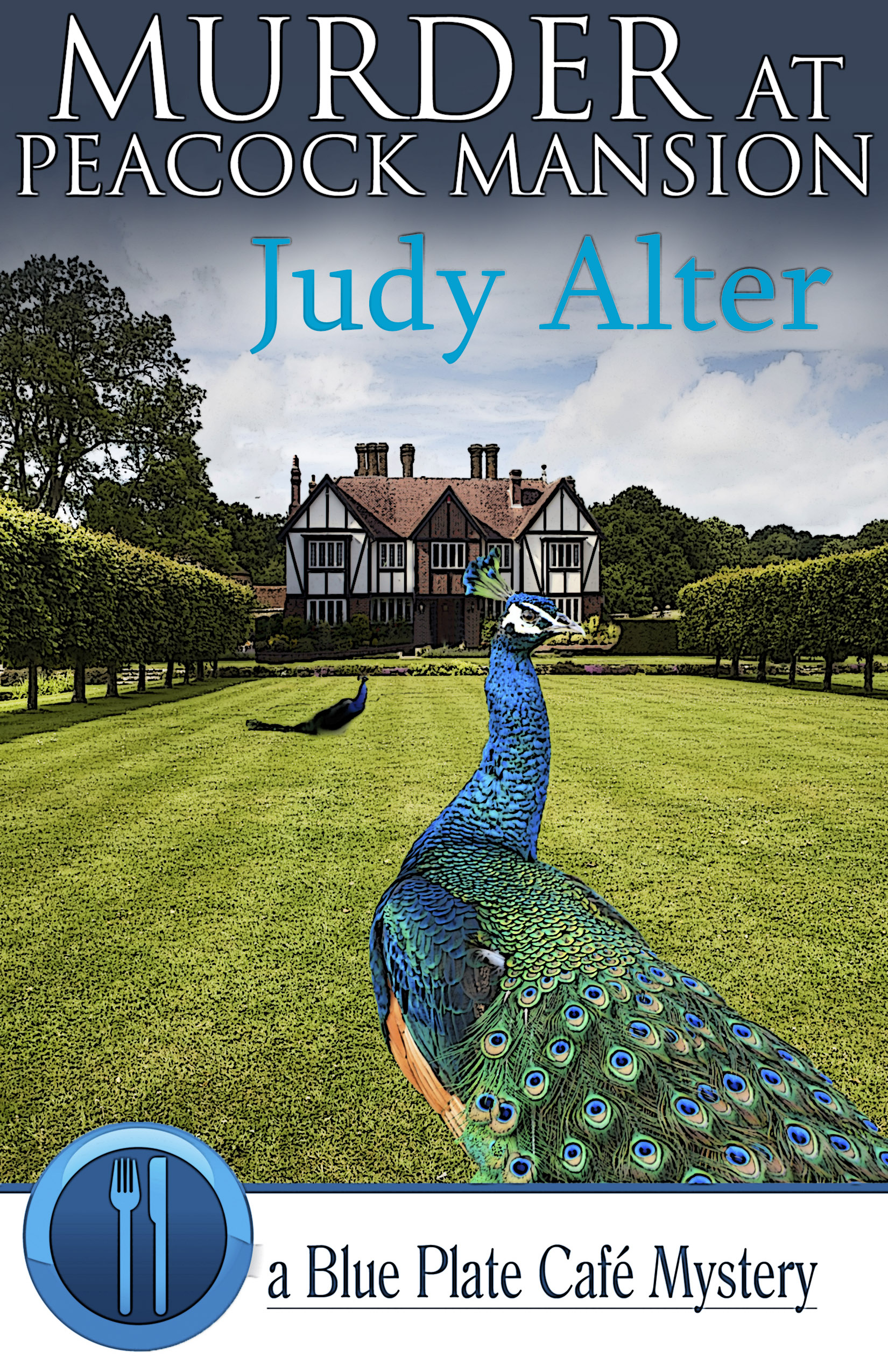
Judy Alter: Murder at Peacock Mansion Wednesday, Dec 2 2015 

Auntie M loves to hear writers talk about their process. Judy’s a wickedly busy author, and her newest, Murder at Peacock Mansion, continues her intriguing mysteries that have won her multiple awards. Here’s Judy Alter to discuss the “Dilemma of the Cozy Heroine:”
3Peacock Mansion -darker top
The Dilemma of the Cozy Heroine

When my first mystery, Skeleton in a Dead Space, came out five years ago, a mystery reviewer gave it a strong review, to my delight.

Six months later when the second one came out, I sent it to him with optimism only to have him pan it and write me requesting that I send no future books. It seems his problem was that my heroine was too passive, didn’t initiate action, didn’t rise to the position of heroically taking action and thereby solving the murders of old women in her neighborhood (No Neighborhood for Old Women).

Since Kelly O’Connell was the same person in each book and since she did unravel the mystery, reveal the killer, and nearly lose her life in the process, I disagreed with his assessment. Maybe it just caught him on a bad day? Maybe it was a gender thing?

At any rate, I’ve never sent him any of the seven mysteries I’ve since published in two series—Kelly O’Connell Mysteries and Blue Plate Café plus the so-far stand-alone, The Perfect Coed.

But that criticism has lingered in my mind because it poses a dilemma. Traditionally, the cozy heroine is an amateur sleuth, usually involved in some other calling—mine are a realtor/renovation expert and a café owner, but caterers and craft shop owners abound along with dozens of other callings. How tough are these women supposed to be?

For thrillers, the answer is clear. The female is often conditioned by training, experience or both to risk and danger. But what about Kelly O’Connell, a single mother of two daughters who spends her days looking for Craftsman houses to renovate in an inner city neighborhood?

Like most of us in our daily lives, she has never been exposed to crime, violence, and danger. Yet once she becomes involved in murders, she fights (literally and physically) for her life, dodges bullets, rescues kidnap victims—all because circumstances force her to. Should we expect her to become an instant Superwoman? I think not.

Besides, her boyfriend/husband Police Officer Mike Shandy keeps telling her to stay out of police business. . .

neighborhood_rev2_MD (2)

And that brings up the second dilemma—why is she involved anyway? Does the cozy heroine say to herself, “Oh, good—a murder. I can solve it.”? Again, I think not.

She has to have a valid reason for involvement—sometimes, for Kelly, it’s a threat to her daughters, or an abused child, or the “accidental” death of an elderly neighbor that turns out to be homicide. Sometimes it’s a desire to preserve and protect her beloved historical neighborhood in Fort Worth.

So how tough is your heroine? And how is she drawn into sleuthing? Sure, mysteries, like much literature, require the “willing suspension of disbelief,” but at the same time they have to be real to a certain extent. The cozy authors I admire—and they are many—have a firm hand on their fictional world and a clear understanding of their characters’ strengths, weakness, and motivation. It’s not just a walk in the park.

judy
About Judy
An award-winning novelist, Judy Alter is the author of six books in the Kelly O’Connell Mystery series: Skeleton in a Dead Space, No Neighborhood for Old Women, Trouble in a Big Box, Danger Comes Home, Deception in Strange Places, and Desperate for Death.

She also writes the Blue Plate Café Mysteries:Murder at the Blue Plate Café, Murder at the Tremont House and the current Murder at Peacock Mansion.

Finally, with 2014’s The Perfect Coed, she introduced the Oak Grove Mysteries.

Her work has been recognized with awards from the Western Writers of America, the Texas Institute of Letters, and the National Cowboy Museum and Hall of Fame. She has been honored with the Owen Wister Award for Lifetime Achievement by WWA and inducted into the Texas Literary Hall of Fame and the WWA Hall of Fame.

Judy is retired as director of TCU Press, the mother of four grown children and the grandmother of seven. She and her dog, Sophie, live in Fort Worth, Texas.

D. E. Ireland: Move Your Blooming Corpse Sunday, Nov 29 2015 

MoveBloomingCorpse
D. E. Ireland burst upon the scene with last year’s witty Wouldn’t It Be Deadly, bringing Eliza Doolittle, Henry Higgins and the cast familiar to readers from Pygmalion and My Fair Lady to life. The sequel, Move Your Blooming Corpse is every bit as charming and witty, taking readers to Royal Ascot and into the world of horse racing.

It’s also the time of the Suffragette movement, with emotions running high, a key element in the mystery when a young woman’s body is found murdered in one of the stables. That she is part owner of Donegal Dancer, the same racehorse that Eliza’s father owns a part of, brings out Eliza’s worst fears: Is her father in over his head and now in jeopardy? Or was the victim, a married woman known to be having affairs with at least two other owners of the race horse, responsible for her own death?

Eliza and Higgins join forces with her Scotland Yard cousin Jack to investigate before another murder takes place. But will they be soon enough? There will be jealous spouses and a young man mad with grief; there will be more races, boating regattas and picnics as the duo race against time to try to keep not only Alfred Doolittle safe, but to find the real culprit just as Eliza becomes embroiled in the Suffragette movement and finds herself learning jujitsu moves>

The writing team get the period details just right, from a the clothing down to the food to the way Society and it mores affected behavior at a time when the world was changing and not everyone appreciated the change. And they keep the characters we’ve come to love true to their nature and their actions, with their dialogue recalling the originals. Take a loverly step back in time with Eliza and Henry Higgins and the crew.

Dr. Barbara Ebel: Collateral Circulation Sunday, Nov 22 2015 

Please welcome Dr. Barbara, author of the Dr. Danny Tilson Novels, whose own clinical background adds credibility to all of her medical scenes. And as an added bonus, one lucky reader who leaves a comment will win an audiobook copy of Collateral Circulation~

CC EBook 900 x 1200

Collateral Circulation: a Medical Mystery by Barbara Ebel, M.D. is the 2015 NIEA – National Indie Excellence Awards – Finalist for Medical Thrillers. It is the third book in the Dr. Danny Tilson Novels, but each book can stand alone. The fourth book, Secondary Impact, will be published any day. Here’s Collateral Circulation’s synopsis:

A lavishly enriched blood supply piques Dr. Danny Tilson’s interest as he performs a routine surgery on Varg Dagmar’s brain. He soon discovers that it’s not just his patient’s cranial anatomy that’s remarkable, but his superlative mental capabilities as well.

As more and more patients surface with similar mystifying profiles, Danny searches for answers. If he can figure out the cause of this surge in advanced mental faculties, the ramifications to humankind could be staggering.

Danny wonders, however. Is this mysterious brain power too good to be true?
*****

EBook, Paperback and Audiobook links:
Amazon Kindle Store – US: http://amzn.to/1BrINiE
Amazon Kindle Store – UK: http://amzn.to/1CNTgta
Amazon US Paperback: http://tinyurl.com/m6xdczf
B&N Nook: http://bit.ly/1Esjymt
Kobobooks: http://bit.ly/1DqD9Q8
Audiobook – Audible: adbl.co/1RuBSix

Spartamagazine

About the Author:
Barbara Ebel is an author of fiction novels, children’s books, and a healthy living book. She is a clinically retired anesthesiologist and sprinkles credible medicine into the background of her novels. Her operating room scenes shine but her characters and plots take center stage! http://barbaraebel.weebly.com

Also, during philanthropic work in middle TN with her own therapy dog, Chester, she was asked to write a children’s book. There are now five books in the Chester the Chesapeake series and Doctor Barbara and Chester make guest book appearances up and down the east coast. http://dogbooksforchildren.weebly.com

Elizabeth George: Banquet of Consequences Sunday, Nov 15 2015 

Auntie M had the distinct pleasure of taking a Masters Class in Beginnings with Elizabeth George last week at New England Crimebake. One of her favorite authors, George’s class was succinct and helpful. The diminutive wordsmith, who claims she is introverted, nevertheless charmed the entire audience over the three days she was there teaching, on panels, doing interviews and just being herself. She is an animal lover, another hit with Auntie M, and the two compared notes on her adorable Wire-haired Dachshund, Lucy, and Auntie M’s Italian Spinone, Radar, two opposite ends of the dog spectrum in size but not in jolly goodness.

George was generous with describing her writing process, which starts with the germ of an idea and victim as she explores her setting. Then she peoples that person’s world with other characters, creating long histories that in Auntie M’s screenwriting days were called “bibles.” Her plot unfolds from this and she’s off and writing a book for the satisfaction of readers, ones that have won her a deservedly huge following. Her newest is destined to keep her readers flipping pages.

BanquetConsequences
Elizabeth George’s 19th Lynley mystery, despite its size, lives up to the best of her work, with Lynley and Havers back on the case in Banquet of Consequences, a most apt title upon reflection.

George takes her time introducing the players: The Goldacre family consists of William and his girlfriend Lily; his brother Charlie and wife India, his mother Caroline, and her second husband, Alastair MacKerron. Their interaction is key to the events that take place some months leading up to William’s suicide, an event that precipitates extraordinary fallout, some of which overlaps into a case of poisoning in Cambridge that handed to Lynleys’ DS Barbara Havers manages to get herself assigned to investigate.

Still smarting from her hasty actions in the last book, Just One Evil Act, which took Havers and Lynley to Italy to the chagrin of Det. Superintendant Isabelle Ardery, Havers has a sword of Damocles hanging over her head: a signed transfer request Ardery has no intention of tearing up if it means Havers toes the line.

Chafing at the bit and hating the restrictions placed on her detecting, Havers begs Lynley to go to bat for her and have the poisoning case assigned to her. That he has to go around Ardery to do it doesn’t improve either of their positions with the Super. Havers is allowed to investigate with a reluctant DS Winston Nkata at her side, yet the duo end up working their investigative magic as the case comes together in a most unexpected way.

The plot is complex, as are the personalities of the characters involved. The dead boy’s mother in particular is a pushy drama queen who never fails to keep the attention on her. There are side affairs, past secrets held and revealed, marriages fractured. There will be time for Lynley to ponder and pursue his relationship with the veterinarian, Daidre, and even a little dog, Arlo, who captures everyone’s heart except that of the Superintendent. One interesting subplot has Ardery’s secretary, the well-put-togehter Dee Harriman, deciding to take Havers under her wing and give her something of a life outside her work.

The final twist falls to the reader, one that will leave them pondering what is true justice and if it has been well served. An intriguing mystery with more than its share of tension and revelations. Highly recommended.

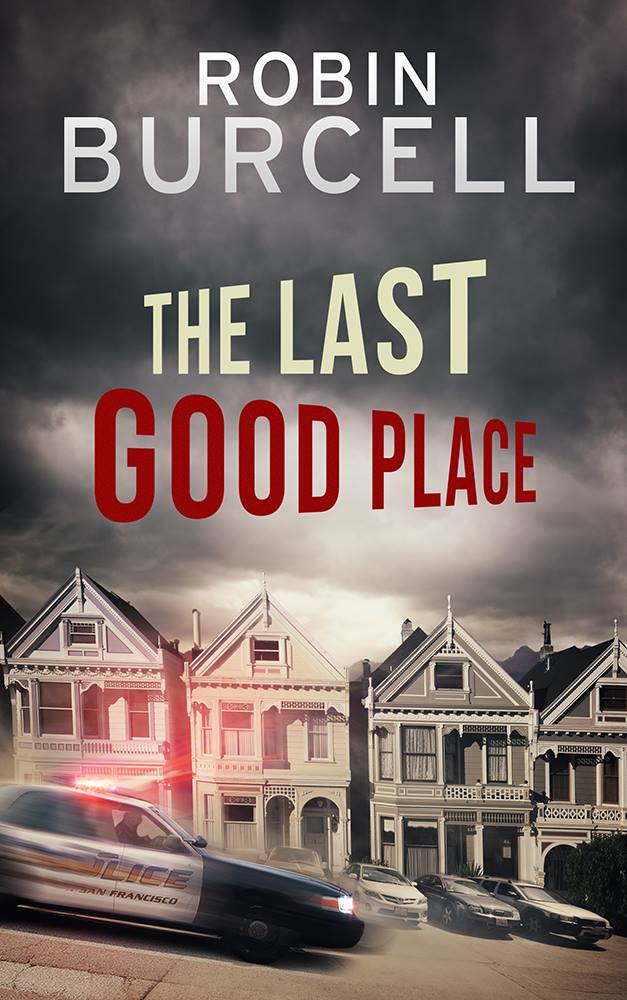
Robin Burcell: The Last Good Place Sunday, Nov 8 2015 

Robin Burcell has written a rebook of the Carolyn Weston books that formed the storyline for The Streets of San Francisco, one of Auntie M’s favorite shows in the 1970s.
The Last Good Place

Way back in the 1970s, an author named Carolyn Weston penned the novel POOR, POOR OPHELIA. That book was the basis for the hit television show, The Streets of San Francisco. I loved that show, and so when Brash Books asked if I’d be interested in continuing the late Weston’s series, I jumped at the chance.

Besides, how hard could it be? I thought. Well… A lot has changed since the 1970s, especially police work. But I was up to the challenge, so I read the three Weston novels and made the startling realization that they were very different from the TV show that I remembered. Or rather Weston’s cops, Al Krug and Casey Kellog, were different from my memory of the TV cops portrayed by Karl Malden and Michael Douglas.

What’s a writer to do? I had a choice about leaving these cops in the 70s, but I wasn’t so sure I wanted to write historical fiction. I started as a cop in 1983 and I’m very happy with the progress departments have made over the years. I had no wish to revisit that time period—and so we made the command decision to update the series to modern day.

LastGoodPlace-1200x628

My personal belief was that Al Krug, the grizzled, older cop Weston wrote as a foil to the younger, college-educated rookie, Kellog, was right for the time period in which he was created. Krug was a kick-ass-take-names-later sort of guy. Unfortunately that wouldn’t fly today, and so I knew I was going to have to temper Krug’s character—to keep him from getting fired—making him more of a mentor to Kellog, but one who was still very much old school.

And then there is the younger Kellog, fresh out of college and still living at home according to Weston’s version. The biggest problem there was that today, Kellog would have to put in at least a decade on the streets before he ever got to homicide, and so I fast-forwarded his time clock, giving him the needed years on the street (and moved him out of his parents’ house!) so that he had the experience to work homicide.

The fun part of the series was melding Weston’s characters with my memories of the television show. I wanted to bring in the best of both worlds. In the end my goal was to write a great police procedural that would pick up where the old books left off, but wouldn’t be out of place in today’s world.

Anyone else out there remember The Streets of San Francisco?

Burcell 2013 Book Photo

Robin Burcell spent nearly three decades as a police officer, hostage negotiator, criminal investigator, and FBI Academy-trained forensic artist. Her most recent book, THE KILL ORDER, was named one of Library Journal’s Best Thrillers of 2014.
Her upcoming book, THE LAST GOOD PLACE, is a continuation of the Carolyn Weston police procedurals which were the basis for the TV show THE STREETS OF SAN FRANCISCO.
More information can be found on her website at: http://www.robinburcell.com/

Linda Huber: Location, Location, Location Sunday, Nov 1 2015 

Auntie M is on her second leg of a book tour for DEATH UNSCRIPTED, winging it from NC all the way to Maine and back, with a stop for New England Crimebake and class with Elizabeth George. More on that in the November 18th review of her newest. In her absence, please heartily welcome guest blogger multi-talented author Linda Huber:

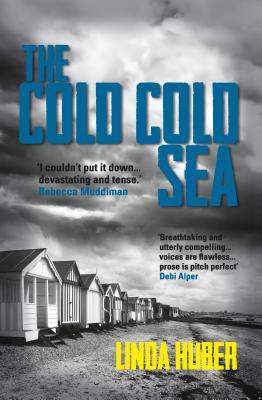
Writing The Cold Cold Sea and The Attic Room – Location, Location, Location.

TheColdColdSea
Nowhere in Scotland is far from the sea, so until I came to lovely Switzerland, I’d always lived less than an hour’s drive from the ocean. The Atlantic, to be precise.

And it was the Atlantic I had in mind when I was writing my second book, The Cold Cold Sea. The setting’s Cornwall, where I spent happy summer holidays as a child. I’ve never forgotten those waves crashing up the beach, or the damp, musty smell of the caves along the coastline. Or how the colour of the ocean is always changing, from blue to grey to green, white-tipped waves providing a contrast nearer the shore. Writing that book was such a pleasure – who wouldn’t enjoy spending the day (in their head) in the picturesque south-west tip of the UK?cornwall-540443_1280

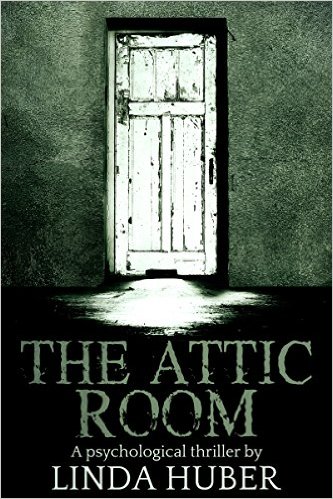
The Attic Room was different. TheAtticRoom
Although the book starts on the lovely Isle of Arran in Scotland, the main setting is Bedfordshire, in the middle of England, well away from fresh sea breezes.

Not only that, as the title suggests, a large part of the book centres round a spooky old house with an attic. And something bad happened up there, long ago when Nina, my main character, was just too young to remember. Nina’s search for the truth about the attic means she has to leave her island home and travel to an unfamiliar urban environment. And there’s no way of knowing if the people she meets mean well – or not.

In The Cold Cold Sea, the action is in the present. A young child disappears without trace –did she go into the sea and drown? Did she wander off and fall into a crevice? Or – the worst thought – did someone take her?

The drama in The Attic Room, however, is in the past. So to make the story live for my readers, part of the book is flashback chapters telling what happened to Nina’s mother, Claire, in the Bedfordshire house. Claire took that secret to her grave before the story starts, so the reader has knowledge that Nina doesn’t have. On the other hand, not everything Claire tells us is the truth…

In the end, the two books have a common theme – a mother trying to protect her child. There are four mothers in my books – Jennifer, Maggie, Claire and Nina. And the mother-daughter relationship is different for each of them – just like in real life.
LindaHuber

Linda Huber grew up in Glasgow, Scotland, but went to work in Switzerland for a year aged twenty-two, and has lived there ever since. Her day jobs have included working as a physiotherapist in hospitals and schools for handicapped children, and teaching English in a medieval Swiss castle. Not to mention several years spent as a full-time mum to two boys and a rescue dog.

Writing has always been her hobby, and over the years she’s had around fifty short stories and articles published in women’s magazines. Her debut novel The Paradise Trees was published in 2013, and was followed by The Cold Cold Sea in 2014 and The Attic Room in 2015.

Book ideas come from Linda’s daily life. The Paradise Trees was inspired by her father-in-law’s struggle with dementia, and The Cold Cold Sea began shortly after she learned that a child in her extended family drowned in the 1940s, aged eleven. The Attic Room begins in one of her most-loved places, the Isle of Arran on the west coast of Scotland.

At the moment she’s working on a further standalone psychological thriller, this one inspired by a chance conversation in the queue for the bar at a wedding.

Links:
Trailer for The Attic Room: https://youtu.be/l6Q0zpOhFLg
Trailer for The Cold Cold Sea: https://youtu.be/91GGeXcyGqA
website: http://lindahuber.net/
blog: http://lindahuber.net/blog/
Twitter: https://twitter.com/LindaHuber19
FB: https://www.facebook.com/authorlindahuber
Amazon UK: http://www.amazon.co.uk/Linda-Huber/e/B00CN7BB0Q/ref=ntt_athr_dp_pel_1
Amazon US: http://www.amazon.com/Linda-Huber/e/B00CN7BB0Q/ref=dp_byline_cont_ebooks_1

Pat McDonald: The Blue Woods Trilogy Sunday, Oct 25 2015 

From time to time Auntie M likes to mix things up. So today instead of a formal review, she’s introducing readers to a writer they may not have found. And being a series writer and a fan of reading them, Pat McDonald has a great one to seek out. Here’s her background and then in her own words, get to know this remarkable woman who has persevered despite a heavy medical condition to continue to write.

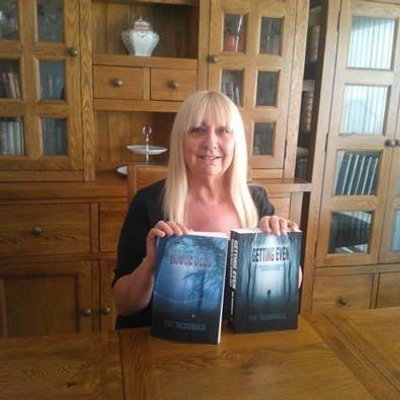
Pat_McDonald
British Crime Author Pat McDonald lives in a rural part of the Midlands, United Kingdom. She has an extensive career working as a researcher, project manager and programme manager within the British National Health Service and in law enforcement and the criminal justice system.

Her work encompassed Heart Disease, Mental Illness and Learning Disability (her formal publications under the name Pat Mounser). Her lifelong ambition has always been to become a writer of fiction; after all, fiction is a reflection of life of which she admits she is a long time voyeur.

“I am a people watcher, and nothing pleases me more than sitting in a public place observing the world as it passes by – hence my penchant for writing my novels in my favourite coffee shop, where I have met some extraordinary people.” She is now a full time novelist.

Her crime trilogy (nicknamed ‘The Blue Woods Trilogy‘ because of an over-active imagination at disposal of bodies!) consists of (1) Getting Even: Revenge is best served cold, (2) Rogue Seed and finally (3) Boxed Off.

Pat’s fictitious detectives D.I Luke Wariner and D.S Aidey Carter tackle a range of Major Crimes against a background of corruption and deception involving some of their own officers. Boxed Off, published in December 2014, brings the plot to its conclusion – or does it? “I only meant to write one book,” Pat confesses, “but I have a real difficulty in ending stories!” Well crime does go on!

Her current work in progress is a move to a different genre. It’s a Young Adult paranormal thriller about stalking, based in the North of Wales, UK, and has a hint of historical W.W 1 drama that is surprisingly haunting!

‘The Blue Woods Trilogy’

When I began writing fiction, I started by writing snippets of my own life which if I ever decide to write an autobiography would contribute as the basis to such a book. But I was far more interested in other people, having spent most of my life watching the world go by with all of its most interesting people.

That is why almost all of the ‘Blue Woods Trilogy’ was written in a coffee shop and other public places. Some of Getting Even was written on a plane out to Dubai and in United Arab Emirates hotels, what I call ‘real’ research; I was there so it had to go in the book.

I love to create my characters from snippets of conversations with strangers; such a character was Hugo Bott, the most unlikely person to become a Police Constable. Having spent seventeen years meeting police officers, I can honestly say my characters are my own creation, within the police setting I knew very well.

I like to take a real situation or setting and say “what if……” just for the sheer hell of it. I loved creating Hugo Bott because he is different with a twist and no psychosomatic testing in the days he was appointed, he became one of my characters.

I have been accused of having too many characters and hence too many personal situations, when what the reader wants is only the action and the thrills. My books are real life with a twist, and my disappointment with most crime books, films and dramas is that the police officers don’t seem to have a life outside of their work. Police officers do. Not only do they have to balance their home life against their work, it can often get in the way and influence it. One impacts on the other. I have tried to reproduce this and then add the – what if.

I don’t really do happy endings, life is not like that or if it is then I would say that these were charmed lives and I have yet to meet someone who has one. It doesn’t mean that my trilogy is all doom and gloom, far from it. I like to weave a theme through each one. The first is about revenge, but explores all facets of it; part of which is life has a natural justice. Rogue Seed was, yes, botanical – a plant growing in the wrong place by force of nature; but also it explores what would happen if a person grew in the wrong place and of course ‘Going Rogue’ is the police concept of going bad. Boxed Off was about finishing the books for me, making one’s life neat and tidy, but also about containing – a body, a person or in one scene people at a ‘rave’.

Finishing the trilogy left me wondering about a character in the first book who drops out of the plot. Needing to know what happened to her became my fourth book (although separate); Breaking Free allowed me to find out. You see I am a ‘free flow’ writer. I don’t plan my plots–they evolve. And so I decided what would happen if she, Livia Morrison, was to come back to the UK? It was my opportunity to explore another genre and is a mix that led me find my ending in Wales at Caernarfon Castle where the Royal Welsh Fusilier’s have their exhibition. This book is a combination of paranormal, historical and crime I wrote for my granddaughters and will be out during 2015.

I am currently editing this book whist I convalesce from a recent operation to remove a brain tumour and take up a new venture. Oh, did I mention the one I’m also writing? It is a humorous look at crime from the villain’s side…..working title ‘A Penny For Them.’

You can find Pat and her books here: Amazon: http://www.amazon.co.uk/Pat-McDonald/e/B00R372WK4/ref=sr_tc_2_0?qid=1434467288&sr=1-2-ent

Face Book: https://www.facebook.com/pages/Pat-Mcdonald/502374626484358?ref=bookmarks

Twitter: @issyblack

« Previous PageNext Page »