Lake District Murders with Style: Martin Edwards and Rebecca Tope Sunday, Nov 24 2013 

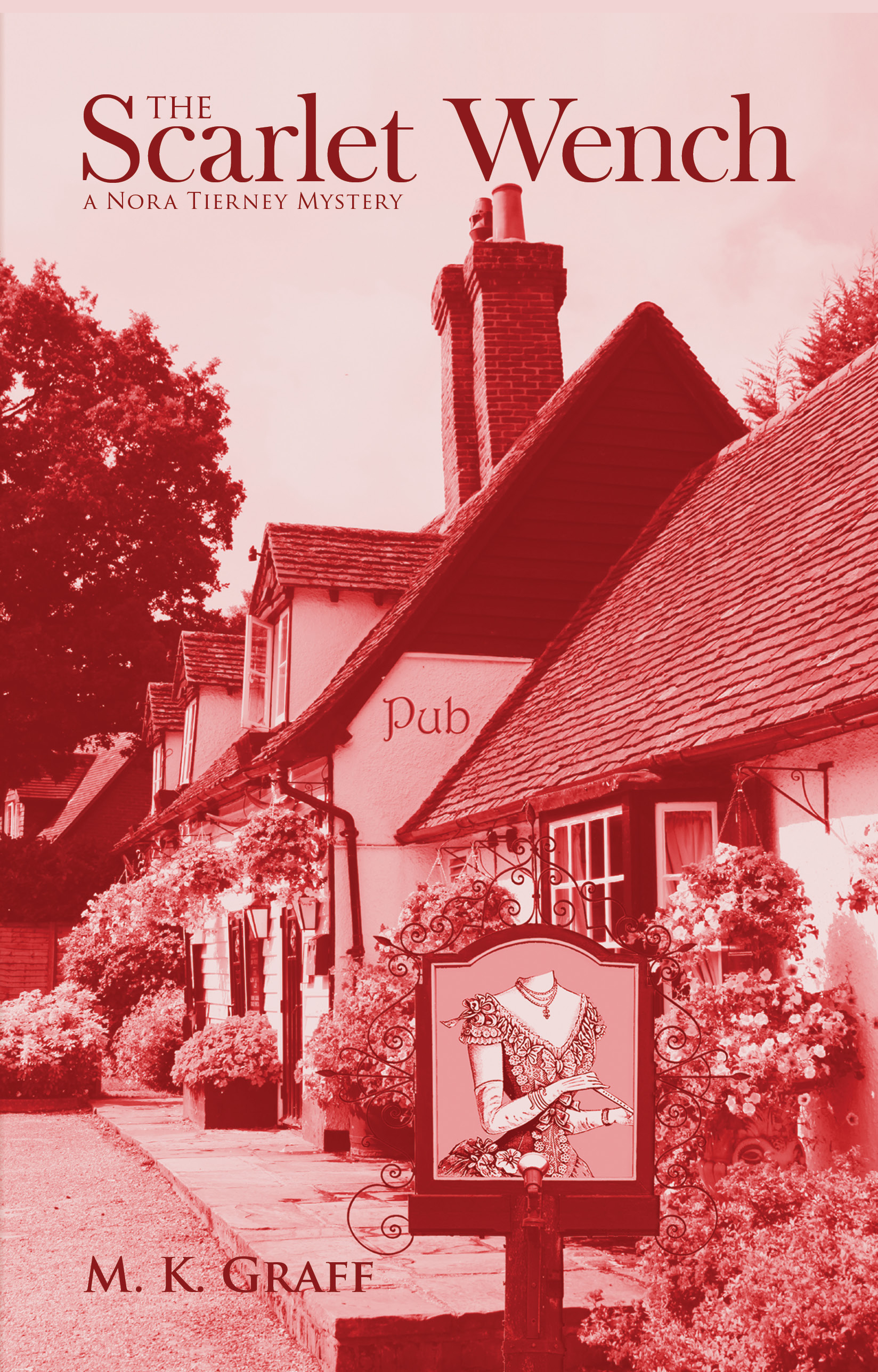
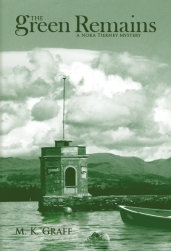
The glorious natural beauty of England’s Lake District, which contains its largest lake, rising fells, and every kind of tree found in the UK, hardly seems to present typical murder landscape. Yet Auntie M has chosen it twice for her own Nora Tierney Mysteries–The Green Remains and 2014’s The Scarlet Wench–and she’s certainly not alone. Two masters have series set in the land of Wordsworth and Beatrix Potter.

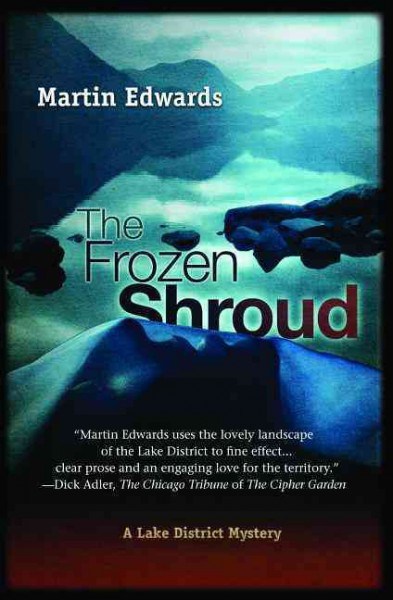
the-frozen-shroud-by-martin-edwards1With a strong feeling for the history of crime novels, Martin Edwards is the archivist for both the Crime Writers Association and for the Detection Club. His talk this year at St. Hilda’s reminded us that the Golden Age authors had more psychological depth than is generally acknowledged. Edwards’ knowledge of crime novels and history is extensive and he is a fascinating speaker.

Author of stand-alones, short stories and multiple essays on crime, he is best known for two series: the Liverpool Harry Devlin series and  the newer one that explores the Lake District and features DCI Hannah Scarlett and historian Daniel Kind.

The Frozen Shroud explores the hidden depths of the small yet remote and diverse locale. Highlighting the landscape and its ability to capture loveliness with menace are the hallmark of this series, confirmed in this sixth offering in the series.

With his vivid descriptions and an overlapping of murders to be solved, The Frozen Shroud capitalizes on a creepy local legend with links to the past and two murders on Hallowe’en that bear the same characteristics. Daniel Kind’s love of research of murder adds to the atmosphere, and Hannah Scarlett’s work situation, fraught with stress and coupled with the the rising tension between these two fascinating characters, adds to the texture of the novel.

There are plenty of red herrings that bring this series along classical lines, making it a totally satisfying and complex crime novel. The dialogue and prose are literate and realistic. Old hurts, revenge, misconceptions and plain old jealousy rear their head as motives. The characters living near the haunted ground of Ravensbank all have secrets with ties to the past, and it would be cruel to tell readers more without spoiling the plot. If you haven’t read this atmospheric series, now’s the time to grab one and then gobble them all up.


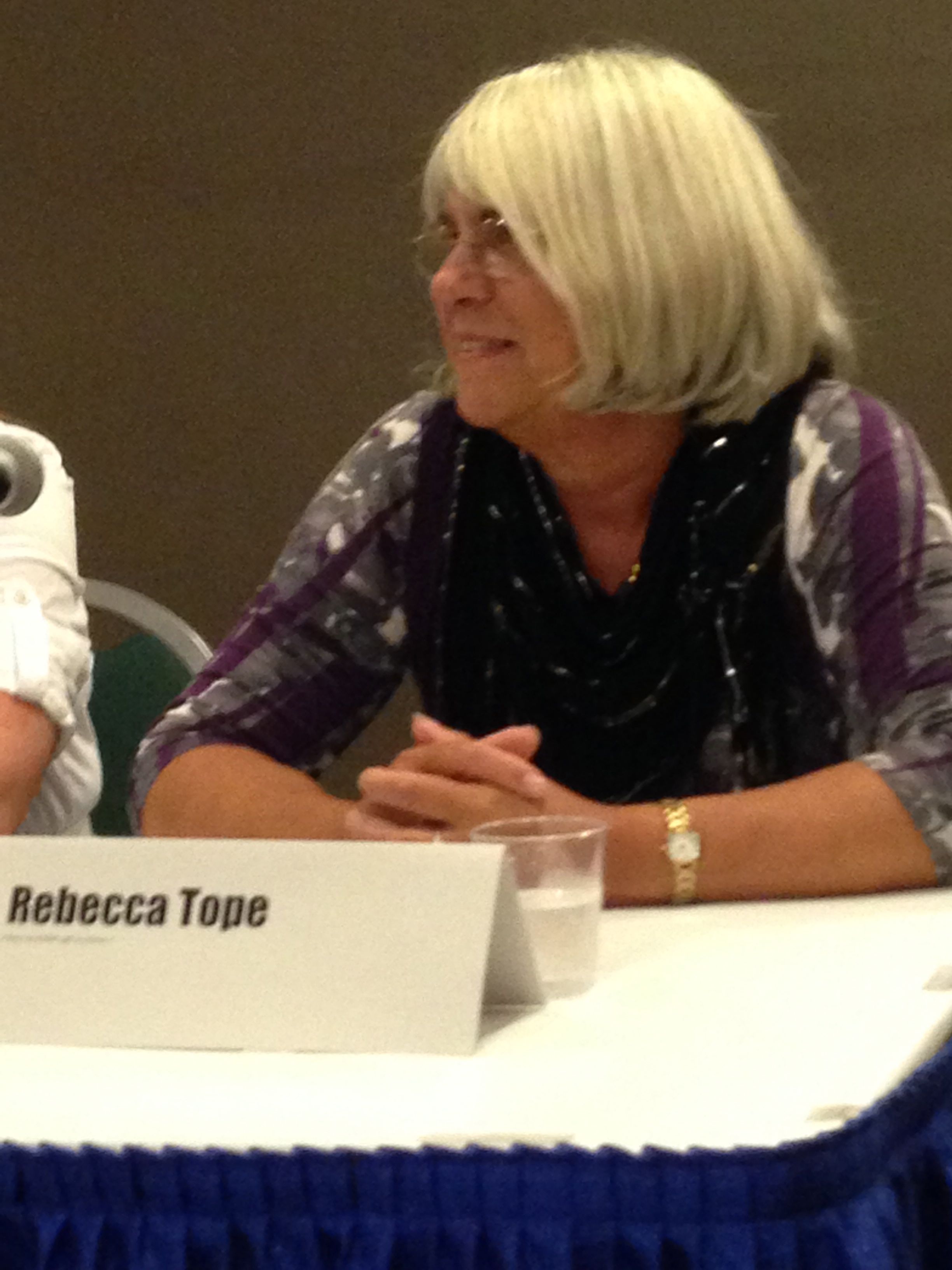
toprRebecca Tope, journalist and author, has four murder series in print: Den Cooper, Devon police detective; Thea Osborne, house sitter in the Cotswolds; rebecca topeundertaker Drew Slocombe; and now her newest series set in the Lake District and featuring florist Persimmon Brown.

I met Tope at St Hilda’s and again in September at Bouchercon, where her British perspective on the differences of mysteries by English and American writers added to her panel discussions. Warm and lively, Tope seems to find the time to write prolifically while living in rural Herefordshire, on a smallholding situated close to the beautiful Black Mountains. She raises Cotswold sheep along with two elderly dogs. Her evenings are spent spinning, knitting and weaving, and she takes commissions for big  pure wool throws and blankets.  Recently added alpacas will make soft baby blankets available. Now where does she find time to write?

Tope’s mind must be working all the time her hands are busy on new plots and characters. Introduced in The Windermere Witness, Simmy Brown’s Windermere florist shop seems an unlikely setting for involving her in murders. With her unconventional parents living nearby, running a B&B, Simmy is getting used to her new home post-divorce in Troutbeck. Her shop assistant, Melanie, and a smart teen, Ben, with a bent for investigation, form Simmy’s “team,” to the chagrin of the local detective, DI Moxon.    

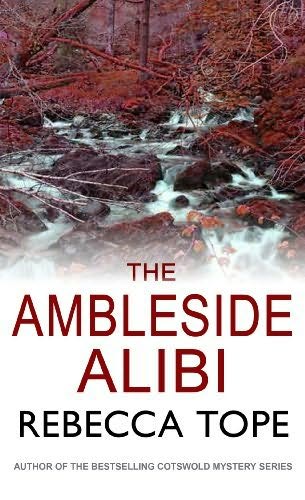
The Ambleside Alibi, book two in the series, finds Simmy unwittingly providing an alibi for a murder suspect, immediately after delivering a bouquet to a grandmotherly sort, sent from a granddaughter the old woman apparently didn’t know she had.  

Then another elderly woman is found murdered and a host of family secrets will be unearthed that may or may not tie the two women together. Against her better judgement, Simmy finds the peaceful new life she envisioned for herself once more fraught with danger and murder. When an attempt is made on her life, she knows she’s become more involved than she’d ever imagined.

Moxon provides a nice foil to Simmy, a reluctant witness and even more reluctant investigator, as he becomes exasperated in his attempts to protect Simmy while finding a murderer. The relationship between these two seems unlikely yet possibly inevitable down the road, a side aspect to drive readers look for the third installment in the series premiering in 2014, The Conistan Case.


Around the World in Crime: Norway, France, Iceland, Denmark and Venice Sunday, Nov 17 2013 

Auntie M’s reading list includes many fine Nordic and European authors she hopes you’ll investigate. These books are all great reads, and with the holidays approaching, make great gifts for the bibliophiles on your list.

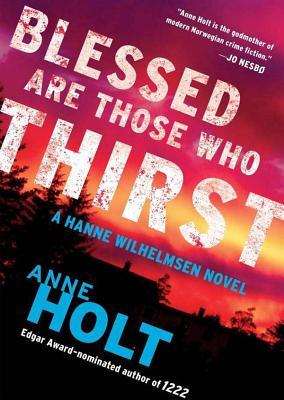
blessed-are-those-who-thirst.jpg.pagespeed.ce.Y23Pst4KrgHanne Wilhelmsen is a police investigator first introduced in Holt’s Blind Justice. Blessed are Those Who Thirst finds her battling a brutal Oslo heat wave, which has set off a huge upward spiral in violent crime in the area. She’s balancing it all with an unsolved rape case which disturbs her.

The newest crime scene she is sent to baffles her at first: in an abandoned shed, covered with blood, an eight-digit number is scrawled in blood on one wall. Is it human blood?

But there’s no victim, at least none at this site. Is this a terrible prank or the mark of a more sinister killer?

More of these bloody crime scenes start to crop up, all in isolated locations throughout the city, all with different numbers. Then Hanne’s colleague discovers the significance of those numbers: they belong to female foreign immigrants who have gone missing.

As her team races to track down this killer, the rape victim and her father separately plan their own vengeance.

How these intersect, with horrifying consequences, will keep readers rooted to the page. This is a well-plotted mystery in a fascinating series.

Holt’s inclusion of Hanne’s domestic situation adds nice texture and reminds us that police personnel all have home lives.


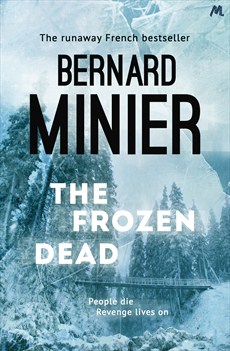
Bernard Minier’s The Frozen Dead was first published in French with the title Glace`, but this translation loses none of the chilling aspects frozen1444732252-detailof the original.

Minier draws on little-known facts to build his suspense, from the bizarre psychiatric methods at some points, to the subterranean power plant that becomes a plot point.

When a headless horse is found suspended from a frozen cliff in southwest France, it annoys the city cop assigned to investigate. Servaz should be dealing with three teens suspect of killing a homeless man.

Yet he cannot ignore this highly unusual and disturbing crime as the rumbling of a cable car brings the horse’s corpse into view. Everyone in attendance is disturbed.

Only miles away, a young psychiatrist named Diane Berg embarks on a journey that will mean so much more than just a year’s assignment in the Pyrenees at the Wargnier Institute.

When DNA from the Institute’s most infamous inmates is discovered on the animal, it is the first hint to Servaz of the nature of the madment he seeks, and sparks a series of horrific murders.

There’s no escaping the cold as theme in this thriller, from the gritty settings to the dark, grisly deeds carried out in the names of healing, and of revenge.

Minier’s novel explains the complicated and different police investigation method of France’s system, which adds to the tone. Readers will look for more by this talented crime writer and await the reappearance of Servaz and his music.


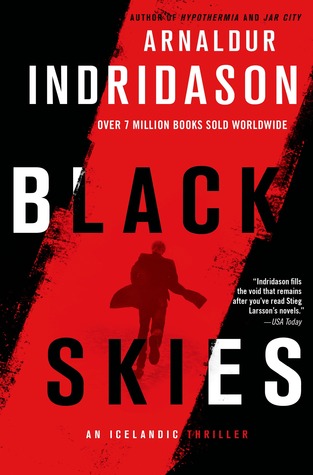
17286708Staying with the cold, we head to Reykjavik, Iceland’s setting for the Erlendur series. This tenth entry is Black Skies, by award-winning author Arnaldur Indridason, who won the CWA Golden Dagger Award for Silence of the Grave.

This time it’s Sigurdur Oli in the spotlight of this subtle and superbly crafted police procedural. Oli finds himself reluctantly agreeing to a friend’s request to head off a blackmail attempt in a scheme of wife swapping. Then he finds the woman accountant found bludgeoned to death was involved with her husband in the scheme.

But Oli is forced to look beyond this obvious motive when the victim’s association with a group of disreputable bankers becomes known.

This has an almost sociological feel to it, without judging or hitting the reader over the head, as Oli follows leads that will take him to the heads of high-finance and the lowest criminals on the economic ladder.

That he becomes disgusted with both extremes speaks volumes. The laziness of the criminals he encounters stands in stark contrast to the greed and flagrantly accepted corruption of the upper class.

By showing how these encounters affects Oli’s own thoughts about his family and marital history, we become involved with him as a real person who happens to be a policeman. That he is tasked with this unenviable job that is sometimes at odds with his personal feelings becomes the heart of the book.


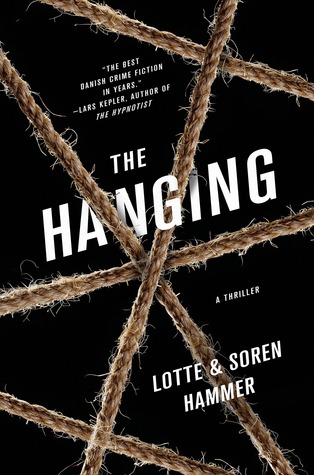
Another Nordic entry not to be missed comes from Denmark’s sibling team of Lotte and Soren Hammer. 16044964The Hanging brings readers the unusual team of lead detective Konrad Simonsen in this startling novel that starts off with a bang and never lets up.

When two Turkish children get to school early, they find the mutilated and naked bodies of five men hanging from the gymnasium ceiling. It doesn’t help the investigation when a prejudiced policeman takes his time responding to the call.

The horrific crime sees Simonsen recalled from a vacation, which stirs a media frenzy that is compounded when the link between the victims is known: all were pedophiles.

Fighting public opinion that their killer should be overlooked complicates his team’s investigation. At the heart of the matter will be the lingering question: when is justice served?

Adding texture to the book is the feel for Copenhagen the authors transmit, as is the team the authors they give to Simonsen. These include a young policewoman feeling her way through the start of her career, and another with independent financial means who doesn’t need the job.

The first of a planned six-part series, Lotte and Soren Hammer have fans already clamoring for the next translation.


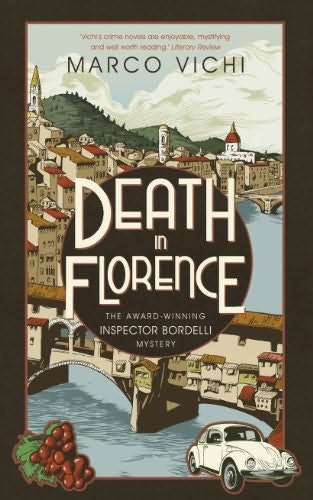
n401410The lovely vintage feel and VW bug on the cover of Marco Vichi’s Death in Florence tell the reader immediately that we are not in contemporary times but rather in 1966.

This is the fourth in the series featuring the novel’s protagonist, Inspector Bordelli, owner of the VW.

“How can a boy vanish into thin air?” That’s the question absorbing Bordelli at the moment.

Giacomo Pellissari seems to have melted into the pouring rain leaving his school. When his mother’s car won’t start, his lawyer father arrives to the school to pick him up an hour late. The boy was seen running into the downpour–and there his trail grows cold.

Bordelli begins an increasingly desperate investigation into the boy’s disappearance with the help of his young sidekick, Piras. They will uncover abuse of power, rape, murder and a ring of homosexuals as they delve deeply into the case.

But he is thwarted by the flood that overwhelms Florence. Based on a real occurrence in November of that year, the swollen river Arno laps over the arches of the Ponte Vecchio, breaks its banks, and completely overwhelms the city.

While streets become rushing torrents, the force of the water sweeps away vehicle and trees, doors and even a coffin lid. Mud piles of debris line the city Bordelli calls home, yet the obstinate detective persists in finding a resolution to the disappearance of a little boy.

Written in an atmospheric and literary style, the ending will leave readers surprised and questioning the next volume to follow.


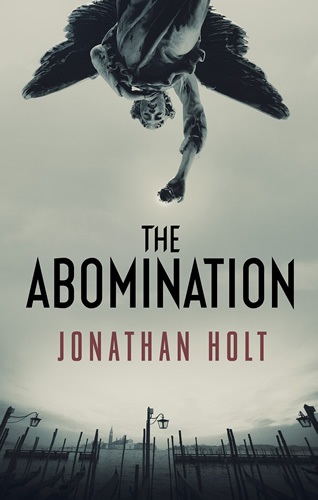
Moving from Florence to Venice, the debut novel The Abomination by Jonathan Holt has been hailed for its complex plot involving two forceful abominationwomen, the Carabiniere Captain Kat, and her American counterpart, Holly.

Their case kicks off when the body of a woman washes up from the Grand Canal wearing the robes of a priest, a desecration seen by the Catholic Church as The Abomination. That this happens on the night of the Feast of the Epiphany with its masked balls add to the drama.

Duality is enhanced with the idea of Carnvia.com, a virtual Venice, a social network revolving around a simulated world that gives users complete anonymity by letting them hide their identities behind carnival masks.

The narrow canals and thick, sewage-scented fog that envelops Venice at times is aptly represented, a counterpoint to the usual image of artworks and tourist cathedrals, and provides the backdrop for the corruption and conspiracy the two women will find.

The action never flags in this combination of mystery, tech thriller and conspiracy. The two worlds of Venice and its cyber-counterpart create a compendium of mysteries that are skillfully rendered.

There are two more volumes in the works from this talented author who blends and balances intriguing characters with multiple story-lines of action.


Susan Sloate: Forward to Camelot Sunday, Nov 10 2013 

Camelot_Cover_11 (1)(2)

Guest Blog – Cutting Down to Size

By Susan Sloate

     You would think that cutting your manuscript was relatively easy. I mean, compared to getting the words down on paper in the first place, cutting what’s already there should be a snap. Didn’t Michelangelo say airily, “I just took a chisel and cut away everything that wasn’t David”?

     Well, that sounds simple enough. You drop an extraneous phrase here, a flabby sentence there—and suddenly your manuscript is ten pages shorter and you’re all ready for the next step.  Nothing to it, right?

     Uh—wrong.

     I hadn’t realized how much I needed to do it until I began a much-needed revision this summer on FORWARD TO CAMELOT, the 2003 time-travel thriller I co-authored with Kevin Finn. We had both loved the book as written, but with a 50th-anniversary edition about to be published (commemorating the 50th anniversary of the Kennedy assassination, which is the subject of our novel), we felt it was a good time to fix some of the usage and grammar errors that had slipped by us the first time, and especially to tweak a couple of small historical points that had bothered me for ten years.

     That was the intention. Make sure the quotation marks are facing the right way, check the history and turn in the book to our publisher.

     Then Kevin and I began to look at what we had, and we realized there were other issues we wanted to address. What started as a simple fix became a much more complex, line-by-line scrutiny, and what we were eventually looking for were the words, sentences and even paragraphs we could cut to bring down the length. Our publisher, Drake Valley Press, explained gently that a book as long as the original version (almost 500 printed pages) would cost so much that we might not see any profit on it at all in paperback, and it could affect eBook sales as well. But if we could significantly reduce the word count, we would do a lot better. And besides, the narrative really did have its flabby moments. Keep the story, by all means—just make it, you know, a lot shorter and simpler.

     I began to feel as though I had an “Everything Must Go!” sign on my computer screen.

     While I began the historical fixes, Kevin began streamlining the manuscript, pulling out sections he felt could safely be cut while maintaining the pace, the plot and the flavor of the original. While we both resisted cutting entire scenes—we cut only one full scene, and that one only reluctantly—there were certain scenes that we also knew we wanted to rewrite; we hadn’t got them right in 2003 and we had another chance now.

     But when I finally saw Kevin’s long, meticulous (did I mention long?) document listing all the changes—which ran about 30 pages—I almost cried. Then began the bargain-with-your-partner phone calls: “Look, we have to keep the hunt scene at the end.”

     “But it’s ten pages; that’s way too long.”

     “Okay, okay. I’ll cut it way down, as long as I can keep the gist of it.”

     “You can have the gist. Just get rid of the gristle!”

     Thus began the slash-and-burn portion of the rewrite, where I began incorporating Kevin’s notes. (“Did you realize you write everything twice?” he asked me. “If you could cut it down to one telling, we could really cut through this manuscript.” By this time the word ‘cut’ or ‘slash’ had a queasy effect on me.)

     We argued, and we both agreed to accept less than what we wanted. Kevin let me keep almost all the scenes intact, as far as intent; I swallowed a good deal of bile and pride and slashed away at anything that wasn’t strictly necessary.

     Within a couple of weeks we’d brought down the 488-page original manuscript to 382 pages, cutting 100 pages (25,000 words) in the process. It was still the longest book either of us had ever written, but it was no longer a project you had to schedule in order to read. The word count was in the ballpark.

     Did I enjoy the process? Most of it, no. But on some level I did like examining a paragraph and finding a way to cut straight to the heart of what we were trying to say. It’s a process writers need to go through all the time—understand what we want to say and say it as effectively—and as simply—as we can. We can never afford to forget that part of our process, especially writers who become very successful, and whose editors then seem to somehow mysteriously evaporate (or more likely, are intimidated or overpowered by the author at that point).

     I know I’ll do the same process from now on: I’ll look for stuff I’ve said twice and hack away at it, along with everything else the reader doesn’t absolutely need to know.

     And maybe that snob Michelangelo was right: when you finish slashing with your machete, what you end up with looks a lot less like a flabby ‘before’ picture and a lot more like that glistening David in marble.

     That alone makes it worthwhile.

     Good luck with your own machete …

WHERE WERE YOU THE DAY KENNEDY WAS SAVED

On the 50th anniversary of the JFK assassination comes a new edition of the extraordinary time-travel thriller first published in 2003, now extensively revised and re-edited, and with a new Afterword from the authors.
On November 22, 1963, just hours after President Kennedy’s assassination, Lyndon Johnson was sworn in as President aboard Air Force One using JFK’s own Bible. Immediately afterward, the Bible disappeared. It has never been recovered. Today, its value would be beyond price
In the year 2000, actress Cady Cuyler is recruited to return to 1963 for this Bible—while also discovering why her father disappeared in the same city, on the same tragic day. Finding frightening links between them will lead Cady to a far more perilous mission: to somehow prevent the President’s murder, with one unlikely ally: an ex-Marine named Lee Harvey Oswald.
Forward to Camelot: 50th Anniversary Edition brings together an unlikely trio: a gallant president, the young patriot who risks his own life to save him, and the woman who knows their future, who is desperate to save them both.
 
History CAN be altered …
Camelot_Cover_11 (1)
SUSAN SLOATE is the author of 20 previous books, including the recent bestseller Stealing Fire and Realizing You (with Ron Doades), for which she invented a new genre: the self-help novel. The original 2003 edition of Forward to Camelot became a #6 Amazon bestseller, took honors in three literary competitions and was optioned by a Hollywood company for film production.
Susan has also written young-adult fiction and non-fiction, including the children’s biography Ray Charles: Find Another Way!, which won the silver medal in the 2007 Children’s Moonbeam Awards. Mysteries Unwrapped: The Secrets of Alcatraz led to her 2009 appearance on the TV series MysteryQuest on The History Channel. Amelia Earhart: Challenging the Skies is a perennial young-adult Amazon bestseller. She has also been a sportswriter and a screenwriter, managed two recent political campaigns and founded an author’s festival in her hometown outside Charleston, SC.
After beginning his career as a television news and sports writer-producer, KEVIN FINN moved on to screenwriting and has authored more than a dozen screenplays. He is a freelance script analyst and has worked for the prestigious American Film Institute Writer’s Workshop Program. He now produces promotional trailers, independent film projects including the 2012 documentary SETTING THE STAGE: BEHIND THE SCENES WITH THE PIRATES OF PENZANCE, and local content for Princeton Community Television.
His next novel, Banners Over Brooklyn, will be released in 2014.
For updates and more information about Forward to Camelot: 50th Anniversary Edition, please visit http://susansloate.com.

Elly Griffiths: A Dying Fall review and brief interview Sunday, Nov 3 2013 

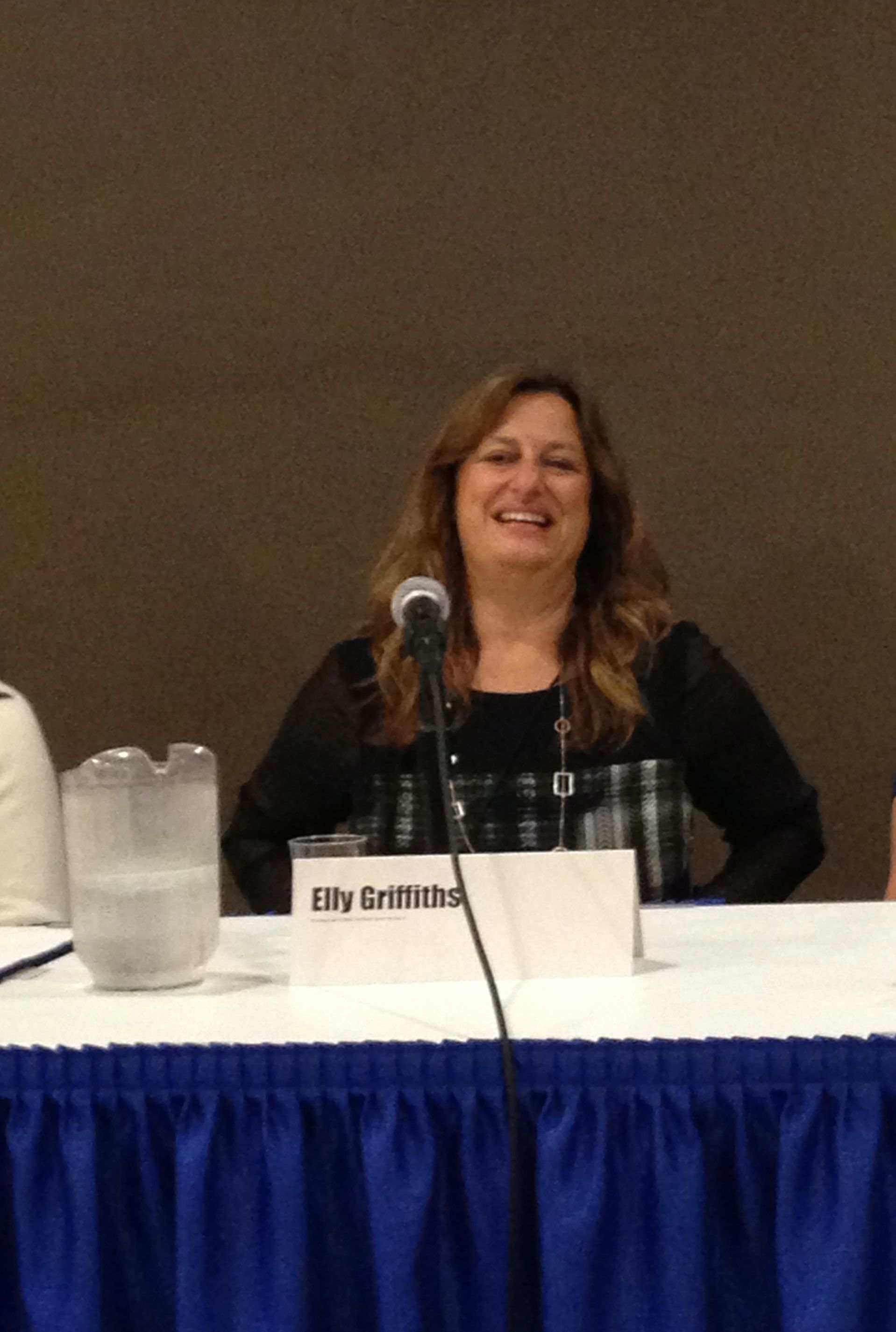
EllyGriffithAuntie M had the pleasure of meeting and talking with Elly Griffiths at Bouchercon, Albany.

The author of the Ruth Galloway series and winner of the Mary Higgins Clark award has a lively sense of humor and a warm personality.

She talked about the origins of her series, featuring the down-to-earth forensic archeologist whose independence and intelligence make her a delightful character readers are eager to follow.

Auntie M: Tell readers how you came up with the idea for the series.

Elly Griffiths: My husband was a lawyer who came to me one day and said he wanted to go back to school to be an archaeologist. I became interested in his studies and his work, and the idea was born.

AM: And Ruth?

EG: With my husband in school, we took a family vacation back to the Norfolk coast where I’d spent summers in my youth. I was thinking about a series as we walked along the beach by the marsh on a foggy day. Out of the mist, Ruth literally came walking to me, fully realized. I saw what she looked like, what she wore, down to knowing  what kind of cracker she would eat!

AM: Ruth is such a realistic, well-rounded person–smart, stubborn, still anxious about her role as a mother. You’ve handled Ruth’s relationship with Harry Nelson, the father of her child, with a great aching tenderness.

EG: They find themselves in an unusual situation. Harry is Catholic, so there’s that to consider, and he loves his wife. Can you love two people at the same time? I’m still working that one out . . .

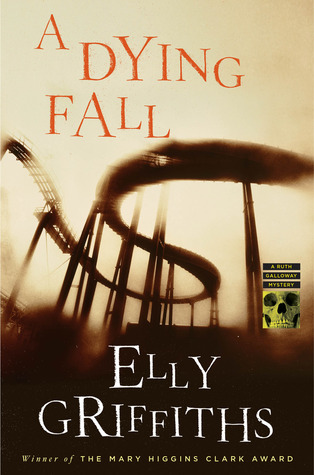
AM: And readers will be waiting to see what you and Ruth have decided!                                            15814458

A Dying Fall is book five in the Ruth Galloway series.

Ruth is surprising herself by juggling motherhood of an 18-month old with the demands of her teaching and the annual university dig.

A call from a former classmate with news that one of their circle from university days has died in a fire brings Ruth memories of their time together: shared secrets, drinking bouts, sharing a flat.

Her memories take on a golden light and she rues she hasn’t stayed in touch Dan Golding. “Now she will never hear from him again.”

But the very next day after years of silence, Ruth receives a letter from Dan that changes everything. When Ruth asks Harry to look into Dan’s death, he asks an old colleague’s help–only to find the professor’s death was anything but an accident: the man’s door had been locked from the inside.

Then Ruth receives a call from Pendle University in Lancashire to consult on an important finding of Dan’s just before his death. She packs up toddler Kate and heads north with her friend, the Druid Cathbad, to Lytham, far too near where DCI Harry Nelson and his family are taking vacation with Harry’s family in Blackheath. Cathbad’s presence will lend its own surprising connection.

Dan was on the verge of a major announcement based on his discovery, which intrigues Ruth in her professional capacity as much as she longs to unearth the truth about the link between Dan’s theories and his murder.

What follows is a brew of old bones, neo-Nazis and New Age hippies mixed with trips to Blackpool Pleasure Beach and the archaeology of early Britain. The plot has enough twists and turns to keep the mystery alive, while Harry’s extended family are on the scene and their interactions add to the texture, at Harry’s obvious discomfort.

Griffiths weaves the archaeology into a compelling plot while she manages to update the characters’ private lives and move those forward. It makes for an intriguing crime story that will have readers looking forward to the next mystery featuring Ruth Galloway.


Continued Series Winners: James, Mays, Cleeves, Toyne, Rhodes, Billingham & Haddam Sunday, Oct 27 2013 

Auntie M is reading a ton of great series and wants to suggest you check out these continued winners.

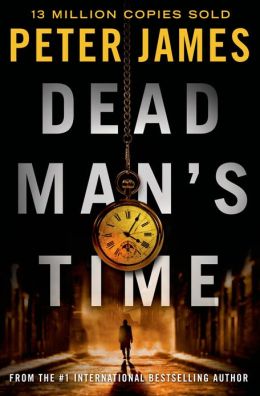
dead man's time by peter james Peter James’ Roy Grace novels have captivated readers in the millions and he continues his powerful series with Dead Man’s Time. Set in Brighton, these police thrillers follow the Detective Superintendent and his relationship. The newest has the unusual premise of a prologue from 1922, when five-year-old Gavin Daly and his sister board a ship for Dublin after the death of their parents.

At the dock in New York, a messenger carries two things that will haunt Gavin for the rest of his life: his father’s pocket watch, and a paper with four names and eleven numbers written on it. Gavin pledges to find out the meaning of these things and spends a lifetime searching.

Fast forward to current time, and Grace is getting used to being a new father and the lack of sleep that brings. A string of burglaries have captured the attention of Brighton’s residents.

When an old woman is murdered and a huge cache of antiques she kept stolen, he is surprised when her family are only interested in one item: a vintage pocket watch. The victim’s brother is none other than an aged Gavin Daly, still on the hunt having amassed incredible wealth as the years have passed.

What Grace will find as he probes is a mixed bag of old revenge and new hatreds. He will become mired in the machinations of several trails, leading to the antiques world of Brighton, to Marbella and its crime world, and back in time to the crime families of New York.

And all the time he seeks to unravel this twisted scheme, a madman plots against his beloved Cleo and their infant son. A wonderful addition to the series, meticulously researched and intricately plotted.

Auntie M had the pleasure of meeting with Peter James this summer and found him warm and likeable, with a wicked sense of humor not unlike his protagonist.


Peter Mays’ Lewis trilogy captures the remoteness of the Outer Hebrides area and its stark beauty in his award-winning series that serves up the complexity of human relationships.

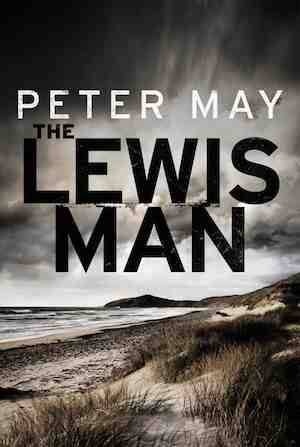
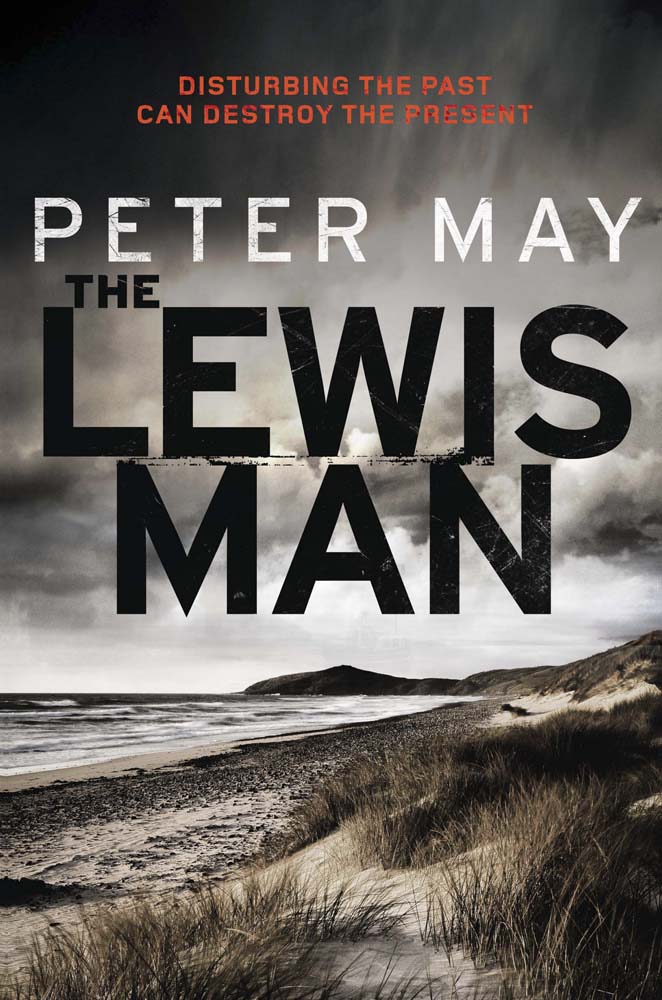
After the success of The Blackhouse, Mays second offering, lewisman300The Lewis Man, finds his protagonist, former DI Fin Macleod, bound by his past to help the family of islanders he is linked to by history and familial ties.

The father of his lover, Marsaili, has always maintained he was an only child, and enters a care home suffering from dementia when Marsaili’s mother has her fill of taking care of him.

Then a corpse is found in a peat bog, and far from being the historic body it is first thought, it is quickly ascertained that this body is far more recent–and is a DNA match to Tormod Macdonald, Marsaili’s father.

This winning novel shows the plot through Fin’s eyes and through the remembrances and clouded memory of Tormod, an interesting device that allows the story of Tormod’s upbringing to unfold, while explaining why he felt it necessary to claim he had no family at all. The climax will keep you reading well past lights out time to seek the improbable resolution to this complicated novel.

43627_TheLewisMan_TPB-Red.indd The Chessmen completes the trilogy. With his divorce final, Fin Macleod has moved back to Lewis and is working as a private investigator.

He is putting his life in Edinburgh and his police skills behind him. Or so he thinks.

He takes an assignment as head of security to track down poachers working a huge island estate, and finds himself reunited with old friends including Whistler Macaskill. Their history and that of their friends form the basis for the action that follows when a body is found in a crashed plane at the bottom of a loch.

May’s uses the device again of showing the past in episodes, this time through Fin’s remembrances. The 1919 tragedy of the Iolaire is recounted and haunts the action.

That loch discovery will change the very foundation upon which Macleod’s memories are built, for a secret being kept for decades by people Macleod thought he knew. At stake will be lives, his and others, and a girl who needs to be saved.

This gritty series has given readers surprising plot twists and brilliant characterizations throughout.

Readers can only hope May will take a page from Ann Cleeves, whose Shetland trilogy so thoroughly engaged readers that she decided to bring out a fourth volume.


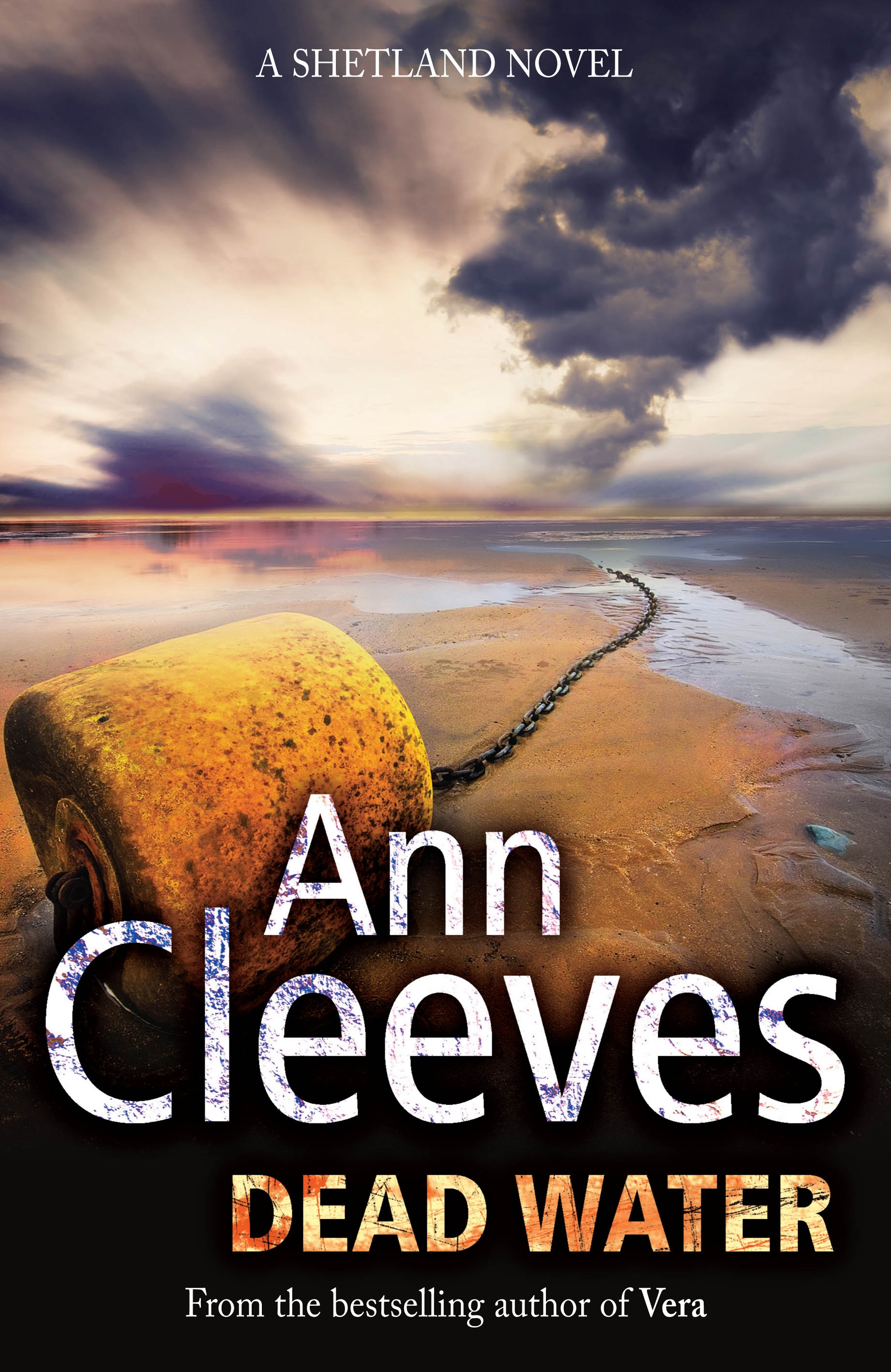
Dead Water continues the story of Shetland Island detective inspector Jimmy Perez. Blue Lightning Spoiler alert: In a shocking twist in the third volume, Perez’s fiancee was murdered, Dead_Water_HB_fc_and the detective is still struggling with that loss as he shares custody of her daughter with the girl’s biological father.

Jerry Markham is a journalist from Shetland whose family run a pricey hotel and restaurant in the area. The young man had left the island for London and work on a bigger and more important paper.

He left in his wake a scandal involving a young woman he made pregnant, who has gone on to make a life for herself on the island and whose impending marriage to an older seaman nears.

Then Markham’s body is found in a boat right outside the home of the Procurator Fiscal, Rhona Laing, a contained woman with a tidy, bleak house, who outlet in a crew team marks an otherwise lonely existence, one she prefers on her road to political advancement.

With Perez on leave, a young DI from the Hebrides is called in to conduct the investigation. Willow Reeves represents an unusual character and she’s able to bring Perez into the case by using his local knowledge. She also gets him to start to look past his grief, as his detecting skills are brought into play.

The case seems to revolve around Sullum Voe, where Shetland’s oil and gas industry are centered, and the big story Markham was following that brought him home.

Then a second death occurs, muddying the waters, and Perez and Reeves will team up to unmask a killer. Readers will hope Cleeves, who also writes the wonderful Vera Stanhope series, will keep Perez afloat.


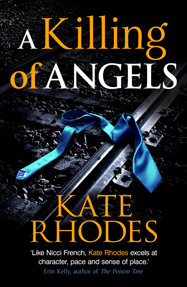
a-killing-of-angels-by-kate-rhodesKate Rhodes knocked our socks off with her first Alice Quentin novel, Crossbones Yard, a complex mystery whose shocking ending resounded with readers.

In this second installment, A Killing of Angels, the behavioral psychologist is back with a new case that finds her assisting the police again, despite her reservations after the nightmare of the first book.

Fiercely independent Alice is training for a marathon, despite London’s hottest summer on record. Her specialty in personality disorders makes her an expert at character analysis and an enormous help to the police.

The body in question was a suspected suicide, until a picture of an angel and a few white feathers are found stuffed into the victim’s pocket.

The killings continue and it’s obvious that the Square Mile and the banking world is the locus for the crimes. As Alice tries to help detective Don Burns with the case, she finds herself dragged deeper into the intrigue and the lives of the people involved.

Complicating matters are the journalists who keep the murders high profile, suggesting the killings are retribution for the banking world and its self-absorption.

Readers can’t help but be engaged with Alice and her complicated history, with Rhodes’ intricate plotting, and with her facility for choosing prose that matters, echoing her poetry background. This is a thumping good read.


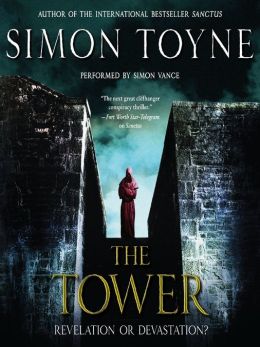
Simon Toyne’s Ruin trilogy has captivated readers with the world he created in his series of a haunting conspiracy thrillers. Tower-2 p0_v2_s260x420Nonstop action and breakneck twists continue in The Tower.

Santus introduced readers to Liv Adamson and the prophecy that caused her brother’s death and changed her life.

The Key left Liv trapped in the Syrian Desert, with her erstwhile savior, ex-special forces Gabriel Mann, suffering from the deadly virus that originated in the Citadel, an ancient monastery at the center of the conspiracy.

Enter new FBI agent Joe Shepherd, at first glance an unlikely choice to work the case after a cyber-attack at the Goddard Space Center that disables the Hubbard telescope and the subsequent disappearance of the prize-winning scientist in charge, who has left behind a cryptic and chilling message.

But Shepherd’s background with degrees in astrophysics and computer science make him the perfect choice. Despite the secrets he is hiding, Shepherd’s investigation leads him to connect these new incidents with the explosion months ago at the Citadel and the viral outbreak that ensued.

Readers will be engrossed in Shepherd’s journey with the added pressure of the device ofa  countdown clock dogging his heels. Then unusual things start to happen around the globe, and it remains to be seen if humanity can be saved.

Things will come full circle, but what is that meaning of that phrase? It it the ending of everything known before, or an entire new beginning?

For the woman at the heart of it all, Liv and her destiny will change the way the world survives–if it can. This third novel successfully answers all the questions raised in the other two, while providing a meaning and reason for the episodes of the others.

Auntie M met with Simon Toyne this summer and his outrageous good looks and charm belie the complicated mind needed to create this new world and the roller-coaster ride his readers will find.


Hearts Sandp0_v2_s114x166 Jane Haddam’s Gregor Demarkain novels continue to entertain. In this 28th installment, Hearts of Sand takes the investigator to the old-monied town of Alwych, Connecticut.

Although Chapin Waring disappeared thirty years ago, the quarter of a million dollars she had with her from a series of bank robberies was never recovered. There have been no sightings of the woman and she’s rumored to be dead.

Then new rumors fill the town: that Chapin has been seen on the beach or in a store, and these prove true when her body is found in the family’s vacant home, a knife sticking out of her back.

As a retired profiler, Demarkian excels at reading people and this kind of situation is right up his alley. With the local police stumped, he’s asked to help them narrow their field of suspects, and there are far too many of them.

Research into Chapin’s life shows her to have been a manipulative girl within an inner circle, whose attraction to danger led to the bank robberies and a car crash that killed her accomplice. The remaining people of her inner circle are just as delectable suspects as are the victim’s own sisters. Haddam gets small town snobbery just right.


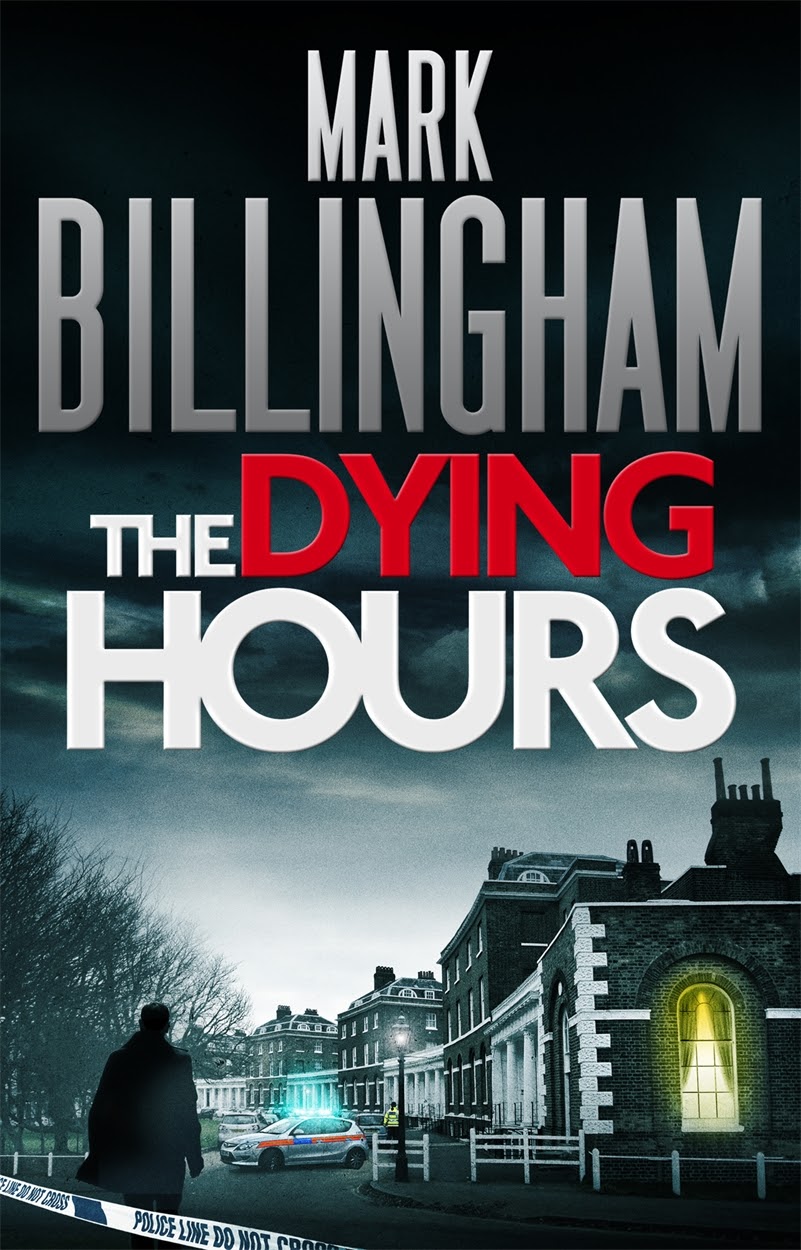
We’re back across the pond with Mark Billingham’s wonderful DI Tom Thorne series. Number eleven doesn’t disappoint: it’s vintage Thorne  The Dying Hoursat his crankiest and most recalcitrant in The Dying Hours.

Busted back to uniform after the horrific events in Good as Dead  and losing the title ‘detective’ while remaining an inspector hasn’t changed the way Thorne’s analytical mind works. Despite his demotion, and putting his budding relationship in jeopardy, Thorne’s instincts run true when he’s called to the scene of a suicide that doesn’t feel right to him.

Unable at first to pinpoint his unease, it soon becomes apparent, at least to Thorne, that a series of suicides of elderly people don’t ring true. One thing they all have in common is a lack of depression or sadness other suicides exhibit.

Try convincing the Murder Squad of that, though. The new head of the very team he once ran refuses to accept these might be the killings of a sick mind.

But any Thorne reader knows he will not take dismissal well, and he plunges into his own parallel investigation, calling on his former colleagues and few remaining friends to help out, despite that they must put their own careers on the line, and jeopardizing any sliver of career he might have left of his own.

This is vintage Thorne, from his predilection for country music to his doggedness once he becomes convinced he’s right.

Adding to the texture is Billingham’s ability to get inside the mind of the creepy villain, bent on revenge and justifying his horrific actions. By adding in the point of the view of the perpetrator, Billingham creates a wily adversary and gives readers a chilling glimpse inside the mind of a murderer.


Elizabeth George: Just One Evil Act Sunday, Oct 20 2013 

Don’t let the length of over seven hundred pages deter you from plunging into Elizabeth George’s new novel, Just One Evil Act. The eighteenth Inspector Lynley novel will leave readers knowing much more than a few Italian phrases once they’ve finished this tome.    images_012

The action centers on the reaction of Lynley’s sergeant, Barbara Havers, to the news her handsome neighbor’s daughter has disappeared.

Havers’ friendship with the girl, Hadiyyah Upman, and her father, microbiolgist Taymullah Azhar, has grown over the two years the duo were the detective’s neighbors.  In the last installment, Believing the Lie, Hadiyyah’s mother had waltzed back into her daughter’s life, surprising the girl, her father, and Havers, all seduced by the woman’s easy manner and ability to fabricate a believable friendship. Angelina Upman is a complicated woman keeping multiple secrets, a beauty whose family has disowned her for having a child with the married Pakistani scientist.

Months pass with no word on the child’s whereabouts, despite Havers’ digging and helping Azhar hire a private detective.

Then Hadiyyah is kidnapped from a market in Lucca, Italy, where she’s been with her mother and Angelina’s fiance. Desperate to help Azhar, worried for the child, Havers makes the fatal mistake of enlisting a tabloid journalist to force the British police to become involved in the British citizen’s abduction. To her dismay, it is Lynley who is sent to Italy to liaise with the British family.
This splendidly plotted novel takes readers to Italy, introducing their very different policing system, and the wily detective Salvatore Lo Bianco. While Italian phrases liberally dot these scenes, George cleverly manages to convey their meaning without direct translations. The intriguing setting is well-described and adds another layer to this complex novel.

In London, Havers finds herself embroiled deeper and deeper into career-killing choices. On the personal front, Lynley is trying to convince himself he is starting to put his wife’s death behind him, and finds himself drawn to an unsuitable zoo veterinarian. His past fling with Superintendent Isabelle Ardery confuses everything, and will impact heavily on Havers’ future.

At one point readers will think the novel has reached its climax right in its middle, only to find that what would have been an ending for another writer is merely a step into the convoluted story that continues to branch off and have fingers reaching right into the lives of all these characters on different levels. At one point a resolution will appear completely out of sight, yet there is an ending that will satisfy readers, even as it does not satisfy every character.

This is a multi-layered story of love and betrayal, and what lengths we will choose when the heart is involved.

Elizabeth Haynes: Interview/ Human Remains: Review Sunday, Oct 13 2013 

One of the goals Auntie M has in writing this blog is introducing US writers to great UK authors they may be missing. Elizabeth Haynes (Into the Darkest Corner; Dark Tide) writes quality crime novels you’ll want to seek out. Auntie M had the privilege at Bouchercon of interviewing Haynes about her newest thriller Human Remains. The first photo is of Elizabeth charming the audience as she moderates a panel. She is warm and personable with a wicked sense of humor, and we shared a delightful time together. Here are her thoughts on her work; the review follows.

IMG_2517HaynesAuntie M: Your first two books drew on your experience as a police intelligence analyst, yet Human Remains is the first to give your protagonist that actual job, a real glimpse into a civilian working for the police. Tell us how your job sparked this book’s storyline.

Elizabeth Haynes: Every morning we received a bland document, the Chief Constable’s report of all reported incidents for the last 24 hours. “Human remains found” is often noted with no name or details or identifier.  It’s an incident but not necessarily a crime if these people appear to have died from natural causes, yet it happens more often than you’d think and I wondered about these forgotten people.

Then I saw a documentary called Dreams of a Life, about 38 yr-old Joyce Vincent, whose decayed body was found in her flat three years after her death.  She was sitting on her sofa surrounded by Christmas presents she was wrapping and the telly was still on! No one had missed her, no had checked on her–she had no “key layer” of people who would have raised the alarm. I started to think: what if someone out there was responsible for these seeming natural deaths, how would I search for this to find a pattern? I gave that job to my character, Annabel.

AM: You have created some really creepy bad guys. How do you get close to them?

EH: The first two books were concerned with relationships and it felt easier to write them. This one differs significantly. Both Annabel and Colin are unsocial people, but for vastly different reasons. I see my books as a snapshot of my characters, a window to them. I love them all, even the baddies. At first Colin didn’t want to talk to me, and I suspect he’s more intelligent than I am. He does hideous things but he sees the beauty in what he does and believes in it.

AM: Whether it’s OCD, pole dancing, or neuro-linguistic programming, you do extensive research. It’s one of the bits I enjoy most in my mystery series–do you?

EH: I do enjoy research but I’ve learned there’s a fine line for me between what’s productive and getting track-tracked on something else that catches my fancy. For this book, I was comfortable with the analyst side of it but less so with the NLP and hypnosis. The forensics of decomposition were the hardest. I was sitting in a coffee shop with this huge book on decomposing bodies and after the first picture, I slapped Post-It notes over them all. I could read the text and absorb the words but that photo was disturbing and still haunts me.

AM: With a husband and young son, how do you fit writing into your personal life?

EH: I have a very good husband who gives me space to write when I’m in the thrall of it, although I’m very good at procrastination. I’m not predictable in my writing habits; it seems to come to me in waves or with the pressure of a deadline. I write in my hut with my dog, Bea, a Portuguese rescued podenco, sleeping on a bed next to me.

AM: When you read for pleasure, whose books are on your nightstand? And what writer influence you?

Elizabeth Haynes, cr Ryan Cox                                                                                                                                      Photo courtesy of Ryan Cox

EH: I receive free books all the time and have found some gems, but the authors I look for and read consistently are Ruth Rendell/Barbara Vine, John Harvey and Mark Billingham, amongst others. I’m going to start Michael Robotham’s in order soon. I’d say Alison Lurie’s Love and Friendship was a big influence on my wanting to write.

AM: What’s up for fans of your writing after Human Remains?

EH: Next spring’s Under a Silent Moon will be a police procedural with a twist: the appendix contains actual flow charts that are used by the police analyst for the DCI, Louisa Smith. There are multiple narrators, and in the next few in this series, several characters from previous novels will appear.

AM: Thanks to Elizabeth for sharing her thoughts with readers. Now on to the review of her latest thriller, Human Remains.  

          HUMAN REMAINS00_Annabel is a police analyst who keeps herself busy with work, her cat and her aging mother, while trying  to persuade herself she’s not lonely. When her cat investigates the next door neighbor’s house with shocking results, its Annabel who discovers the woman’s decomposing body. The woman’s absence was not noted, least of all by Annabel, who is disturbed to the point of paying attention to the other cases of “human remains found” in her area. Her talents at investigation soon lead her to find a surge in such cases, but she’s unable to convince her police colleagues to pay attention.

Colin is also a loner, but more by choice. His one friend invites him to meet the woman he’s interested in, with disastrous results. Colin is fastidious and highly intelligent, stuck in a mind-numbing job that pays the bills, and he takes multiple courses at night in subjects all related to the human mind. He has his own study of the human psyche in progress with appalling results, yet he’s convinced he has embarked on a wondrous experiment.

How the paths of these characters intersect, and the devastating results, form the basis for Haynes’ most chilling thriller yet. Readers will find themselves compelled  to trace the trajectory of this story that weaves several threads expertly. One of the hallmarks of all of Haynes books is the level of research she does that adds multiple layers of plausibility to her stories.

The story is told in first person by both narrators, bringing the reader right into their minds and emotions. Sprinkled in between are newspaper articles of the discovery of these bodies, and in a specially insightful twist, chapters from the victims point of view. How these ordinary people living ordinary lives fall prey to Colin through circumstances that could happen to any of us adds to the book’s harrowing tone.

This is an all-too-believable story of what can happen to people who live alone. Highly recommended.

JL Greger: Murder: A New Way to Lose Weight Sunday, Oct 6 2013 

Please welcome medical mystery writer JL Greger has taken time off from writing her series to give Auntie M’s readers some great advice on how to lose weight while dieting~

cover Murder- A New Way to Lose Weight

WRITING IS LIKE DIETING


Doubt me? Let’s look at six pieces of advice for writers and dieters.


1. Set realistic priorities. You are more apt to attain small achievable goals (such as losing a pound a week or writing ten pages per week) than larger goals with artificial deadlines (for example losing fifty pounds before your class reunion or writing a three hundred page novel by Christmas).


2. Don’t procrastinate. Start working on your goals today, by skipping dessert at supper and writing at least one page for your next novel tonight.


3. Control problems and distractions. For writers, the distractions on the Internet are comparable to high fat, sugary foods to dieters. Perhaps this advice to Linda Almquist in the first chapter of Murder: A New Way to Lose Weight will help you sort through your clutter.


“There are three types of problems. A few problems are like wine; those situations improve if you delay decisions and let them age. Most problems are like waste paper. You can ignore them because they don’t matter. Unfortunately like waste paper, they tend to be messy when they pile up. And some problems are like manure. You must identify them quickly before they stink.”


                                                                                                                                                                                                                               Coming Flu Front CV


4. Work at it every day. Most successful dieters have changed their lifestyle and eaten less and exercised more for months. If you want to write a novel a year, set aside time to “work on your book” every day.


5. Sweat the small stuff. Little bedtime snacks can undo our good behavior at meals or in the gym. Similarly grammar and spelling errors can ruin a novel with a great plot and characters.


6. Laugh at all those who give advice like this because you know it’s easier to give advice than follow it.


Bug&me5 


JL Greger traded in being a biology professor at the University of Wisconsin-Madison to be a writer who puts tidbits of science into her medical mystery/suspense novels.


In Murder: A New Way to Lose Weight, the protagonist Linda Almquist struggles to lose weight, to fit into a new job where she’s not really wanted, and to help the police discover whether an ambitious young “diet doctor” or a couple of old-timers with buried secrets have the most to gain from the deaths of two women in a medical school. She has to work fast or she may be the next victim.


In Coming Flu, epidemiologist Sara Almquist, Linda’s sister, is trying to stop two killers:  the Philippine flu, which is rapidly wiping out everyone in a walled community in New Mexico, and a drug kingpin determined to break out of the quarantined enclave. Sara (in the third novel in the series, which is due out in November 2013) finds the wrong people from her past follow her to Bolivia when she accepts a public health assignment while Linda stays in Albuquerque and deals with more shenanigans in the medical school.   


The Kindle versions of both medical mysteries are on SALE on Amazon for $2.99 in September.


Coming Flu(http://www.amazon.com/Coming-Flu-ebook/dp/B008WDL84O/ref=sr_1_1?s=digital-text&ie=UTF8&qid=1372715303&sr=1-1&keywords=Coming+Flu ) and


Murder: A New Way to Lose Weight(http://www.amazon.com/Murder-New-Lose-Weight-ebook/dp/B00DFCC3IM/ref=sr_1_1?s=digital-text&ie=UTF8&qid=1372715439&sr=1-1&keywords=Murder%3A+A+New+Way+to+Lose+Weight).


For more, visit http://www.jlgreger.comcast


Susan Sloate: My Cousin Fred & the Power of the Broadway Musical Sunday, Sep 29 2013 

Susan’s original post became garbled when it loaded; some of you might have had trouble reading her neat story about her cousin Fred. So here it is again in its entirely. And don’t miss Susan’s new release, Stealing Fire.

HOW DO YOU RECOGNIZE YOUR SOULMATE?
In glittery 1980’s Los Angeles, Beau Kellogg, a brilliant lyricist now reduced to writing advertising jingles, yearns for one last Broadway hit to compensate for his miserable marriage and disappointing life.
Amanda Harary, a young singer out of synch with her contemporaries, dreams of appearing in Broadway musicals while she holds down a day job at a small New York hotel.
When the two meet in a late-night phone conversation over the hotel switchboard, it’s the beginning of something neither has ever found—an impossible situation that will bring them both unexpected success, untold joy and piercing heartache… until they learn that some connections, however improbable, are meant to last forever.
STEALING FIRE is, at its heart, a story for romantics everywhere, who believe in the transformative power of love.

Stealing_Fire_Front_7

My Cousin Fred & the Power of the Broadway Musical


By Susan Sloate


     Let me tell you about my cousin Fred. Fred was the failure of my family. (And no, I didn’t plan all that alliteration.)  This is my father’s side I’m talking about now. On my father’s side were all people who came from poor backgrounds, who determined they weren’t going to be poor in the future, and in the 1920’s, ‘30s and ‘40s rolled up their sleeves, started their own businesses, worked long hours, sacrificed, and yes, became very wealthy. (And God bless them; I didn’t realize for many years how much I owe them and how hard they worked to make my life wonderful. But that’s another story.)
 

     My cousin Fred, however, wasn’t a start-your-own-business kind of guy. He had another dream. To support that dream, he took a job in a shoe store in New York in the 1950’s.


     None of my relatives had a problem with the shoe store. They understood starting at the bottom. What they had a problem with was Fred’s dream: he wanted to be a (gulp) songwriter.


     What was worse, in my relatives’ opinion, was that he didn’t even want to write the music. Oh, no. Fred wanted to write just the words for these songs. Seriously.
 

     “You call that a career?” my aunts, uncles and grandparents would bellow. “What are you thinking? You got a good job at the shoe store; if you work hard, who knows, someday you might become the store manager. Think big, Fred!”


     I don’t know how Fred felt, hearing that ongoing vote of confidence, but he persevered anyway. He teamed up with a composer friend and they wrote their little songs. And eventually they met a young girl with a big voice who had lots of energy and ambition. She wasn’t all that pretty, but she could belt out a song.
 

     So all three of them worked together and eventually got their big break, with an off-Broadway show they wrote the score for and their singer friend starred in.


     Flop.


     I know; you thought it was going to end with their all showing up my relatives, right?


     My relatives took that failure as proof that they were right; Fred needed to focus on the shoe store. Fred took it differently.


     And my relatives finally did stop bugging him about his career in feet on the night he got them house seats for his new Broadway show … CABARET.


     Seriously.


     My cousin Fred was Fred Ebb, half of the musical team of Kander & Ebb, who also wrote the scores for CHICAGO, ALL THAT JAZZ, and the movie FUNNY LADY. And that energetic young girl they worked with? Her name is Liza Minnelli, and she introduced their most famous song, “New York, New York”. Start spreading the news, indeed.


     Kander & Ebb are not just a Broadway success story; they are legendary. (And I promise, all of the above is true. How can you not believe a family story?) Fred Ebb, sadly, is no longer with us. But for the purposes of this blog, what’s important to know is that by the time I was old enough to hear Fred’s story, he was already a Broadway superstar. Also, my mother had studied voice and wanted to sing on the musical stage herself, and that was my first career dream as well. So I was raised with Broadway musicals—old ones, new ones, famous ones, not-so-famous ones, hits, flops. I knew their stories, I knew their stars, producers and creative teams, I knew how they came to be hits or flops. To this day, I can still sing more than a hundred show scores from memory. I’m praying someday someone invents a game show entirely about Broadway musicals. I’ll be a million-dollar winner, guaranteed.


     So many years ago, when I sat down to write about a complex love affair I was living through and didn’t want my characters to have the same jobs or lives as we did, it was natural for me to set the story in the musical theater. I’d grown up in it; I’d actually written a musical at the age of 14 (book and lyrics), with a close friend. And yes, I still dream of writing for the musical theater. If you should really ‘write what you know’—well, it was something I knew, all right.


     The beginning of what I called for years my ‘baby novel’ was about two characters much like my love and me. Within just a few pages, I found he had become a Broadway lyricist (no, not modeled on Fred, but I’m sure his story was at the back of my mind). I became the girl who was studying to be a singer on Broadway (which I’d once desperately wanted; funny how things change when you realize you have no talent). In real life, the guy was a novelist/screenwriter and I was working at becoming a novelist/screenwriter. It wasn’t the same thing, but on the other hand, it was.


     The novel which finally emerged from many years of writing, putting it down, and picking it up again is titled STEALING FIRE, and it’s just been published by Drake Valley Press. And the reason (apart from plain old fear and procrastination) that it hasn’t been published till now is just that I really had no idea how the story was supposed to end, and for a long time I wasn’t sure it mattered. I told myself for a long time that this was just therapy during a tough period long ago, that it didn’t have any relevance for me now. It had nothing to do with the me of today.


     But it kept nagging at me. It’s hard to ignore 275 pages of passionate pleading, especially when you wrote them. You can’t just throw all that stuff out. I took it out again when I stumbled on the Amazon Breakthrough Novel Award Contest. I had one week to get in my entry, and in that one week, I cut 100 pages, wrote 100 new pages (new scenes, connections between scenes) and basically finished it, though I still wanted to clean it up a little.


     I got it into the contest with about 30 minutes to spare, panting all the way, and was thrilled when it was named a Quarter-Finalist in 2012. I promised myself I’d publish it, and when Drake Valley Press and I found each other earlier this year, all the stars seemed to align.


     STEALING FIRE is about the musical theater, yes, but it’s mostly about a love affair between unlikely soul mates, but soul mates nonetheless—people who have no business understanding each other so well, but because they do, they change each other’s lives. It’s about a love most of us only dream about, but few of us ever know. I’m grateful that what I lived through all these years ago is now down on the page for readers to experience along with me, and I hope they’ll believe such a love is possible—because I know from experience that it is.


     I think what I loved most about writing it was that since Beau was a lyricist, I got to write song lyrics again, something I hadn’t done for many years. The challenge, of course, is that I set up Beau as a really superb lyricist, far above other lyricists in the musical theater. So the lyrics I wrote for him had to be, of course, superb.


     Well… not sure I nailed that, but there are three song lyrics that Beau ‘wrote’ in the novel. Whether you’ll think they’re good or not is debatable. But wherever he is, I hope my cousin Fred is proud.

Susan Author Photo 2013 Author Photo Copyright 2013 Vicki Faith

 SUSAN SLOATE is the author of 20 books, including her latest, Stealing Fire (which went to #2 in its category on Amazon the day it was published), the upcoming JFK time-travel thriller Forward to Camelot: 50th Anniversary Edition (with Kevin Finn) and Realizing You (with Ron Doades), for which she invented a new genre: the self-help novel. The original 2003 edition of Forward to Camelot went to #6 on Amazon, took honors in 3 literary competitions and was optioned by a Hollywood company for film production.
 Stealing Fire has autobiographical elements, including Susan’s love for the musical theater. She is proud to be distantly related to Fred Ebb, the legendary Broadway lyricist of Cabaret, Chicago, All That Jazz, and “New York, New York”.
Susan has also written young-adult fiction and non-fiction, including the children’s biography Ray Charles: Find Another Way!, which won the silver medal in the 2007 Children’s Moonbeam Awards. She has been a sportswriter and a screenwriter, managed two recent political campaigns and founded an author’s festival in her hometown outside Charleston, SC. Visit her online at http://susansloate.com.


Rosie Genova: Murder and Marinara: An Italian Kitchen Mystery Sunday, Sep 22 2013 

Auntie M is enjoying the Bouchercon Mystery Convention in Albany, participating in a panel discussion on amateur sleuths and conducting several interviews she’ll share this fall.

Today, please welcome guest Rosie Genova, whose mystery Murder and Marinara debuts October 1st. Rosie will describe the influence of an early murder case on her writing career. Rosie, over to you:

I love working in the genre of cozy mysteries, with their small communities, quirky characters, and murders that happen offstage. I’m happy to leave the darker stuff to those who do it well. But while my passion for mysteries has its roots in the work of Agatha Christie and Dorothy Sayers, it was also fed by a more gruesome source—a real life 19th century murder.

For me, it all started with Lizzie Borden, a figure who besides Nancy Drew is probably responsible for the careers of many a mystery writer. By the time I was fourteen, however, I’d outgrown Nancy, and my aunt was reading a book about Borden. It may well have been Edward Radin’s book, Lizzie Borden: The Untold Story, a work that posited Lizzie’s innocence.

Once I opened it, I was hooked. Everything from the ghastly murder scene photos to the days-old mutton that the parsimonious Mr. Borden insisted serving the family caught my imagination, not to mention the unanswerable questions. Why did Lizzie reportedly buy poison the day before the murder? Why did she burn a blue corduroy dress in the kitchen stove? What of the mysterious houseguest, John Morse? And Bridget Sullivan, the maid who was none too fond of the Bordens—might she have served as Lizzie’s accomplice? Or was that role played by Lizzie’s sister Emma?

 Borden housePhoto courtesy of Wikimedia Commons.

After that book, many others about Lizzie followed, and it was impossible not to get pulled into the repressive and stultifying world that she inhabited. It was easy to imagine the locked house, the oppressive August heat, and one too many dinners of leftover mutton. Lizzie lived in a family and community whose strictures regarding women bound her as tightly as her corset and many layers of clothing. Her father, a man typical of his era, was a rigid patriarch who brooked no opposition. Lizzie had lost her mother at a young age, and she made no bones about her antipathy toward her stepmother Abigail, not exactly a warm and fuzzy type. Despite a life of physical comforts, Lizzie must have felt very much like a prisoner in Andrew Borden’s house. A year before the murder, the Borden house was robbed of cash and jewels, with Lizzie the prime suspect. Was it a play for attention? An indication of the greed that might have been behind the murder of Abigail and James Borden? Or simply a way to have some income of her own?

Photos of Lizzie Borden depict a face nearly devoid of expression. But there is an eerie, otherworldly light in those pale eyes. Behind those unsettling eyes and attractive but blank face, was there a seething anger that manifested itself in a bloody act of violence? A reading of the bald facts of the case points to Lizzie’s guilt; my own instincts tell me that her rage finally erupted that day, in the most terrible way imaginable. So why am I on her side?

Lizzie Borden Photo courtesy of Wikimedia Commons

And I know I’m not alone. A quick search of Lizzie’s name will garner a number of websites devoted to the murder, and an even greater number of fans devoted to Borden herself. We’re secretly glad that Lizzie was acquitted, that she and her sister inherited her father’s large estate and bought a lavish home. And though Lizzie lived her life under a shadow of suspicion, she also lived it as a free woman. But at what price?

(For a detailed and fascinating account of the Borden case, see the UMKC Law School Famous Trials website.)

Rosie Genova, mystery author

rosiesig

Murder and Marinara: An Italian Kitchen Mystery (Book 1)

Release date: October 1, 2013


·        

·      

·   

Amazon Link

Author Bio:A Jersey girl born and bred, Rosie Genova left her heart at the shore, which serves as the setting for much of her work. Her new series, the Italian Kitchen Mysteries, is informed by her deep appreciation for good food, her pride in her heritage, and her love of classic mysteries from Nancy Drew to Miss Marple. An English teacher by day and novelist by night, Rosie also writes women’s fiction as Rosemary DiBattista.  She lives in central New Jersey with her husband, two of her three Jersey boys, and an ill-behaved fox terrier.

Social Media:

www.rosiegenova.com     

www.facebook.com/RosieGenova

Goodreads link

Hit whodunit writer Victoria Rienzi is getting back to her roots by working at her family’s Italian restaurant. But now in between plating pasta and pouring vino, she’ll have to find the secret ingredient in a murder…. 

When Victoria takes a break from penning her popular mystery series and moves back to the Jersey shore, she imagines sun, sand, and scents of fresh basil and simmering marinara sauce at the family restaurant, the Casa Lido. But her nonna’s recipes aren’t the only things getting stirred up in this Italian kitchen.

Their small town is up in arms over plans to film a new reality TV show, and when Victoria serves the show’s pushy producer his last meal, the Casa Lido staff finds itself embroiled in a murder investigation. Victoria wants to find the real killer, but there are as many suspects as tomatoes in her nonna’s garden. Now she’ll have to heat up her sleuthing skills quickly…before someone else gets a plateful of murder.

Advance Praise:

“The tastiest item on the menu with colorful characters, a sharp plot, and a fabulous Jersey  setting.  I enjoyed every bite.”- Jenn McKinlay, New York Times bestselling author

“Clever and intriguing…..It definitely left me hungry for more.”- Livia J. Washburn, author of the Fresh Baked Mystery series.

Upcoming release:   The Wedding Soup Murder, Summer 2014


« Previous Page — Next Page »

Chick Lit Book Café

CLBC Multi-Genre Book Reviews

Miss Demeanors

A Blog for Readers and Writers of Mystery, Crime, and Suspense Fiction

Mysteries To Die For

For Mystery Listeners and Readers

Amazing Family Books

Featuring The Very Best in Fiction & Nonfiction Books For Children, Parents & The Entire Family

Book Review Magazine

Incredible Books & Authors

Book Sparks News

Writing, Books & Authors News

Bookish Trends

Subcribe for Free List of the Top Reads

Book Bug Out

KIDS CLUB

Writer Beware

Shining a small, bright light in a wilderness of writing scams

authorplatforms.wordpress.com/

Books, Reviews & Author Spotlights

DESTINATION PROPERTIES

The preview before the visit.<ins class="bookingaff" data-aid="1815574" data-target_aid="1815574" data-prod="map" data-width="400" data-height="300" data-lang="xu" data-currency="USD" data-dest_id="0" data-dest_type="landmark" data-latitude="40.7127753" data-longitude="-74.0059728" data-landmark_name="New York City" data-mwhsb="0"> <!-- Anything inside will go away once widget is loaded. --> <a href="//www.booking.com?aid=1815574">Booking.com</a> </ins> <script type="text/javascript"> (function(d, sc, u) { var s = d.createElement(sc), p = d.getElementsByTagName(sc)[0]; s.type = 'text/javascript'; s.async = true; s.src = u + '?v=' + (+new Date()); p.parentNode.insertBefore(s,p); })(document, 'script', '//aff.bstatic.com/static/affiliate_base/js/flexiproduct.js'); </script>

Auntiemwrites Crime-Mystery Author M K Graff

Award-winning Mystery Author on books, reading and life: If proofreading is wrong, I don't wanna be right!

Lee Lofland

The Graveyard Shift

Sherri Lupton Hollister, author

Romance, mystery, suspense, & small town humor...

The Life of Guppy

the care and feeding of our little fish

My train of thoughts on...

Smile! Don't look back in anger.

K.R. Morrison, Author

My author site--news and other stuff about books and things

The Wickeds

Wicked Good Mysteries

John Bainbridge Writer

Indie Writer and Publisher

Chick Lit Book Café

CLBC Multi-Genre Book Reviews

Miss Demeanors

A Blog for Readers and Writers of Mystery, Crime, and Suspense Fiction

Mysteries To Die For

For Mystery Listeners and Readers

Amazing Family Books

Featuring The Very Best in Fiction & Nonfiction Books For Children, Parents & The Entire Family

Book Review Magazine

Incredible Books & Authors

Book Sparks News

Writing, Books & Authors News

Bookish Trends

Subcribe for Free List of the Top Reads

Book Bug Out

KIDS CLUB

Writer Beware

Shining a small, bright light in a wilderness of writing scams

authorplatforms.wordpress.com/

Books, Reviews & Author Spotlights

DESTINATION PROPERTIES

The preview before the visit.<ins class="bookingaff" data-aid="1815574" data-target_aid="1815574" data-prod="map" data-width="400" data-height="300" data-lang="xu" data-currency="USD" data-dest_id="0" data-dest_type="landmark" data-latitude="40.7127753" data-longitude="-74.0059728" data-landmark_name="New York City" data-mwhsb="0"> <!-- Anything inside will go away once widget is loaded. --> <a href="//www.booking.com?aid=1815574">Booking.com</a> </ins> <script type="text/javascript"> (function(d, sc, u) { var s = d.createElement(sc), p = d.getElementsByTagName(sc)[0]; s.type = 'text/javascript'; s.async = true; s.src = u + '?v=' + (+new Date()); p.parentNode.insertBefore(s,p); })(document, 'script', '//aff.bstatic.com/static/affiliate_base/js/flexiproduct.js'); </script>

Auntiemwrites Crime-Mystery Author M K Graff

Award-winning Mystery Author on books, reading and life: If proofreading is wrong, I don't wanna be right!

Lee Lofland

The Graveyard Shift

Sherri Lupton Hollister, author

Romance, mystery, suspense, & small town humor...

The Life of Guppy

the care and feeding of our little fish

My train of thoughts on...

Smile! Don't look back in anger.