Three Winners: Brown, Berry and Holt Sunday, Oct 5 2014 

Coldsleep Lullaby
Andrew Brown won the South Africa Sunday Time Fiction Prize with Coldsleep Lullaby, a mix of modern mystery and historical fiction.

The steady pace of this dramatic premise will hold readers to the page. Fighting his own demons after the collapse of his marriage and an addiction to cocaine, Detective Eberard Februarie is handed the investigation into the murder of a woman found floating down a river in the old university town of Stellenbosch. With only a part-time reservist policeowman to assist him, he glimpses the body of the young woman, hit in the head hard enough to cause a skull fracture, her body dumped into the river while she was still alive.

The dead woman’s father is a respected university law professor, probably the university’s next dean, and known for his outspoken views on protection Afrikaans culture on campus. Was this murder a message to him?

Eberard’s investigation will lead him to a world of sexual depravity, and Brown’s parallel story of the town’s 17th century residents becomes a counterpoint to the modern investigation. The ideas of prejudice and redemption are underlined by the lullabies that begin each chapter, and this juxtaposition creates a chilling device.

The-Lincoln-Myth-Steve-Berry

Steve Berry’s Cotton Malone thrillers have a juxtaposition of their own, balancing the historical thread of the story that propels the action of today.

In The Lincoln Myth, he successfully creates yet another page-turner from this internationally best-selling author.

In 1861, Abraham Lincoln receives a package from his predecessor, James Buchanan, sending on a secret that has been passed down through all the presidents from Washington.

In the modern world, Cotton Malone keeps trying to run his bookshop in Denmark, but calls for his help keep the former Justice Department agent returning to action.

In Utah, the remains have been found belonging to Mormon pioneers, murdered during their expedition in the 1800’s.

How all of these intersect, and how Malone finds himself thrust into the heart of a secret war over two hundred years old, form the basis for this adventure that will involved the fast-paced action with the skillful mix of historical facts and supposition that is the hallmark of the series.

abduction

Jonathan Holt premiered his Carnivia trilogy with last year’s The Abomination and returns with the second installment in The Abduction.

Featuring the likable and unlikely duo of police detective Captain Kat Tapo and Lt. Holly Boland from nearby Camp Ederle, Venice in all its glory and squalor is the site of the action, with its virtual counterpart, Carnivia, in play. The hacker-proof world will be challenged, and force Carnvia creator Daniele Barbo to confront his ethics when the teenaged daughter of a US soldier disappears in Venice.

Then clues as to the girl’s whereabouts begin to appear on Carnivia’s site, leaving Kat Tapo flailing behind. She enlists intelligence analyst Holly Boland to help her rescue the girl. What they find will bring the darkest secrets to light they’ve encountered yet and have fingers reaching back into wartime Italy.

This is a skillful mix of history and terror that brings out an all-too plausible situation. Mia Elston, the abducted girl, is a resourceful young woman dealing with her kidnappers. The characters and setting are strong and the action is fast and furious as a second kidnapping occurs. An intelligent thriller.

killer-wasps-cover-amy-korman-400x602

And switching moods, new from Witness Impulse as an ebook comes this debut lighthearted fare:
Killer WASPs
A Killer WASPs Mystery

Crime really stings in Killer WASPs (Witness Impulse e-book, on sale 9/16/2014, $1.99), a Witness Original from debut author Amy Korman. If you love cocktails, antiquing, parties, shopping and the occasional crime-lite thrown in amid vodka tonics and tennis matches at the club, then you’ll love Killer WASPs. The first installment in this modern and cozy series features crime, romance, and fun amid the classic estates of Philadelphia’s Main Line.

Bryn Mawr, Pennsylvania, is a haven for East Coast WASPs, where tennis tournaments and cocktails at the club are revered traditions. Little happens in the sleepy suburb, and that is the way the Lilly Pulitzer–clad residents prefer it. So when antiques store owner Kristin Clark and her portly basset hound stumble upon the area’s newest real estate developer lying unconscious beneath the hydrangea bushes lining the driveway of one of Bryn Mawr’s most distinguished estates, the entire town is abuzz with gossip and intrigue.

When the attacker strikes again just days later, Kristin and her three best friends—Holly, a glamorous chicken nugget heiress with a penchant for high fashion; Joe, a decorator who’s determined to land his own HGTV show; and Bootsie, a preppy but nosy newspaper reporter—join forces to solve the crime. While their investigation takes them to cocktail parties, flea markets, and the country club, they must unravel the mystery before the assailant claims another victim.

Fans of Janet Evanovich’s Stephanie Plum series will enjoy shaking up the Philadelphia Main Line. To learn more, check out the Killer WASPs Facebook page: https://www.facebook.com/killerWASPsseries.

Nicola Upson: The Death of Lucy Kyte Sunday, Apr 20 2014 

Readers know that Auntie M has long been a fan of Nicola Upson’s series set in the 1930s and featuring Josephine Tey as the protagonist. Starting with An Expert in Murder, through the stunning Fear in the Sunlight, each book is carefully researched and an enjoyable read.

So it was with great delight that after this brief review she is able to bring you an interview with Upson with questions based on her newest offering. THE DEATH OF LUCY KYTE is perhaps the author’s most challenging novel to date, a mystery within a mystery, meticulously researched, and a resounding read. It’s complex plot features the Suffolk countryside as the setting, where Tey has inherited a remote and crumbling cottage from her godmother.
Death of Lucy Kyte

Along with the hard work needed to make it habitable comes just the sort of intrigue to pique the interest of a mystery writer. A centuries-old murder still resonates on the minds of the villagers; yet the young woman named as the beneficiary in Tey’s godmother’s will seems to have disappeared from their memories. How Tey solves the mystery of Lucy Kyte forms the basis of this intelligent and rewarding read. Highly recommended.

And now in her own words, learn the story behind this book and please welcome Nicola Upson:

Auntie M: You obviously spend a great deal of time doing research on your novels and their settings and history: Angel With Two Faces and the Minack Theatre in Cornwall; Fear in the Sunlight and the Hitchcock’s in Portmeirion, Wales. Now with The Death of Lucy Kyte you’ve indicated that Polstead and the story of Maria Marten and William Corder is one you grew up with and wanted to explore in this book. How did you decide on the storyline to bring Josephine Tey to the area and involve her in its history?

Nicola Upson: I felt justified in bringing Josephine to Suffolk, as she had Suffolk ancestry on her mother’s side – her family brewed beer in the county – and it’s clear from her letters that she often visited many of the places that are referred to in the book – Stoke, Lavenham and, of course, Newmarket for the horseracing. ‘Josephine Tey’ was a pseudonym (her real name was Elizabeth MacKintosh) and she claims to have taken that name from her Suffolk great-great-grandmother. But you’re right – the decision to set a book in Suffolk was a personal one, and much more about me than it was about her! It’s my home county, where I grew up and where most of my family still lives, and it’s where my roots are. So – perhaps inevitably – Josephine’s story is a very personal one in this book, a story that touches on her family and her past, and in which she feels very strongly the presence of the people she’s lost, and the book feels very personal to me as well.

The Red Barn Murder – the killing of Maria Marten by her lover, William Corder in May 1827 – is certainly the first crime story I was ever aware of. As a child, I remember summer days out in the Suffolk village of Polstead with my parents, walking past Maria’s house or William’s, fascinated even then by what had happened there and by the real people behind the legend. I lived in Bury St Edmunds, the town where Corder was hanged, and every weekend I passed the Gaol where the execution took place on the way to my grandmother’s house. Bury’s museum, Moyse’s Hall, has a macabre collection of exhibits from the crime – Corder’s scalp and death mask, an account of the trial bound in his skin – and those things were so thrilling and so horrifying to a little girl. And we know from Tey’s work that she was fascinated by true crimes from the past – The Franchise Affair and The Daughter of Time are both based on historical crimes – so I felt she would have loved the facts and the mythologies that circle around the Red Barn Murder, too.

Choosing and getting to know the setting for each book is, for me, one of the greatest joys of writing. Lucy Kyte was different in that Polstead was a place I knew well as a child and have now rediscovered; most of my other novels have been set in locations that I’ve come to know primarily through the act of writing and research, places like Portmeirion or areas of London which were unfamiliar to me before I set books there. So it was special for me to revisit those childhood landscapes, to see Polstead in each new season and to imagine myself back there in a different time – first Josephine’s, and then Maria’s. 


AM: We don’t learn who Lucy Kyte is until the storyline is well-established and unravels, yet her death forms the last part of the book. After reading it, I realized this was absolutely the best title for this book. Did that come to you after writing the book, or was it always your premise from the start?

NU:

It’s the only one of my books that has had and kept its title from the very beginning. Titles are so hard because it’s not just your decision: you have to find something that feels right to you for the story, but your publisher has an input and it has to be something which tells a reader what to expect and which fits with the genre you’re working in. It wasn’t until Two for Sorrow that I titled one of my own books! My editor suggested An Expert in Murder, and PD James gave me the poem that’s titled Angel With Two Faces, because she felt it was exactly what the book was about. But there was never any question about this one: as soon as the character was named Lucy Kyte, the book had its title and I’ve never thought of it as anything else.

AM: Even as you’re promoting Lucy Kyte I’m certain you’re researching and writing the next Tey book. What’s in store for Josephine that you can share, and will her cottage figure in the future you have planned for her?

NU:The sixth book in the series – which currently has two titles! – is indeed underway, and it sees Josephine back in London in May, 1937, where she is involved in a cycle of radio plays at the BBC to celebrate the coronation of George VI. The repertory company of characters is back for this book, with Archie and Bridget, the Motleys and Lydia, but there will be other books that are more intensely focused on Josephine in the way that Lucy Kyte is.

Josephine’s cottage will be a very important part of her future, particularly as we head towards the war years. It’s funny, but when I started Lucy Kyte I deliberately held back on making a decision as to whether or not she would keep it at the end of the book: I wanted to feel my way into it as she did, and see how we both settled in! But there was no doubt in my mind by the end that she’d fallen in love with it, and I certainly haven’t finished with Suffolk as a novelist. And in all the books, there is an element of wish-fulfilment, of giving Josephine things in life that I genuinely believe she would have enjoyed under different circumstances. She wrote very movingly to friends about wanting one day to make a home for herself – she’d always lived in digs or the family house – but never got the chance to do that as she died so shortly after her father; I think she’d have liked the one I’ve chosen for her. I hope so, anyway.


AM: Besides Tey, whose writing has been an influence on your own?

NU: PD James. I think it’s significantly down to Phyllis and to Ruth Rendell that people like me are able to write detective fiction with the freedom and popularity that we enjoy today. When they began to publish in the early 1960s, crime fiction was at a crossroads: it could be relegated to the realms of slightly outdmoded entertainment, or it could become the living, breathing reflection of society that it is today; they set us out on the right path, and really expanded those boundaries – and they’re still doing it, creating benchmarks for writers to aspire to and books for readers to love, and I’m hugely grateful to them for that. And when you pick up a PD James novel, you get a brilliant fusion of theme, setting and character which makes the book about so much more than the plot; her descriptive passages take your breath away. For me, Death in Holy Orders is the perfect (crime) novel.

Reginald Hill is another huge influence. He has inspired me to be brave with a series, to try to develop characters whom readers will feel a real ownership of, and to play with the format and not be afraid of trying something a bit unexpected between one book and the next. He was a writer who really trusted his readers to go with him, and that takes a lot of courage.

Pat Barker is a remarkable novelist – I loved Toby’s Room; it’s a brilliant book, and her blend of fact and fiction is truly inspirational.


AM: When you read for pleasure, whose books are on your nightstand?

NU: I love Irish fiction, so Sebastian Barry, William Trevor, Jamie O’Neill and Colm Toibin are favourites. Susan Hill amazes me every time with her versatility. I treasure a book that makes me laugh, and I’m particularly keen on Barbara Pym, Stella Gibbons and Angela Thirkell – that wry, female humour with a real sting in its tail. Every summer, I re-read JL Carr’s A Month in the Country, which is probably the novel I wish I’d written, short and very, very beautiful. Virginia Woolf and Elizabeth Bowen have always been important to me. Wuthering Heights – which I first read when I was seven because of Kate Bush! – is a book I return to often, and it’s never disappointed me at any age – very few books grow with you in that way. Other than Tey, the Golden Age writers I love are Christianna Brand and Edmund Crispin. And the book I’m saving because I don’t want it to be over is The Days of Anna Madrigal, the most recent volume in Armistead Maupin’s Tales of the City.

AM: We share many of the same affections and mentors. Many thanks for sharing your influences, your insights and especially the background regarding this newest addition to your exceptional series.

Opposite Poles: Nele Neuhaus and Laura McHugh Sunday, Apr 13 2014 

German Nele Neuhaus and American Laura McHugh are two writers who couldn’t be more different in their writing or their settings, yet both of their works use setting to their advantage to add to the stories they want to tell.

badwolf
Nele Neuhaus returns with Bad Wolf, the second in her series that started with last year’s Snow White Must Die. Set in Frankfurt and featuring Inspectors Pia Kirchhoff and Oliver von Bodonestein heading their team, the usual police procedural takes on a darker tone despite the nod to Grimm’s fairy tales in Neuhaus’ titles.

It’s hot in Frankfurt in June when a sixteen-year-old girl’s body turns up on a river bank outside of town. Despite the brutality of her injuries, her identity remains unknown and no one turns in a missing person report. Pia’s team is frustrated for weeks and then a new case takes precedence. A television reporter who’s become a known personality is attacked, raped, and locked in the trunk of her car, barely surviving.

Pia suspects the reporter’s investigations into a popular child welfare organization, run by an old, established family with an untarnished reputation, may provide the key to the woman’s attack.

Then a link is drawn with a child pornography ring, and overruns into both inspectors’ personal lives. This chilling tale has a huge emotional component as the different subplots connect. Well-crafted and engrossing, it’s an unpredictable and multi-dimensional book that will hook readers from the start.

Neuhaus started out selling her self-published books out of the trunk of her car before becoming Germany’s top crime writer. Don’t miss this powerful psychological thriller based on a police procedural.

weightblood2

Laura McHugh’s debut The Weight of Blood is a totally different kind of crime novel, yet every bit as disturbing. Told from the viewpoints of Lucy Dane and Lila, her mother who disappeared when Lucy was a child, the action revolves around the the murder of one of Lucy’s friends, the slow-witted Cheri.

The setting this time is the tiny village of Henbane, deep in the Ozark Mountains. Filled with strange ways and customs, and a fear of strangers, it’s an area the modern world has almost passed by. McHugh manages to make the landscape come alive, and the story is inspired by a true incident that took place in the Missouri town where the author went to school.

Small wonder then that its authenticity rings so true. Readers will be drawn in immediately by the voice of Lucy and then by that of her mother, Lila, a young woman whose destiny is not hers to decide. Lucy is haunted by the mystery surrounding Lila’s disappearance and by the murder of young Cheri. Here is McHugh in Lucy’s voice describing her emotions when Cheri’s body is found: “…Boys our age, the ones at school, were cruel. They called her a retard and make her cry. I told her to ignore them, but I never told them to stop, and that’s what I remembered when Cheri’s body turned up in the tree: the ways I had failed her.”

That sense of failure will drive Lucy to investigate Cheri’s death, while not forgetting her mother, and the result will call into question everything Lucy thinks she has come to learn about family and secrets.

This is beautifully written novel that will suck you in from its opening as the story gains momentum to its powerful conclusion. No spoilers here: read it yourself and you’ll find you’re flipping pages well past bedtime.

ALSO RECOMMENDED: Cover of Snow by Jenny Milchman. This debut follows young widow Nora Hamilton, trying to make sense of the suicide of her police officer husband, a man who loved her, his job, and their Adirondack town–and died without leaving her a note of explanation? A taut and believable mystery.

Hard Going: Cynthia Harrod-Eagles newest Bill Slider crime novel brings back his family and partner in a complex mystery that interrupts his vacation week. A retired solicitor, known for his good deeds, has been bashed in the head with a statue in a frenzied attack that will have them searching into the man’s past for the culprit. Highly satisfying.

Hunting Shadows: Inspector Rutledge returns in Charles Todd’s sixteenth book in the post WWI series. The countryside of Cambridgeshire finds Rutledge to town to locate the murderer of a man at the doorstep to Ely Cathedral, on his way to a wedding. After a second murder, one witness’s description leaves the locals convinced a madman is on their doorstep. Great period details and a intricate plotting are the hallmark of this series.

AND NEW IN PAPERBACK: Jane Casey’s The Last Girl, the third DC Maeve Kerrigan novel. Compared to Tana French or Denis Mina, Casey’s series twists and turns through the investigation of the murder of a wealthy defense attorney. But was this a disgruntled client, or does the truth lie closer to home?

Rosie Genova: Murder and Marinara: An Italian Kitchen Mystery Sunday, Sep 22 2013 

Auntie M is enjoying the Bouchercon Mystery Convention in Albany, participating in a panel discussion on amateur sleuths and conducting several interviews she’ll share this fall.

Today, please welcome guest Rosie Genova, whose mystery Murder and Marinara debuts October 1st. Rosie will describe the influence of an early murder case on her writing career. Rosie, over to you:

I love working in the genre of cozy mysteries, with their small communities, quirky characters, and murders that happen offstage. I’m happy to leave the darker stuff to those who do it well. But while my passion for mysteries has its roots in the work of Agatha Christie and Dorothy Sayers, it was also fed by a more gruesome source—a real life 19th century murder.

For me, it all started with Lizzie Borden, a figure who besides Nancy Drew is probably responsible for the careers of many a mystery writer. By the time I was fourteen, however, I’d outgrown Nancy, and my aunt was reading a book about Borden. It may well have been Edward Radin’s book, Lizzie Borden: The Untold Story, a work that posited Lizzie’s innocence.

Once I opened it, I was hooked. Everything from the ghastly murder scene photos to the days-old mutton that the parsimonious Mr. Borden insisted serving the family caught my imagination, not to mention the unanswerable questions. Why did Lizzie reportedly buy poison the day before the murder? Why did she burn a blue corduroy dress in the kitchen stove? What of the mysterious houseguest, John Morse? And Bridget Sullivan, the maid who was none too fond of the Bordens—might she have served as Lizzie’s accomplice? Or was that role played by Lizzie’s sister Emma?

 Borden housePhoto courtesy of Wikimedia Commons.

After that book, many others about Lizzie followed, and it was impossible not to get pulled into the repressive and stultifying world that she inhabited. It was easy to imagine the locked house, the oppressive August heat, and one too many dinners of leftover mutton. Lizzie lived in a family and community whose strictures regarding women bound her as tightly as her corset and many layers of clothing. Her father, a man typical of his era, was a rigid patriarch who brooked no opposition. Lizzie had lost her mother at a young age, and she made no bones about her antipathy toward her stepmother Abigail, not exactly a warm and fuzzy type. Despite a life of physical comforts, Lizzie must have felt very much like a prisoner in Andrew Borden’s house. A year before the murder, the Borden house was robbed of cash and jewels, with Lizzie the prime suspect. Was it a play for attention? An indication of the greed that might have been behind the murder of Abigail and James Borden? Or simply a way to have some income of her own?

Photos of Lizzie Borden depict a face nearly devoid of expression. But there is an eerie, otherworldly light in those pale eyes. Behind those unsettling eyes and attractive but blank face, was there a seething anger that manifested itself in a bloody act of violence? A reading of the bald facts of the case points to Lizzie’s guilt; my own instincts tell me that her rage finally erupted that day, in the most terrible way imaginable. So why am I on her side?

Lizzie Borden Photo courtesy of Wikimedia Commons

And I know I’m not alone. A quick search of Lizzie’s name will garner a number of websites devoted to the murder, and an even greater number of fans devoted to Borden herself. We’re secretly glad that Lizzie was acquitted, that she and her sister inherited her father’s large estate and bought a lavish home. And though Lizzie lived her life under a shadow of suspicion, she also lived it as a free woman. But at what price?

(For a detailed and fascinating account of the Borden case, see the UMKC Law School Famous Trials website.)

Rosie Genova, mystery author

rosiesig

Murder and Marinara: An Italian Kitchen Mystery (Book 1)

Release date: October 1, 2013


·        

·      

·   

Amazon Link

Author Bio:A Jersey girl born and bred, Rosie Genova left her heart at the shore, which serves as the setting for much of her work. Her new series, the Italian Kitchen Mysteries, is informed by her deep appreciation for good food, her pride in her heritage, and her love of classic mysteries from Nancy Drew to Miss Marple. An English teacher by day and novelist by night, Rosie also writes women’s fiction as Rosemary DiBattista.  She lives in central New Jersey with her husband, two of her three Jersey boys, and an ill-behaved fox terrier.

Social Media:

www.rosiegenova.com     

www.facebook.com/RosieGenova

Goodreads link

Hit whodunit writer Victoria Rienzi is getting back to her roots by working at her family’s Italian restaurant. But now in between plating pasta and pouring vino, she’ll have to find the secret ingredient in a murder…. 

When Victoria takes a break from penning her popular mystery series and moves back to the Jersey shore, she imagines sun, sand, and scents of fresh basil and simmering marinara sauce at the family restaurant, the Casa Lido. But her nonna’s recipes aren’t the only things getting stirred up in this Italian kitchen.

Their small town is up in arms over plans to film a new reality TV show, and when Victoria serves the show’s pushy producer his last meal, the Casa Lido staff finds itself embroiled in a murder investigation. Victoria wants to find the real killer, but there are as many suspects as tomatoes in her nonna’s garden. Now she’ll have to heat up her sleuthing skills quickly…before someone else gets a plateful of murder.

Advance Praise:

“The tastiest item on the menu with colorful characters, a sharp plot, and a fabulous Jersey  setting.  I enjoyed every bite.”- Jenn McKinlay, New York Times bestselling author

“Clever and intriguing…..It definitely left me hungry for more.”- Livia J. Washburn, author of the Fresh Baked Mystery series.

Upcoming release:   The Wedding Soup Murder, Summer 2014


Terry Shames: A Killing At Cotton Hill Sunday, Aug 4 2013 

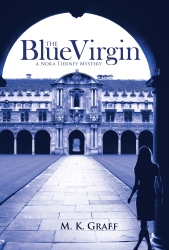
Auntie M is embarking on an adventure! She’s won a grant to attend St. Hilda’s Crime Conference in her beloved Oxford, site of the first Nora Tierney Mystery, The Blue Virgin (which is a finalist in the Murder and Mayhem Fiction Awards from Chanticleer Media).

After the conference she’ll be traveling around the south of England, researching settings for upcoming books in the series. In her absence, she’s arranged for a stable of great guests to blog in her stead. These kick off with the wonderful new release by author Terry Shames, A Killing At Cotton Hill.


Killing at Cotton Hill-3

It’s an honor to be a guest on Auntiemwrites. Auntie M writes fantastic reviews that I look forward to. I won’t be reviewing my own book, A KILLING AT COTTON HILL, today. Instead I’ll be sharing with you some thoughts on how and why it was such an easy book for me to write.


Because it took two years for my agent to place my book with a publisher, A KILLING AT COTTON HILL got a little fuzzy in my memory. So when I first saw the cover, although I loved the look of it, I wondered what it had to do with the book. Once I started rereading, I realized that the cover artist caught the undercurrent that runs through the book: Samuel Craddock early on says he feels like a rusted out old car. He has lost his wife and his focus in life.


Once I understood what the artist had in mind, I wondered what kind of car it was. After hours on the Internet looking at different grills, I finally ran into a man in a department store who looked at my cover and said with serene self-assurance, “It’s a 1962 or ’63 Dodge Dart. I know my cars.” I ran to look it up. No, it wasn’t. I turned to my audience, and held a contest to find out. Instant success: It’s a 1966 Plymouth Belvedere.


The exercise in reading the book for car references lead me to rediscover how much I love my characters. People have asked me where the character of Samuel Craddock came from and how I chose the setting. Unfortunately the real answer is lost. All I know is that I sat down and started writing and two months later, the first draft was done. It seemed effortless—even though most of it was written while I was aboard our catamaran, with lots of guests and activities to keep me busy. I got up every day at 6 AM and wrote for two to three hours, nonstop. I had heard of authors feeling like they channeled their characters, but this is the first time I had experienced it.


What I do know about the inception of the book is that I had decided that it was time to write a book that would sell. I had written six other novels, all of which had secured good agents, but none of them sold. This time I was determined to write, “the book only I could write.” I had written several short stories about Jarrett Creek, so I had a ready-made cast of characters. But who would be the focus of investigating crimes in the town? I had a vague idea that he would be someone like my grandfather, who was a force in the small town where he lived for almost his whole life. He was never in law enforcement, but he was smart and had his finger on the pulse of the town. The one-time mayor of town, he was called on for years afterwards to solve odd problems. I didn’t think an ex-mayor would be a particularly good investigator—but suppose I made him an ex-chief of police?


The rest, as they say, is history. Although the main inspiration for Samuel Craddock was my grandfather, there was another person stirred into the mix. Probably my closest friend for thirty years was a man from Kentucky who had a dry wit, a jaded view of people and a southern accent. He died a year before I started the book, and I missed him. So Samuel Craddock is really a blend of my upright grandfather and my droll friend Charlie.


Other characters in the book stepped from real life onto the pages. I know the killer in person—although as far as I know he has never really killed anyone. I know the model for Rodell, Jarrett Creek’s chief of police. He was a hard-drinking man. I know the murder victim and Samuel’s friend Loretta—and all the other people who show up. None of them is a direct match for a real person; they are blends of people. And these people aren’t all from my personal past–some are from stories I heard growing up.


I also know the geography of Jarrett Creek intimately. I can go there in my head and walk around. I know who lives in what house, the man who has a dog that barks non-stop, the woman whose elderly mother lives with her. I know who is stingy, who is generous, who is foolish, and who is kind. I know the people who have had hard luck, and those who laugh at their worries. And here’s the part that I can hardly fathom: I love all of them. I love their foolishness and their intelligence; their kindness and their selfishness. I even care about the bad people.


My hope is to convey through my writing that villains usually behave out of desperation. It doesn’t let them off the hook; but I hope readers understand and maybe have a bit of empathy for them the way Samuel Craddock does—even as he hands them over to the law.


A KILLING AT COTTON HILL: A Samuel Craddock Mystery                                 Blue


The chief of police of Jarrett Creek, Texas, doubles as the town drunk. So when Dora Lee Parjeter is murdered, her old friend and former police chief Samuel Craddock steps in to investigate. He discovers that a lot of people may have wanted Dora Lee dead—the conniving rascals on a neighboring farm, her estranged daughter and her surly live-in grandson. And then there’s the stranger Dora Lee claimed was spying on her. During the course of the investigation the human foibles of the small-town residents—their pettiness and generosity, their secret vices and true virtues—are revealed.


Terry Shames grew up in Texas. She has abiding affection for the small town where here grandparents lived, the model for the fictional town of Jarrett Creek. A resident of Berkeley, California, Terry lives with her husband, two rowdy terriers and a semi-tolerant cat. She is a member of Sisters in Crime and Mystery Writers of America. Her second Samuel Craddock novel, THE LAST DEATH OF JACK HARBIN will be out in January 2014. Find out more about Terry and her books at www.Terryshames.com.


“…if you’re as fond of good writing as I am, it will be the characters in Cotton Hill that will keep the pages turning until late in the evening…”

                                                                 Mysteryfile


“Shames’ novel is an amazing read. The poetic, literary quality of the writing draws you in…”


                                                               RT Book Reviews


“Readers will want to see more of the likable main character, who compassionately but relentlessly sifts the evidence. Convincing small town atmosphere and a vivid supporting cast are a plus.”


                                                               Publisher Weekly


Terry Shames offers readers a wonderfully-told tale that kept me turning pages… what kept my interest more than anything was the writing. It was absolutely superb. 

                                                  Lee Lofland, The Graveyard Shift        


         A KILLING AT COTTON HILL enchants with memorable characters and a Texas backdrop as authentic as bluebonnets and scrub cedars. A splendid debut by a gifted writer who knows the human heart. 

                                                    Carolyn Hart, Agatha award-winning author of ESCAPE FROM PARIS


         Terry Shames does small-town Texas crime right, and A KILLING AT COTTON HILL is the real thing I has humor, insight, and fine characters. Former chief of police Samuel Craddock is a man readers are going to love, and they’ll want to visit him and Jarrett Creek often.”

                         Bill Crider, Anthony award-wining author of COMPOUND MURDER, a Dan Rhodes mystery


Nicola Upson: Fear in the Sunlight Sunday, May 19 2013 

Nicola Upson’s fourth mystery featuring real-life Golden Age mystery writer Josephine Tey proves once again that Upson is a master at plotting, and at figuring out the complexities of personality and psychology.

Fear-in-the-Sunlight-Nicola-Upson-Cover

An intriguing setting is provided by Portmeirion, Wales, the imaginative architectural transformation of Clough Williams-Ellis, who created an Italianate village out of a section of northwest Wales’ coastal wilderness.

Noel Coward wrote Blithe Spirit at the resort, and it was frequented by actors and writers, including Tey and her circle, as a place of undeniable beauty and peace, a refuge from the hectic reality of their celebrity lives. It is to Upson’s credit that Portmeirion springs to life in the reader’s mind.

Into this tranquil setting of medieval buildings and fragrant gardens, Josephine has arrived to celebrate her fortieth birthday with the circle of friends readers will recognize, including detective Archie Penrose. Also present are celebrated director Alfred Hitchcock and his wife Alma Reville and a few of their company.

Hitchcock wants to convince Tey she should allow him to adapt her mystery, A Shilling for Candles, for the screen. (The film was made as Young and Innocent, released in 1937 and was Hitchcock’s favorite British film.) But Tey needs to meet the Hitchcock’s first before granting her approval.

It is the eve of World War II, and the Hitchcock’s are being wooed to come to America, a move that will certainly change their lives. This decision weighs heavily on the director’s mind, as he listens to the wise counsel of his wife, the woman who served as his editor, writer and confidante.

But Hitchcock was known for elaborate and sometimes perverse pranks, a master manipulator of people and their reactions, fodder for his superb psychological thrillers. As Josephine and Archie each struggle with their own private demons, the group at Portmeirion will fall prey to one of the filmmaker’s most unusual and absurd tricks.

Then a grande dame of cinema is found horrifically murdered in a nearby cemetery, and each person at Portmeirion will have their past explored.

The bodies continue to pile up until a resolution is reached that leaves more questions than answers.

For Archie, the case had a very unsatisfying conclusion. It is only in the opening and closing chapters, set in 1954, that readers will learn the truth behind the string of killings that had deep-seated roots.

For readers not familiar with the series, Upson does exhaustive research into the 1930’s in the entire series, so readers are transported to the spell of that era. She has immersed herself in the life of Elizabeth Mackintosh, the Scottish author who wrote her mysteries as Tey and historical plays under the name of Gordon Daviot.

In Fear in the Sunlight, the resort village will spring to life. Portmeirion in all its glory becomes a character in itself, in this compelling mystery that hints at the future of several of its major characters. Each character is finely drawn, visually imagined, with distinct voices and sometimes surprising viewpoints.

Don’t miss this newest blend of fact and fiction from an author whose stories leap off the page. Highly recommended.

Mark Billingham: From the Dead Sunday, Apr 8 2012 

DI Tom Thorne’s life is about to become more complicated. On the personal front, he and his partner Louise, also in The Job, are splitting their time between their two flats, their plans to buy a large one together on hold after Louise’s miscarriage months before. The strain of grief is taking its toll on both of them, their relationship strained and worsening. At work, he’s on edge, waiting for the verdict in a case that has become personal and difficult to prove: that high-powered Adam Chambers murdered the missing Andrea Keane, without her body being found. Worse is that Chambers has become a media darling.

Into this tension steps Anna Carpenter, a new private investigator looking for a life different from the bank job she held before.

Recent photos have surfaced that seem to be of Alan Langford, a wealthy career criminal who supposedly died ten years ago, handcuffed to the steering wheel of his car which was set afire in the midst of Epping Forest. Langford’s wife had been subsequently arrested for paying for her abusive husband’s death and has just been released from prison.

Donna Langford is trying to reconnect with her teenaged daughter and start a new life with a female partner she’s met in prison. When these photos are anonymously delivered to her, Donna hires Anna to find the truth. Anna’s research finds Thorne sent Donna Langford to prison and she enlists his aid. When she shows up with the photos from Donna, she becomes attached to Thorne’s investigation by his publicity-seeking DSI, to his chagrin.

Thorne loses the Chambers case, which contributes to his moody, anti-social behavior. The Langford case takes Thorne to Spain, with the tension building as the investigation heats up. His patience with Anna at times wears thin, but her honesty and outlook wear him down, and he finds himself drawn to the young woman’s joy of life. By the end of the novel, Thorne is surprisingly vulnerable, even as the twists and turns of the plot take their toll. This one has a climax you won’t see coming.

By giving us Anna Carpenter’s point of view, Billingham ties readers to the amateur sleuth and how she views Thorne. His knack for describing small details in the life of his characters add texture and complexity that allow the reader to view them in reality, making him one of Auntie M’s favorite reads. This is compelling read, completely engrossing, and will keep you flipping pages to the unexpected ending.

UK’s Sky TV has filmed some of the Thorne series and it’s to Auntie M’s regret that the series isn’t available here yet. But the books are so well written that Thorne leaps off the page satisfyingly and without the need of film.

Billingham’s next in the Thorne series, Good as Dead, make number one in the UK and you can be certain Auntie M will be reading it soon.

P D James: Death Comes to Pemberley Friday, Feb 10 2012 

Fans of P. D. James will find this newest offering to be very different from her carefully plotted, meticulously described, and heavily psychologically-oriented crime novels. Readers familiar with James’ autobiography Time to Be in Earnest will know of her lifelong passion for Jane Austen. Indeed, one of her daughters is named Jane.

So it’s no surprise that James has adeptly recreated the world of Pride and Prejudice, and readers of Austen will be plunged immediately into the familiar landscape of those novels.

It’s 1803, and Elizabeth and Darcy are settled comfortably at his magnificent estate at Pemberley, parents to two healthy little sons, aptly named Fitzwilliam and Charles. With her favorite sister, Jane, and Jane’s husband, Bingley, and their family living nearby, Elizabeth has grown into her role, running the household competently. Darcy’s sister, Georgiana, is contemplating marriage prospects. It is an idyllic life, soon to be in disarray.

The estate is preparing for the autumnal Lady Anne’s ball, silver being polished, flowers being chosen with care, when a flying chaise arrives on the eve of the ball, “lurching and swaying down the woodland road towards the house, its two sidelights blazing like small flames. Imagination provided what was too distant to be seen–the manes of the horses tossed by the wind, their wild eyes and straining shoulders, the postilion heaving at the reins.”

And we’re off and running with the story, as Lydia Wickham, Elizabeth’s younger, most unreliable sister, runs into the house, screaming hysterically that her husband has been murdered. Suddenly everyone at Pemberley is thrust into a frightening situation which threatens the peace and future of all who inhabit it. Secrets will be unearthed and confidences made public as the weeks unfold, for it is not Wickham who has been killed; he is instead arrested as the murderer. Darcy will play several roles in the drama, even as he finds himself in the uncomfortable position of being called as a star witness in the eventual trial. At times it seems there is little chance for a peaceful resolution. But to expect that would be to underestimate P. D. James.

James is spot on with the period details, as well as the mores and customs of the time. She has a gift for the cadence of Austen, too, with a lovely use of language and syntax which represent another era. The details of the unfolding mystery are parsed out as the story unfolds, and the mystery is eventually solved with great consideration.

Some readers have pointed out that the mystery seems to take a back seat to the perambulations of the story; no Dalgliesh investigation here. Indeed, James prefaces the novel with an Author’s Note apologizing “for involving her beloved Elizabeth in the trauma of a murder investigation … ”   But Auntie M feels Jane Austen would applaud James for her wise craft and gratifying skill in bringing crime to Pemberley.

« Previous Page