Elly Griffiths has a treat for fans of her all of her series: a collection of stories that feature some of her favorite characters for readers to gobble up.
And what a collection this is! By turns heartwarming (St. Lucy’s Day), to the wry humor of Ruth’s First Christmas Tree, to a modernized Little Women in Castles in the Air. There are stand alones, too, such as Turning Traitor, What I Saw from the Sky, and others.
And we are treated to seeing Ruth Galloway and her Nelson together again for those readers who miss that series (hint, hint Elly!).
Many have tidbits of the history Griffiths sprinkles into her stories that add to them. And there’s even one from the viewpoint of Ruth’s cat, Flint (Flint’s Fireside Tale; A Christmas Story)
Best of all, the final story, Ruth Galloway and the Ghost of Max Mephisto, brings Ruth across the path of DI Harbinder Kaur, her protagonist from a different series, with the ghost of magician Max Mephisto from yet another of her series. It ties them all together, however briefly, for a delightful moment for readers.
Auntie M is a huge fan of Taylor’s Sweeney St. George and Maggie D’arcy mysteries, so I was excited to plunge in to AGONY HILL, the first in her new series set in 1960s Vermont.
Former homicide detective Franklin Warren, barely coping with a painful past, moves from Boston to the small rural town of Bethany, Vermont to work with the state police during a time of upheaval in the nation and in this small corner of the world.
He hasn’t settled in when he’s thrust into his first case, a death on a remote farm where a barn has burned with the owner, Hugh Weber, locked inside. Was this suicide from the hermit who wanted to live off the land, and whose family, including his pregnant wife, are now set adrift?
Warren tackles the investigation using all of the skills he’s brought with him, stumbling across the many secrets his neighbors and even the widow try to hide. It’s a jumbled dance as he put the pieces of the puzzle together in a highly satisfying read.
Taylor is skilled at using her settings, whether it’s Ireland in the Maggie D’arcy series or this rural corner of Vermont. Setting the book at the time of the Viet Nam war brings the outside world in to this cloistered area, too. Her cast of characters, some of whom we hope to see again, shine.
After the success of A TRAITOR IN WHITEHALL, Kelly brings back typist Evelyne Redfern who has just returned from ‘spy’ school and is anxious for a real field agent case.
She’s decidedly unhappy that her first foray is an assignment to do what seems an easy security test at a manor house requisitioned for the war in rural Sussex, one expecting a visit in a few days from none other than Winston Churchill. Her handler, David Poole, equally frustrates her and amuses her, but Blackthorn Park is the site of a secret munitions facility and they agree to the mission.
She’s learning the lay of the land when she discovers one the chief engineer murdered in his office, and she and David quickly become conscripted into a murder investigation, hampered not only by the reticence of the staff, who have all been cautioned to be secretive about their work, and also by the layers of deception at hand that have far reaching effects.
Kelly’s historical details are spot on, as is the dicey relationship between Evelyne and David, who make a good detecting couple even as they dance around each other as Evelyne proves herself his equal. There are many aspects to their investigation, from the actual munitions being made to the personal relationships hidden amongst the staff that all play into the plot.
And it’s all under the time threat of the impending visit from Churchill.
Highly readable and well-plotted with a nice dose of feminism to boot.
Chouinard’s bright and witty mystery shines with a cast of quirky characters and a portrait of San Francisco in all her guises that makes the city a character of its own.
Capri Sanzio has a business taking tourists on local tours, including the sites of several serial killers. With her grandfather William known as “Overkill Bill,” Capri has always believed him to be innocent.
But then a copycat murder strikes, with a second one just after her ex-mother-law cuts off Capri’s daughter’s tuition. Of course her daughter, herself, and her ex are all suspects. This is the perfect time, she decides, to not only clear her family but to investigate who might have really committed the crimes attributed to her grandfather.
Through a podcast, an eventual book, and far too many escapes of her own as she investigates, Capri slowly unravels what really happened to the victims, past and present.
The first of a planned series, Capri will easily handle more books. Chouinard mixes high society in this one with the dense fog only San Franciso can bring.
Charming, with a compelling plot and nicely done ending twist.
Fiona Barton introduced DI Elise King in LOCAL GONE MISSING, when the detective is recuperating after a mastectomy and called into a case sooner than expected.
At the time I was struck by how this idea of a woman detective recovering from something so many of us will face (I am a breast cancer survivor myself) hadn’t been tackled before; and of how well Barton gave us a picture of a woman reeling after being left by her long-time partner to face this alone, with all of the concurrent things that medically and emotionally are attached to it.
In TALKING TO STRANGERS, Elise is back at work with her chemo hair growing out but still affected by ‘chemo brain’ she hopes her team don’t notice. Her second-in-command and friend, DS Caro Brennan, is aware of the missing memory synapses and helps cover for her as she heals. It’s not a good feeling to think she’s not operating on all of her cylinders, especially when a new case arrives the day after Valentine’s Day.
A body found in Knapton Woods by walkers is soon identified by Elise herself, recognizing local hairdresser Karen Simmons from the small seaside town of Ebbing where she now lives. As the investigation heats up, links to a dating site emerge and the suspects are too numerous to be easily eliminated.
The death resonates strongly with another character, Annie Curtis, former nurse now a part-time medical receptionist, as her young son was found dead in that same woods fifteen years before. But this new killing brings the horror of that time and all of its agony to the forefront of Annie’s mind, and she finds herself drawn back to the woods and to the mother of the young man accused of her son’s murder.
How Barton brings these two threads together will take your breath away. She has a gift for strong characterizations that allow the reader to feel their emotions, whether it’s Elise’s lack of confidence or Annie’s deep searing pain that bind them to the reader.
And in her usual fashion, Barton also manages to create a whopper of an ending–which she then turns of its head. Brilliant and not to be missed.
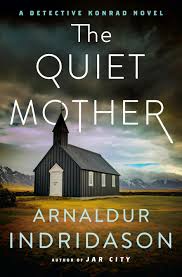
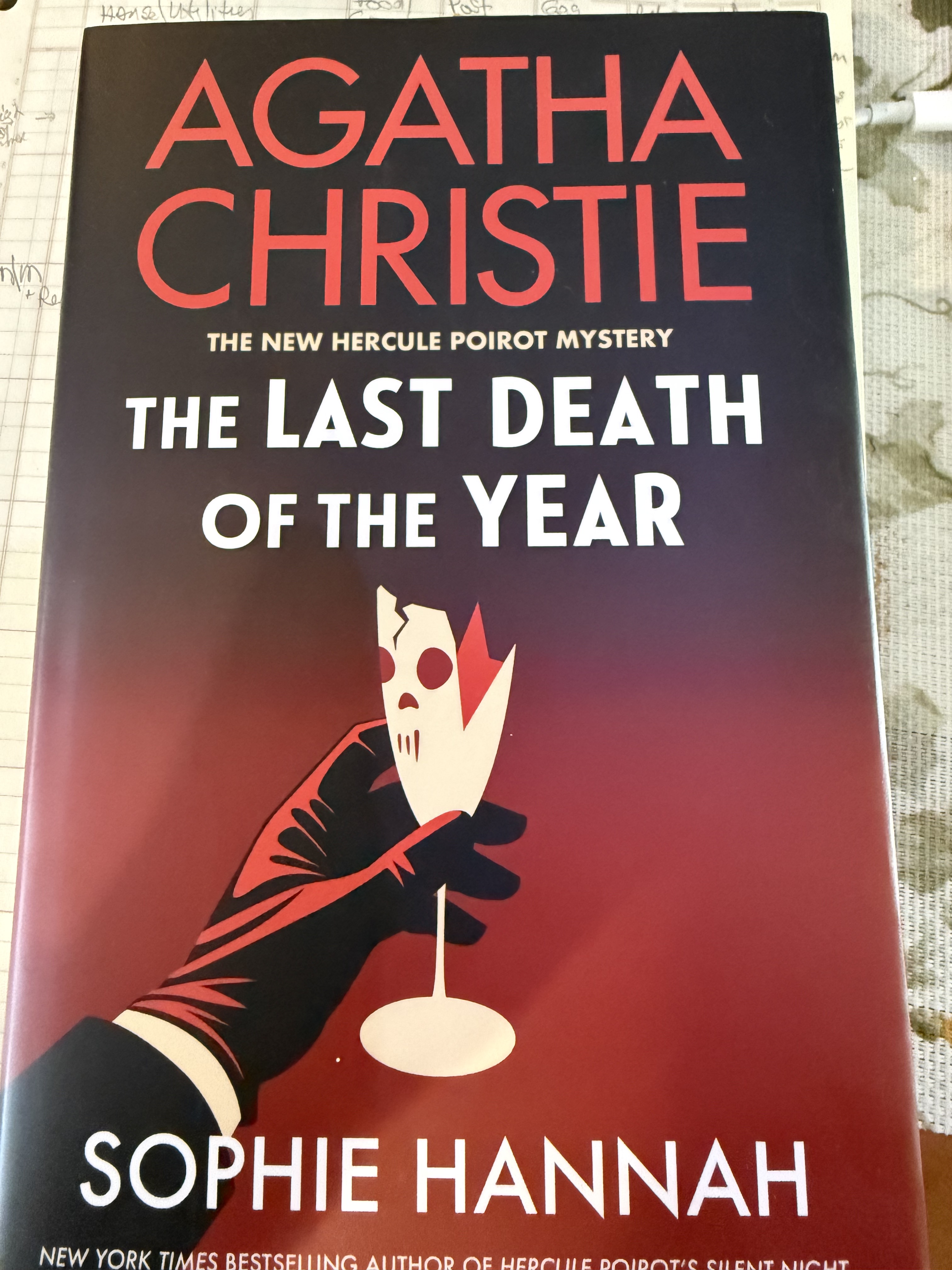
Auntie M reads about three books a week, 90% crime fiction. So you can believe me when I tell you that there are dozens of great reads out there for you to discover. I’m putting the spotlight on four standouts I’ve recently read that have stayed with me, and all are highly recommended.
AJ Finn’s The Woman in the Window was a huge success with good reason, made into a movie starring Amy Adams. This story is another that took time and creativity to construct and it shows. A young detective fiction expert is invited to the home of a dying crime novelist to write his own story. Leaving her NY home behind, she travels to San Francisco, which comes alive under Finn’s talented pen and luscious prose. And there she meets what is left of Sebastian Trapp’s family: his spinster daughter Madeline and second wife Diana. For Trapp’s first wife and son disappeared twenty years ago and that mystery is only one Nicky Hunter hopes to solve.
Filled with clues and quotes from detective novels, this homage to Golden Agers feels fresh as it mines the tropes of detective fiction and manages to contain twists you won’t expect and more you won’t see coming. It’s simply terrific.
Alex Gray’s long-running DSI William Lorimer series still manages to feel fresh in this 21st outing. Gray takes the detective and his wife Maggie from Glasgow to Zimbabwe for a special holiday. Their good friend, Zimbabwean inspector Daniel Kohi, has become a PC in Scotland and must rise through the ranks, despite his elevated position before.
With Lorimer checking out Kohi’s home turf, the PC becomes involved in a Glasgow murder investigation that puts him on high alert. For back in his home country, malignant forces believe Kohi perished in the fire that killed his wife and child, and if they have found him alive in Scotland, anyone in Kohi’s circle is in danger, and that includes his elderly housemate. When news that Lorimer and Maggie are friends of Kohi, they find themselves as targets in the wilds of a safari. With a fascinating sense of place that makes this highly atmospheric, the twin stories weave together into an exciting read.
The new Inspector McLean finds the detective out of sorts on his self-imposed retirement. He’s reluctant to become involved when a well-known crime boss insists the police are not looking deeply enough into the death of an ex-con who perished when a wall collapsed in a decrepit Edinburgh church. When this body was found in the rubble, the death was deemed a heart attack from the terror.
But then a second body is found in another closed church, and McLean finally becomes involved when this man’s corpse is found to have a cross branded in his forehead. It’s a balancing act between his police and the crime lord’s worlds that leads McLean to one of his most unusual cases. Oswald has soldiered McLean through serious crimes, personal tragedy, and offbeat friends over the course of fourteen books, and they only get stronger. He also writes the newer DC Constance Fairchild series, with an intriguing lead you should check out.
Belfast born and bred Steve Cavanagh’s Eddie Flynn series is set in Manhattan and its environs. As a native New Yorker, I’d swear he lived there for at least part of his life, that’s how good his grasp of the city and its vibe is. And Eddie Flynn, the conman who is now a defense lawyer, radiates all aspects of that vibe and is such an intriguing character that I find myself anxiously awaiting each book.
This time Eddie takes on an innocent brain surgeon, accused of the murder of a neighbor. With no connection to the woman, it’s difficult to find a motive, yet the murder weapon and the surgeon’s DNA are found on it. But the other part of the equation is Ruby Johnson, a nanny who used to live on the tony Upper West side, and who is determined to provide care for her ailing mother. When she witnesses the murder and can identify the killer, she chooses to place an anonymous call to the police naming the surgeon and uses her knowledge for her own ends.
There will be more killings, hitmen, and so many twists you can’t see how Eddie can handle them all. In the words of Anthony Horowitz: “Steve Cavanagh’s twists hit you between the eyes.” You’ll love it.
The Silver Falchion Award celebrates the best books of 2023. The Claymore Award is for the best first fifty pages of an unpublished manuscript at the time of submission.
Winners of both awards will be announced at the Killer Nashville Awards Dinner on the final night of the conference, August 23rd, in Nashville, Tennessee.
SIGN UP NOW if you haven’t already for this premier international conference~ see link above to register.
Laury Egan will capture your attention from page one of her psychological suspense novel, a tale of two teenaged youths, but it’s not as simple a premise as it seems, for both of these teens inhabit the same mind and body, with a devastating outcome.
Afflicted with Dissociative Identity Disorder, long known as Multiple Personality Disorder, Egan illustrates how Jack’s early childhood abandonment followed by a series of foster home abuses led to the host Jack being “occupied” at times by another Jack whose actions lead to truancy, stalking, promiscuity–and that’s the tip of the iceberg. Worst of all, perhaps, is that host Jack often has amnesia to the actions of his alter ego. Scenes of host Jack waking and finding himself in a different place or situation from where he started out are particularly harrowing.
It’s a recipe for disaster as the ‘two Jacks’ struggle for dominance. Along the way Egan clearly illustrates, with growing horror, how Jack must learn to cope with the actions of someone who is his moral opposite to the point of causing him legal troubles. The reader identifies with host Jack’s heartbreaking attempts to carry on a semblance of normal life.
The depth that Egan uses to illustrate Jack’s early abuse explains why his “other” takes over at times and how that developed. Psychologists and therapists who understand this complex disease help to explain it to Jack, and thus to the reader, as he tries to find an inner strength to combat the torment of his daily life and overcome the hopeless feeling he has to find a road to a semblance of a normal life.
At once a terrific character study of both Jacks, it’s also a primer on this form of mental illness. With grace and compassion, Egan has created a suspenseful novel that shines a light on a harrowing disease.
Laury A. Egan is the author of thirteen novels, including The Black Leopard’s Kiss & The Writer Remembers;The Psychologist’s Shadow; Once, Upon an Island; The Firefly; Doublecrosses; and Jenny Kidd. as well as a collection, Fog and Other Stories, and four volumes of poetry. She lives on the northern coast of New Jersey. Visit Laury at: www.lauryaegan.com.
My bookshelves surround me with the words of writers I admire, whose influence I feel when I sit at my desk. The place we keep our treasured books varies from reader to reader, but who knew bookshelves were such an aesthetic trend?
According to Madison Malone Kircher in her New York Times article of Jan 16, 2024, social media platforms have been having a field day with people who own a huge number of books and how they “stage” them. The term “bookshelf wealth” is bandied about, too.
Here’s a direct quote: “If you’ve ever seen a Nancy Meyers movie, the look might ring a bell. Warm and welcoming. Polished, but not stuffy. A bronze lamp here. A vintage vase there (with fresh-cut flowers, of course). Perhaps there is a cozy seating area near the floor-to-ceiling display, with an overstuffed couch topped with tasteful throw pillows.”
What happened to buying books to READ by authors you admire or will come to enjoy, or for learning about something new, or for delving into someone’s life. (Big sigh) And if my shelves are sprinkled with family and friend and dog photos, it’s because those are the things I want near me when I work, not because of their price tag.
My three walls of bookshelves do not include the additional rack of those waiting to be reviewed by the side of my desk, nor the towering stacks in our bedroom, waiting for my insomniac reading. What they do have is the one thing I’d set my heart on when we built our house: a ladder from the Putnam Rolling Ladder Company in New York, which I convinced myself was practical for reaching the tops of the nine-foot shelves we were building into the library nook where our desk sits in the middle. Yes, I share a desk with my husband, an antique oak partner’s desk from the 1920s.
Another thing mine have: all of the book spines facing OUT so I can read the titles/authors and actually find the book I’m looking for. To me, this is a lovely part of a book’s cover. I cannot understand the new fashion of placing books with the pages out with no way to ascertain which book one is looking at. I recently emailed an HGTV show whose designs I admire, except for her habit of placing books with their spines against the wall. I asked why that was a trend as it negated any useful searching for actual reading. I actually received a reply from a production assistant, who explained when she asked said designer that they were worried about ‘copyright infringement’ if they displayed a book spine out without the authors’ permission.
That sounds hokey to me. What author would object to seeing his or her book on a television shows’ shelves, if they could even be distinguished at that distance? I thanked her for her answer but told her I knew plenty of authors who would gladly send a copy of their book to be displayed properly. She didn’t take me up on it…
And that makes me think that people who like this look backwards look (sorry if I’m mistaken) are not reading those books, keeping them to savor and re-read, or perhaps loan to a reading friend, but using them as a trendy sign of acquisition, that dreaded “bookwealth.”
I‘m likely dotty about books and papers, I’m the first to admit. I love a good pen and nice stationary and pretty notecards. I inhale the scent of a shelf of vintage books, the old inks and paper covers curled and maybe slightly moldy. The idea of spending time in a used bookstore thrills me, scouring for treasure.
A few years ago, one of my writing group members and myself visited Powell’s in Portland, the world’s largest independent bookstore. Heavenly. We separated and met in the main lobby hours later, hardly sated. When I lived in New York, I’d stagger out of a visit to The Strand under a burden of several book bags chock full of those that simply couldn’t be left behind. Plus a few journals or notebooks. And don’t get me started on pens. Both Michele Dorsey and Susan Breen have blogged about these items with good reason. We are smitten.
Wisdom in old shelves and books of Trinity College, Dublin
I find that photos of large and gorgeous libraries all over the world intrigue me, too, and frequently post them on my Facebook page. They go onto a bucket list in case I’m ever in that part of the world. Who wouldn’t want to visit the libraries in great cities, to simply look on in awe and take a deep breath of all of that goodness? One of my favorite places to stop by when I’m back in NY is the Morgan Library, for that aesthetic pleasure of being surrounded by all of those books in that gorgeous setting. And yes, I freely admit I almost swooned many years ago when taking the oath to read in the Bodleian Library’s Radcliffe Camera, surrounded by original broadsheets of Charles Dickens and Wilkie Collins.
It’s a sickness of sorts.
Our bookshelves are all oak and there are lot of them. After twenty years in this house, I recently did a nice cleanout and donated and gave away carton upon carton of books to our library and to reading friends in other states who would then donate them to their library. I kept my most favorite authors near me, but as my husband said, just made room for all the new ones I’d soon be adding in.
He’s right.
Then I decided all of that oak needed to be broken up, so I’ve been using swatches of peel and stick wallpaper in different designs to line just the back shelves. You can’t see a lot of them because they’re covered with, well, books. But when a bit of color peeks above a stack, I smile. It’s my way of personalizing all of that wood that supports the tangible thing I love most.
Readers, do you have a favorite library to visit? And what are your thoughts on the way books are placed on shelves? Be honest!
Canadian Nita Prose’s first Molly Gray book, THE MAID, won all sorts of well-deserved awards, including an Anthony and Barry for best first mystery, as well as the Ned Kelly Award for International Crime Fiction.
Now she returns with Molly, elevated to Head Maid at the prestigious Regency Grand Hotel where she tries for perfection and trains and mentors new maids. The hotel’s tearoom has just undergone a spectacular renovation, and its inaugural event features the famous mystery author, JD Grimthorpe, who manages to spread mayhem of his own when he drops dead during his speech.
This is particularly upsetting to Molly, who has gloried in the tearoom upgrade. She has a credo of cleanliness is stickler for proper manners, and lives by the handbook of her department.
The mystery follows Molly trying to sleuth the murderer, after her success in The Maid, despite the case being handled by Detective Stark, who would like to find a reason to arrest if not Molly, then her new charge, Lily.
And Molly is hiding a past association with Grimthorpe, told in scenes that give readers a glimpse into her upbringing. Even her best friend, doorman Mr. Preston who watches over Molly, seems to have a secret.
This is first class crime writing, with a protagonist who you will come to adore. Molly is likely on the autism spectrum but that is never openly addressed, nor need it be. She is an original creation, one who can lead a series, and who has found a way to open her heart to love and will soon find her way into yours.