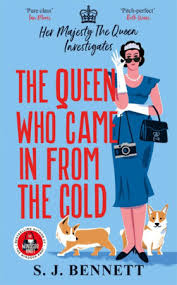
Bennett’s Her Majesty the Queen Investigates series is a favorite of Auntie M’s, and by going back in time to the Queen’s earlier years, Bennett has given herself plenty of years to travel through cases with the lively woman who would go on to serve her nation for decades.
In this one we are brought to the height of James Bond fever. It’s 1961, with Prince Charles now 12 and Princess Anne at 10 already in love with horses. The Queen is on the royal train with her entourage that includes her sister, Princess Margaret, and her photographer husband, Anthony Armstrong Jones.
It is after dinner that one of the group claims to have seen a murder from the train’s window, not seen by any of the others who were all in the dining car. An unreliable witness, her claim still must be investigated as it has recently come to light that a photographer friend of Tony Armstrong Jones is missing.
The Queen relies on her assistant private secretary, Joan McGraw, to help her work the investigation amidst the threat of the Cold War, and an important upcoming visit to Italy with time on the royal yacht Britannia, where the Queen Mother makes an appearance.
What follows is a well-crafted mystery as the Queen uses Joan to help her get to the bottom of the death of the body seen from the train. Elizabeth’s wit and intuition is called on, and her ability to use her staff to her ends is delightful.
I’m pleased and honored to call Cambridge partners and authors, Mandy Morton and Nicola Upson, my friends for over a decade, after email correspondence let to our first meeting while attending the memorial service for PD James, our friend and mentor. Their lovely Cornwall cottage, the last thatched cottage in the seaside town of Porthleven, will be the setting for the next Nora Tierney mystery when I get around to writing it!
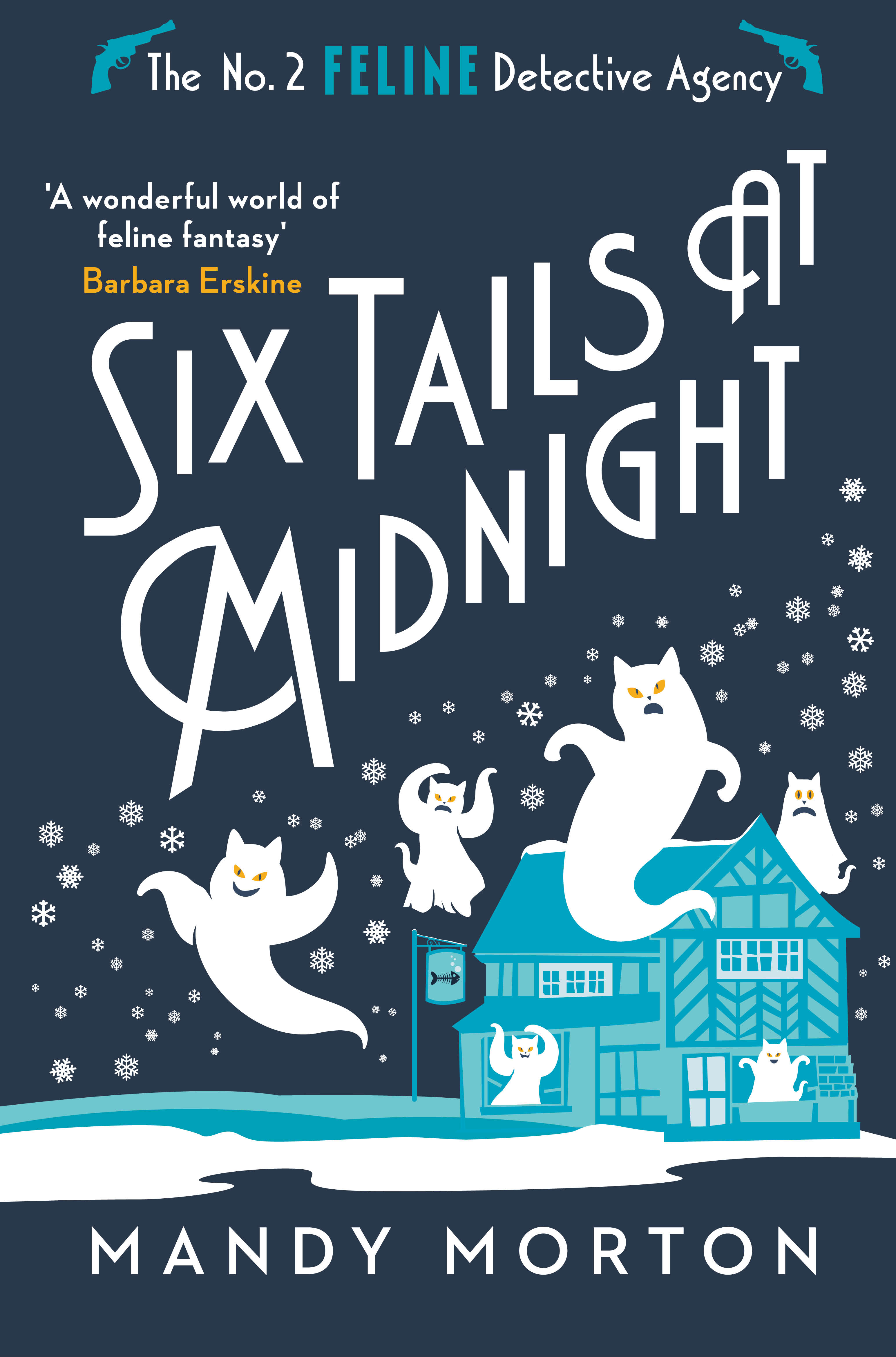
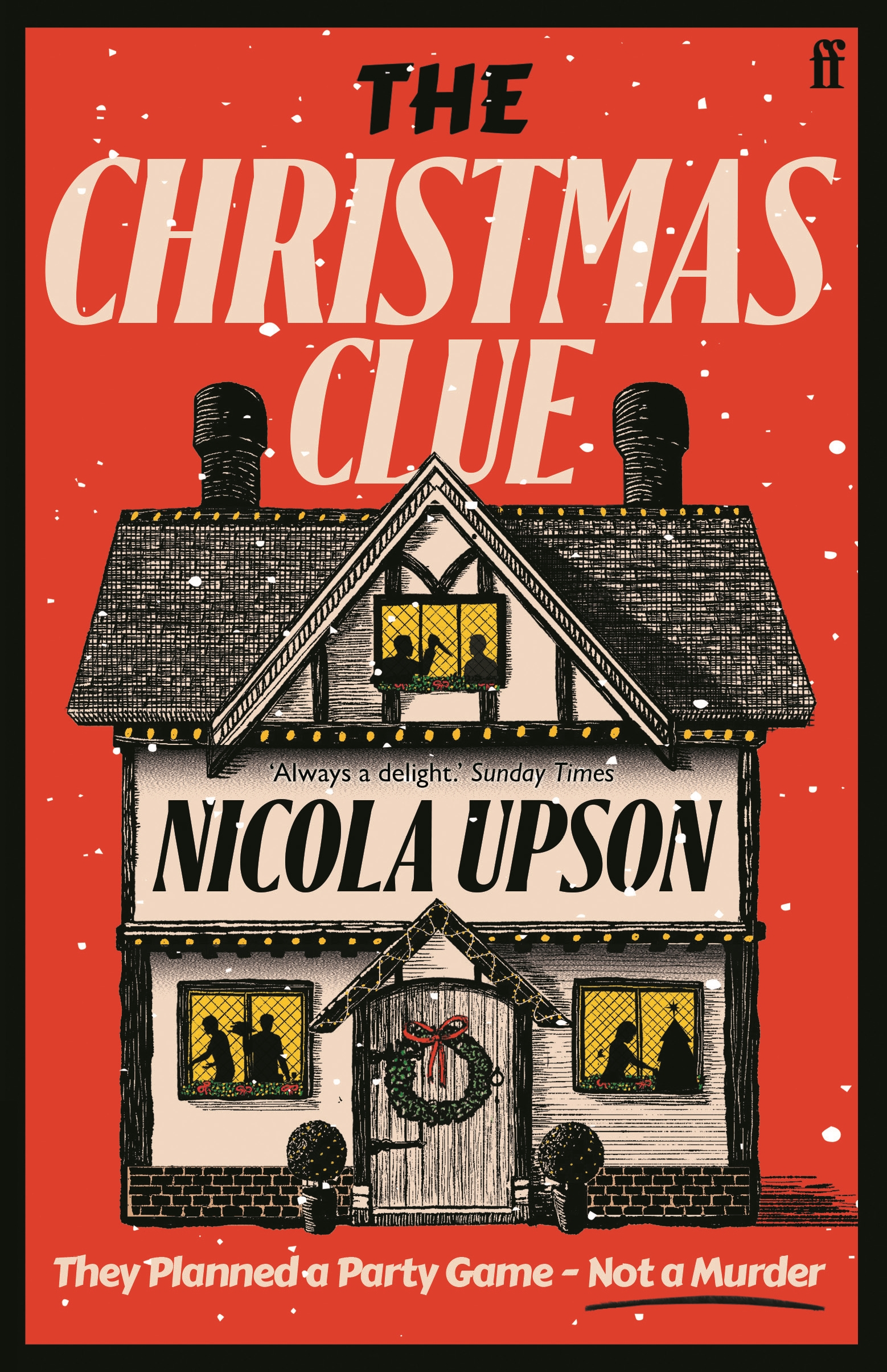
I’m fascinated by the idea of living with another writer and how that dynamic works. Both of these talented women have new books releasing this fall and worked on them either at their Cambridge home or the Cornwall cottage: Mandy’s No. 2 Feline Detective Agency continues her engaging series set in a world of cats with Six Tails at Midnight. Nicola’s TheChristmas Clue leaves her Josephine Tey series temporarily as this stand-alone revolves around the couple who created the popular game Cluedo, which was adapted in the US as Clue.
They’ve just been hailed in a cover article (see above) in their local Cambridge Independent, which ran a long and detailed article about the duo. The two, who are very involved in the Cambridge Arts scene and often interview each other about their new books, have also curated a wonderful event together at literary festivals: Celebrating P. D. James: A Mind to Murder. They held their launch for both Christmas books at their local Waterstones with a surprise guest—more on that in a moment.
They gave me a glimpse into two very different books written in the same house, and their writing lives in general, telling me their tea-time discussions openly center around plots, creating murders, and being first readers for each other, as well as valued critique partners. They write in different areas of their homes, but come together to talk about their progress, and are deeply involved in each other’s work. For the writers out there, think about the advantage of living with your own private critique partner and reader!
Their works are distinctly different and equally creative despite them both writing mysteries. Mandy’s Six Tails at Midnight is set at Christmas in the Cambridgeshire Fens, and brought back happy memories for the musician and arts journalist of a series she produced years ago for BBC Radio.
“The Fens are shrouded in mystery and legend, with stories of ghosts and murderers, and in this book, I couldn’t resist tapping into some of that history.” Private detectives Hettie and Tilly, along with their friends Bruiser and the Butter Sisters, set out across the snowy fens to spend Christmas at The Fishgutter’s Arms and become snowed in. With no hope of rescue, they find they are soon sharing Christmas with five Christmas spirits who threaten to ruin the festivities.
With Hettie Bagshot and Tilly Jenkins in their feline world, Mandy notes her cats are much more human than many people she’s met. “My cat characters wear cardigans, run bakeries, and are very good at solving murders without any assistance from the likes of you and me! Cats can be spiteful, cruel, vicious, and downright nasty, but they can also be cute, loving, and mild-mannered—the perfect combination for a series of crime novels.”
Six Tails at Midnight is the fifteenth book in this popular series, but Mandy began her professional life as a musician, and was the lead singer for the folk rock group Srpiguns of Tolgus. She more recently worked as an arts journalist for national and local radio. Her books can be found at Farrago Books or on Amazon.co.uk and Amazon.com.
Nicola was researching for The Dead of Winter in her Josephine Tey series, when country house parties were popular in England. Two names she kept finding were Anthony and Elva Pratt, who in 1943 created the game Cluedo, still played today.
Deciding this intriguing couple deserved their own story, Nicola set to work crafting her book surrounding the couple who developed Cluedo on their dining room table in 1943 as a distraction from wartime worries. Motivated by Anthony’s love of detective novels and true crime, the game’s playful murderous premise was inspired by the murder mystery weekends he witnessed during his musician years. The Christmas Clue, set in a snowy country house, stars Anthony and Elva, who step in to detect when a mystery game goes horribly wrong.
“I’ve loved Cluedo since I was a child. It was the board game of choice in my family, and I still have the 1970s version I played then, complete with my mum and dad’s handwriting on the old detective notes, and my own workings-out, which seem to be nothing but question marks!”
She adds: “Not only did it give me hours of pleasure and lots of happy memories, but the game introduced me to crime fiction long before I read Agatha Christie and her contemporaries, and in particular the classic English detective story and its obsession for knowing—or concealing— who did what, where and how.”
That the pair enjoyed writing their Christmas mysteries together is obvious, and their joy increased when Nicola’s book received the stamp of approval from the Pratt’s daughter, Marcia Lewis, who appeared at their Cambridge book launch at the end of September and answered audience questions.
Nicola read English at Downing College, Cambridge. Her first Josephine Tey novel was dramatized for BBC Radio 4, with several listed for the CWA Gold Dagger and Historical Daggers. She is a member of the Detection Club, and in 2024 curated the acclaimed exhibit Murder by the Book: A Celebration of 20th Century British Crime Fiction at the Cambridge University Library. Her books are available from Faber & Faber, or on Amazon.co.uk or Amazon.com.
I hope readers will enjoy discovering these talented authors. Each of these books would make lovely Christmas gifts for the readers on your list~
Founder Clay Stafford of the Killer Nashville International Writers’ Conference is pleased to announce this year’s Silver Falchion Award Finalists. The Silver Falchion Award is given for the Best Book in each category for the previous year (2024). Winners in each category will be announced at the annual Killer Nashville Awards Dinner taking place on August 23rd at the Embassy Suites Nashville South/Cool Springs Hotel in Franklin, TN.
This year marks the 20th anniversary of the conference which hosts aspiring and established writers from all over the world to network and develop their writing skills in fiction and nonfiction that incorporate elements of mystery, thriller and suspense.
And here is the complete listing of all of the Finalists. Congratulations to the nominees:
2025 KILLER NASHVILLE SILVER FALCHION AWARD FINALISTS
(for best books of 2024)
Best Action Adventure
JERICHO BURNING
T.G. Brown
THE GENERAL’S GOLD
Bruce Robert Coffin and LynDee Walker
DESPERATE MEASURES
Ley Esses
WHERE LOVE MEANS NOTHING
Howard Gimple
THE NORTH LINE
Matt Riordan
Best Comedy (includes comedic P.I. and crime caper)
THE PRINCESS SHOPPE
Kerry Blaisdell
SWIPED
L.M. Chilton
GET GRIBNITZ
Howard Gimple
MODEL GHOST
TK Sheffield
SORRY, KNOT SORRY
Lois Winston
Best Cozy
BEESWAX BEWITCHMENT
S.E. Babin
ELIZABETH SAILS
Kristin Owens
STUDY GUIDE FOR MURDER
Lori Robbins
FRAMED FOR MURDER
Marla White
WHEELING AND DEALING
Becki Willis
Best Historical
EMPOWERED BY THE DREAM: A JOURNEY OF RESILIENCE
Gladys A. Barrio
THE PARIS MISTRESS
Mally Becker
A KILLING ON THE HILL
Robert Dugoni
FIND YOUR WAY TO MY GRAVE
Chris Keefer
WHAT ONCE WAS PROMISED
Louis Trubiano
Best Investigator (includes procedural, serious P.I., detective, and noir)
THE THINGS THAT CANNOT BE FORGOTTEN
Peter W.J. Hayes
LAST DOG OUT
Candace Irving
BLACK & WHITE
Justin M. Kiska
TIGER CLAW
Michael Allan Mallory
MURDER OUTSIDE THE BOX
Saralyn Richard
Best Juvenile / Y.A.
BEYOND THE CEMETERY GATE: THE SECRET KEEPER’S DAUGHTER
Valerie Biel
DEAD GIRL
Kerrie Faye
STEALING TIME
Norman Birnbach and Tilia Klebenov Jacobs
SNOWED
Twist Phelan
STAR BROTHER
Maxine Rose Schur
Best Literary
SHE RUINED OUR LIVES
Chris Chan
AN AMERICAN TRAGEDY
Dan Flanigan
Best Mainstream / Commercial
THOSE THAT DID NOT DIE
Penny Fletcher
ON THE MAD RIVER
Lucrecia Guerrero
PEOPLE WILL TALK
Kieran Scott
BETWEEN LIES AND REVENGE
Hannah Sharpe
BLINDSPOT
Maggie Smith
Best Mystery
DROP DEAD SISTERS
Amelia Diane Coombs
OBEY ALL LAWS
Cindy Goyette
AT FIRST I WAS AFRAID
Marty Ludlum
A WORLD OF HURT
Mindy Mejia
SCORCHED: BURN ME ONCE…
Cam Torrens
Best Nonfiction
THERE IS NO ETHAN
Anna Akbari
LOVERS IN AUSCHWITZ: A TRUE STORY
Keren Blankfeld
ASK NOT: THE KENNEDYS AND THE WOMEN THEY DESTROYED
Maureen Callahan
TILGHMAN: THE LEGENDARY LAWMAN AND THE WOMAN WHO INSPIRED HIM
Chris Enss
SEEDS OF LEADERSHIP
Wilson Lukang
Best Sci-Fi / Fantasy
OCEAN’S GODORI
Elaine Cho
THE CANOPY KEEPERS
Veronica G. Henry
MASTER VERSION 1.1
Antanas Marcelionis
HOUSE OF FIRE & MAGIC
Sherrilyn McQueen
THE BUILDING THAT WASN’T
Abigail Miles
Best Short Story Collection / Anthology
NEVER TELL COLLECTION
Kjersti Egerdahl, ed.
THE OTHER SIDE OF THE ROAD / Andrea Bartz (author)
EVERYWHERE WE LOOK / Liv Constantine (author)
SCORPIONS / Rachel Howzell Hall (author)
THE BAD FRIEND / Caroline Kepnes (author)
JACKRABBIT SKIN / Ivy Pochoda (author)
THE GHOST WRITER / Loreth Anne White (author)
DAY
Patrick Kitson (author)
DEEDS OF DARKNESS
William Burton McCormick (author)
6-LANE HIGHWAY
Sean Mitchell (author)
LARCENY & LAST CHANCES: 22 STORIES OF MYSTERY & SUSPENSE
Judy Penz Sheluk, ed.
HIT-AND-RUN / Christina Boufis (Author)
WHEEL OF FORTUNE / John Bukowski (Author)
THE POOL / Brenda Chapman (Author)
HAIL MARY BLUES / Susan Daly (Author)
INCIDENTS AND INTENTIONS / Wil A. Emerson (Author)
THE CRIMSON SALAMANDER / Tracy Falenwolfe (Author)
NO GOOD DEEDS / Kate Fellowes (Author)
NOT THIS TIME / Molly Wills Fraser (Author)
THE CASE OF THE PILFERED PARKA / Gina X. Grant (Author)
A PROMISE KEPT / Karen Grose (Author)
RED INK / Wendy Harrison (Author)
SKEETER’S BAR AND GRILL / Julie Hastrup (Author)
A TIGHT SQUEEZE / Lary M. Keeton (Author)
UNCLE RANDY’S MONEY / Charlie Kondek (Author)
THE PURLOINED PARCHMENT / Edward Lodi (Author)
THE RAGE CAGE / Bethany Maines (Author)
ONCE A THIEF / Gregory Meece (Author)
ROBBERY AT THE BIRDCAGE / Cate Moyle (Author)
THE CONSTELLATION NECKLACE / KM Rockwood (Author)
THE LAST CHANCE COALITION / Judy Penz Sheluk (Author)
THE HOSPITAL BOOMERANG / Kevin R. Tipple (Author)
ARTIFACT / Robert Weibezahl (Author)
Best Southern Gothic
POCKET FULL OF TEETH
Aimee Hardy
KENTUCKY BLOOD (BOOK I OF THE KENTUCKY BLOOD SERIES)
Sally Smith calls on her barrister background and intimate knowledge of the Inner Temple to debut a mystery series set in 1901 that introduces reluctant sleuth Sir Gabriel Ward KC. Rich in historical details of the insulated Inner Temple and its workings, Smith also gives readers a cogent look at Edwardian London with its class and societal workings and restrictions of the era.
Gabriel is so preoccupied with his case, a dispute over the authorship of a children’s book with a mouse as protagonist and set in Temple Church that has taken readers by storm, that he almost doesn’t notice the body on his doorstep. This turns out to be the Lord Chief Justice of England, who currently has a silver carving knife stuck in his chest. And several candidates longing to replace him . . .
Soon Gabriel finds himself pushed into investigating the murder while still researching his case. His OCD tendencies make this even more difficult, as does the fact he wants nothing to do with the investigation, but has been threatened with losing his lovely set of rooms where he’s lived for entire career—and thus, a reluctant but completely charming amateur sleuth is born.
It’s an absorbing story with both plots cleverly wound together. Told in prose that sounds lifted off pages from the time period, with the setting lovingly described, I highly recommend this to readers for the complex character of Gabriel alone, but also for the nicely twisted plot Smith created.
I was at Temple Church years ago for the memorial service held there for my mentor, PD James, and delighted in walking the lovely area, so I really enjoyed taking a trip back to the cloistered legal world it services. And to my delight, Sally Smith agreed to be interviewed for Auntie M!
Auntie M: Knowing the Inner Temple setting as well as you do really helped the setting come alive as I read. Did you find using an area you loved made it easier for you to describe to readers? Were there any parts you deliberately left out? (Auntie M notes that for those who’ve never visited, there is a very helpful plan of the area in the front of the book.)
Sally Smith: I love the Temple and so of course I enjoy describing it. My book is set in 1901 and the Temple sustained severe bombing during the Second World War. So now some of it is as it has been for centuries and some of it has been rebuilt post war.
It was fun to knit together what I see with my own eyes every day with what I know (from maps and pictures) it looked like in Edwardian times. I did not leave anything out but I did add in a few fictional doors and windows!
AM: I once attended a memorial service in the chapel, an important place in your book, and you brought me right back to that day. Did you have to obtain any permissions to use the site?
SS: You are right, there are some detailed and loving descriptions of the church in the book. It has an amazing history, built by the Knights Templar in 1185. I happen to have a flat in the Temple and I am a member of the Inner Temple, but anyone can visit the church during visitor hours and write about it. Many tourists do so, particularly from the USA, and they are more than welcome.
AM: Your prose is lovely and fits the era well. Did you read books set in your time period to acclimate that voice as if you were there?
SS: I am delighted you think the prose fits the era. It may be that I chose the Edwardian era because I know I write in a fairly formal way but I do not really do it on purpose; a lifetime as a lawyer meant it just developed naturally. The only thing I did consciously was not to use actual words and phrases that were not used in 1901. Other than that it just comes naturally to me.
AM: How difficult was it for you to design such interesting yet realistic characters? Are any based on people you know?
SS: Everyone wants to know that! There is no one in the book completely modelled on anyone I know but the characters are all amalgams of many personalities I have met.
AM: Now that’s a barrister’s careful answer if I ever heard one! Please tell readers Sir Gabriel Ward will return soon with another mystery to solve.
SS: Sir Gabriel Ward is returning with another mystery to solve in A Case of Life and Limb, published in the UK in July and a bit later in the USA.
AM: When you’re not plotting or promoting, who do you like to read for relaxation?
SS: I am a real Golden Age detective reader; my favourite of that period is any of Dorothy L. Sayers; I also like PD James. One of my desert island books is Donna Tartt’s The Secret History, which I think is wonderful, and I find something new in it every time I read it. Coming forward, I loved Janice Hallett’s The Appeal.
I read huge amounts of nonfiction; I love biographies, and don’t care who they are about. Real lives are more fascinating than anything made up!
Sally, thank you for a very interesting interview. Sally’s book is available from Bloomsbury Publishing or Amazon, in ebook, hardcover, and on Audible as of today! Don’t miss it~
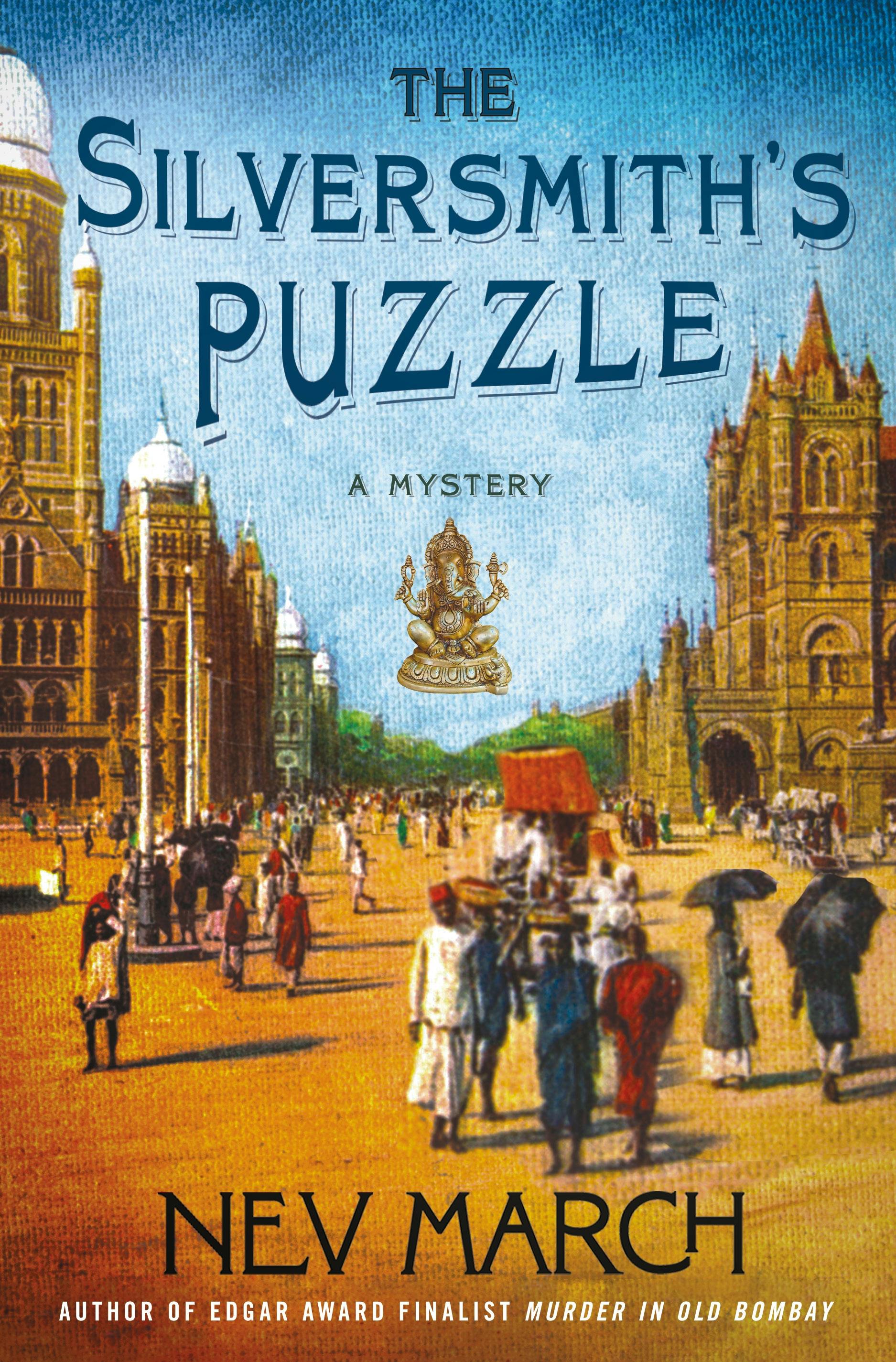
Edgar Award Finalist Nev March brings readers her fourth mystery revolving around Captain Jim Agnihotri and Lady Diana Framjii as the married couple travel back to India for the first time since their marriage.
All is not well in the Framjii family with financial difficulties and Diana’s brother Adi accused of murdering his business partner. Found over the dead man shortly after his murder, Adi is the likely suspect, as their business making surgical instruments was floundering. Upon their return, Jim, who is mixed race, is not well received by the strict Parsi community, and as Diana grapples with being shunned, Jim investigates the murder.
The police seem content with arresting Adi, who protests his innocence. As Jim tries to unravel the silversmith’s life, he is hit with a perplexing trail that doesn’t make sense, from owed bills, to downright lies. Who and what was Satya Rastogi protecting?
He must go undercover at some point, and visit brothels before the truth emerges. And he soon finds Diana by his side helping him. This unlikely duo give this the air of a late Victorian Nick and Nora Charles.
1894 Colonial India springs to life under March’s talented pen. Rich in period details, coupled with the sights and sounds of Bombay, March bring the traditions of caste to the forefront as the mystery unfolds in this multilayered tale. Recommended read, especially for those who enjoy history.
Auntie M has long been a fan of this well-researched Victorian-era series, and of the two main characters: Private enquiry agent Cyrus Barker, a traveled man with an interesting past and deep connections in London and the world; and his young partner, Thomas Llewelyn, whose Welsh roots rear their head from time to time in his pithy thoughts.
As SEASON OF DEATH opens, Thomas is dealing with lack of sleep from his teething infant daughter, whose mother Rebecca has figured prominently in several episodes and is a recurring character. Several other recurring characters have become part of the fabric of this intelligent and highly readable series. It’s intriguing how issues like communication, when there were no cell phones, and information, with no computers yet, are handled.
The Dawn Gang has reared its ugly head, only to be properly dispatched by Barker and Llewelyn in spectacular fashion as they threatened a poor beggar who dragged her leg, known as Dutch, and is brought to a mission to be bathed and treated.
Then the influential MP Lord Danvers and his wife visit and ask the enquiry agents help in finding Lady Danvers missing sister, who is thought to have tried to elope to Rome. But before they get started in their search for the missing woman, an enormous sinkhole opens in an area called Calcutta. Built over old railway tunnels, the devastation is enormous in terms of loss of life. It was also the known meeting place for the criminal underworld, and it is assumed and soon proven that a massive bomb caused the sinkhole, with buildings atop it falling into the crater to kill not only those families living above it but the criminals meeting behind it.
The race is one to find out who caused the explosion, where Lady Danvers sister, May, is living, and what has become of Dutch, who disappeared from the mission. With the leaders of local gangs dead, who will take over the criminal land? And where is May hiding and why?
What is an added pleasure amidst the complicated cases and action is Thomas’s commentary on the social classes and political issues of the day. A delightful read all around~
Auntie M is a huge fan of Taylor’s Sweeney St. George and Maggie D’arcy mysteries, so I was excited to plunge in to AGONY HILL, the first in her new series set in 1960s Vermont.
Former homicide detective Franklin Warren, barely coping with a painful past, moves from Boston to the small rural town of Bethany, Vermont to work with the state police during a time of upheaval in the nation and in this small corner of the world.
He hasn’t settled in when he’s thrust into his first case, a death on a remote farm where a barn has burned with the owner, Hugh Weber, locked inside. Was this suicide from the hermit who wanted to live off the land, and whose family, including his pregnant wife, are now set adrift?
Warren tackles the investigation using all of the skills he’s brought with him, stumbling across the many secrets his neighbors and even the widow try to hide. It’s a jumbled dance as he put the pieces of the puzzle together in a highly satisfying read.
Taylor is skilled at using her settings, whether it’s Ireland in the Maggie D’arcy series or this rural corner of Vermont. Setting the book at the time of the Viet Nam war brings the outside world in to this cloistered area, too. Her cast of characters, some of whom we hope to see again, shine.
After the success of A TRAITOR IN WHITEHALL, Kelly brings back typist Evelyne Redfern who has just returned from ‘spy’ school and is anxious for a real field agent case.
She’s decidedly unhappy that her first foray is an assignment to do what seems an easy security test at a manor house requisitioned for the war in rural Sussex, one expecting a visit in a few days from none other than Winston Churchill. Her handler, David Poole, equally frustrates her and amuses her, but Blackthorn Park is the site of a secret munitions facility and they agree to the mission.
She’s learning the lay of the land when she discovers one the chief engineer murdered in his office, and she and David quickly become conscripted into a murder investigation, hampered not only by the reticence of the staff, who have all been cautioned to be secretive about their work, and also by the layers of deception at hand that have far reaching effects.
Kelly’s historical details are spot on, as is the dicey relationship between Evelyne and David, who make a good detecting couple even as they dance around each other as Evelyne proves herself his equal. There are many aspects to their investigation, from the actual munitions being made to the personal relationships hidden amongst the staff that all play into the plot.
And it’s all under the time threat of the impending visit from Churchill.
Highly readable and well-plotted with a nice dose of feminism to boot.
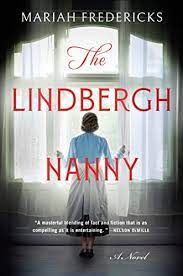
Mariah Fredericks’ THE LINDBERGH NANNY takes readers inside the homes of Anne Morrow and Charles Lindbergh, exploring their marriage, their travels, and the horrific kidnapping in 1932 of their first-born child, Charlie, all from the point of view of the young nanny they hire, Betty Gow.
A Scottish immigrant learning East Coast etiquette after a disastrous affair, Betty is often put off by the eccentricities of Colonel Lindbergh. She admires Anne Lindbergh for her attempts to live up to her husband’s expectations, despite her shy and nervous manner. Coming from a monied family, the young couple live with the Morrow’s as they renovate a house in New Jersey.
Charlie is a darling child, sweet-natured and adventurous, and well as he gets on with Betty, Anne Morrow often worries he’s growing more attached to his nanny when she’s away on world-wide jaunts with her famous husband. At times not understanding how the parents can be away from Charlie for such extended periods, she nevertheless spends her own money on his clothing when he outgrows what she’s been left with. Yet she carves out a life for herself and even has a new beau.
Then when Anne is heavily pregnant with the couple’s next child, tragedy strikes, becoming one of the most celebrated international cases when young Charlie is kidnapped and his body eventually found.
Betty soon finds herself at the center of journalists and public scrutiny, when a suspect is arrested. She understands that to clear her name for the future, she must figure out what really happened that night when a loose shutter allowed the child she’d come to love to be abducted.
You may think they know this story, but Fredericks’ manages to bring readers into the closed off world of the Lindbergh’s and into Betty’s thoughts, as she adds a sense of tension and mystery to the story. The characters, real and fictional, are finely drawn. With its on-the-spot view, this is a book that speaks to the role of women in the 1930s and delves into what might have happened on that fateful night, and who was responsible. A gripping and suspenseful read.
When Agatha Christie wrote a short story featuring Jane Marple in 1927, she didn’t think the character would have sustainability. It wasn’t until three years later, with The Murder at the Vicarage that she wrote the first Marple novel, “for a bit of fun,” her grandson Matthew Pritchard notes, and then she concentrated on Hercule Poirot and didn’t write another Marple mystery until twelve years later.
Yet Jane Marple proved to be a favorite of readers and many writers, myself included, with an enduring quality about her. I have always loved Miss Marple and her wry humor and retiring manner, and I’m not alone. Richard Osman of the Thursday Murder Club series notes she is his inspirational protagonist, and so it would seem, do many of the leading crime writers of today.
Forty-five years after the last Miss Marple mystery was published, William Morrow’s new book, MARPLE, is a collection of twelve new Miss Marple stories written by such crime writing luminaries as Val McDermid, Elly Griffiths, Ruth Ware, and Lucy Foley.
Each author exhibits a new take on Miss Marple, and while Elly Griiffths has her visit Italy, Alyssa Cole takes her to Manhattan. Yes, Miss Marple visits New York! But while their settings and the age of Jane Marple may vary, what doesn’t is the spinster’s ability to read people who remind her of the inhabitants of her small village of St. Mary Mead. Each story brought Miss Marple back to life for me, and I had great fun reading the these stories.
Agatha Christie’s estate has had author Sophie Hannah write new Hercule Poirot novels. The Mystery of Three Quarters is the most recent. Hannah captures Poirot’s voice and his mincing mannerisms, carefully bringing Hercule to live another day. I was delighted to see that while these authors each have a different take on Jane Marple, she does indeed, live again for another day in a very recognizable way.
While actresses such a Helen Hayes, Geraldine McEwan, and even Angela Lansbury played Jane Marple at different times, Margaret Rutherford’s take on the role over four films gives viewers a touch of nostalgia when seen today.
But Christie has said Jane was based on her grandmother and that woman’s cronies, and admitted that of all the actresses who played Miss Marple over the years, her favorite was Joan Hickson, who fit Christie’s visual image of a “bird-like and slightly twittery” spinster, and she is my personal favorite, too.
Jane Marple’s endurance perhaps comes from her as a symbol of “Britishness,” of country life that seems tranquil until it’s applied to murder. With one of my own series set in England, she remains a constant to turn to while evoking another era, a source of comfort as readers know at the end of it all, Miss Marple will figure out who is the murderer and justice will be served.
When I bought a Mini Cooper a few years ago, I had to name it for their marketing department to find in their computer. They then send you hilarious emails as it’s being made and shipped across the ocean.
I couldn’t think of a better name than Miss Marple.
Readers, what are your thoughts about an icon being resurrected in this way with new authors? Do you think you’d enjoy this story collection?













 Auntiemwrites Crime-Mystery Author M K Graff