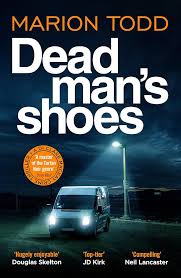
The 9th DI Clare Mackay is a tightly-plotted winner, chockfull of Todd’s twists and page-turning events.
Intelligence indicates a serial killer known as the Choker, who targets gay men, is heading for Clare’s corner of Scotland, St. Andrews. Clare’s team swings into action, with covert actions, undercover work, and long surveillances.
Then a young man is murdered near a nightclub with all the hallmarks of this serial killer. Could Theo Glancy’s murder be connected to the nightclub as his family run it, or is this the newest case of the Choker?
Even worse than catching a new murder case, Clare finds the nightclub is attached to her nemesis, Val Docherty, who has shrugged off previous charges like a duck sheds water. Will this be the time Clare finally gets to see Val behind bars, and if so, at what cost?
This is a tight police procedural, with Clare’s team functioning well under her lead. Her personal life is on smooth sailing, too, until her sister brings her attention to her aging father’s issues. It’s time for Clare to have a few moments of personal reflection, all while searching to stop a serial killer before he strikes again.
Auntie M is a huge fan of Todd’s atmospheric series, gobbling up each installment. If you haven’t found this series yet, reach for it now. Better yet, start with the first, See Them Run, to follow Clare’s personal life. And now I have to wait for the next one…
Auntie M’s 2025 gift to you readers. Happy New Year! And three greats to read:
Alan Bradley’s Flavia de Luce Mysteries, set in the 1950s, are currently in production in the UK, based on the first in this wonderful series, The Sweetness at the Bottom of the Pie. The books are a revelation, and when Bradley created his young genius sleuth, 11 in the first book, he hit on a magnificent creature, at turns smart and wily.
So Auntie M was delighted to find a new adventure for Flavia, now 15, and her prodigious brain growing in leaps and bounds, in What Time the Sextion’s Spade doth Rust. Mentoring her live-in cousin, Undine, described as “odious” and “moonfaced,” Flavia attempts to channel Undine’s potential for trickery to her own uses in her investigations.
This time a former hangman dies after eating poisonous mushrooms, and the de Luce’s own cook is suspected. With her chemistry expertise (something Auntie M admires add wonders how Bradley gets his information), Flavia sets out to clear dear Mrs. Mullet and uncovers some surprising and disturbing truths about her own family along the way. Clever humor balances the darker bits. Terrific.
I recommend Doug Johnstone’s Skelf series all the time and often give one for gifts. This family of three generations of strong Edinburgh women have been through the wringer and keep chugging along, and that is at the forefront of Living is a Problem.
Running a funeral home and private investigation agency from their home, their personal lives become entwined in the stories. Matriarch Dorothy, a skilled drummer, too, tries to help her boyfriend who is suffering from PTSD, when a Ukrainian member of the refugee choir that Dorothy’s band plays with goes missing.
Her daughter, Jenny, is conducting a funeral when it’s attacked by a drone, and Jenny sees gangland interference. She and Archie, their funeral home helper, are becoming closer, despite their differences. And her daughter, Hannah, a scientist, finds her interests changing, while supported by her wife.
This series is consistent, with an uplifting story that doesn’t shrug away from life–and death–yet leaves the reader uplifted and wanting more Skelfs.
Peter Lovesey closes his long-running Peter Diamond series with Against the Grain. The stubborn Diamond has solved more than his share of cases using his wiles and wit, with some surprises along the way.
In Against the Grain, Diamond travels to the country for a holiday with his partner, Paloma, at the invitation of his former colleague Julie Hargreaves. It’s no secret that Diamond is contemplating life after detecting, and he must decide to retire or solider on.
But he’s no sooner in the lovely village of Baskerville when Julie’s ulterior motive is revealed: a horrific accident at a grain silo has resulted in a manslaughter conviction for the dairy farm’s owner, and Julie is convinced that not only was there a miscarriage of justice, but that the real killer is still at large. He soon finds unfamiliar village customs come to the forefront of his days.
Diamond finds himself up to his elbows, literally, in things he couldn’t begin to imagine, that delight readers and perhaps Diamond himself. And uses his experience and his knowledge of human nature to a stunning climax.
It’s always sad to say goodbye to beloved characters, and readers can only hope Lovesey will keep Diamond going in a story or two. A wonderful series amongst Lovesey’s other fiction, Diamond is but one of Lovesey’s creations who linger with readers and deserve to be investigated.
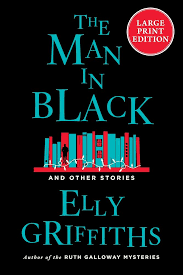
Elly Griffiths has a treat for fans of her all of her series: a collection of stories that feature some of her favorite characters for readers to gobble up.
And what a collection this is! By turns heartwarming (St. Lucy’s Day), to the wry humor of Ruth’s First Christmas Tree, to a modernized Little Women in Castles in the Air. There are stand alones, too, such as Turning Traitor, What I Saw from the Sky, and others.
And we are treated to seeing Ruth Galloway and her Nelson together again for those readers who miss that series (hint, hint Elly!).
Many have tidbits of the history Griffiths sprinkles into her stories that add to them. And there’s even one from the viewpoint of Ruth’s cat, Flint (Flint’s Fireside Tale; A Christmas Story)
Best of all, the final story, Ruth Galloway and the Ghost of Max Mephisto, brings Ruth across the path of DI Harbinder Kaur, her protagonist from a different series, with the ghost of magician Max Mephisto from yet another of her series. It ties them all together, however briefly, for a delightful moment for readers.
Fiona Barton introduced DI Elise King in LOCAL GONE MISSING, when the detective is recuperating after a mastectomy and called into a case sooner than expected.
At the time I was struck by how this idea of a woman detective recovering from something so many of us will face (I am a breast cancer survivor myself) hadn’t been tackled before; and of how well Barton gave us a picture of a woman reeling after being left by her long-time partner to face this alone, with all of the concurrent things that medically and emotionally are attached to it.
In TALKING TO STRANGERS, Elise is back at work with her chemo hair growing out but still affected by ‘chemo brain’ she hopes her team don’t notice. Her second-in-command and friend, DS Caro Brennan, is aware of the missing memory synapses and helps cover for her as she heals. It’s not a good feeling to think she’s not operating on all of her cylinders, especially when a new case arrives the day after Valentine’s Day.
A body found in Knapton Woods by walkers is soon identified by Elise herself, recognizing local hairdresser Karen Simmons from the small seaside town of Ebbing where she now lives. As the investigation heats up, links to a dating site emerge and the suspects are too numerous to be easily eliminated.
The death resonates strongly with another character, Annie Curtis, former nurse now a part-time medical receptionist, as her young son was found dead in that same woods fifteen years before. But this new killing brings the horror of that time and all of its agony to the forefront of Annie’s mind, and she finds herself drawn back to the woods and to the mother of the young man accused of her son’s murder.
How Barton brings these two threads together will take your breath away. She has a gift for strong characterizations that allow the reader to feel their emotions, whether it’s Elise’s lack of confidence or Annie’s deep searing pain that bind them to the reader.
And in her usual fashion, Barton also manages to create a whopper of an ending–which she then turns of its head. Brilliant and not to be missed.
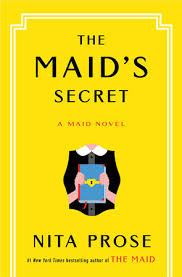
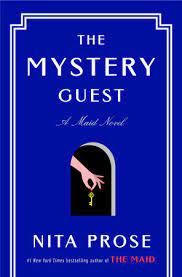
Canadian Nita Prose’s first Molly Gray book, THE MAID, won all sorts of well-deserved awards, including an Anthony and Barry for best first mystery, as well as the Ned Kelly Award for International Crime Fiction.
Now she returns with Molly, elevated to Head Maid at the prestigious Regency Grand Hotel where she tries for perfection and trains and mentors new maids. The hotel’s tearoom has just undergone a spectacular renovation, and its inaugural event features the famous mystery author, JD Grimthorpe, who manages to spread mayhem of his own when he drops dead during his speech.
This is particularly upsetting to Molly, who has gloried in the tearoom upgrade. She has a credo of cleanliness is stickler for proper manners, and lives by the handbook of her department.
The mystery follows Molly trying to sleuth the murderer, after her success in The Maid, despite the case being handled by Detective Stark, who would like to find a reason to arrest if not Molly, then her new charge, Lily.
And Molly is hiding a past association with Grimthorpe, told in scenes that give readers a glimpse into her upbringing. Even her best friend, doorman Mr. Preston who watches over Molly, seems to have a secret.
This is first class crime writing, with a protagonist who you will come to adore. Molly is likely on the autism spectrum but that is never openly addressed, nor need it be. She is an original creation, one who can lead a series, and who has found a way to open her heart to love and will soon find her way into yours.
Doug Johnstone’s Skelf series is a favorite of Auntie M’s and readers worldwide. The three generations of women in the Skelf family, who run a funeral home and PI agency out of their home, captured our attention with good reason.
He’s back with the fifth offering, THE OPPOSITE OF LONELY, and it’s another winner. Dorothy is the matriarch, who plays drums in a band, keeps the funeral home ticking over with an assorted crew she’s assembled from people who’ve needed her, and in this episode, as she plans to grow the kind of funeral the Skelfs offer, she adds to her crew. She’s also tasked with investigating a fire at a campground of travelers. What she unearths is terrifying.
Daughter Jenny works and lives at the house, after the dramatic events of the previous books. If you haven’t read them, you can read this now as Johnstone gives enough backstory for it to make sense, but then please do yourself a favor and go back to the beginning to watch a master author at work. The titles in order are: A Dark Matter; The Big Chill; The Great Silence; and Black Hearts. In this book, Jenny searches for her dead husband’s sister.
Granddaughter Hannah, married to Indy, the funeral home’s assistant funeral director, is completing her Phd in Physics, and has an opportunity to assist a female astronaut she admires when the woman complains of a stalker. She opens Hannah’s eyes to more than she bargained for, and puts herself in danger to do it for her idol.
The way Johnstone weaves these threads into one cohesive story, keeping an element of suspense alive, while imbuing the novel with pathos and emotion, is nothing short of masterful.
Along the way, he gives us an insider’s look to Edinburgh that has me aching to visit there again. I first came to know that city through Ian Rankin’s Rebus and then through other novelists including the wonderful James Oswald, who whet my appetite for a repeat visit, and Johnstone has just added to that urge.
Do yourself a favor. If you enjoy unique characters, tons of atmosphere, with a moving undercurrent and intelligent women protagonists, please read the Skelfs. I promise you’ll be a fan, too.
Kate Rhodes has been a favorite author of Auntie M’s, starting with her compelling Alice Quentin series. Now that’s she’s branched out to her Locked-Island Mysteries, set in the Scilly Isles, Auntie M caught up with the series that features local detective DI Ben Kitto, with the 5th and 6th in this compelling series.
Devil’s Table centers on the island of St. Martin’s, where young Jade and her twin brother, Ethan, are attacked after leaving their shared bedroom at night. Ethan escapes but Jade is nowhere to be seen, and an island-wide search starts with residents and police battling the incessant fog that permeates the island.
Then a body is found in a dramatic, posed fashion, and Ben and his small team scramble to redouble their efforts to find the missing girl, while at the same time searching for a killer amidst the seemingly innocent narcissi harvest. The juxtaposition between the fields of fragrant bulbs, to be picked and flown to the mainland for Christmas and New Years clashes with the tiny community burdened by suspicion.
Having grown up on nearby Bryher, Ben knows most of the people on St. Martin’s, who suddenly become suspects in this baffling murder of a man who is seen differently by people. Grudges held from long ago surface, and he must question everyone, regardless of his history with them.
A tense and gripping plot combine with an atmospheric mystery that make this an instant classic.
The Brutal Tide has Ben looking for clues to a set of old bones found during the excavation for a new outdoor activities center on Bryher, spearheaded by two locals who married and have returned home to complete this project.
Not everyone is a fan of the new center, and as Ben tries to find the identity of these bones, they suddenly disappear, and one of the loudest critics of the project is found dead.
At the same time, a young woman whose father has been a crime kingpin sets up a plot to take out the officers whose information sent her father to prison. Now dying, Craig Travis has constructed this plan for his daughter Ruby with a devious way to take his revenge on those he hates, all from his prison hospital bed.
Ben Kitto, whose undercover past has returned to haunt him with a vengeance, must search for a killer on his home island while he avoids being Ruby’s last victim—all while his partner reaches the end of her difficult pregnancy.
A taut, clever mystery, with a very real protagonist at the heart of this series, makes this a tense and beautifully written mystery.
Rhodes abilities as a poet surface in her lyrical prose and beautifully constructed descriptions and prose; her talents at creating tension have Elly Griffiths calling her “An absolute master of pace.”
Do yourself a favor if you haven’t already discovered the wildly talented Kate Rhodes, and immerse yourself in her wonderful sense of place and character, wrapped in stunningly good crime stories.
Mariah Fredericks’ THE LINDBERGH NANNY takes readers inside the homes of Anne Morrow and Charles Lindbergh, exploring their marriage, their travels, and the horrific kidnapping in 1932 of their first-born child, Charlie, all from the point of view of the young nanny they hire, Betty Gow.
A Scottish immigrant learning East Coast etiquette after a disastrous affair, Betty is often put off by the eccentricities of Colonel Lindbergh. She admires Anne Lindbergh for her attempts to live up to her husband’s expectations, despite her shy and nervous manner. Coming from a monied family, the young couple live with the Morrow’s as they renovate a house in New Jersey.
Charlie is a darling child, sweet-natured and adventurous, and well as he gets on with Betty, Anne Morrow often worries he’s growing more attached to his nanny when she’s away on world-wide jaunts with her famous husband. At times not understanding how the parents can be away from Charlie for such extended periods, she nevertheless spends her own money on his clothing when he outgrows what she’s been left with. Yet she carves out a life for herself and even has a new beau.
Then when Anne is heavily pregnant with the couple’s next child, tragedy strikes, becoming one of the most celebrated international cases when young Charlie is kidnapped and his body eventually found.
Betty soon finds herself at the center of journalists and public scrutiny, when a suspect is arrested. She understands that to clear her name for the future, she must figure out what really happened that night when a loose shutter allowed the child she’d come to love to be abducted.
You may think they know this story, but Fredericks’ manages to bring readers into the closed off world of the Lindbergh’s and into Betty’s thoughts, as she adds a sense of tension and mystery to the story. The characters, real and fictional, are finely drawn. With its on-the-spot view, this is a book that speaks to the role of women in the 1930s and delves into what might have happened on that fateful night, and who was responsible. A gripping and suspenseful read.
When Agatha Christie wrote a short story featuring Jane Marple in 1927, she didn’t think the character would have sustainability. It wasn’t until three years later, with The Murder at the Vicarage that she wrote the first Marple novel, “for a bit of fun,” her grandson Matthew Pritchard notes, and then she concentrated on Hercule Poirot and didn’t write another Marple mystery until twelve years later.
Yet Jane Marple proved to be a favorite of readers and many writers, myself included, with an enduring quality about her. I have always loved Miss Marple and her wry humor and retiring manner, and I’m not alone. Richard Osman of the Thursday Murder Club series notes she is his inspirational protagonist, and so it would seem, do many of the leading crime writers of today.
Forty-five years after the last Miss Marple mystery was published, William Morrow’s new book, MARPLE, is a collection of twelve new Miss Marple stories written by such crime writing luminaries as Val McDermid, Elly Griffiths, Ruth Ware, and Lucy Foley.
Each author exhibits a new take on Miss Marple, and while Elly Griiffths has her visit Italy, Alyssa Cole takes her to Manhattan. Yes, Miss Marple visits New York! But while their settings and the age of Jane Marple may vary, what doesn’t is the spinster’s ability to read people who remind her of the inhabitants of her small village of St. Mary Mead. Each story brought Miss Marple back to life for me, and I had great fun reading the these stories.
Agatha Christie’s estate has had author Sophie Hannah write new Hercule Poirot novels. The Mystery of Three Quarters is the most recent. Hannah captures Poirot’s voice and his mincing mannerisms, carefully bringing Hercule to live another day. I was delighted to see that while these authors each have a different take on Jane Marple, she does indeed, live again for another day in a very recognizable way.
While actresses such a Helen Hayes, Geraldine McEwan, and even Angela Lansbury played Jane Marple at different times, Margaret Rutherford’s take on the role over four films gives viewers a touch of nostalgia when seen today.
But Christie has said Jane was based on her grandmother and that woman’s cronies, and admitted that of all the actresses who played Miss Marple over the years, her favorite was Joan Hickson, who fit Christie’s visual image of a “bird-like and slightly twittery” spinster, and she is my personal favorite, too.
Jane Marple’s endurance perhaps comes from her as a symbol of “Britishness,” of country life that seems tranquil until it’s applied to murder. With one of my own series set in England, she remains a constant to turn to while evoking another era, a source of comfort as readers know at the end of it all, Miss Marple will figure out who is the murderer and justice will be served.
When I bought a Mini Cooper a few years ago, I had to name it for their marketing department to find in their computer. They then send you hilarious emails as it’s being made and shipped across the ocean.
I couldn’t think of a better name than Miss Marple.
Readers, what are your thoughts about an icon being resurrected in this way with new authors? Do you think you’d enjoy this story collection?
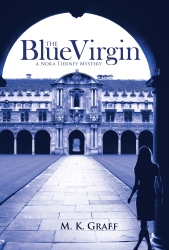
Auntie M is very pleased to announce that the fifth Nora Tierney English Mystery, THE EVENING’S AMETHYST, has made it through the Covid delays and the paperback is now available. Kindle and Audible version will follows in the next few weeks, but she’s excited to have the book on offer.
This time the majority of the story takes place in Oxford, where Nora is settling into her new home with her fiancé, DI Declan Barnes, her young son, Sean, and their puppy, Typo.
Who is Verity? That soon becomes the central question for Nora and Declan, after his new case at Exeter College coincides with a frantic call from Nora’s stepsister, Claire Scott: a fellow graduate student has died in a fall, and Claire begs Nora to help her prove Bea Jones would never commit suicide.
The sisters start their own snooping, while Declan and his team juggle this death investigation with a cold case that will prove to have a startling resolution. Over twenty years ago, toddler Donnie Walsh was kidnapped from his dirty playpen outside a Cumbrian pub. His body was never found. Now in the midst of Declan’s new case, a young man walks into St. Aldate’s Police Station claiming to be Donnie Walsh.
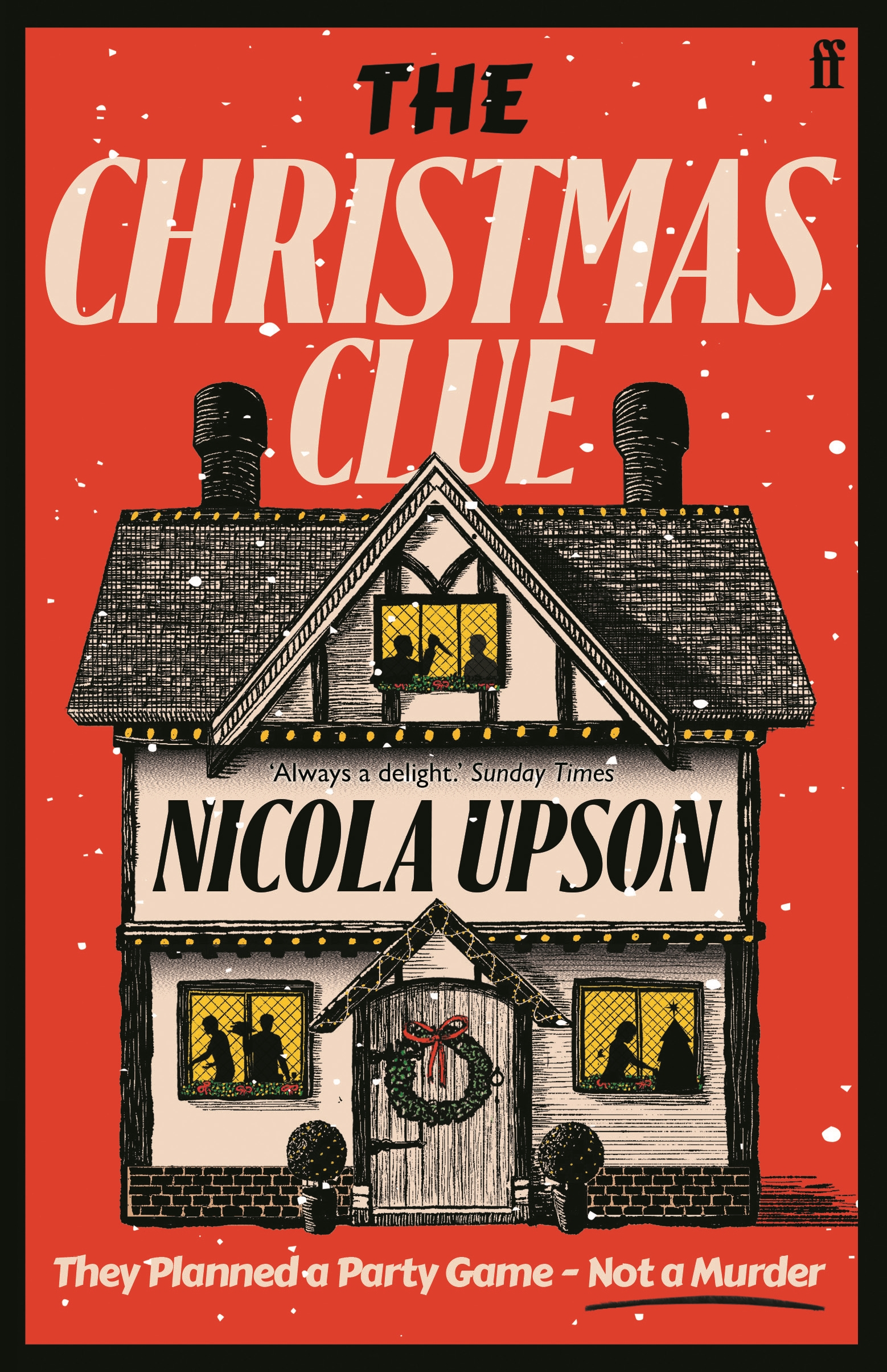
A mix of amateur sleuth and police procedural, The Evening’s Amethyst has garnered wonderful early reviews, including this one from Nicola Upson, author of the Josephine Tey series: “A fine addition to a wonderful series, Graff delivers her trademark blend of compelling mystery, vivid setting, and engaging characters—and in Nora Tierney she has created a sleuth whose humanity and insight are the stars of the show. I loved it.”